

创作上传
VIP
收藏下载
登录 | 注册有礼
查看完整案例

收藏

下载

分享

翻译
Architects:Región Austral
Area:885m²
Year:2025
Photographs:Luis Barandarián
Lead Architects:Región Austral
Category:Recreation & Training,Community
Office Of Urban Planning And Economics:Centro de Estudios Económicos Urbanos (CEEU) de la EEyN-UNSAM
Client:Corporación Buenos Aires Sur (CBAS
Project Leaders:Soledad Patiño, Stéfano Romagnoli, Joaquín Tomé, Luciana Pacheco
Collaborators:Paula Ferraris, Facundo Rasch, Delfina Borioli, Francisco Grancharoff
City:Buenos Aires
Country:Argentina

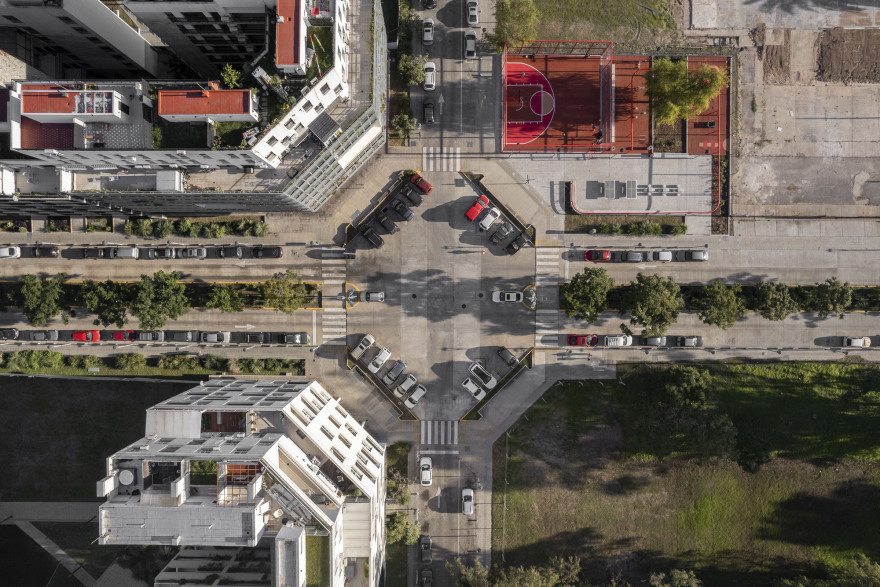
Text description provided by the architects. In Comuna 8 of Buenos Aires, the Olympic Neighborhood, a legacy of the 2018 Youth Olympic Games, presented an urban paradox: a modern residential infrastructure that lacked active public spaces. In response to the manifest need of its residents for gathering places, the design of this community square emerges as a direct response, transforming a vacant lot into a catalyst for social activity.


The project is part of a broader urban strategy aimed at equipping the environment with nearby amenities. In a context of marked territorial inequality, the square serves as a reparative action, offering a tangible alternative for enjoying public space in a historically marginalized area. Designed through participatory processes, and with a special focus on children and adolescents, the intervention transforms a vacant lot into an open space that prioritizes the right to play, to meet, and to recreate.

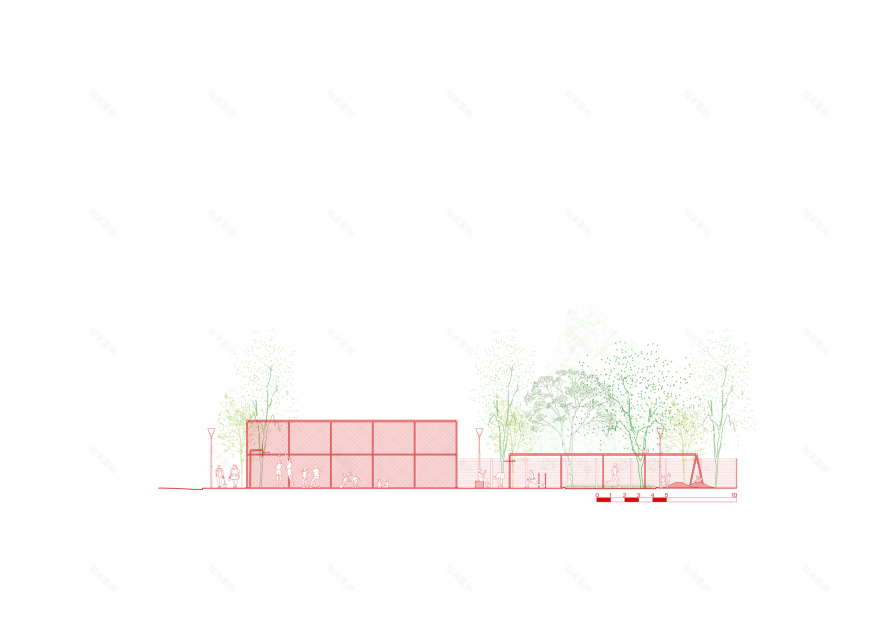
The design was based on universal accessibility criteria to create an inclusive and safe environment, with designated areas for playing, resting, and training. The key feature is a distinctive red metal tube structure that provides a strong visual identity and simultaneously serves as support for play equipment, urban furniture, and signage. Its layout defines pathways and organizes the program, which includes a basketball court, a training area, and children's play areas.


The materials were chosen to reinforce openness and durability. Permeable surfaces such as continuous draining rubber were incorporated, which absorb impacts and prevent soil waterproofing. Additionally, on-site concrete benches were used to delineate sections and promote rest without the need for fences or barriers, reinforcing the appropriateness of the space.
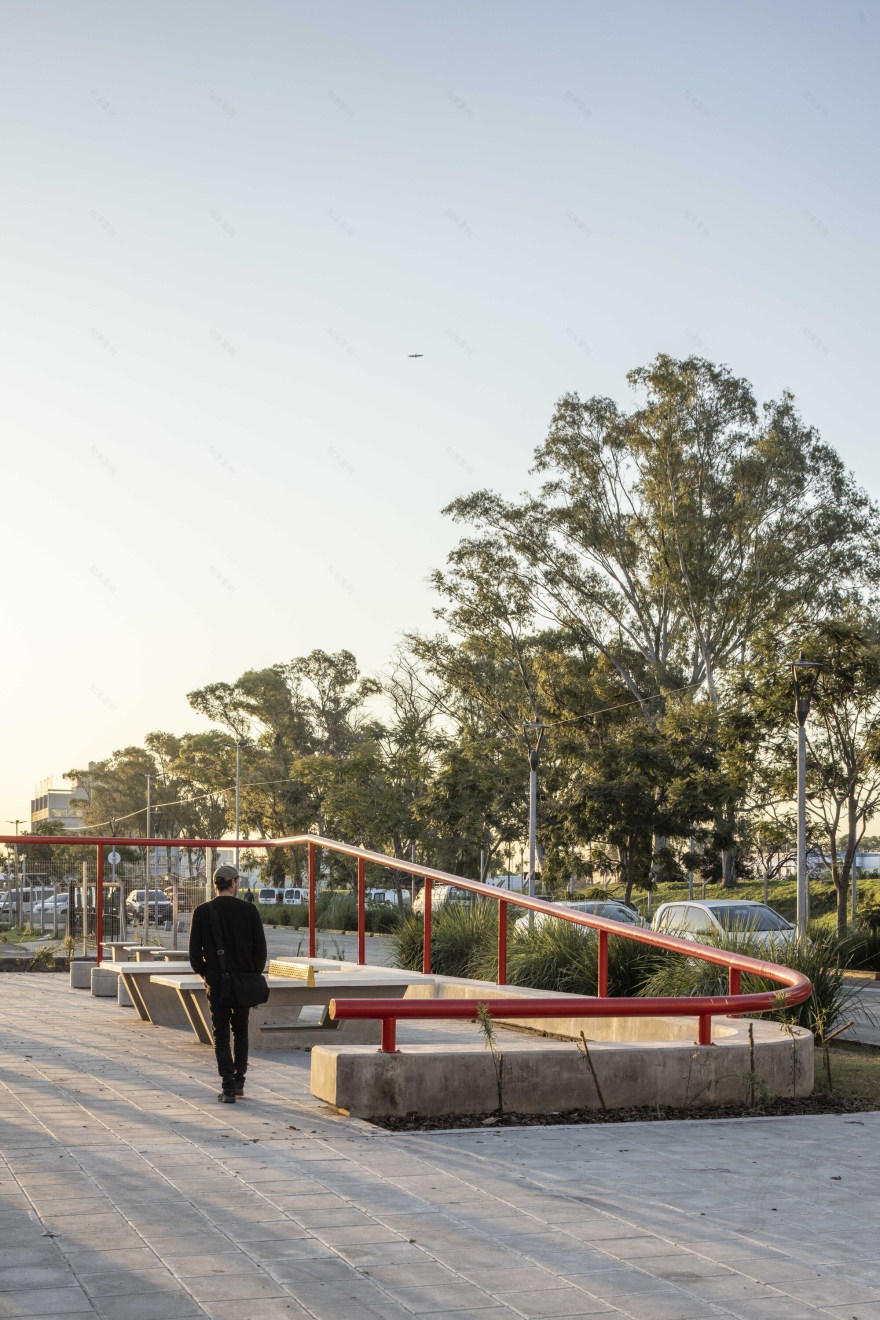
From a technical and environmental perspective, durable, low-maintenance, and high-resistance materials suitable for intensive use were selected. The incorporation of native vegetation and shaded areas contributes to improving environmental comfort and reducing the ecological impact of the project.


In the face of the retreat of public space in the face of privatized leisure, the square was designed as a daily and barrier-free place. Its execution is part of a virtuous cycle of urban economy: the new public space drives future developments, and these, in turn, allow for financing further improvements in the neighborhood. Since its inauguration, the square has been intensively used, solidifying itself as a new and vital point of community life.

Project gallery





南京喵熊网络科技有限公司 苏ICP备18050492号-4知末 © 2018—2020 . All photos and trademark graphics are copyrighted by their owners.增值电信业务经营许可证(ICP)苏B2-20201444 苏公网安备 32011302321234号
苏公网安备 32011302321234号客服
消息
收藏
下载
最近