

创作上传
VIP
收藏下载
登录 | 注册有礼
查看完整案例

收藏

下载

分享

翻译
Architects:Ryan Leidner Architecture
Area:1900ft²
Year:2023
Photographs:Joe Fletcher Photography
Lead Architects:Ryan Leidner
General Contractor:Home and Construction Services, Andy Canada
Structural Engineer:RA Structural Engineering
Civil Engineering:Essi Engineering
Category:Houses
City:Joshua Tree
Country:United States

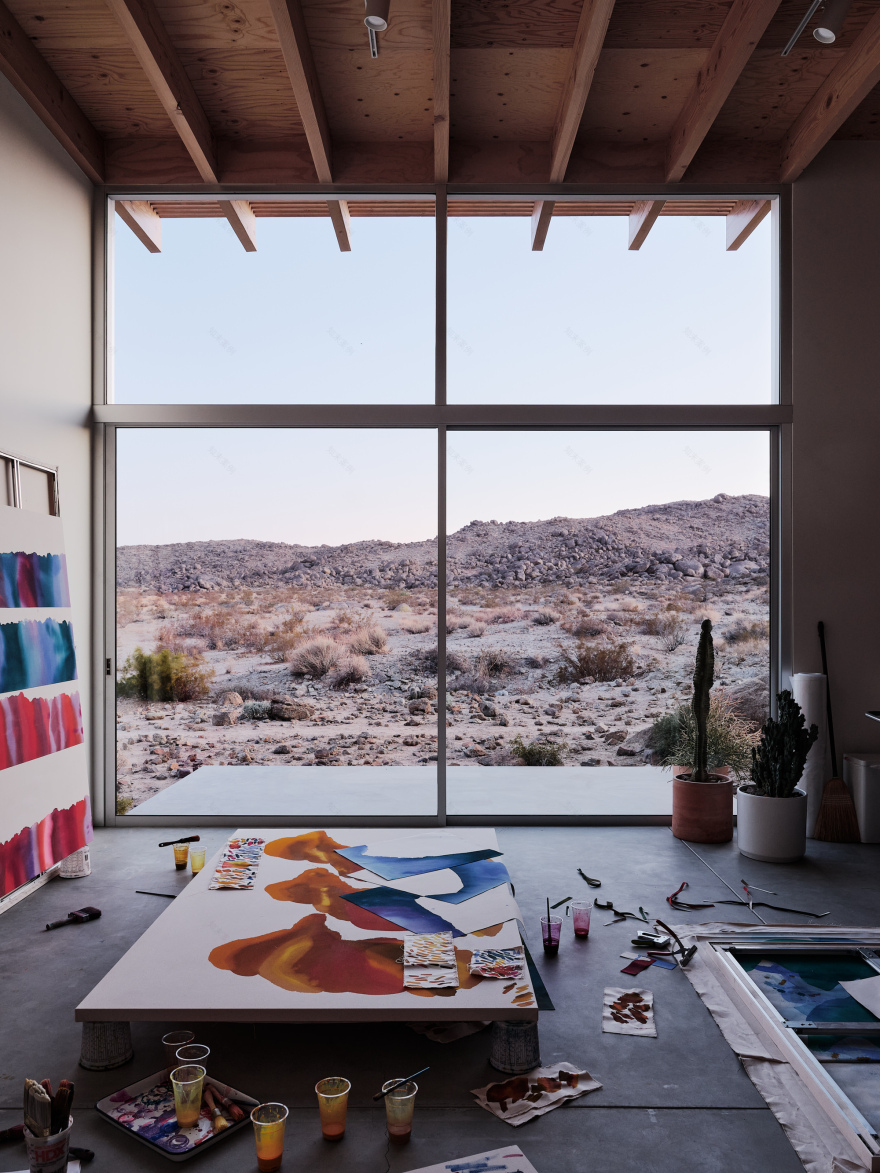
Text description provided by the architects. Located on a picturesque, undeveloped parcel in Joshua Tree, the High Desert House celebrates the beauty of the desert in its simplicity while serving as a home and creative space for the owners.

The design process started with the desire to respect the landscape by creating a building that maintains a compact footprint while still enjoying the sense of expansiveness one feels in the desert. From a design perspective, we wanted the house to feel both like a clear sculptural gesture while also being a warm and inviting home. Inspired by the artists and sculptors working in the Land Art Movement of the 1960s and 70's, we found inspiration in seeing how the context of the desert landscape can give a unique meaning to a work.
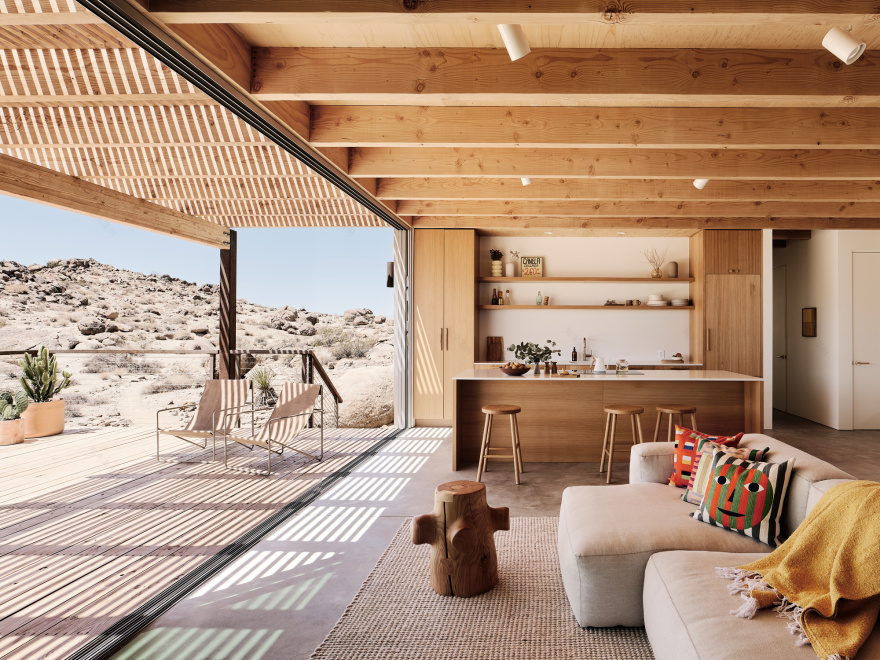
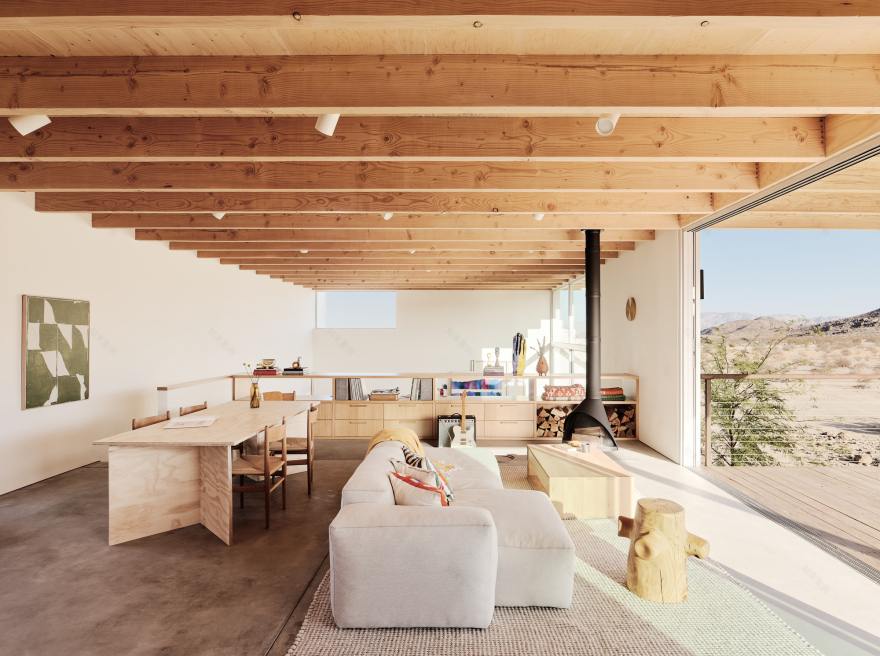
In order to reach the property, you drive several miles down an unpaved, sandy road, seeing the occasional home or trailer along the way. And then you take a final turn, and the house begins to emerge from behind a rock outcropping, as a thin white line in the landscape.

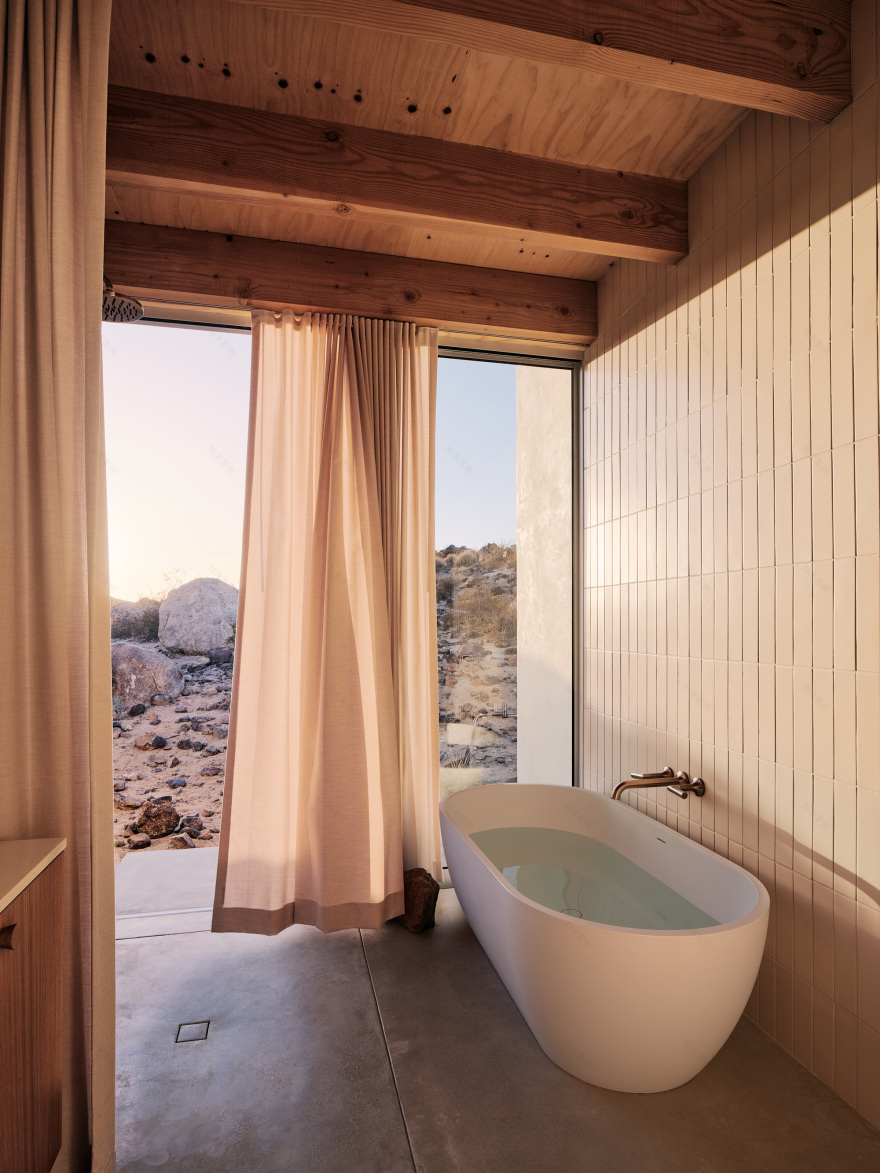
Working in a remote environment necessitates a certain simplicity and economy when it comes to design. For that reason, a straightforward exposed post-and-beam structural system was used, and the regular spacing of those members informed the interior layout of the rooms and spaces.

Being both a home and art studio, the initial design process was guided by the studios of many notable artists from Georgia O'Keeffe and Willem and Elaine de Kooning, as well as the home Luis Barragan designed for himself. In all of these spaces, there is a beautiful commingling of creative work and life that inspired the design.
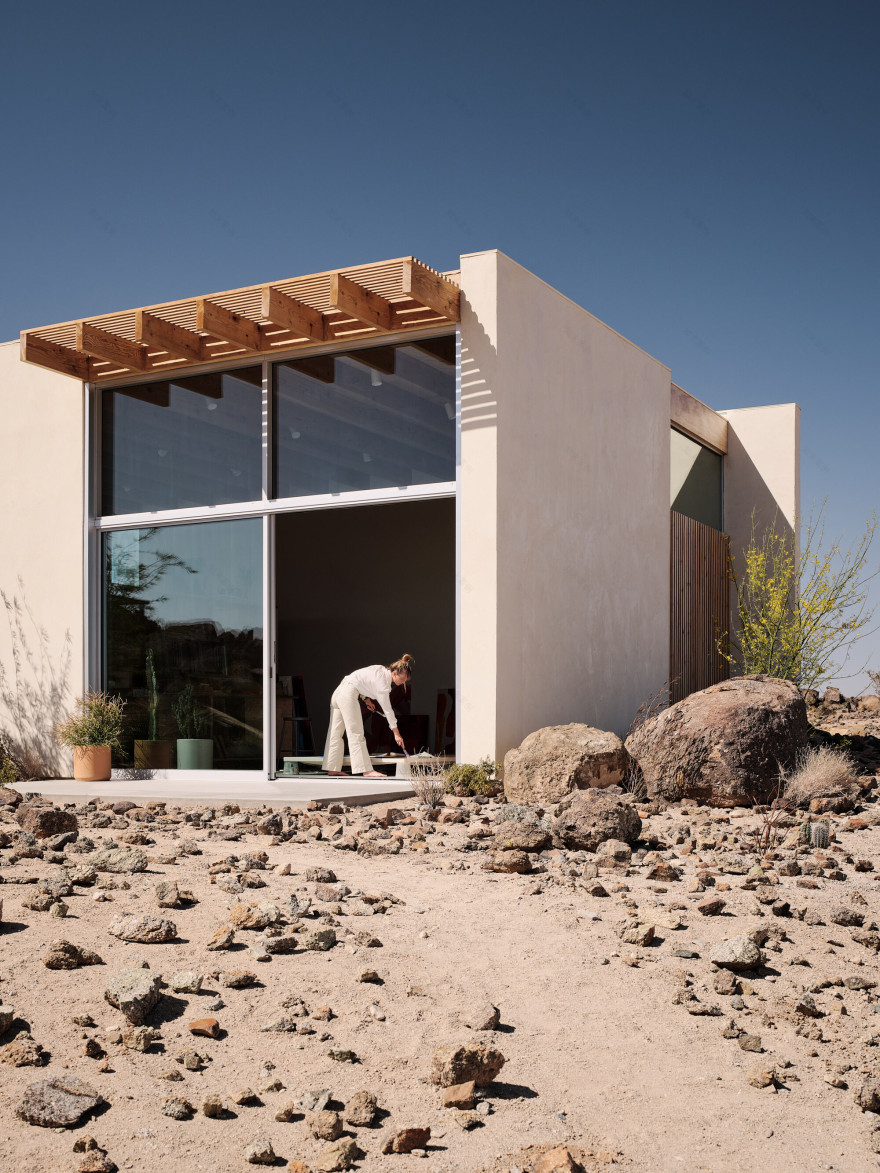
The house is a wood-framed construction with a plaster stucco exterior, which was chosen because it can withstand the extreme fluctuations of the weather in the desert. One of the more interesting questions faced during the design process was choosing a color for the exterior. We initially explored using a neutral-toned plaster with the thought that it would blend in with the desert landscape. But as we studied that option further, we realized that it actually took away from the landscape and architecture, and that having a stronger contrast in tone helped to highlight the beauty of the surroundings.


The design of the home settles the mind and allows more inward focus while celebrating the beauty of the desert.

Project gallery




南京喵熊网络科技有限公司 苏ICP备18050492号-4知末 © 2018—2020 . All photos and trademark graphics are copyrighted by their owners.增值电信业务经营许可证(ICP)苏B2-20201444 苏公网安备 32011302321234号
苏公网安备 32011302321234号客服
消息
收藏
下载
最近