

创作上传
VIP
收藏下载
登录 | 注册有礼
查看完整案例

收藏

下载

分享
“在场”的环境与纪念性——震动、层积与新生
“Presence” in Environment and Memoriality: Perturbation, Stratification, and Renewal
自然环境的“变化”是剧烈的,只是这种速度和程度超越了人的认知,成为一种超验的常识。亿万年以来形成的山川河流,组成今天我们对环境感知的起点,而一场地震、一场泥石流,倾泻的自然之力便极大改变了人类生存的景观,形成新的原点。周而复始,层叠往复。而唯一不变的则是人类纪元中与环境的不断对话,推动文明的前进。
The “transformation” of the natural environment is drastic, yet its speed and scale often exceed human perception, becoming a transcendent common sense. Mountains and rivers shaped over billions of years form the starting point of our environmental awareness today. However, an earthquake or a mudslide—sudden outbursts of natural forces—can drastically alter the human-inhabited landscape, creating new origins. Cycles repeat, layers accumulate. What remains constant is humanity’s ongoing dialogue with the environment, driving civilization forward.
▼“绵茂公路”与展览馆整体自然环境,The Mianmao Highway and the Exhibition Hall in its Natural Setting©存在建筑

▼展览馆的周边河道景观,Riverside Landscape Surrounding the Exhibition Hall©存在建筑

17年前的汶川地震导致基础设施遭受极大破坏,经历艰苦卓绝的抗震救灾后,这一区域也急需重建。2009年在由多方资助下,为打通位于四川盆地边界的德阳绵竹市与阿坝州茂县的“绵茂公路”始建。而当地地势险峻,险情时发,“绵茂公路”是绵竹市乃至四川省最艰巨的交通灾后重建工程之一,历经14年建成,于2023年通车。为展示其建设历程和建设者的英勇事迹,展览馆位于四川省德阳市绵竹市清平镇,坐落群山之间、大河之畔,毗邻“绵茂公路”清平段。清平镇在汶川地震中受灾严重,之后重建镇区,并且至今仍保留着地震和泥石流等多次地质灾害的痕迹。
▼总平面图,Masterplan©设计团队绘
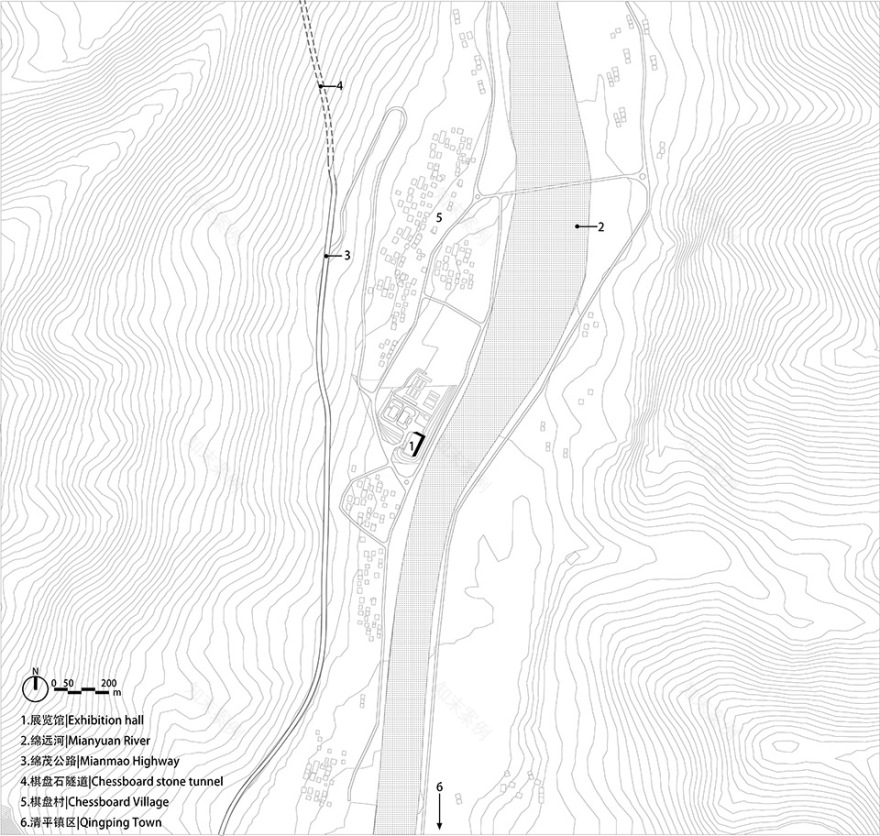
Seventeen years ago, the Wenchuan Earthquake severely damaged infrastructure in this region. After arduous post-disaster reconstruction, the “Mianmao Highway” was initiated in 2009 with multi-party funding to connect Mianzhu City (on the edge of the Sichuan Basin) and Mao County in Aba Prefecture. Due to the treacherous terrain and frequent hazards, the highway became one of Sichuan’s most challenging post-disaster transportation projects. After 14 years of construction, it opened in 2023, ending the historical isolation between Mianzhu and Mao County. To commemorate its construction journey, honor the heroic efforts of its builders, and serve local cultural and spiritual needs, the “Mianmao Highway” Memorial Exhibition Hall was established.
▼从“绵茂公路”上远眺展览馆,Distant View of the Exhibition Hall from the Mianmao Highway©存在建筑

厂房原址占地面积约1400m2,为一座矩形平面钢结构仓库,设计首先因地制宜,保留厂房整体结构,并实现空间秩序的重塑,开放于环境。
▼原仓库厂房外立面,Original Warehouse Facade©设计团队摄

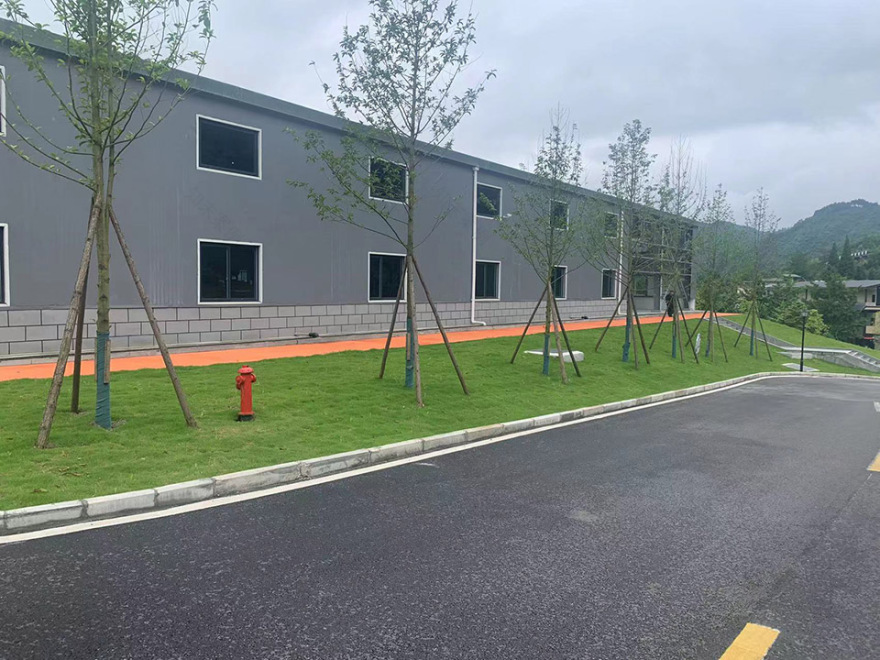
▼原仓库仓房内景,Original Warehouse Interior©设计团队摄


The exhibition hall repurposes a rectangular steel-structured warehouse originally used by the Mianzhu Transportation Bureau. The 1,400㎡ site was structurally intact but highly enclosed. With limited budget and climatic advantages, the design retained the factory’s framework while reshaping spatial order to open it to the environment.
▼展览馆西侧主视角,West Facade©存在建筑

▼展览馆轴测分析图,Axonometric Diagram©设计团队绘制

▼展览馆展陈与空间策划分析,Exhibition Layout and Spatial Planning©设计团队绘制

Breaking away from traditional exhibition methods, the design employs environmental reenactment as a narrative thread. An open, linear spatial organization combined with nodal storytelling creates immersive experiences that echo the highway’s “epic” construction.Firstly, the maintenance structure of the exterior facade around the building should be removed, while the original structure and roof should be retained, and the waterproofing treatment should be strengthened.
▼主入口,Main Entrance©存在建筑

面向环境的界面
Environmental Interfaces
展览馆的四个立面各具特色,呼应不同的环境特征。
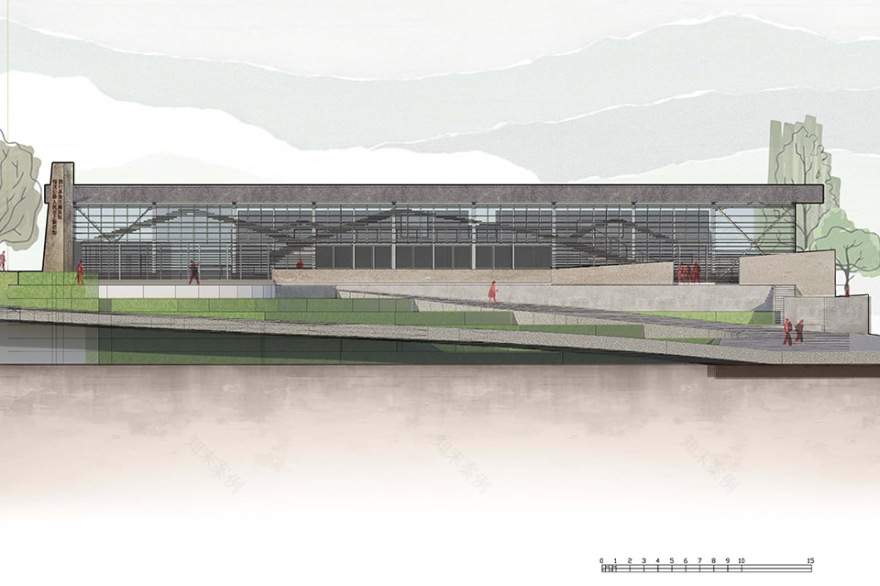
西立面——塑造群山掩映下的纪念性入口,呼应厚重历史和坚实奋斗沉积而成的建设“现场”。立面上保留厂房原有的檐板结构,并增加杆件以拓展形成呼应场地连绵的山脉。
Each facade responds to distinct environmental features:
West Facade: A monumental entrance framed by mountains, echoing the site’s layered history. Original eaves were preserved, with added beams mirroring the surrounding ridges.
▼从清远河望向展览馆东立面,East Facade from Qingyuan River©存在建筑

东立面——展现巨石展厅,为东侧旅游主干线呈现展览馆新的特征。凹凸起伏的表面是对巨石的抽象,从外部呼应修建环境之险,并从细部的塑造混凝土质感上突出光影变化。
East Facade: Features an abstract “monolith” with undulating concrete surfaces, reflecting construction challenges through light and shadow interplay.
▼东立面与延展的场地,East Facade and Extended Site©存在建筑

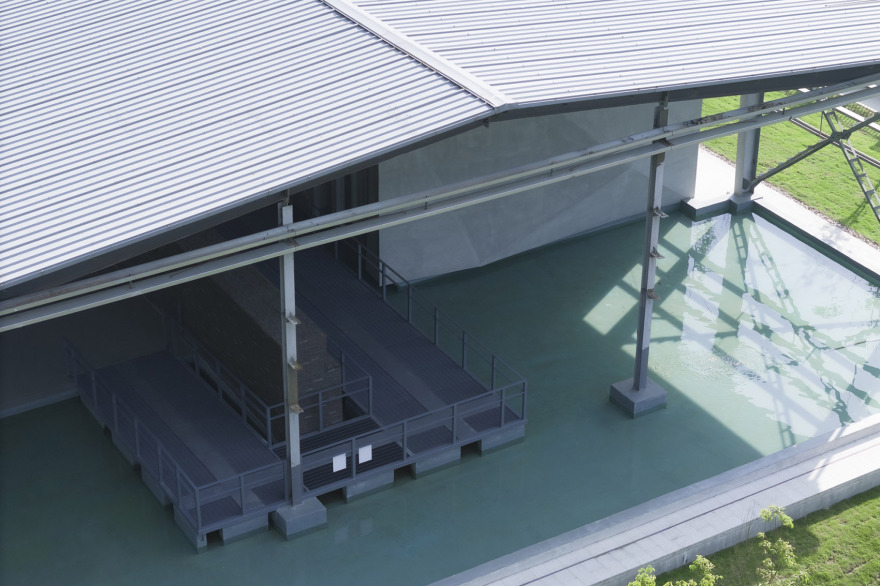
南立面——将厂房空间特质以及内部结构向外打开。“天堑”分隔左右展区,通过水面更进一步将空间内外进行渗透和延申,远眺“绵茂公路”和重建后的清平镇区。
South Facade: Opens the factory’s internal structure outward. A “chasm” divides exhibition zones, while water surfaces extend views toward the highway and rebuilt town.
▼南立面开放界面,Open South Facade©存在建筑

▼水面尽端鸟瞰视角,Aerial View of Waterfront ©存在建筑
北立面——以实体嵌入,形成服务、布展与后勤通道,增设卫生间、休息室等服务设施,并预留大面积空地用于临时活动与停车。
North Facade: Solid walls house service facilities, restrooms, and parking areas.
▼北立面的实体界面,North Facade©存在建筑

线性叙事与“天堑”
Linear Narrative and “Chasm”
▼展览馆内部剖透视,Sectional Perspective©设计团队绘制

The surrounding mountains, rivers, highway, and town serve as “exhibits.” The interior abstracts environmental elements, integrating them with artifacts, graphics, and multimedia.
▼中心轴线北望——高耸石墙与混凝土质感展厅形成穿越感的强化,Central Axis North View: Towering Stone Walls and Concrete Galleries©存在建筑
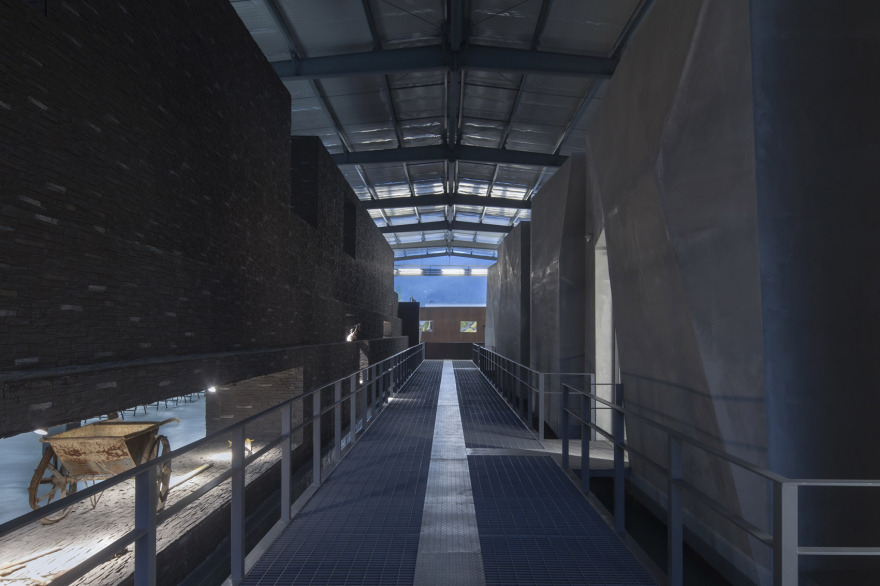
“绵茂公路”绵延五十六公里,一路途径艰难险阻,沿线险峻的自然环境、巨大的施工难度,犹如“天堑”,公路即是对天堑的跨越。设计将公路的线性特质作为最直接的秩序基础,串联起不同分区。进而,通过感官设计,例如入口的斜向元素置入原本的几何秩序,利用厂房高度,形成入口较大的聚集和讲解空间;当游客身穿行在中心轴线,利用两侧尺度的夸张强化穿越之感,“天堑”分隔左右展区,可触摸的石墙与混凝土粗粝质感再现建设之艰难困苦的环境。底部水面上浮起的金属网格铺地,带来模拟施工现场蜀道之难的“失稳”、“金属碰撞”的沉浸,为非“舒适”、“遥远”的“观看”。
The Mianmao Highway stretches for 56 kilometers. Along the way, it is full of difficulties and obstacles. The steep natural environment and huge construction difficulties along the route are like a “natural chasm”, and the highway is a leap over this chasm. The design takes the linear characteristics of the highway as the most direct basis of order, connecting different sections. Furthermore, through sensory design, such as the oblique elements at the entrance being placed in the original geometric order, and by taking advantage of the height of the factory building, a larger gathering and explanation space at the entrance is formed. When visitors walk along the central axis, the exaggerated scale on both sides enhances the sense of time travel. The “natural chasm” separates the left and right exhibition areas, and the touchable stone walls and the rough texture of the concrete recreate the difficult and challenging environment of the construction. The metal grid that floats on the water surface at the bottom creates an immersive experience of “instability” and “metal collision” that simulates the difficulty of the Shu Road at the construction site, providing an “uncomfortable” and “distant” “viewing”.
▼中心轴线南望——石墙上的开凿提供施工实物的展陈,South-facing view of the central axis – The excavation on the stone wall provides an exhibition of the construction objects©存在建筑 &施工团队


巨石与墙体也形成中心轴线上的对话,以不同高度、位置的开口形成视线和流线的穿越,布置不同实物展品与灯光设计,服务展览的具体组织。
The huge stones and the walls also form a dialogue along the central axis. Openings of different heights and positions create the passage of lines of sight and flow, and different physical exhibits and lighting designs are arranged to serve the specific organization of the exhibition.
▼中心轴线南望——通过自然光的控制形成轴线上由暗及亮,形成远眺平台,Through the control of natural light, the changes from dark to bright along the axis are formed, creating a platform for distant viewing©存在建筑
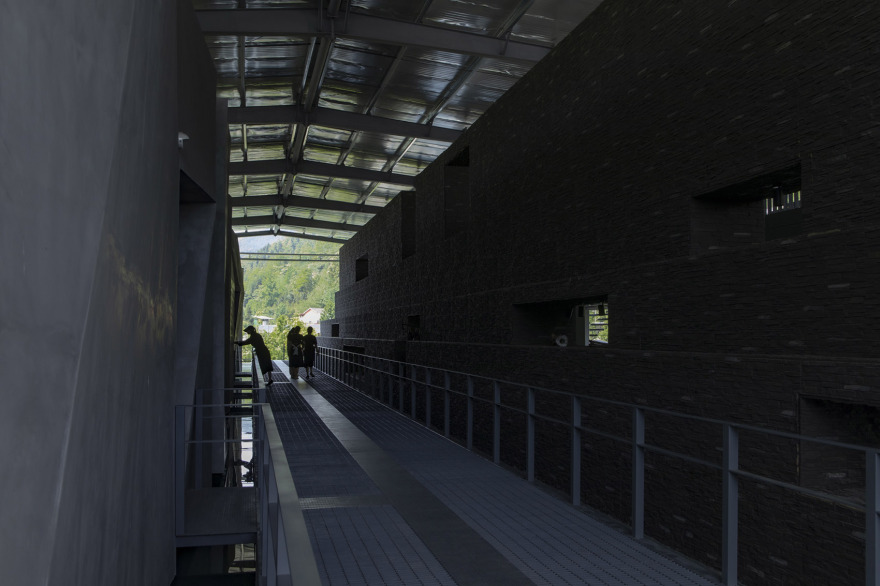

中心展廊尽端,展览路线转折,光线由暗至明,形成对艰苦建设到美好生活重塑的呼应。展廊尽端漂浮于水面之上,在巨石环绕的厚重感中引入一丝轻巧,在此远眺清平镇区与“绵茂公路”,将实景转化为展览对象。
At the axis’s end, light shifts from dim to bright, symbolizing hardship giving way to renewal. A floating platform over water offers views of Qingping Town and the highway, merging reality with exhibition.
▼线性观战路线尽端的开放空间与外部环境,Linear Route’s Terminal Open Space ©存在建筑

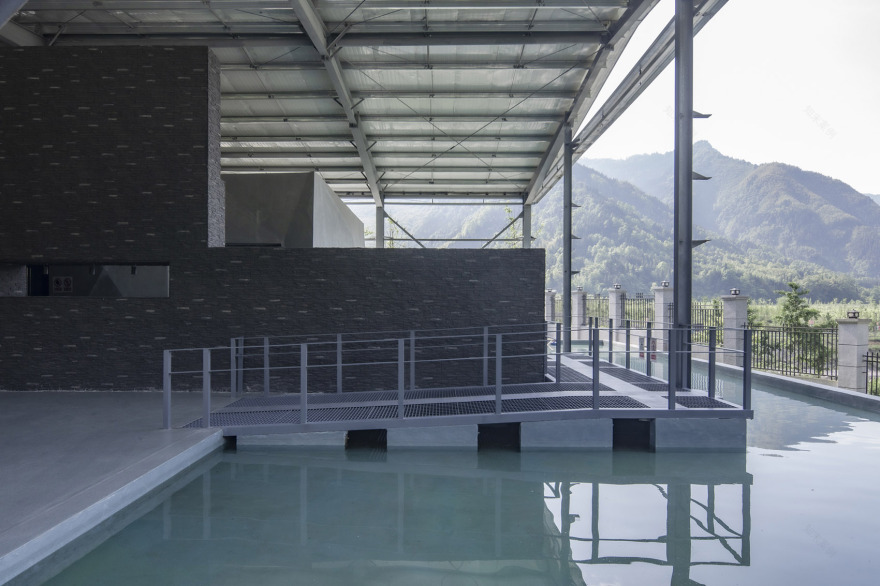
▼线性观战路线尽端的开放空间与外部环境,Linear Route’s Terminal Open Space ©存在建筑

在展廊尽端回过头可坐在阶梯休憩,感受阳光洒入,也可进入二层实物互动体验空间,服务多功能使用,例如社区活动、展览研讨、儿童学习等。
Visitors can rest on sunlit steps or ascend to interactive mezzanine spaces for community events or educational activities.
▼可驻足休息的观景阶梯,Viewing Steps©存在建筑

▼展厅夹层活动空间,Mezzanine Spaces©存在建筑

▼夹层活动空间细部,Details of the mezzanine activity space©孙昊德

节点叙事与“巨石”
Nodal Narrative and “Monolith”
▼展廊与巨石展厅缝隙水景在墙面上的反光,The reflection of the water feature in the gap between the exhibition corridor and the huge stone exhibition hall on the wall©孙昊德
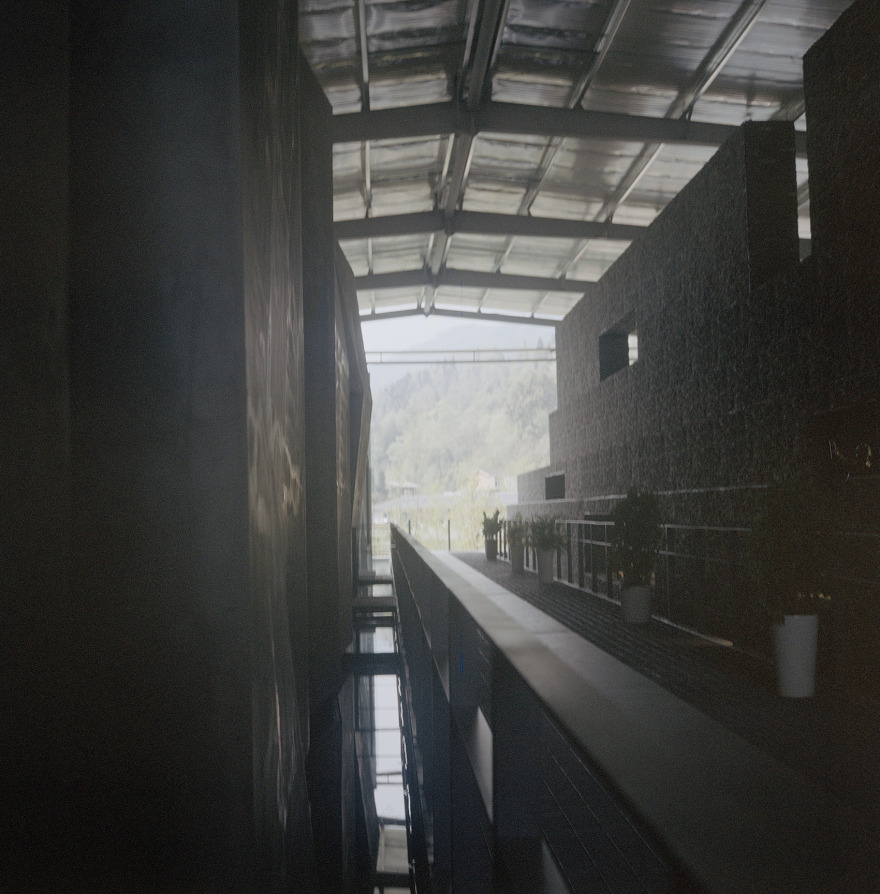
▼展廊尽端水景、金属杆件与巨石景观,At the end of the exhibition corridor, there are water features, metal rods and huge rock landscapes ©孙昊德


▼既有结构与杆件与新介入设计的搭配,The combination of the existing structure and members with the newly introduced design©孙昊德

▼既有结构与杆件与新介入设计的搭配,The combination of the existing structure and members with the newly introduced design© 存在建筑
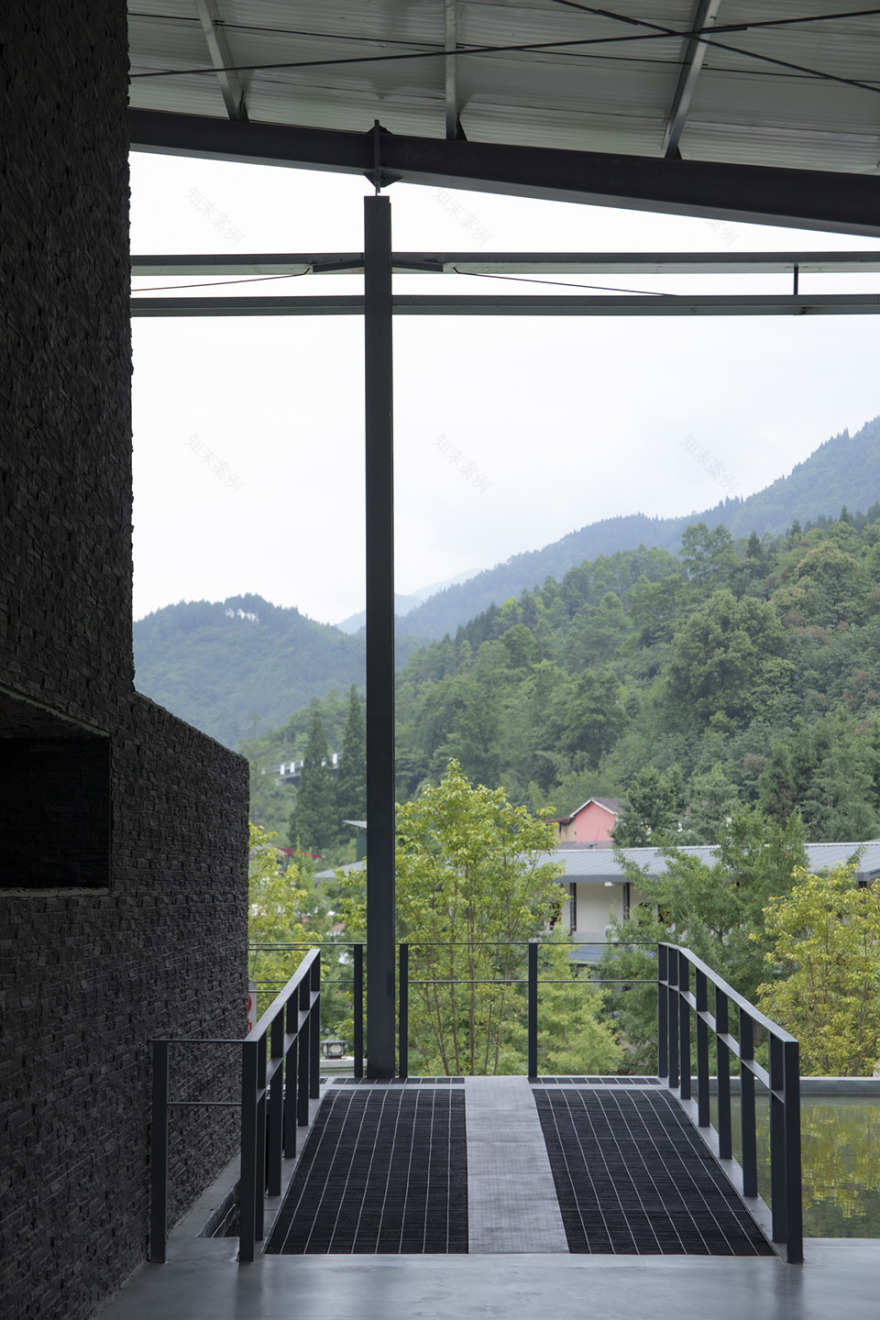
▼巨石与外立面杆件的光影细部,Monolith Details: Water Reflections, Metal Beams, and Light Play©孙昊德
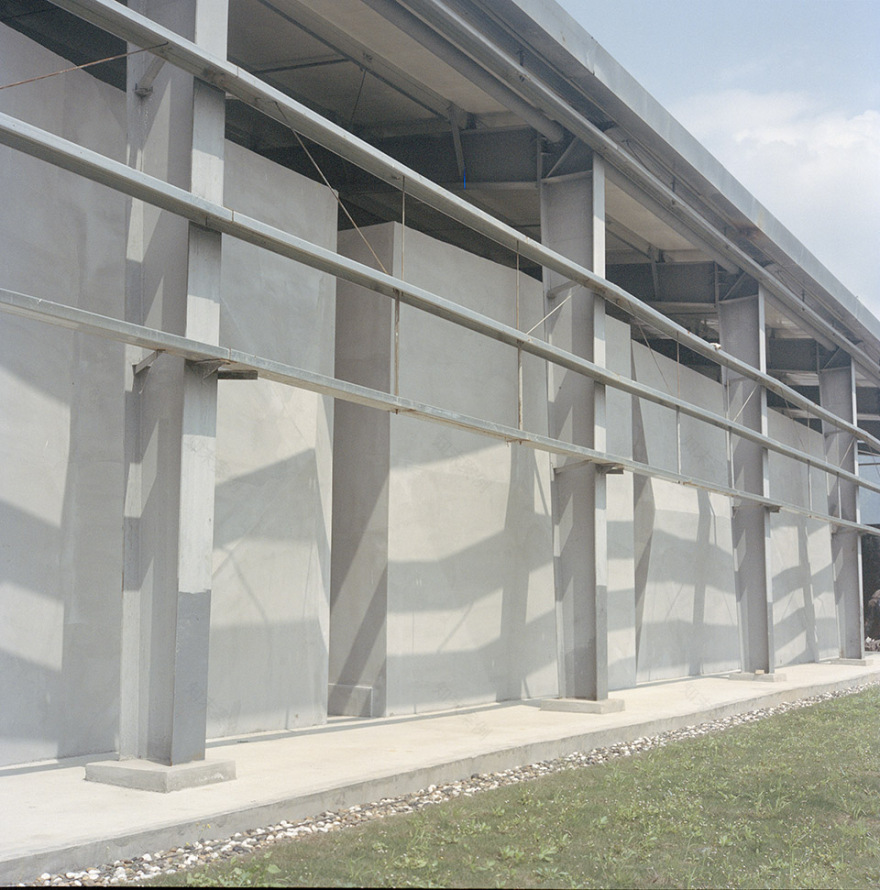
▼巨石与外立面杆件的光影细部,Monolith Details: Water Reflections, Metal Beams, and Light Play©孙昊德

“在场”的环境赋予设计以“天堑”和“巨石”等组织逻辑与形态意象,回应自然的运动,并最终形成空间的叙事——经年累月,超越人类纪元的能量活动,不断地挤压、冲刷、沉积,形成了当下可感知到的自然形态。而人类活动则快速地复写在层积的表面之上,并同自然的作用一起发展、沉寂、消亡,以及再次的新生。对于自然力量的抽象表达,赋予设计层面在人体尺度、光线、材质等直觉的反应,试图给予空间更强的纪念意义与沉浸感,呈现“绵茂公路”的建设历程,回到日常与生活。
The “presence” of the environment informs the design’s logic of “chasm” and “monolith,” echoing natural forces that shape landscapes over eons. Human endeavors, inscribed atop stratified layers, interact with nature’s cycles of creation and decay. Through abstraction of natural power, the design employs scale, light, and materials to amplify memoriality and immersion, commemorating the Mianmao Highway’s legacy while grounding it in daily life.
▼远眺主题展馆与穿梭山间的“绵茂公路”,Distant View of the Hall and the Mianmao Highway©存在建筑

最终,“绵茂公路”纪念展览馆成为人与自然的长期互动中的一次注脚,是对于自然的一种自我反射和自觉表述。成为对于汶川地震后公路重建成就的纪念与展示,呼应对于人民至上理念的具体表现,以及对于自然敬畏的素朴呈现。
Ultimately, the Memorial Exhibition Hall stands as a testament to humanity’s enduring dialogue with nature, honoring post-earthquake reconstruction achievements, the people-first ethos, and humble reverence for nature.
▼一层平面图,Ground floor plan©上海交通大学设计学院昊德工作室

▼屋顶平面图,Roof floor plan©上海交通大学设计学院昊德工作室

▼东立面,East elevation©上海交通大学设计学院昊德工作室

▼南立面,South elevation©上海交通大学设计学院昊德工作室

▼西立面,West elevation©上海交通大学设计学院昊德工作室
项目名称:天堑与巨石——“绵茂公路”纪念展览馆设计
项目类型:建筑改造、展览馆设计、室内与展陈设计
设计方:上海交通大学设计学院昊德工作室
项目设计:2023-2024年
完成年份:2024年
设计团队:孙昊德、李浩宇、侯品伊、王雨彤、Monica Sunkara、谢雨潇
项目地址:四川省德阳市绵竹市清平镇
建筑面积:1270㎡
摄影版权:存在建筑、孙昊德
材料:钢、钢筋混凝土、砖、石
Project name: Chasm and Monolith – Memorial Exhibition Hall Design for the “Mianmao Highway”
Project type: Architectural Renovation, Exhibition Hall Architectural Design, Interior and Exhibition Display Design
Design: Atelier Haode, School of Design, Shanghai Jiao Tong University
Design year: 2023
Completion Year: 2024
Leader designer & Team: Sun Haode, Li Haoyu, Hou Pinyi, Wang Yutong, Monica Sunkara, Xie Yuxiao
Project location: Qingping County, Mianzhu City, Deyang City, Sichuan Province, China
Gross built area: 1270㎡
Photo credit: Arch-Exist, Sun Haode
Materials: Steel, Reinforced Concrete, Brick, Stone
南京喵熊网络科技有限公司 苏ICP备18050492号-4知末 © 2018—2020 . All photos and trademark graphics are copyrighted by their owners.增值电信业务经营许可证(ICP)苏B2-20201444 苏公网安备 32011302321234号
苏公网安备 32011302321234号客服
消息
收藏
下载
最近