

创作上传
VIP
收藏下载
登录 | 注册有礼
查看完整案例

收藏

下载

分享
2025年,毗邻的两座城市——斯洛文尼亚的诺瓦戈里察(Nova Gorica)和意大利的戈里齐亚(Gorizia)——共同获得“欧洲文化之都”的称号。这一象征性与实际运作的联盟,正在重新定义两座城市之间的联系:两种语言、文化与传统的交汇交织,并塑造出新的共享生活方式。
In 2025, the two bordering cities, Nova Gorica (Slovenia) and Gorizia (Italy) jointly hold the title of European Capital of Culture. This symbolic and operational alliance is redefining the connection between the cities where the encounter of two languages, cultures, and traditions intertwines and shapes new, shared ways of life.
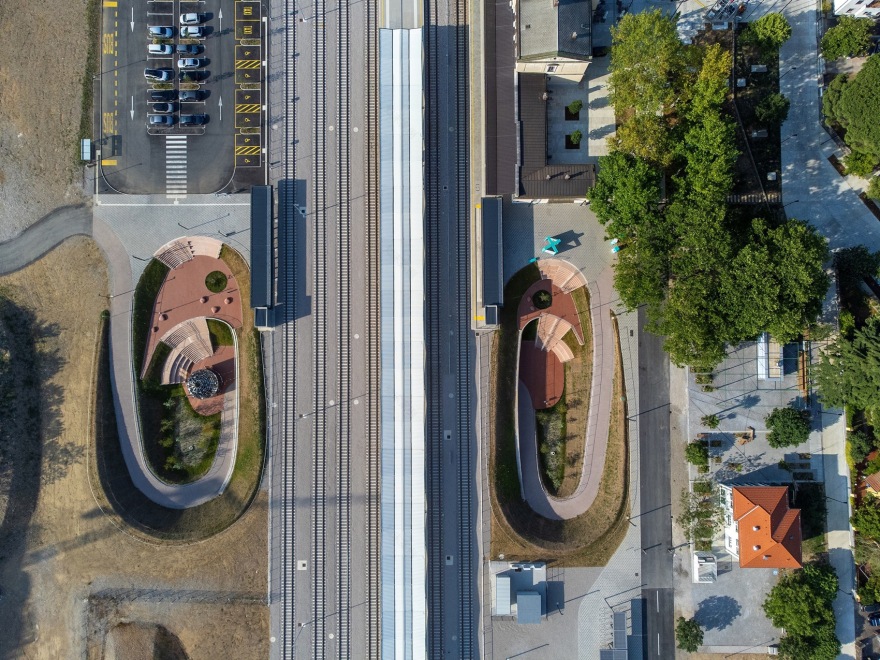
▼鸟瞰全貌,Bird’s eye view© Matjaž Prešeren


该项目——对Transalpina火车站部分建筑的翻新,以及对诺瓦戈里察铁路区域的改造,包括铁轨重新配置、新岛式站台建设、侧式站台翻修及Vrtača地下通道的建造——在物理层面上体现了两座曾经分隔城市的连接。历史悠久的Transalpina车站长期象征着分离,其边界仅距Piazza Transalpina数米,如今则成为象征性且功能性的连接点。
▼轴测分析图,axo© Sadar+Vuga
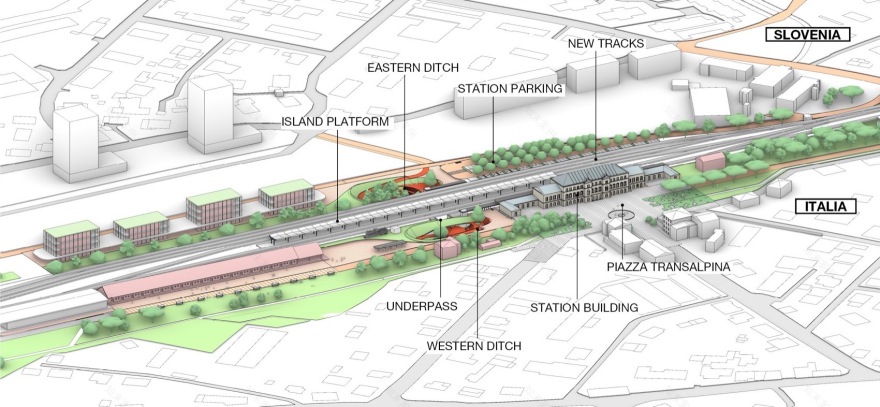

The project – the renovation of part of the Transalpina railway station building and the redevelopment of the Nova Gorica railway area, including reconfiguration of the tracks, construction of a new island platform, refurbishment of the side platform, and creation of the Vrtača underpass – physically embodies the connection between two once-divided cities. The historic Transalpina Station has long symbolized separation, with the borderline just meters away at Piazza Transalpina, is now a symbollic and functional point of connection.
▼周边环境,Sourrounding context© Matjaž Prešeren

项目的主要挑战是重新想象火车站区域未来的意义。第一步是铁路基础设施的重新配置,包括将铁轨数量从14条减少至6条,并新增岛式站台。这一重组为轨道下方的人行连接——Vrtača地下通道——腾出空间,使访客首次能够安全、直接地在两座城市间通行。
The main challenge was to reimagine what the railway station area could represent in the future. The first step was the reconfiguration of the railway infrastructure which included reduction of train tracks from 14 to 6 and addition of new island platform. This restructuring made space for a new pedestrian link beneath the tracks – the Vrtača Underpass – allowing visitors to have a safe, direct passage between the two cities for the first time.
▼下沉广场,Sunken plaza © Ana Skobe
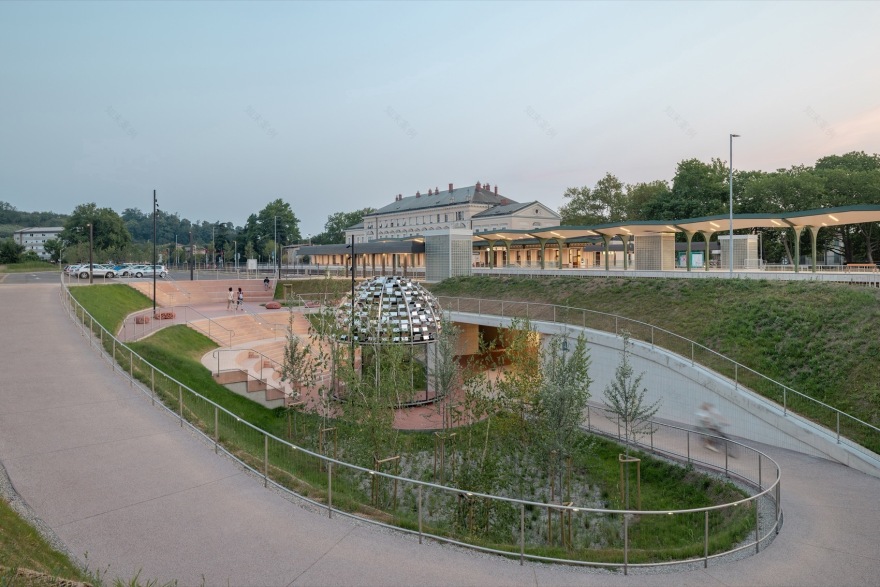
▼步行、会面、休息和聚集的空间,Spaces to walk, meet, rest and gather © Ana Skobe


▼骑行通道,Cycling channel © Ana Skobe
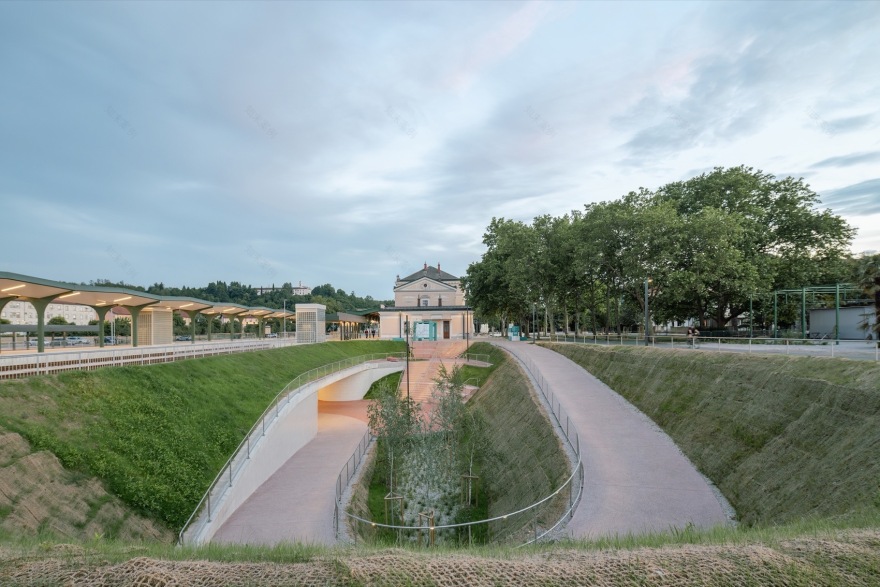
通往乘客站台的高低错落通道是新的重要城市手势,在空间和功能上将地下通道的基础设施与公共空间设计整合在一起。因此,地下通道不仅仅是一个实用的连接路径,还被设计为可供步行、会面、休息和聚集的空间。
The off-level access to the passenger platforms is an important new urban gesture that spatially and programmatically integrates the infrastructure of the underpass with the design of the public space. The underpass is thus not designed only as a utilitarian connection, but also as a space for walking, meeting, sitting and gathering.
▼地下通道入口,Underpassentrance © Ana Skobe


轨道下方的通道长36.6米,最宽可达8米(骑行区3.5米,步行区4.5米)。通道从两端入口和中央天窗自然采光,天窗位于通向岛式站台的电梯上方。通道两端延伸至椭圆形下沉广场——即所谓的“沟渠”。访客可通过宽阔楼梯或环绕沟渠外围的螺旋坡道上升至地面,同时方便骑行者通行。
The path beneath the tracks is 36.6 meters long and up to 8 meters wide (3.5 m for cyclists and 4.5 m for pedestrians). It is naturally lit from both entry points and through a central skylight located above the elevator that connects to the island platform. At both ends, the underpass opens onto elliptical sunken plazas — or so-called “ditches.” From the underpass, visitors ascend to ground level via wide staircases or spiral ramps that wrap around the perimeter of the ditches and accommodate cyclist.
▼地下通道,Underpass© Ana Skobe


▼地下通道公共空间,Underpass public space© Ana Skobe

▼地下通道材质,Underpass material© Ana Skobe

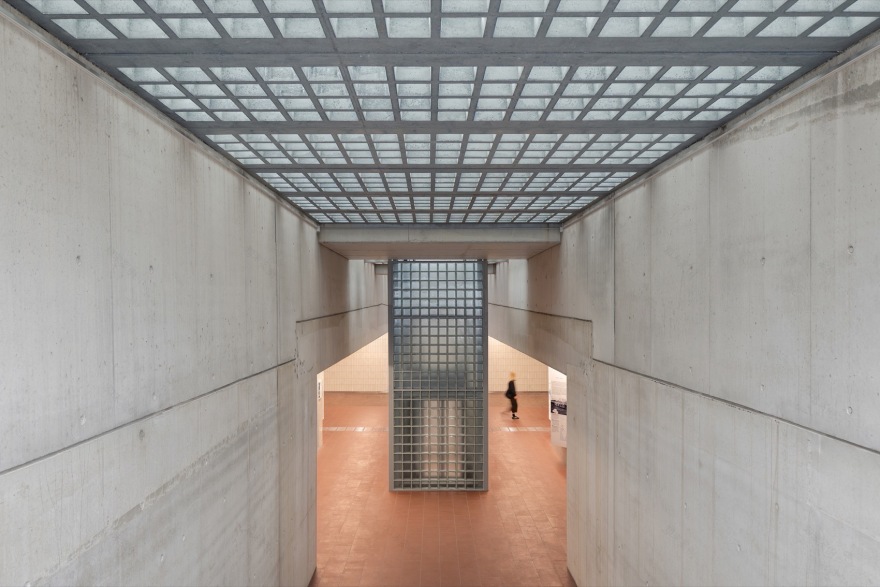
地下通道的材质经过精心挑选,以营造明亮而宜人的公共空间。自然采光、光亮白色反光墙砖和色彩铺装共同创造出安全且温馨的氛围,同时清晰划分步行与骑行区域。砖红色陶瓷地面延伸至下沉广场,彩色楼梯与坡道向车站延伸,与绿色植被坡形成对比。这种对比在视觉上弱化了沟渠的尺度,并为项目引入自然元素。
The materiality of the underpass was carefully selected to create a bright and welcoming public space. Natural daylight, glossy white reflective wall tiles, and colored paving together establish a welcoming and safe atmosphere, while clearly separating pedestrian and cycling zones. The brick-colored ceramic flooring continues into the plazas, where colorful stairs and ramps rise toward the station, forming a contrast with the green, planted slopes. This contrast visually softens the scale of the ditches and introduces a natural element into the project.
▼站台概览,Platform overall view© Ana Skobe
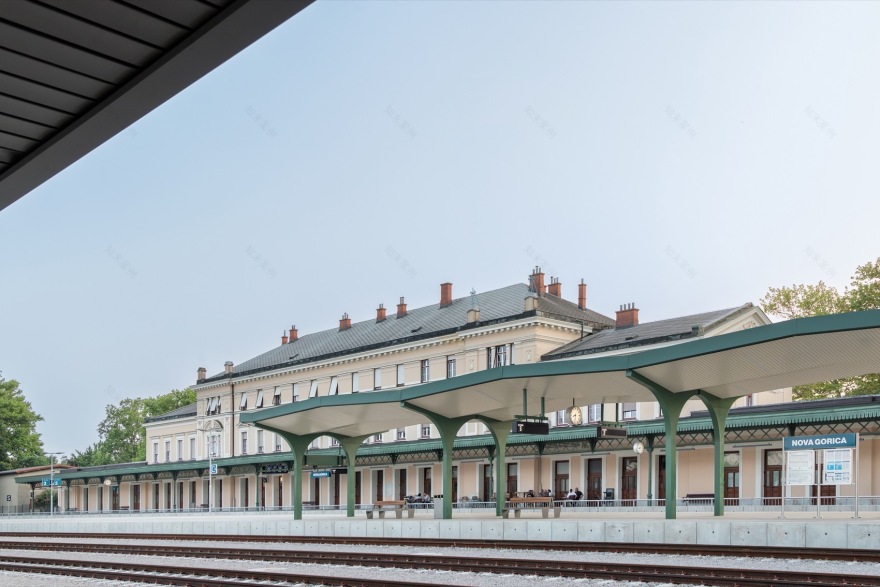

▼站台近景,Platform close view© Ana Skobe

▼站台出入口,Platform entrance© Ana Skobe

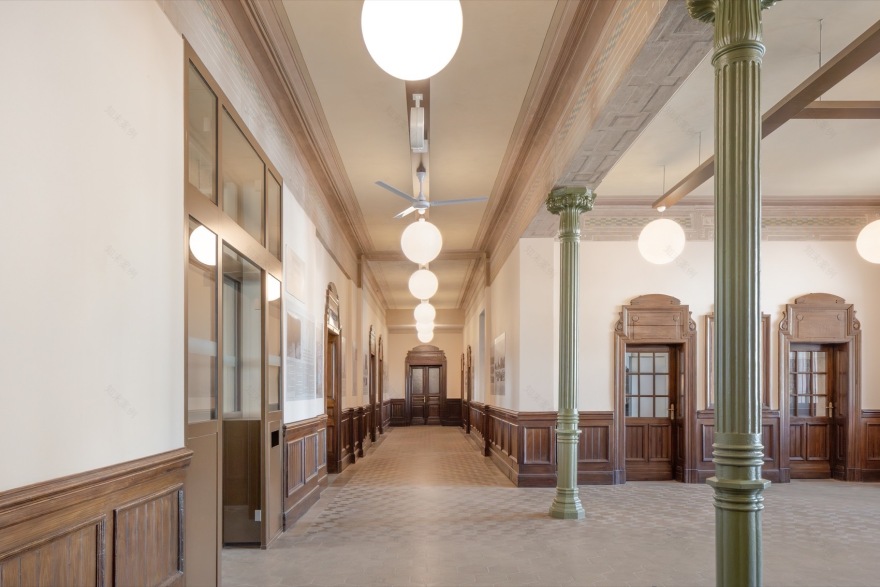
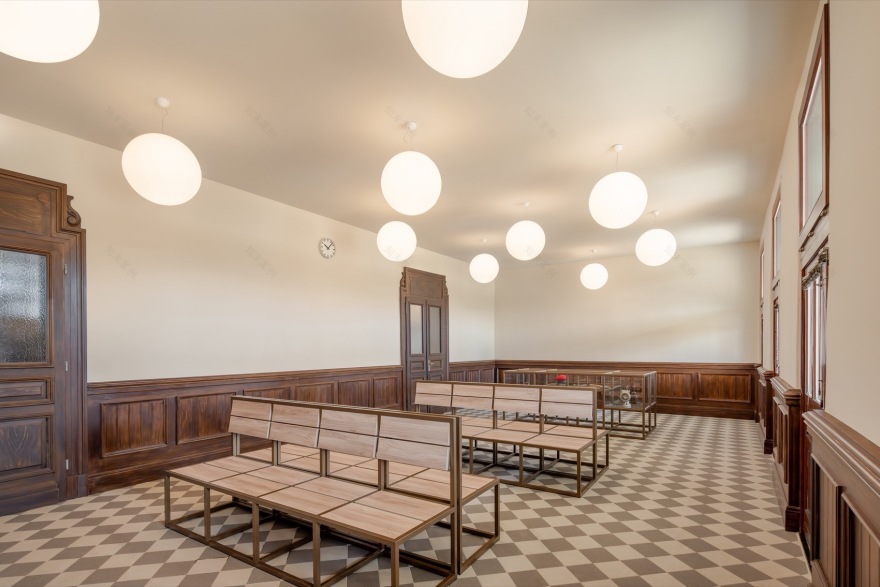
项目的重要组成部分还包括对1906年建成的Transalpina历史车站部分的翻新与修复。翻新重点是室内功能的重新设计,特别是入口大厅、售票处及新的候车区。同时,与文化遗产保护研究所(ZVKDS)紧密合作,修复了原有铺地、木质墙板、立柱、侧棚及发现的壁画。
An important part of the project was also the renovation and restoration of a part of the historic 1906 Transalpina station. The renovation focused on the functional redesign of the interior, with emphasis on the entrance lobby, ticket offices and new waiting area. Additionally restoration of the original paving, wooden wall panelling, columns, side canopy and the discovered frescoes was carried out in close cooperation and coordination with the Institute for the Protection of Cultural Heritage (ZVKDS).
▼售票大厅,Ticket hall © Ana Skobe

▼候车室,Waiting room © Ana Skobe
开通仅数月后,Vrtača地下通道已成为重要的公共通道。车站周边区域成为日常城市生活的活跃枢纽——充满骑行者、通勤者和游客,他们不仅穿越轨道,更能轻松、开放、无界地从一座城市移动到另一座城市。
Just months after opening, the Vrtača Underpass has already established itself as a vital public link. The area around the station has become an active hub of everyday urban life – full of cyclists, commuters and visitors, not only crossing the tracks, but moving from one city to another – effortlessly, openly, and without borders.
▼玻璃砖与台阶材质,Glass brick and step materials © Ana Skobe


作为欧洲文化之都GO! 2025的一部分,地下通道不仅是建筑干预,更是一座文化连接器。它举办临时摄影展,在东侧广场设置互动装置“Ingeborg Dome”,并直接连接至Piazza Transalpina附近举办的各类活动与音乐会。
As part of the European Capital of Culture GO! 2025, the underpass is more than an architectural intervention – it is a cultural connector. It hosts a temporary photography exhibition, features the interactive Ingeborg Dome installation in its eastern plaza, and links directly to nearby events and concerts held at the Piazza Transalpina.
▼项目区位,site plan© Sadar+Vuga

▼地下通道平面图,underpass plan© Sadar+Vuga


Project Name: Nova Gorica Railway Station and Underpass Vrtača
Project Authors: Sadar+Vuga
Investor: Ministry for Infrastructure, Slovenian Infrastructure Agency
Photography: Ana Skobe, Areal photos: Matjaž Prešeren
Location: Nova Gorica, Slovenia
Year of Completion: 2025
Net Area Underpass: 641 m²
Eastern Vrtača: 1706 m²
Western Vrtača: 1339 m²
Side Platform: 1220 m²
Island platform: 2216 m²
Architecture: Sadar+Vuga d.o.o. (Jurij Sadar, Boštjan Vuga, Miha Čebulj, Petko Grabljić, Belén Villán Fernandez, Urška Linda, Bauermann, Nicholas Hartman)
Landscape Architecture: Studio AKKA (Ana Kučan Krajinska Arhitektura d.o.o.)
Structural Engineering: Elea iC d.o.o.
Railway Infrastructure: SŽ – projektivno podjetje Ljubljana d.d.
南京喵熊网络科技有限公司 苏ICP备18050492号-4知末 © 2018—2020 . All photos and trademark graphics are copyrighted by their owners.增值电信业务经营许可证(ICP)苏B2-20201444 苏公网安备 32011302321234号
苏公网安备 32011302321234号客服
消息
收藏
下载
最近