

创作上传
VIP
收藏下载
登录 | 注册有礼
查看完整案例

收藏

下载

分享
透视——光、水与景观
Seeing Through – Light, Water, Landscape
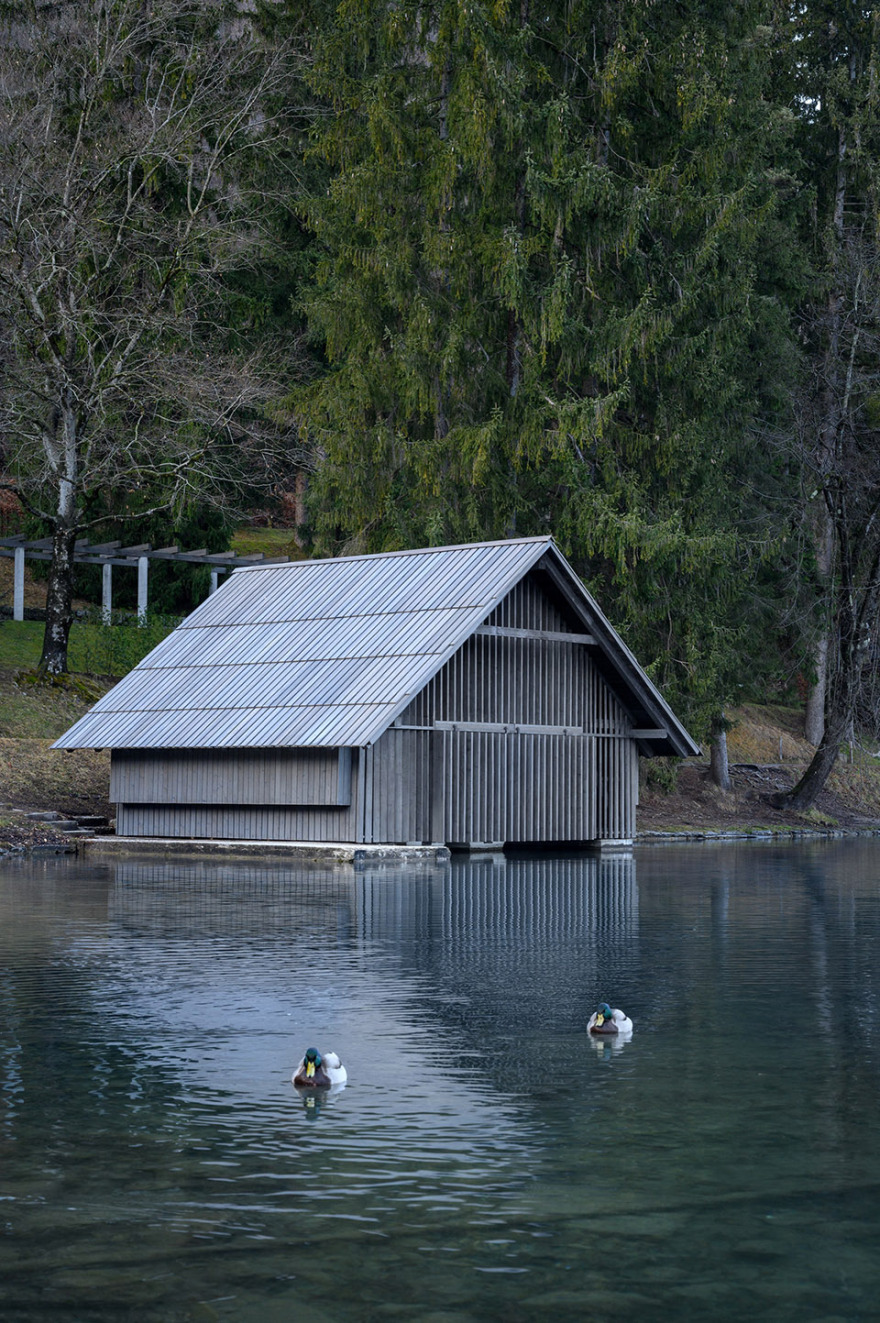
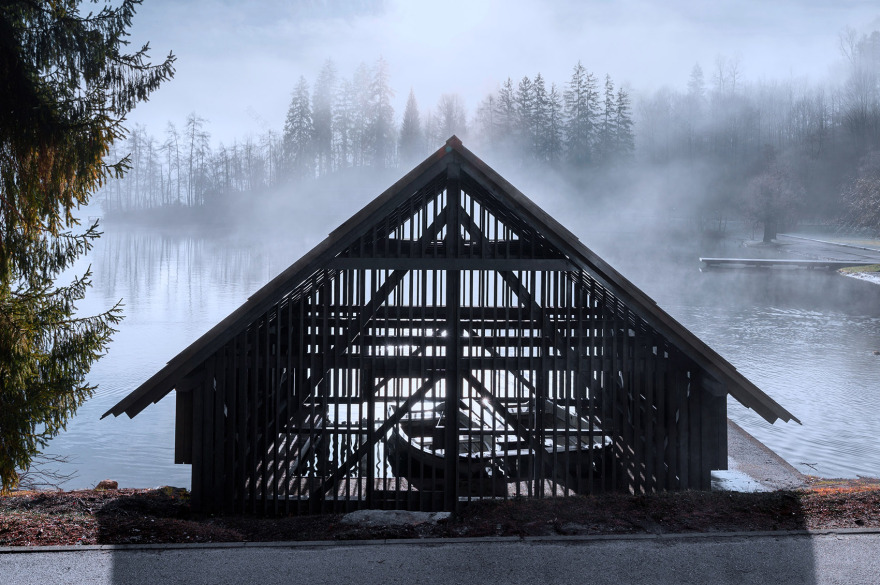
通过错位排布的木板,船屋的立面呈现出半透明的质感,使其不再是坚固的墙体,而是一层能够过滤的“表皮”——光线、空气与湖面的掠影得以穿透。这样的视觉通透性营造了结构内外的互视关系,将室内空间与周边景观微妙联结。建筑宛如一枚透镜,框取水面、天空与水岸的片段,引导来访者将湖泊作为建筑空间的有机组成部分,而非单纯的背景。正如屋顶的过滤床一般,立面同样在过滤我们的感知,提醒人们:建筑既可庇护,也能揭示。
The shifted wooden planks create a semi-transparent façade, turning the boathouse into a filter rather than a wall — a skin that lets light, air, and glimpses of the lake pass through. This visual porosity allows cross-views across the structure, subtly connecting the interior with the surrounding landscape. The building becomes a lens, framing fragments of water, sky, and shore, and inviting visitors to experience the lake not as a backdrop, but as part of the architectural space itself. Like the filtration beds on the roof, the façade filters perception, gently reminding us that architecture can both protect and reveal.
▼项目概览,overview of the project©Miran Kambic

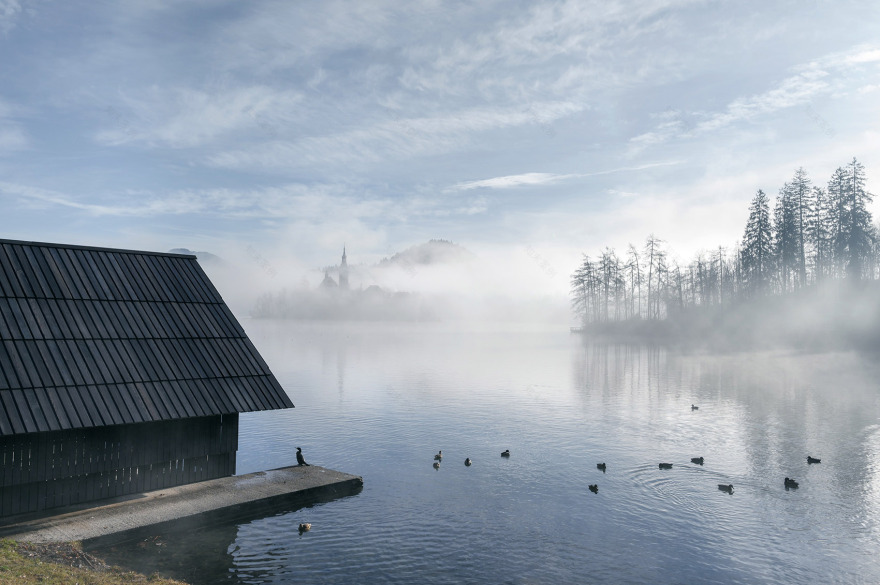
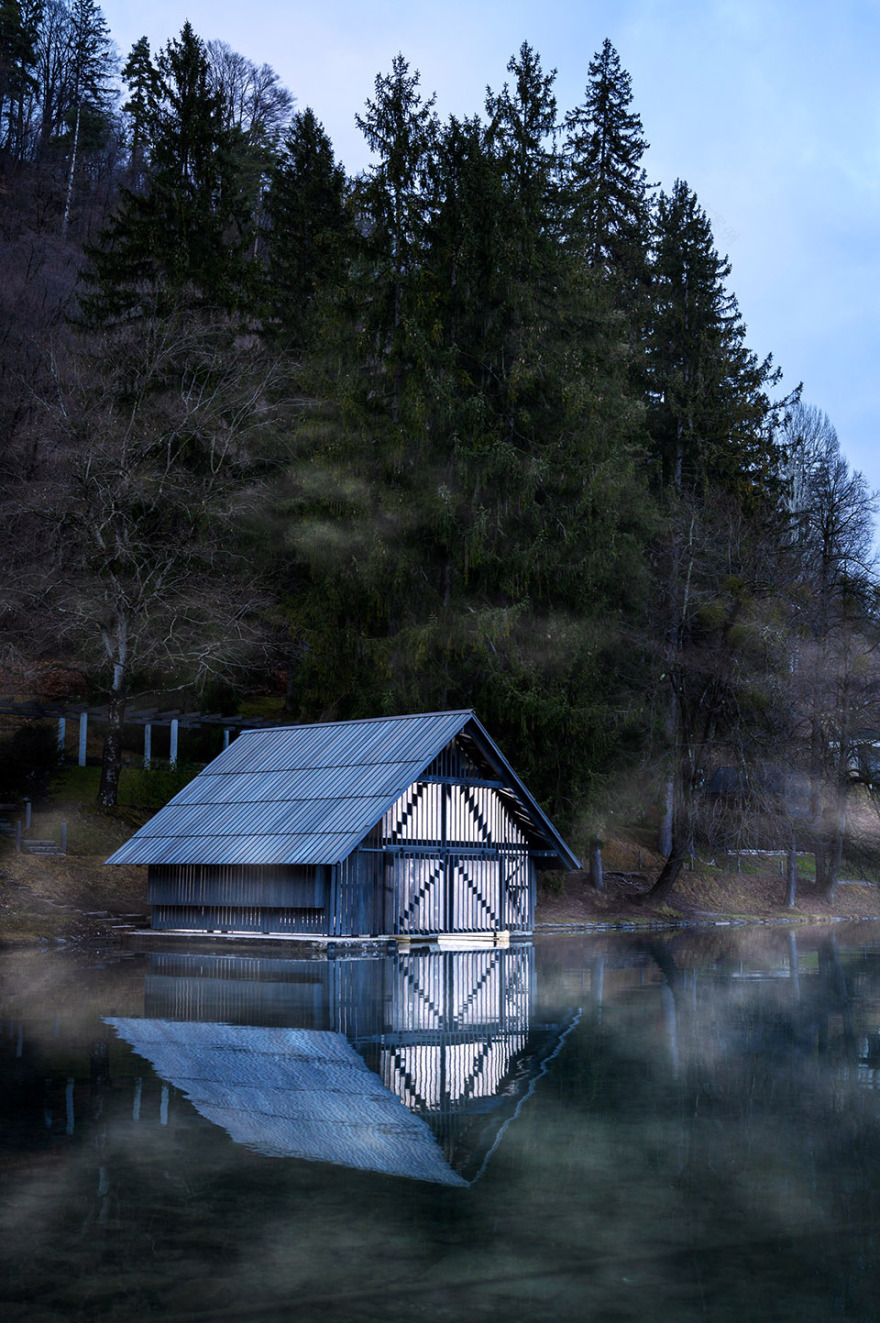
▼水岸边的船坞,the boathouse on the riverside©Miran Kambic

建筑与生态的复兴
Architectural and Ecological Revitalisation
Zaka船屋位于Bled湖西岸静谧的一隅,这一体量谦逊却富有意义的建筑,诠释了建筑、景观、生态与公共认知之间的多重关系。布莱德作为斯洛文尼亚最具标志性的高山度假地,以晶莹的湖水、独特的湖心岛教堂以及环绕的尤利安阿尔卑斯山而享誉国际,并长期作为自然观察与环境治理的重要场所。在这样的敏感语境下,设计策略并非推倒重建,而是以谦和而明确的姿态对既有建筑进行更新。▼地理位置,site location©OFIS Architects

The Boathouse Zaka, located at the quiet western edge of Lake Bled, is a modest yet meaningful structure that speaks to the layered relationship between architecture, landscape, ecology, and public knowledge. Bled is one of Slovenia’s most iconic alpine resorts—globally recognised for its crystalline lake, dramatic island church, and surrounding Julian Alps—and serves as a site of continuous natural observation and environmental care. Within this sensitive context, the architectural approach taken was not to design anew, but to revitalize with humility and intention.
▼谦和而明确的姿态,revitalize with humility and intention©Miran Kambic

▼致力于生态修复的设计,dedicated to the design of ecological restoration©Miran Kambic


传统的延续与修复
Preserving Tradition Through Restoration
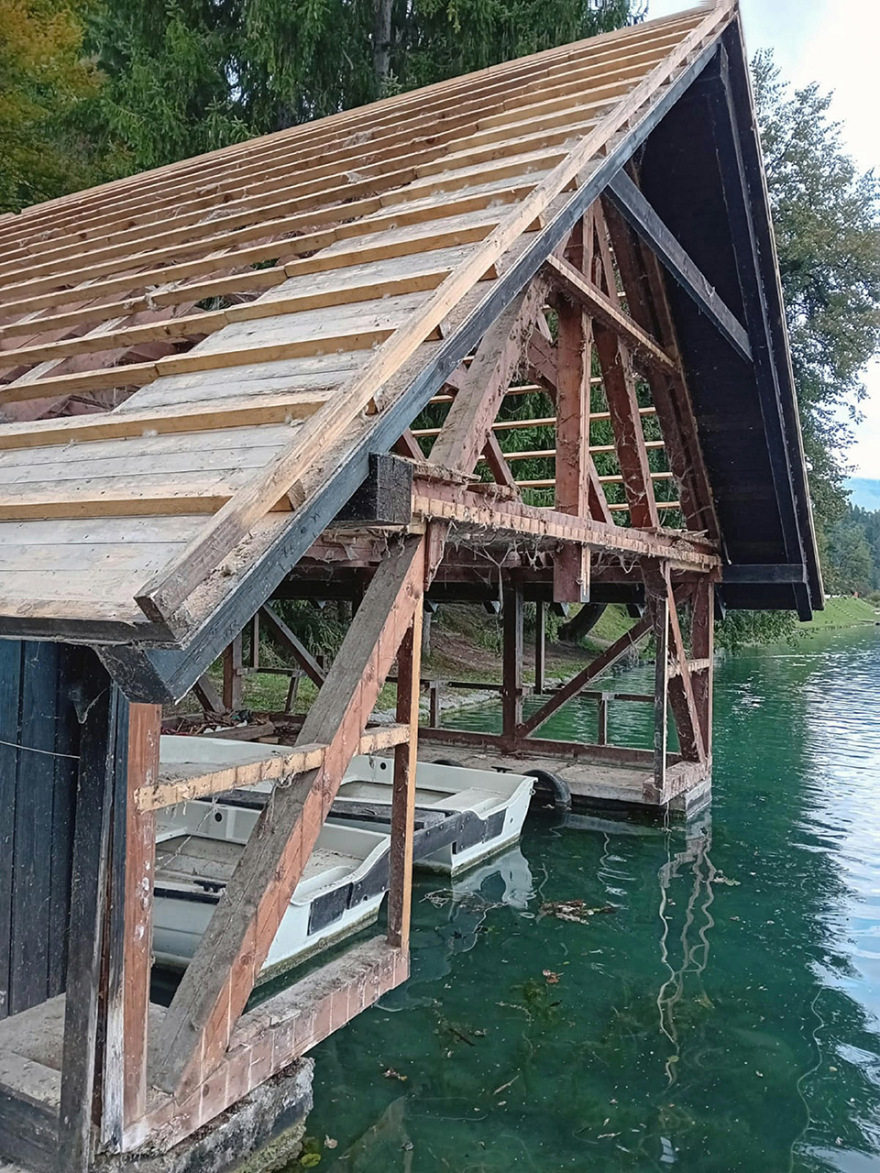
项目的核心在于保护与再利用。设计并未拆除或彻底改造原有船屋,而是坚持完整保留其木构架,延续阿尔卑斯地区湖畔民居的比例、尺度与建筑语言。原有木结构经过仔细拆解、检修与复原,立面板材则通过清理、修补,并以传统松脂加以防护——这种天然材料既提升了耐久性,也回应了本地工艺传统与生态规范。▼施工过程,construction progress©OFIS Architects


At the heart of the project lies a commitment to preservation and reuse. Instead of demolishing or radically transforming the existing boathouse, the intervention focused on retaining its full original wooden structure, preserving the proportions, scale, and architectural language of vernacular lakeside buildings found across alpine regions. The entire timber frame was carefully dismantled, examined, and restored, and all wooden façade cladding was cleaned, repaired, and protected using traditional pine resin, a natural material that enhances durability while respecting local craft knowledge and ecological standards.
▼完整保留原木构架,retaining its full original wooden structure©Miran Kambic

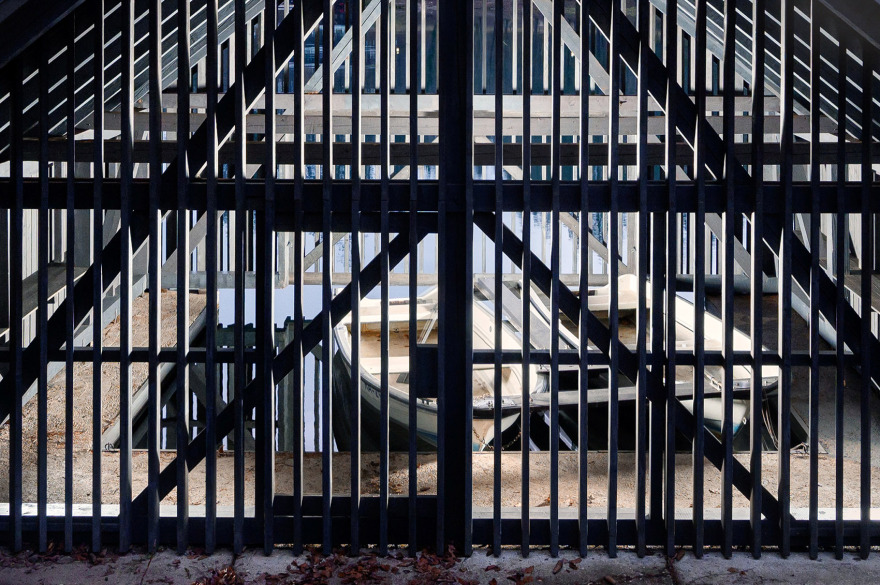
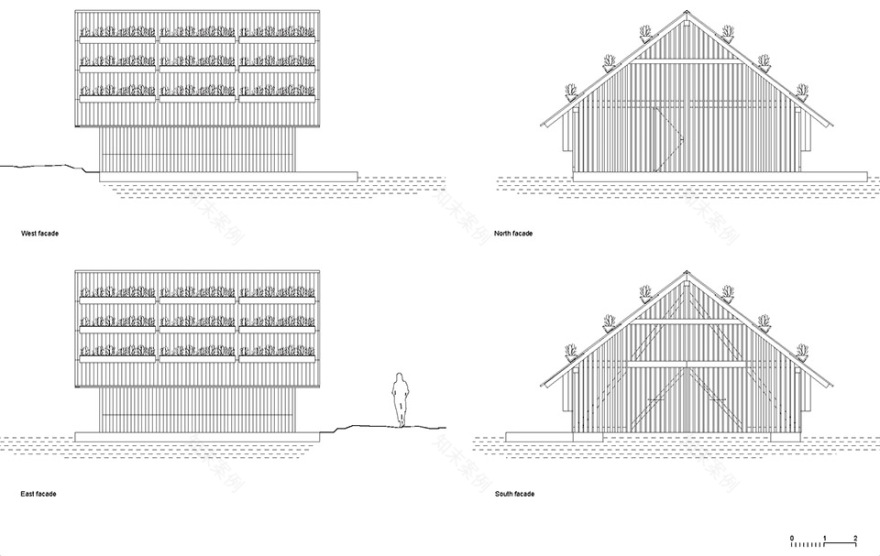
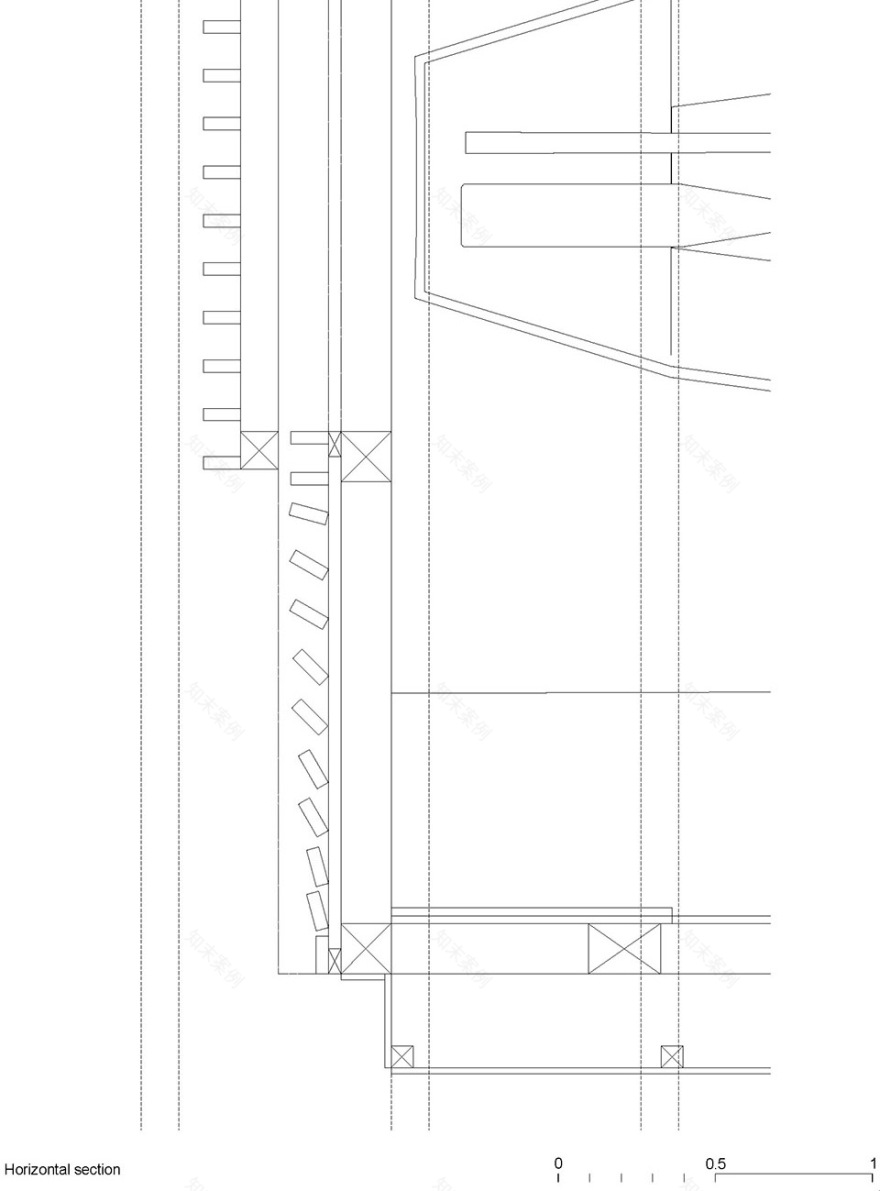
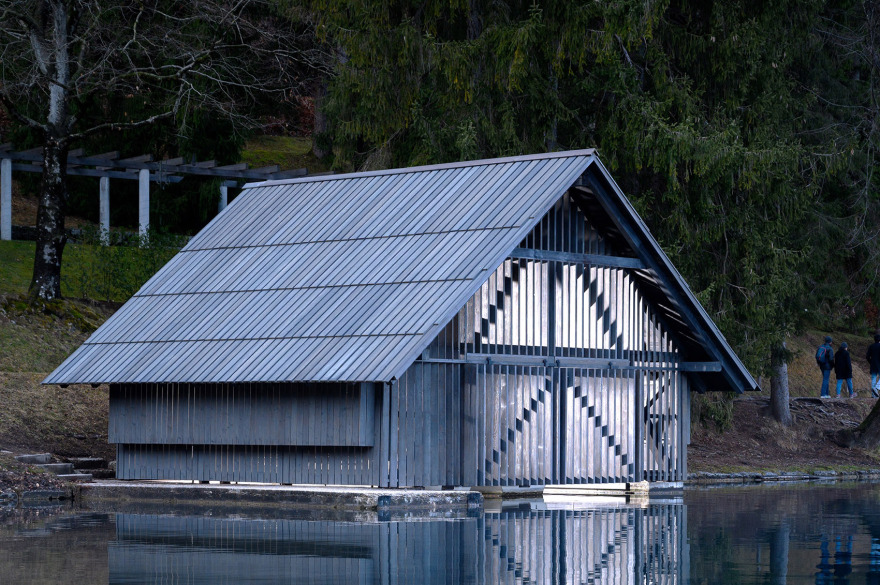
为使建筑呼吸并与湖水及林地保持视觉联系,外立面并未按原样统一复原,而是通过旋转、错位的木板组合营造出有节奏的层次关系,呈现出透明、光影与过滤视线的效果。如此处理,使得外壳由单一的防护层转化为富有生命力的“呼吸性膜”,与光、空气与湿度产生互动,呼应湖畔环境的本质特征。
To allow the building to breathe and visually connect with the water and surrounding forest, the existing façade was not reinstalled uniformly. Instead, the wooden planks were rotated and offset at varying angles, generating a rhythm of slats that offers a degree of transparency, shadow play, and filtered views from within and without. This subtle articulation transforms the building envelope from a purely protective surface into a responsive, living membrane that interacts with light, air, and moisture—elements intrinsic to its lakeside setting.
▼呈现出透明、光影与过滤视线的效果,offers a degree of transparency, shadow play, and filtered views©Miran Kambic
功能作为框架
Function as Framework
船屋虽在外观上保持克制与低调,却承载着关键的科研与运营职能。它是斯洛文尼亚共和国环境局两艘科研船的主要存放点,支撑着长期的湖泊水质监测工作——在Bled湖的生态敏感性与高强度旅游压力下,这一职能尤显重要。
While the boathouse maintains a restrained and discreet external appearance, it plays a vital scientific and operational role. It serves as the main storage facility for two research boats used by the Environmental Agency of the Republic of Slovenia, supporting regular fieldwork dedicated to the monitoring of Lake Bled’s water quality—a critical responsibility in light of the lake’s ecological sensitivity and high tourist pressure.
▼夜景,night view©Miran Kambic

翻新不仅提升了建筑性能与寿命,也改善了科研设备与研究人员的内部环境。原有的水泥砖地面被替换为天然木地板,营造出更温润、柔和、透气的触感。这些适度的材料更新,为空间带来舒适、可持续且契合氛围的环境,延续了木构建造与湖区场所精神。
The refurbishment not only improved the building’s performance and longevity, but also created better interior conditions for the equipment and researchers. The cement tiles that previously lined the floor were removed and replaced with natural wooden planks, offering a softer, warmer, and more breathable surface underfoot. These modest material improvements result in a more comfortable, sustainable, and atmospherically appropriate space that echoes the timber construction and lake environment.
▼延续了木构建造与湖区场所精神,echoes the timber construction and lake environment©Miran Kambic


建筑作为生态基础设施
Architecture as Ecological Infrastructure
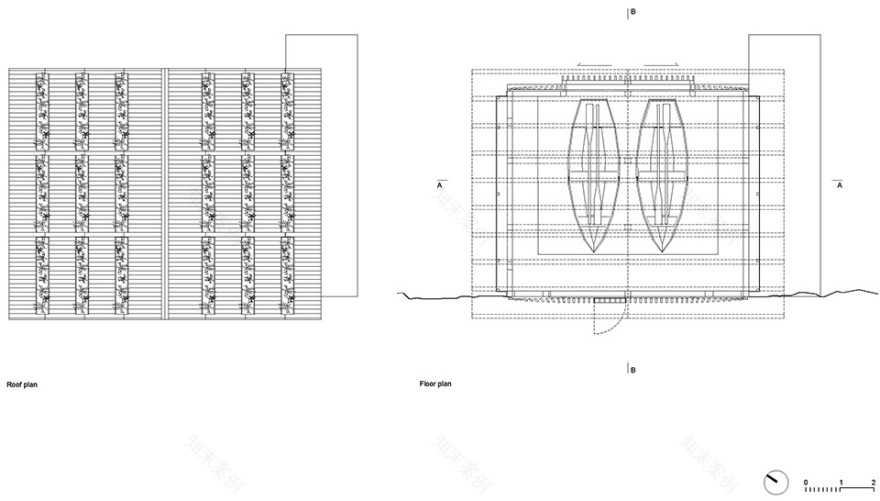
项目的独特之处在于其具备实验性与教育意义的屋顶系统。鉴于建筑的科研属性与战略位置,设计团队在屋顶上设置了一系列定制木质托盘,栽种本地高山花卉。这些托盘并非装饰,而是活态实验的一部分:其内部填充石块、砾石、砂土、泥土与椰纤层,湖水被缓慢引入其中,经过层层过滤后灌溉植株。水在托盘间循环,模拟自然过滤过程,在净化的同时滋养植被。所有植物均为本土物种,不仅突显了区域生物多样性,也展示了简单自然系统的生态效益。
▼原场地结构,the original structure©OFIS Architects


What distinguishes this project is its experimental and didactic rooftop system. Recognising the building’s strategic position and scientific purpose, the architects proposed the installation of a series of custom-made wooden trays atop the pitched roof, each containing locally sourced alpine flower species. These are not ornamental in nature; they are part of a living experiment in natural filtration and ecological education. Each tray is filled with layered filtering substrates—stone, gravel, sand, soil, and coir—through which lake water is slowly pumped and filtered before irrigating the plants. The water cycles through the trays, mimicking natural filtration systems, and returns cleaner, while supporting the growth of vegetation. The species planted are all native to the alpine region, highlighting the biodiversity of the area and demonstrating how simple natural systems can have measurable ecological effects.
▼修复后的船坞夜景,the boathouse after renovation at night©Miran Kambic
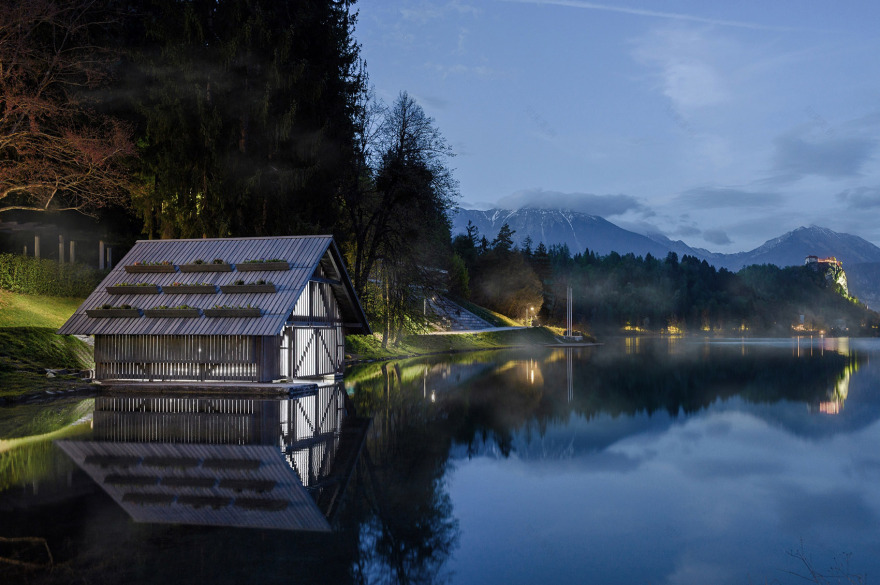
这一可见且运行的绿色基础设施使船屋成为具备教育意义的载体:它既支持科学研究,又让公众直观参与到环境保护与水质净化的过程之中。屋顶同时成为景观与实验室,建筑与生态功能由此融为一体。
This visible and functioning green infrastructure invites reflection. It transforms the boathouse into an educational instrument, one that not only supports scientific research but also engages visitors in the processes of environmental care and water purification. The roof becomes both a landscape and a laboratory, merging built form with ecosystem function.
▼建筑与生态功能由此融为一体,merging built form with ecosystem function©Miran Kambic
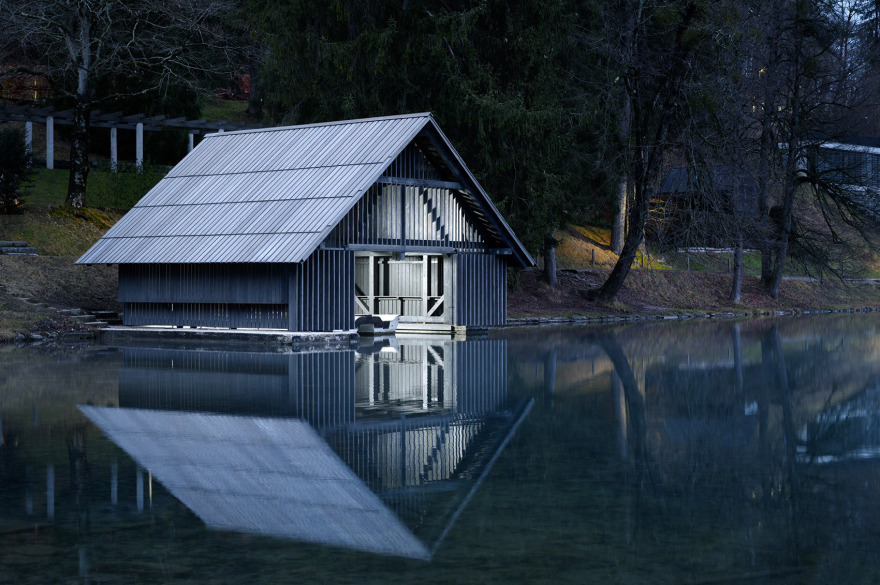
▼建筑与生态功能由此融为一体,merging built form with ecosystem function©Miran Kambic

安静的姿态,持久的力量
A Quiet Gesture with Lasting Impact
复兴后的扎卡船屋并不以喧哗或标志性的形式存在,而是以谦逊、克制与深度嵌入环境的姿态呈现。它的力量来源于材料的真实、生态的智慧与场所的连续性。建筑并未试图与布莱德湖的宏伟景致相抗衡,而是通过细腻的更新放大了湖泊的自然、文化与科研价值。这一实践提供了低干预却高价值的建筑范例:在延续记忆与延长寿命的同时,通过生态与公共参与赋予新的意义。它不再仅是存放船只的场所,更是承载水体、知识与景观守护的公共平台。
The revitalised Boathouse Zaka is not loud, iconic, or formally expressive. It is intentionally humble, respectful, and embedded within its environment. Its strength lies in its material honesty, ecological intelligence, and continuity with place. It does not attempt to compete with the grandeur of Lake Bled but instead amplifies its natural, cultural, and scientific value through subtle intervention. In doing so, the project offers a model for low-impact, high-value architecture: one that preserves memory, extends the life of existing structures, and adds new layers of meaning through ecology and public engagement. It becomes not just a shelter for boats, but a platform for stewardship—of water, of knowledge, and of the landscape itself.
▼场地平面,site plan©OFIS Architects

▼平面图,plan©OFIS Architects
▼立面图,elevation©OFIS Architects
▼剖面图,section©OFIS Architects

▼细部,detail ©OFIS Architects

location: Bled, Slovenia
status:project 2024 completion 2025
program:Boathouse
project team: Rok Oman, Špela Videčnik, Janez Martinčič, Rok Dolinšek, Amadej Mravlak, Vladyslav Bondarenko, Adrien Riviere
Site area: 47 m2
build area: 25.5 m2
technical team: Mizarstvo Ovsenik d.o.o.






南京喵熊网络科技有限公司 苏ICP备18050492号-4知末 © 2018—2020 . All photos and trademark graphics are copyrighted by their owners.增值电信业务经营许可证(ICP)苏B2-20201444 苏公网安备 32011302321234号
苏公网安备 32011302321234号客服
消息
收藏
下载
最近