

创作上传
VIP
收藏下载
登录 | 注册有礼
查看完整案例

收藏

下载

分享
在Cruda住宅项目中,空间分为两个明确的层次:一个是经过更新的基座(地面与墙面均重新铺装),另一个是保留原貌的上部结构,粗粝而真实,未被触碰。新与旧、技术与手工、修复与保留,在一个连续空间中交织共生。这种对过去与当下的综合诠释,使居住者得以体验时间的多重层次。
In Casa Cruda, two levels are clearly distinguished: a renewed base (with floors and walls clad) and an upper part that remains bare, authentic, and untouched. In this way, a single continuous space brings together the new and the existing, the technical and the handcrafted, the repaired and the preserved; a synthesis between past and present that allows time to be inhabited in all its layers.
▼项目概览,overall of the project © Hiperfocal

Cruda住宅通过最小而精准的干预修复了一座上世纪60年代的邻里住宅。项目聚焦于对传统且匿名的建筑类型的重新思考,探讨它们与当代建筑之间的关系。与其说是改造,不如说是提炼与激活既有空间,将建筑记忆转化为设计的驱动力。Casa Cruda并非传统意义上的翻新,而是在修复过程中保留原有痕迹与创伤,使其成为住宅物质叙事的一部分。通过一系列克制的动作,空间质量得以提升:层高增加,自然光加强,一个开放而灵活的整体空间由此生成。项目明确区分了两种构造层级:下部是经过更新的基座(地面与墙面重新处理),上部则保持原貌、粗粝真实。在这个连续空间中,新与旧、技术与手工、修复与保存交汇共存,构建出一种多时态共居的场所体验。
▼分析图,analysis diagram © meii estudio

Casa Cruda repairs a 1960s neighborhood house through a minimal and precise intervention. The project reflects on the legacy of traditional and anonymous typologies, and their connection to contemporary architecture. Rather than transforming, it refines and reactivates what already exists, turning built memory into the driving force of the project. Far from a conventional renovation, Casa Cruda preserves both previous traces and the scars that emerged during the process, embracing them as part of the material narrative of the house. Through a series of measured gestures, the spatial quality is enhanced: ceiling height and volume are increased, natural light is amplified, and a single open, flexible space is created. Casa Cruda clearly distinguishes between two levels: a renewed base — floors and rendered surfaces— and an upper part that remains raw, authentic, untouched. In this continuous space, the new and the existing, the technical and the handcrafted, the repaired and the preserved coexist; a synthesis between past and present that allows time to be inhabited in all its layers.
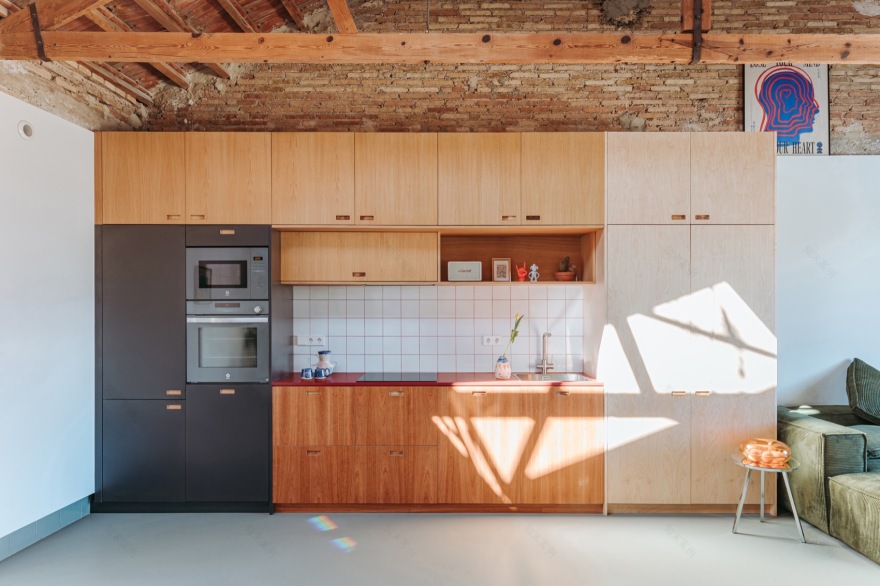
▼厨房,kitchen © Hiperfocal
策略解析
STRATEGIES
原生空间|Raw space
改造过程中,住宅被彻底剥离——去除隔墙、吊顶及多年来附加的包层,使空间结构得以简化,并展现出此前被遮蔽的体量。这一“清空”的动作揭示了建筑的原初构成:砖砌的分户墙、承重木桁架及坡屋顶下的木梁。不再隐藏,这些结构被有意识地保留,作为新空间中的主动构件,赋予其肌理感、特质及材料记忆。
During the intervention, the house was stripped bare, removing partitions, suspended ceilings, and cladding layers that had been added over time. This act of clearing simplified the layout and revealed the full volume previously hidden behind these elements. This process also unveiled the essence of the original construction: the fired brick of the party wall and the wooden trusses and beams supporting the pitched tiled roof. Rather than concealing them, these elements are left exposed as active components of the project, adding texture, character, and a material memory to the new space.
▼光影,light and shadow © Hiperfocal
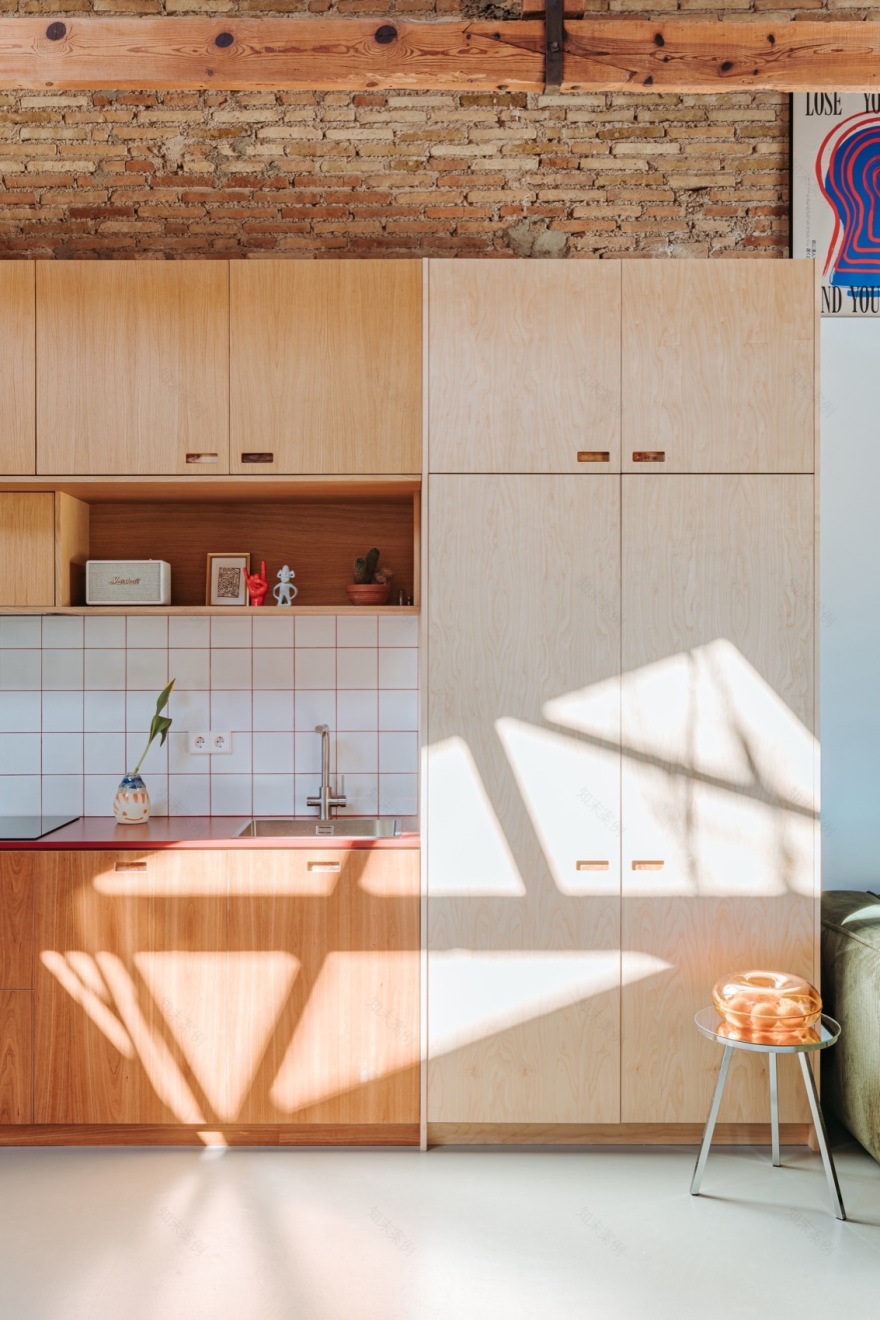
▼细部,details © Hiperfocal

▼原始结构被保留并展示,the original structure was retained and displayed © Hiperfocal

天光的连接|Celestial Connection
屋顶在整体上被保留,唯有一处关键干预:开设一扇可开启的大型天窗。这一“空洞”不仅通向新建的屋顶露台,更引入了与天空的直接联系——成为贯通空间的垂直装置,彻底改变了室内的空间感知。自然光从上方涌入,穿越整个体量,在一天与四季流转中重塑氛围。光不仅是照明,更成为结构的一部分,揭示肌理、激活表面,在日常生活与自然节律之间建立流动的关系。
The roof was preserved almost entirely, except for one key intervention: the opening of a large operable skylight. This void not only provides access to the new rooftop terrace, but also introduces a direct connection with the sky—acting as a vertical device that articulates the home and transforms the spatial perception of the interior. Natural light floods the space from above, travelling across the volume and reshaping the atmosphere throughout the day and across seasons. More than simply illuminating, the light structures the space, reveals textures, and activates surfaces—establishing a shifting relationship between everyday life and the natural rhythms of the environment.
▼可开启的大型天窗,the opening of a large operable skylight © Hiperfocal

▼天光,skylight © Hiperfocal

▼天窗近景,closer view of the skylight © Hiperfocal
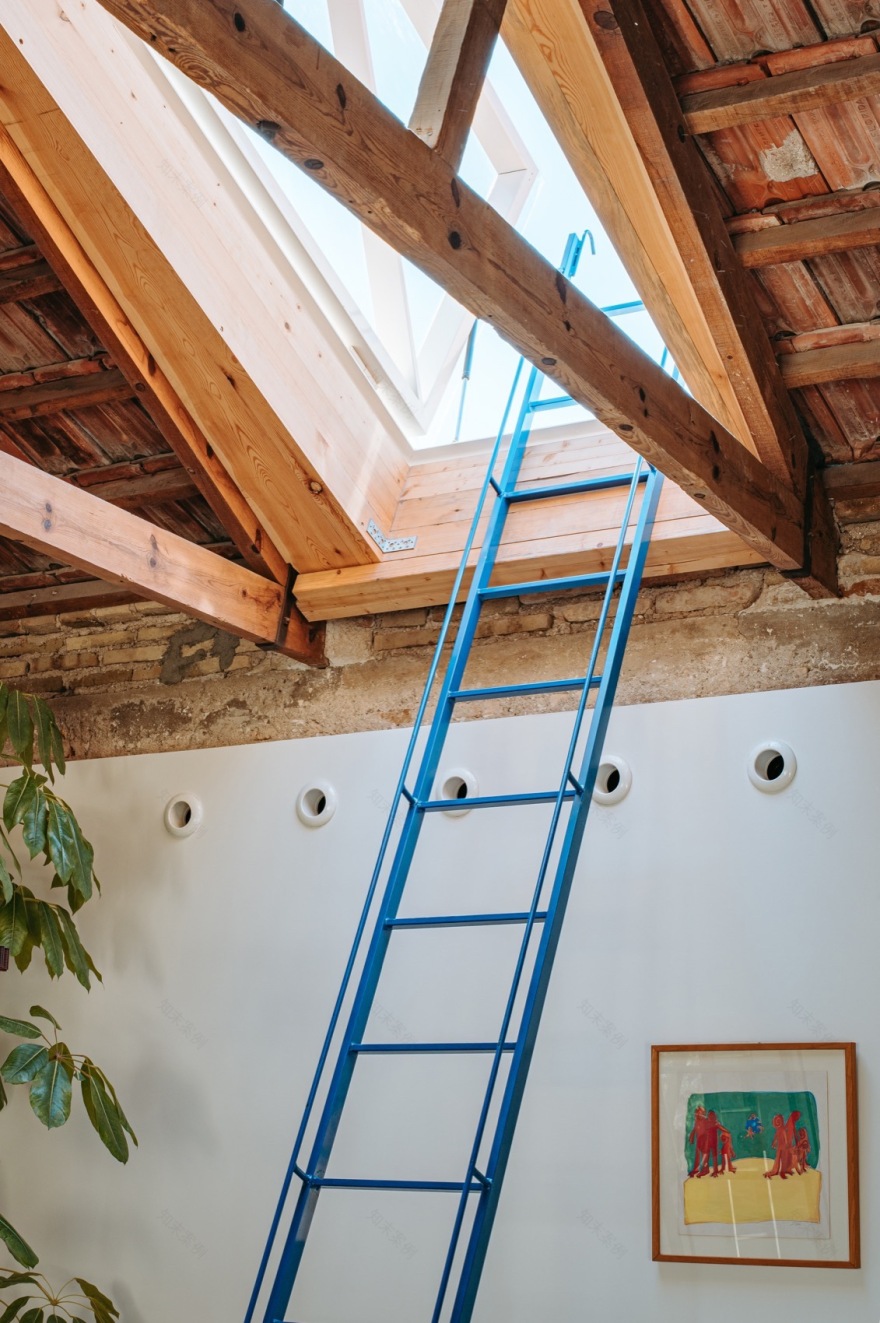
▼金属爬梯与家具,metal ladders and furniture © Hiperfocal

▼细部,details © Hiperfocal

▼楼梯,staircase © Hiperfocal

300立方米的起居空间|A 300 m3 Living Room
项目的核心是一处约300立方米的开阔空间,承载着日常生活的全部内容。其组织清晰分为两层:下部为更新后的生活基座,上部则保留了其原始状态,作为时间与构造的见证。一层使用鼠尾草绿的环氧树脂地坪,统一了水平面,并延伸出20厘米高的陶砖踢脚线。从此向上,一圈“悬浮”的技术包层包裹着空间至2.8米高,容纳所有设施设备,同时保持了视觉的整洁与连续性。部分位置设置开口,以连接更为私密的休憩区。最终,空间通过植物、灯光、家具及本地艺术家的作品被激活,使每一处角落都具备独特的个性与尺度感。
At the heart of the project lies a large open space of approximately 300 cubic meters that concentrates daily life into a single volume. It is organized into two clearly distinct layers: the lower level, renovated and updated; and the upper level, preserved in its original state as a witness to time and construction. A continuous sage green resin floor unifies the horizontal plane and transitions into a 20 cm-high ceramic baseboard. From that point upward, a floating technical cladding runs along the perimeter up to 2.80 meters, containing all necessary installations while maintaining the visual clarity of the space. This enclosure is only interrupted at specific points to allow access to the more intimate resting area. The volume is completed with vegetation, lighting, furniture, and artworks by local artists, which populate the interior and activate its scale—giving each corner character and individuality.
▼客厅,living room © Hiperfocal

▼沙发,sofa © Hiperfocal
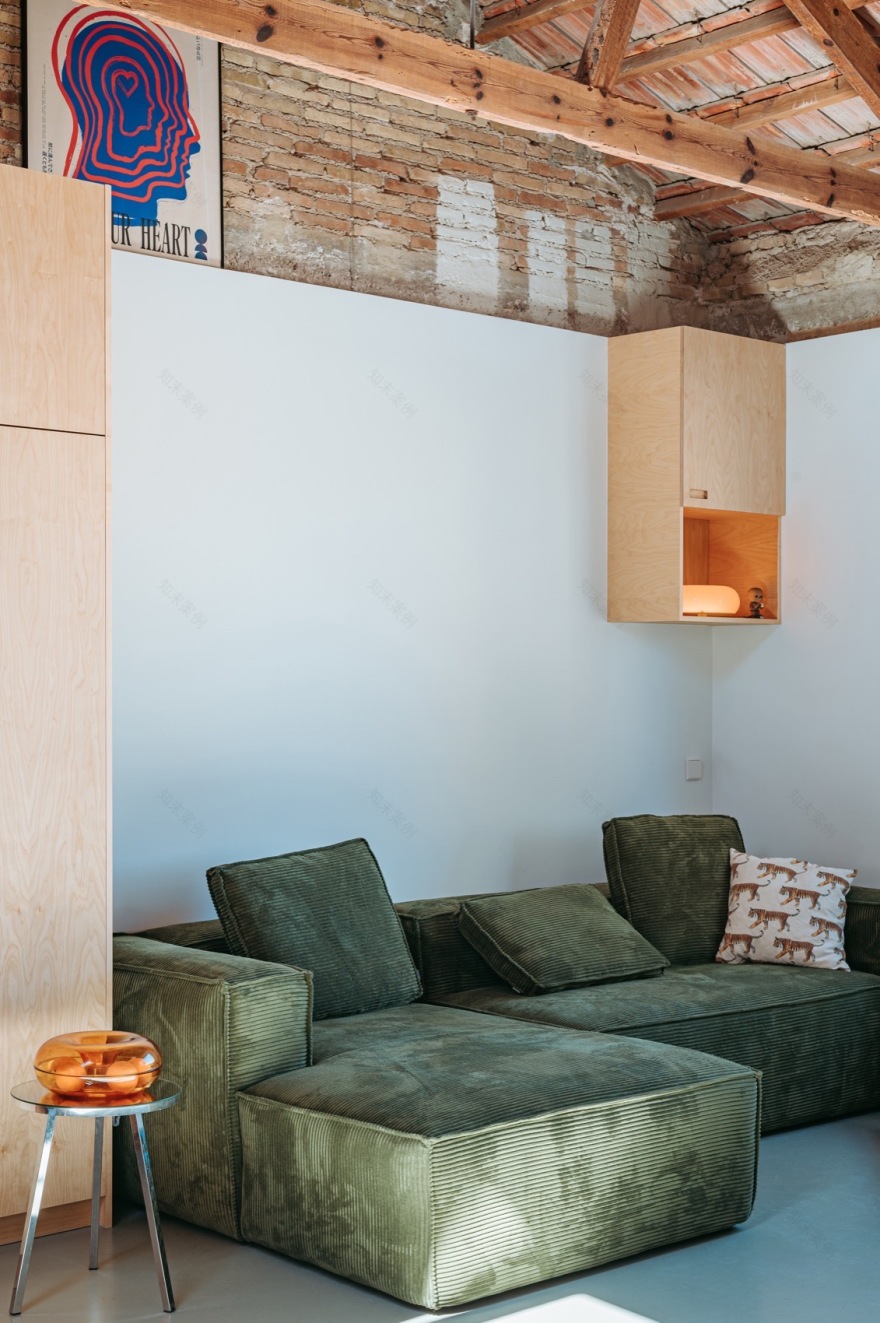
▼走廊,hallway © Hiperfocal

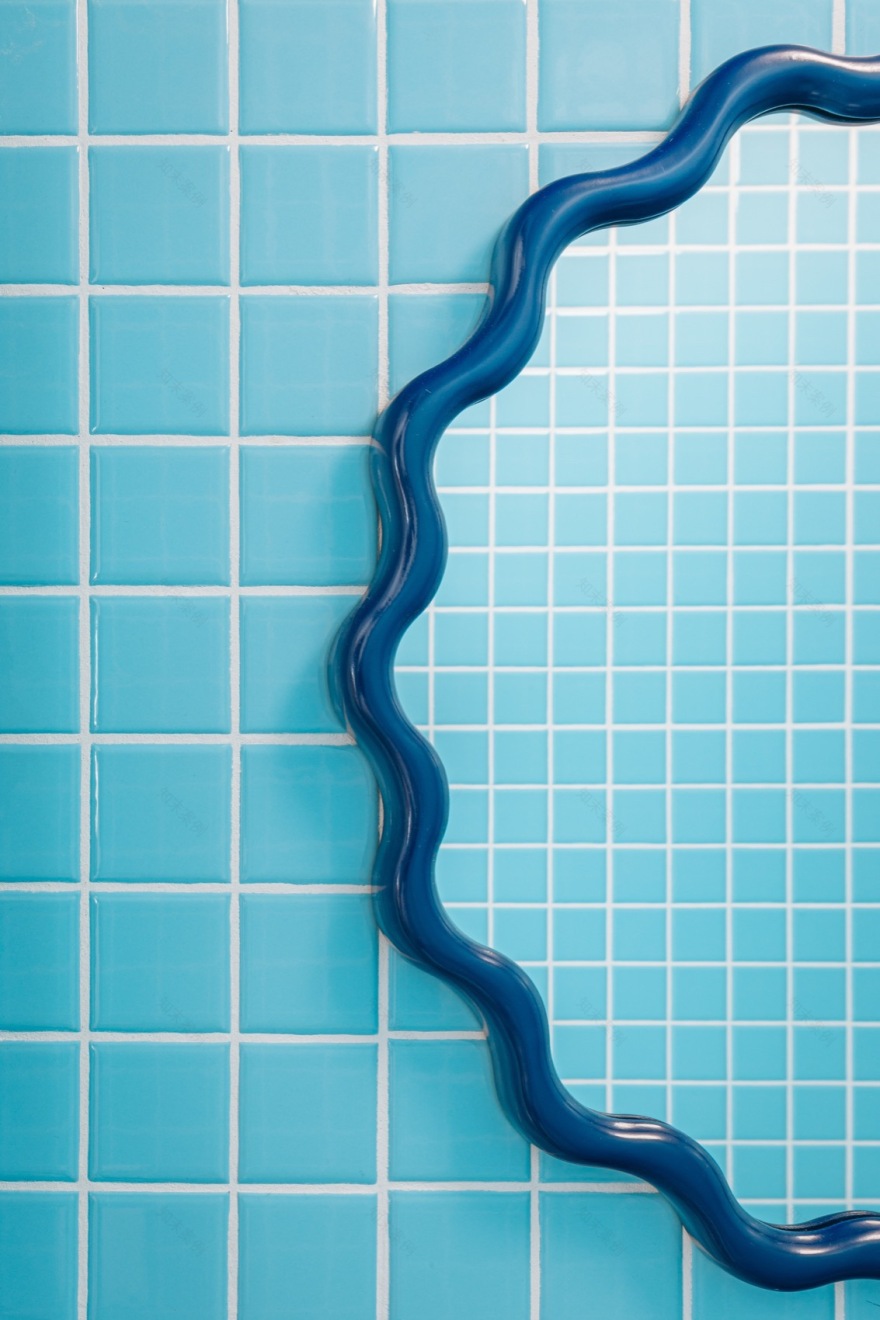
▼浴室细部,details of the bathroom © Hiperfocal

▼剖面图与平面图,section and plan © meii estudio

Start of construction: September 2024
Completion year: January 2025
Built area: 200 m2
Ubicación: Barrio de la Concepción, Cartagena
Client: Jose María Mateo
Team: Jose María Mateo, Elvira Carrión, Javier Albacete, Andrea Sanabria, Juan Antonio Abril
Photography: Hiperfocal ()
Builder: Traza Construye ()
Art and furniture: Casil, SomosFino, Catalina Catarsis, Shiva Gupta, Flos, Warren & Laetitia, Kave, Faro Iluminación
南京喵熊网络科技有限公司 苏ICP备18050492号-4知末 © 2018—2020 . All photos and trademark graphics are copyrighted by their owners.增值电信业务经营许可证(ICP)苏B2-20201444 苏公网安备 32011302321234号
苏公网安备 32011302321234号客服
消息
收藏
下载
最近