

创作上传
VIP
收藏下载
登录 | 注册有礼
查看完整案例

收藏

下载

分享
Cloÿs街5号位于巴黎第18区市政厅附近、一个正在快速复兴的街区内,是一座建于1930年代的前汽车大楼,由建筑师Prudent设计。1982年,该建筑经历了首次重大改造,转变为办公楼。如今,在Weinberg Capital Partners的推动下,Franklin Azzi建筑事务所提出了在保留原始结构的基础上进行再激活的方案。
Located near the town hall of the 18th arrondissement, in a rapidly revitalizing neighborhood, 5 rue des Cloÿs is a former automobile building constructed in the 1930s by architect prudent. In 1982, it underwent a major transformation, becoming an office Building. under the initiative of Weinberg capital partners, Franklin Azzi proposes an intervention that reveals the original structure.
▼项目外观概览,overall view of the project © Schnepp Renou
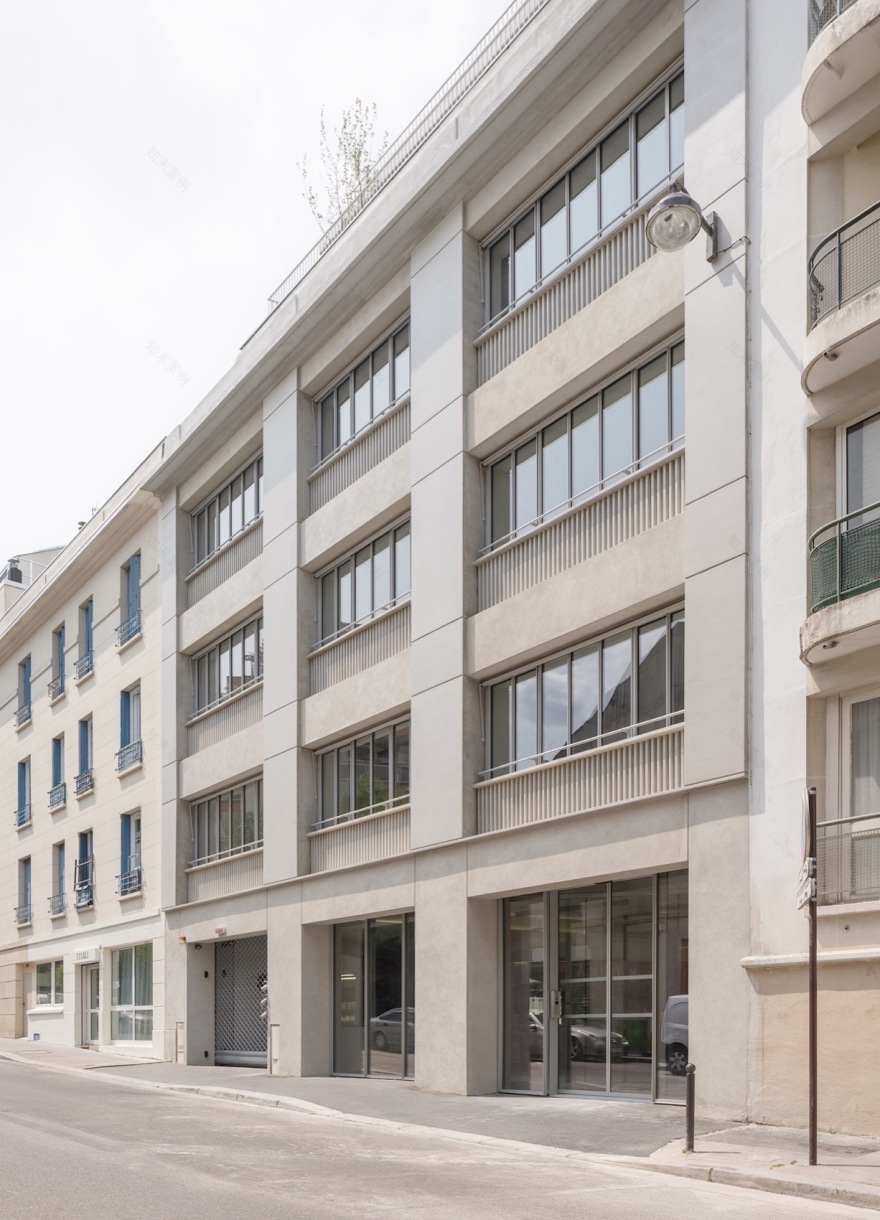
汽车建筑的建筑遗产:结构理性与功能优势
The Architectural Heritage Of Former Automobile Buildings:
Constructive Rationality And Functional Qualities
最初的改造显著改变了建筑原本的构造逻辑。然而,汽车楼类型本身具有诸多优势,尤其是其结构网格、空间内各部分之间的非等级性以及高效、重复的建造系统。这种理性且极具适应力的“通用框架”具备极大的中性潜能,能优化纳入多样化的新用途。
The building’s first transformation significantly altered its original construction principles. However, parking building typologies offer numerous advantages, particularly their structural grid, the absence of hierarchy between parts of the building, and an efficient, repetitive construction system. Rational and radical, this “capable framework” of great neutrality allows for the optimized integration of new programs.
▼街景,street view © Schnepp Renou

改造而非拆除
Transformation Rather Than Demolition
由Franklin Azzi事务所主导的本次改造,是对1930年代原始停车建筑图纸的精准再诠释,旨在推动其进入一个更长远、符合巴黎新环境目标的可持续发展周期。早在19世纪末,巴黎即是汽车革命的发源地,也衍生出一批为城市停车而设的建筑原型。但随着私人汽车在巴黎的日益减少,这些建筑逐渐空置,“大量停车楼的转型”已成为巴黎城市更新的标志之一——正如 2018 年巴黎城市建筑展览馆(Pavillon de l’Arsenal)所强调的:“汽车楼的转变象征着巴黎城市面貌的更新。”相较于现代主义的“清空重建”思维,当代城市转而从已有结构中重建自身。
The rehabilitation project led by the Franklin Azzi agency is therefore a meticulous reinterpretation of the original 1930s parking garage drawings, aiming to guide this second architectural transformation toward a long-term and sustainable vision aligned with the new environmental goals of the city of Paris. At the end of the 19th century, the Paris region became the cradle of the automobile revolution. Along with it came new architectural archetypes designed to accommodate car parking in the city. However, today, fewer and fewer Parisians own cars, leading to the gradual vacancy of these parking structures. A “transformation of numerous parking buildings” is thus underway, “becoming a symbol of the city of Paris’s renewal,” as highlighted by the 2018 pavillon de l’arsenal exhibition immeubles pour automobiles. In contrast to the modernist tabula rasa approach, the contemporary city is now rebuilding itself from within, based on its existing structures.
▼分析图,analysis diagrams © Franklin Azzi Architecture

▼分析图,analysis diagrams © Franklin Azzi Architecture

Cloÿs 项目:一次建筑的“再生激活”
The Cloÿs Project: An Architectural Revitalization
本项目的重构策略严格遵循巴黎《城市局部规划法》(Plan Local d’Urbanisme)所规定的框架。它展现了老旧停车结构“再利用”的巨大潜力——尤其在办公用途上的可行性,并在碳排与资源效率方面优于拆除重建方案。位于Cloÿs街5号与Duhesme街 23 号交界的这栋建筑,是一个统一的建筑实体,拥有两个街道门牌号码。它包括四层地上建筑与三层地下空间,拥有大开间与充裕的层高,完全符合现代办公标准。尽管1982年的改造保留了主要的结构网格,但对中庭、立面以及内部流线做出了显著更动,导致建筑在空间逻辑、技术性能与法规要求上均出现“过时”问题。在完成必要的法规更新之外,该项目围绕五项主要设计干预展开,结合了技术、环境与功能三方面的目标:
The restructuring project led by the agency falls within the regulatory framework defined by the City of Paris’s Local Urban Plan (Plan Local d’Urbanisme). The project demonstrates the potential for repurposing the superstructures of former parking facilities—particularly for office use—and highlights their exemplary performance in terms of carbon footprint and resource efficiency compared to a demolition-reconstruction scenario. The building on rue des Cloÿs is a single architectural entity with the unique feature of having two street addresses: 5 rue des Cloÿs and 23 rue Duhesme. It consists of four above-ground levels and three basement levels, offering large openings and generous floor-to-ceiling heights that meet current standards. While the 1982 conversion had the merit of preserving the building’s primary structural grid, it significantly altered the courtyard, façades, and interior circulation. These changes contributed to a form of architectural, technical, and regulatory obsolescence. Beyond the necessary regulatory upgrades, the project is structured around five major interventions that combine technical, environmental, and programmatic objectives:
▼分析图,analysis diagrams © Franklin Azzi Architecture

1. 打造开放且通透的建筑基座
Creation of an open and generous base
通过对Cloÿs街一侧地面层的巧妙找平,以及一座三段式欢迎楼梯的设置,新的设计在建筑的三个基座层之间建立起了物理与视觉的贯通关系。如今,入口大厅位于街道层,可全面联通至 -1 层与 +1 层。对地下空间的重新利用也拓展了未来用户的功能想象。-1 层被打造为全模组化布局,可设置多个中到大型会议室,类似于商务中心的配置。-2 层则延续了商务中心的功能:沿 Cloÿs 街设置一间双层高的大型空间,并通过新增的玻璃砖采光井引入自然光。-3 层保留原有功能,继续作为停车库使用,并通过 Duhesme 街一侧的汽车电梯直接出入。
Through a clever leveling of the ground floor on rue des Cloÿs and the installation of a large, three-flight welcoming staircase, the new design establishes a physical and visual connection across the three base levels. Now accessible at street level, the entrance hall opens fully onto levels -1 and +1. Repurposing the basement levels has enriched the potential programming for future occupants. Level -1 has been designed to be fully modular, allowing for the creation of several medium- and large-sized meeting rooms in the style of a business center. Level -2 houses the continuation of the business center program: a large, double-height room along rue des Cloÿs, naturally lit through newly created glass block skylights. Level -3 retains its original function as a parking garage, directly accessible via a car elevator located on rue Duhesme.
▼底层空间,ground floor space © Schnepp Renou

▼下层底层空间,lower ground floor space © Schnepp Renou

2. 中庭
The Courtyard
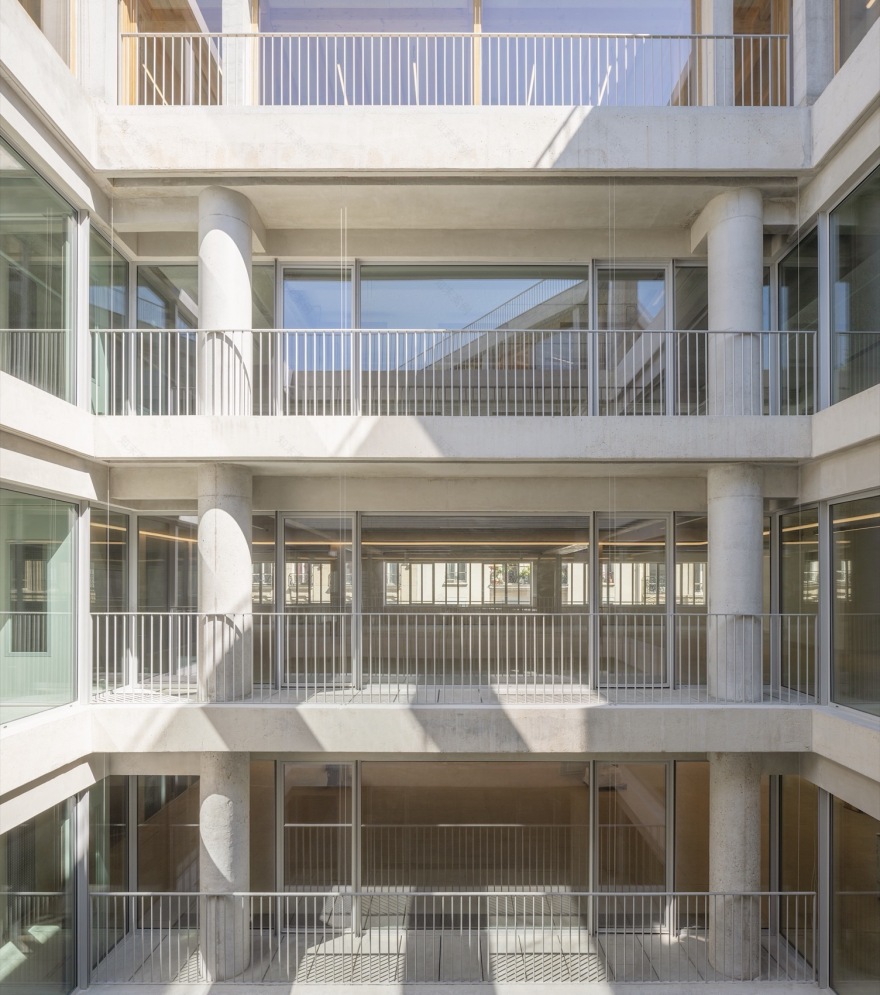
作为建筑的核心空间,中庭被全面重新设计。其原本的矩形几何被恢复,同时加深了整体进深,使自然光渗透能力提高了 10%,尤其改善了 -1 层的光照条件。主办公楼层还新增了可通行的宽阔连贯式室外阳台。
Located at the heart of the building, the courtyard has been completely redesigned. Its original rectangular geometry has been restored, and its depth increased to enhance natural light penetration by 10%, particularly at level -1. Large, continuous outdoor balconies are now accessible from the main office floors.
▼中庭,the courtyard © Schnepp Renou
3. 上层空间
The Upper Floors
无论是大堂、办公室,还是会议室,所有楼层的室内设计都保持一致性。为最大化层高并尽可能隐藏机械系统,设计引入了架空地板系统以容纳空调、供热和通风设备。天花板则采用原始混凝土板裸露形式,仅点缀灯具与声学构件,展现原建筑的功能主义美学。
Across all programs—lobbies, offices, meeting rooms—the interior approach remains consistent. To maximize ceiling height and minimize visible mechanical systems, a raised flooring system (for air treatment, heating, and ventilation) has been installed. The concrete ceiling slabs are left exposed, punctuated only by lighting and acoustic elements, revealing the functionalist aesthetic of the original building.
▼上层空间,upper floors © Schnepp Renou

▼改造后的空间,space after renovation © Schnepp Renou

4. 屋顶露台
The Rooftop Terrace
屋顶部分新增一层木结构楼层(+5 层),通过退台设计形成种植露台,提供俯瞰巴黎的新视角。这些可渗透的绿色表面有助于降低城市热岛效应,也提升了未来使用者的舒适度。
On the roof, a timber-framed extension adds an additional floor (level +5) to the building. Setbacks create generous planted terraces, offering new perspectives over the Parisian landscape. These new permeable surfaces help cool the urban environment and enhance comfort for future users.
▼露台,terrace © Schnepp Renou

▼露台,terrace © Schnepp Renou

5. 建筑立面
The Façades
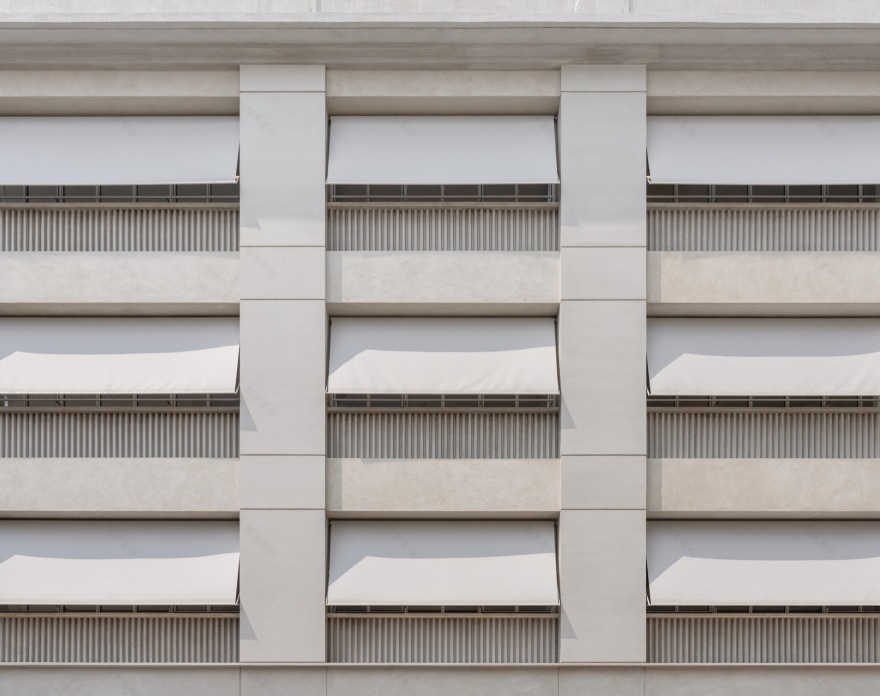
最后,立面被全面重设计,构建起一个高质量的建筑围护结构。新的设计重释了原有的结构网格,通过实心且富有肌理的矿物基带,在一天内营造出不断变化的光影效果。现有混凝土结构与新增构件之间形成有意为之的鲜明对比,构建出一种独特而自觉的美学混合体。
Finally, the façades have been entirely redesigned to provide a high-quality building envelope. The new design reinterprets the original structural grid. Solid, textured mineral spandrels create a dynamic play of shadow and light throughout the day. The deliberate contrast between the existing concrete and the newly added elements establishes a distinctive and intentional aesthetic hybridization.
▼立面,facade © Schnepp Renou
南京喵熊网络科技有限公司 苏ICP备18050492号-4知末 © 2018—2020 . All photos and trademark graphics are copyrighted by their owners.增值电信业务经营许可证(ICP)苏B2-20201444 苏公网安备 32011302321234号
苏公网安备 32011302321234号客服
消息
收藏
下载
最近