

创作上传
VIP
收藏下载
登录 | 注册有礼
查看完整案例

收藏

下载

分享
一、山水文化属性
Cultural Attributes of Mountains and Rivers
在巴山深处的镇巴县,原来名为“定远”,后来改名“镇巴”,有镇守巴山的寓意。起先,是由湖北过三峡经重庆到达,后来,多从西安越秦岭南下巴山到达,都绕不过的翻山越岭。高速自西乡开始就沿“泾阳河”一路扎进大山深处,两边山势起伏错落,宛若水墨山水画卷。
Deep in the Bashan Mountains lies Zhenba County, originally named “Dingyuan” (meaning “stabilizing the far frontier”) and later renamed “Zhenba” to signify “guarding the Bashan Mountains”. In early days, people reached here from Hubei via Chongqing; later, most traveled south from Xi’an, crossing the Qinling to the Bashan Mountains—all journeys involving arduous mountain crossings. Starting from Xixiang County, the expressway runs along the Jingyang River into the mountains, with rolling peaks on both sides resembling an ink wash landscape scroll.
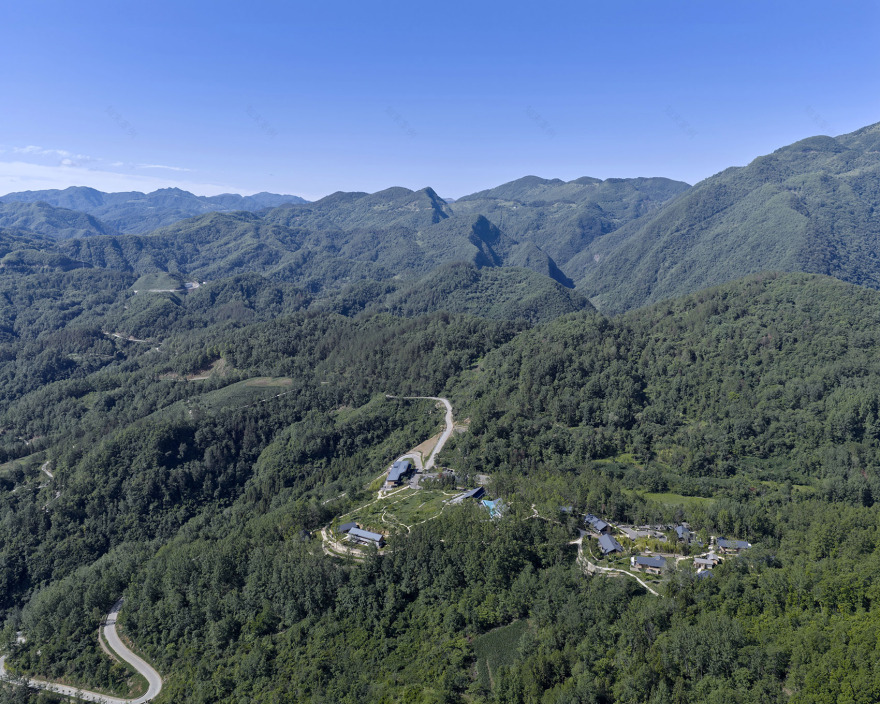
▼项目鸟瞰,Aerial view of the project©章鱼见筑
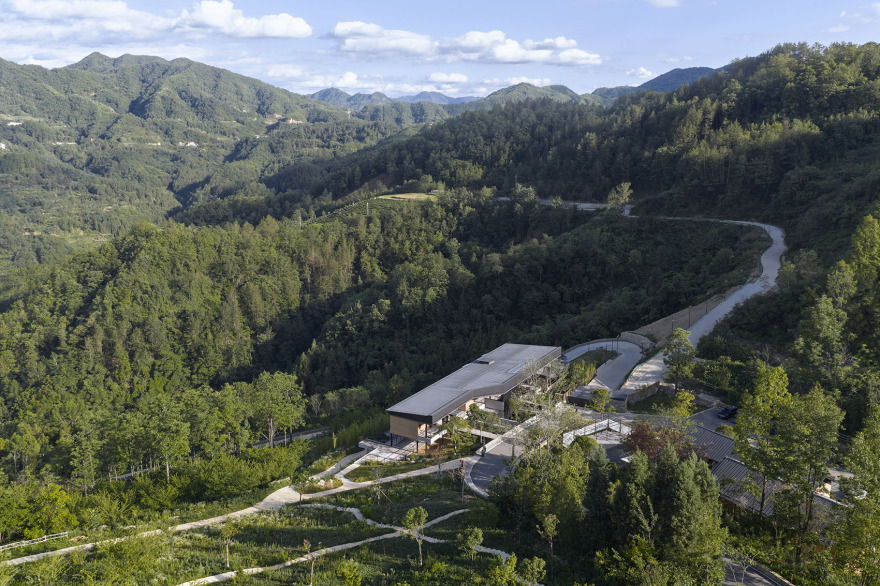

▼项目鸟瞰,Aerial view of the project©章鱼见筑


位列中国山水画十大名作之列的《明皇幸蜀图》,据传由李昭道(唐)所作,现藏于台湾故宫博物院。这幅画作描绘了皇帝因安史之乱逃亡蜀地避难的历史事件。画面以山水为主,人物为辅,山水的比重在构图上明显增强,改变了以往山水画中人物占主导地位的构图方式,对于后世山水画成为独立门类起到了重要的推动作用。画面全用青绿,浓郁艳丽的青绿色达到了绚丽典雅的效果,塑造了 “青绿山水” 的经典山水画范式。
Emperor Xuanzong’s Flight to Shu, one of China’s top ten landscape painting masterpieces, is attributed to Tang Dynasty artist Li Zhaodao and now housed in the National Palace Museum in Taiwan, China. It depicts Emperor Xuanzong fleeing to Shu (present-day Sichuan and parts of Chongqing) during the Anshi Rebellion. Centered on mountains and rivers with figures as supplements, the painting increased the proportion of landscapes—breaking the previous figure-dominated composition—and played a key role in establishing landscape painting as an independent genre. Using rich, bright green and blue hues, it created a gorgeous, elegant style and set a classic “green landscape painting” model.
▼《明皇幸蜀图》,Emperor Xuanzong’s Flight to Shu© 网络

为什么想到这幅画?应该是秦岭和巴山的这种穿越感。在唐代,只有皇帝才有长途旅行(或者避难)的各种体验。而当下,不禁感慨,跨越千里的旅行成为普通人的日常。画中的皇帝是为了避难,狼狈地向巴蜀逃离。置身现代社会的我们,却是抛掉生活的压力,向大自然的主动奔赴。“逃离”的情景截然不同,但确也有相似的山水穿越体验。
We thought of this painting because traveling between the Qinling and Bashan evokes a similar sense of traversal. In the Tang Dynasty, only emperors could undertake long journeys (or refuge); today, thousands of miles of travel are routine for ordinary people. The emperor in the painting fled Bashu in embarrassment, while modern people actively seek nature to escape life’s pressure. Though the “escape” scenarios differ, both share the experience of crossing mountains and rivers.
▼林中的泳池咖啡,the pool and cafe in the woods©章鱼见筑

▼泳池鸟瞰,Aerial view of the pool©章鱼见筑


进入镇巴县城,沿河生长的县城密度相当高,沿路上山,周围的大山向我们压过来,是“高远”的视觉感受。继而,回头弯密集的一段山路,远山近景相互错动,产生“深远”的意境,最终到达项目地,一组“平远”的山水画面进入视野。一个具备中国山水画审美的项目选址,逐渐清晰起来。
Entering Zhenba, the county town stretches along the river with high building density. As we drive uphill, surrounding mountains feel “lofty” as they close in. Along the hairpin-bend mountain road, distant and nearby peaks alternate, creating a sense of “depth”. Finally, at the project site, a “spacious and flat” landscape unfolds—revealing the site’s alignment with Chinese landscape painting aesthetics.
▼总体鸟瞰,aerial view of the site©为至工作室
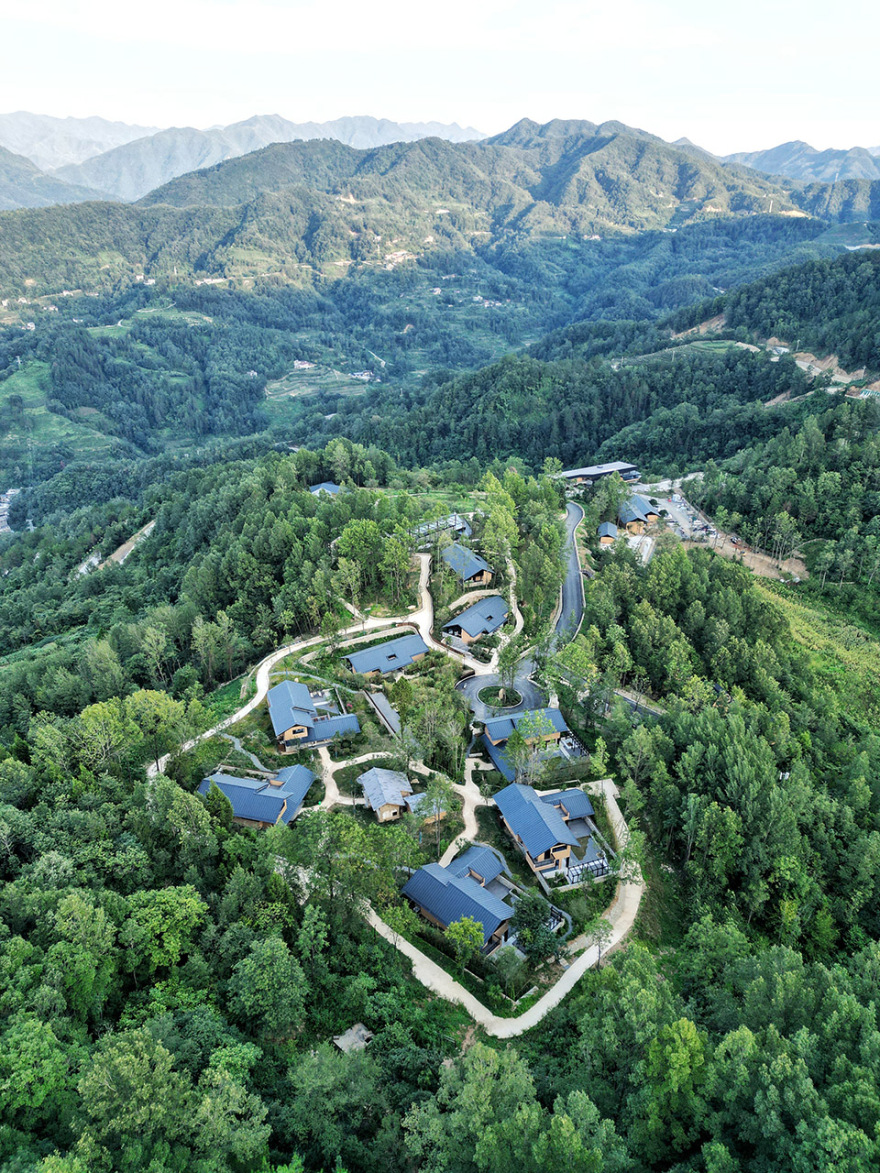
▼总体鸟瞰,aerial view of the site©章鱼见筑
二、应对山地机理
Adapting to Mountain Terrain
项目选址在南向的一大片山坡地上,越往南越陡峭,视线越开阔,往北则逐渐平缓,有一组老宅院,现在已经荒废,老乡在屋内堆了一些农具,做仓库用。整个地区的山地有些喀斯特地貌,有地下暗河和溶洞,虽然位于降水量充裕的陕南山区地带,但却存在缺水的问题。当然,这些溶洞地貌对建筑选址也产生了一定的负面影响。
The project sits on a large south-facing hillside: the further south, the steeper the slope and wider the view; the north slopes gently, where abandoned old courtyards are used by villagers to store farm tools. The area has karst landforms (underground rivers, caves), leading to water shortages despite abundant rainfall in southern Shaanxi—these landforms also pose challenges for building siting.
▼套房入口院落,courtyard at the suit entrance©章鱼见筑

▼林中的套房院落,the suit in the woods©章鱼见筑

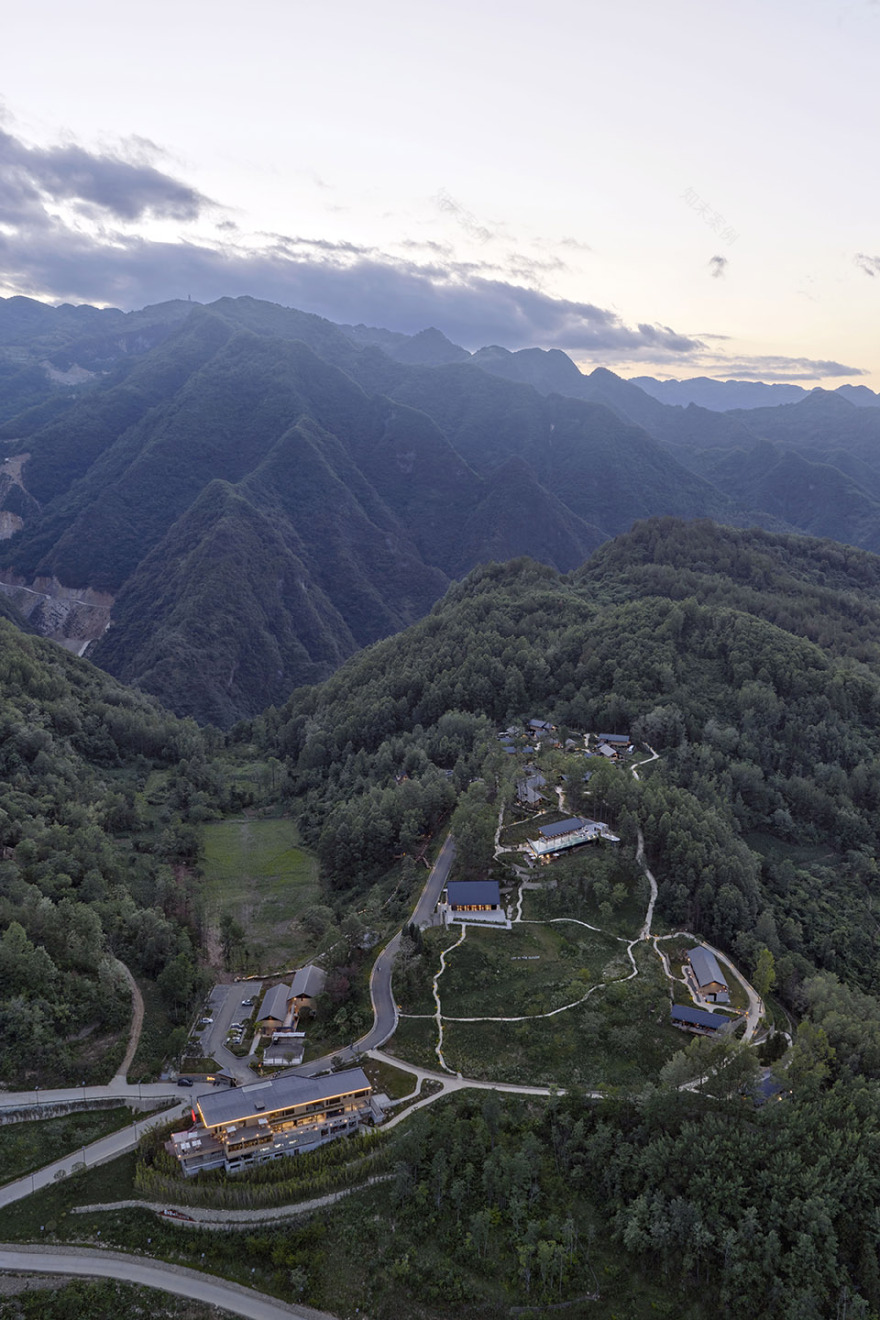
北面相对平缓的山坡地,结合老宅院的机理布置了五组院落度假屋。向南,在一大片树林中,点缀三组独立的单层度假产品。再向南,是一处制高点,这里视线纵深很好,可以俯瞰南面的用地,适合布置公共活动,最终落位了泳池和咖啡厅。继续向南,有大片相对平整的场地,在其紧邻的北侧安排了多功能厅,希望室外和室内的空间互补,创造更多运营的可能性。再往南,向东有几个小地块,可以布置客房,标准间和单人间落位于此。继续南下,外部道路在这里有个坡度很大的发卡弯,在这样的“猛回头”之后,视线急速提升,可以看到对面壮丽的山景。这是由县城上山进入项目地后,第一个也是最开阔的一个观景点,它也就成为后续设计中的接待区和本项目最集中的观景台。
▼体块推敲,massing generation©为至工作室
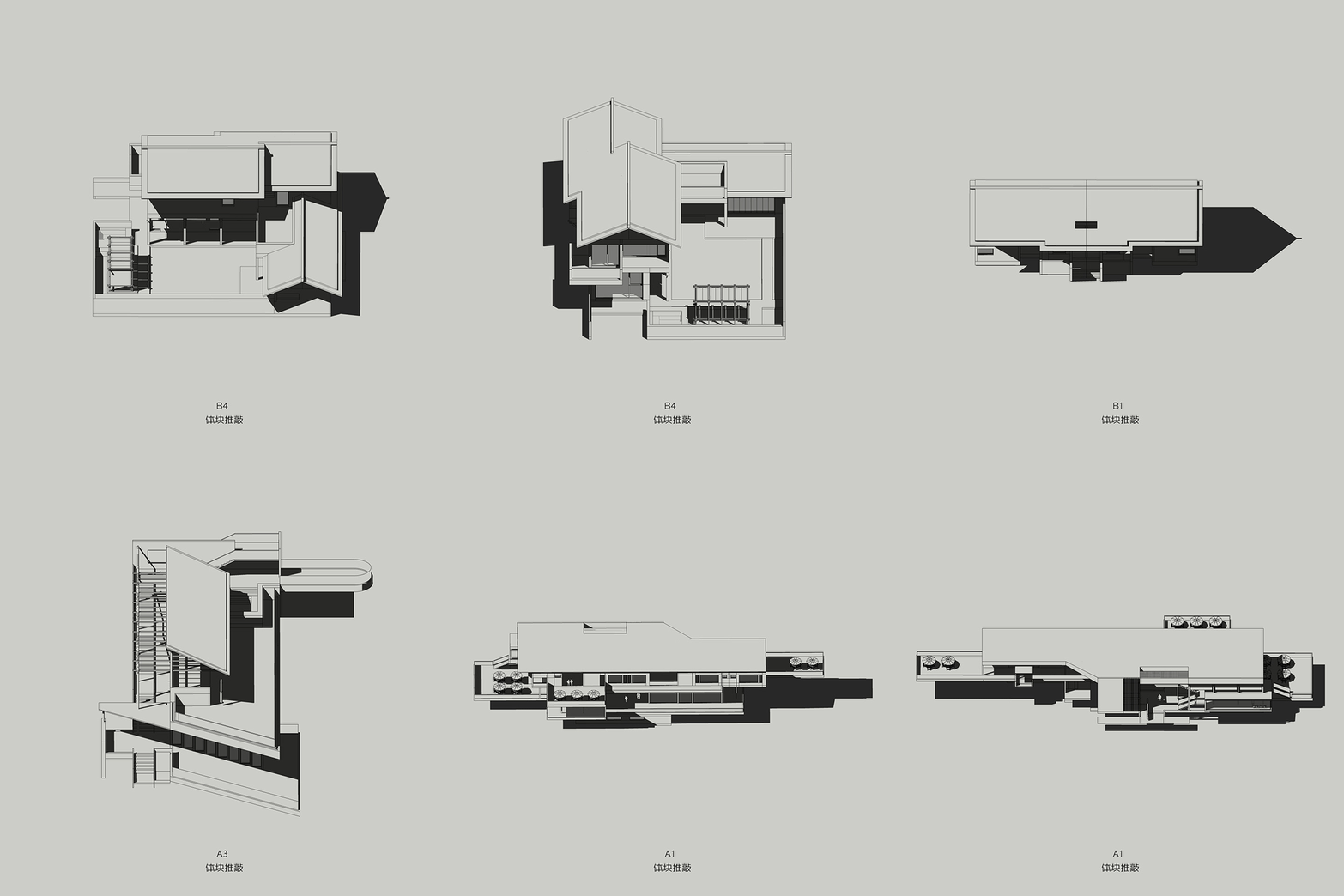
On the gentle northern hillside, five courtyard-style vacation houses are arranged, drawing on the old courtyards’ layout. To the south, three sets of independent vacation units are scattered in a forest. Further south, a commanding height with good visibility (overlooking southern lands) holds a swimming pool and café. Next, a large flat area has a multi-function hall on its north side to complement indoor-outdoor spaces for flexible operations. East of this area are small plots with guest rooms (standard and single). Further south, a steep hairpin bend on the external road offers a sudden elevated view of magnificent opposite mountains—this becomes the reception area and core viewing platform, as it is the first broad viewpoint when ascending from the county.
▼庭院套房入口灰空间,the gray space at the entrance©章鱼见筑

在五十余亩的山坡用地上,仅布置了五千多平米的建筑体量。依据山势的走向,地形的机理,建筑点缀其中,希望表达中国山水画般的水墨画境。▼概念拼贴,concept collage©为至工作室
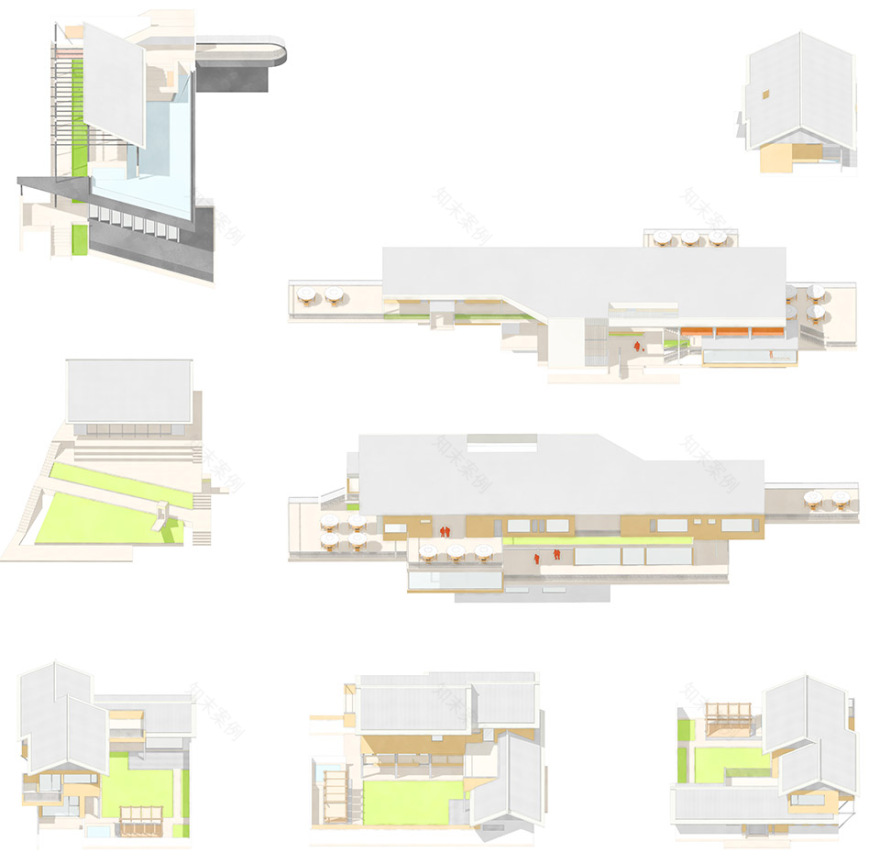
Covering over 50 mu (1 mu ≈ 0.0667 hectares), the site only has 5,000+ sqm of floor area. Buildings are scattered following the mountains’ trend and terrain, aiming to replicate the ink wash realm of Chinese landscape paintings.
▼建筑点缀其中,Buildings are scattered following the mountains’ trend©章鱼见筑

三、建筑性格特征
Architectural Characteristics
我们提到中国山水画的意境,是山水为主,人物建筑为辅,画面或“大山堂堂”,或“边角一景”,亦或有大片的留白。那么,当建筑落地,应该以什么样的性格展现于群山之中?
In Chinese landscape paintings, mountains and rivers are central, with figures and buildings as supplements—featuring “majestic peaks”, “small corner scenes”, or large blank spaces. So what traits should buildings have among mountains?
▼建筑展现于群山之中,The building is displayed among the mountains ©章鱼见筑

从老房子到新院落
From Old Courtyards to New Ones
山路的尽头,项目的最深处有一组老宅院,是村民的旧屋。在充分保留场地乔木的基础上,旧屋也被部分保留下来。并且,这一横一竖的组合方式也成为客房院落设计的出发点。我们以老宅的组合方式为原型,做了适当的升级,局部提升层数,组合成具备独立庭院的院落客房。独立的院子内布局了三套大小不同的客房,同时还提供了餐厅、活动室和室外的露台与泡池,构成了本项目核心的度假单元。▼保留老宅院,Preserved the old residence ©为至工作室
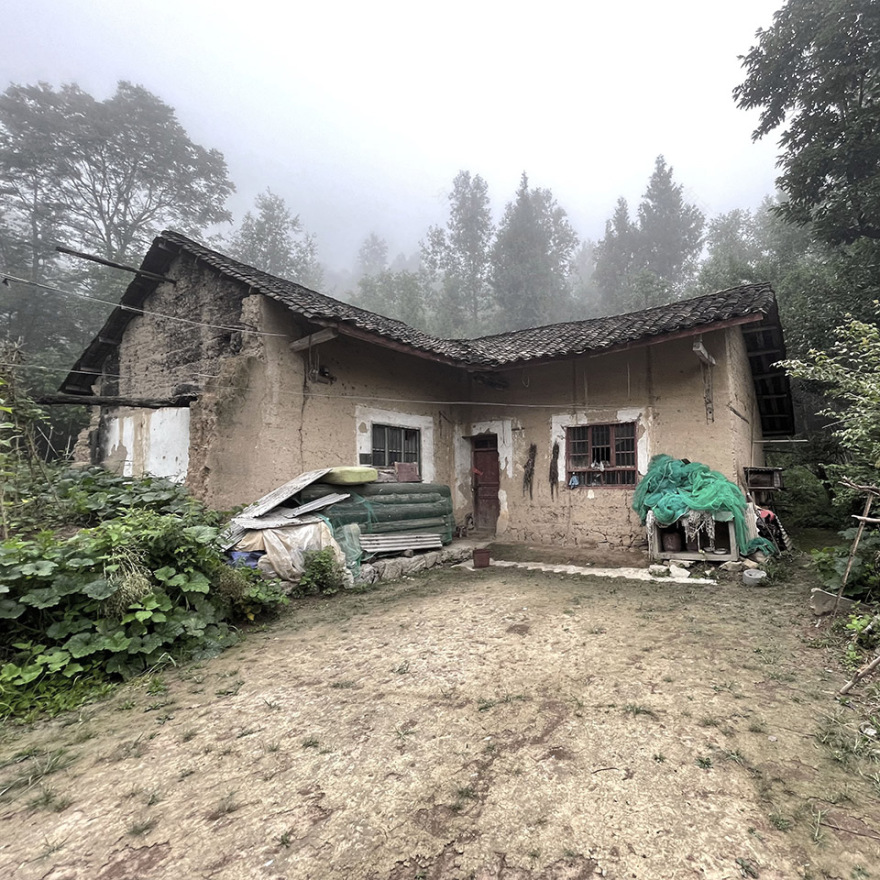
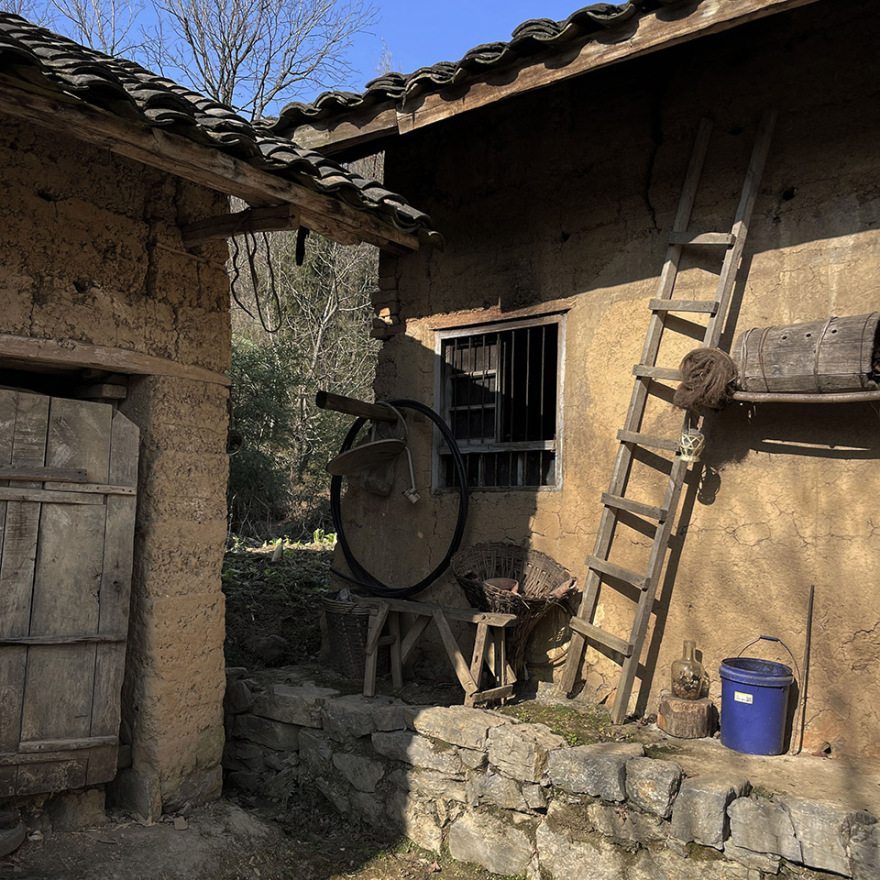
At the project’s deepest point, near the mountain road’s end, stand old village courtyards. While preserving on-site arbors, some old houses are retained, and their horizontal-vertical layout inspires the guest room design. Using the old courtyards as a prototype, we upgraded and added floors locally to create courtyard-style guest rooms. Each independent courtyard has three guest room sets (different sizes), plus a restaurant, activity room, outdoor terrace, and hot spring pool—forming the project’s core vacation units.
▼独立庭院的院落客房,courtyard-style guest rooms ©章鱼见筑

山林间的泡池客房
Forest Hot Spring Guest Rooms
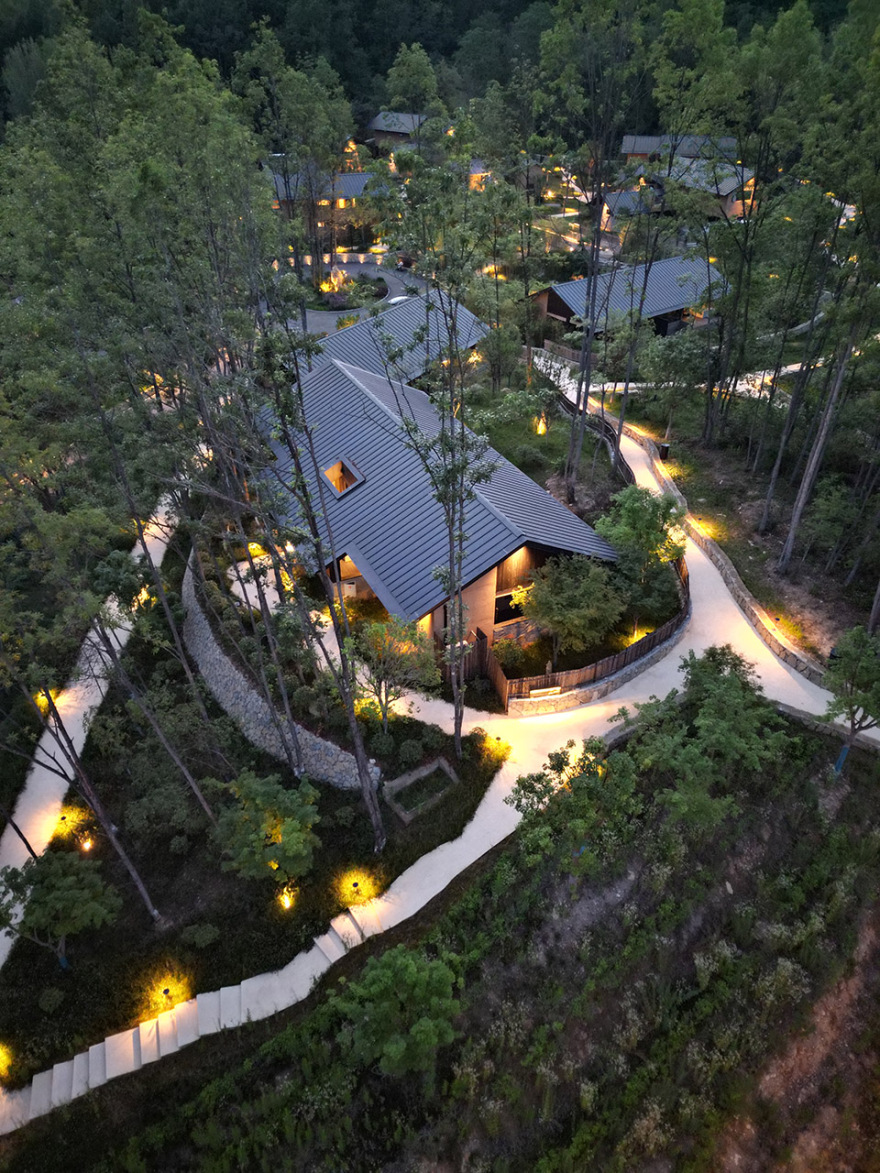
这一处用地上的乔木特别高大,树干笔直,直冲云霄。用地的东西向进深不大,南北向较长,因此,布置单层的客房南北向拉长,主要面向东西。尽可能保留乔木的情况下,单层的客房掩映在林中,具有林中小屋的体验感。每两间套房并置,面向东面有宽大的院落,户户不同,露天的泡池提升了森林度假感。
The site’s tall arbors have straight trunks reaching the sky. With limited east-west depth but long north-south length, single-storey guest rooms extend north-south, facing east-west. Hidden in the forest (while preserving arbors), they offer a “living in the woods” experience. Every two suites stand side by side with a wide east-facing courtyard; unique open-air hot spring pools enhance the forest vacation vibe.
▼泳池咖啡连接道,the corridor connects the swimming pool©章鱼见筑

▼晨雾下的泳池,the swimming pool under the mist©章鱼见筑

咖啡屋顶上的泳池
Café-Rooftop Swimming Pool
泳池的选址在用地的负荷中心,同时也是个制高点,向南可以俯瞰项目全局,远山近景尽收眼底。为了提升泳池的景观属性,利用地形的高点,将泳池靠向更高的标高,下方架空的部分放置一个咖啡厅,这样,靠着咖啡厅的托举,泳池拥有了更完美的视线,同时,泳池活动也有了咖啡水吧的服务支撑,功能也更加完备。
The pool sits at the project’s functional center and a high point, overlooking the entire site and distant/nearby mountains. To boost its landscape value, it is built on an elevated terrain, with a café below. The café supports the pool’s views and provides beverage services, making the pool more functional.
▼俯瞰景观的泳池,the swimming pool overlook the landscape©章鱼见筑


面向大草坡的会客厅
Grass Slope-Facing “Living Room”
除了民宿的基本功能需求外,本项目还有和特殊的职能——城市客厅。对于整个项目来说,它是承载大型活动的场所,也是本项目的“会客厅”。它可以承载政府招商活动、企业产品发布、创业公司路演、文化旅游推介等方面的综合功能,同时也是民宿客人进行团队活动场所。结合室外的广场,能够辐射整个活动草坪,是室内会议和室外活动的多目的空间。
Beyond basic homestay functions, the project serves as an “urban living room”—hosting large events like government investment promotions, corporate product launches, startup roadshows, and cultural tourism events, as well as guest team activities. Combined with the outdoor square, it covers the activity lawn, acting as a multi-purpose space for indoor meetings and outdoor events.
▼晨雾里的会议中心,the conference center in the mist©章鱼见筑

▼会议中心正面入口,the entrance for the conference center©章鱼见筑

▼餐厅室外用餐区,the outdoor dining area©章鱼见筑

70米长的山水画卷
70-Meter-Long “Landscape Scroll”
项目入口的回头弯,是整个园区的接待服务中心。集接待、餐饮、咖啡、茶室等功能于一体的综合性建筑,是项目人流量最大的区域。为了能够让更多的客人体验到这里的绝佳景观,我们把建筑尽量拉长,就像长长的抽屉柜,部分抽屉被抽走了一样,在观景面增加的同时,建筑形成了很多的空腔。它既是山间微风的主要通道,也构成了大大小小的室外平台。使用者可以从不同的角度,在不同的使用场景下,反复体会眼前的山水画卷。餐厅外的室外用餐平台;接待厅外的咖啡休息平台;茶室外的室外活动平台;包厢外的户外活动平台;包厢外的休息洽谈平台等,这些灰空间的容量已经接近室内空间的总和。人流涌动间,满足功能服务需求的同时,与自然完美地融合。
At the project entrance’s hairpin bend lies the reception service center—a comprehensive building integrating reception, catering, coffee, and teahouse functions, and handling the most visitors. To maximize landscape access, we made the building as long as a drawer cabinet with some drawers open. It increases viewing sides and creates open spaces—these are not only mountain breeze channels but also outdoor platforms of various sizes. Visitors can enjoy the landscape from different angles: outdoor dining platforms outside the restaurant, coffee lounges by the reception hall, activity areas near the teahouse, and leisure spots by private rooms. These semi-outdoor spaces match indoor capacity; amid crowds, the building meets functional needs while blending seamlessly with nature.
▼接待区室外空间,the reception service center’s outdoor area©章鱼见筑
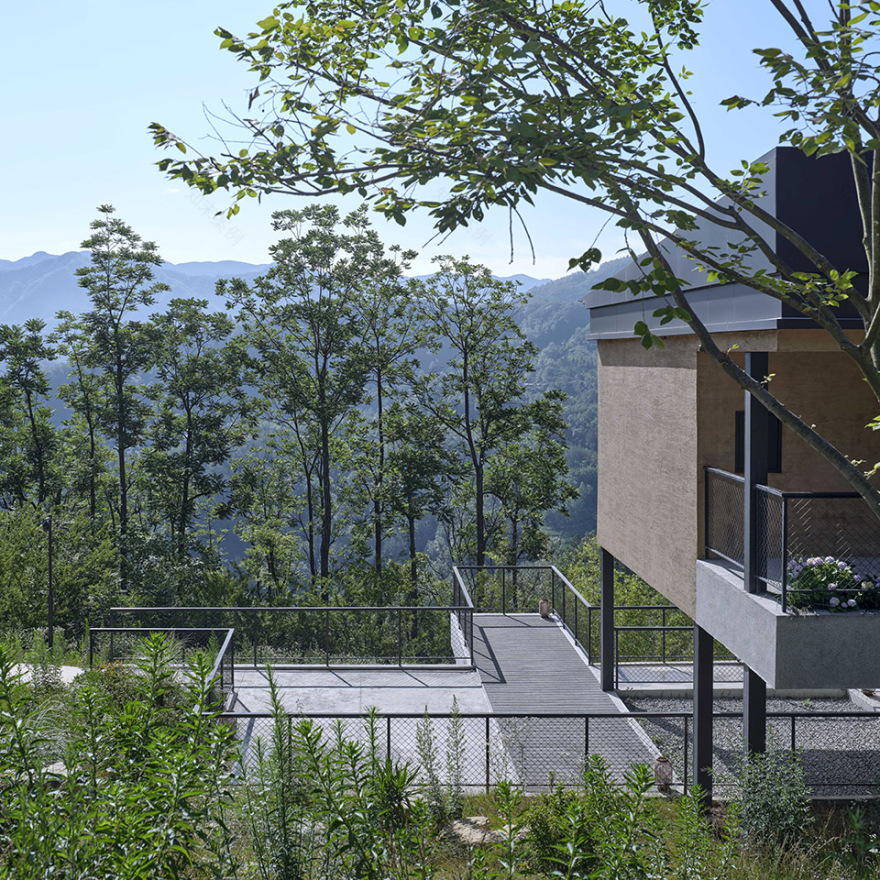
▼接待区入口,the reception service center’s entrance©章鱼见筑

四、从度假底层逻辑看设计
Design from Vacation’s Underlying Logic
DOSE,是多巴胺、催产素、血清素、内啡肽四种给人带来愉悦的物质的缩写。多巴胺让人追求快乐,催产素让人分享快乐,血清素让人保持快乐,内啡肽让人享受快乐。大脑里的血清素是让人情绪稳定地保持在一个基线水平,它帮人回复情绪。提高血清素的一种非常有效的手段是接触大自然,享受阳光。人类从基因角度看,需要定期回归自然,恢复自己的血清素水平。
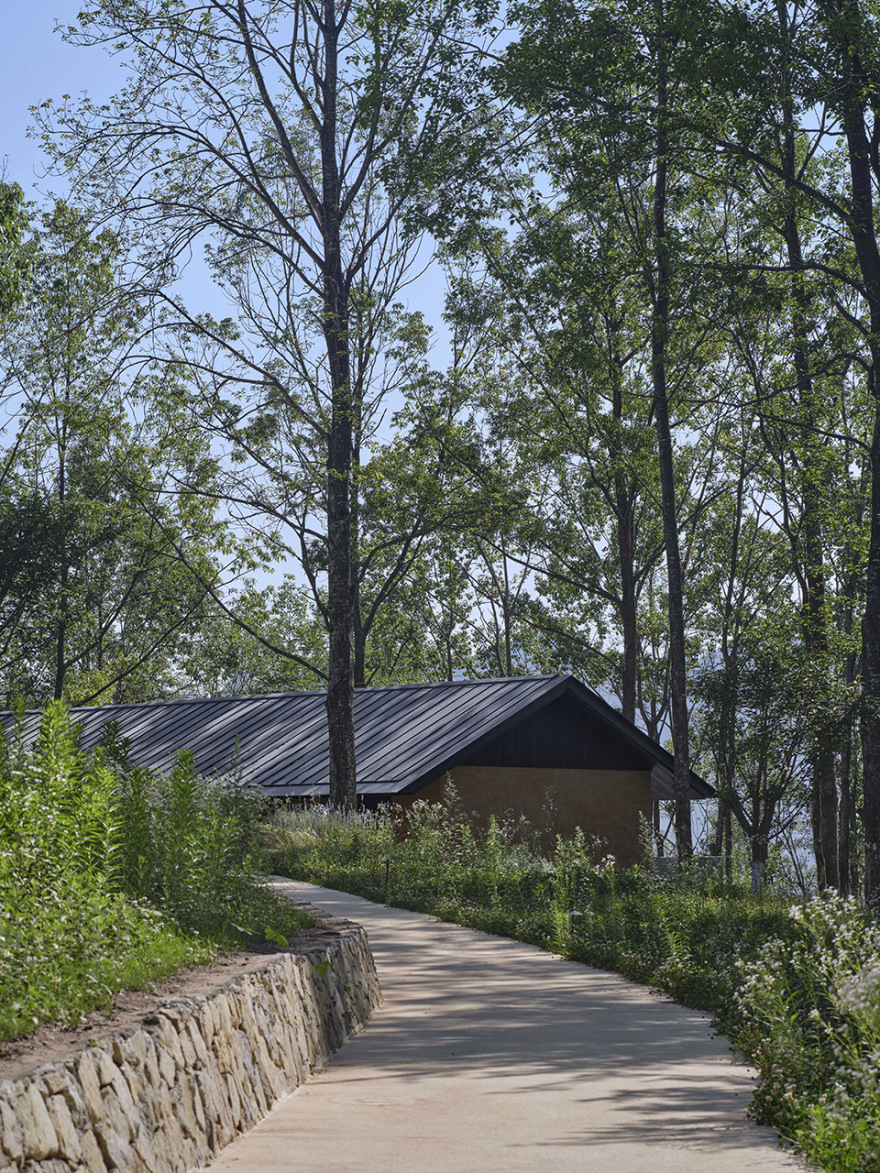
▼通往客房区的小路,the corridor towards the guestroom©章鱼见筑
▼客房空间,the guest room©隐居乡里

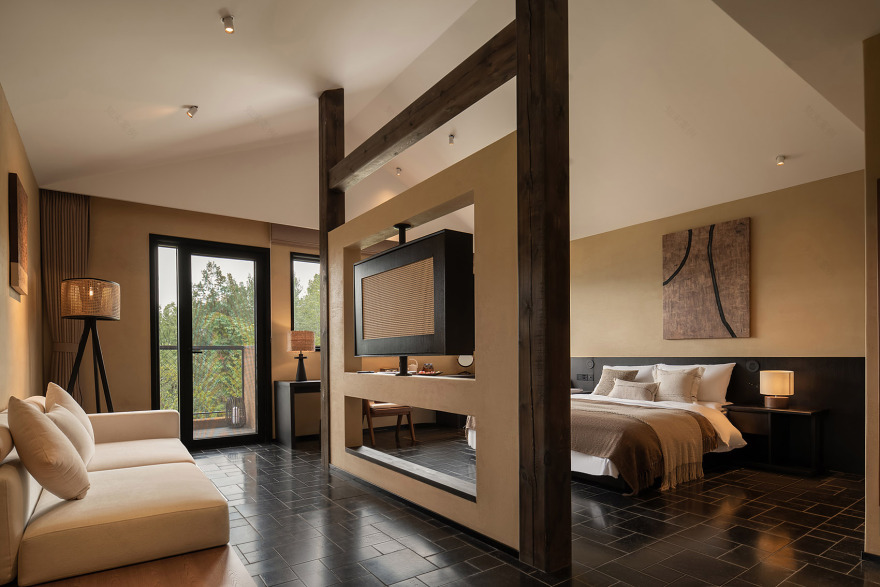

确认了度假的底层逻辑,也清楚了人们来到乡村的目标,是更好地与自然接触,建筑只是空间的载体,满足基本的需求,以最原始的材料满足安全性和舒适性即可。这也就解释了木材、石头、泥土等自然的质感特别得到度假人群认可的原因。那些金属、玻璃、过度加工的材料都是人工化的产品,会破坏这种回归自然的体验。建筑整体性格也倾向于后退,避免破坏了自然的意境。
With this logic clear, we know people visit the countryside to connect better with nature. Buildings are just space carriers for basic needs—using simple materials to ensure safety and comfort. This explains why natural textures (wood, stone, soil) are favored by vacationers, while artificial materials (metal, glass, over-processed goods) ruin the “return to nature” experience. Buildings also adopt a “low-key” style to avoid spoiling natural scenery.
▼接待中心鸟瞰夜景,the night view of the reception center©隐居乡里

▼70米长的接待服务中心,A 70-meter-long reception service center©隐居乡里
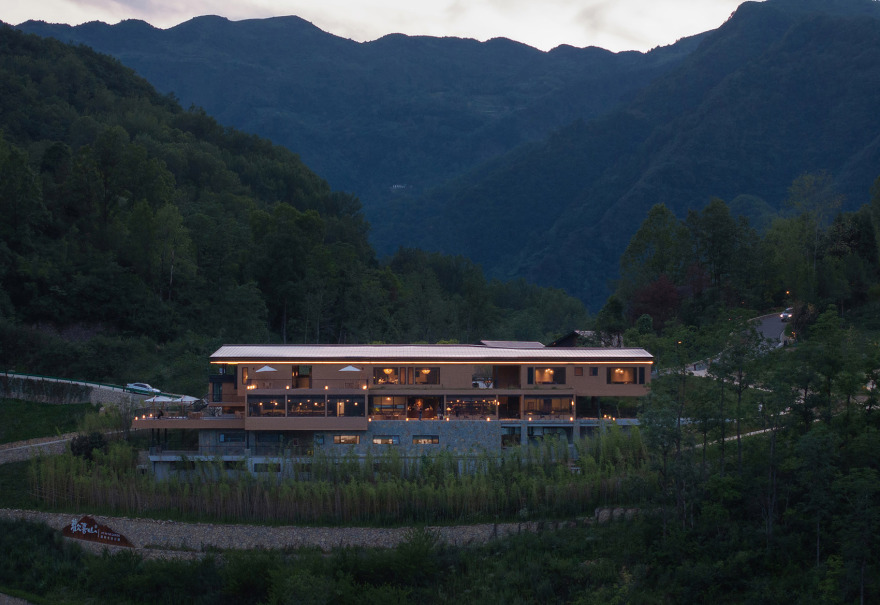
▼客房组团鸟瞰,Bird ‘s-eye view of the guest room cluster©隐居乡里

回到的中国山水画,早期的画作都是以人物为主,后来有了“树下人像”的概念,形成类似“竹林七贤”这样的画面,最终人物和建筑弱化,山水独立成为画面的主体,单独成为一种范式。就像中国山水画的演进一样,建筑,越是脱离城市越是需要设计上的克制,仅作为山水的点缀足已。在大好的自然山水中,建筑不求刻意的表达,而是提供与自然互动的场景,成为回归自然的载体罢了。
Chinese landscape paintings evolved: early works focused on figures, then “figures under trees” (e.g., “the Seven Sages of the Bamboo Grove”) emerged, and finally, figures/buildings were downplayed to highlight mountains and rivers as the core. Similarly, buildings farther from cities need more restrained design—serving only as landscape accents. In beautiful natural scenery, buildings do not seek attention; instead, they provide spaces for nature interaction and act as carriers for returning to nature.
▼总平面图,Site plan© 为至工作室

▼A-1-1平面图,A-1-1 plan© 为至工作室
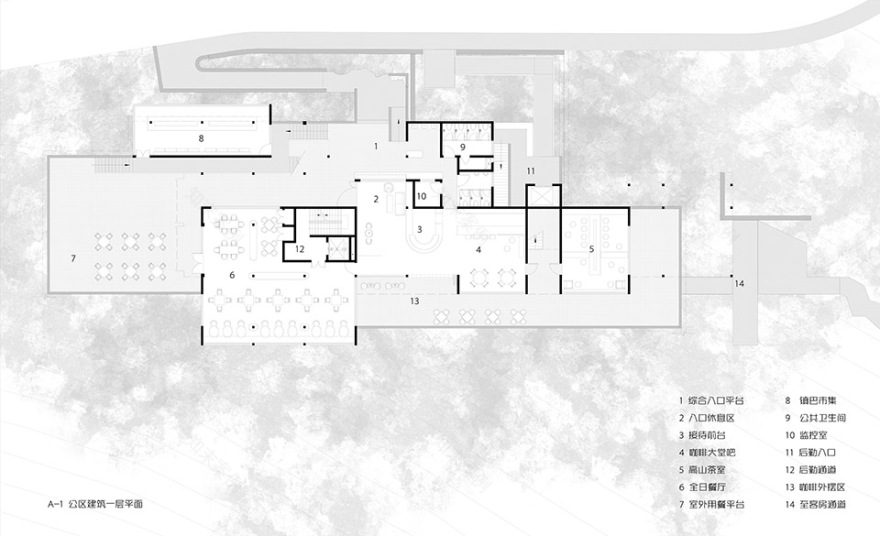
▼A-1-2平面图,A-1-2 plan© 为至工作室

▼A-3-1平面图,A-3-1 plan© 为至工作室

▼B-1平面图,B-1 plan© 为至工作室

▼B-7-1平面图,B-7-1 plan© 为至工作室

▼B-7-2平面图,B-7-2 plan© 为至工作室

项目名称:陕西汉中欢喜山森林生活公园
项目类型:民宿酒店
设计方:为至工作室
项目设计:2022年8月
完成年份:2025年5月
设计团队:熊伟、张知敏、金艳、石兴源、蔡鹏飞、谷嘉丽、张晓丽、江安懿
项目地址:陕西省汉中市镇巴县曾家山
建筑面积:5500㎡
摄影版权:章鱼见筑、隐居乡里、为至工作室
合作方:陕西一品雅筑设计工程有限公司、重庆圣东旅居装配式建筑技术有限公司
客户:隐居乡里
Project name:Huanxi Mountain Forest Life Park, Hanzhong, Shaanxi
Project type: Hotel
Design:WITHSTUDIO
Design year:August 2022
Completion Year:May 2025
Leader designer & Team:Xiong Weihang ZhiminJin YanShi XingyuanCai PengfeiGu Jialihang XiaoliJiang Any
Project location:Zengjia Mountain, Zhenba County, Hanzhong City, Shaanxi Province
Gross built area:5500 ㎡
Photo credit:Zhangyu Jianzhu Yinju Xiangli WITHSTUDIO
Partner:Shaanxi Yipin Yazhu Design & Engineering Co., Ltd.Chongqing Shengdong Tourism & Residential Prefabricated Building Technology Co., Ltd
Clients:Yinju Xiangli






南京喵熊网络科技有限公司 苏ICP备18050492号-4知末 © 2018—2020 . All photos and trademark graphics are copyrighted by their owners.增值电信业务经营许可证(ICP)苏B2-20201444 苏公网安备 32011302321234号
苏公网安备 32011302321234号客服
消息
收藏
下载
最近