

创作上传
VIP
收藏下载
登录 | 注册有礼
查看完整案例

收藏

下载

分享
在意大利马米拉(Marmilla)的腹地,建筑师Martino Picchedda将村庄的主要入口转化为一座富有诗意的城市门槛。设计呼应了撒丁岛“巨人之墓”的永恒形态,并通过耐候钢、当地石材与光影,展现了撒丁岛景观的独特身份。在这里,历史与当代设计交融,构筑了一处诉说地方与人文故事的迎宾空间。
In the heart of Marmilla, architect Martino Picchedda transforms the village’s main entrance into a poetic urban threshold. The design evokes the timeless forms of the Giants’ Tombs while celebrating the Sardinian landscape’s identity through corten steel, local stone, and light. Here, history and contemporary design converge, creating a welcoming space that tells the story of place and people.
▼项目概览,Overall of the project © Cédric Dasesson

起伏的撒丁岛丘陵在马米拉(Marmilla)的中心地带徐徐展开,并一直延伸至Giara di Gesturi。在这里,人们可以远眺金色田野与古老的橄榄林。位于撒丁岛南部的Siddi市因此获得了一处新的城市入口。该改造工程超越了单纯的基础设施层面,成为建筑与文化感性的凝练表达。
In the heart of Marmilla, where the gentle Sardinian hills open up to views of golden fields and ancient olive groves stretching to the Giara di Gesturi, the municipality of Siddi (South Sardinia) gains a new urban threshold. The redevelopment of Via Napoli, the main access road to the village, transcends mere infrastructural function to become an act of refined architectural and cultural sensibility.
▼周边风光,Surrounding scenery © Cédric Dasesson

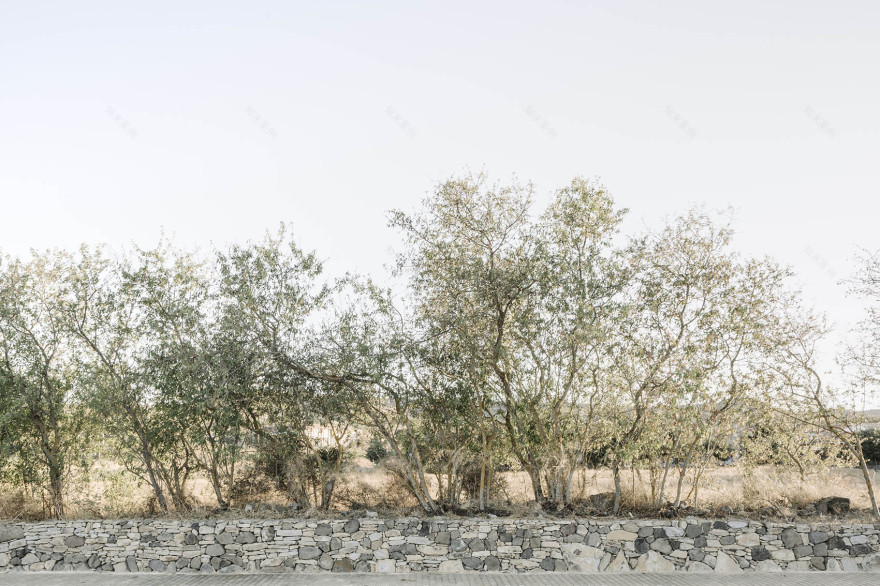
从人行道到停车区与城镇入口,该项目将一条边缘道路转化为真正的“欢迎叙事”,引导人们在行走中欣赏马米拉(Marmilla)的景观之美。耐候钢、当地石材与光线成为三大核心要素,交织着记忆、身份与风景,既迎接来者,也成为身份的标识。
From the sidewalk to the parking area/town entrance, the project invites a walk with a view of the landscape beauties of Marmilla, transforming a peripheral route into a true story of welcome. Corten steel, local stone, and light become the three key elements that intertwine memory, identity, and landscape, welcoming arrivals and offering at the same time a sign of recognition.
▼真正的“欢迎叙事”,A true story of welcome © Cédric Dasesson

该项目由建筑师Martino Picchedda设计,由撒丁大区和Siddi市政府共同出资,共同回应了该地区长期存在的历史性问题:破损的路面、缺失的人行道、以及与环形道路交汇处危险的道路沟渠。最终,项目成功将这些问题转化为设计机遇。新的沥青路面与人行道、使用当地玄武岩与泥灰岩重建的干砌石墙,不仅恢复了道路的功能与安全性,更在遗产提升与环境融合中实现了不可分割的统一。而在对道路沟渠的重新演绎中,项目展现了更深层的意义:一个原本的空洞隐患被转化为一处休憩与沉思之所,成为叙事与象征的焦点。
The intervention, designed by architect Martino Picchedda and co-funded by the Sardinia Region with the Municipality of Siddi, addresses historical criticalities – deteriorated road surface, absence of sidewalks, and a dangerous ditch at the intersection with Via Circonvallazione – transforming them into opportunities. The new asphalt and sidewalks, including a dry-stone wall rebuilt with local basalt and marl stones, address the functional dimension and restore safety and dignity to the road in an indissoluble intertwining with heritage enhancement and environmental integration. But it is in the reinterpretation of the ditch that the project reveals its depth: what was a critical void becomes a place of rest and contemplation, a narrative and symbolic focal point.
▼遗产提升与环境融合,Heritage enhancement and environmental integration © Cédric Dasesson

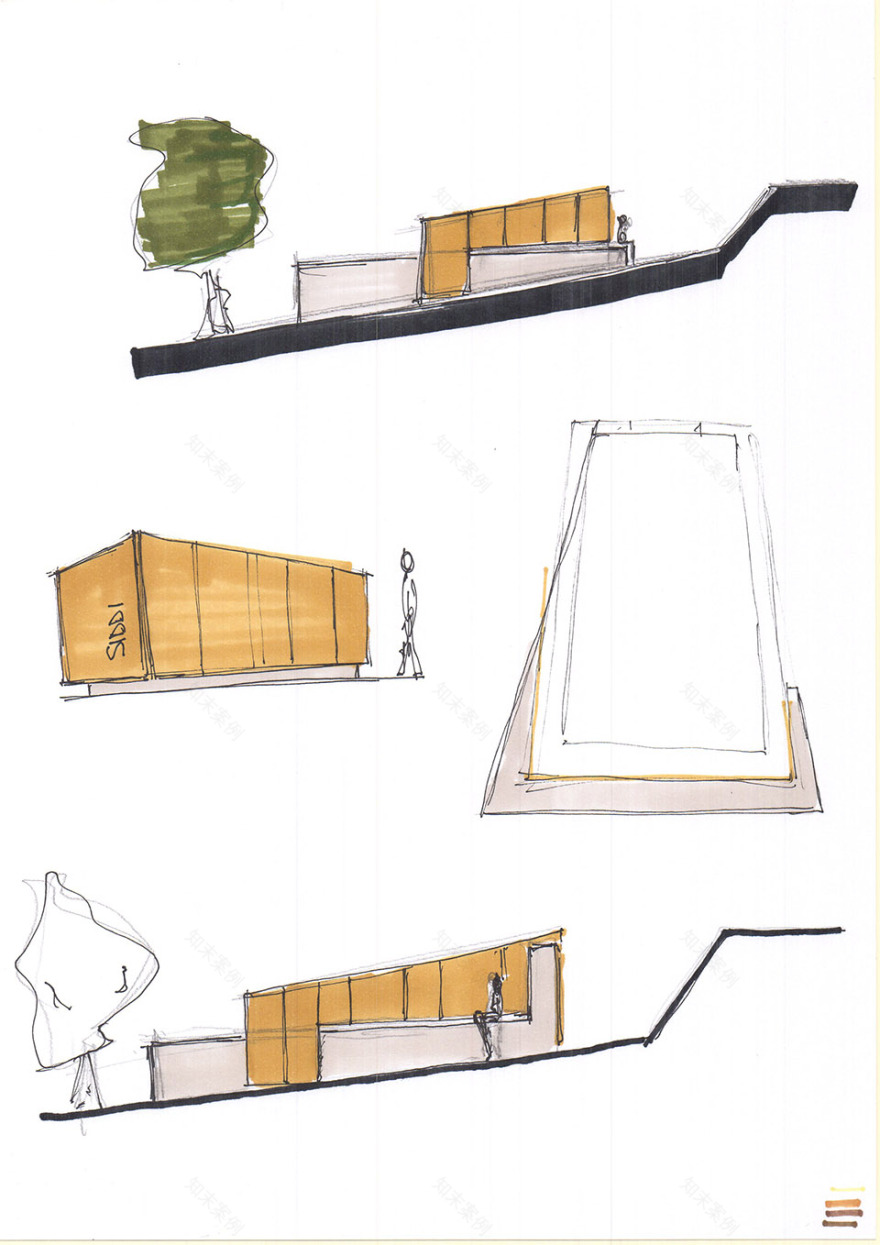
一块经过精确塑形的耐候钢板环抱着沟渠,唤起人们对“巨人之墓”剖面的联想——这种遍布撒丁岛的巨石纪念性遗迹在Siddi市仍保存着珍贵的实例(例如Sa Domu e S’orcu)。这一设计并非直接的引用,而是一种对原型的解构与重释:历史遗迹(墓穴)的弯曲轮廓转化为保护、屏障与雕塑。
A sheet of corten steel, precisely shaped, embraces the ditch and evokes the section of the giants’ tombs, extraordinary megalithic monuments that dot Sardinia and of which Siddi preserves a precious example, Sa Domu e S’orcu. This formal gesture is not a literal quotation, but an operation of deconstruction and archetypal reinterpretation: the enveloping curve of a Nuragic tomb becomes protection, barrier, but also sculpture.
▼设计手稿,Design sketch © Martino Picchedda

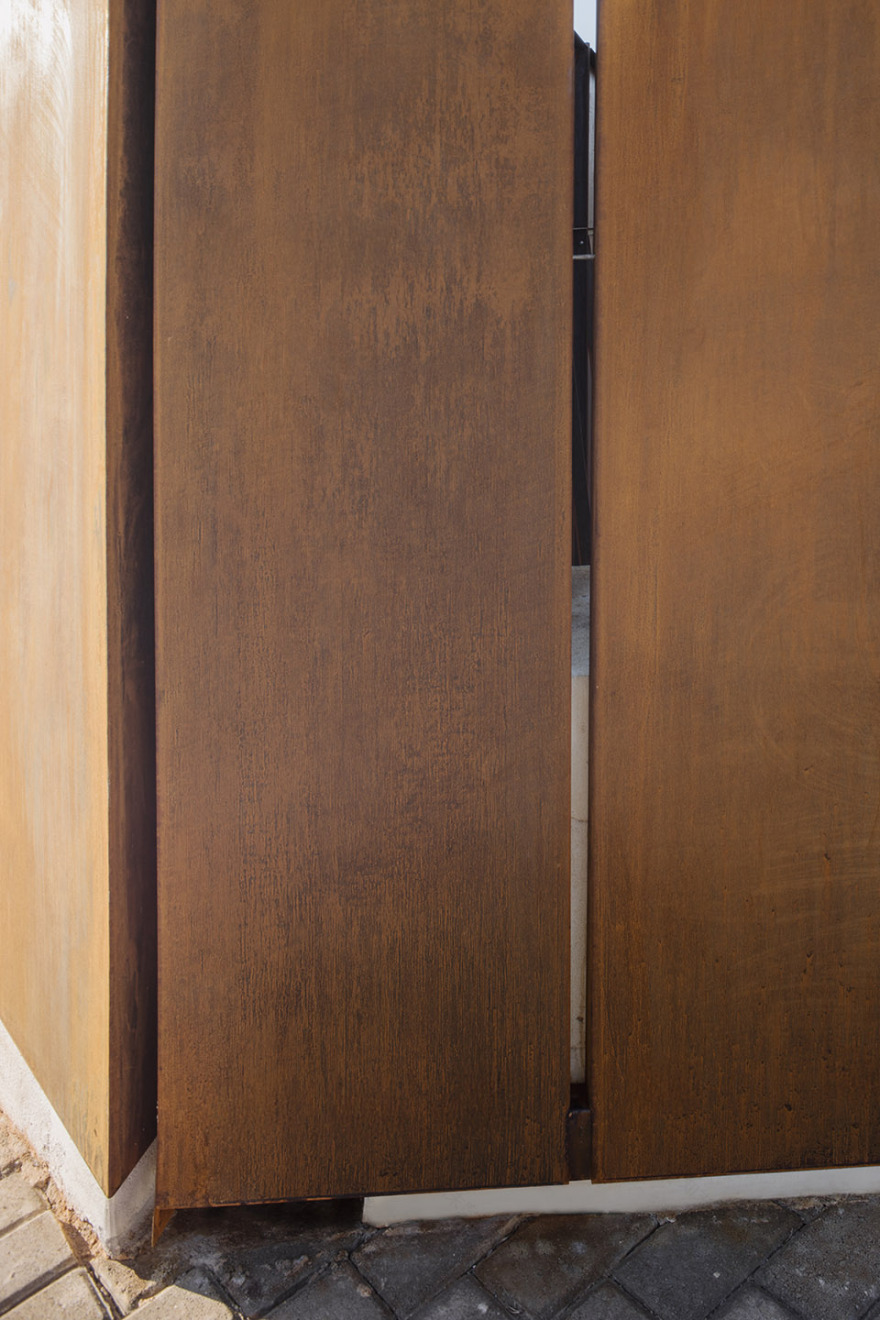
耐候钢——正如艺术家Richard Serra所言,是一种“有生命”的材料,会随时间而变化,并与土地、田野和橄榄树的色彩展开对话。其氧化并非衰败,而是成熟,这一过程将作品与景观紧密相连,色彩变化呼应着春花的红、麦田的赭、树冠的绿与裸土的褐。
Corten – a living material, as Richard Serra recalled, that changes over time and dialogues with the colors of the earth, fields, and olive trees – gives the place a poetic dimension. Its oxidation is not degradation but maturation, a process that inextricably links the work to the landscape, with chromatic variations that recall the red of spring flowers, the ocher of wheat, the green of canopies, and the brown of bare earth.
▼耐候钢材与景观,Corten and landscape © Cédric Dasesson

对材料感染力与建筑归属感的强调,明显呼应了Peter Zumthor的思想。石材、耐候钢与光,不是作为表层装饰,而是作为扎根于场所心理的工具,使之与居民与来访者的集体记忆共鸣。
The emphasis on the evocative power of materials and on the ability of architecture to generate a sense of belonging is a clear reference to the lesson of Peter Zumthor. Stone, corten, and light are not used as simple finishes, but as tools to root the work to the psyche of the place, so that it resonates with the collective memories of those who live in and pass through Siddi.
▼耐候钢材细部,Corten details © Cédric Dasesson

光的作用亦不可或缺:白日里,它调和耐候钢表面的质感并放大色彩层次;夜晚,内置照明将此处转化为温暖而安全的地标。带有“SIDDI”发光雕刻的耐候钢图腾成为城市灯塔与身份标志,在欢迎的姿态中连接当地的记忆与当下。
The role of light is also fundamental: by day, it modulates the surface of the corten and amplifies its chromatic variations; by night, integrated lighting transforms the area into a welcoming and safe landmark. The corten totem with the luminous engraving “SIDDI” becomes an urban beacon and an identity sign, uniting Nuragic memory and contemporaneity in a gesture of welcome.
▼发光雕刻的耐候钢图腾,The luminous engraving © Cédric Dasesson

项目使用当地石材与耐久且低维护的材料(如耐候钢),以降低环境影响。但项目真正的可持续性,体现在它所营造的归属感之中。这不仅是基础设施,更是共享的文化遗产,扎根历史,同时面向未来。本次改造项目不仅仅是一项道路工程,更是一场“场所营造”,将一条交通要道转化为相遇、休憩与反思的空间。这是城市更新的典范案例,既赞颂了根源,又重塑了社区身份,并提升了马米拉(Marmilla)的景观价值。
The use of local stones and durable low-maintenance materials like corten reduces environmental impact, but the true sustainability of the project lies in its ability to create a sense of belonging. Not just infrastructure, but shared cultural heritage, rooted in history and projected into the future. The redevelopment of Via Napoli in Siddi is more than a road project: it is a placemaking operation, which transforms a thoroughfare into a place of meeting, rest, and reflection. It is a virtuous model of urban regeneration that celebrates roots, renews community identity, and enhances the landscape of Marmilla.
▼材料细部,Material © Cédric Dasesson


Siddi 并非只是“修复”了一条道路,而是创造了一座有生命的入口,能讲述自身的故事,欢迎来者,并在时间的流逝中持续与其土地对话。
Siddi has not simply “fixed” a road: it has created a living threshold, capable of telling its own story, welcoming arrivals, and dialoguing, over time, with the land that generated it.
▼总平面图,General Plan © Martino Picchedda
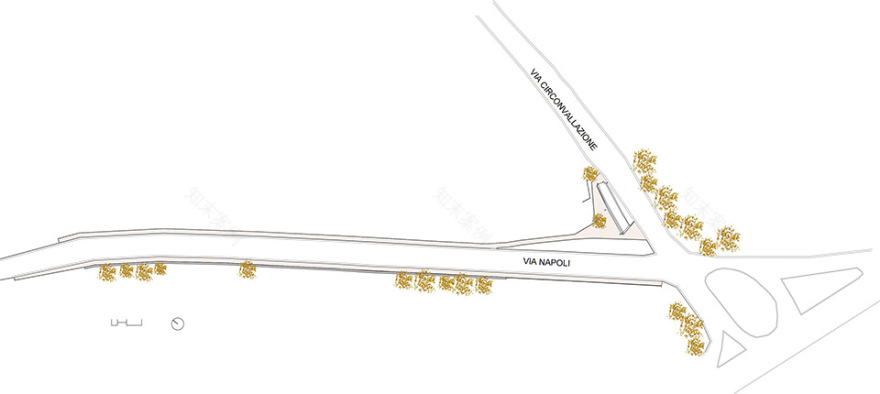
▼平面图,Site Plan © Martino Picchedda

▼立面图,Elevation drawing © Martino Picchedda

Project Credits
Location: Siddi (SU)
Client: Municipality of Siddi
Project co-funded by: RAS – Department of Public Works – LR21 February 2023 n. 1, art. 10, comma 8 interventions in local and regional road network
Project: Arch. Martino Picchedda
Works Supervision: Arch. Martino Picchedda
RUP: Arch. Salvatore Cadau
Executing companies: Building and road works: I.C.A. di Attardo Carmelo; FF SERCI s.r.l.; TECNO SIGNAL S.R.L.
Metal installations: Giovanni Pinna
Dimension: 200 ml
Completion Date: 2025
Works Amount: € 225,000
Total Project Amount: € 330,000
Photographs: Cédric Dasesson
Materials:
Basalt Curbs: Perdas Basalti & Lapidei Paulilatino (OR)
Basalt and Marls: Siddi (SU)
Paving: Gruppo Edil Piras, Tortolì (SU)
Lighting: Lumeitalia, Milano (MI)
南京喵熊网络科技有限公司 苏ICP备18050492号-4知末 © 2018—2020 . All photos and trademark graphics are copyrighted by their owners.增值电信业务经营许可证(ICP)苏B2-20201444 苏公网安备 32011302321234号
苏公网安备 32011302321234号客服
消息
收藏
下载
最近