

创作上传
VIP
收藏下载
登录 | 注册有礼
查看完整案例

收藏

下载

分享
本项目的首要挑战是在城市转角处建立连续的街道界面。临街立面自然延续了街角的奥斯曼式建筑节奏,与维莱特大道(Boulevard de la Villette)和普拉迪耶街(Rue Pradier)的韵律相呼应。从布特肖蒙公园(Parc des Buttes-Chaumont)望去,建筑以鲜明的姿态嵌入城市景观,成为整体感知中的关键元素。
The main challenge of the site is to establish urban continuity at the corner of an intersection. The street-facing façade naturally extends the Haussmannian building on the corner, harmonizing with both the rhythm of Boulevard de la Villette and Rue Pradier. Viewed from the Parc des Buttes- Chaumont, the building emerges as a key feature in the urban landscape, asserting its role in the perception of the whole.
▼木质百叶窗开启时的公寓外观,
The exterior of the apartment when the wooden blinds are open ©Cyrille Lallement

▼木质百叶窗关闭时的公寓外观,
The exterior of the apartment when the wooden blinds are closed ©Cyrille Lallement

材料选择充分体现了对场地语境的回应。来自巴黎盆地的诺扬石材(Noyant stone)不仅成为项目的结构核心,还与现有建成环境建立了直接的联系,同时支持低碳与本地供应链。在庭院一侧,木结构与麻混凝土的结合重新诠释了传统建造技艺。这些选择不仅是对历史的回应,更是一种基于耐久性、建造一致性与资源效率的深思熟虑的策略。
▼公寓轴测图,the apartment axonometric ©MAO architects
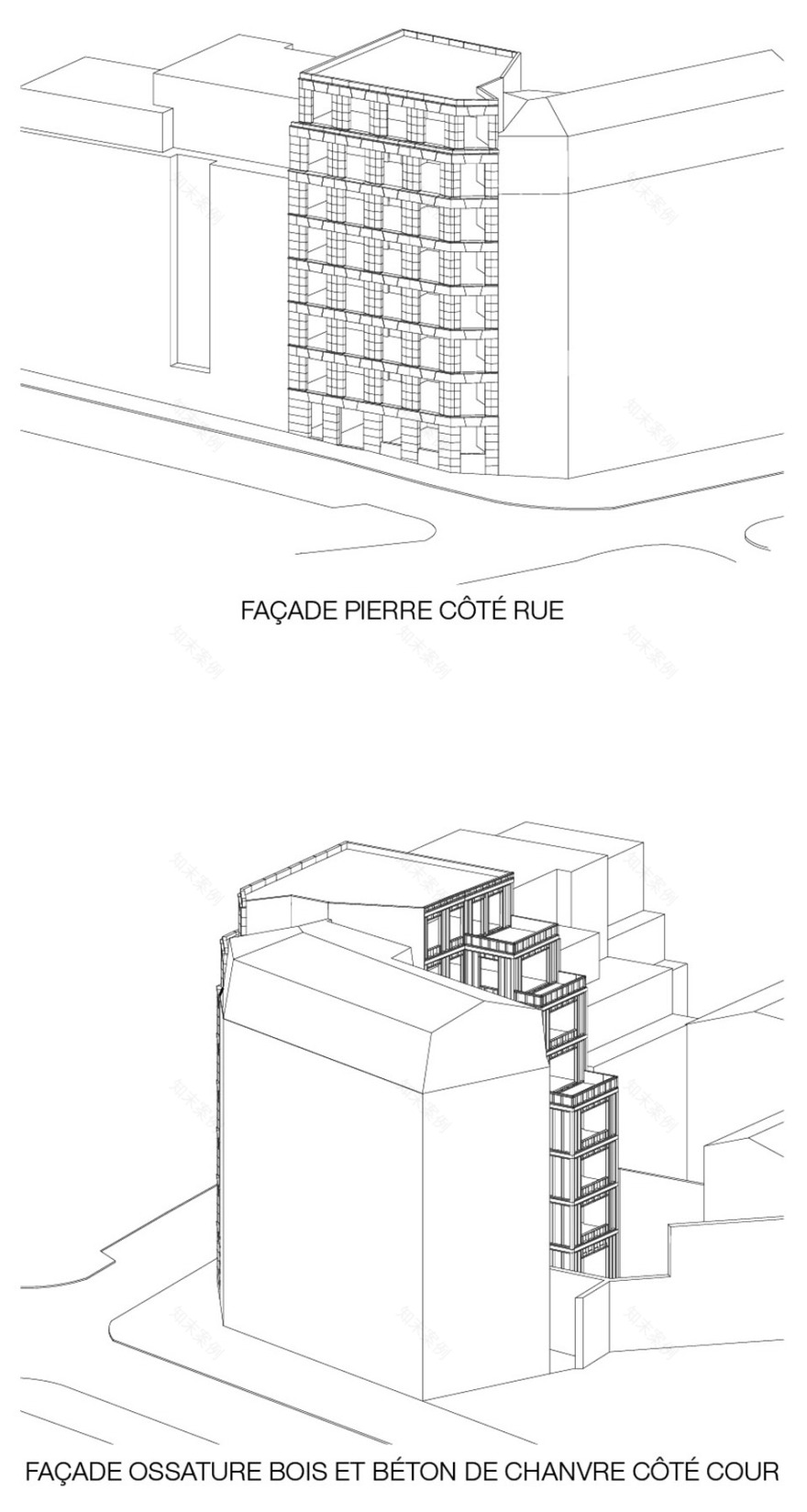
The choice of materials and their implementation reflects a contextual approach. The cut stone from the Paris Basin (Noyant stone) becomes a structural element of the project, creating a direct link with the existing built environment while favoring a low-carbon, local supply chain. On the courtyard side, the timber frame and hemp concrete reinterpret traditional construction techniques. These choices go beyond a mere historical reference and embody a thoughtful approach where durability, construction coherence, and resource efficiency guide the design.
▼木结构与麻面混凝土的结合,
the combination of the timber frame and hemp concrete ©Cyrille Lallement


▼一层“可呼吸”的围护结构,forms a breathable envelope ©Cyrille Lallement
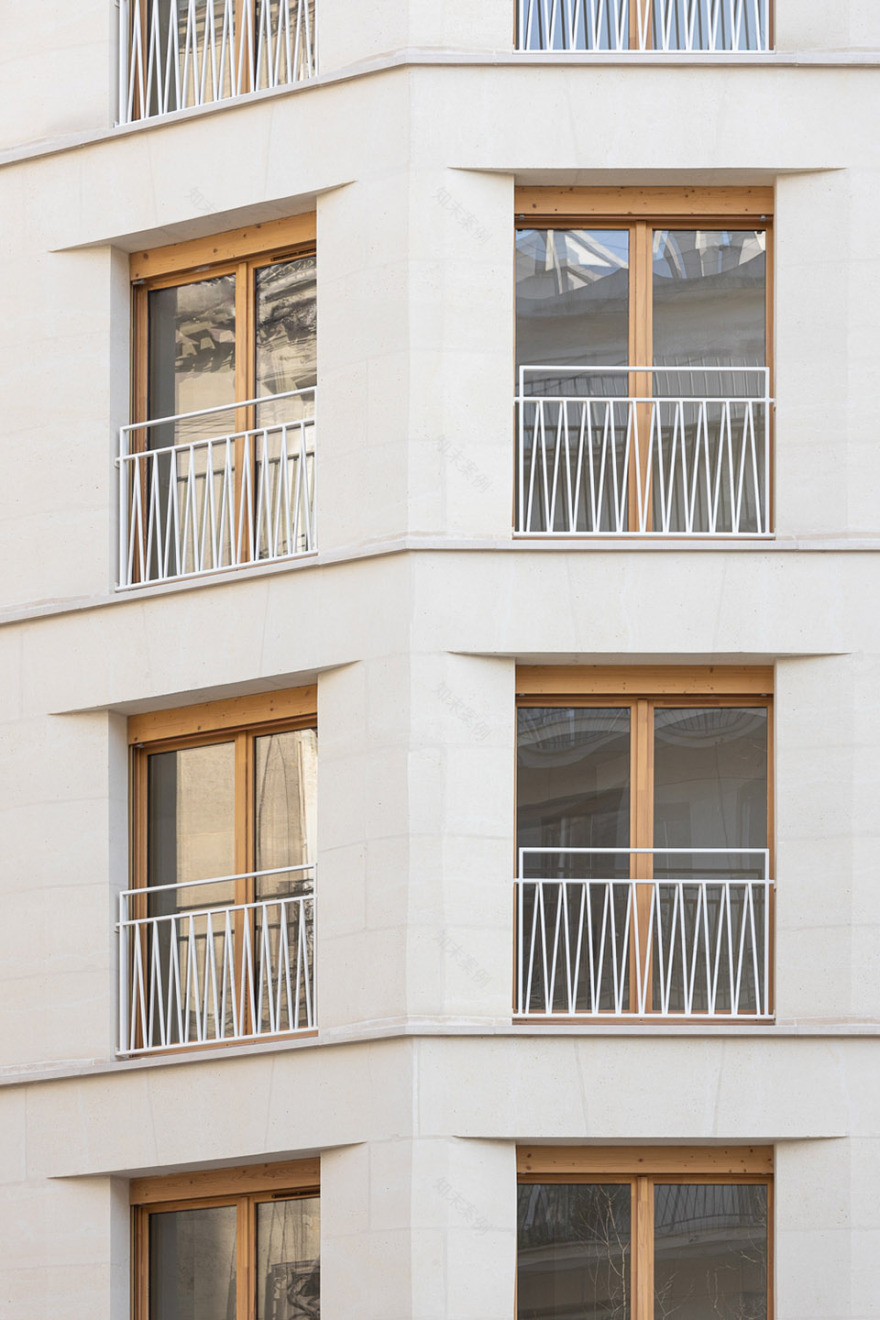
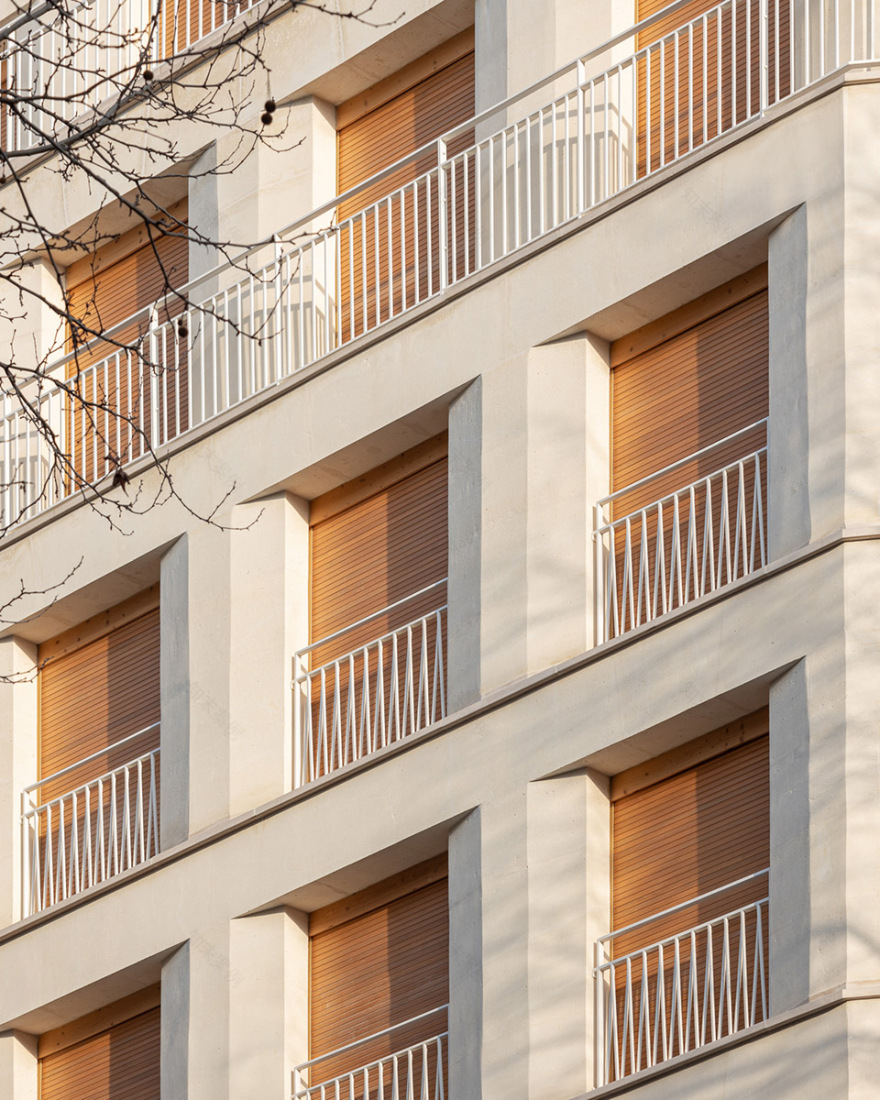
立面在街道一侧以整石砌筑,在花园一侧则覆以石灰抹灰,并结合麻混凝土保温层,共同构成一层“可呼吸”的围护结构。这些具有透湿性的天然材料能够调节冷热与湿度交换,使室内湿气得以自然排出,同时降低温度波动。石材在转角与檐口处的精细处理强化了厚重立面的视觉效果,随着日光的变化而呈现出丰富的层次感。大尺度木质门窗、木制百叶与金属细部赋予建筑独特的居住性与城市气质。
▼街道一侧立面,facade facing the street ©MAO architects

The façade, clad in solid stone on the street side and lime render on the garden side, combined with hemp concrete insulation, forms a breathable envelope that actively contributes to the building’s and apartments’ thermal comfort. These natural materials, known for their vapor-permeable properties, promote the regulation of heat and moisture exchange between the interior and exterior, allowing humidity to escape while minimizing temperature fluctuations. The work on the Noyant stone, with its angles and cornices, emphasizes the effect of a thick façade that shifts with the daylight. Large wooden joinery, wooden shutters, and detailed metalwork give the whole its domestic and urban character.
▼庭院立面,facade facing the courtyard ©Cyrille Lallement


▼庭院立面,facade facing the courtyard ©Cyrille Lallement

体量设计尽可能保持街区内部的比例与视野,同时引入更多的开放与绿化。高大的乔木直接植入土壤中,窗户的布置兼顾了采光与隐私,确保室内在一整天中都能获得良好的自然光照。紧凑但符合人体工学的户型设计保证了明亮而多向的空间,每两户共享一个楼层前厅。底层的公共空间(门厅、自行车库)直接向花园敞开,而轻质木结构屋顶则在既有石灰石墙体之上延展,容纳柔性交通的停放空间。
▼公寓平面图,apartment plan ©MAO architects

The volumetric design preserves the proportions and views into the block’s interior as much as possible. The intervention seeks to open up the space, increase natural light, and enhance greenery through the planting of tall trees directly in the ground. The work on window placement limits direct lines of sight between apartments and offers good natural lighting throughout the day. Though compact, the interior layout prioritizes bright, multi-oriented, and ergonomic apartments, each served by a landing shared by two units. The ground floor common areas (lobby, bicycle storage) open onto the garden. A lightweight roof structure, supported by a wooden frame integrated into existing limestone walls, accommodates soft mobility parking.
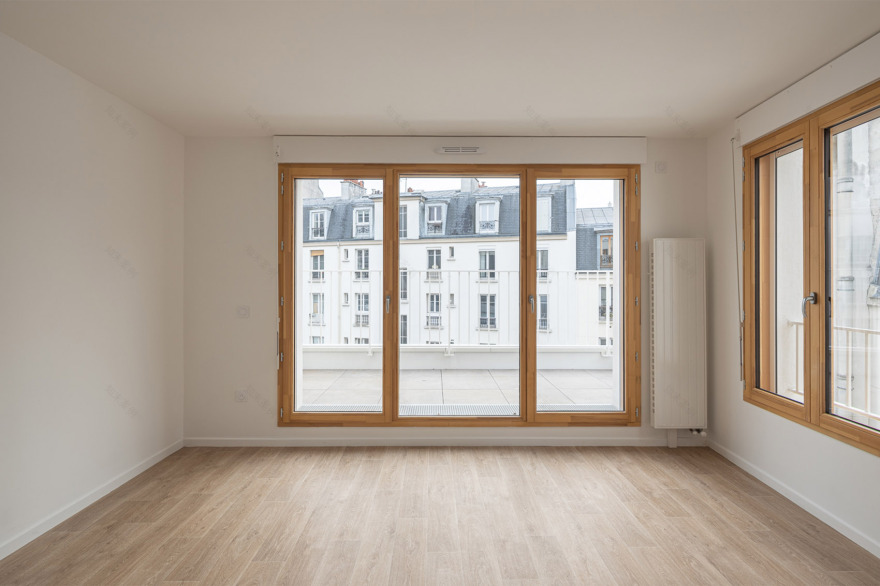
▼公寓内部空间,apartment interior space ©Cyrille Lallement

▼公寓露台,apartment terrace ©Cyrille Lallement

▼公寓露台,apartment terrace ©Cyrille Lallement

▼细部,detail ©Cyrille Lallement

结构体系结合了石材、木材与麻面混凝土,大幅减少了对高碳建材的依赖。混凝土仅限于楼板与柱子,用以保证声学效果并控制建筑高度与周边环境协调。预制化的建造方式(预制墙体、石材板、木质构件)使得施工过程低扰动,最大程度减少了在有限场地条件下对邻里的影响。
The structure relies on a combination of stone, timber, and hemp concrete, significantly reducing the use of carbon-intensive materials. Concrete is limited to floor slabs and columns to ensure good acoustics and to maintain a modest building height within its surroundings. Prefabrication of construction elements (precast walls, stone, timber panels) enabled a low-nuisance construction site that respected neighbors despite the limited site space.
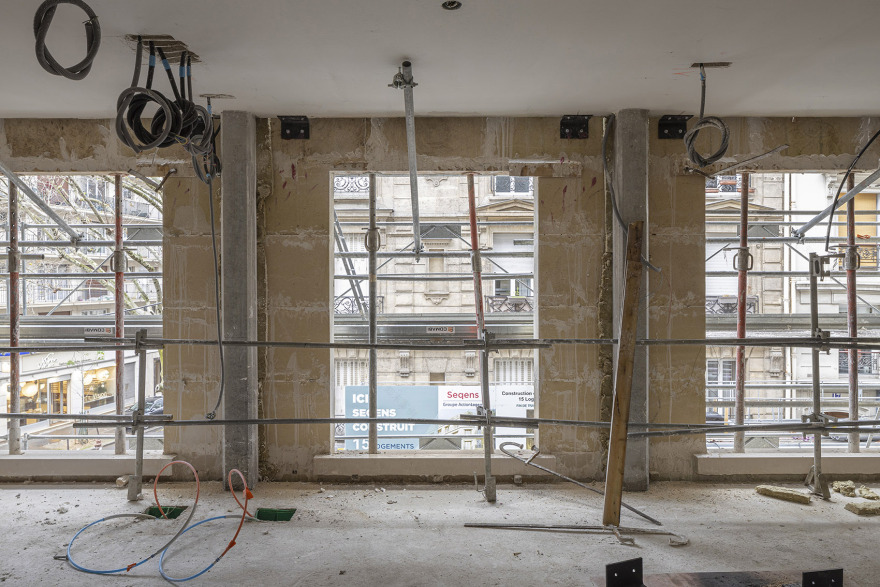
▼施工过程,construction photo ©Cyrille Lallement


▼场地平面,site plan ©Mao Architectes

▼一层平面,ground floor plan ©Mao Architectes

▼当前平面,current floor plan ©Mao Architectes

▼阁楼平面,attic floor plan ©Mao Architectes

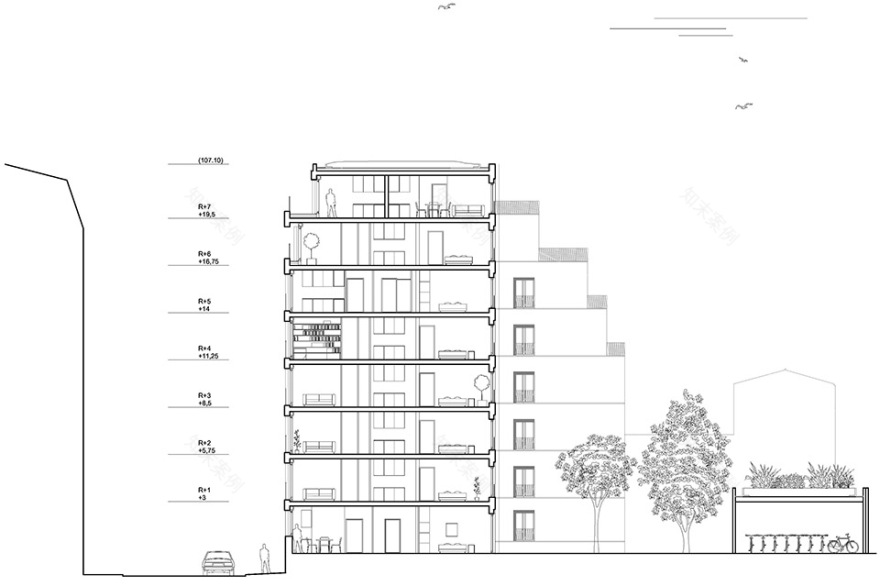
▼剖面,section ©Mao Architectes
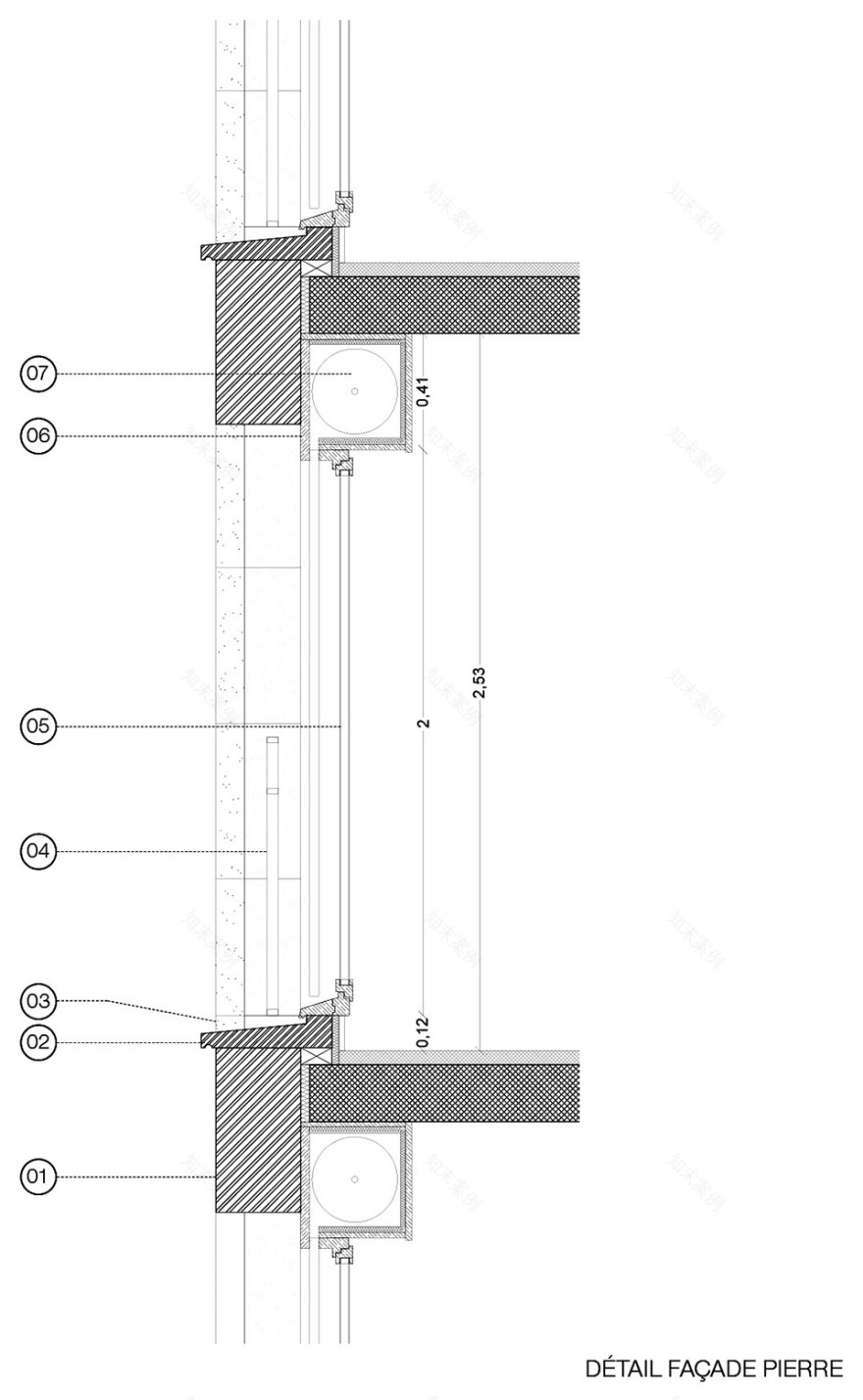
▼细部,detail ©Mao Architectes

Client: Sequens
Architects: Mao Architectes
Fabien Brissaud, Architect Aurélien Ferry, Architect Laura Chérubin, Architect
Photographer: Cyrille Lallement
Location: 18 Rue Pradier, Paris 19th
Performance Standards: Rt 2012 -20% City Of Paris Climate Plan Nf Habitat Hqe
Surface Area (Shab):820 M²




南京喵熊网络科技有限公司 苏ICP备18050492号-4知末 © 2018—2020 . All photos and trademark graphics are copyrighted by their owners.增值电信业务经营许可证(ICP)苏B2-20201444 苏公网安备 32011302321234号
苏公网安备 32011302321234号客服
消息
收藏
下载
最近