

创作上传
VIP
收藏下载
登录 | 注册有礼
查看完整案例

收藏

下载

分享
受业主方全心致力于推动生物农业创新的使命与热忱之启发,由NBBJ领衔设计的海大科学园将“自然”作为规划与设计的灵感之源。园区被构想为一棵大树,沿东西方向生长,其“枝干”环抱中央湖泊作为中心焦点。园区围绕一系列功能性空间布局,并将其分布于12座建筑,以满足多种需求。
Inspired by the client’s passion and commitment to bio-agricultural innovation, NBBJ’s planning and design concept for Haid Science Park takes its cues from nature. Envisioned as a giant living tree that grows in an east-west direction, its “branches” embrace a central lake as the focal point. The campus is organized around a series of functional programs, spreading across 12 buildings that cater to diverse needs.
▼空中鸟瞰实景图,Aerial View © 海大科学园供图

以东侧园区大门为起点,建筑物以总部 – 科研 – 餐厅 – 文化 – 办公 – 公寓的逆时针方向排列。尽管建筑的外观和体量不尽相同,但都体现了生命体在细胞层面运作的共同过程——从分裂到复制。
Starting from the campus gate on the east side, the buildings are oriented counterclockwise, beginning with the headquarters, labs and cafeteria which then leads to the cultural exhibition space, office highrise and apartments. Although the buildings vary in size, shape, and identity, they are all part of a common process of how living organisms—on a cellular level—work, from division to duplication.
▼总图,Masterplan © NBBJ

▼设计概念示意图,Design concept evolution ©NBBJ

总部在海大 Headquartered in Haid
作为园区东部的入口门户,总部建筑群是这段生命旅程的起点。总部建筑的外观形态源于生物学DNA结构的概念,建筑布局呈H状,俯瞰又如细胞分裂的片段。
Serving as a gateway at the eastern part of the campus, the Headquarters Building Complex is the starting point of this life journey. Drawing inspiration from the DNA structure, the building is laid out as a H shape and visually relates to fragments of cell division when looking from high above.
▼总部建筑群空中鸟瞰图,Aerial View © 刘松恺
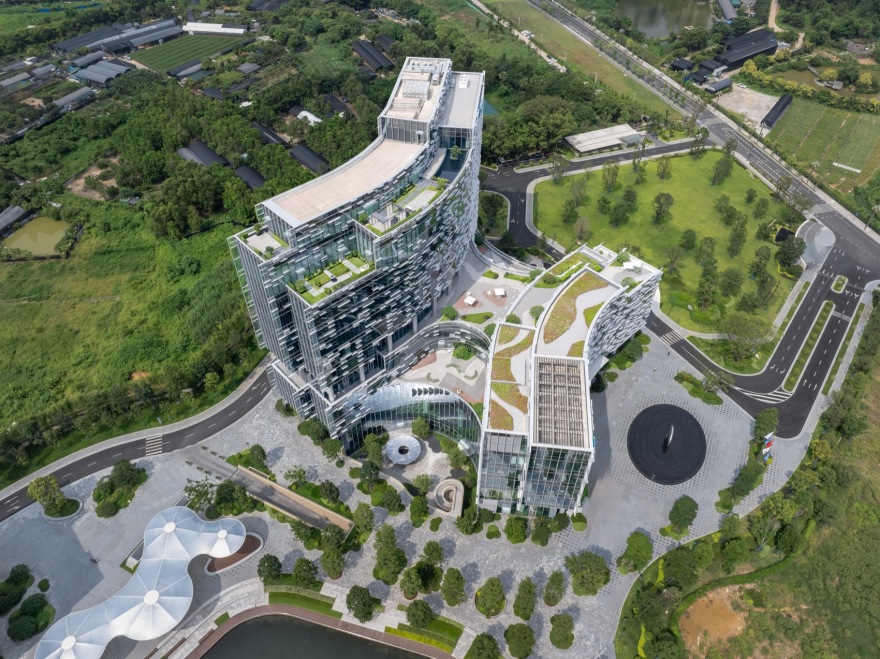
总部建筑群由南楼和北楼组成,底部通过一座多功能裙楼连接起来,裙楼将容纳访客中心、品牌展厅、会议室、报告厅和活动空间。
The Headquarters hosts a south building and a north building, connected by a multi-functional podium that houses a visitor center, a branded exhibition hall, meeting rooms, an auditorium, and event spaces.
▼总部建筑群,Building Complex © 刘松恺
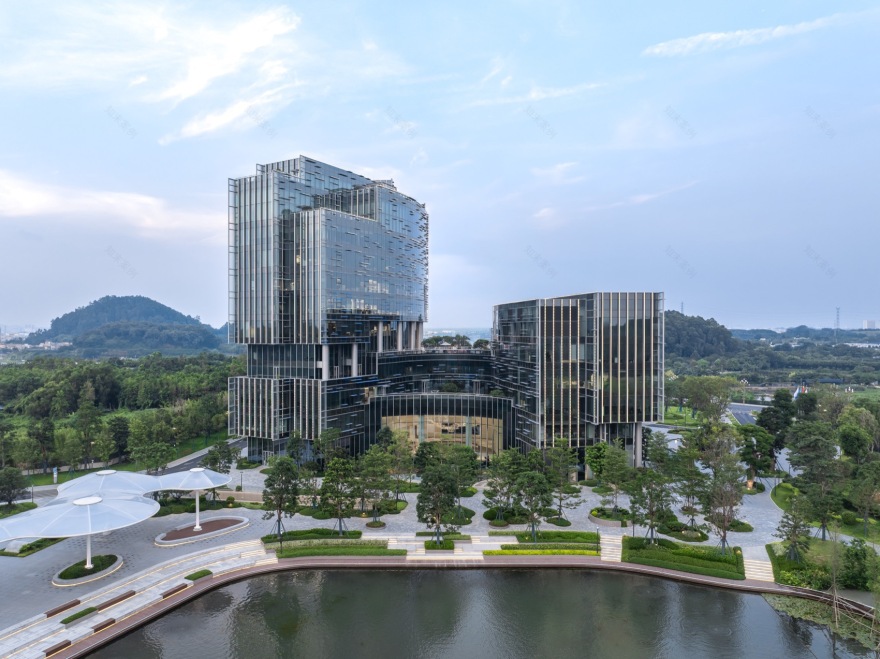
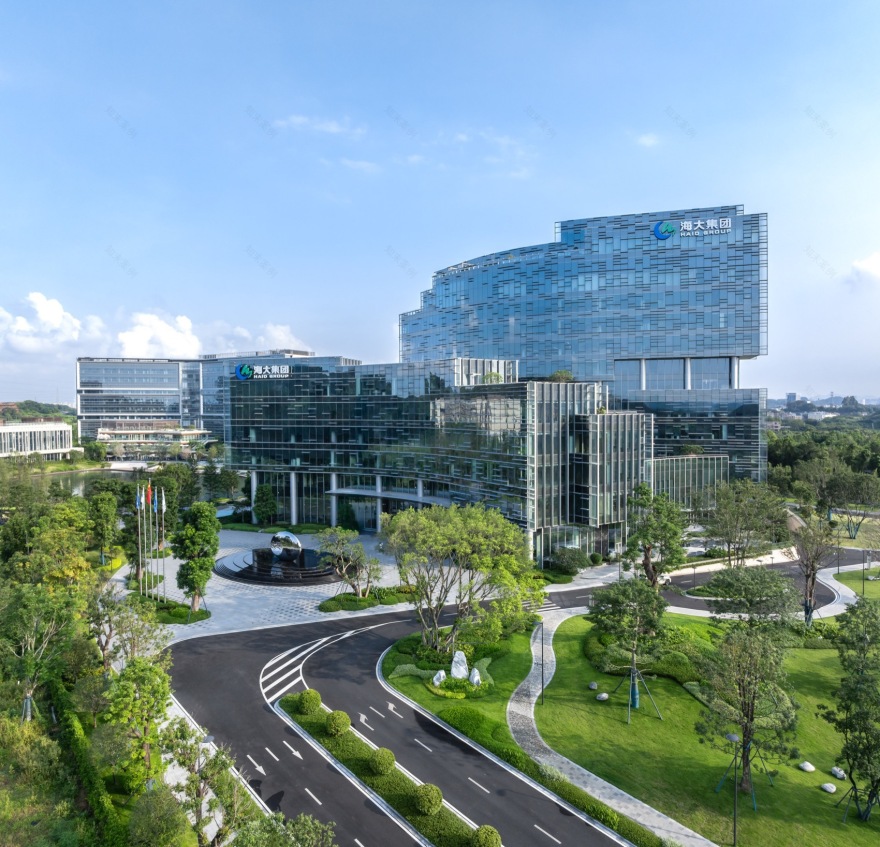

建筑外立面采用大小不一的肋板,既是基于节能的遮阳考虑,也暗示着生物工程和基因图谱的有序渐变。作为园区的中央枢纽,这座H形建筑因其曲线造型极具辨识度,并在每个建筑方向上设有一个与周边环境相呼应的宽阔广场。
▼总部建筑群,总体建筑布局,Overall Building Layout © NBBJ
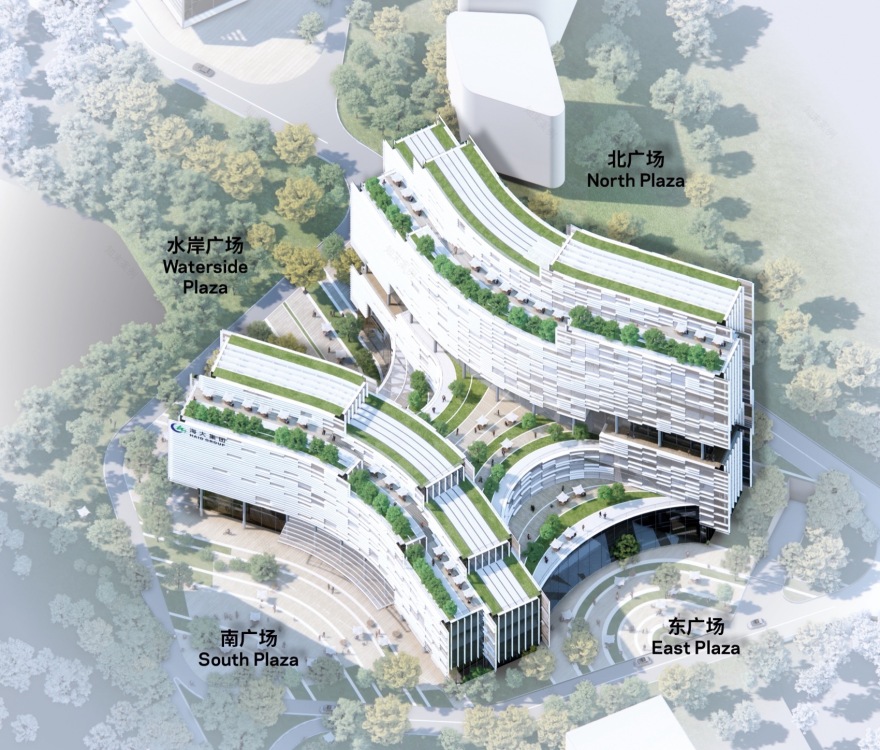
The building facade features fins of varying sizes, serving as sunshades with a subtle hint to the ordered gradations found in bioengineering and genetic mapping. Designed as a central hub of the campus, the ‘H’ shaped building is highly recognizable by its curves and hosts an expansive plaza in each building direction that responds to the neighboring environment.
▼总部建筑群实景图,Building Complex © 刘松恺
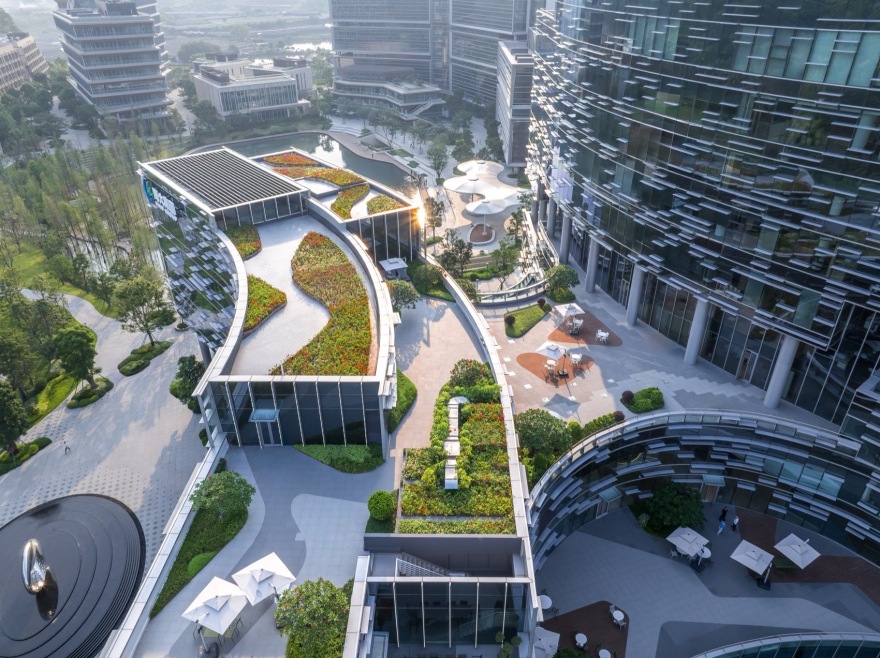
▼建筑立面近景,Facade close view© 刘松恺

总部楼在临湖方向设置下沉广场,与湖景餐厅处的下沉广场相互呼应,并配备了水景与水帘装置,栽培了茂盛的绿植,为员工提供聚集、讨论、休憩的景观客厅。▼下沉广场位置分布示意,Sunken Plaza Locations © 海大科学园供图
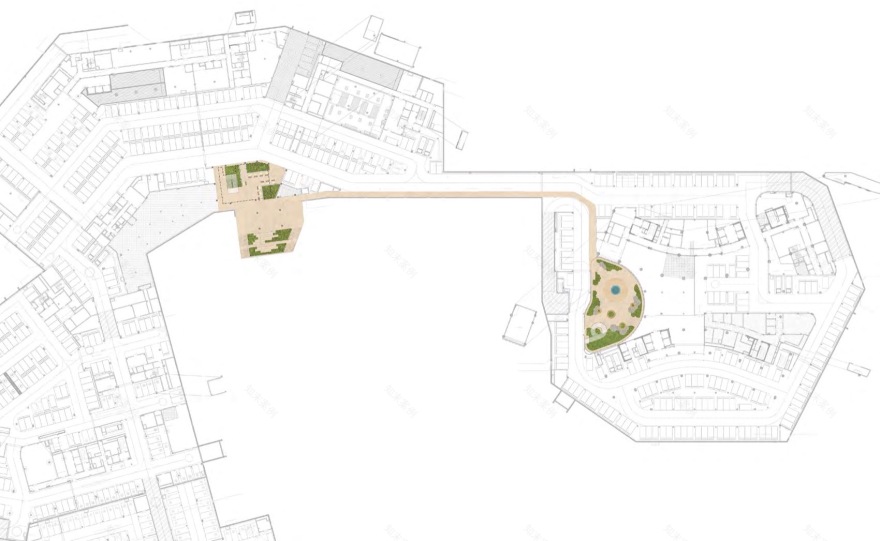
The Headquarters Building Complex features a sunken plaza facing the lake, complementing the sunken plaza at the lakeside restaurant. Equipped with water features and a water curtain, it is adorned with lush greenery, creating a scenic lounge where employees can gather, engage, and relax.
▼景观,Landscape © Duo Vision & LOLA景观建筑事务所, 海大科学园供图

此外,条形建筑体块运用退台的设计手法,为员工和访客创造出多元而立体的室外空间,并将绿植引入建筑的垂直方向及屋顶,最大限度地拉近了人们与自然的距离,让身处于总部楼的人们随处都能发现建筑空间的惊喜。
In addition, setbacks are brought in building bars to create diverse, multi-level outdoor spaces with greenery vertically along the facades and across the rooftops to bring people closer to nature, and create delightful moments for those on the inside.
▼入口立面,Entrance facade© 刘松恺

▼室内休闲空间,Interior space© 刘松恺


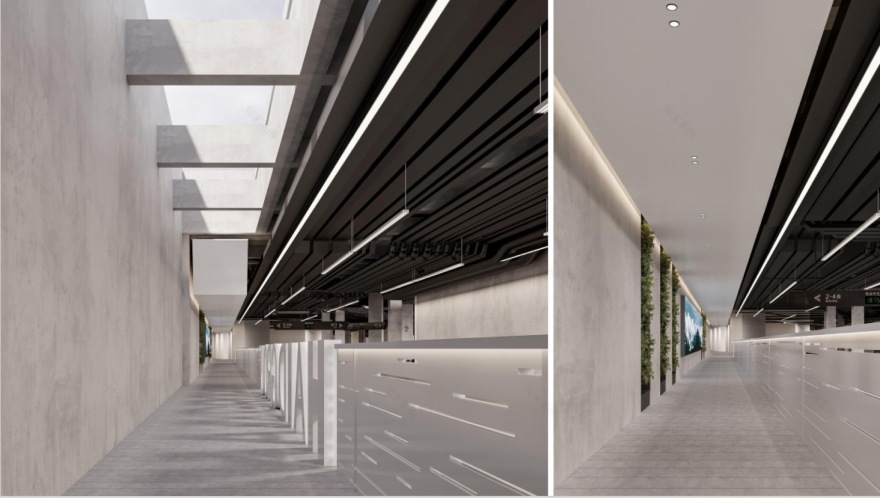
设计充分响应广州夏季炎热多雨的气候特征,地下空间被设计成了贯通的状态,在两个下沉广场之间为员工及访客创造了一条遮阳挡雨、四通八达的地下通道,并于通道顶部开设采光井,有利于引入日照与通风,优化地下通行与停车的体验。
To respond to the hot and rainy summer climate in the city of Guangzhou, the underground space is designed as a continuous network, creating a sheltered, interconnected underground passageway between two sunken plazas for employees and visitors. Skylights are incorporated into the passageway ceiling to facilitate natural light and ventilation, enhancing the walking and parking experience below grade.
▼地下通道,Underground Passage © 海大科学园供图

科研在海大
Research in Haid
科研建筑群与高层办公组团相互呼应,由近乎相同的建筑体量组合而成,其设计旨在支持科研发现与创新。其中,科研建筑群被组织在三个类似的建筑体量当中,通过中庭或连廊相连,方便员工开展交流互动。与此同时,面积不等的实验室通过灵活组合来呼应基因测序的视觉隐喻,同时也丰富了立面的分区设计。
The Lab Buildings and Office Highrise Cluster compliment one another with nearly identical volumes that support discovery or innovation. The Lab Buildings are organized into three similar building volumes which are connected through an atrium or a connecting corridor to facilitate collaboration and interaction amongst employees. Meanwhile, the flexible combination of large and small laboratories echoes the visual metaphor of genetic mapping, while enriching the division of the facade.
▼科研建筑群,Lab Building Complex © 刘松恺

科研建筑群的规划设计主要以功能需求为导向。采光需求较低的实验室空间布置在北侧,而采光需求较高的办公空间则布置在南侧。外立面设计也遵循同样的序列组织逻辑。采光需求较低的区域采用玻璃加肋板的材料组合,起到适当的遮阳和降噪作用;采光需求较高的区域则尽可能扩大玻璃幕墙的覆盖面积,有助于增加室内日照范围,同时充分利用朝向中心湖体的优势,力求实现景观视野最大化。
The plan and design of the Lab Buildings is primarily driven by functional needs. Laboratory spaces with lower light needs are located on the north side, while office spaces with higher light needs are located on the south side. The façade design follows the same logic. Areas with low light demand use a combination of glass and fins to provide appropriate shading and noise reduction; areas with high light demand increase the size of the glass curtain wall as much as possible, which helps to drive sunlight deeper into the building while maximizing views to the lake.
▼科研建筑近景,Lab Building Complex© 刘松恺

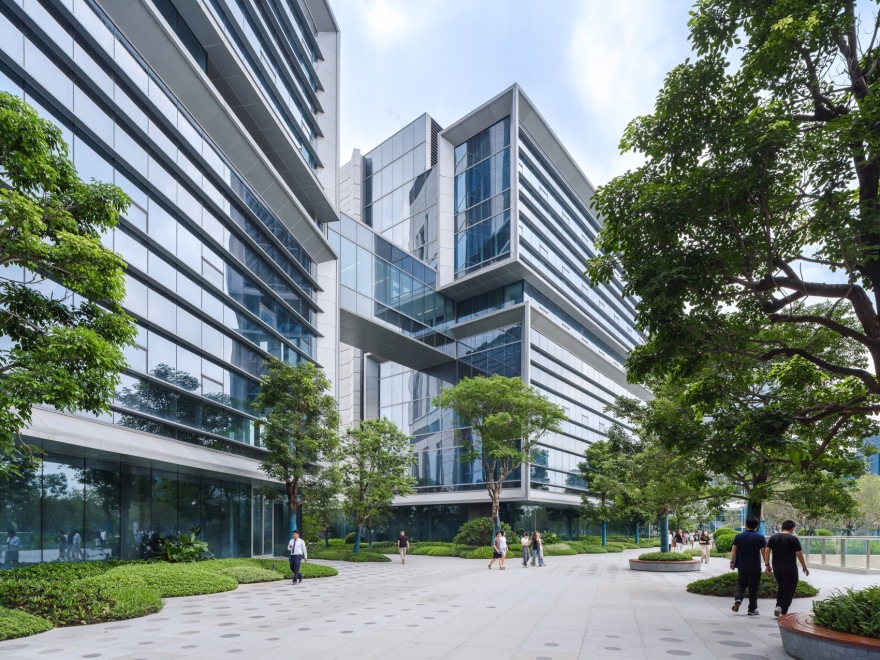
垂直堆叠的办公空间之间穿插设置协作开放式交流空间,以更丰富的形式将办公功能联系起来。在多个楼层穿插设置双层通高空间以及景观露台,为立面增添视觉趣味,并提供多元的工作场景。
The design intersperses vertically stacked office spaces with collaborative and open communication zones for employees to connect and collaborate. Multiple floors are interspersed with double-height spaces and landscaped terraces, adding visual interest to the façade, integration with the outdoors and opportunities for a variety of working scenarios.
▼立面近景,Facade close view© 刘松恺

办公在海大 Work in Haid 构成高层办公组团的两个相近的建筑体量通过一系列垂直堆叠的空中花园和露天连桥衔接起来,成就了一座空中会客厅,宛如一颗绿色“心脏”,使建筑与建筑之间形成鲜活的有机联系。
The Office Highrise Cluster is comprised of two nearly identical buildings, which are connected by a series of vertically stacked sky gardens and open-air bridges, creating a living room that acts as a green ‘heart’ and creates a vibrant connection between the building volumes.
▼高层办公组团,Office Highrise Cluster © 刘松恺

富于创新的折板外墙系统被纳入到办公楼设计当中。南北立面采用锯齿形折叠立面系统,营造出清晰的立面表达。这种立面系统的基本模块由一个有角度的玻璃视觉面板和一个不透明的侧面板组成。一方面,倾斜的玻璃视觉面板的位置与场地的最佳视野方向相呼应。另一方面,不透明面板通过集成的可开启通风口提供遮阳保护,便于自然通风。
The design incorporates a folded panel façade system. The north and south elevations utilize a serrated folding façade system to create a clear exterior expression. The basic module of this façade system consists of an angled glass visual panel and an opaque side panel. The angled glass visual panel is positioned in a way that echoes the direction of the best site view, while the opaque panel provides shading through integrated openable vents to facilitate natural ventilation.
▼立面系统,The façade system © 刘松恺


生活和学习在海大
Culture & Living in Haid
除以上建筑组团,园区内的其他建筑则主要承载文化、餐饮及居住等功能,并继续围绕构建细胞层面生命体与绿色自然的主题铺展开来,对园区使用群体给予支持。其中,湖景餐厅建筑共有三层,餐厅正面沿着湖景轮廓线设置,室外设有餐饮区域、休憩台阶及亲水栈道,二三层则配有户外露台。
Additional buildings on the campus host cultural, dining and residential functions, are all centered around the theme of “building life” and sustainability by supporting different user groups. The Lakeview Cafeteria has three floors, the front of which is set up along the contour line of the lake view, with outdoor dining areas, a large ramp and a waterfront walkway, and the second and third floors are provided with outdoor terraces.
▼湖景餐厅,Lakeview Cafeteria © 刘松恺

下方与下沉广场相连,方便人们通过地面或地下通道抵达聚餐位置,在享受餐饮服务的同时欣赏优美的湖景。
The cafeteria is designed to connect to the sunken plaza allowing people to reach the dining area via ground level or underground passage. It is where people can enjoy culinary service while taking in the beautiful lake views.
▼湖景餐厅处下沉广场,Sunken Plaza under Lakeview Cafeteria © 刘松恺
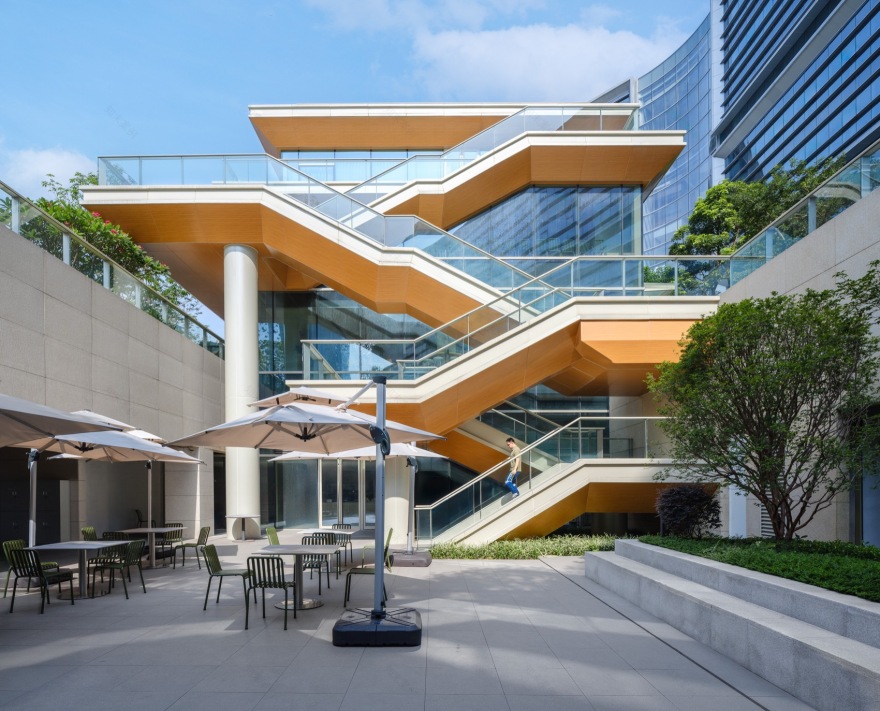
海大文化展览空间位于中央湖区西侧。底层区域包含灵活的开放式展览空间,设有面向水岸的半户外茶室。建筑的外观宛如一个悬浮于地面之上的轻飘飘的盒子,首层的几道石墙着意引导公众走入室内。
The Cultural Exhibition Space is located on the western side of the central lake. The ground floor features flexible open exhibition areas and a semi-outdoor tearoom facing the waterfront. The building is designed as a light-weighted, floating box suspended above the ground, with several stone walls on the first level deliberately guiding visitors into the interior.
▼海大文化展览空间,Haid Cultural Exhibition Space © 刘松恺

与海大文化展览空间毗邻的是小型办公建筑,采用相似的立面语言以及更具亲密度的立面材料,如暖色石材和纹理木板等,拉近与员工、访客之间的距离。
Adjacent to the cultural exhibition space stands compact office buildings. By using a similar architectural language and more intimate facade materials—such as warm-toned stone and textured wood panels—it fosters a sense of closeness with both staff and visitors.
▼小型办公建筑,Compact Office Building © 刘松恺

园区的西南角设有人才公寓,这里较为静谧,很少会受到场地上其他区域活动的干扰。公寓楼由三个自东向西的水平连接体块组成,力求营造基因图谱感的外观效果,以响应内部不同的单元类型,并为其赋予独特的立面表现力。
The southwest corner of the campus anchors Talent Apartments, offering a relatively quiet environment largely undisturbed by activities in other areas of the site. The apartment building consists of three horizontally connected volumes in the east and west direction, striving to create a genetic map-like outlook that responds to the diverse room types on the inside and exhibits a distinctive facade expression.
▼人才公寓,Talent Apartments© 刘松恺

海大科学园的规划与设计积极引入海绵城市的发展原则及可持续发展策略,由此实现了全园区范围内的水循环策略,使微气候得到了调整,可再生能源获得了应用。项目力求展现构建生命体和绿色生态的大主题,通过设计创新推动生物农业创新,为员工和访客带来了一座将人与自然有机连通起来的低碳示范园区。
The Haid Science Park is planned and designed to incorporate the Sponge City principles and a series of sustainable strategies. As a result, the site-wide water circulation has been implemented, microclimate has been improved, and renewable energy application has been enabled. The project strives to embody the overarching themes of “building life” and sustainability. Through design, it drives innovation in bio-agriculture, creating a low-carbon model that connects people and nature for both employees and visitors.
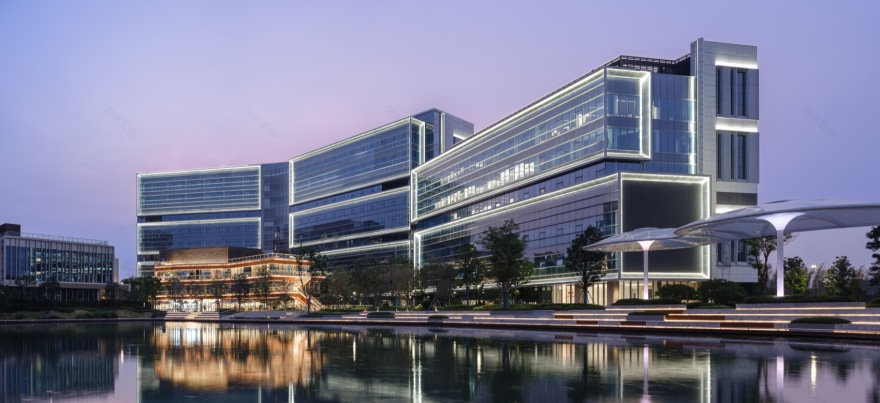
▼夜览,Night view© 刘松恺

项目基本信息
项目地点:中国广州
建筑面积:17万平方米
建成时间:2025年
功能要素:总部大楼、益豚大厦、研究院、产业独栋、文化展览空间、产研大厦、餐厅、人才公寓
总体规划:NBBJ
建筑设计:NBBJ
施工图设计:广州市设计院集团有限公司
景观设计:LOLA景观建筑事务所
可持续设计:EMSI君凯环境管理咨询有限公司
施工总包:中国建筑第五工程局有限公司
幕墙工程:广州江河幕墙系统工程有限公司
景观工程:广东东篱环境建设有限公司
专业摄影:刘松恺(标明海大科学园供图的除外)
Basic Information
Location: Guangzhou, China
Size: 170,000 SM
Completion Date: 2025
Components: Headquarters Building Complex, Yi Tun Building, Research Institute, Stand-Alone Industrial Buildings, Cultural Exhibition Space, Industrial & Research Building, Cafeterias, Talent Apartments
Masterplan: NBBJ
Architecture: NBBJ
Construction Documents Design: Guangzhou Design Institute Group Co., Ltd.
Landscape Design: LOLA Landscape Architects
Sustainability: EMSI
General Contractor: China Construction 5th Engineering Division Corp., Ltd.
Curtain Wall Engineering: Guangzhou Jangho Curtain Wall System Engineering Co., Ltd.
Landscape Engineering: Guangdong Donglee Environmental Co., Ltd.
Photography: Songkai Liu (except for those provided by the Haid Science Park)


南京喵熊网络科技有限公司 苏ICP备18050492号-4知末 © 2018—2020 . All photos and trademark graphics are copyrighted by their owners.增值电信业务经营许可证(ICP)苏B2-20201444 苏公网安备 32011302321234号
苏公网安备 32011302321234号客服
消息
收藏
下载
最近