

创作上传
VIP
收藏下载
登录 | 注册有礼
查看完整案例

收藏

下载

分享
Calder Gardens并不是一座传统的博物馆。从一开始,客户就希望创建一个能够与亚历山大·卡尔德(Alexander Calder)的作品进行全新、亲密和不断变化的互动的空间。尽管建筑仍然需要满足传统博物馆的技术要求,但它被构思为一种全新的与艺术共处的场所:一个艺术、建筑、自然、人和周围城市相互交织的地方。
Calder Gardens is not a conventional museum. From the beginning the client wanted a space that would provide a totally new, intimate and ever-changing encounter with the work of Alexander Calder. While the building is still tasked with the typical technical requirements of a traditional museum, it is conceived as a new type of place for being with art: a place that provides an interplay between art, architecture, nature, people, and the surrounding city.
▼项目鸟瞰,aerial view of the project©Iwan Baan


费城是卡尔德的出生地,也是两代卡尔德艺术家生活过的地方,他们在这座城市留下了自己的印记。沿着本杰明·富兰克林大道(Benjamin Franklin Parkway)可以找到他们的雕塑,这条大道是19世纪“美丽城市”(city beautiful)运动的产物,由美国两座最著名的博物馆——费城艺术博物馆和巴恩斯基金会(Barnes Foundation)主导。贯穿这条大道的是下沉式的藤街高速公路(Vine Street Expressway),它像许多美国城市中的同类公路一样,在20世纪中期切割了原有的城市肌理。Calder Gardens位于这两条重要街道的交汇处。
Philadelphia is Calder’s birth city and was the home of two previous generations of Calders who, as artists, left their own impressions on the city. Their sculptures can be found along the Benjamin Franklin Parkway, a boulevard that is a product of the 19 century ‘city beautiful’ movement and is anchored by two of America’s most remarkable museums, the Philadelphia Museum of Art and the Barnes Foundation. Cutting across this Parkway is the sunken Vine Street Expressway which, like many of its counterparts in other American cities, sliced through the existing city fabric in the mid-20 century. Calder Gardens is located at the intersection of these two significant streets.
▼项目位于平坦渐变的地块之上,the site of Calder Gardens is a flat, tapered piece of land©Iwan Baan
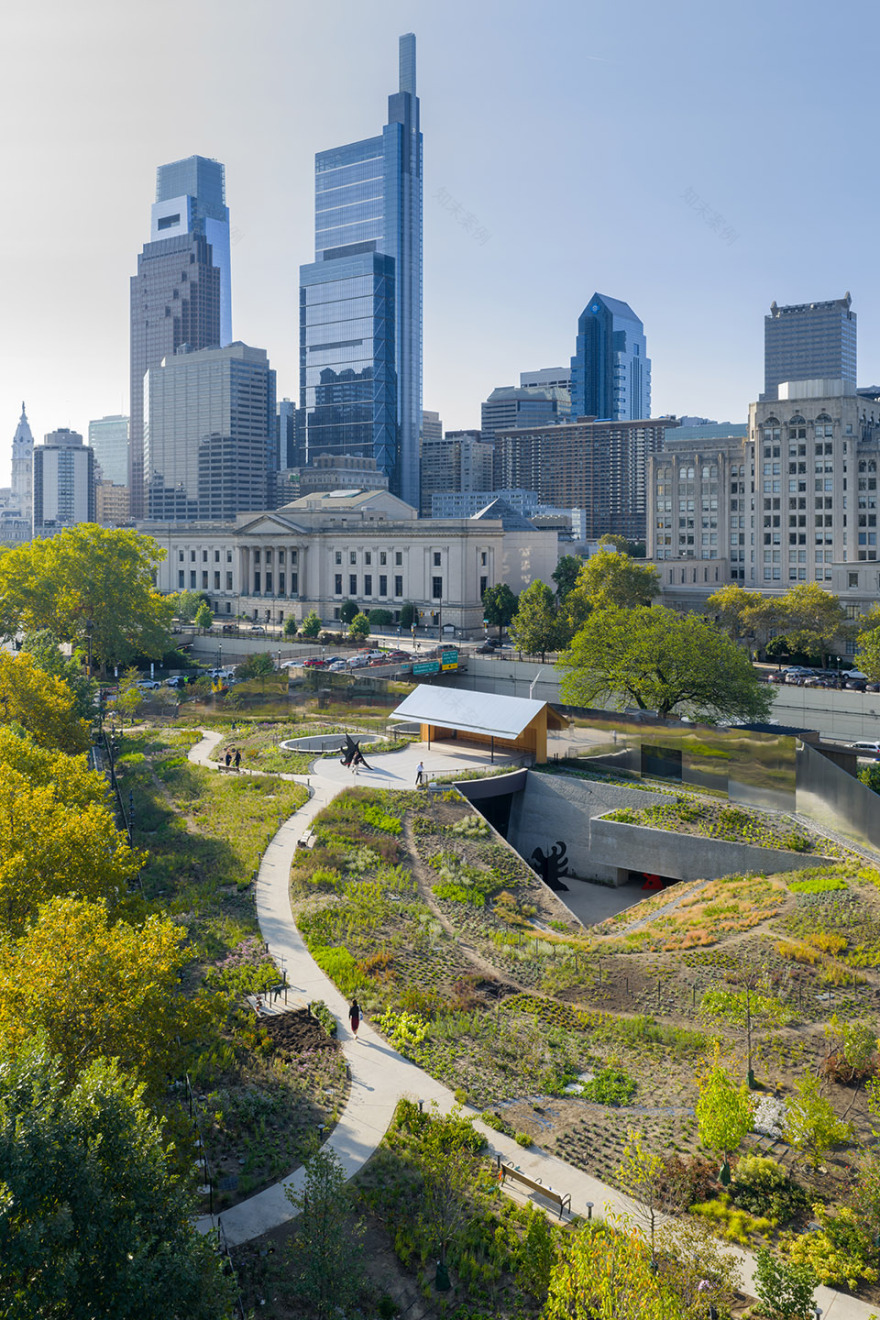
Calder Gardens的选址是一个平坦、渐变的地块,位于Rodin博物馆和巴恩斯基金会对面的宽阔大道的另一侧。高速公路的出口延伸在其南侧,而西侧的22街和东侧的21街主要作为车行道使用。尽管位置居中,但该地块是一个废弃空间,缺乏明显的魅力。高速公路的噪音始终存在,几乎没有人有理由穿过这个地点。如何在这个城市的空白地带创造一个目的地,成为该项目的核心挑战。
▼一层平面,ground floor plan©Herzog & de Meuron

The site of Calder Gardens is a flat, tapered piece of land located across the broad Parkway from the Rodin Museum and the Barnes Foundation. A highway offramp extends along its long southern edge while 22 Street to the west and 21 Street to the east are primarily used as vehicular throughways. Despite its central location, the site is a leftover space without much obvious charm. The sound of the highway is always present, and few people have had reason to walk through the site. Creating a destination within this urban void was a central challenge for the project.
▼隐于地下的博物馆,the museum which hide in under the ground©Iwan Baan
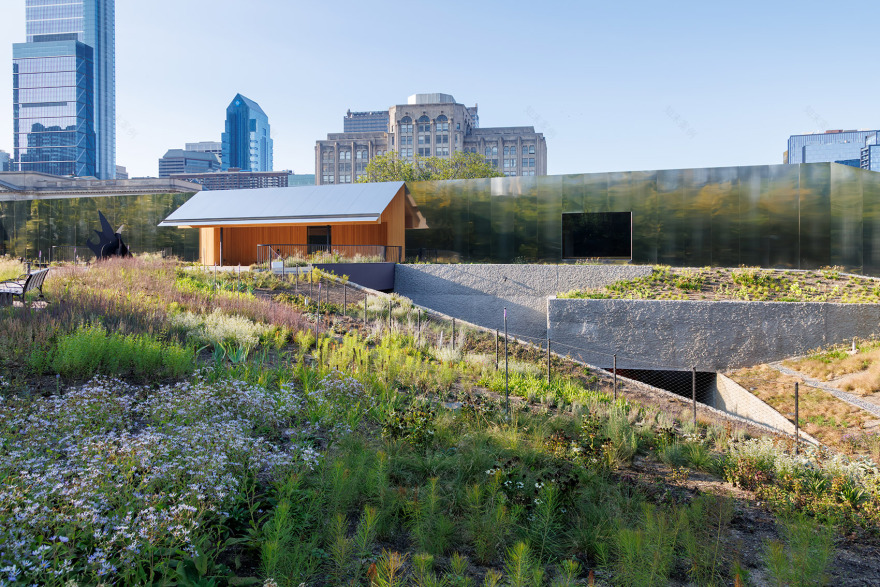
形式、色彩和运动是卡尔德艺术中最明显的特征。在Calder Gardens的构思过程中,设计师尽量避免将这些特征作为设计元素,而不是直接采用它们。同样,设计避免了本杰明·富兰克林大道沿线已有的令人印象深刻的博物馆建筑的纪实风格。考虑到这些参数,决定该项目的面貌不应是一个建筑物。相反,它是一个花园,建筑隐藏其中,逐步呈现为一系列独特的异质空间。
Form, color, and movement are the most obvious aspects in Calder’s art. When the concept for Calder Gardens was conceived, it sought to avoid rather than adopt the use of these characteristics as possible design elements. Likewise, the design avoids the monumental architecture of the already impressive collection of museums which line the Benjamin Franklin Parkway. With these parameters in mind, it was decided that the face of this project should not be a building. Instead, it is a garden with a building within that reveals itself step by step as a series of distinct, heterotopic spaces.
▼隐于地下的博物馆,the museum which hide in under the ground©Iwan Baan

墙与圆盘
The Wall and The Disc
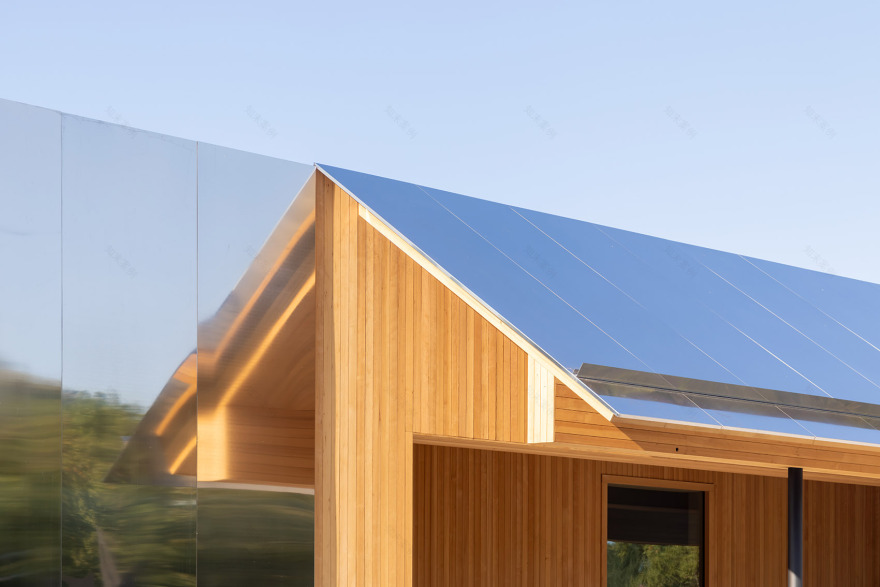
从本杰明·富兰克林大道看,一面逐渐收缩的金属墙作为公共草地花园的背景。墙壁有效地降低了高速公路的噪音,并将花园与大道框起来。从东北和西北角的路径引导参观者穿过花园,向中央的单一开口处进发,那里有一个折叠的金属棚顶,遮挡着一个木质的入口区域。
When viewed from the Parkway, a tapered metal wall forms a backdrop to a public meadow-like garden. The wall reduces the sound of the highway and frames the garden towards the Parkway. Pathways from the northeast and northwest corners draw visitors through the garden towards a single central opening where a folded metal canopy covers a wood-lined entry area.
▼金属墙作为公共草地花园的背景,a tapered metal wall forms a backdrop©Iwan Baan

当参观者接近入口时,建筑开始显现。一块巨大的中央圆盘形成了中央广场,并为下方的画廊提供了屋顶。向东是几何纯粹的圆形“下沉花园”,向西则是形态不规则的“遗迹花园”,它们被雕刻在圆盘两侧的地面上。这些花园为卡尔德的雕塑提供了受保护的户外空间,并将光线引入周围的画廊。圆盘与墙壁的交界处定义了入口,单个窗户让人可以窥见下方的画廊。
As visitors approach the entry, the architecture comes into view. A large central disc forms a plaza at the center and provides a roof to the galleries below. A geometrically pure circular ‘Sunken Garden’ towards the east and an elongated irregular ‘Vestige Garden’ to the west are carved into the ground on either side of the disc. They create protected outdoor spaces for Calder’s sculptures and bring light into the surrounding galleries. The intersection of the disc and the wall define the entry. A single window offers a glimpse to the galleries below.
▼檐下空间,space under the eave©Iwan Baan

金属墙的背面覆盖着黑色木材,形成一个简单的类似谷仓的建筑,面向高速公路。这个低矮的建筑仅在经过时可见,并不会吸引人们的注意力。它包含了一些必要的员工空间、装卸区域和一个小型的木质大厅。这个大厅的规模不同于大多数博物馆入口处典型的大空间。它具有家庭规模,吸引着每位参观者开始他们的Calder Gardens体验。
The backside of the metal wall is covered with blackened wood and forms a simple barn-like building towards the highway. The low building is only seen in passing from this vantage point and does not draw attention to the project. It contains a few necessary staff spaces, a loading area and a small wood-lined lobby. The lobby is different than the typical large-scale spaces that define most museum entryways. It is domestic in scale and engages the individual as they begin their Calder Gardens experience.
▼金属墙后嵌入类似谷仓的建筑,The backside of the metal wall is covered with blackened wood and forms a simple barn-like building ©Iwan Baan
逐步展开
Step by Step
从大厅进入后,参观者会沿着一段大楼梯下降到下方的画廊。一条大楼梯将人们带到“高速公路画廊”。这条楼梯本身还起到了小型讲座厅的作用。一个长而低的线性窗户将视野引向高速公路和远处的城市;“高画廊”则位于楼梯下方。高速公路画廊是这个高空间中的一个夹层,为观众提供了一个从高处观赏卡尔德动态雕塑的机会。与上方墙体相对应的一根梁将高画廊与下方圆盘下方的空间隔开。梁上方的窄缝让人可以一瞥下方的画廊。
From the lobby, visitors descend to the galleries below. A large stair brings people down to the ‘Highway Gallery’. The stair functions as a small auditorium for gathering. A long, low linear window frames a view of the highway and city beyond; the ‘Tall Gallery’ is seen below. The Highway Gallery is a mezzanine within this tall space and gives the viewer an opportunity to experience a Calder mobile from an elevated position. A beam corresponding with the wall above separates the Tall Gallery from the space below the disc. A narrow slot above the beam offers a glimpse into the gallery below.
▼从夹层观赏卡尔德动态雕塑,experience a Calder mobile from an elevated position©Iwan Baan


▼线性窗户引入自然光线,the linear window introduce the natural lighting©Iwan Baan

从高速公路画廊的夹层,通道和楼梯铺设了深色、粗糙的混凝土表面。这条“立方体”楼梯将人们引向地面和形成外部花园的遗迹般的空间。正如所有的空余空间一样,这条楼梯也提供了展示卡尔德作品的独特机会。
From the Highway Gallery mezzanine, a passage and stair are lined with a dark, rough concrete surface. This ‘Cuboid’ stair links people to the ground and the vestige-like spaces that form the outer garden. As with all leftover spaces, the stair offers another distinct opportunity to display Calder’s work.
▼深色、粗糙的混凝土表面,a dark, rough concrete surface©Iwan Baan


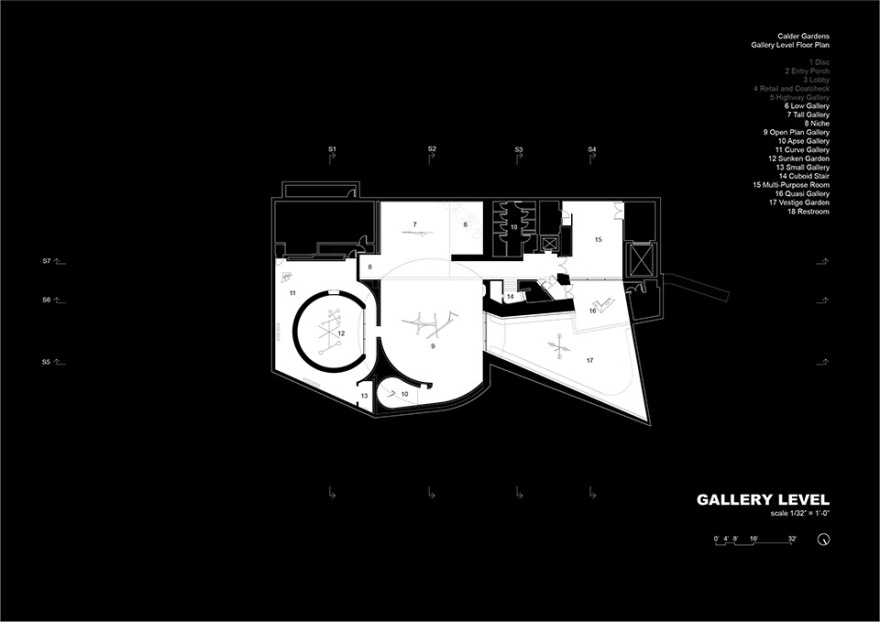
楼梯到达主画廊层。穿过高画廊后,参观者会进入位于圆盘下方、自然采光充足的“开放式画廊”。开放式画廊的几何形态在东西方向上是正交的,北向则呈弯曲状,反射了上方的圆盘。一个大窗户朝向遗迹花园,带来了自然光,并将中央空间与外部花园连接起来。一个小型的“圣坛画廊”由两面错位的弯曲墙面构成——该画廊没有明显的拐角,以免分散观众对内部艺术的注意力。开放式画廊和圣坛画廊共同展示了卡尔德的大型和小型作品,从多个角度呈现其艺术风貌。
The stair arrives on the main gallery level. Passing through the Tall Gallery, the visitor encounters the daylit ‘Open Plan Gallery’ below the disc. The geometry of the Open Plan Gallery is orthogonal on the east and west and curved towards the north, reflecting the disc above. A large window opens towards the Vestige Garden bringing in natural light and connecting the central space with the garden outside. A small ‘Apse Gallery’ is created from two offset curved walls – this gallery has no visible corners which could distract from the view of the art inside. Together, the Open Plan and Apse galleries allow a variety of Calder’s large and small works to be seen from multiple perspectives.
▼画廊由两面错位的弯曲墙面构成,‘Apse Gallery’ is created from two offset curved walls©Iwan Baan


从开放式画廊,窄缝揭示了“下沉花园”和通往“弯曲画廊”的入口。开放式画廊提供了一个光线充足的空间,并可以看到外部景观,而弯曲画廊则是一个完全内嵌的空间,裸露的混凝土基础墙最大限度地控制光照条件。这个空间可以用来展示卡尔德的纸上作品、光敏雕塑以及卡尔德祖先的绘画。下沉花园位于这个空间的中央;一座稳定的雕塑将被放置在一面浓密植被环绕的弯曲墙上,为卡尔德的作品提供了又一种不同的背景。
From the Open Plan Gallery, a narrow slot reveals the ‘Sunken Garden’ and the entry to the ‘Curved Gallery’. While the Open Plan Gallery offers a light-filled space with views to the outside, the Curved Gallery provides a fully internalized space with exposed concrete foundation walls and maximum control over light conditions. This space can be used to show Calder’s works on paper, light sensitive sculptures and the paintings done by Calder’s ancestors. The Sunken Garden is at the center of this space; A single stabile will be placed against a densely planted curved wall offering yet again a different background to experience Calder’s work.
▼环绕的弯曲墙面为雕塑提供不同的背景,curved wall offering a different background©Iwan Baan

▼细部,detail©Iwan Baan

遗迹
Vestiges
现有场地的历史条件在室内平面几何和花园配置中都有体现。与附近水管的错位形成了地下平面不规则的边界。此前存在的城市网格的历史基础结构的痕迹影响了遗迹花园的几何形态。一个“准画廊”提供了一个洞穴般的、被覆盖的户外空间,在室内高度控制的画廊空间与外部露天花园之间起到了调解作用。这些空间共同鼓励策展人以全新的、意想不到的方式展示卡尔德多面的作品。它为沉思和专注提供了一个场所,并提供了一种空间序列体验,而非传统的画廊体验。Calder Gardens是一个随着你走过门口逐步展开的世界。
The historical conditions of the existing site surface in both the interior plan geometry and garden configuration. An offset of an adjacent water main establishes the kinked boundary of the underground plan. Traces of the historical foundations from the city grid which pre-dated the Parkway inform the geometry of the Vestige Garden. A ‘Quasi Gallery’ provides a cave-like, covered outdoor space that mediates between the highly controlled gallery spaces on the interior and the exposed garden spaces outside.
Together, these spaces encourage curators to display Calder’s multifaceted work in ever new and unexpected ways. It provides a place of contemplation and focus and offers a spatial sequence rather than a classical gallery experience. Calder Gardens is a world that unfolds as you walk through the door.
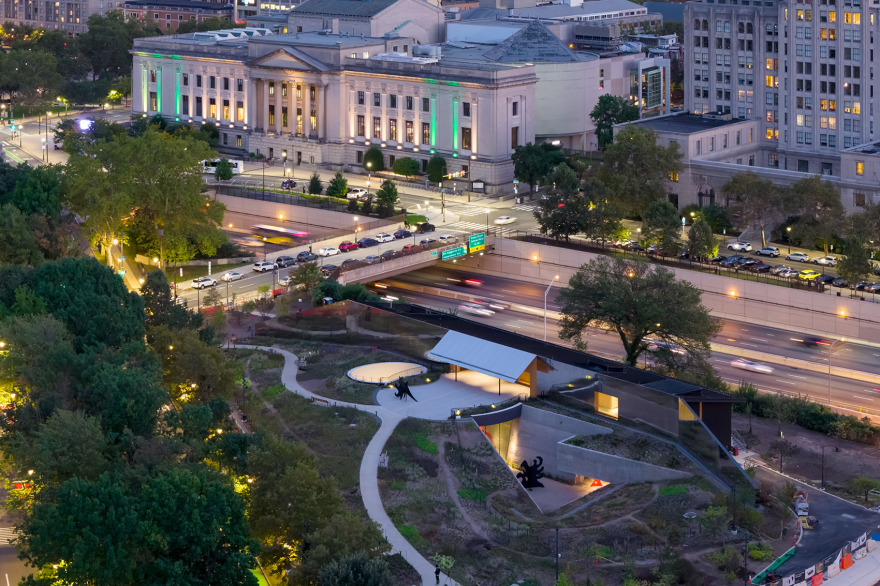
▼夜景,night view©Iwan Baan

▼场地平面,site plan©Herzog & de Meuron

▼美术馆平面,gallery level plan©Herzog & de Meuron
▼南立面,south elevation©Herzog & de Meuron

▼西立面,west elevation©Herzog & de Meuron

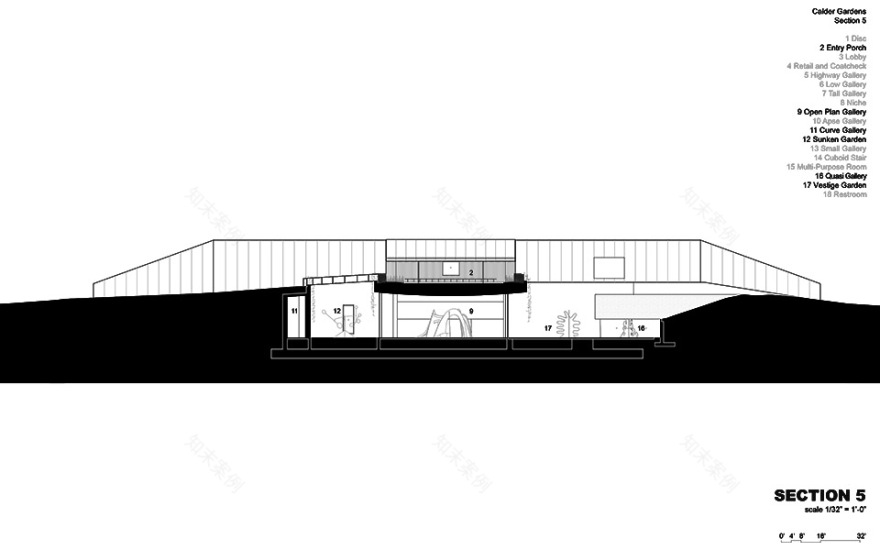
▼剖面,section©Herzog & de Meuron



Project Official Name:Calder Gardens
Location:Philadelphia, PA, USA
Herzog & de Meuron
Project Team
Partners: Jacques Herzog, Pierre de Meuron, Jason Frantzen (Partner in Charge)
Project Team: Aurélien Caetano (Associate, Project Director), Mehmet Noyan (Associate, Project Director), Ninoslav Krgovic (Project Manager)
Antoine Foehrenbacher, Julia Hejmanowska, Josh Helin, Neda Mostafavi, Daria Nikolaeva, Martin Jonathan Raub, Camilla Vespa, Rio Weber, Xin Yue Wang, Benjamin Muller
南京喵熊网络科技有限公司 苏ICP备18050492号-4知末 © 2018—2020 . All photos and trademark graphics are copyrighted by their owners.增值电信业务经营许可证(ICP)苏B2-20201444 苏公网安备 32011302321234号
苏公网安备 32011302321234号客服
消息
收藏
下载
最近