

创作上传
VIP
收藏下载
登录 | 注册有礼
查看完整案例

收藏

下载

分享
环西丽湖绿道,作为深圳重要的生态廊道与活力纽带,承载着连接城市繁华与自然野趣的使命。其中,位于大磡村东侧的核心节点设计,不仅是一个交通驿站或观景平台,更是一场精心策划的生态缝合与社区激活行动。我们力图在都市扩张的边界,重塑一片生机盎然的绿洲。
The Xili Lake Circular Greenway, as a vital ecological corridor and dynamic link in Shenzhen, bears the mission of connecting urban vibrancy with natural wilderness. Within this context, the core node design on the eastern side of Dakan Village is not merely a transportation rest stop or a viewing platform—it is a meticulously planned initiative for ecological integration and community revitalization. At the urban expansion frontier, we strive to reshape a thriving oasis where nature and human activity coexist in harmony.
▼北侧水岸看浮岛和主驿站,Look at the floating islands and the main post station from the north waterfront©董博儒

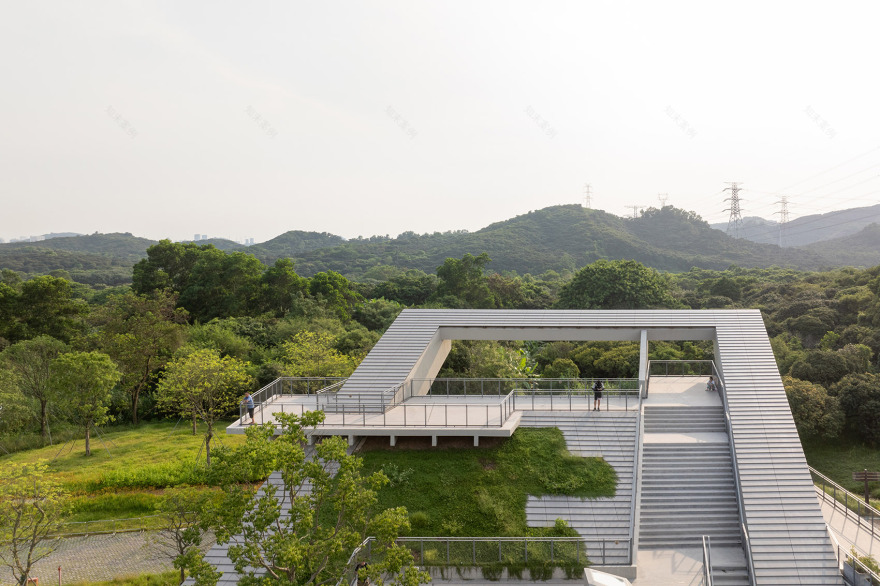
▼俯瞰主驿站及周边景观,Overlook the main post station and the surrounding scenery©董博儒

▼浮岛交错构图,The floating islands are interlaced in composition©董博儒

一、重回自然的怀抱:沉浸式的感官疗愈
Return to Nature’s Embrace: A Therapeutic Immersion of the Senses
项目地处深圳水源保护区边缘,紧邻城市建成区,设计改造提升一处原有鱼塘以求创造一个能让人瞬间抽离都市喧嚣,深度沉浸于自然怀抱的场所。这并非简单的绿化覆盖,而是通过精妙的空间序列与感官体验设计来实现:
▼设计策略,Design strategy©同济原作工作室
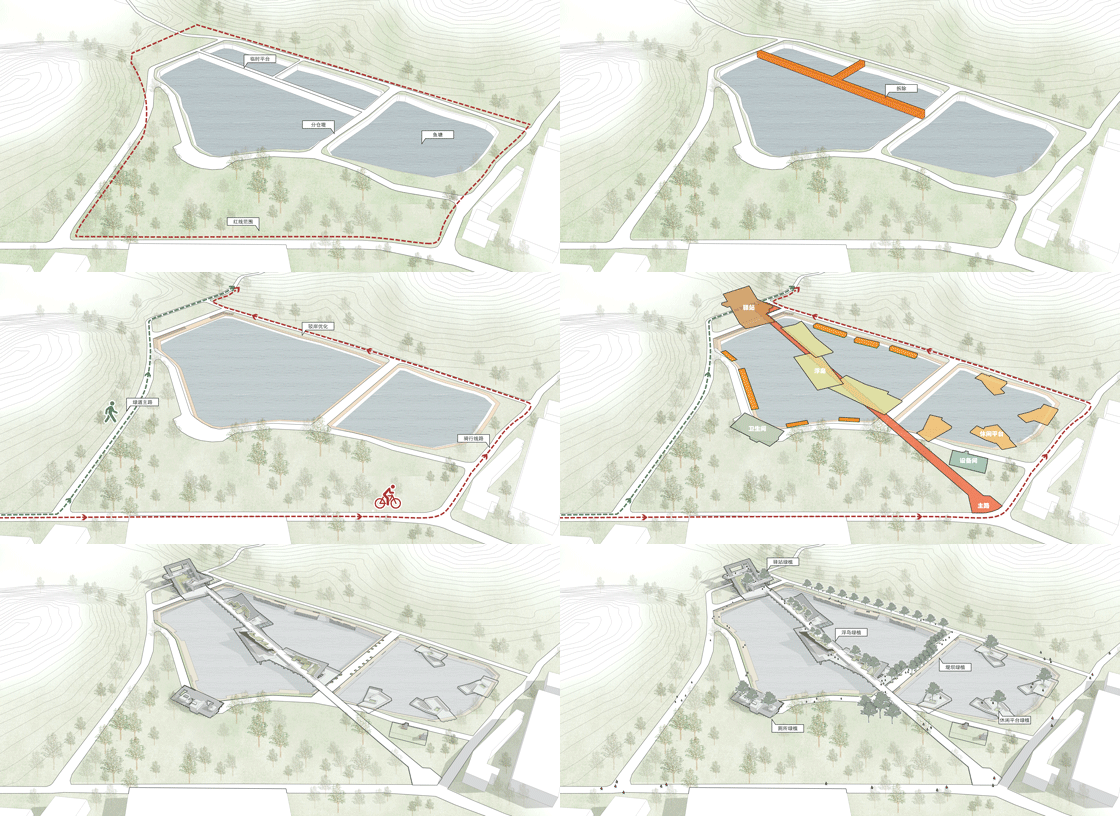
The project is located on the edge of Shenzhen’s water source protection area, adjacent to the urban built-up area. It aims to transform and upgrade an existing fishpond to create a space where people can instantly escape the hustle and bustle of the city and immerse themselves deeply in nature. This is not a mere greening endeavor but is achieved through ingenious spatial sequencing and sensory experience design:
▼基地俯瞰,aerial view of the site©董博儒

原生植被的拥抱:摒弃单一化的园林种植,大量选用本地乡土植被,构建层次丰富的近自然植物群落。林下空间被精心梳理,形成或通透或幽闭的区域,引导视线,也营造神秘感与探索欲。
Embrace of Native Vegetation: Abandoning the monotony of traditional garden planting, the design extensively employs local native vegetation to construct multi-layered, near-natural plant communities. The understory spaces are meticulously organized, forming areas that are either open or secluded, guiding the line of sight while fostering a sense of mystery and curiosity for exploration.
▼路口保留大榕树下看水上栈道,The intersection retains the view of the water walkway under the big banyan tree©董博儒

水岸的亲昵对话:充分利用原有水塘,设计低干预的亲水界面。运用场地原有的石材重构多级清水平台与浅滩生境。在这里,观水、听风、触叶、嗅泥土芬芳,多重感官被自然元素温柔唤醒,实现深度的身心放松与精神回归。
Intimate Dialogue with the Waterfront: The design makes full use of the existing pond, creating low-intervention hydrophilic interfaces. By utilizing the original stones on-site, multi-tiered clear water platforms and shallow bank habitats are reconstructed. Here, one can observe the water, listen to the wind, touch the leaves, and inhale the fragrance of the earth, as multiple senses are gently awakened by natural elements, achieving profound physical and mental relaxation and a spiritual return to nature.
▼水上浮岛平台鸟瞰,Bird ‘s-eye view of the floating island platform on the water©董博儒

静谧的庇护所:在群山环抱之中的一砚横塘之中设置尺度宜人的休憩场所。这些“自然客厅”鼓励人们停留、静思、阅读或交谈,在绿意环绕中感受宁静与庇护。
A Tranquil Sanctuary: Within the landscape of mountains encircling a horizontal pond (resembling an inkstone), well-proportioned resting areas are established. These “natural living rooms” encourage people to linger, meditate, read, or converse, allowing them to feel peace and shelter amidst the surrounding greenery.
▼林稍眺望台,Observation Deck©董博儒

二、面向远方的导引:空间叙事与精神眺望
Guidance towards the Beyond: Spatial Narrative and Spiritual Contemplation
这里是由大磡村进入西丽湖绿道的入口,是环湖旅程中重要的启程点与观景点,承载着“面向远方”的导引功能:
The project is situated on the edge of Shenzhen’s water source protection zone, adjacent to the urban built-up area. The primary design goal is to create a space that allows people to instantly escape the urban hustle and immerse themselves deeply in nature. This is not merely about adding greenery, but rather achieved through carefully crafted spatial sequences and sensory experiences:
▼主轴线大鸟瞰,aerialview of the main axis©董博儒

视觉通廊的开启:精心设计主要入口与节点内部的视觉轴线。踏水而过的栈道见进入场地的人们的视线导向远方,将远处的湖光山色、连绵山峦引入视野,第一时间唤起人们对远方探索的向往。
▼轴测图,axonometric©原作设计

Embraced by Native Vegetation:Moving away from uniform landscaped planting, the design extensively incorporates local native vegetation to establish richly layered, near-natural plant communities. The understory spaces are delicately articulated, forming zones that range from open to enclosed—guiding sightlines while fostering a sense of mystery and exploration.
▼主栈道和三座水上浮岛,The main plank road and three floating islands on water©董博儒
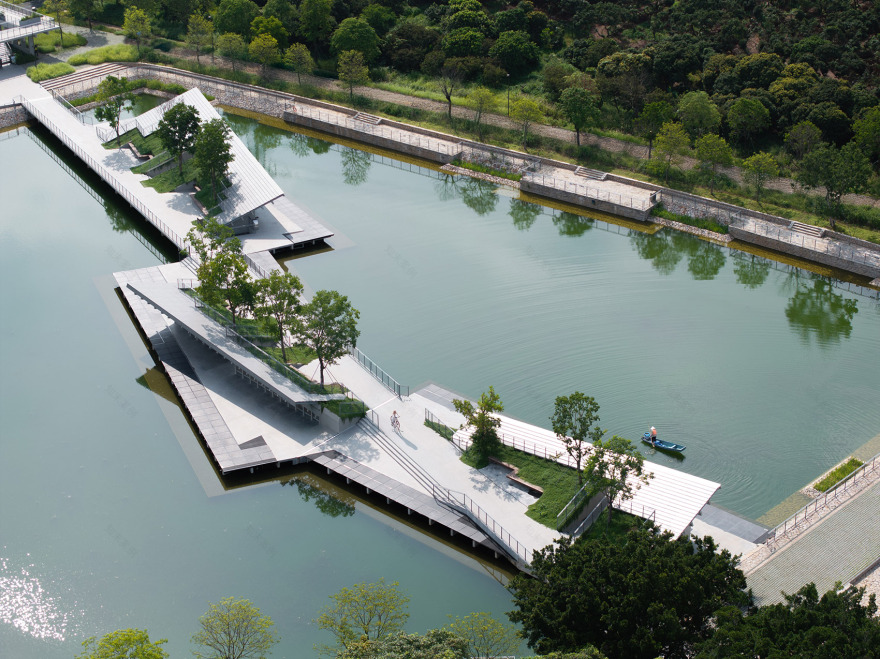
路径的叙事张力:慢行系统(步行道、自行车道)的设计充满叙事感。路径沿水岸舒展,形成多变的空间体验。适度抬高的骑行驿站,不仅提供休憩指引,更成为指向湖山深处、激发探索欲的“精神灯塔”。
An Intimate Dialogue with the Water’s Edge:Leveraging its proximity to the water, the design introduces low-intervention waterfront interfaces. Using existing site stones, multi-level clearwater platforms and shallow-water habitats are reconstructed. Here, observing the water, listening to the wind, touching leaves, and smelling the earthy fragrance gently awaken multiple senses—enabling profound physical and mental relaxation, as well as spiritual reconnection.
▼骑行环线穿行建筑前广场与景观绿丛,Riding loop through the square in front of the building and the landscape greenery©董博儒

与湖山的对话:设计中融入对西丽湖天际线和周边山体的尊重。构筑物形式力求简洁、轻盈,色彩与材质呼应自然基底,引导使用者能与壮阔的湖山远景建立强烈的视觉与情感连接,感受置身于宏大山水画卷之中的体验。
Sanctuary of Serenity:Nestled within the surrounding mountains and the “inkstone” of the pond itself, intimate resting spaces are placed. These “natural living rooms” encourage people to pause, reflect, read, or converse—embracing tranquility and shelter amidst lush greenery.
▼南侧水岸看水上浮岛与远山,From the south waterfront, you can see the floating island and distant mountains©董博儒

三、场地生长的力量:记忆的延续与社区的活力
The Inherent Power of Place: Continuity of Memory and Community Vitality
设计深刻尊重场地的场所特质,让“生长”的力量贯穿始终:在地元素的焕新:挖掘并巧妙利用场地内遗留的乡土元素。几株姿态优美的古树得到精心保护,成为空间的核心标志和精神象征;建筑以倾斜的姿态伸入土地,仿佛从大地中生长而出,其建构形式也呈现了最本真的梁柱搭接方式,赋予场所独特的在地记忆。
The design deeply respects the unique spirit of the place, allowing the power of “growth” to permeate throughout: Reimagining Local Elements: The design unearths and artfully repurposes indigenous elements found on site. Several ancient trees with elegant forms are meticulously preserved, becoming core landmarks and spiritual symbols of the space. Structures stretch into the land at subtle angles, as if growing naturally from the earth, while their construction reveals an honest expression of beams and columns, reinforcing a distinctive local memory.
▼林间看主驿站外挑景观平台,View the overhanging viewing platform outside the main post station in the forest©董博儒

社区活力释放:场所提供活动空间,成为社区活力释放口。汇聚欢声笑语,见证孩童嬉戏、老人晨练。精心设计角落诉说社区温度,功能分区激发互动热情。从清晨太极拳到傍晚广场舞,周末亲子活动到节假日社区集市,这个场所正重新定义现代社区邻里关系,让城市空间焕发人情味,成为情感纽带。
Unleashing Community Vitality:The place provides dynamic activity spaces, serving as a release valve for neighborhood energy. It gathers the sounds of laughter and play—hosting children’s games, morning exercises for the elderly, and daily gatherings. Carefully designed corners convey a sense of community warmth, and functional zoning encourages social interaction. From morning tai chi to evening square dancing, weekend family activities to holiday markets, this space is redefining modern neighborhood relations. It injects human connection into the urban fabric, becoming an emotional anchor for all.
▼砌石景观平台看水上浮岛,View the floating islands on the water from the stone masonry landscape platform©董博儒
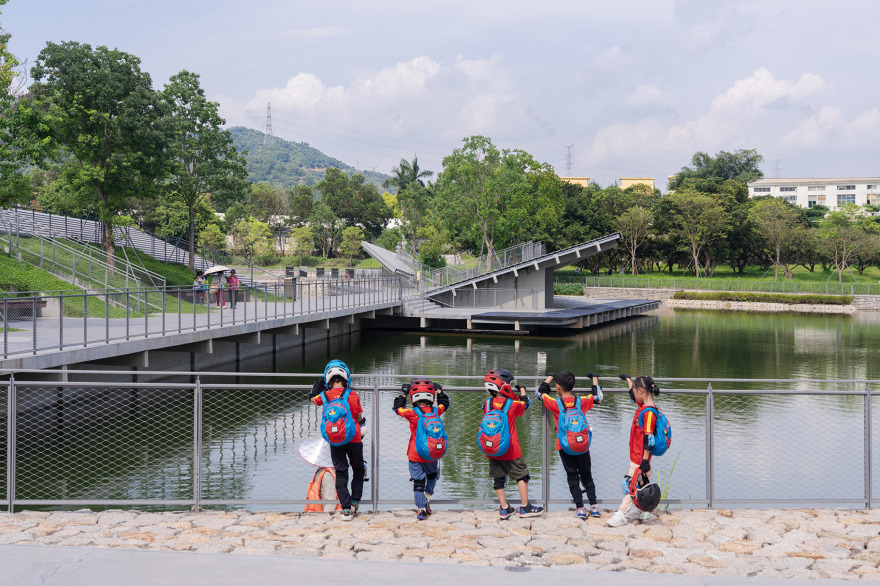
低干预的韧性设计:采用最小化土方平衡、透水铺装、生态草沟等技术,最大限度减少对原有地貌和水文的干扰。设施建设顺应地形,仿佛从土地中自然“生长”出来,体现设计的谦卑与韧性。
Low-Impact Resilient Design:Strategies such as minimized earthwork, permeable paving, and bioswales are employed to reduce disruption to the original landform and hydrology. Facilities blend into the terrain as though naturally “emerging” from the land, embodying both humility and resilience in design.
▼驳岸植物掩映下的浮岛平台,A floating island platform hidden among the plants along the revetment©董博儒

四、 生态环境的修复:绿脉的编织与生境的重建
Ecological Restoration: Weaving the Green Vein and Rebuilding Habitats
作为生态廊道的关键节点,生态修复是设计的基石与底色:
As a critical node within the ecological corridor, ecological restoration forms the very foundation and backdrop of the design:
▼游船视角看水上浮岛,View of the floating islands on the water from the perspective of a cruise ship©董博儒

水生态系统的修复与提升:对于场地内的水体实施针对性的净化策略。构建生态草沟、植草洼地收集净化初期雨水;塑造多样化驳岸,营造丰富的滨水栖息地。
Restoration and Enhancement of the Aquatic Ecosystem:Targeted purification strategies are implemented for the water bodies within the site. Ecological grass swales and vegetated swales are constructed to collect and purify initial rainfall runoff; diverse riparian edges are shaped to create rich waterfront habitats.
▼主驿站咖啡厅二层通高空间,The second-floor full-height space of the Main Post Station cafe©董博儒
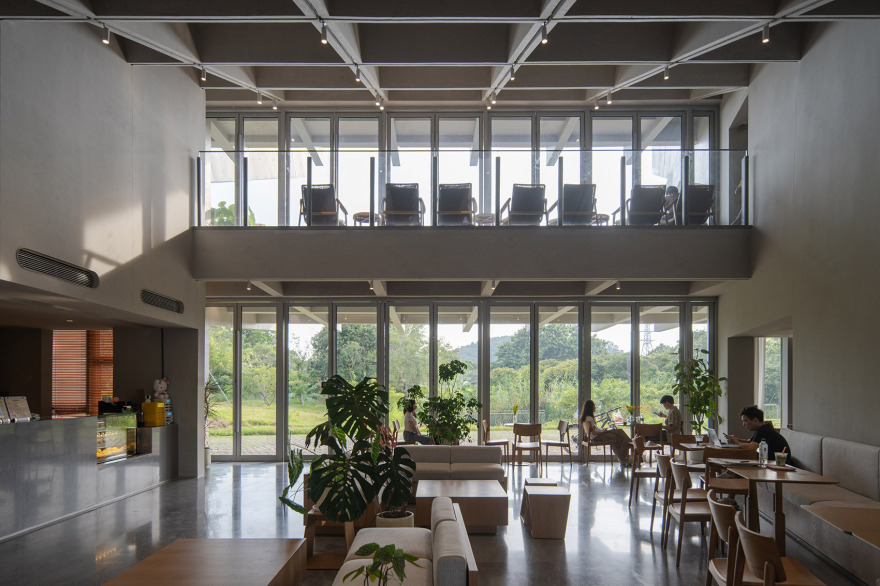
生物多样性的庇护所:精心设计多层次、多类型的栖息地:密林区为鸟类和林下生物提供庇护与食源;开花蜜源植物搭配昆虫旅馆吸引传粉昆虫;静水区和水生植物带是蛙类、蜻蜓的理想家园。
A Sanctuary for Biodiversity:Multi-layered and varied habitats are carefully designed: dense woodland areas provide shelter and food sources for birds and understory organisms; flowering nectar plants paired with insect hotels attract pollinators; still water zones and aquatic vegetation belts offer an ideal home for frogs, dragonflies, and other species.
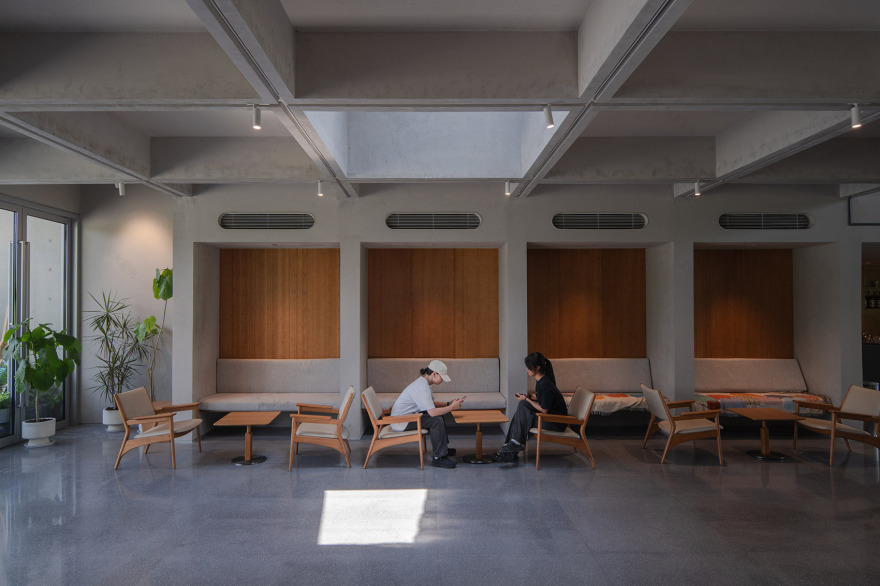
▼咖啡吧台雅座,Private seats at the coffee bar©董博儒

▼室内天窗下的卡座,The booth under the indoor skylight©董博儒
向野而生的城市绿洲
The Urban Oasis, Born of the Wild
环西丽湖绿道大磡村东侧核心节点,是一次在城市边缘地带进行的生态实践与社会探索。它通过修复伤痕、激活场地、连接社区、引导体验,成功地将一片面临压力的过渡地带,转化为充满生机与魅力的“城市绿洲”。在这里,人们得以重回自然的怀抱,心灵获得栖息;视线被引向壮丽的远方,激发探索的渴望;场地的记忆与社区活力在设计中悄然生长;受损的生态环境得到系统性修复,重焕生机。它不仅仅是绿道上的一个节点,更是深圳探索人与自然、城市与湖山和谐共生模式的生动样本,向所有人传递着“向野而生”的城市生活新可能。
The core node on the eastern side of Dakan Village along the Xili Lake Greenway represents an ecological and social exploration within an urban fringe area. By healing scars, activating the site, connecting communities, and guiding experiences, it has successfully transformed a pressured transitional zone into a vibrant and captivating “urban oasis.” Here, people can return to the embrace of nature and find solace for the soul; their gaze is drawn to the magnificent distant views, sparking a desire for exploration; the memory of the place and the vitality of the community gently flourish through the design; and the damaged ecosystem has been systematically restored, revitalizing its innate dynamism. More than just a node along the greenway, it stands as a vivid example of Shenzhen’s pursuit of a harmonious coexistence between humanity and nature, city and lake-mountain landscapes. It offers everyone a new vision of urban life—one that “emerges from the wild.”
▼天窗,skylight©董博儒

▼总平面图,site plan©同济原作工作室

▼浮岛一层平面图,Floating island ground floor plan©同济原作工作室

▼浮岛屋顶平面图,Floating island roof plan©同济原作工作室

▼浮岛立面图,floating island elevation©同济原作工作室

▼浮岛立面图,floating island elevation©同济原作工作室

▼横塘垂砚断面,Hengtang bank section©同济原作工作室


▼驿站一层平面图,post station ground floor plan©同济原作工作室

▼驿站二层平面图,post station second floor plan©同济原作工作室

▼驿站屋顶平面图,post station roof plan©同济原作工作室

▼卫生间一层平面图,restroom ground floor plan©同济原作工作室

▼卫生间西立面图,restroom west elevation©同济原作工作室

▼卫生间剖面图,restroom section©同济原作工作室

项目名称:深圳市南山区环西丽湖绿道横塘垂砚空间节点设计
主创设计单位:同济大学建筑设计研究院(集团)有限公司原作设计工作室
主创建筑师:章明、张姿、秦曙
建筑及景观设计团队(方案及初步设计):羊青园、杜文彬、李雪峰、汪子峻(实习)名取皓(实习)、杨恩鉴(实习)、刘佳琳(实习)
结构设计顾问:陈泽赳、王瑞
项目地点:深圳市南山区沁园路4032号环西丽湖绿道(碧道)横塘垂砚
用地面积:49950㎡
建构筑物总面积:1230㎡
建设单位:深圳市南山区工务署
代建单位:华润置地有限公司
深化设计单位:深圳市城市交通规划设计研究中心股份有限公司(程智鹏,陈岚,欧阳靖源,党超,陈燕芳,高杨,王国栋,刘颂良,张文杰,王霞,王超,陈腾飞)(设计总包、景观施工图设计)
柏涛国际工程设计顾问(深圳)有限公司(刘红星、林超伟、吴昀泽、方飞虎)(结构施工图设计)
深圳市柏涛蓝森国际建筑设计有限公司(建筑:李慧慧、范金健;电气:卢勇;给排水:赵运芬、李春光;暖通:吕权龙、陈培智;室内:黄志军)(建筑、设备和室内施工图)
摄影师:董博儒 DONG 建筑影像(DONG Image)




南京喵熊网络科技有限公司 苏ICP备18050492号-4知末 © 2018—2020 . All photos and trademark graphics are copyrighted by their owners.增值电信业务经营许可证(ICP)苏B2-20201444 苏公网安备 32011302321234号
苏公网安备 32011302321234号客服
消息
收藏
下载
最近