

创作上传
VIP
收藏下载
登录 | 注册有礼
查看完整案例

收藏

下载

分享
在阿姆斯特丹冯德尔公园历史悠久的亭阁宏伟拱廊下,被绿意环绕的Café Vertigo成为这场大胆文化复兴的中心舞台。这里长期以来深受影迷、创意人群与公园游客的喜爱,它从来不仅是一家咖啡馆,更是一种聚会场所、一种氛围、一种场景。当空间迎来重塑之机,Studio Modijefsky接下挑战:既要扎根于建筑的历史底蕴,又要展现无法抗拒的当代感。最终呈现的是一种电影般的沉浸体验:既亲密又开放,既优雅又俏皮,既怀旧又焕然一新。
Tucked beneath the grand arches of the historic Vondelpark Pavilion and surrounded by Amsterdam’s lushest scenery, Café Vertigo takes center stage in a bold new cultural revival. Long loved by film buffs, creatives, and casual park-goers alike, this iconic spot has always been more than just a café, it’s a meeting place, a mood, a scene. When it came time to reinvigorate the space, Studio Modijefsky took on the challenge: to create a place that would be both rooted in the building’s grandeur and irresistibly contemporary. The result is a cinematic experience that redefines the Vondelpark dining experience; intimate yet open, sophisticated yet playful, nostalgic yet thrillingly new.
▼历史悠久的冯德尔亭阁,the historic Vondelpark Pavilion©Maarten Willemstein


概念与视觉叙事
Concept & Visual Narrative
Café Vertigo是一场关于“眩晕”的空间研究,灵感来自希区柯克电影《迷魂记》所展现的心理复杂性与视觉张力。设计在感知、层次与节奏上不断游走,让空间既熟悉又超现实。Studio Modijefsky 将项目视为一系列展开的场景,每一幕通过尺度、材料与光线的变化而生成。目标是将这一历史地标转化为多维度的体验,在当下重新诠释过去。
Café Vertigo is a study in cinematic disorientation, inspired by the psychological complexity and visual tension of Hitchcock’s Vertigo. The design plays with perception, layering, and rhythm to create a space that feels at once familiar and surreal. Studio Modijefsky approached the project as a sequence of unfolding scenes, each one shaped by shifts in scale, material, and light. The goal: to transform a historic landmark into a multidimensional experience where the past is reframed.
▼历史悠久的冯德尔亭阁前广场,the plaza in front of the historic Vondelpark Pavilion©Maarten Willemstein
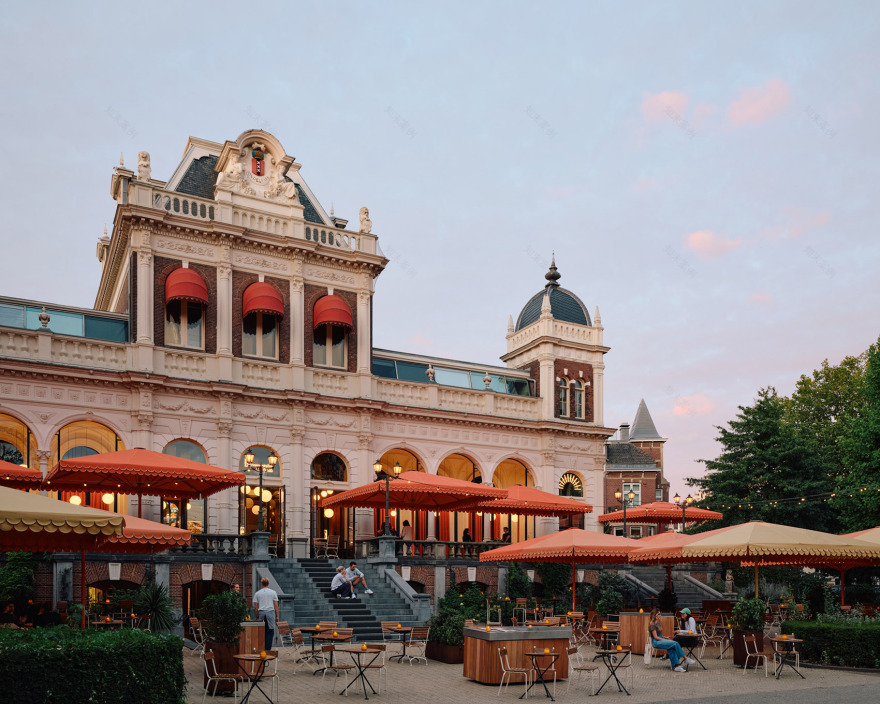
▼历史悠久的冯德尔亭阁前广场,
the plaza in front of the historic Vondelpark Pavilion©Maarten Willemstein

这种电影式的叙事贯穿整个空间,透视关系在各个层面不断变化。墙面、地面与天花的饰面共同形成透视线条,引导视线,制造出微妙的错位感与纵深感。在地下层,绒面拱廊与切面镜面唤起后台休息室与经典片场的戏剧氛围。楼上,紫色高光漆面吧台在庄重的建筑背景中成为戏剧性的点睛之笔。冬园则以落地珊瑚色窗帘环绕,柔和光晕呼应室外露台伞的色调。建筑立面上,成排悬浮的球形灯具在夜色中闪耀,指引视线并吸引路人走入场景。整个室内通过历史元素、光学幻象与多重材质层叠,营造出一种电影般的氛围:沉浸、流动、始终在运动。
This cinematic narrative plays out across all levels of the café, where perspective is constantly shifting. The vertigo effect is echoed in the deliberate use of perspective lines created by the wall, floor, and ceiling finishes, drawing the eye and creating a subtle sense of disorientation and depth throughout the space. In the souterrain, plush velvet arches and faceted mirrors evoke the drama of backstage lounges and classic film sets. Upstairs, the bar’s glossy purple lacquer adds a bold, theatrical gesture against the building’s formal architecture. The winter garden is wrapped in floor-to-ceiling coral curtains, casting a warm glow and echoing the soft hues of the parasols on the terrace outside. On the façade, a wave of glowing orb lights hovers above the tables, guiding the eye and inviting passersby into the scene. Throughout, historic cues, optical illusions, and layered materials come together to create an interior that feels cinematic, immersive, and perpetually in motion.
▼地下层的绒面拱廊,plush velvet arches in the souterrain©Maarten Willemstein

▼地下层的绒面拱廊,plush velvet arches in the souterrain©Maarten Willemstein


历史与记忆
History
冯德尔公园亭阁自19世纪末起便是阿姆斯特丹的地标,由建筑师Willem Hamer Jr.以意大利文艺复兴风格设计。百余年来,它不断变换身份:曾是带有楼上住宿的豪华餐厅,也曾是舞厅、理发馆,亦或文化空间,包括国际文化中心与电影博物馆。如今咖啡馆所在的地下层曾经是巴黎地窖俱乐部 Au Caveau Parisien,以镜面墙与红色天鹅绒闻名;后来则是全粉色内饰的夜间社交场所Kiekeboe,成为上世纪 70 年代阿姆斯特丹创意圈的聚点。
The Vondelpark Pavilion has been a landmark in Amsterdam since the late 19th century, originally designed in the Italian Renaissance style by architect Willem Hamer Jr. Over the decades, it has hosted a range of tenants and identities: a grand restaurant with upstairs lodging, a dance club, a barber, and several cultural spaces including the International Cultural Centre and the Filmmuseum. The souterrain, where the café now sits, was once home to Au Caveau Parisien, a club known for its mirrored walls and red velour flooring, and later to Kiekeboe, a night society with an all-pink interior that became a hub for Amsterdam’s creative scene in the 1970s. These past incarnations have left behind both physical traces and cultural memory, tangible reminders of the building’s layered identity.
▼通往地下层的大理石走廊,the marble corridor towards the souterrain©Maarten Willemstein
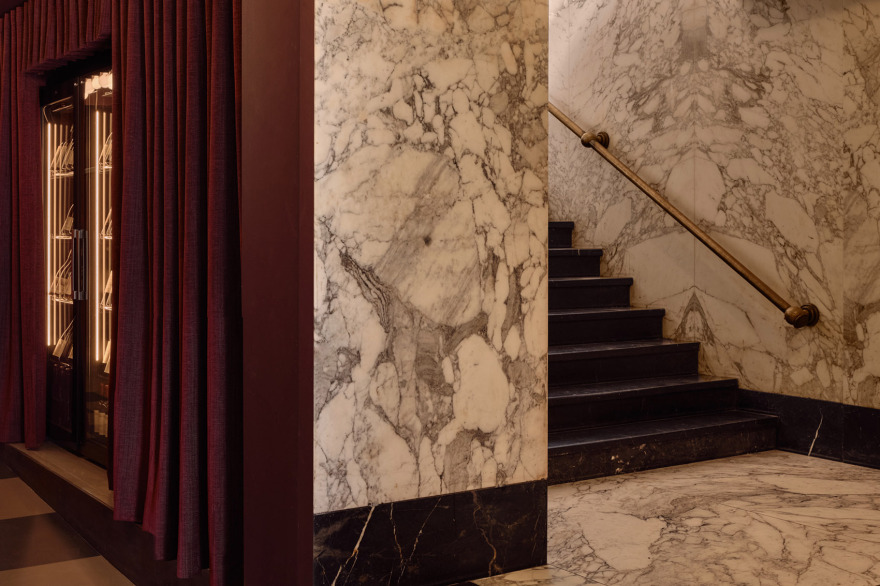
Studio Modijefsky并未抹去这些历史痕迹,而是与其展开对话。室内设计以当代语言回应建筑的过往:丝绒与粉色呼应了Kiekeboe的标志性氛围;马赛克质感与材质层次唤起早年浴室与沙龙的优雅细节;通向壁龛的拱形开口被重新演绎为半圆形卡座,既呼应了原有的建筑母题,又为空间带来韵律与纵深。这些设计手法不是怀旧复刻,而是将历史融入当下,让空间既扎根过去,又准备迎接未来。
Rather than erasing those layers, Studio Modijefsky chose to engage with them. Throughout the new interior, references to the building’s former lives appear in subtle, contemporary forms. Velvet and pink hues nod to the iconic Kiekeboe nightclub, while mosaic-inspired textures and material layering recall the elegance of its early bathroom and salon details. The arched openings leading toward the alcove, now home to three half-circular booths, reinterpret original architectural motifs and add rhythm and depth to the space. These gestures aren’t nostalgic replicas, but deliberate design moves that tie the present to the past; creating an interior that feels grounded in history, yet ready for generations to come.
▼丝绒与粉色呼应了标志性氛围,
Velvet and pink hues nod to the iconic Kiekeboe nightclub©Maarten Willemstein
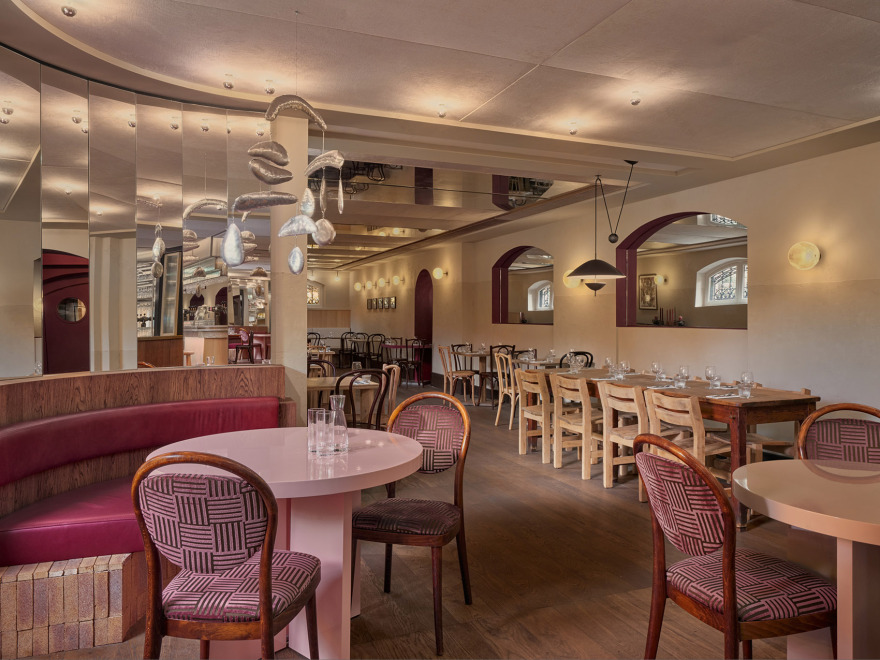

▼镜面为空间带来韵律与纵深,
mirror adds rhythm and depth to the space©Maarten Willemstein

区域、氛围与材质
Zones, Atmosphere & Materiality
Café Vertigo被精心编排为一系列空间体验,每一处都有独特的氛围与节奏。主吧台如同引力中心,以雕塑般的存在感与层叠材质吸引人群。周围的空间则提供不同的情绪选择:下沉式卡座、抬高的座位区、亲密的壁龛,或热闹社交,或安静独处。空间动线通过层次变化、框景与节奏感的控制,引导人们在不同氛围间流转。
Café Vertigo is carefully composed as a sequence of spatial experiences, each with its own atmosphere and rhythm. The main bar area acts as a gravitational centre, drawing visitors in with its sculptural presence and layered materiality. Around it, a series of distinct zones- sunken nooks, elevated seating, and intimate alcoves- offer guests a choice of moods: from animated and social to calm and secluded. This spatial choreography is reinforced through shifting levels, framed views, and a deliberate pacing that invites movement.
▼抬高的座位区,elevated seating©Maarten Willemstein


▼半圆形卡座,half-circular booths©Maarten Willemstein


每一区域由自身的材料语言界定,形成视觉与触觉的过渡:Zellige瓷砖与木材相遇,丝绒与肌理灰泥对比,黄铜在哑光大理石之间闪烁。地下层餐饮区以丝绒拱廊与厚重帷幕营造私密氛围,弧形卡座与镜面元素增添戏剧张力。楼上的吧台覆以高亮紫色漆木,为历史环境注入出人意料的能量。
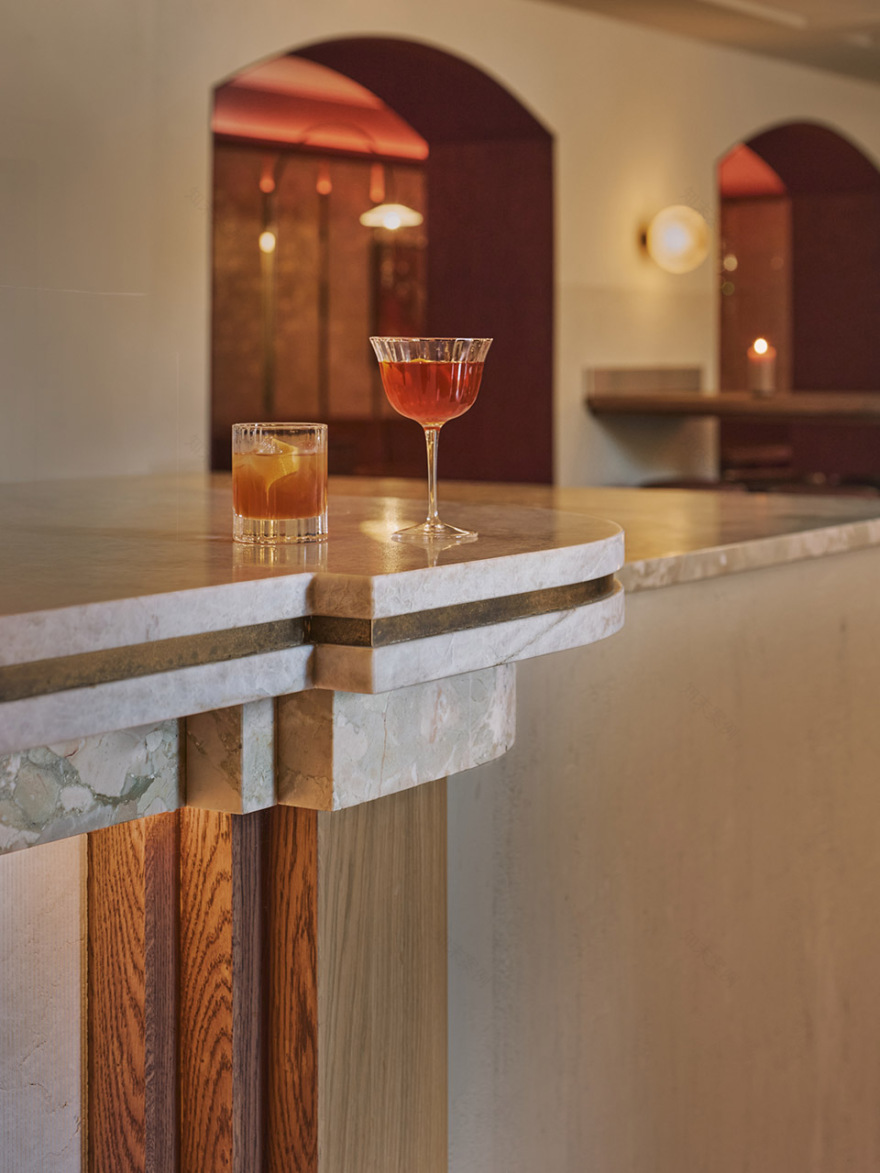
Each zone is defined by its own material language, creating transitions that are both visual and tactile. Zellige tile meets timber, velvet contrasts with structured plaster, and brass accents glint against matte marble. In the souterrain dining area, velvet-lined arches and heavy drapery establish a sense of intimacy and richness, while curved banquettes and mirrored elements add theatrical flair. Upstairs, the bar is clad in high-gloss purple lacquered wood, injecting a bold, unexpected energy into the historic setting.
▼楼上的吧台,the bar upstairs©Maarten Willemstein

▼楼上的吧台,the bar upstairs©Maarten Willemstein


▼吧台与餐饮区的圆形壁灯,
Circular wall lamps in the bar counter and dining area©Maarten Willemstein


冬园内,落地珊瑚色窗帘将室内与露台视觉相连,让亭阁在公园景观中脱颖而出。漂浮的球形灯阵点亮露台,如同动态装置,从远处即可望见。整体氛围略带超现实色彩,恰如其分地回应了咖啡馆名称的电影灵感。
Throughout the interior, materials evoke the glamour and drama of the building’s cinematic history. The winter garden is wrapped in floor-to-ceiling coral colored velvet curtains, visually tying the inside to the terrace and making the pavilion stand out from the surrounding park. A wave of glowing orb lights floats above the bistro tables in the wintergarden, illuminating the façade and creating a dynamic installation visible from afar. These immersive, tactile elements create a slightly surreal atmosphere – a fitting tribute to the film that inspired the café’s name.
▼漂浮的球形灯阵,A wave of glowing orb lights©Maarten Willemstein

光与艺术
Light & Art
光在Café Vertigo不仅是功能元素,更是氛围塑造与体验引导的叙事者。自然光透过地下层窗户洒入,营造出神秘的氛围;人工照明则通过吊灯与壁灯继续延伸叙事。复古与手工艺灯具被精心挑选,融合新旧,以丰富的质感营造一致的氛围。在壁龛卡座中,灯具形态呼应早期浴室的淋浴喷头,金属光泽强化了设计隐喻。吧台与餐饮区的圆形壁灯则借鉴化妆间的经典灯光,不同尺寸与安装高度制造出视角的错位感。在地下层吧台,内置灯光的玻璃酒架与布艺结合,营造出入场的氛围序幕;吧台后墙的蒂凡尼彩灯为高桌洒下温暖光晕。
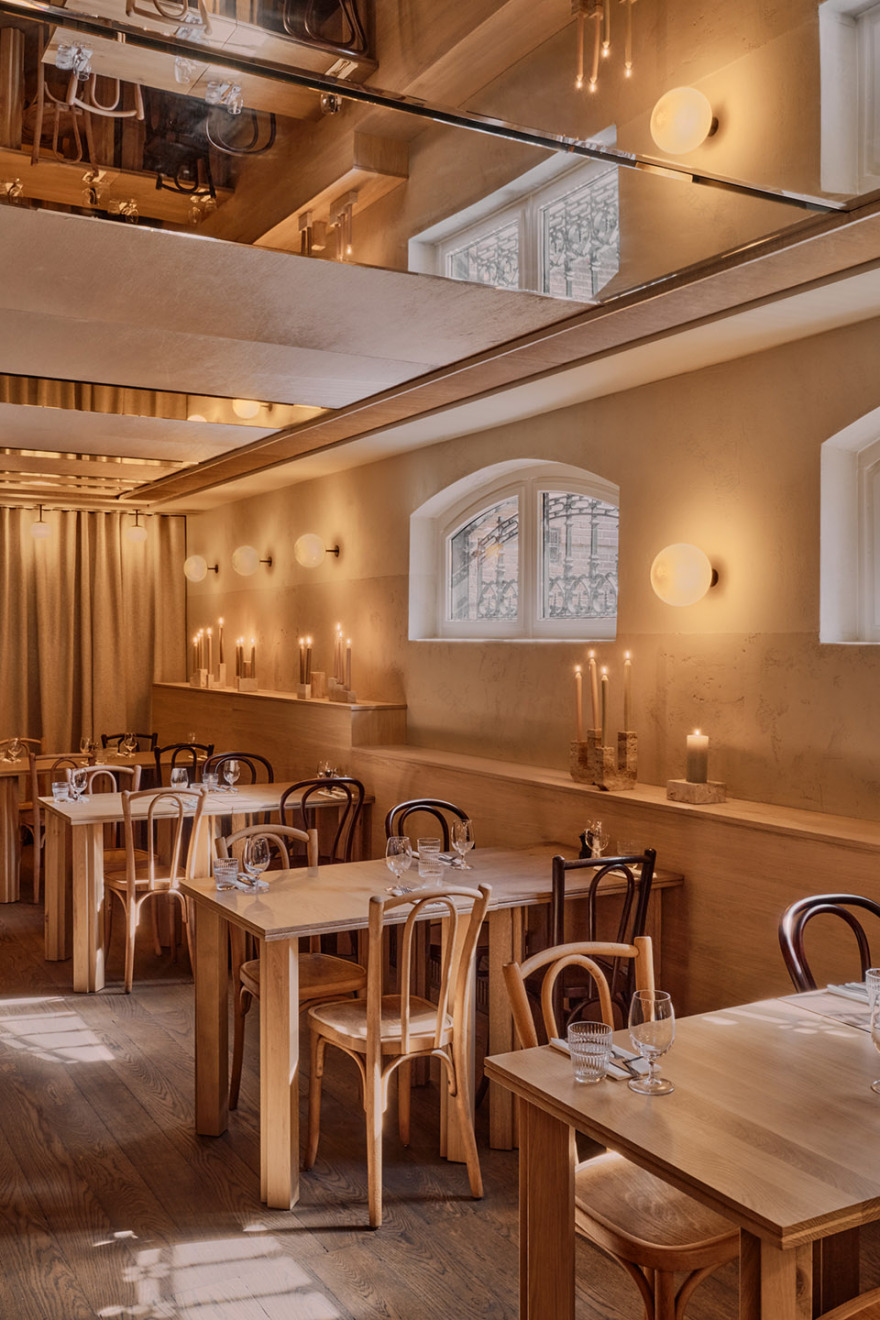
Light in Café Vertigo is more than a practical element; it plays an active role in shaping the atmosphere and guiding the experience. Natural daylight filters through the souterrain windows, creating a moody ambiance below ground. Artificial lighting continues this narrative with a mix of pendants and sconces. Carefully sourced vintage and artisan-crafted fixtures are combined to create a palette that is both thoughtful and rich, blending old and new with a consistent focus on quality. Each lighting element was intentionally selected to enhance the character of its space. In the booth alcoves, which reference the tile patterns of the building’s original bathrooms, the light fixtures mimic the curve and metallic finish of vintage shower heads. In the bar and dining area, the wall sconces are round and handcrafted, offering an artisan feel. Their forms reference classic dressing room lighting, and their varied sizes and mounting heights reinforce the spatial play of shifting perspectives along each dining wing. At the souterrain bar, a suspended glass rack is illuminated from within and filtered through fabric, setting the mood as guests enter. Behind the bar, three Tiffany-style glass lamps are mounted on a tiled wall and cast a warm glow over high tables designed for more intimate conversations.
▼自然光透过窗户洒入,Natural daylight filters through windows©Maarten Willemstein

▼灯具形态呼应早期浴室的淋浴喷头,
the light fixtures mimic the curve and metallic finish of vintage shower heads©Maarten Willemstein

▼通过吊灯与壁灯继续延伸叙事,
Artificial lighting continues this narrative©Maarten Willemstein

艺术作品同样强化了电影感。Bregje Sliepenbeek的反光装置在座位上方轻轻旋转,捕捉光影碎片;Indigo Sum与Lotus Krabbé的作品呼应空间的暖色调;Jesper Dobbeling、Vincent de Boer与Annelot de Boer的艺术与复古影像交织,形成对Vertigo多层次个性的诙谐回应。艺术装置既承载历史文化,也融入阿姆斯特丹的城市气质,唤起怀旧、亲密与在地感。
Artworks integrated throughout the interior reinforce the cinematic tone. A reflective mobile by Bregje Sliepenbeek spins gently above one of the booths, catching glints of mirror and light. In the tiled alcoves, pieces by Indigo Sum and Lotus Krabbé echo the café’s warm red palette. Nearby, works by Jesper Dobbeling, Vincent de Boer, and Annelot de Boer mix with vintage imagery; each one a visual wink to Vertigo’s layered personality and cheeky Amsterdam attitude. These works enrich the spatial narrative with intimacy, nostalgia, and local flair. The collection reflects the rich cultural history of the Vondelpark Pavilion and the city of Amsterdam. Inspired by iconic cinema and urban storytelling, the art reveals itself as a layered tribute to the indomitable power of creativity. Well-known names and emerging talent come together in a carefully curated selection that surprises, delights, and lingers—adding an extra layer of meaning and experience to both the interior and the café itself.
▼反光装置在座位上方轻轻旋转,捕捉光影碎片,
spins gently above one of the booths, catching glints of mirror and light©Maarten Willemstein


露台
Terrace
在户外,改造延伸至阿姆斯特丹最令人瞩目的露台之一,从公园边缘一直铺展至亭阁庄重的台阶。双层露台营造出两种氛围:下层面向公园,充满活力,适合轻松晚餐、即兴聚会或阳光下的慢饮;上层抬高的阳台则是更精致的法式小酒馆氛围:洁白亚麻、树梢视野与四季更迭的头排景观。固定座椅、柔和灯光与种植花槽融为一体,伞具与可移动桌椅的色调——木瓜红、浅橙与水仙黄——映照着自然景观,也与亭阁的建筑优雅相呼应。无论是观影后小憩,还是归途中驻足,又或在金色时刻停留用餐,露台都邀请人们重新发现城市的另一种视角。
Outside, the transformation continues across one of Amsterdam’s most impressive terraces, stretching from the park edge to the building’s stately bordes. Two levels offer two distinct atmospheres: below, the park terrace hums with energy. Ideal for easy dinners, impromptu meetups, or a slow vermouth in the sun. Above, the elevated balcony offers a more composed bistro setting: crisp linen, a view over the treetops, and a front-row seat to Vondelpark’s shifting seasons. Fixed benches blend seamlessly with soft lighting and planters, while parasols and movable tables in hues of papaya red, soft orange, and daffodil yellow echo the surrounding landscape. These tones form a soft visual bridge between the green openness of the Vondelpark and the structured elegance of the pavilion. Whether you’re arriving from a screening, passing through on your way home, or settling in for a long dinner at golden hour, the terrace invites you to stop, stay and see the city from a new perspective.
▼适合轻松晚餐、即兴聚会的露台,terrace ideal for easy dinners, impromptu meetups©Maarten Willemstein


文化角色与结语
Cultural Role & Conclusion
Café Vertigo标志着阿姆斯特丹文化地标的复兴。它的层叠室内致敬城市的电影与夜生活传统,而真正让它焕发活力的,是人:楼上观影的影迷,楼下穿行的公园行人,皆在此交织。作为共享时刻与新故事的发生地,Vertigo既熟悉又新鲜。在塑造这一新篇章的过程中,Studio Modijefsky不只是修复了一座建筑,而是将它重新归还给城市,成为阿姆斯特丹人的又一个归属。
Café Vertigo marks the revival of a cultural anchor woven into the heart of Amsterdam. While its layered interior subtly nods to the city’s legacy of film and nightlife, it’s the people who truly bring it to life: from cinephiles catching screenings upstairs to locals drifting in from the Vondelpark below. Reimagined as a space for shared moments and new stories, Vertigo feels both familiar and fresh. In shaping this next chapter, Studio Modijfesky hasn’t just restored a building, they’ve given it back to the city. A home for Amsterdammers, once again.
▼整体平面图,overall plan© Studio Modijefsky

▼室内平面图,indoor space plan© Studio Modijefsky

Project: Café Vertigo
Location: Amsterdam, Netherlands
Program: Bar, Café & Restaurant
Assignment: Interior design
Status: Finalized July 2025
Size: 350 m2 interior/ 660 m2 exterior
Client: Vondelpark 3 B.V.; Casper Moolhuijzen, Floor Botter, Jima Claassen, Matan Schabracq, Pim Evers, Tamir Schabracq, Teun Vermaas, Thomas Anderiesen
Design: Studio Modijefsky; Esther Stam, Kathryn Mallory, Beau Van der Schoot, Laura de Miranda, Ivana Stella, Moene van Werven, Julia Banaszewska, Christel Willers
Photography: Maarten Willemstein


南京喵熊网络科技有限公司 苏ICP备18050492号-4知末 © 2018—2020 . All photos and trademark graphics are copyrighted by their owners.增值电信业务经营许可证(ICP)苏B2-20201444 苏公网安备 32011302321234号
苏公网安备 32011302321234号客服
消息
收藏
下载
最近