

创作上传
VIP
收藏下载
登录 | 注册有礼
查看完整案例

收藏

下载

分享

翻译

Shanghai Lao Fandian
A Century-Old Brand in Spatial Evolution
The DDO design team integrated Haipai culture into the Republican-era style of Shanghai Lao Fandian, creating a brand-new dining experience space. With a fresh perspective, it reinterprets Shanghai in the 1920s.
Let us return to 1920, a glorious era as enchanting as the poppy flower. To feel the brilliance of the century-old restaurant — Shanghai Lao Fandian. It was a time drenched in red — the sediment of blood, the splendid mandala silk, flowing like ribbons through the long river of years.
Like a flower, like a dream, a fleeting encounter. Standing between today’s glittering glass city and the decadent, intoxicating metropolis of that bygone age, one steps into a red world of extravagance and allure, woven with both Eastern and Western cultural threads.
Origin
Rong Shun Tang, the predecessor of Shanghai Lao Fandian, was born in old Shanghai, amid the charm of the 1920s and 1930s. The Japanese writer Muramatsu Shōfū once called Shanghai a “Magic City,” describing its complex and enigmatic social fabric.
“The old will not be reborn, nor will it disappear. What once existed will always reappear in a new form.” In the conceptual system of architect Alvar Aalto, history and traditional art are invaluable treasures.
Within a certain scope, reshaping the space reasonably creates a new Shanghai Lao Fandian. “Neither Eastern nor Western”—it is precisely this ambiguous cultural temperament that transports us to the kaleidoscopic, intoxicating “Paris of the East.”
Glory
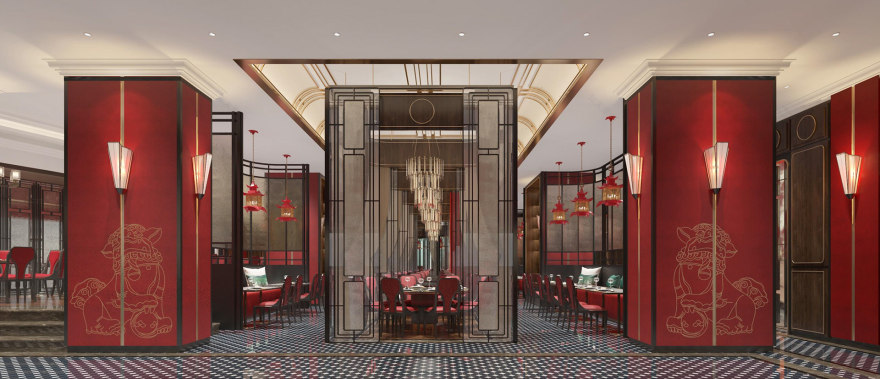
The lion symbolizes the revival of Eastern authority and honor, glory earned through a century of heritage. The symmetrical main hall embodies the most ancient Eastern aesthetics. Radiating forms evoke Gatsby’s shattered dreams. The sequence of private rooms suggests history repeating itself.
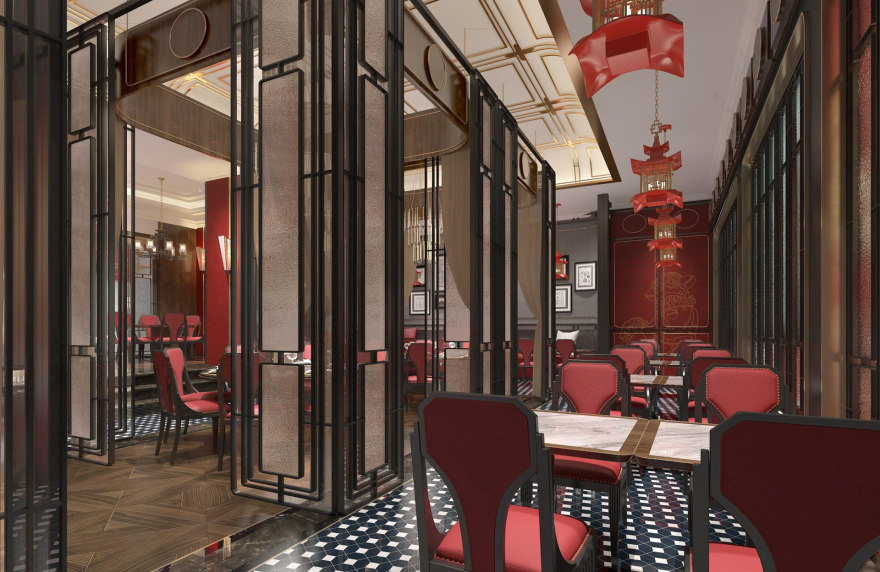
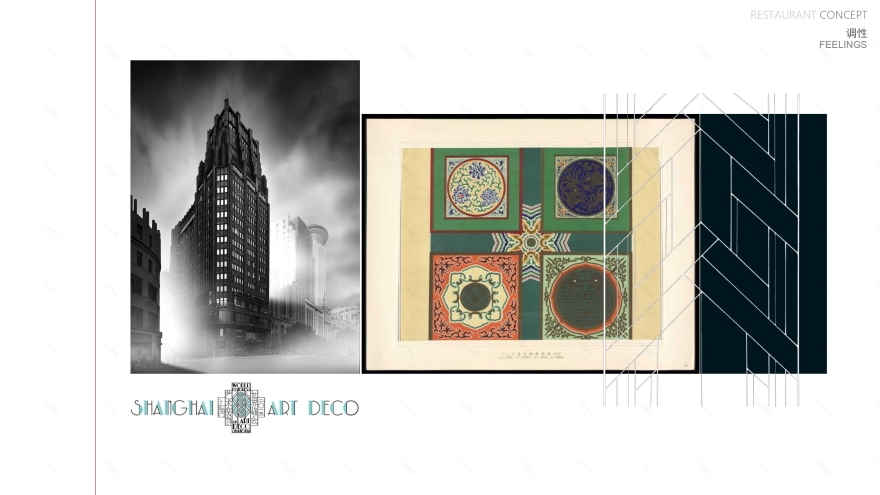
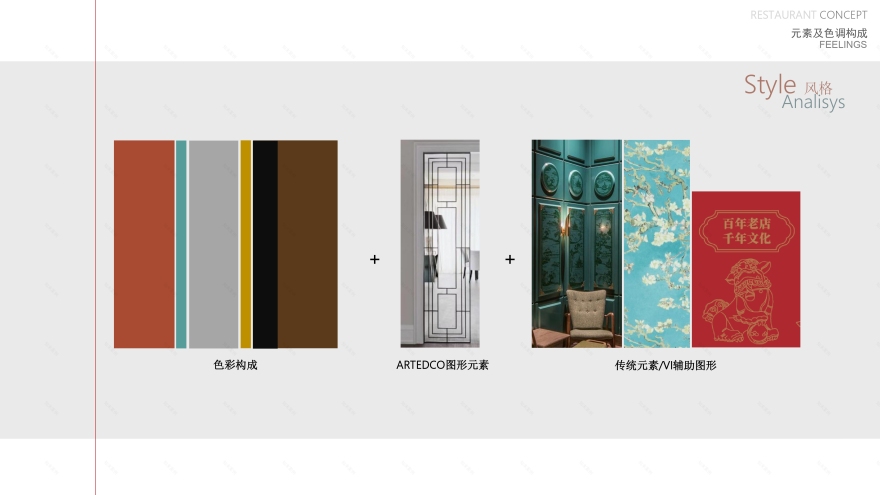
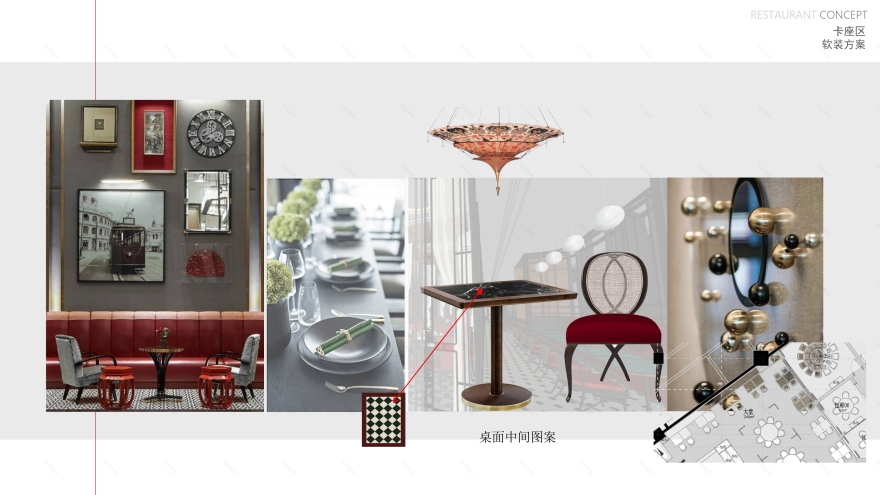
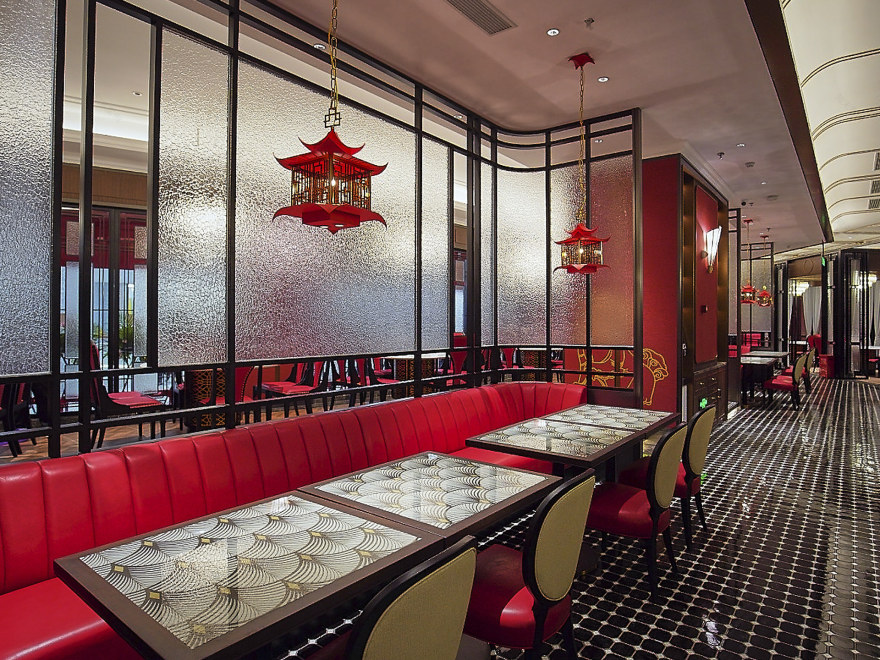
On the tables, the fan-shaped radiating patterns of Art Deco, once fashionable in 1920s Shanghai, intertwine with the square elements of traditional Chinese partitions. The flooring boldly adopts black-and-white mosaic inlays, presenting cultural clashes and confrontations in a fascinating way.
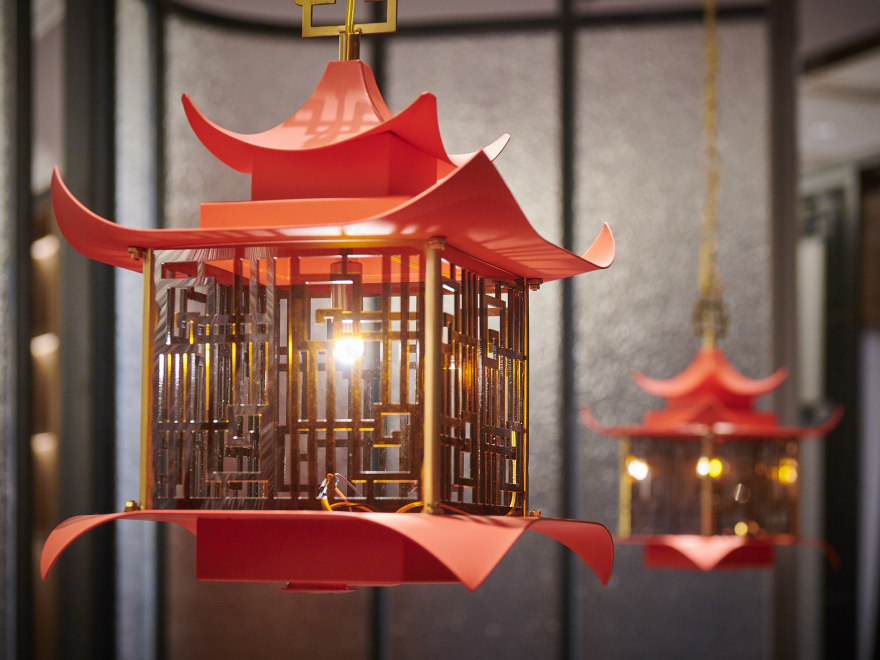
Special octagonal lamps were custom-made for the restaurant, combining the totems of long-standing historic architecture with contemporary materials and fluid forms. In this way, culture “lives” in the modern space. Together with technical methods and emotional needs, a complete lifestyle is presented, making the place feel even more authentic beneath all its splendor.
Joy
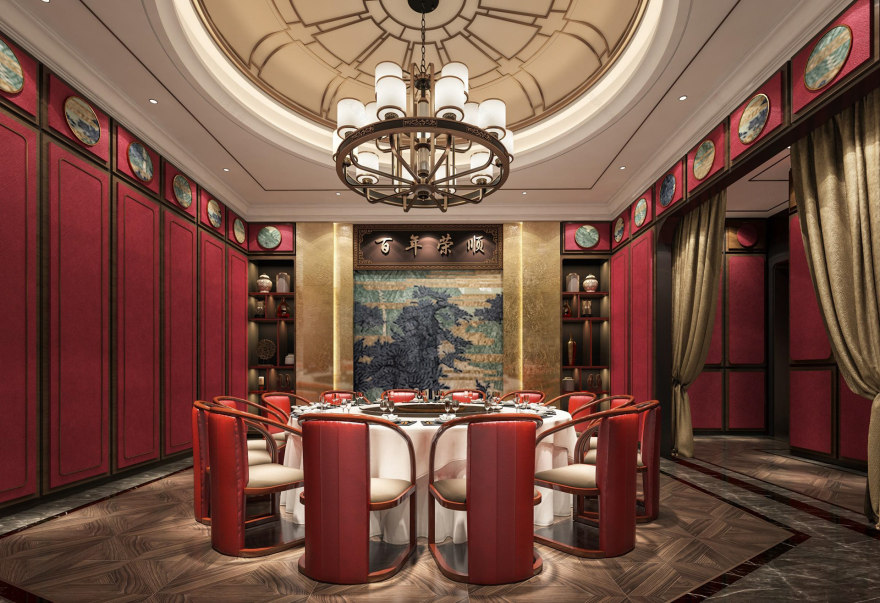
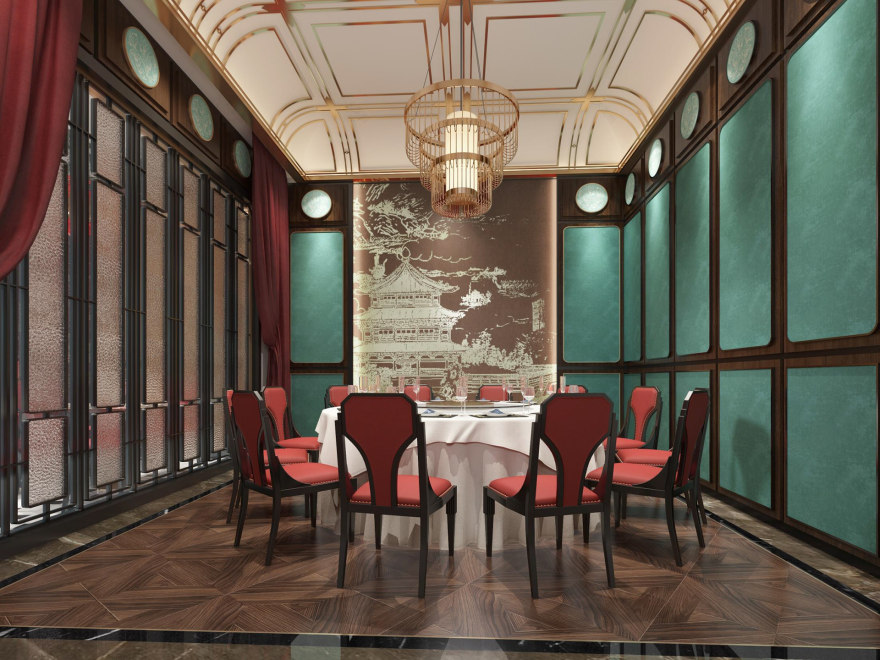
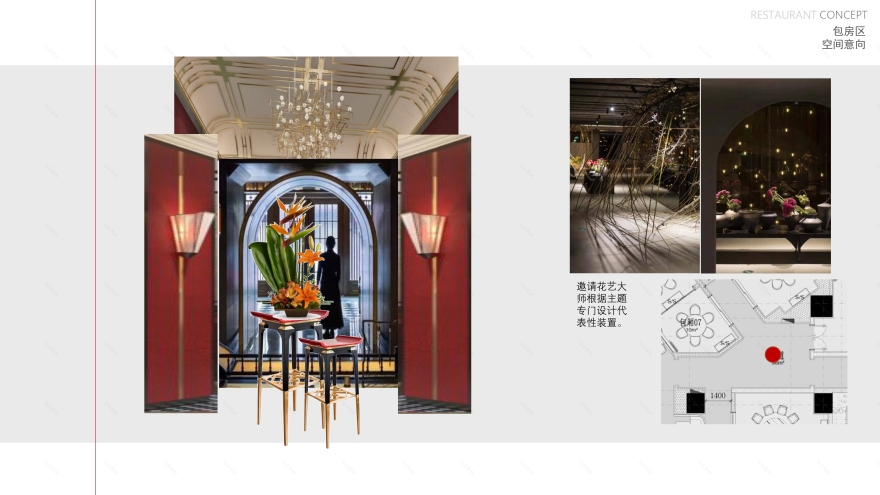
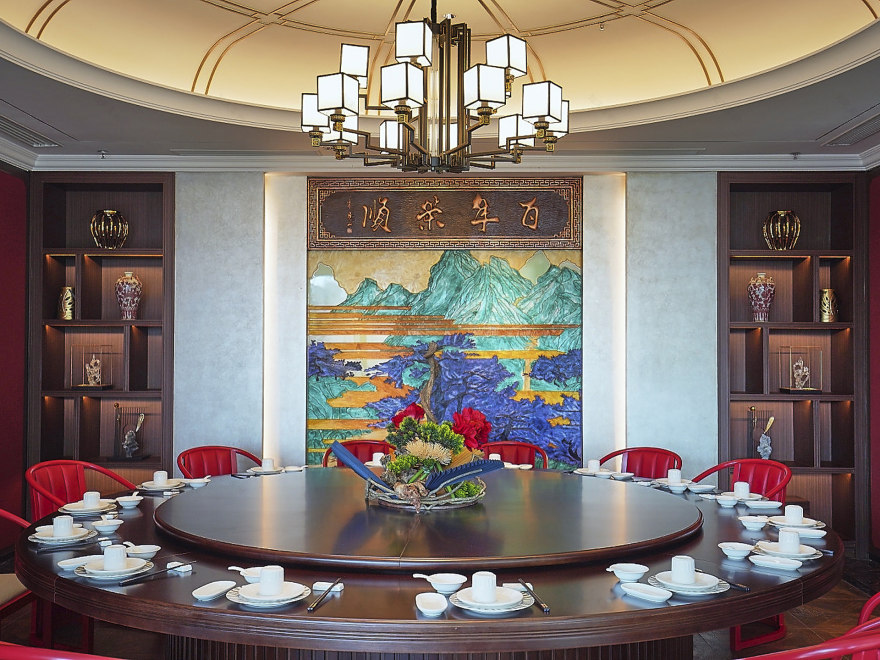
In the VIP grand private dining room, bold red collides with the flamboyant colors of enamel wall paintings, evoking the jubilance and festivity of Republican-era banquets. Families gathering here feel a heartfelt longing for a better life. Minimalist Chinese-style furniture in red complements the intricate pavilion paintings in the background and the layered chandeliers above — a fusion of modern and classical.
The calligraphy “百年荣顺” (A Century of Rong Shun), was penned by Zhu Jianshan — calligrapher, tea connoisseur, and founder of Dongjia. The mural conveys auspicious themes such as Lofty Mountains and Flowing Waters, Auspiciousness and Good Fortune. The craft used is cloisonné enamel, continuing the tradition of unique painting artistry.
Chinese red meets emerald green, square meets circle, Yu Garden encounters Versailles.
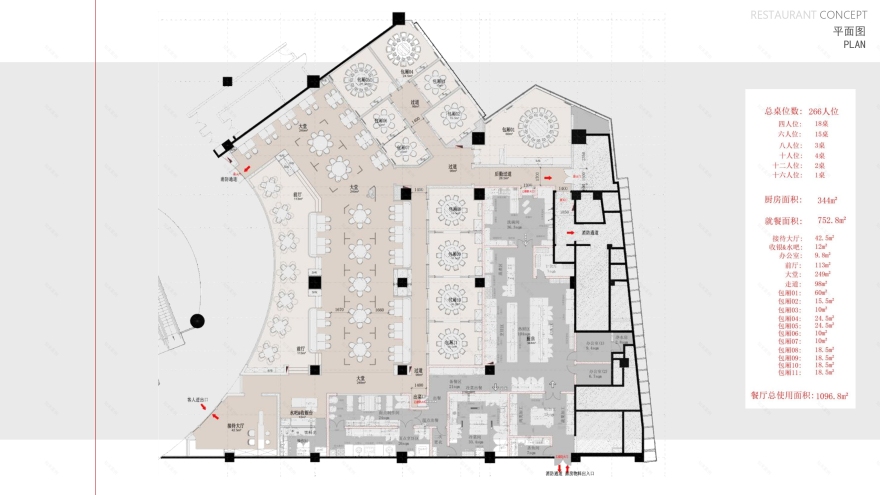
In terms of layout, the restaurant is divided into two main zones: the main hall and private dining rooms. The hall is softly divided with raised floors and semi-transparent partitions. Arranged along a central axis, the design achieves visual symmetry and balance.
Small private rooms are located on the axis, with booth seating unfolding on either side. The booths and raised floor areas are interwoven, emphasizing a spatial relationship of separation yet connection throughout the hall.
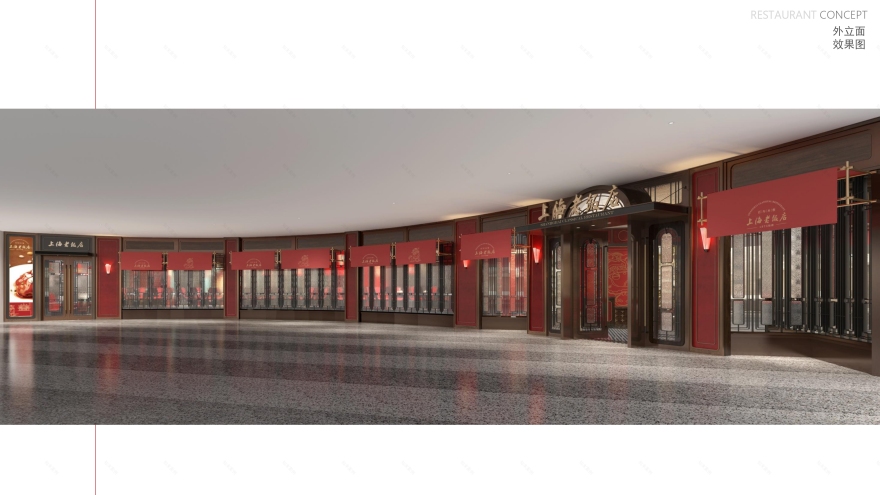
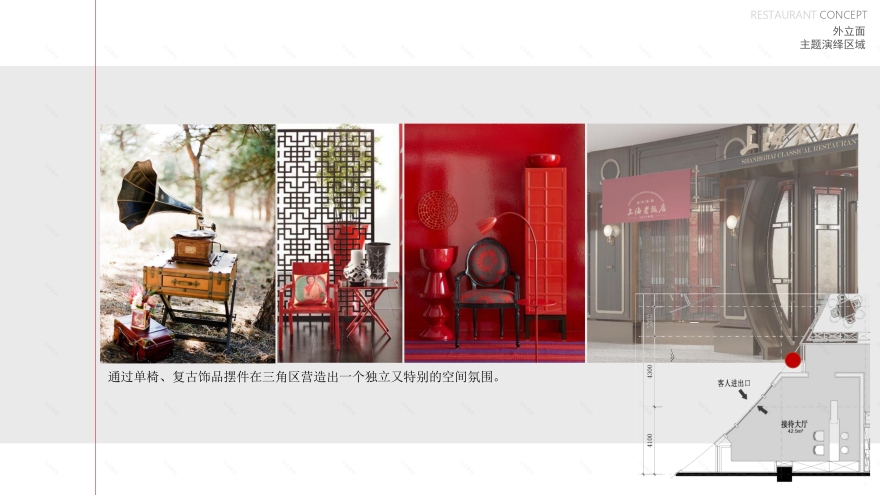
The façade combines Chinese and Western elements, with metallic luster evoking memories of past glory. Wall projections of old photos depict the Huangpu River in the 1920s, where the Black Angel statue once stood, transporting guests back to the origins of the restaurant.
From yesterday’s Rong Shun Tang to today’s Shanghai Lao Fandian, the restaurant has endured a century of wind and rain, becoming both a symbol of Shanghai’s modern history and a cultural melting pot. In 2020, the splendor of 1920s Shanghai seemed to be reborn here once again.
Project Information
Project Name: Shanghai Lao Fandian
Interior Design: DDO design
Design Director: Rene Guan Huiyun
Hard Decoration Design: Giacomo Liviabella, Chen Tian (Tein), Wen Jianjian (Arvin)
Soft Decoration Design: Gu Xiaoxia (Echo), Wu Yan (Iris)
Client Management Team: Yang Jiong, Ye Jun
Client: Shanghai Lao Fandian
Completion Date: December 2019
Location: Shanghai, China
Project Area: 1,200 sqm

















南京喵熊网络科技有限公司 苏ICP备18050492号-4知末 © 2018—2020 . All photos and trademark graphics are copyrighted by their owners.增值电信业务经营许可证(ICP)苏B2-20201444 苏公网安备 32011302321234号
苏公网安备 32011302321234号客服
消息
收藏
下载
最近