

创作上传
VIP
收藏下载
登录 | 注册有礼
查看完整案例

收藏

下载

分享
Lemay揭幕了Centre Lise et Yvon Lamarre,这是一座专为自闭症成年人及智力障碍者设计的住宅及日间中心,于2025年2月正式启用。由Fondation Yvon Lamarre发起的这一标志性项目,通过创造一个以感官福祉、自主性和社区融入为核心的环境,为自闭症成年人及智力障碍者提供了关于包容性生活的新视角。
Lemay unveils the Centre Lise et Yvon Lamarre, a residence and day centre inaugurated in February 2025. This signature project by Fondation Yvon Lamarre offers a new perspective on inclusive living for autistic adults and individuals with intellectual disabilities through an environment that prioritizes sensory well-being, autonomy, and community integration.
▼包容性生活的新视角,a new perspective on inclusive living © Claude-Simon Langlois


Centre Lise et Yvon Lamarre位于蒙特利尔Sud-Ouest区Cœur-Immaculé-de-Marie教堂的历史遗址上,是一座专为神经多样性人群打造的建筑。该项目响应了一个迫切需求:自闭症成年人住房和支持资源的严重缺乏。由Lemay主导的设计汲取了公司Sensory Fragments研究的成果——一项深入探讨空间逻辑与感官兼容性如何创造包容性环境的研究。该研究指导了中心的每一个设计决策,确保满足居民的实际需求及感官需求,同时为他们营造安全感和独立性。
▼建筑立面(渲染图),elevation rendering © Lemay
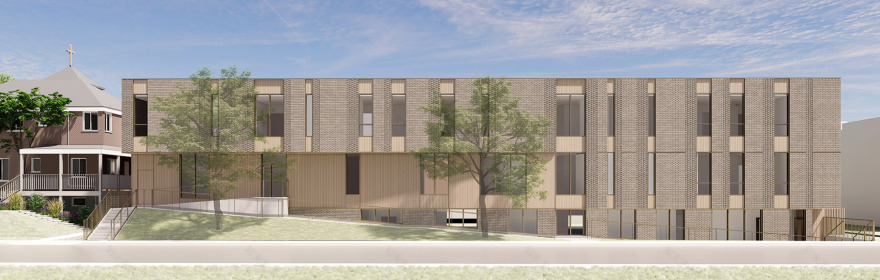
Located on the historic grounds of the Cœur-Immaculé-de-Marie church in Montreal’s Sud-Ouest borough, the Centre Lise et Yvon Lamarre is a purpose-built neuroinclusive environment. It responds to a pressing need: the significant lack of housing and support resources for autistic adults. The facility’s design and architectural vision, led by Lemay, draws on the research of the firm’s Sensory Fragments study—an in-depth exploration of how spatial logic and sensory compatibility can create inclusive environments for autistic individuals. This foundational research guided every aspect of the centre’s design, ensuring that it meets the practical and sensory needs of its residents, alongside fostering their sense of security and independence.
▼营造安全感和独立性的空间,fostering sense of security and independence environment
© Claude-Simon Langlois

通过精心的空间布局、材料选择和感官分区,中心创造了一个直观、舒适且包容的环境,适应不同的感官敏感度。中心的四座互联小屋可容纳最多16名居民,营造出熟悉感,公共空间鼓励互动,同时尊重个人界限。灰色砖砌外立面与邻近教堂的石灰岩色调相呼应,使建筑与周围环境和谐融合;木质点缀和内凹檐口则为建筑增添了温暖感和人性化尺度。精心设计的窗户最大化了采光,为居民提供平静的景观,拉近了室内外的联系。
Thoughtful spatial organization, material selection, and sensory zoning ensure an intuitive and soothing environment rooted in comfort and inclusion, and tailored to varying sensitivities. The centre’s four interconnected maisonettes, which can house upwards of 16 residents between them, establish a sense of familiarity, with shared spaces that encourage interaction while respecting personal boundaries. The grey brick façade, a subtle nod to the adjacent church’s limestone, helps the structure seamlessly integrate into the neighbourhood, while wood accents and recessed soffits introduce warmth and a human-scale approachability. Carefully positioned fenestration maximizes light, offering calming views that connect residents to the outdoors.
▼中心的四座互联小屋,centre’s four interconnected maisonettes © Claude-Simon Langlois
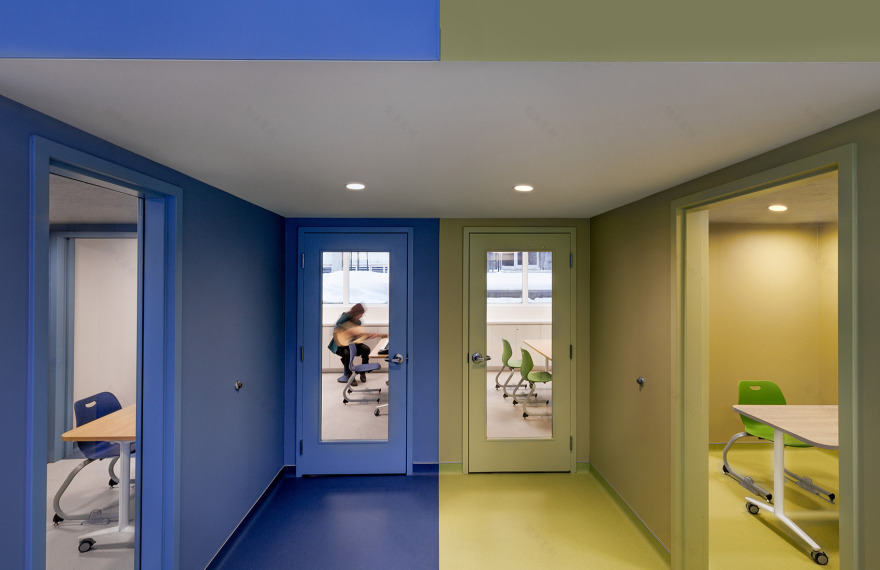
▼公共空间,public space © Claude-Simon Langlois

室内设计通过柔和的色调、天然材料和柔软的质感,减少了感官过载。照明在感官调节中发挥着至关重要的作用,配备可调节灯具,以适应居民不同的视觉敏感度。可调光灯具使得照明水平可以根据需求自定义,创造出平静且适应性强的环境,适应每位居民的独特需求。
Inside, the design reduces sensory overload through muted colour palettes, natural materials, and soft textures. Lighting plays a crucial role in sensory regulation, with adjustable fixtures designed to accommodate residents’ varying visual sensitivities. Dimmable luminaires allow for customized lighting levels, helping to create calming and adaptive environments suited to individual needs.
▼室内采用柔和色调,interior in muted colour palettes © Claude-Simon Langlois


如餐饮区和感官室等关键区域,通过材料的对比巧妙地区分开,提升了空间的清晰度和导向性。经过声学优化的环境进一步提升了居民的舒适感,机械系统设计最大限度地减少环境噪音。通过减少通风噪音和控制回声,空间有效缓解了听觉过度刺激——这是自闭症人士的一个重要考虑因素。
Key elements such as dining areas and sensory rooms are subtly distinguished through material contrasts, enhancing spatial clarity and wayfinding. An acoustically optimized environment further enhances resident comfort, with mechanical systems engineered to minimize ambient noise. By reducing ventilation sounds and controlling reverberation, the space mitigates auditory overstimulation—a key consideration for autistic individuals with heightened sound sensitivity.
▼餐饮区,dining area © Claude-Simon Langlois

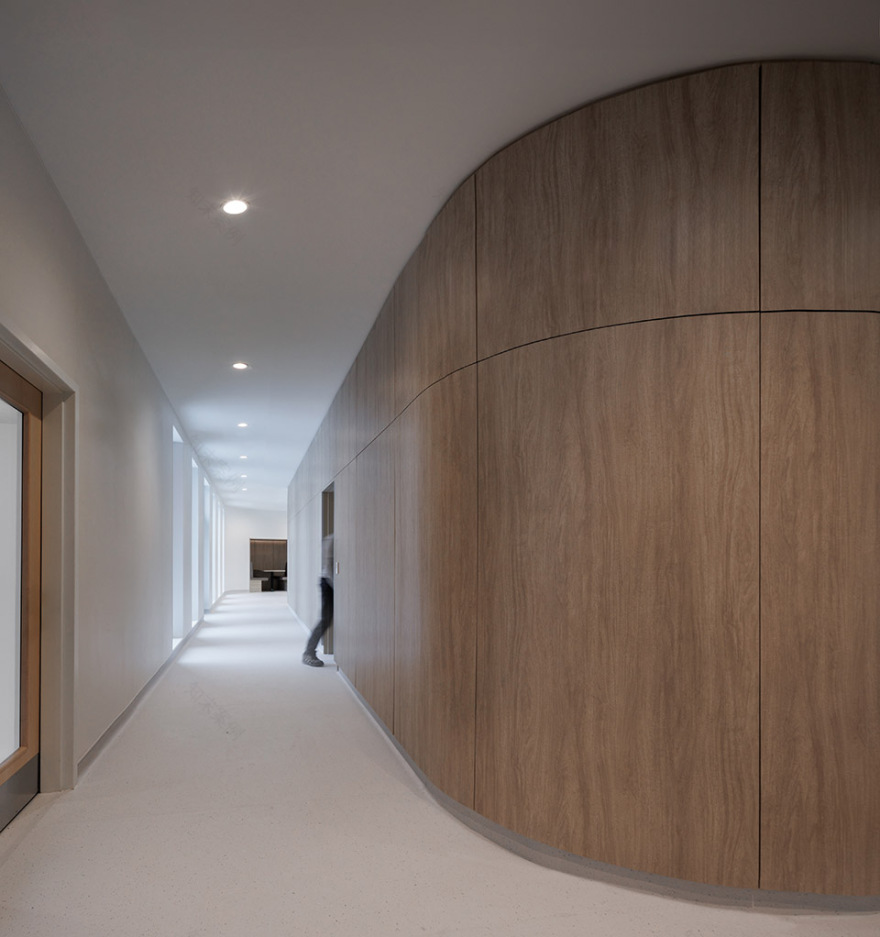
流通区域设计简洁、可预测,有助于增强居民的方向感和舒适感。圆弧形的走廊柔化了空间间的过渡,消除了尖锐的转角,避免了可能引发焦虑或过度刺激的设计元素。这一细节设计提升了空间流动性,减少了居民在建筑内的压力。
Circulation areas are designed for smooth, predictable transitions, reinforcing a sense of ease and orientation. Rounded corridors soften movement between spaces, eliminating abrupt corners that can contribute to anxiety or overstimulation. This subtle but effective design element enhances spatial fluidity, reducing stress for residents navigating the building.
▼流通区,circulation areas © Claude-Simon Langlois


▼圆弧形的走廊,rounded corridors © Claude-Simon Langlois
▼居民卧室,residents bedroom © Claude-Simon Langlois

建筑外部的景观设计延续了该项目以感官为导向的理念。芳香花园、质感路径和水景等设计元素鼓励居民以自己的节奏与自然环境互动。精心设计的感官刺激梯度提供多样的户外体验,从宁静的反思区到鼓励探索的互动空间。
Extending beyond the building, the centre’s integrated landscape architecture continues the facility’s engaged and sensory-focused approach. Aromatic gardens, textured pathways, and water features invite residents to engage with their surroundings at their own pace. Carefully designed gradients of sensory stimulation provide a range of outdoor experiences, from tranquil reflection zones to interactive spaces that encourage exploration.
▼感官为导向的景观设计,sensory-focused approach landscape design © Claude-Simon Langlois

除了对神经多样性需求的关注,Centre Lise et Yvon Lamarre还通过Lemay的NET POSITIVE™可持续发展策略展现了环境责任感。该策略通过减少项目的生态足迹并提升居民的福祉,确保设施的长期正面影响。项目获得了零碳建筑(ZCB)认证,采用高性能建筑围护结构、低排放饰面和节能系统。此外,景观设计通过植被和节水措施减缓了城市热岛效应,同时加强了与自然环境的互动。
Beyond its neuroinclusive focus, the Centre Lise et Yvon Lamarre exemplifies environmental responsibility through the sustainability strategies of Lemay’s NET POSITIVE™ approach to reduce the project’s ecological footprint while enhancing occupant well-being. Careful attention to the facility’s long-term impact includes a Zero Carbon Building (ZCB) certification, high-performance building envelope, low-emission finishes, and energy-efficient systems. Additionally, vegetation and water-saving landscaping mitigate urban heat islands while deepening engagement with the natural environment.
▼采用可持续性的环保材料,use sustainable and eco-friendly materials © Claude-Simon Langlois

凭借其通用设计原则和感官意识建筑,Centre Lise et Yvon Lamarre体现了城市如何为神经多样性群体提供包容性空间,成为包容性城市发展的典范。作为向可持续发展和以人为本设计转型的一部分,该项目展示了建筑环境如何支持尊严、自主性和有意义的社区参与。通过拥抱神经多样性,确保所有人无论认知或感官需求如何,都能进入促进福祉和归属感的空间。
With its use of universal design principles and sensory-conscious architecture, the Centre Lise et Yvon Lamarre embodies a shift in how cities can accommodate neurodiverse populations, serving as a model for inclusive urban development. As part of the broader evolution toward sustainability and human-centred design, this project demonstrates how built environments can support dignity, autonomy, and meaningful community participation. By embracing neurodiversity, it ensures that everyone, regardless of cognitive or sensory needs, has access to spaces that foster well-being and belonging.
▼为神经多样性群体提供包容性空间,accommodate neurodiverse populations © Claude-Simon Langlois

Technical sheet
Architecture: Lemay
Landscape architecture: Lemay
Mechanical and electrical engineering: Martin Roy et associés
Structural engineering: ELEMA experts-conseils
Civil engineering: Marchand Houle
Construction manager: Pomerleau
Contractor: Pomerleau
Lighting supplier: EDP inc.
南京喵熊网络科技有限公司 苏ICP备18050492号-4知末 © 2018—2020 . All photos and trademark graphics are copyrighted by their owners.增值电信业务经营许可证(ICP)苏B2-20201444 苏公网安备 32011302321234号
苏公网安备 32011302321234号客服
消息
收藏
下载
最近