

创作上传
VIP
收藏下载
登录 | 注册有礼
查看完整案例

收藏

下载

分享

翻译
Architects:Maximilian Hartinger Architekt
Area:280m²
Year:2025
Photographs:Simon Burko
Category:Houses,Refurbishment
Office Lead Architects:Maximilian Hartinger
Design Team:Maximilian Hartinger Architekt
Project Management:Benjamin Neumeier, Neumeier Architekten
Engineering & Consulting > Structural:Büro Bergmann
Engineering & Consulting > Environmental Sustainability:Ingenieurbüro Hausladen, Energieberater Manuel Breu
Engineering & Consulting > Other:Restaurierung Franz Kaltenecker
City:Tiefenbach
Country:Germany

Text description provided by the architects. Heritage conservation forms its own biotope of project stories — stories that carry urgent relevance for today's architectural debates and initiatives. This particular story began when a family abandoned their historic farmhouse north of Passau after the grandmother, the last in many generations to live there, moved out. Water infiltration, rot, and poor foundations had already caused severe damage. Consulted "experts" declared the building unsalvageable, leaving the family discouraged.


New hope came with the passion of a newly arrived daughter-in-law and the support of the heritage authority. Dendrochronological studies dated the construction to 1600/1601 — exceptionally old for the region. Many characteristic details had survived centuries of alterations (and destructions), testifying to the building's long and complex history. Despite the damage, the house's spatial generosity and potential were still visible. The upper floor and attic had never been inhabited, serving only as storage for harvests and other goods.


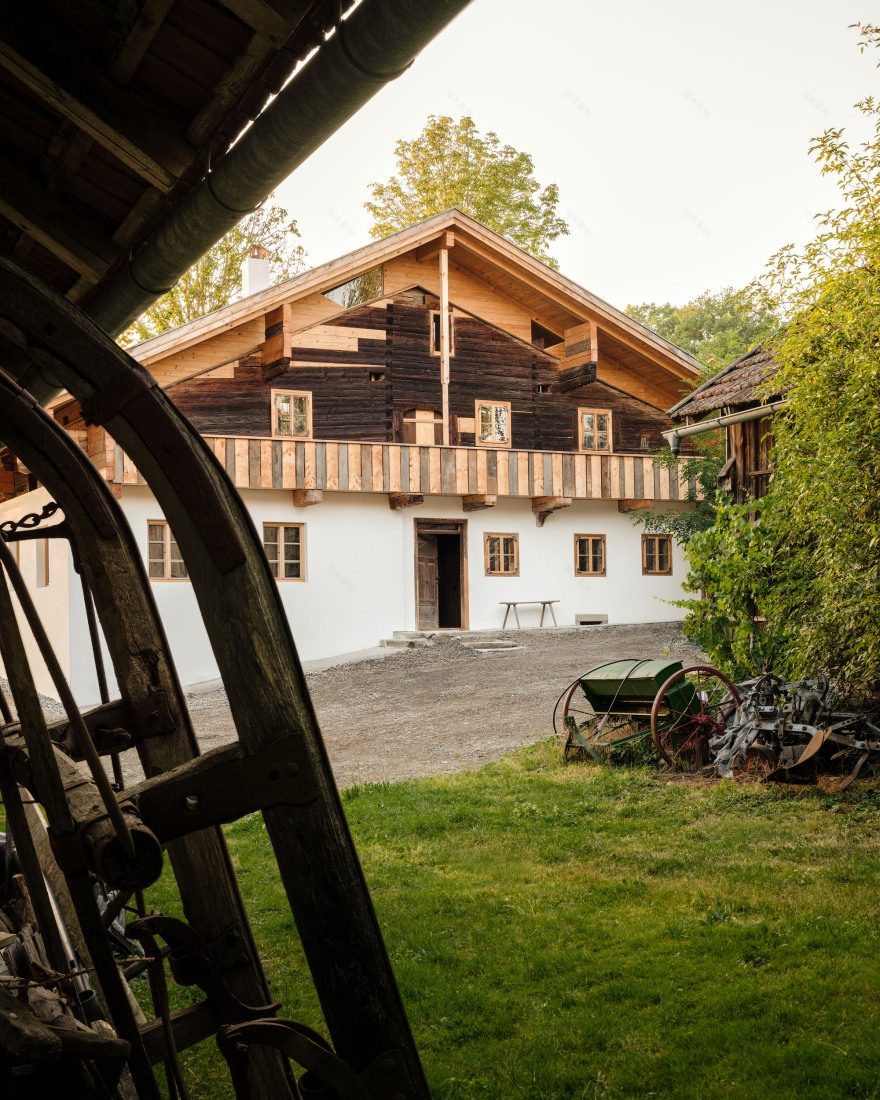
The greatest challenges stemmed from past interventions. Around 1800, part of the log structure on the ground floor had been replaced with masonry — a common practice in the area at the time. Without proper foundations, the house subsided nearly half a meter downhill, leaving it visibly tilted. In the mid-20th century, the roof had been raised, though executed with modest means, and was structurally insufficient. The fragile construction led to further deformations and damage. Yet this intervention, as part of the building's history, was to be preserved.

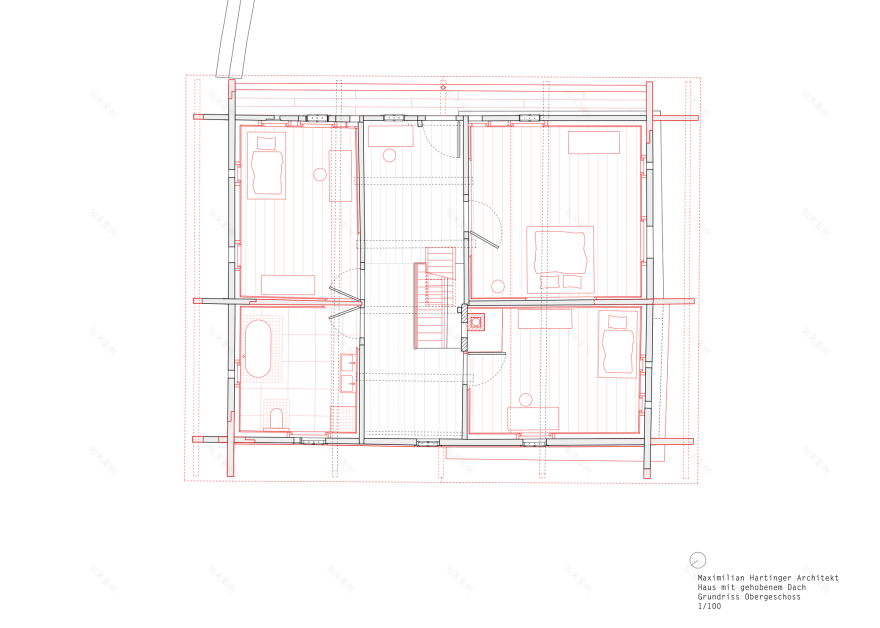

The key design move consisted of inserting several precisely fitted room-sized volumes into the existing log structure. These elements served multiple purposes: bracing the house, forming an insulated shell — especially in the raised roof area — and carrying the roof loads that the historic structure could no longer support. At the same time, their geometry and bright surfaces improved daylight in the otherwise dim upper floor.


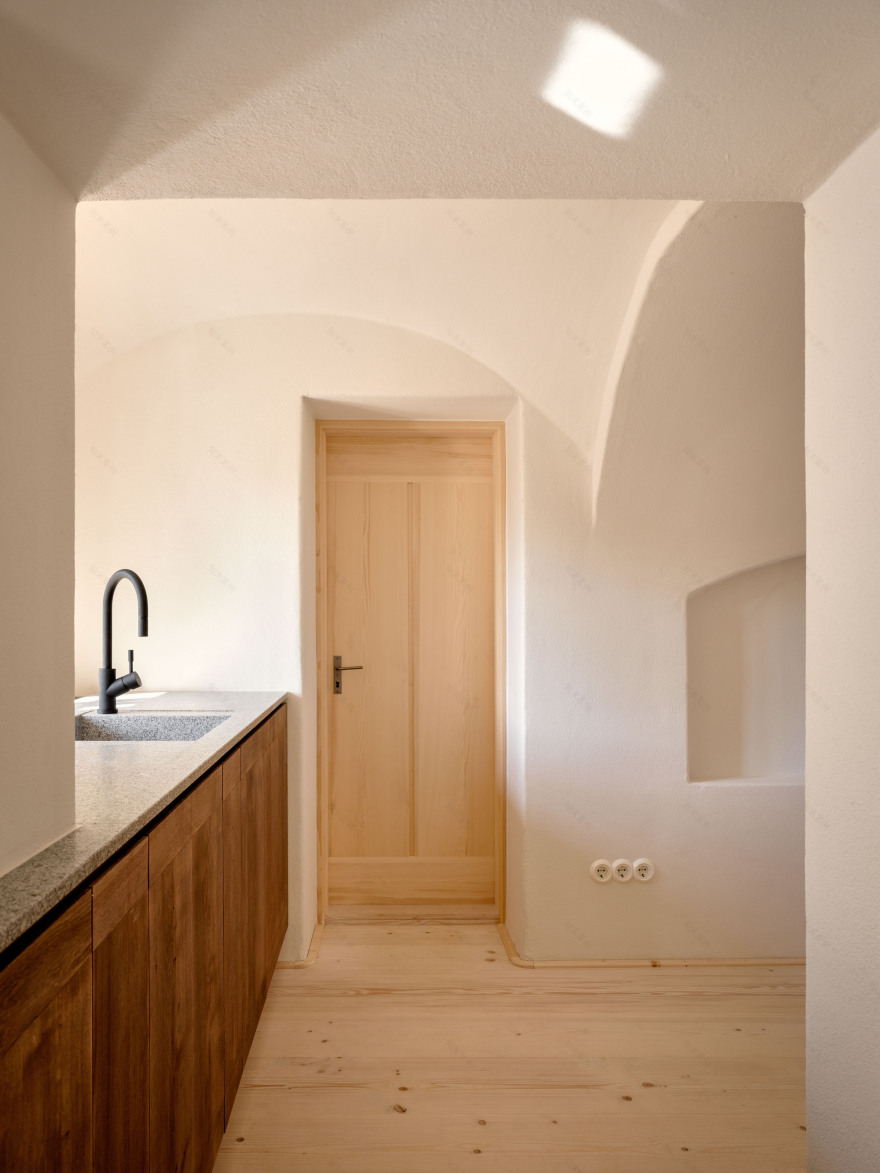
The restoration relied on traditional techniques and materials, rediscovered through experimentation and the expertise of craftspeople with historic knowledge. Family and friends contributed significantly through hands-on work: mixing clay plasters and paints, applying casein-bound lime and oil finishes, laying lime screeds, forging iron details, and protecting metal with firnis-burn treatments. Granite came from local quarries, and much of the timber from the family's own forest.

Over time, old and new will merge through patina and use, offering a home to future generations — until the question of repair arises again. The remaining buildings of the farmstead will hopefully be restored and reused with similar dedication.

The project stands as a prototype of what the construction transition requires. Courage and commitment can overcome skepticism about supposedly "unsalvageable" buildings. Knowledge, materials, and techniques are still available, and with effort, the risks remain manageable. Challenging projects generate enthusiasm among participants and fascination among observers — craftspeople, neighbors, institutions alike. The essential condition: existing structures must first be protected from demolition, and genuine expertise must be made integral. Heritage conservation has long demonstrated that such practices can — and must — become the norm.

Project gallery







南京喵熊网络科技有限公司 苏ICP备18050492号-4知末 © 2018—2020 . All photos and trademark graphics are copyrighted by their owners.增值电信业务经营许可证(ICP)苏B2-20201444 苏公网安备 32011302321234号
苏公网安备 32011302321234号客服
消息
收藏
下载
最近