

创作上传
VIP
收藏下载
登录 | 注册有礼
查看完整案例

收藏

下载

分享

翻译
Architects:Haworth Tompkins
Area:3700m²
Year:2025
Photographs:Simon Devitt
Manufacturers:Regupol America,AMF Heradesign,Abodo Wood,Aspect Furniture,Autex Acoustics,Batten & Cradle,Big River Panels,Carboline,Forbo/Marmoleum,Kirwin and Simpson,Mammoth Insulation,Markham Global,Red Stag Timber,Resene,Rooflogic,Sawmill Direct,Symonite,Thermosash
Project Manager:Octa
Main Contractor:Hawkins
Structural Engineering:Ruamoko Solutions
Lighting Design:Cosgroves
Acoustic Engineering:Marshall Day Acoustics
Category:Theater
Design Team:Roger Watts, Steve Tompkins, Toby Johnson, Danny Lane, Nick Royce, Jason Ho
Interior Architect:Cathy Lee, Hollie Norman
Architectural Technician:Elise Walding, Isabelle Thompson, Lottie Vandervis
Architectural Graduate:Georgia Bartley
Architects:Jeffrey Jiang, Martijn van der Tol
Athfield Architects Design Team:Jon Rennie, Matthew Webby, Charles Collins
Client:Christchurch City Council / The Court Theatre
Theatre Consultant:Charcoalblue
Landscape Architect:Botanic Landscape Architects
Facade Engineer:Mott MacDonald
Facade Structural Engineer:BG&E
Quantity Surveyor:AECOM
Planning:Planz
Geotech Engineer:PDP
City:Christchurch
Country:New Zealand
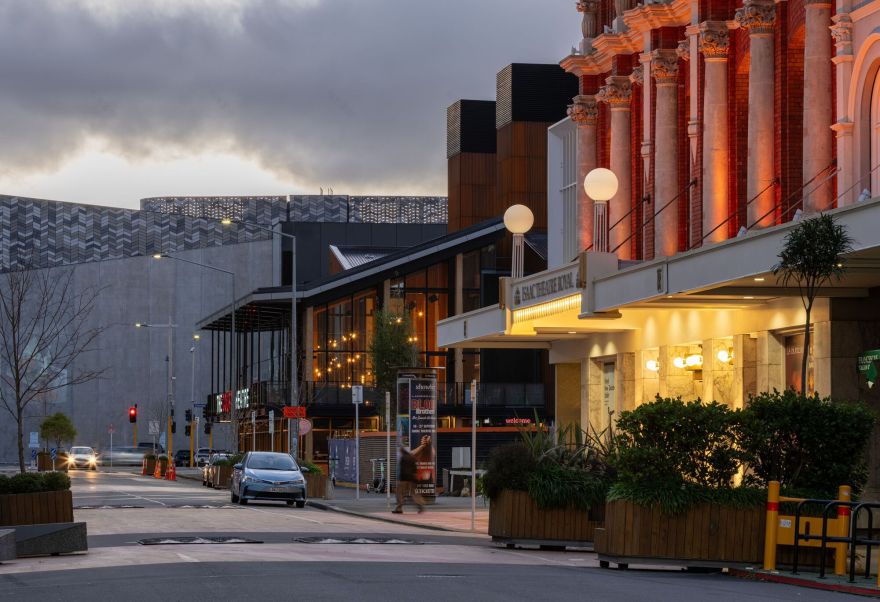
Sustainability — As a long-term partnership between Christchurch City Council and The Court Theatre sustainability was from the outset an underlying driver for the project. The following summarises key aspects of sustainability incorporated into the building's design.
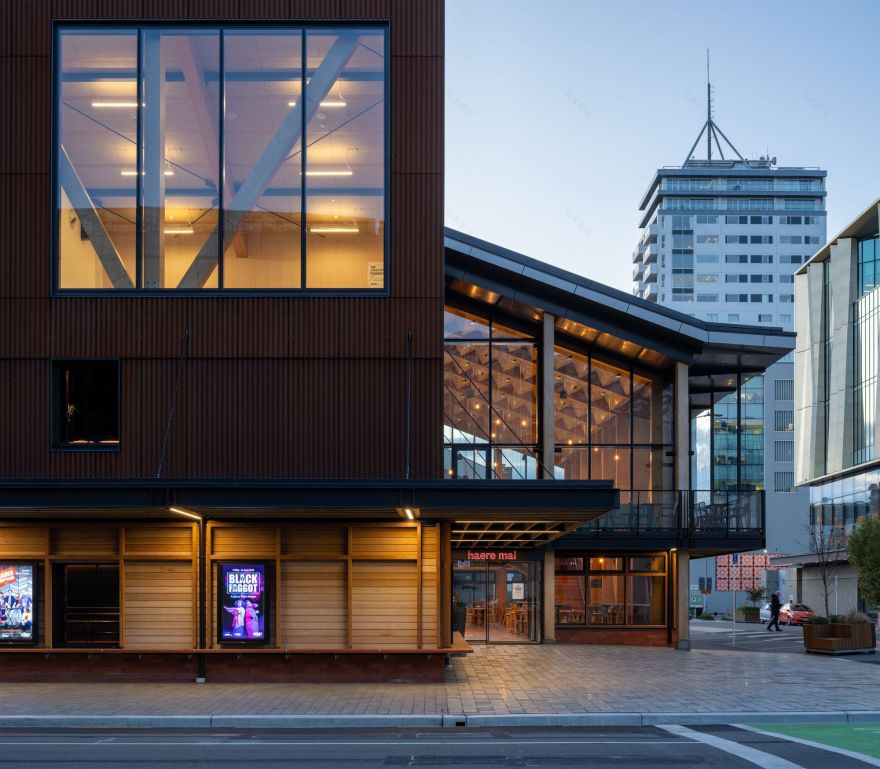

1. Hybrid low-carbon structural system — Engineered timber structural elements have been used extensively where structurally and acoustically appropriate in conjunction with a hybrid precast concrete and steel structural elements. Concrete has been used efficiently in the design to achieve the demanding seismic and acoustic requirements while timber is used for both its carbon sequestering properties, as well as the beauty and warmth it brings to the feel of the building.

2. High performance thermal envelope — In order to minimise heat losses and gains, insulation levels and building air tightness are key strategies to minimise long term energy use. At the time of design, insulation values were in excess of double national building code requirements paired with exposed thermal mass where possible to minimise energy use and moderate internal temperatures.

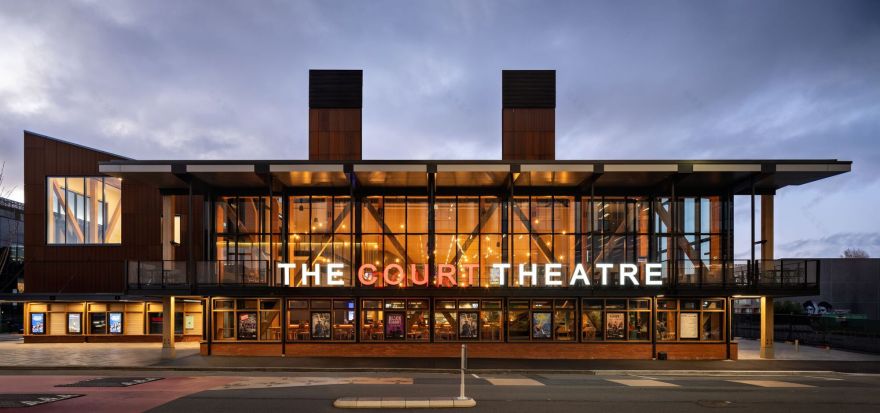
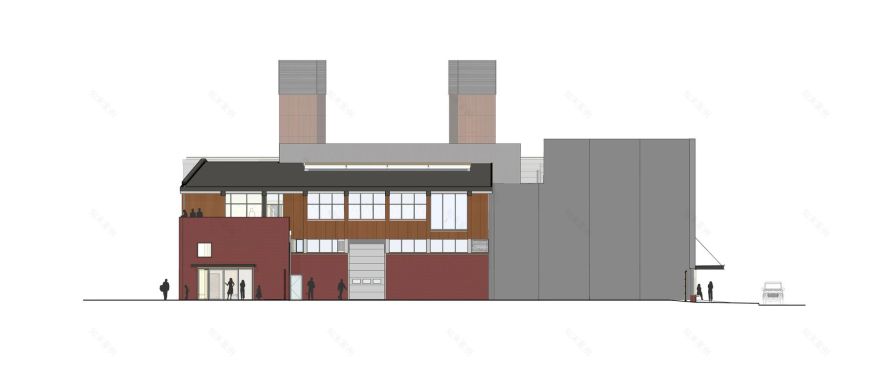
3. Assisted passive ventilation and cooling — Passively assisted ventilation and cooling has been employed within the foyer and main theatre space. Developed from Haworth Tompkins' UK work, passive ventilation strategies have been adapted to a New Zealand context. Via acoustically attenuated vents and externally expressed chimney, when outdoor temperatures are suitable, the main auditorium benefits from free cooling even during a performance.
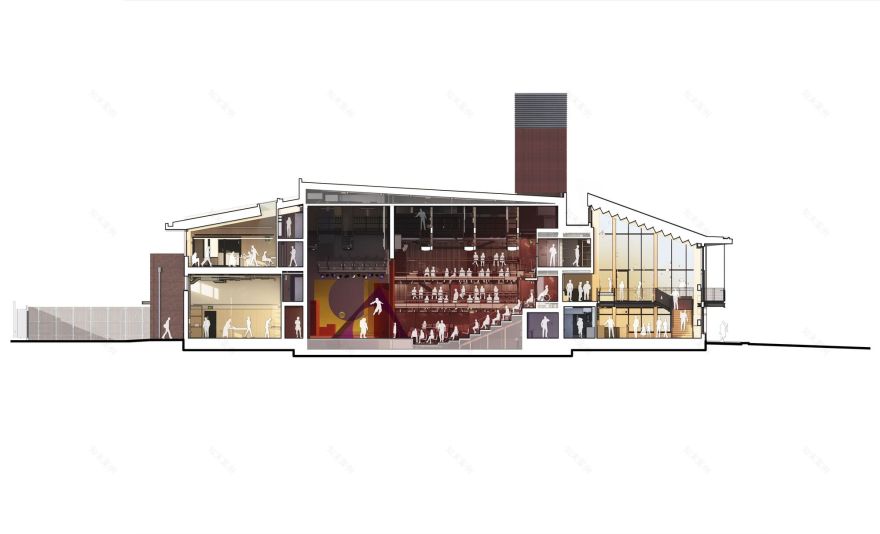
4. Air source heat pumps — Electric air source heat pumps are used to provide efficient heating and cooling to the building in conjunction with the passively assisted ventilation and cooling. The building draws on the electricity from New Zealand's extensive renewable hydro generation.

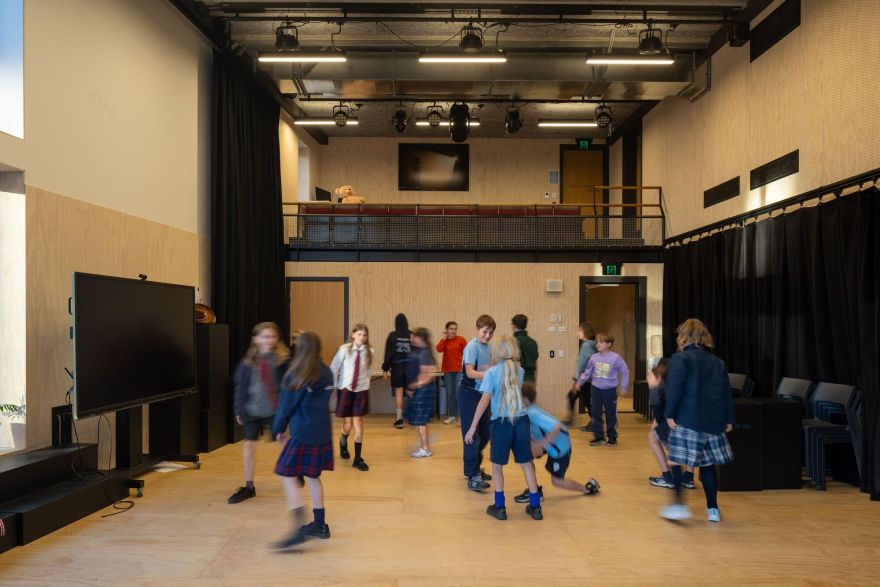
5. Accessibility for all — The building is fully accessible. In particular the auditorium includes wheelchair positions on all levels, level changes are minimised and the building is provided with facilities to maximise access. The palette of materials has been selected with legibility in mind.

Project gallery






南京喵熊网络科技有限公司 苏ICP备18050492号-4知末 © 2018—2020 . All photos and trademark graphics are copyrighted by their owners.增值电信业务经营许可证(ICP)苏B2-20201444 苏公网安备 32011302321234号
苏公网安备 32011302321234号客服
消息
收藏
下载
最近