

创作上传
VIP
收藏下载
登录 | 注册有礼
查看完整案例

收藏

下载

分享

翻译
Architects:Moradia Comum [Lanchonete <> Lanchonete]: Amanda Arcuri + Danilo Filgueiras + Gabriel Martucci
Area:50m²
Year:2023
Photographs:Estudio Quadrante
Category:Cultural Architecture,Library
Coordination:Amanda Arcuri, Danilo Filgueiras, Gabriel Martucci
Intern:Mariana Guimarães
General Construction:Concreto Rosa
Engineering & Consulting > Others:Plínio Calil
Partnership:Quilombo da Gamboa + Rede Jubileu Sul
Promotion:Conselho de Arquitetura e Ubanismo do Rio de Janeiro CAU-RJ
City:Gamboa
Country:Brazil

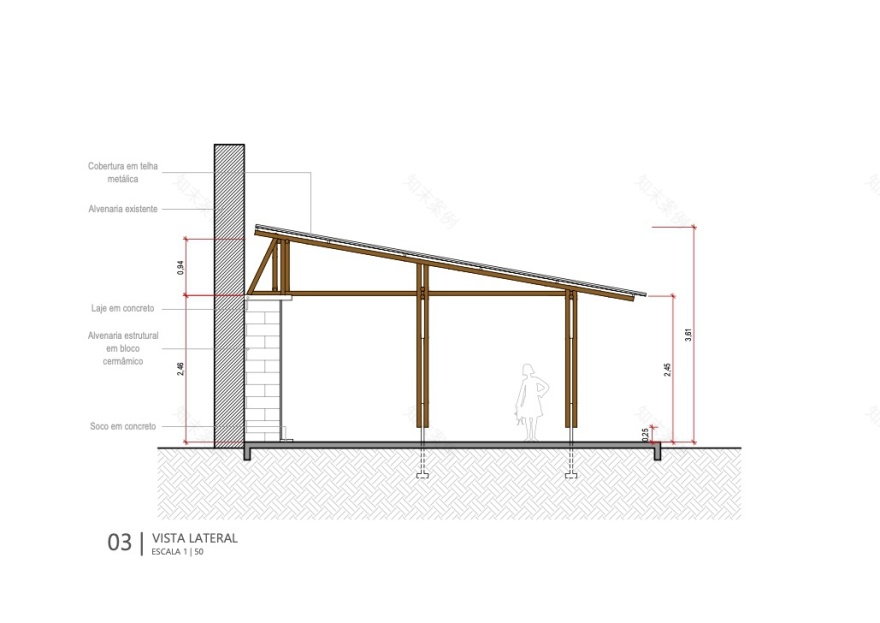
Text description provided by the architects. The Pavilion Library of the Gamboa Quilombo was built from construction workshops, in the model of an experimental site, as part of the Common Housing project_Phase 1: Ground, funded by the Technical Assistance for Social Interest Housing program of the Architecture and Urbanism Council of Rio de Janeiro (ATHIS CAU RJ), focusing on the dissemination of architectural culture.


The workshops focused on the construction of a collective space in the occupation, where various types of cultural activities open to the public already took place, as well as the dynamics of the families in the Quilombo. The architectural project was developed after a collective debate on the program of the space and the most suitable architectural solutions within a participatory and educational project, in addition to an analysis of similar projects in Latin America, with the participation primarily of women living in occupations in the region.

The goal, in addition to the construction of the pavilion, was to experiment with different materials that could contribute to the construction repertoire of women who self-build their houses in occupations in the central area of Rio de Janeiro, presenting low-cost and low-maintenance materials such as structural ceramic bricks and eucalyptus roundwood as alternatives to the standard construction of concrete and hollow brick masonry.

The Common Housing project, through an action against hegemony, seeks the co-production of community spaces in the territory of Little Africa, legitimizing and recognizing the authenticity of the spaces created by non-architects, whose spatial dynamics, in turn, contribute to our practice in the field of architecture and urbanism.

Project gallery



南京喵熊网络科技有限公司 苏ICP备18050492号-4知末 © 2018—2020 . All photos and trademark graphics are copyrighted by their owners.增值电信业务经营许可证(ICP)苏B2-20201444 苏公网安备 32011302321234号
苏公网安备 32011302321234号客服
消息
收藏
下载
最近