

创作上传
VIP
收藏下载
登录 | 注册有礼
查看完整案例

收藏

下载

分享
在班加罗尔不断扩展的边缘地带,在一片干燥大地与零星工业活动的背景中,Elements of Nature不仅仅是一座营销与销售办公室,而是一种被精心编排的体验——一次关于结构、材料与感官的建筑对话。由Source Architecture的创始人Sneha Ostawal设计,这座8,000平方英尺的空间并不是常规的商业展示厅,而是一个邀请来访者放慢脚步、沉浸感受、静心体会的场所——甚至在他们接触“居住”的概念之前。项目位于Hoskote半英亩的用地上,正对主干道,成为社区开发的第一个接触点。这里并非郁郁葱葱的风景,而是一片荒凉而布满灰尘的场地——一块等待转化的空白画布。在这里,设计并不试图去人为复制自然,而是通过光影与真实的材料语言,营造出一种经过培育的静谧感,让来访者与环境共同呼吸。
In the heart of Bangalore’s expanding peripheries, amidst a landscape of dry earth and scattered industrial activity, Elements of Nature emerges not just as a marketing and sales office but as an orchestrated experience, an architectural dialogue between structure, materiality, and the senses. Designed by Sneha Ostawal, founder of Source Architecture, this 8,000 sq ft space is not a typical commercial showroom. It is a space that invites visitors to slow down, absorb, and feel—before they are even introduced to the idea of ownership.
Set within a half-acre property in Hoskote, Elements of Nature occupies a key position along the main road, standing as the first point of engagement for the township’s development. This is not a lush, picturesque landscape; it is a stark, dusty terrain, a blank canvas waiting for transformation. Here, the design does not seek to replicate nature artificially but rather allows visitors to experience a cultivated stillness—through light, shadow, and an honest material palette that breathes with the environment.
▼建筑概览,overview of the building©Shamanth Patil


▼项目鸟瞰,aerial view of the project©Shamanth Patil

入口处,一堵巨大的米色墙体静默地矗立,如同一块从地面升起的独石。它隐藏的部分与揭示的部分一样多,唤起人们的好奇心。墙上唯一的一扇木门几乎不被远处察觉,而是等待来访者自行发现。跨越这一门槛,便是进入另一重境遇——一个逐层展开、缓慢揭示的空间。
A large, uninterrupted beige wall marks the entrance, rising from the ground like a quiet monolith. It conceals as much as it reveals, prompting curiosity. A single wooden door punctuates its expanse, designed to be discovered rather than noticed from afar. The act of stepping through this threshold is a transition, the first step into a space that unfolds slowly, one layer at a time.
▼巨大的米色墙体静默地矗立,A large, uninterrupted beige wall marks the entrance©Shamanth Patil

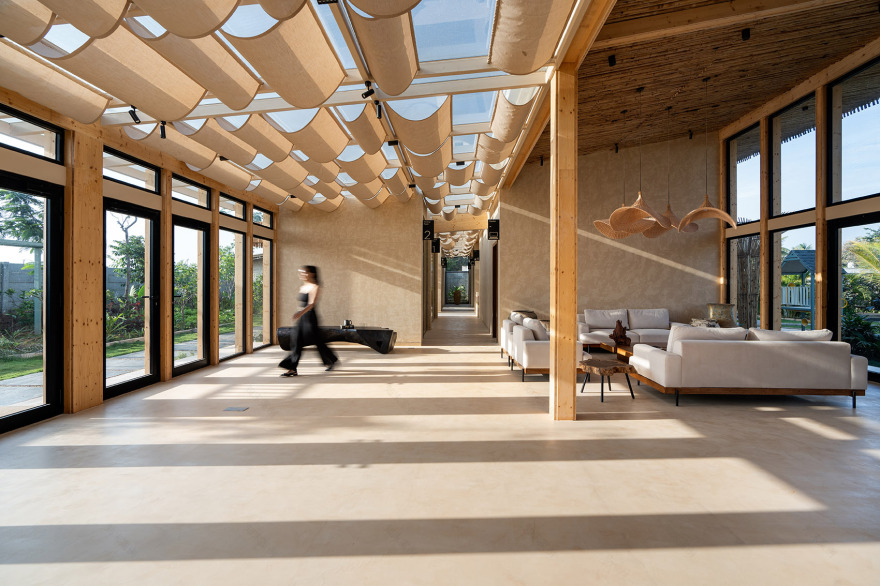
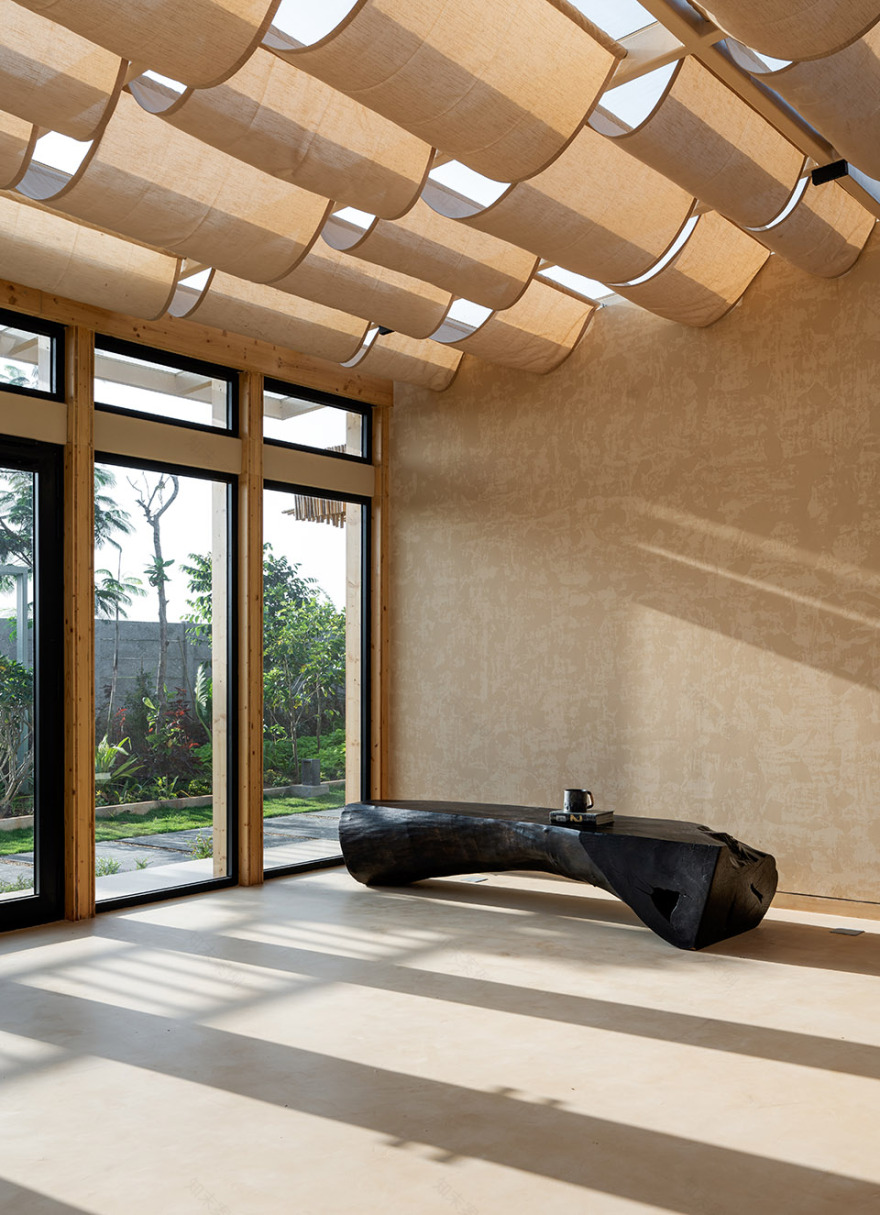
前台是感官体验的起点。空气变得凉爽,柔和的光线渗入,触感与脚下的质地都保持着原始的粗粝。一个用夯土打造的前台低调地立于空间中央,色调沉静。常见的椅子被两段巨大的木头所取代,它们既是座椅,也是随光影变幻而不断变化的雕塑元素。这些木材饱经岁月却仍充满触感,为空间赋予了任何光亮家具都无法给予的厚度。竹片覆盖的屋顶在白日不断过滤光线,在微水泥地面上投下变幻的纹理,让室内的每一个瞬间都独一无二。
▼结构轴测图,structure axonometric©Source Architecture

The reception is where the sensory experience begins. The air feels cooler, diffused light trickles in, and the textures underhand and underfoot are intentionally raw. A rammed-earth desk, sculpted with muted tones, stands unobtrusively in the space. Instead of conventional chairs, two large wooden logs rest nearby—not just as seating but as sculptural elements that change with the passage of sunlight. These logs, worn yet tactile, anchor the space in a way that no polished furniture could. The bamboo-clad facade filters light throughout the day, casting patterns on the microcement floors, ensuring that no two moments inside feel quite the same.
▼用夯土打造的前台,A rammed-earth desk©Shamanth Patil

▼用夯土打造的前台,A rammed-earth desk©Shamanth Patil


▼巨大的木头所打造的茶几,desk made by giant wood©Shamanth Patil

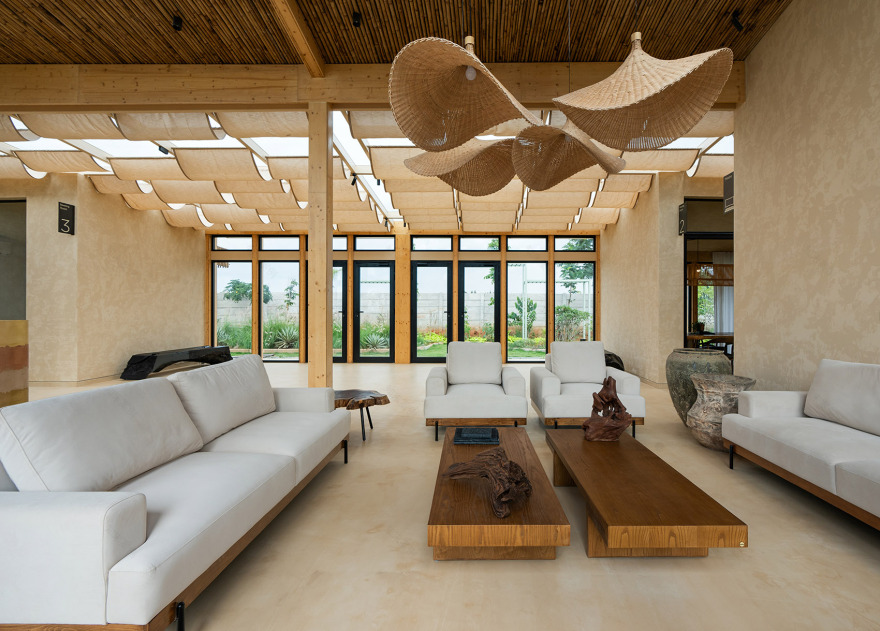
▼竹片覆盖的屋顶不断过滤光线,The bamboo-clad facade filters light throughout the day©Shamanth Patil

▼竹片覆盖的屋顶不断过滤光线,
The bamboo-clad facade filters light throughout the day©Shamanth Patil


前台之后,是AV室——一个被围合的停顿。厚实的墙体屏蔽了声音,使注意力集中于数字叙事。不同于充斥着宣传资料的传统销售办公室,这里是一处沉浸式的间歇。室内空间保持克制,柔和而富于触感的材料使视觉内容成为绝对的主角。这是一次亲密的体验,强化了项目的核心理念:空间首先塑造情绪,然后才塑造决定。
Beyond the reception, the AV room becomes a moment of enclosure. Solid walls contain sound, allowing a controlled focus on digital storytelling. Unlike traditional marketing offices that are overwhelmed with promotional material, this space is an immersive pause. The interiors remain muted—soft, tactile materials ensuring that the visuals take precedence. It is an intimate experience, reinforcing the project’s ethos: that spaces shape emotions before they shape decisions.
▼沉浸式的休息空间,an immersive resting area©Shamanth Patil

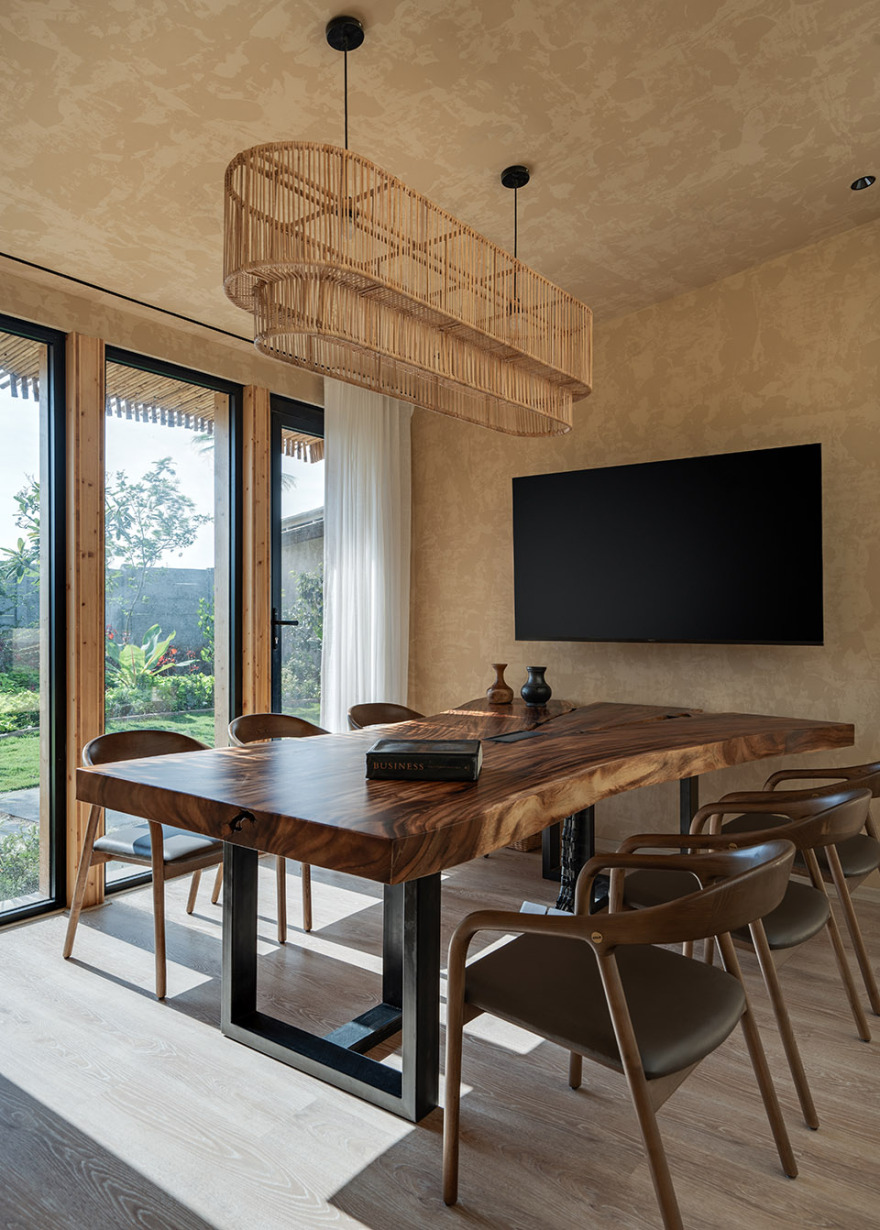
会议室延续了这一哲学。它们并非为僵硬的交易而设计,而是为安静的交流而生。12 英尺长的木桌占据中心,桌面光滑却留有自然的纹理痕迹。天然织物的座椅与木材的温润相互呼应,而微水泥的墙体消隐于背景,让质地超越色彩成为主角。没有刺眼的人造灯光,只有柔和而均匀的光晕,使讨论显得不急不躁,更加亲切,以触感而非视觉奇观来支撑氛围。
The meeting rooms extend this philosophy, designed not for transactional stiffness but for quiet engagement. A large, 12 ft wooden table grounds the rooms, its surface smooth yet marked with organic imperfections. Natural fabric seating complements the warmth of the wood, while micro-cement walls dissolve into the background, allowing the texture to take precedence over colour. There is no sharp artificial light, only a soft, diffused glow that makes discussions feel unhurried, personal, and grounded in tactility rather than spectacle.
▼会议室,the meeting rooms©Shamanth Patil
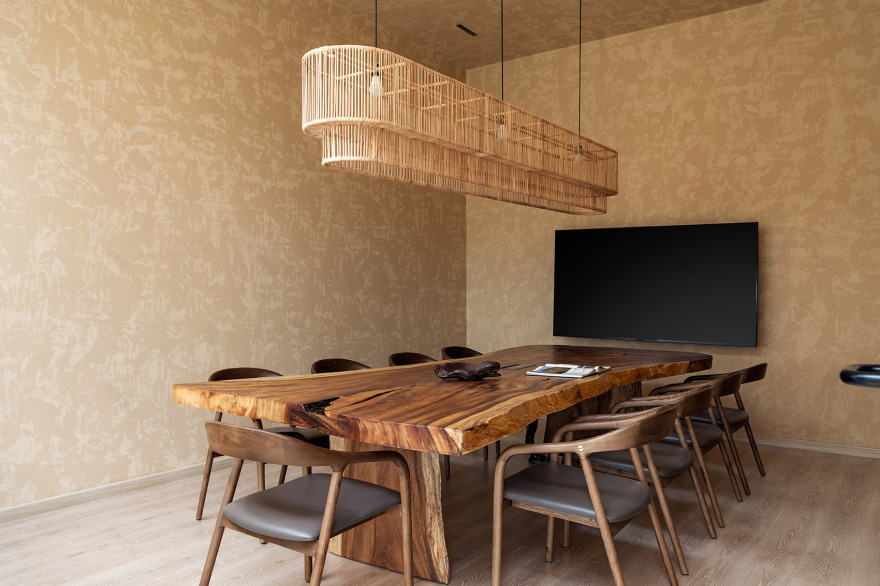
▼木桌占据空间核心,12 ft wooden table grounds the rooms©Shamanth Patil

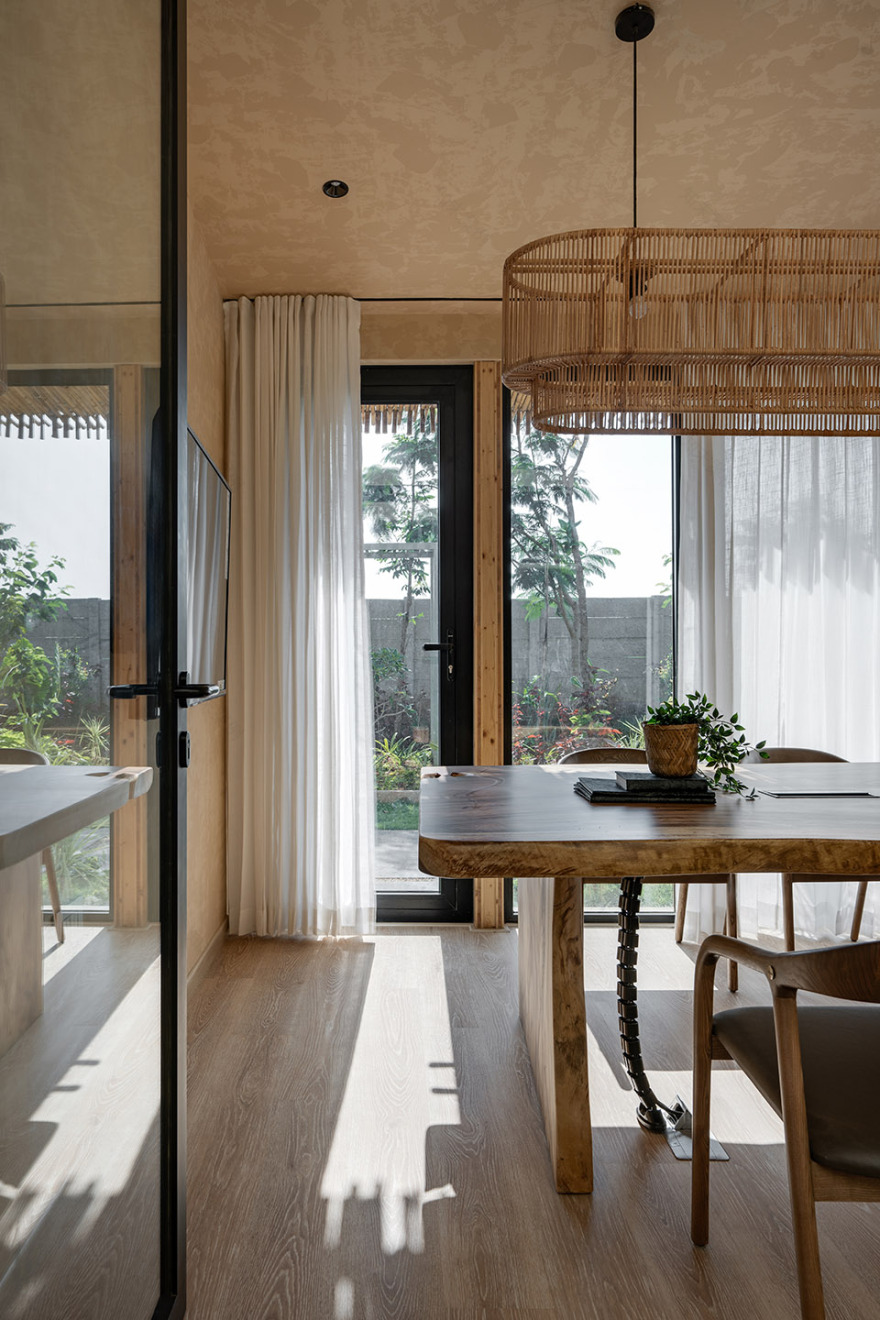
咖啡区为空间的序列注入了另一种能量。这是一个脱离交易的片刻,一处让交谈超越协商、让人们捧着咖啡沉思的场所。轻盈的窗帘取代了传统的百叶窗,随风轻轻摇曳,将光线柔化,抚触一切。座椅布置极为节制,却刻意引导互动。咖啡区不仅是便利设施,更是一种节奏的转变——一种无声的安抚:筑家不仅关乎结果,同样关乎过程。
The cafe punctuates the sequence of spaces with an entirely different energy. It is a breakaway, a space for conversations that spill beyond negotiations, for moments of reflection with a cup of coffee in hand. Soft curtains replace conventional blinds, shifting gently with the breeze, filtering light in a way that softens everything it touches. The seating is deliberate, and minimal, yet positioned to encourage interaction. The cafe is not just about convenience; it is about fostering a slower rhythm, an unspoken reassurance that making a home is as much about the process as it is about the place.
▼轻盈的窗帘取代了传统的百叶窗,
soft curtains replace conventional blinds©Shamanth Patil
走向户外,过渡显得自然而然。儿童游乐区紧邻咖啡区,既是功能的延伸,也是视觉的延展。再往外,是一片开放草坪,可用于静思,也可承载社区活动。而在角落深处,则伫立着一顶蒙古包。它并非附加的点缀,而是对生活方式的再思考。作为原型,它暗示住宅不必总是固定不移的建筑。由在地材料搭建,它的简约便是力量,为那些希望先行体验土地、再决定建造的人们提供了一种灵活的可能性。蒙古包因此成为谈话的引子,悄然改变人们对当代居住弹性的认知。
Stepping outside, the transition to the outdoor spaces feels effortless. A children’s play area sits adjacent to the cafe, designed to be both a visual and functional extension. Beyond it, an open lawn serves as a gathering space, adapting to different needs; be it quiet contemplation or community events. And then, tucked into a quiet corner, stands the yurt. The yurt is not just an architectural afterthought but an invitation to rethink living. It is a prototype, a suggestion that a home need not always be a permanent, immovable structure. Built with locally sourced materials, its simplicity is its strength, an alternative for those who wish to experience the land before fully committing to construction. The yurt stands as a conversation starter, subtly shifting perceptions about flexibility in modern living.
▼室外庭院,outdoor courtyard©Shamanth Patil
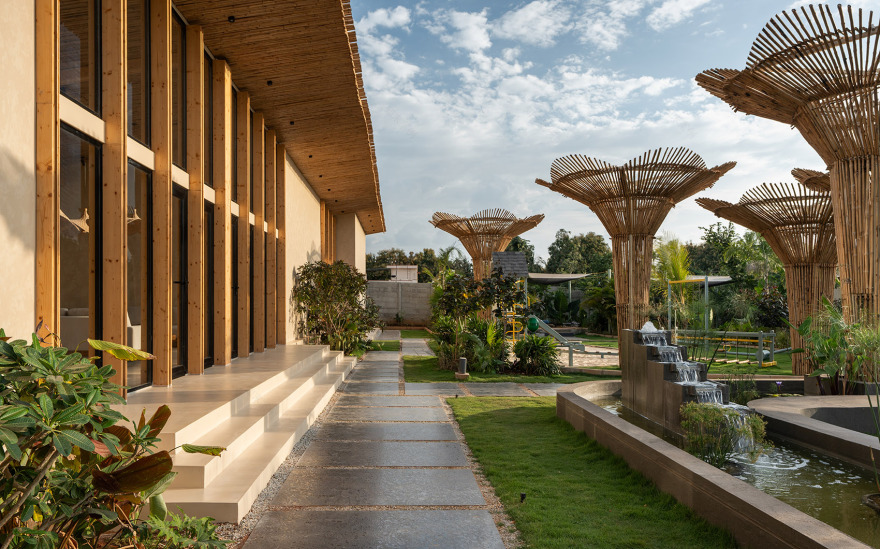

▼可承载社区活动的开放草坪,
a gathering space adapting to different needs©Shamanth Patil


在Elements of Nature中,可持续性并非附加功能,而是其存在的核心。建筑整体可拆卸,钢结构骨架保证其在五至十年生命周期后仍可再利用。竹材覆面因其可自然降解而被选用,同时带来温润与触感。室内延续了材料的本真:未经处理的木材、质感粗粝的微水泥、柔软的天然织物。这不是试图以奢华夺目的空间,而是一个呼吁人们重新与“元素”相连的场所。布局中隐含着风水原则,确保流线直观顺畅。管理层办公室位于后方,以玻璃隔断保持透明度,在安静中维持权威。设计并不强加秩序,而是让行动、思考与互动自然发生。
Sustainability is not just a feature of Elements of Nature; it is embedded into its very being. The structure is entirely dismantlable, framed in steel to allow repurposing after its lifecycle of five to ten years. Bamboo cladding, chosen for its ability to biodegrade naturally, lends warmth and tactility. Interiors are grounded in the raw honesty of materials—untreated wood, textured micro-cement, and soft, natural textiles. This is not a space that attempts to dazzle with opulence but one that urges visitors to reconnect with the elemental quality of spaces. Vastu principles subtly guide the layout, ensuring an intuitive flow of movement. The senior management cabins, placed at the rear, maintain a sense of quiet authority while remaining transparent through glass partitions. The design does not impose itself, it allows movement, thought, and engagement to unfold naturally.
▼管理层办公室,the senior management cabins©Shamanth Patil

Elements of Nature的成功不仅体现在美学层面,更在于它对期待的重塑。它挑战了传统的售楼处模式,证明商业空间同样可以是体验空间。来访者离开时,不只是带走一本宣传册,而是带着一份不同寻常的感受——一种经过考量、令人难以忘怀的体验。随着光影在竹制立面上不断流转,空间持续演变;在静谧中鲜活,在克制中表达。Elements of Nature 不仅是一座办公室,更是一份静默的宣言:建筑如何唤起情感,创造连接,并将一次日常的销售体验转化为一次深刻而难忘的记忆。
The success of Elements of Nature is not just in its aesthetics but in its ability to reshape expectations. It challenges the conventional sales office model, proving that spaces of commerce can also be spaces of experience. Visitors leave not just with brochures but with a lingering sense of having stepped into something different, something considered, something that stays with them even after they step back out onto the dusty roads of Hoskote. As the light shifts and patterns of shadow move across the bamboo facade, the space continues to evolve; alive in its stillness, expressive in its restraint. Elements of Nature is not just an office; it is a quiet manifesto for how architecture can evoke emotion, create connection, and turn something as routine as a sales interaction into something profoundly memorable.
▼夜景,night view©Shamanth Patil

▼整体平面,general plan©Source Architecture

▼建筑平面,building plan©Source Architecture

▼立面,elevation©Source Architecture
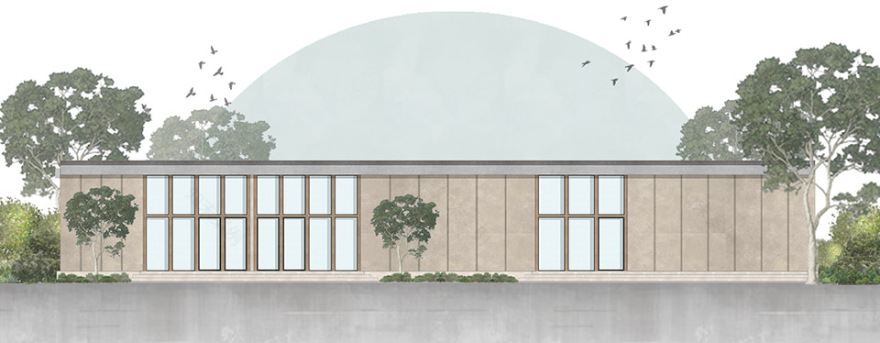

▼剖面,section©Source Architecture


Project Completion Year: 2024
Principal Designers: Sneha Ostawal and Manu Gautham
Name of Clients (if you feel free to share): Urban Fields
Location: Bangalore
Type of Project: Marketing Office
Floor Plan Features: Vastu compliant Marketing office on 0.5 Acre land
Size: 5000sft
Stylist: Sneha Ostawal
Photography: Shamanth Patil



南京喵熊网络科技有限公司 苏ICP备18050492号-4知末 © 2018—2020 . All photos and trademark graphics are copyrighted by their owners.增值电信业务经营许可证(ICP)苏B2-20201444 苏公网安备 32011302321234号
苏公网安备 32011302321234号客服
消息
收藏
下载
最近