

创作上传
VIP
收藏下载
登录 | 注册有礼
查看完整案例

收藏

下载

分享

翻译
Architects:Studio Gang
Area:55000ft²
Year:2025
Photographs:Jason O Rear
Manufacturers:Andreu World,Forbo Flooring Systems,ALW,Acuity Brands,Allegion,Armstrong World Industries,Armstrong World Industries,Armstrong World Industries,Attiro,B-K Lighting,BASO,Benjamin Moore,Bernhardt Furniture,Bernhardt Furniture,Bobrick Washroom Equipment,Boston Sand and Gravel Company,Burns Manufacturing, Inc.,Caesarstone US,Cap8 Doors & Hardware,Cap8 Doors & Hardware, +71Capri Collections,Carboline,Centria,Cherry Hill Glass Co., Inc.,Construction Specialties,Contexture, Inc.,Corian® Design,Crossville Tile,Custom Office Furniture,Daltile,Dawson,Dur-A-Flex,Dyson,E-Skylight,ENE Systems,Elkay,Forbo,G&S Acoustics,GAF,GLASSBEL Group,Ghent,Guardian Glass,HASSLACHER NORICA TIMBER GLT®,HASSLACHER NORICA TIMBER GLT®,HBF Textiles,HID Global,Haworth,Haworth,Hightower,Hushoffice,Kawneer,Keilhauer,Kohler,Kvadrat,LaCantina Doors,Leland Furniture,Limelight Tiles & Ceramics,Linder Enterprises,Lumenwerx,Luna Textiles,Luum Textiles,MCM Acoustical,Maharam,Mark Richey Woodworking,Mark Richey Woodworking,Mark Richey Woodworking,Mark Richey Woodworking,Mark Richey Woodworking,McKeon,Mermet USA,Mitsubishi Electric,Morin by Kingspan,Nordic Structures,Nucraft Furniture,Oregon Door,Pedrali,Rytec,Schüco International,Schüco International,Shaw Contract Carpet,Skyfold Inc.,Sloan,South County Post & Beam, Inc.,Stylex,Tate Magnetic,Toto,USAI Lighting,Von Duprin,WE-EF,Western Forest Products,Western Forest Products-71
Landscape Architect:Scape
structural Engineer:Arup
Category:University,Sustainability
Owner/Operator:Harvard University
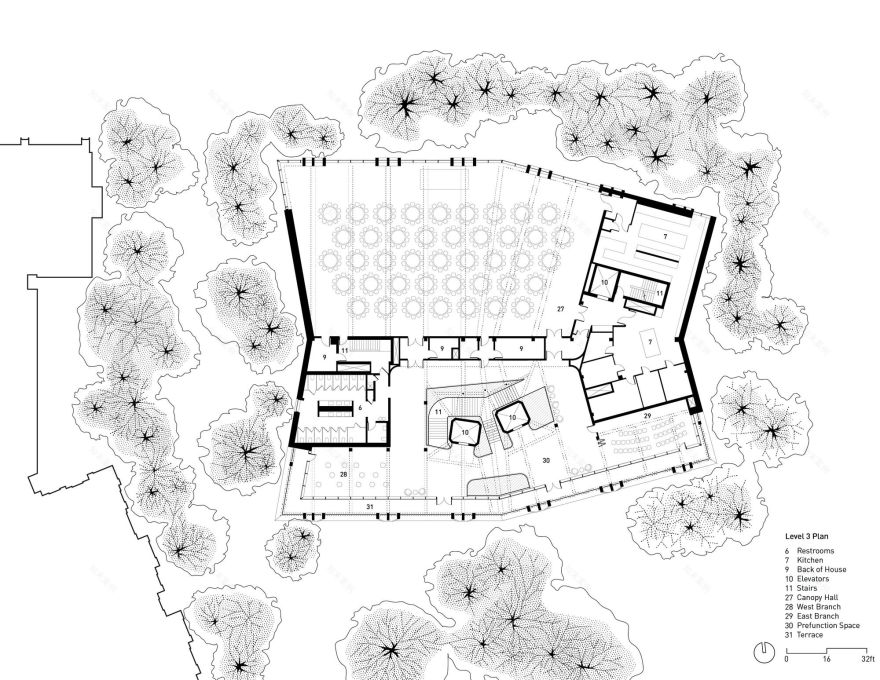
Program And Organization:Level 1: o6,000 sf public lobby o850 sf cafe o2,300 sf across two loggias that also serve as points of entry •Level 2: o5,400 sf of breakout spaces, or meeting rooms of a variety of sizes, which cansupport larger events in the Canopy Hall or function independently •Level 3: oCanopy Hall, an 8,000 sf ballroom and the building’s main meeting space o1,100 sf outdoor terrace
Developer:Tishman Speyer
Design Architect:Studio Gang
Sustainability Consultants:Perkins&Will, Harvard Office for Sustainability, Arup
Mep/Fp Engineer:Arup
Civil Engineers:Nitsch Engineering
Geotechnical Engineer:Haley & Aldrich
Accessibility:Code Red Consultants
Envelope:FRONT
Waterproofing:Simpson Gumpertz & Heger
Lighting Designers:Tillotson Design Associates, George Sexton Associates
Acoustics/Audiovisual/ Information Technology:Arup
Communications:Arup
Signage & Wayfinding:Once–Future Office
Vertical Transportation:Edgett Williams Consulting Group
Food Service:Ricca Design Studios
Logistics:Kleinfelder
Waste Management:Kleinfelder
Façade Access Consultant:Lerch Bates
Cost Estimator :Vermeulens
Contractor:Consigli and Smoot Construction
City:Boston
Country:United States
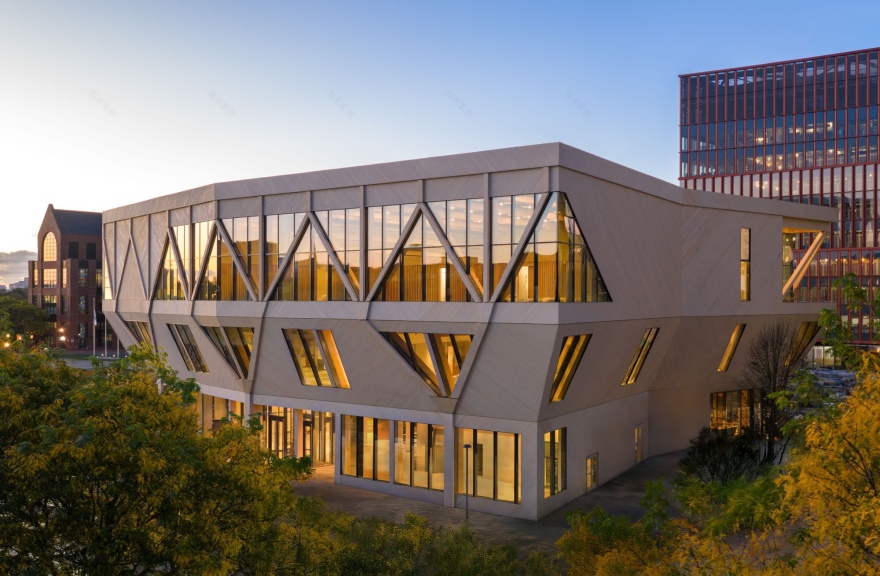
Text description provided by the architects. Studio Gang, the international architecture and urban design firm led by Jeanne Gang, announced the completion of the David Rubenstein Treehouse at Harvard University. Establishing Harvard's first university-wide hub for convening, the building anchors the new Enterprise Research Campus (ERC) in Allston, which is dedicated to fostering innovation and collaboration. The Rubenstein Treehouse is also the first mass timber building on Harvard's campus, setting a model for holistically sustainable buildings in Boston and institutions worldwide.
"As a Harvard alumna and faculty member, it's so rewarding to have the opportunity to help define a new chapter for Harvard's campus, "said Jeanne Gang, Founding Partner of Studio Gang and Kajima Professor in Practice of Architecture at the Harvard Graduate School of Design. "The Rubenstein Treehouse is a building that opens itself up, welcomes all people, and serves as a visual and programmatic anchor to the ERC. Its exposed mass timber structure demonstrates Harvard's commitment to a more sustainable future."

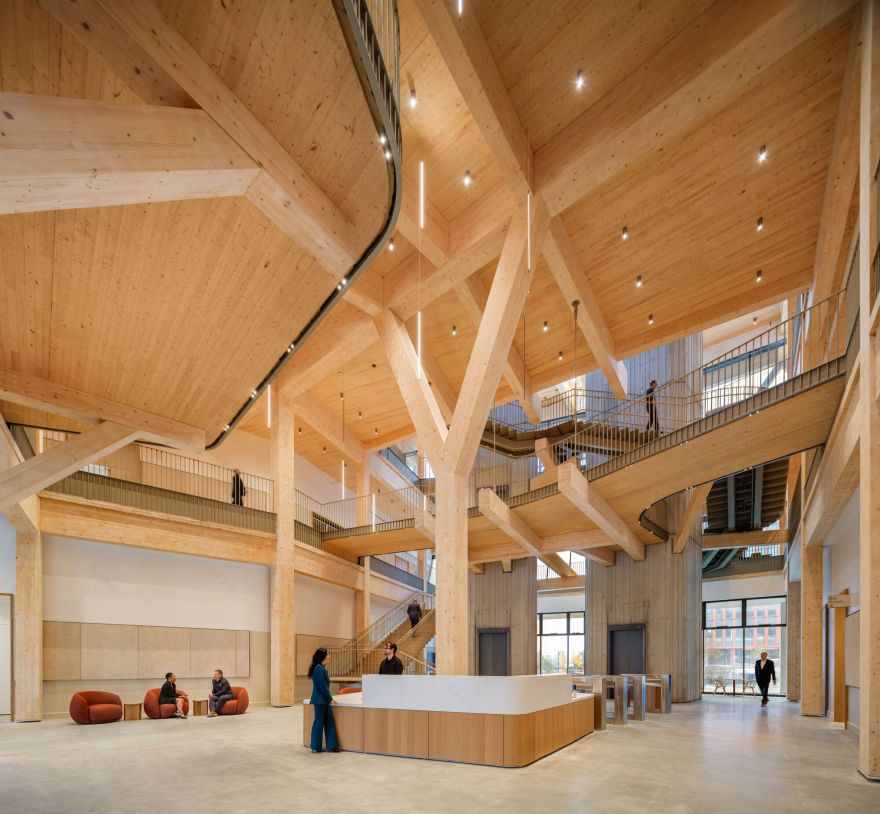
The 55,000-sf building provides dedicated event space and meeting amenities for Harvard affiliates, the community, academia, and industry and business leaders from around the globe. On the ground level, three entrances connect to a double-height atrium, welcoming visitors and allowing them to seamlessly flow through the building to the surrounding campus. The atrium also spills outward onto two covered porches that create outdoor gathering areas to be enjoyed throughout the year.

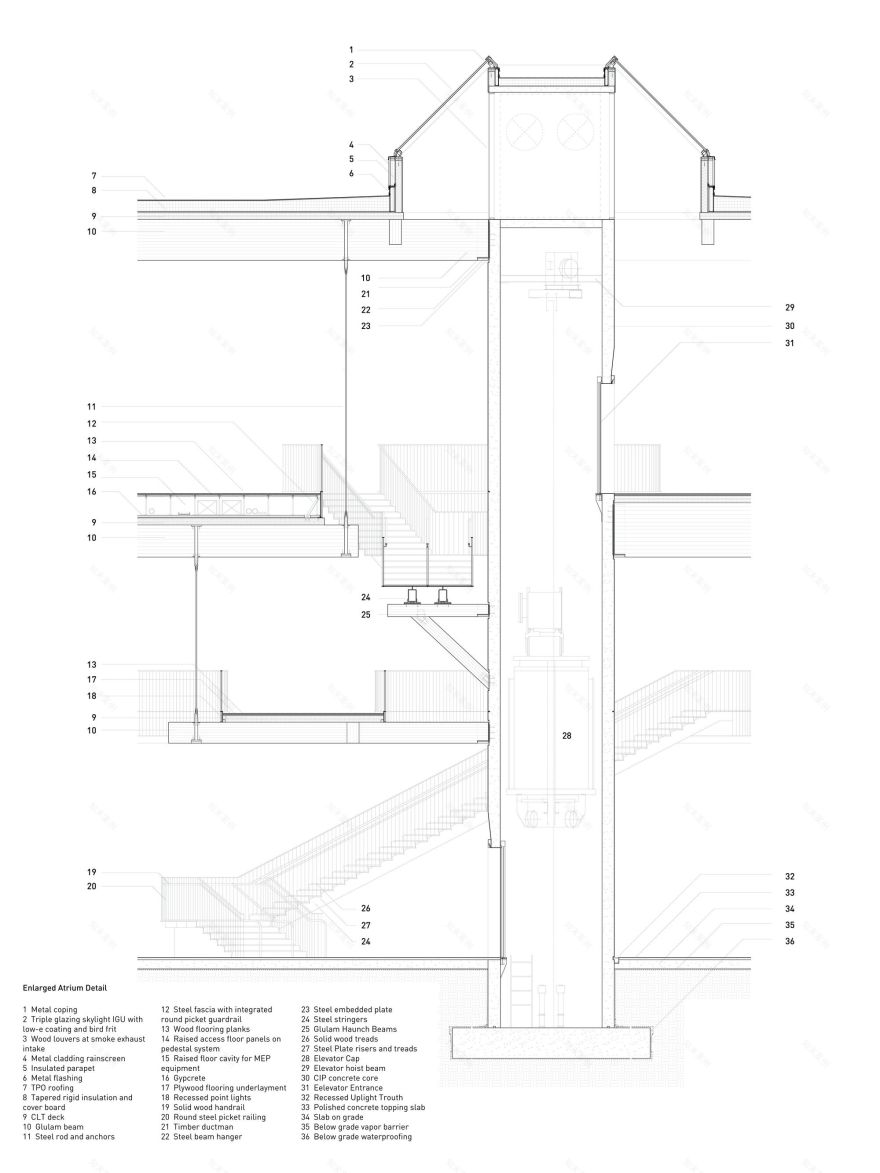
Evoking the wonder and excitement of climbing up into a treehouse, a central stair, lit by skylights from above, immerses guests in the natural warmth of the building's mass timber structure. Upper floors support meetings and events through a series of spaces that vary in size and can accommodate different uses. The building's main space, the Canopy Hall, features an adjoining open-air terrace and expansive views of the city framed by the structure's timber columns. Additional spaces that encourage informal convening and interaction are designed into every floor.


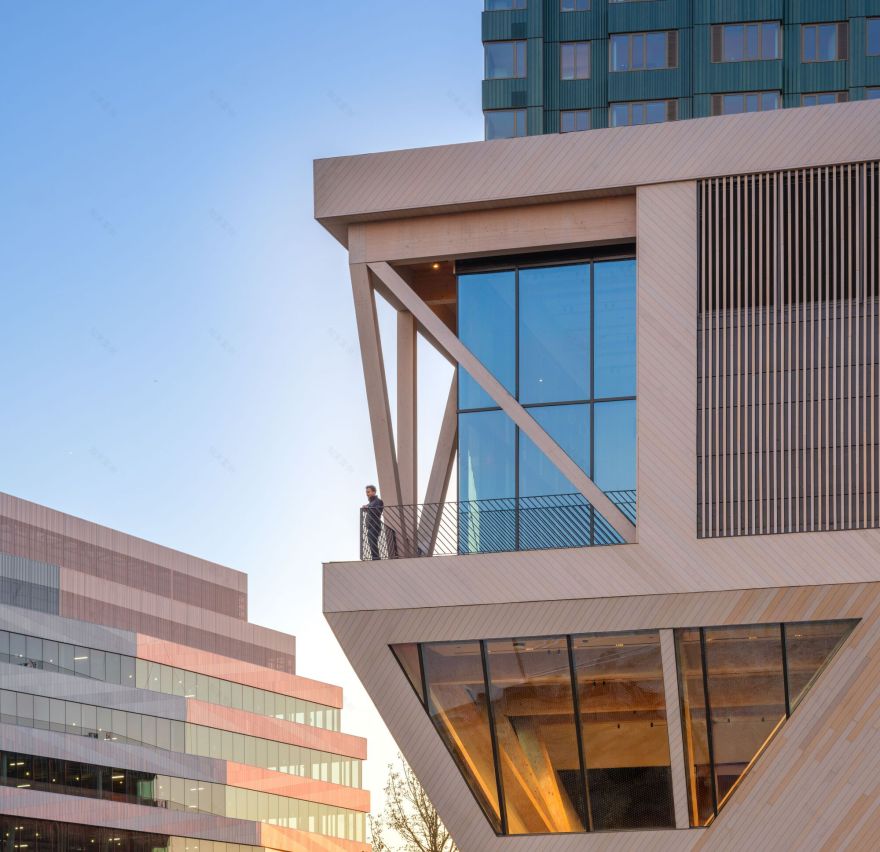
The building's exposed mass timber structure creates its distinct architectural identity and reinforces it as a destination for innovation. On the façade, canted timber columns branch outward like a tree to support a cantilevered upper floor. Each face of the building is strategically inflected to embrace its outdoor environment and the surrounding neighborhood. The north and south inflect outward to draw people towards the building's multiple entrances, while the east and west inflect inward to expand pedestrian corridors.

The design integrates numerous sustainability strategies that optimize the performance of the Rubenstein Treehouse. The building's structure significantly lowers its embodied carbon, which is 55% less than that of a similar building using conventional materials, through the use of healthier, low-carbon materials. These include responsibly sourced wood and concrete made from ground glass pozzolan, a cement replacement derived from post-consumer glass containers. Further, the design supports zero fossil fuel combustion on-site and a significant reduction in energy use through natural daylighting and self-shading, rooftop solar panels, a raised floor that conditions the interior while concealing major building systems, and a connection to Harvard's District Energy Facility, which provides the building with heating, cooling, and electricity.

The use of healthier interior materials, furniture, and finishes without harmful chemical classes like PFAS improves indoor air quality and occupant health. Creating a vibrant and engaging environment year-round, the biodiverse landscape also offers habitat for wildlife, and its bioswales work in combination with a rooftop collection system to retain and reuse rainwater. In addition to achieving Harvard's Healthier Building Academy goals, the building is targeting Living Building Challenge (LBC) Core Certification and LBC Petal Certification.
The Rubenstein Treehouse is among the first buildings to open on Harvard's Enterprise Research Campus, a new mixed-use district in the Boston neighborhood of Allston that has transformed a large parcel of formerly industrial and vacant land into a welcoming and active area focused on research, enterprise, and innovation. The design for the Enterprise Research Campus's master plan was co-led by Studio Gang and Henning Larsen with landscape architecture by SCAPE and urban planning and local advisory by Utile.

Project gallery




南京喵熊网络科技有限公司 苏ICP备18050492号-4知末 © 2018—2020 . All photos and trademark graphics are copyrighted by their owners.增值电信业务经营许可证(ICP)苏B2-20201444 苏公网安备 32011302321234号
苏公网安备 32011302321234号客服
消息
收藏
下载
最近