

创作上传
VIP
收藏下载
登录 | 注册有礼
查看完整案例

收藏

下载

分享
粗野主义建筑能否与自然如此亲密地融合,以至于仿佛树木亲手塑造了它?位于艾哈迈达巴德的Studio Saransh以MS House给出了大胆的回答。设计的起点是一个简单的承诺:无论如何都要保留场地上九棵成年的印度楝树。于是,一座“顺从自然意志”的混凝土建筑诞生了——从空间布局到建筑形态与材料选择,所有设计决策都受到自然的影响。这种对环境与语境的敏锐感知,是Studio Saransh一贯设计理念的体现——在功能优雅的基础上,形成有力量的设计语言。
©Studio Saransh
Can Brutalist architecture embrace nature so closely that it feels like the trees have shaped it? Studio Saransh’s MS House in Ahmedabad offers a bold answer. The design of the house begins with a simple promise: to preserve the site’s nine mature neem trees at all cost. The result is a concrete structure that bends to nature’s will, influencing every decision—from spatial layout to the architectural form and material palette—in the process. This sensitivity to context and environment is a hallmark of Studio Saransh’s design ethos, which emphasises functional elegance with an impactful design language.
▼住宅概览,Overall view of the house©Ishita Sitwala | The Fishy Project


自然的影响,从抵达开始。自然的存在,从靠近场地的那一刻便可感受到。界墙在树干旁蜿蜒,让树木得以自由生长;入口大厅旁一枝下垂的树枝,更进一步强化了人与自然的联系。一条带有方形洞口的戏剧性入口廊道引领访客进入室内,这些精心布置的开孔让原本朴素的通道变得生动多变,斑驳的阳光洒下光影图案,墙面与地面不断变化的明暗节奏,与外部葱郁的景色相互呼应。
The influence of nature is evident from the moment one approaches the site. The boundary wall winds around a tree trunk to preserve its growth, and a downward-curving branch near the entrance lobby reinforces this connection. A dramatic entrance corridor with square punctures in the wall leads the visitors into the home. These carefully positioned openings transform an otherwise austere passage into a dynamic space, where dappled sunlight casts ever-changing patterns across the flooring and walls, while offering glimpses of the lush greenery beyond.▼界墙在树干旁蜿蜒,The boundary wall winds around a tree trunk©Ishita Sitwala | The Fishy Project


▼带有方形洞口的戏剧性入口廊道,
A entrance corridor with square punctures in the wall©Ishita Sitwala | The Fishy Project

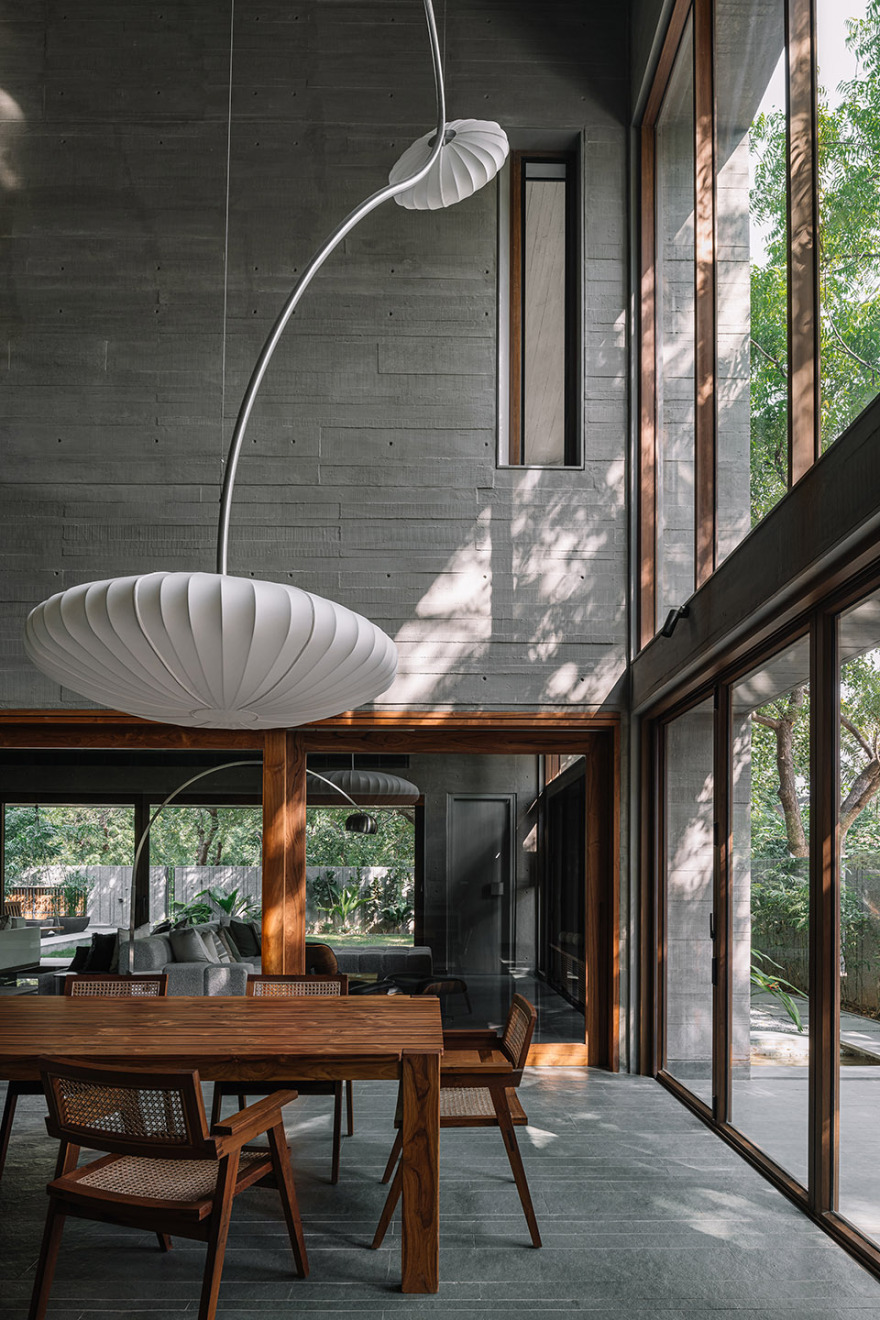
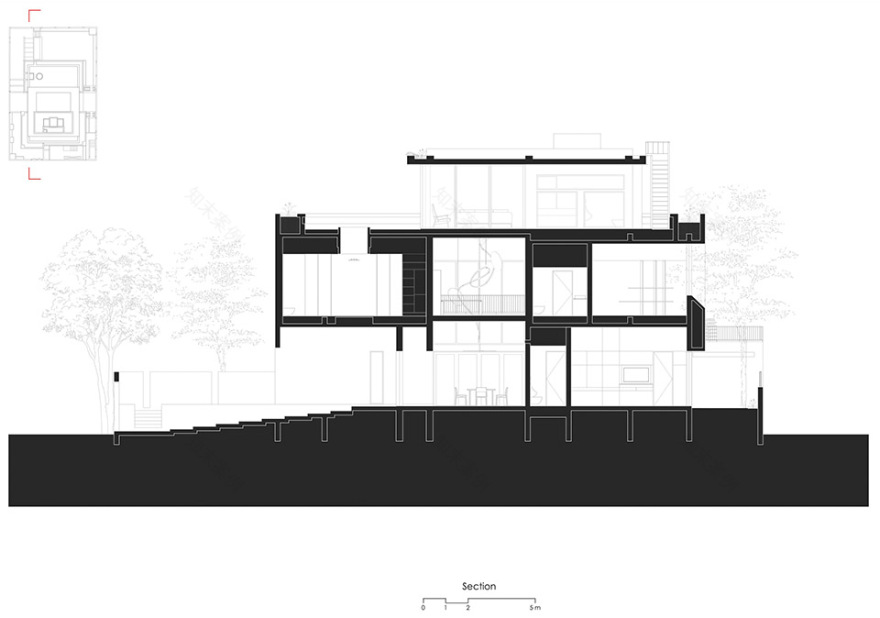
屋内的布局围绕一处双层挑空的中央空间展开,这里以一棵印度楝树为核心。建筑东西向布置,这个空间成为家人晨饮与聚餐的场所——在树荫之下的日常生活。
Inside, the house is organised around a double-height central bay that celebrates the neem tree as its focal point. Oriented East-West, it becomes a place where the family gathers for morning tea and meals under the canopy.
▼双层挑空的中央空间,a double-height central bay ©Ishita Sitwala | The Fishy Project

“中央挑空不仅是设计元素,它是整栋住宅的灵魂。”Studio Saransh 主创建筑师 Malay Doshi 解释道。它连接着两翼:前部包括起居室、走廊与花园,后部则布置客房、厨房及辅助空间。“这座住宅的每个元素都由场地自然与家庭需求共同塑造,体现了我们认为好的设计应无缝整合功能、个性与环境的信念。”室内主创设计师 Kaveesha Shah 补充道。
“The central bay is more than just a design element—it is the soul of the house”, explains Malay Doshi, the principal architect at Studio Saransh. It anchors two wings: the front housing the living room, verandah and garden; the other accommodating the guest room, the kitchen and ancillary spaces. “Every element of this house is shaped by the site’s natural context and the family’s needs, embodying our belief that a good design must seamlessly integrate function, individuality, and environment,” adds Kaveesha Shah, the principal interior designer at Studio Saransh.
▼中央挑空是整栋住宅的灵魂,
the central bay is the soul of the house©Ishita Sitwala | The Fishy Project
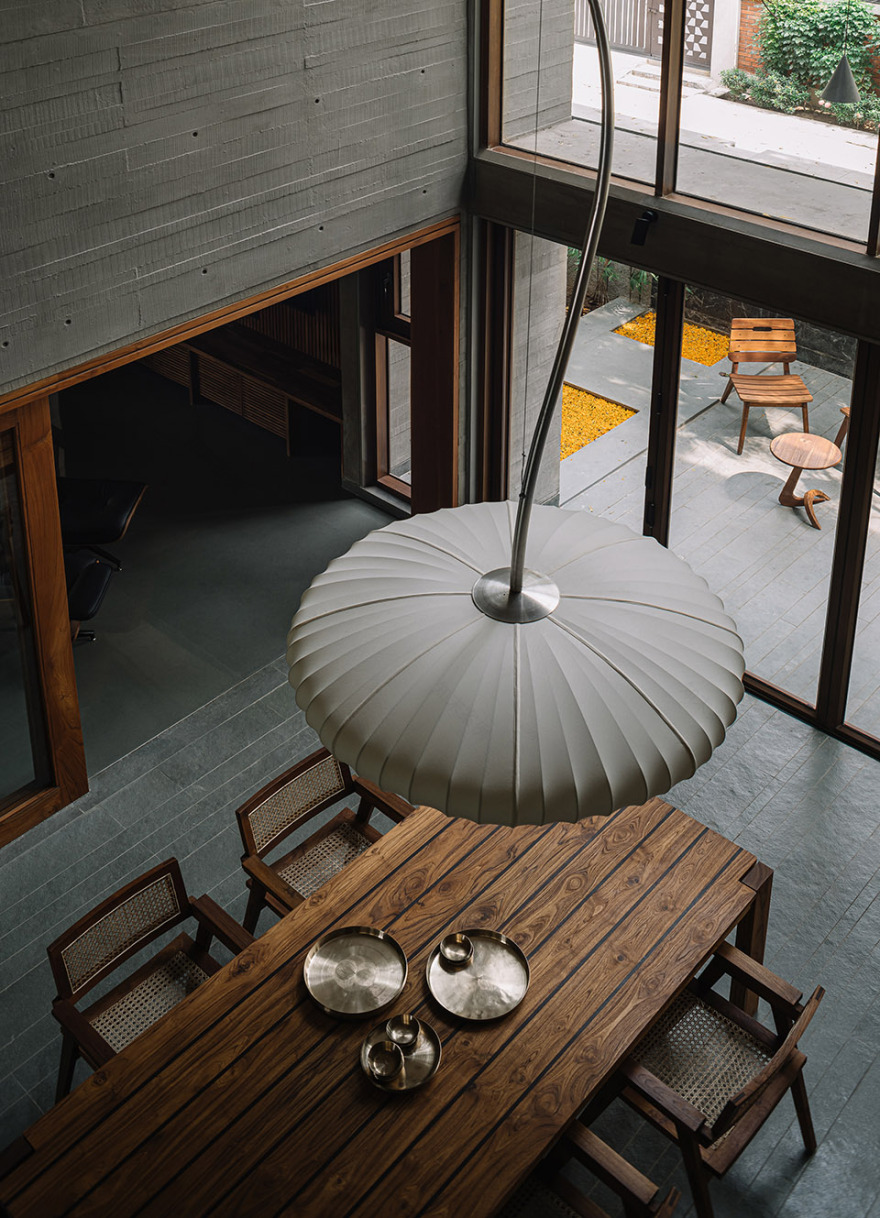
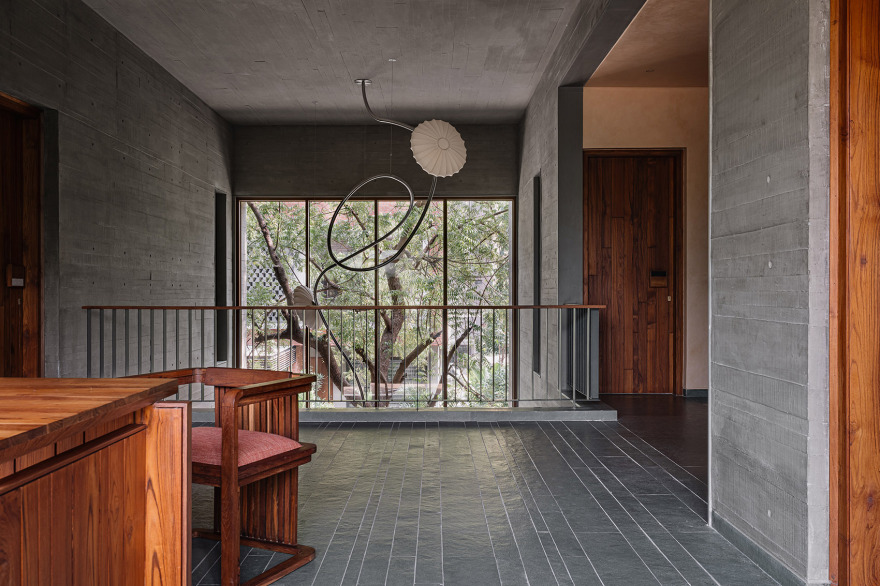
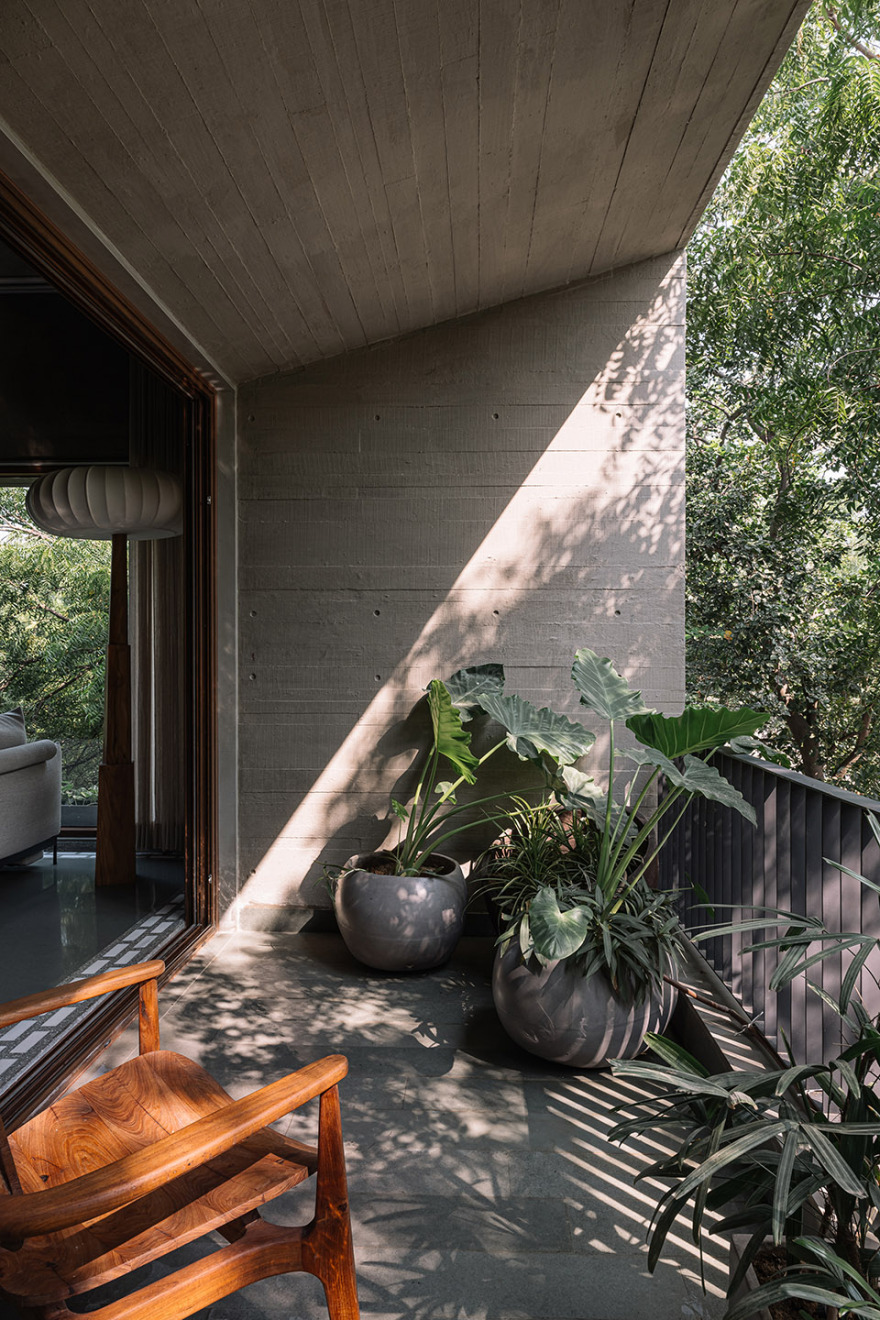
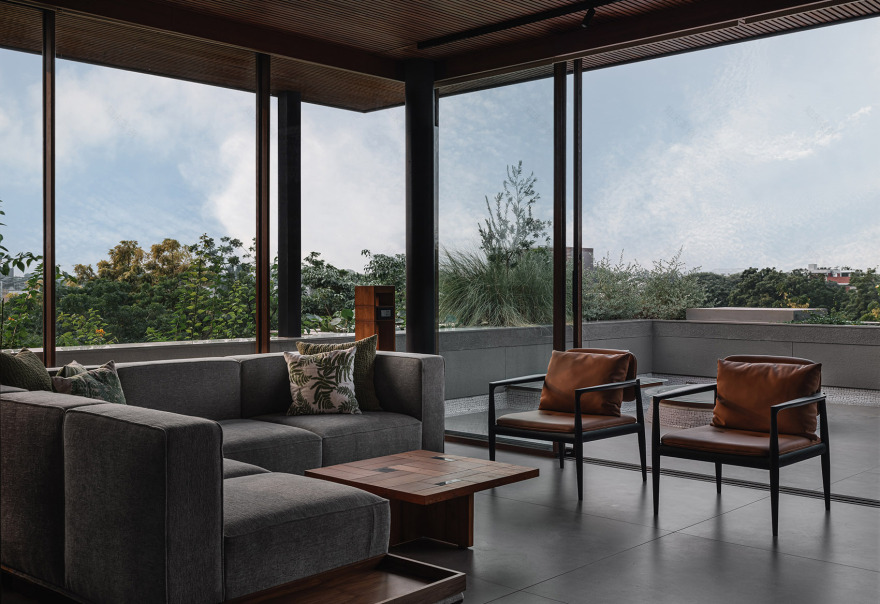
在上层,中央挑空转化为一个俯瞰餐厅的书房。每个空间都与室外的树木建立了独特关系。主卧位于起居室上方,带有一处阴凉阳台,可俯瞰树梢;女儿的卧室则坐落于更为安静的后翼,面向后院。二层设置了家庭休闲露台,带有客厅、吧台与盥洗间,成为家人于楝树冠层之上的社交场所。
On the upper floor, the central bay transitions into a study area overlooking the dining space below. Each space establishes its own relationship with the trees outside. The master bedroom, for instance, positioned directly above the living room, opens to a shaded balcony overlooking the trees, while the daughter’s bedrooms occupy the quieter rear wing with the views of the backyard. The second floor serves as a social terrace with a family lounge, bar, and powder room, creating an inviting space for gatherings above the neem canopies under the open sky.
▼俯瞰餐厅的书房,a study area overlooking the dining space below©Ishita Sitwala | The Fishy Project
▼卧室空间,bedroom space©Ishita Sitwala | The Fishy Project

▼可俯瞰树梢的阳台,a shaded balcony overlooking the trees©Ishita Sitwala | The Fishy Project
▼家庭休闲露台,a social terrace with a family lounge©Ishita Sitwala | The Fishy Project


景观设计进一步模糊了自然与建筑的界限。除了保留的楝树外,设计师还精心挑选热带及本地植物,为绿意增添层次。入口旁的静水景营造温柔的声响,并映照天空与树影。在屋顶露台上,爬藤植物被有意沿女儿墙种植,随着时间推移将蔓延覆盖混凝土的锐利几何,使绿意自然“占领”建筑。
The landscape scheme further dissolves the boundaries between nature and architecture. Beyond the preserved neem trees, a careful curation of tropical and local plant species adds layers to the green foliage. A serene water feature near the entrance provides a gentle acoustic backdrop while reflecting fragments of sky and foliage. On the terrace, creepers are planted strategically along the parapet—an intentional gesture that will, over time, allow the greenery to spill over the building’s sharp concrete geometries.
▼景观设计模糊了自然与建筑的界限,
The landscape scheme dissolves the boundaries between nature and architecture©Ishita Sitwala | The Fishy Project


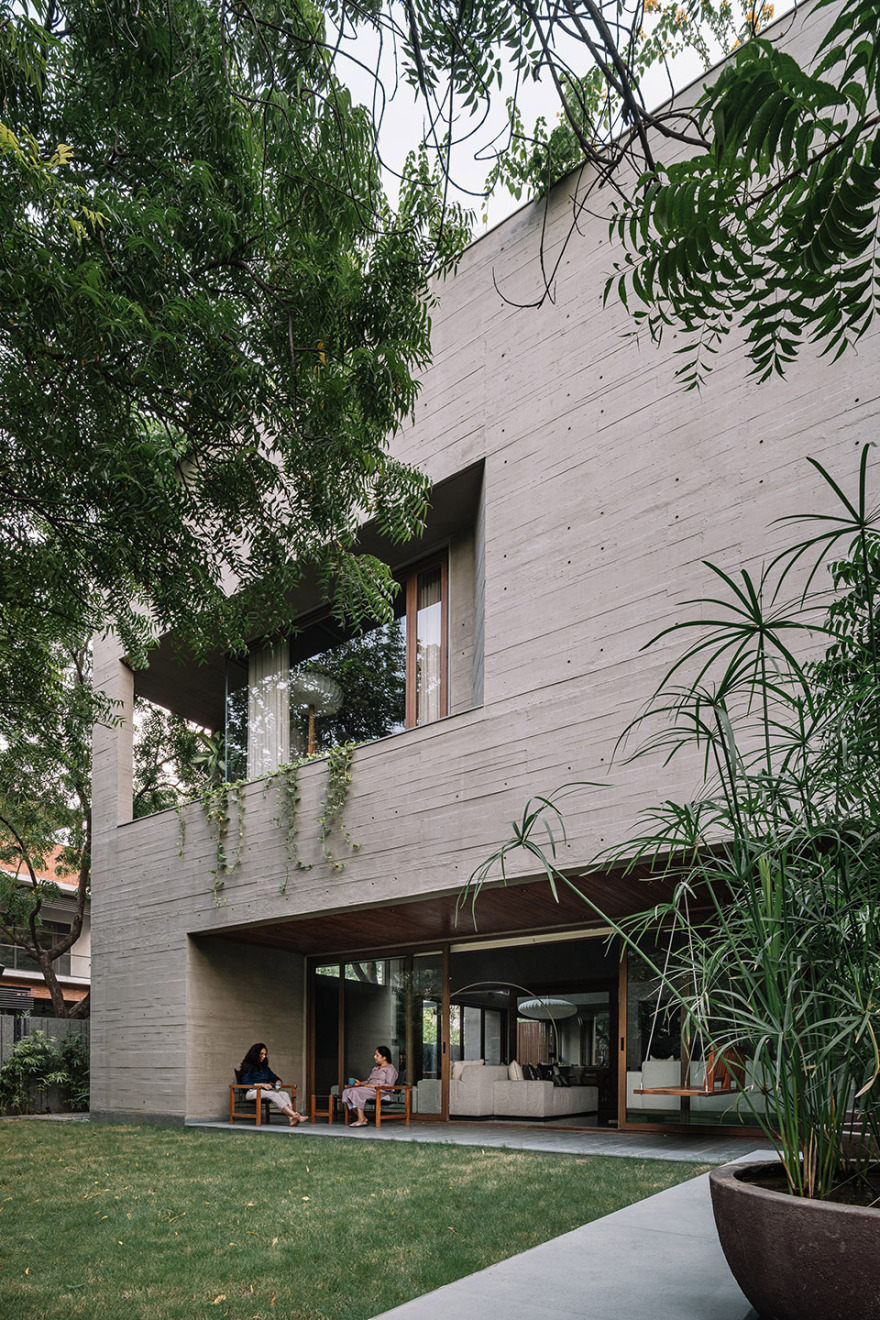
住宅外观延续了粗野主义的强烈特征,混凝土立面的几何形态在绿荫中悄然隐去。立面上的方形孔洞与深斜窗台既强化了光影变化,也柔化了建筑的视觉印象。表面以带木纹质感的混凝土饰面完成,与树干纹理相呼应,使结构更具触感与亲和力。而在这冷峻几何的外壳之下,MS House的真正成就在于:一座“粗野主义的房子”,被转化为一处温暖的“家”。
The Brutalist aesthetic manifests strongly in the house’s exterior, where bold geometries of the concrete facade disappear quietly within the green foliage. Square punctures within the facade, and deep chamfered window sills further maximise this effect, whilst allowing diffused light to cast playful shadows. The facade, enveloped in wooden-strip textured concrete, subtly mirrors the textures of the trees, softening the structure’s visual presence while enhancing its tactile appeal. However, beneath its raw concrete geometries, MS house quietly reveals its most significant achievement: a Brutalist house crafted into a home, by a multidisciplinary team of architects and interior designers.
▼带木纹质感的混凝土饰面,
The facade, enveloped in wooden-strip textured concrete©Ishita Sitwala | The Fishy Project


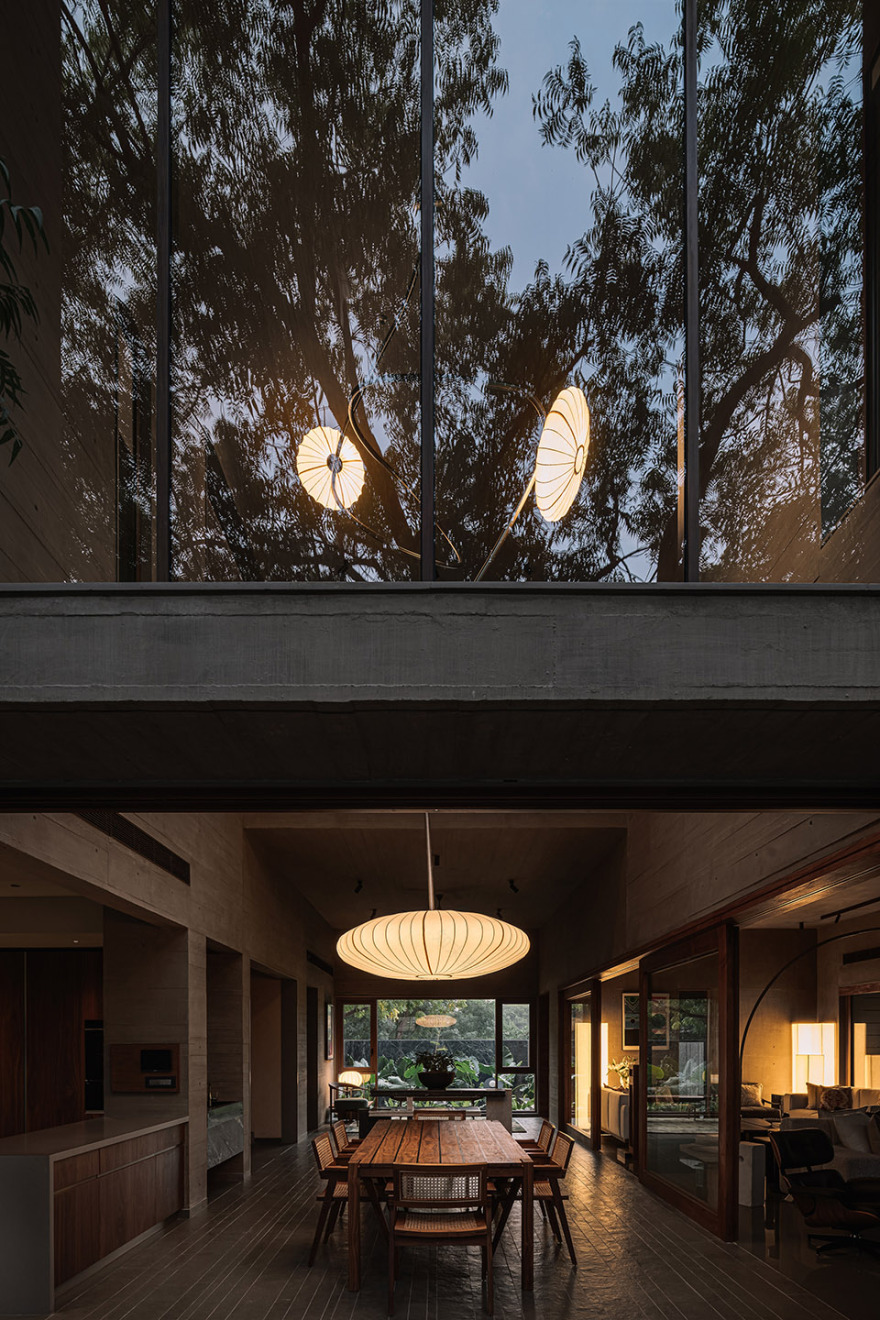
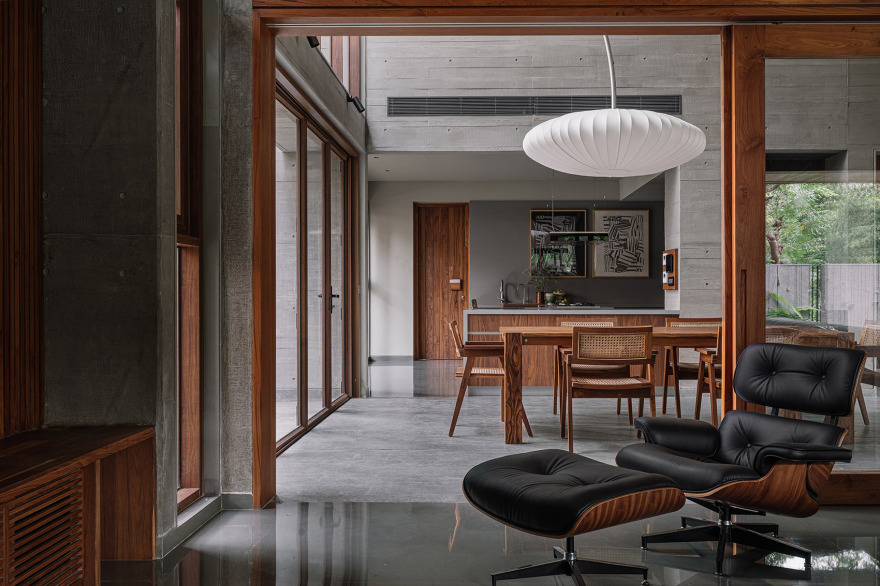
室内材料体系克制而周到——混凝土与石灰抹灰墙面、灰色Kota石地面共同构成室内外一致的设计语言。皮质磨面的Kota石延续了混凝土板的肌理,使中央挑空区如同“户外空间”。局部采用胶合板模板浇筑混凝土时,Kota石则改为无缝抛光处理,成为餐区理想的背景。餐桌由TDW定制,带有紫檀细节,呼应混凝土与地面线性纹理;椅子由Mistry at Finest制作,以柚木与藤编材质搭配Andlabs合作设计的吊灯。
Inside, the material palette is deliberately restrained yet thoughtful, with concrete and lime plastered walls and grey Kota flooring creating a cohesive design that ties the home’s interior and exterior together. The kota flooring in a leather finish extends the concrete plank pattern to the floor of the central bay, making it feel like the “outside”. In spaces with ply cast concrete, the kota is laid in a seamless polished finish. It forms an ideal backdrop for the dining ensemble—a custom order wooden table by TDW with the rosewood detailing mirroring the linearity of the concrete and kota pattern, and teak and wicker chairs from Mistry at Finest, paired with a single point suspension parametric lamp designed in collaboration with Andlabs.
▼室内材料体系克制而周到,
the material palette is deliberately restrained yet thoughtful©Ishita Sitwala | The Fishy Project

▼木质天花,wood ceiling©Ishita Sitwala | The Fishy Project

▼石灰抹灰墙面,lime plastered walls©Ishita Sitwala | The Fishy Project

起居室采用光滑的胶合板模板混凝土表面,配合来自Valsad的可持续柚木饰面,狭长窗框取景出外部树影。起居区被划分为两个聚落:一组为定制沙发与Eames椅搭配Flos的Arco 灯;另一组为更正式的布艺灯具与Jaipur Rugs的抽象地毯,营造丰富层次的居家氛围。
The living room incorporates smooth-polished plywood cast concrete surfaces and ethically sourced Valsadi teak panelling, with ribbon windows framing the views of the foliage outside. The living room is designed to function as two clusters of seating, one with a custom sectional sofa set and an iconic Eames chair with the Arco lamp from Flos bringing the space together—while the second more formal furniture setup featuring custom designed fabric lamps and an abstract art rug from Jaipur Rugs.
▼起居室采用光滑的胶合板模板混凝土表面,
The living room incorporates smooth-polished plywood cast concrete surfaces©Ishita Sitwala | The Fishy Project


▼营造丰富层次的居家氛围,
Create a richly layered home atmosphere©Ishita Sitwala | The Fishy Project

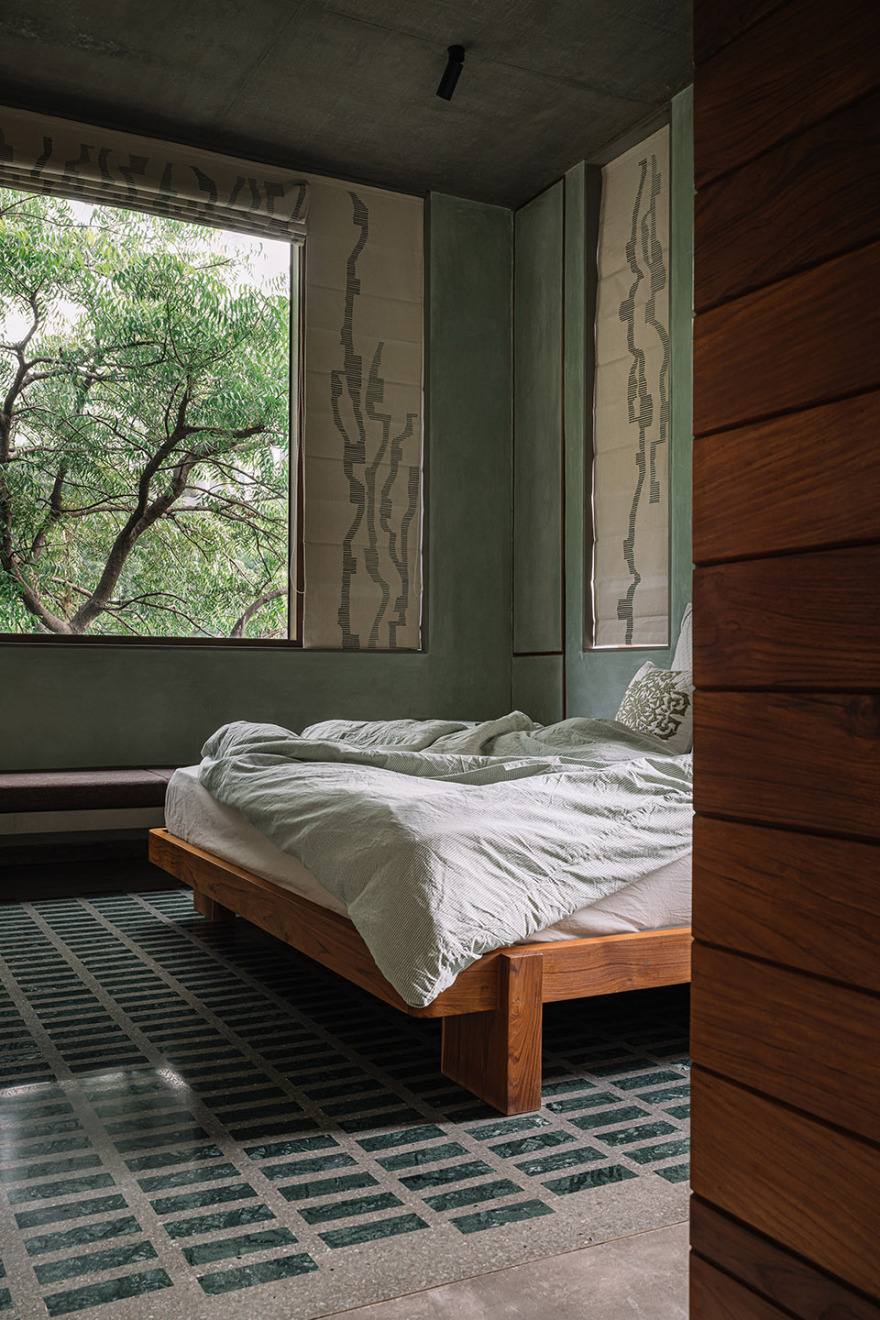
卧室延续自然联系并体现居者个性。主卧以胶合板模板混凝土与Kota石地面为基调,点缀水磨石细节,配置定制的四柱床,石基与木柱形成对比。两位女儿的卧室各具风格——一间为石墨色调,另一间以鼠尾草绿墙面与含绿纹大理石的水磨石地面为主,色彩也延续至各自的套卫。客卧为长辈准备,采用自然中性色与简约细节,营造安静的休憩感。
The bedrooms reflect distinct personalities of their occupants while maintaining an intimate connection to nature. The master bedroom, in ply cast concrete surfaces and kota flooring with terrazzo detailing, features a custom four-poster bed with stone pedestals and wooden posts. The daughters’ rooms maintain their distinct personalities—one embracing graphite tones, the other featuring sage green walls and green marble-infused terrazzo flooring. This colour palette extends into their respective ensuite bathrooms. The guest bedroom, designed for elderly parents, offers a calm retreat with natural tones and minimal detailing.
▼卧室空间,bedroom space©Ishita Sitwala | The Fishy Project
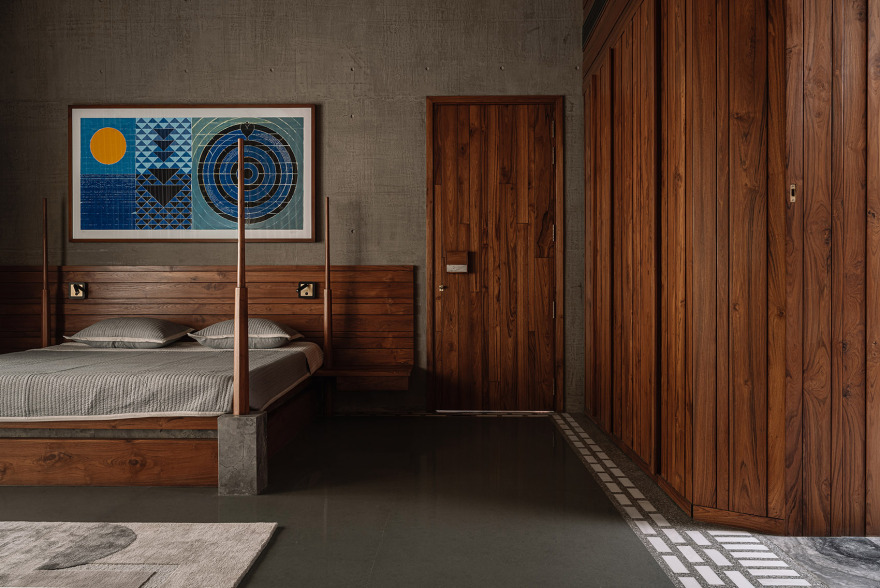

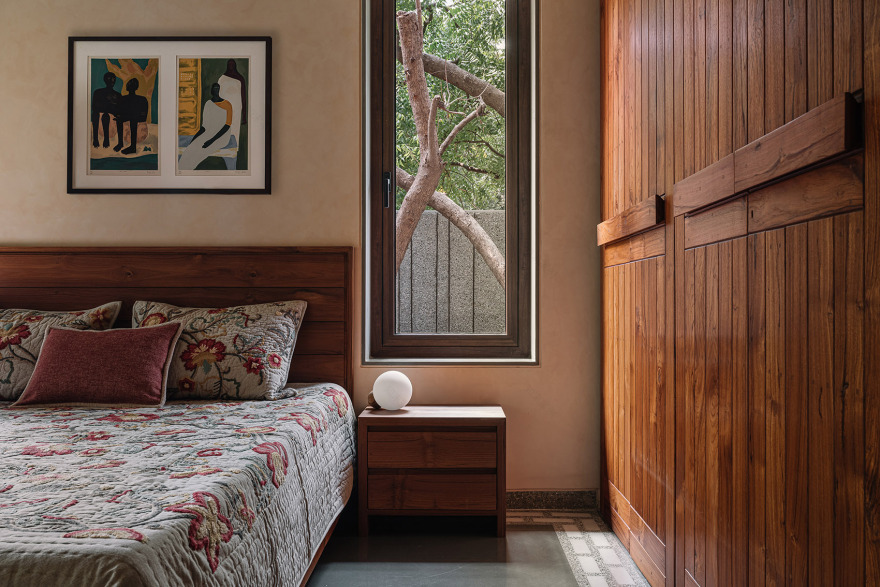
▼营造安静的休憩感,offers a calm retreat ©Ishita Sitwala | The Fishy Project


浴室设计细致入微,成为独立叙事。主卫通过两个天窗引入自然光——洗手台上方为圆形天窗,淋浴区隐藏方形天窗。露台黑色盥洗室采用整面玻璃,可眺望一排缅栀树,营造私人庭院的错觉。定制混凝土洗手台由Artemis Cast Stone联合设计,使玻璃可延伸至地面,并通过木百叶保障私密性。
The bathrooms become a design narrative of their own, with thoughtfully curated details. The master ensuite is bathed in natural light from two skylights: a circular one above the sink and a square one hidden in the shower, while the black powder room on the terrace, featuring full-height glazing, overlooks an array of Champa trees, creating an illusion of a private courtyard. A custom concrete basin, designed in collaboration with Artemis Cast Stone, sits on its walls, allowing the glazing to extend to the floor, whereas wooden blinds provide much needed privacy to this space.
▼通过天窗引入自然光,natural light from skylight©Ishita Sitwala | The Fishy Project


MS House的可持续策略贯穿始终。除保留树木外,建筑充分利用朝向实现自然采光与通风;通过夹层墙、深窗洞与双层夹胶玻璃降低热量吸收。亭子屋顶配备太阳能系统,能满足 70–80% 的能源需求。石灰抹灰墙面避免使用塑料基油漆,使建筑更环保。同时,剩余木材被再利用制成定制家具,废弃大理石被改造为客厅玄关桌,最大程度减少施工浪费。
Sustainability is integral to MS House. Beyond mere preservation of the trees, the house takes advantage of its orientation to maximize natural light and ventilation. Heat gain is reduced through a combination of laminated double glazing, deep shaded openings and cavity walls. The solar-powered roof of the gazebo enables the house to run on solar energy, meeting 70-80% of its needs, while lime plastered walls eliminate the need for plastic-based paints, ensuring the house remains as eco-friendly as possible. Additionally, the design emphasises the resourceful use of materials, with leftover timber repurposed into custom tables and marble remnants into a console in the drawing room, ensuring minimal construction waste.
▼夜景,night view©Ishita Sitwala | The Fishy Project

MS House证明了建筑如何在延续艾哈迈达巴德建筑传统的同时,与自然共生。外部粗犷的几何在绿意中柔化,展示出“粗野主义”也能以优雅姿态顺应自然节奏。“无论是混凝土与景观的细节,还是室内最小的材质交汇,每一处定制化的精细处理,都体现了建筑与室内团队的紧密协作。”Kaveesha说道。因此,Malay 总结道,“MS House不只是设计表达,更是一种转化的过程——让‘粗野主义的房子’真正成为‘家’。每个决定、每个构件,都是一次用心的演变,完美诠释我们坚持的理念:建筑传统应随时间演进,与自然共生,同时保持其根本原则。”
MS House is a testament to how a design can build on Ahmedabad’s architectural tradition, while embracing and celebrating nature at the same time. Its exterior, with bold geometries softened by foliage illustrates how Brutalism, often associated with rigidity, can bend gracefully to the rhythms of nature. “The level of curated customisation inside and out, from details in the concrete and landscape, to the smallest interior junctions bringing together a medley of materials, reflects a seamless collaboration between our team of architects and interior designers,” says Kaveesha. Consequently, “beyond its design expression,” emphasises Malay, “MS House shows what it takes to turn a ‘Brutalist House a Home’. Every decision, every element, is a careful act of transformation, perfectly summarising the practice’s belief that ‘architectural traditions must evolve with time, embrace the natural world while staying true to their underlying principles.’”
▼地下一层平面,basement plan©Studio Saransh

▼一层平面,ground floor plan©Studio Saransh

▼二层平面,first floor plan©Studio Saransh

▼三层平面,second floor plan©Studio Saransh

▼立面,elevation©Studio Saransh


▼剖面,section©Studio Saransh

Client: Manish Shah
Typology: Residential
Location: Ahmedabad, Gujarat
Start date: July, 2020
Finish date: July, 2024
Status: Completed
Built-Up: Area 605 sqm
Site area: 543 sqm
Design Lead: Malay Doshi, Kaveesha Shah
Design Team: Vishal Gohel, Anamica Gupta
Photography: Ishita Sitwala | The Fishy Project
Structure: Sakshham Consultants
MEP: Ravi Engineering
Parametric Consultant: andLabs
Horticulturist: Shwetal Bhavsar




南京喵熊网络科技有限公司 苏ICP备18050492号-4知末 © 2018—2020 . All photos and trademark graphics are copyrighted by their owners.增值电信业务经营许可证(ICP)苏B2-20201444 苏公网安备 32011302321234号
苏公网安备 32011302321234号客服
消息
收藏
下载
最近