

创作上传
VIP
收藏下载
登录 | 注册有礼
查看完整案例

收藏

下载

分享
概要
Overview
轻井泽地处日本中心位置,是一处幽静的别墅区。在轻井泽可眺望浅间山的南部、毗邻盐泽湖与风越公园的自然环境中,我们规划了一座木结构平房式的认证保育园*,旨在打造丰富的教育环境。*认证保育园:满足日本政府的标准,由地方政府给与认定的,面向0岁到小学入学前的儿童提供保育服务的设施。
Karuizawa is a quiet resort area located in the geographical center of Japan. This wooden, single-story licensed nursery school in the south of the town area was designed amid a natural setting.
▼设施整体鸟瞰,Aerial view of the entire facility© NORIHITO YAMAUCHI


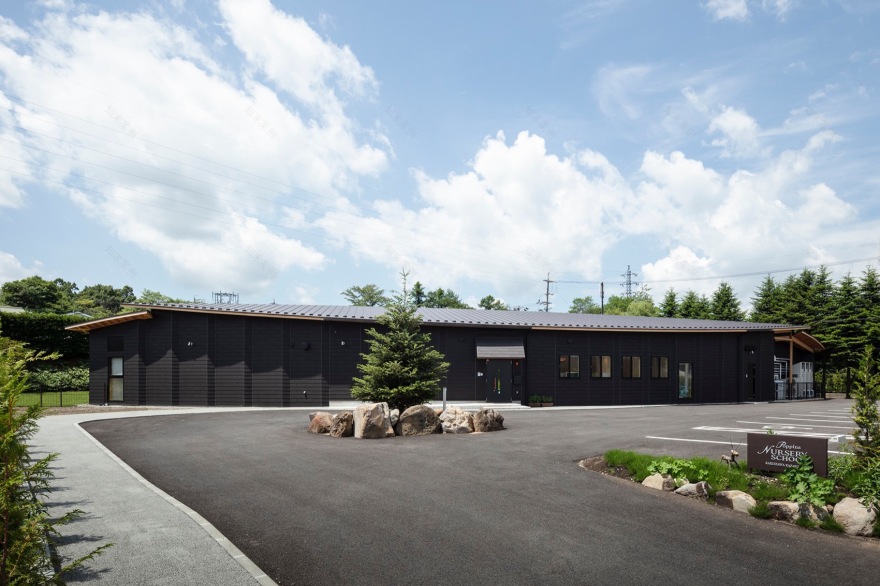
利用地块南侧连接较高邻地的绿色斜坡,在明亮的南侧配置了庭园。通过将树叶形状的建筑斜置于场地中央,将南侧庭园与北侧停车场自然地分隔开来。由于西侧也存在现有的挡土墙,因此庭园在将栅栏等设施控制在最低限度的同时,采用了安全且与周边环境和谐共生的布局规划。
Sited near Lake Shiozawa and Kazakoshi Park with a view of Mount Asama, the location provides a scenic and inspiring learning environment. Utilizing the green slope of the elevated neighboring land on the south side of the site, the playground is located on the sunny southern side. The leaf-shaped building is positioned diagonally at the center of the site, naturally dividing the south-facing playground from the north-facing parking lot. On the west side, where an existing retaining wall already existed, fences and other barriers were minimized to create a safe and harmonious layout that blends seamlessly with the surrounding environment.
▼庭园侧外观,Exterior view from the playground side© NORIHITO YAMAUCHI
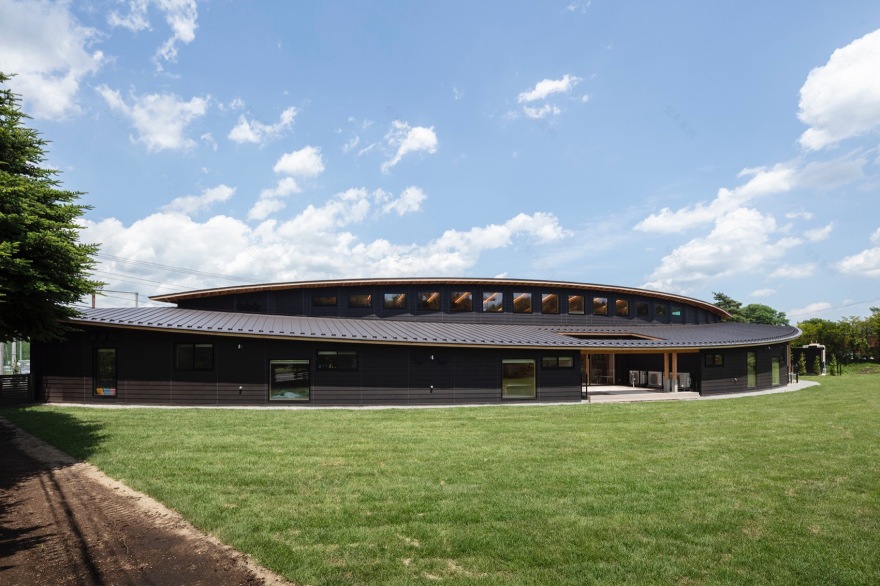

▼庭园,Garden © NORIHITO YAMAUCHI

▼停车场侧外观,Exterior view from the parking lot side© NORIHITO YAMAUCHI
为儿童打造的自由保育空间
A “free” childcare space for kids
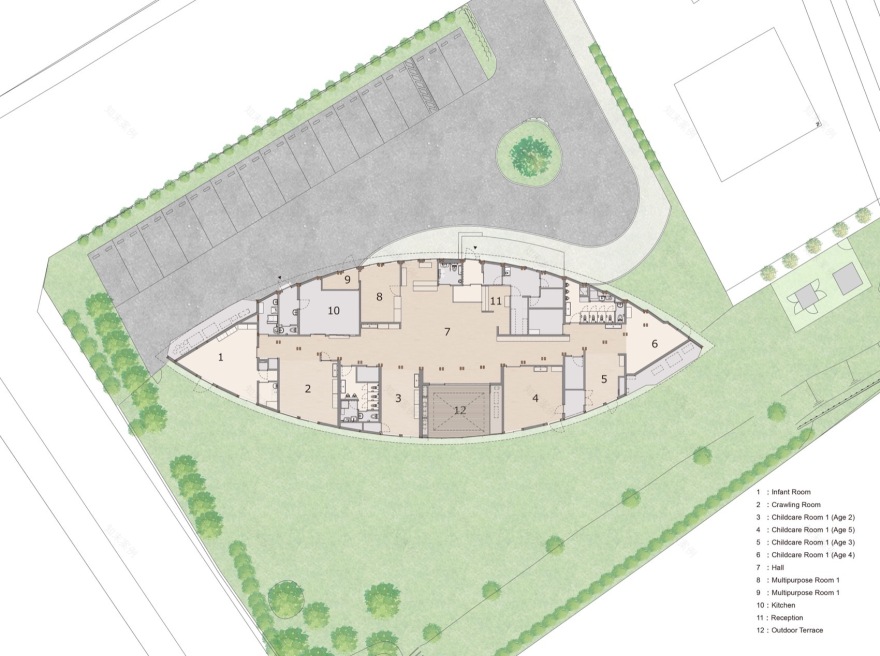
由两个不同高度的屋顶构成的建筑采用树叶形状的平面布局,使所有保育室都能更宽敞地朝向庭园。低屋顶下设置保育室,高屋顶下配置大厅与教职工区域。
Uniquely, the building has two roofs of different heights. This design includes a leaf-shaped floor plan that allows all childcare rooms to face the larger garden. The lower roof houses the childcare rooms, while the higher roof accommodates the hall and staff areas. The hall, located under the higher roof, serves as the center of the facility. It is spacious and tall enough to accommodate all the children, providing a space for free and creative activities. Large windows brighten the space and allow children to experience the changing seasons and the rich natural surroundings of Karuizawa.
▼户外平台,Outdoor terrace© NORIHITO YAMAUCHI

▼从玄关眺望大厅和庭园,View of the hall and playground from the entrance© NORIHITO YAMAUCHI
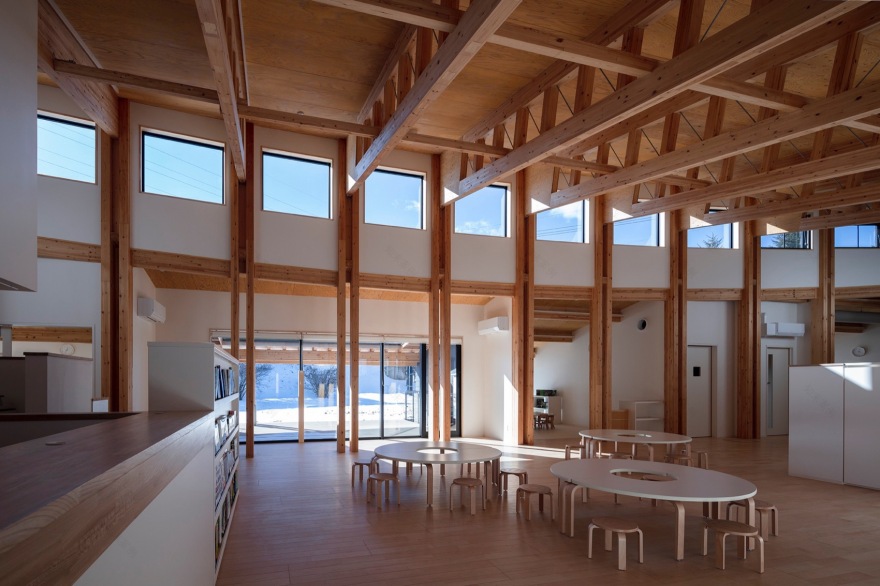
▼大厅,Hall© NORIHITO YAMAUCHI


▼从大厅眺望庭园,View of the playground from the hall© NORIHITO YAMAUCHI

我们在高屋顶下设置了作为保育园中心的大厅。这里有足够的面积和高度,可以让所有孩子聚集在一起进行自由活动。透过大窗户,可以感受到轻井泽丰富的自然景观与四季变迁,营造出明亮的空间。大厅东侧的员工室有一面巨大的白色墙壁,上面挂满了孩子们创作活动的作品。大厅西侧的厨房可透过玻璃观摩烹饪过程,旨在为孩子们设计一个随时都能接触到各种学习机会的空间。
On the east side of the hall is the staff room, which features a large white wall where the children’s creative works are displayed. On the west side of the hall is the kitchen, designed with glass walls so that children can observe the cooking process. These features create an environment where children are constantly exposed to various learning opportunities.
▼保育室1,Childcare room 1©NORIHITO YAMAUCHI

▼保育室2,Childcare room 2©NORIHITO YAMAUCHI


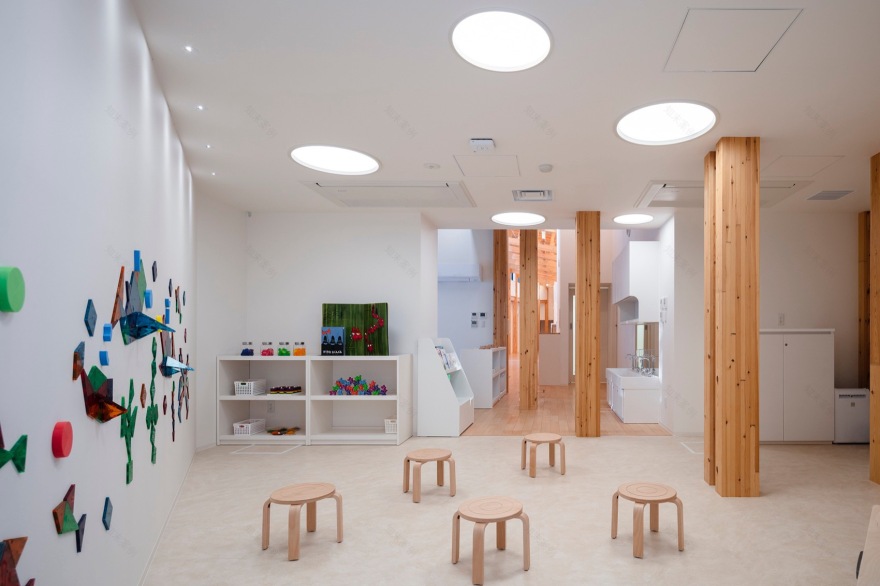
低屋顶下的各保育室与大厅相比天花板较低,采用了适合儿童的小尺度建造。保育室是孩子们一天中停留最久的场所,因此我们将其设计成能让孩子们安心度过的“专属领地”。根据孩子们的年龄,将6间保育室大致分为0~2岁和3~5岁两个区域。各个空间相对于大厅通过木制列柱进行分隔,同时形成松散的连接。通过将整个园区设计成一个大空间的空间结构,让孩子们能够自由活动,不仅促进了不同年龄段儿童之间的交流,还能激发他们对大厅活动的兴趣。此外,为了让孩子们能感受到材料的丰富性,儿童空间采用了以木材为基调的装饰风格。整个设计呼应了轻井泽丰富的自然环境,蕴含着我们希望这里能被长久珍视和利用的期待。
On the other hand, each nursery room under the low roof has a lower ceiling compared to the hall and is designed on a smaller scale suited to kids. As the children spend most of their day in the nursery rooms, they have been designed so that they can settle into them as their own spaces. The six nursery rooms are divided into two zones, according to age: 0-2 and 3-5 years old. Each space is connected to the hall by wooden columns, making for a gentle space transition. By creating one large space throughout the entire facility, children can move around freely, promoting interaction between different age groups and encouraging interest in the hall activities. The children’s spaces are also finished with wood, which affords a sense of richness. The design reflects the rich natural environment of Karuizawa so it can be loved and used for many years.
▼爬行室,Crawling room© NORIHITO YAMAUCHI

两个屋顶之间设置了高侧窗,从那里倾泻而下的自然光使大厅成为无需照明即可使用的明亮空间。在过渡季节打开高侧窗、通过重力通风使轻井泽的凉爽空气贯穿整个园区的设计,实现了低环境负荷的建筑。
Between the two roofs, high-side windows allow natural light to flood into the hall, creating a bright space that can be used without artificial lighting. During the intermediate seasons, the high-side windows can be opened for “gravity” ventilation, which allows cool Karuizawa air to circulate with the aim of an environmentally friendly building design.
▼大厅走廊,Hallcorridor© NORIHITO YAMAUCHI


以简约系统实现丰富形态的框架结构
A simple structural system that creates a rich shape
树叶形状的屋顶由两片无扭曲变形、简单平面的单面斜屋顶构成,通过将平面切割成树叶形状,使檐口在向端部延伸时呈现出优雅变化的有机形态。未使用特殊的弯曲集成材,仅用市售普通集成材就实现了树叶状平面的结构。根据曲线中心线微调柱体角度进行配置,使柱梁几乎垂直相交,从而能够使用普通金属件进行连接,最大限度地减少了定制金属连接件的使用。根据胶合板等的尺寸以1,820 mm间距布置的欧洲红松双柱(120mm×240mm),如同森林中的树木般实现了柔性分隔的空间。通过统一短边剖面连接处的细部形状降低了施工复杂度,在有限的预算和工期内实现了具有舒展屋顶形态与富有节奏感的椽木间距的框架体系。同时,通过在高屋顶下设置厨房与员工室,低屋顶的吊顶空间中安装空调等设备,实现了建筑体量的高效利用。
Two simple, untwisted planes comprise the roof, which is cut into a leaf-like, organic shape that changes gracefully toward the eaves. The leaf-shaped plane structure was constructed using only commercially available laminated wood, and without using any special curved sections. By slightly adjusting the angles of the columns to align with the centerline curve, columns and beams intersect nearly vertically, enabling common hardware for connections and minimizing the use of custom-made hardware. Double columns made of European red pine (120mm × 240mm) are arranged at 1,820mm intervals to match the scale of the plywood, creating a space divided into gentle, forest-like zones. By unifying the detail shapes of the short-hand cut joints, construction complexity was reduced, resulting in a structure that combines a spacious roof shape and rhythmic beam spacing within a limited budget and construction period. Additionally, the building’s volume is efficiently utilized by locating the kitchen and staff rooms under the high roof, and installing HVAC equipment in the ceiling space beneath the low roof.
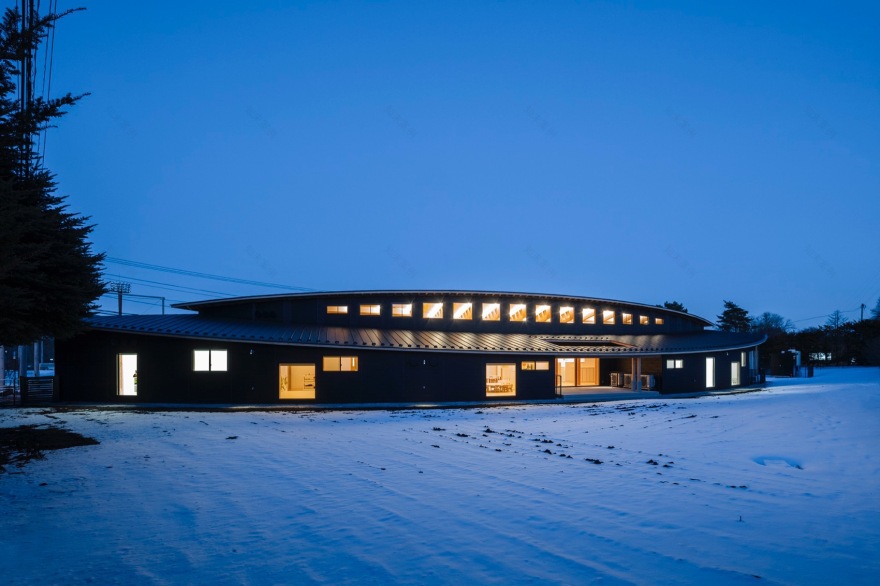
▼庭园侧外观夜景,Exterior view of the playground night view© NORIHITO YAMAUCHI
▼平面图,Floor plan© 日建设计Nikken Sekkei Ltd
▼场地布局和屋顶俯视图,Layout plan and roof plan© 日建设计Nikken Sekkei Ltd

▼剖面图,Cross section© 日建设计Nikken Sekkei Ltd

▼框架1,Structure1© 日建设计Nikken Sekkei Ltd
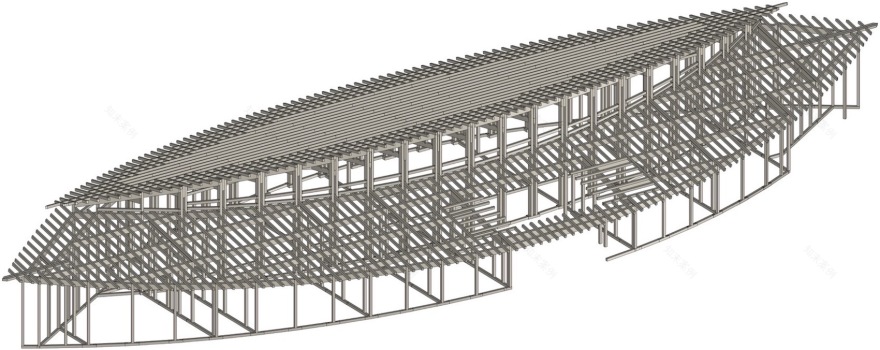
▼框架2,Structure 2© 日建设计Nikken Sekkei Ltd

▼框架3,Structure 3© 日建设计Nikken Sekkei Ltd

项目名称(中文):Poppins Nursery school轻井泽风越
项目名称(英文):Poppins Nursery school Karuizawa Kazakoshi
用途:保育园
所在地(都道府县、市):日本长野县北佐久郡轻井泽町
用地面积(m2):2699.04
建筑面积(m2):498.34
层数:1
檐口高度/最高高度(m):6.3
主体结构:木结构
竣工年月:2022年11月
业主(中文):株式会社Poppins Educare
业主(英文):Poppins Educare Inc.
主创设计:日建设计
主要业务范围:日建设计(初步设计、施工图设计、监理顾问)+西武建设(监理)
施工单位:西武建设
照片来源1(中英):山内纪人(NORIHITO YAMAUCHI)
项目负责人:胜矢武之建筑设计总部设计部门部长和祖川健建筑设计总部设计部门
Project name(Japanese):ポピンズナーサリースクール軽井沢風越
Project name(English):Poppins Nursery school Karuizawa Kazakoshi
Purpose:Nursery school
Location(prefecture, city):Karuizawa, Kitasaku-gun, Nagano Prefecture
Site area(m2):2699.04
Total floor area(m2):494.46
Number of floors:1
Eave height/max height (m):6.3
Main structure:Wood
Completion month/year:November 2022
Client name(Japanese):株式会社ポピンズエデュケア
Client name(English):Poppins Educare Inc.
Lead architect:Nikken Sekkei Ltd
Main scope:Nikken Sekkei Ltd (concept/development design, supervision consulting) + Seibu Construction Co., Ltd. (supervision)
Construction Contractor:Seibu Construction Co., Ltd.
Photo credit (Japanese/English):山内紀人 Norihito Yamauchi
Project Team Information:Takeyuki Katsuya Design Director, Architectural Design Group, Architectural Design Department,and Ken Sogawa Architectural Design Group, Architectural Design Department
南京喵熊网络科技有限公司 苏ICP备18050492号-4知末 © 2018—2020 . All photos and trademark graphics are copyrighted by their owners.增值电信业务经营许可证(ICP)苏B2-20201444 苏公网安备 32011302321234号
苏公网安备 32011302321234号客服
消息
收藏
下载
最近