

创作上传
VIP
收藏下载
登录 | 注册有礼
查看完整案例

收藏

下载

分享
后湖聚落
Houhu Settlement
镜像是地方工作室介入后湖城中村更新系列项目设计实践的延续。镜像所处地块紧邻后湖环湖步道,水面与步道挤压形成狭长且极为局促的场地。相较于D区已完成的实践项目(及舍、麦垛空间、维特鲁威、后湖·驿)以及正在进行的乐之书店,其所面临的环境制约更为刚性,建筑对周边环境的影响也更为直接。
Jing Xiangis a continuation of the design practice by the Regional studio in the series of urban village renewal projects around Houhu. The site of Jing Xiang is adjacent to the Houhu lakeside trail, where the water body and the path compress to form a narrow and extremely constrained plot. Compared to the already completed projects in Zone D (such as Ji She, Straw Stack Space, Vitruvian, and Houhu Station) and the ongoing Le Zhi Bookstore, the environmental constraints here are more rigid, and the building’s impact on the surrounding context is more direct.
▼项目概览,Overall view© 存在建筑


▼鸟瞰,Bird’s eye view© 存在建筑


镜像
Mirror Image
在对分析岸线边界、周边建筑风貌与驳岸现状调研后,设计采取了“反常合道”的设计策略。常规逻辑往往导向建筑的消隐与退让,由于原有违章搭建与建筑布局形态的杂乱,后湖岸线缺乏归属感。
▼轴测分析图,axo of the site© 地方工作室 + 湖南大学设计研究院有限公司
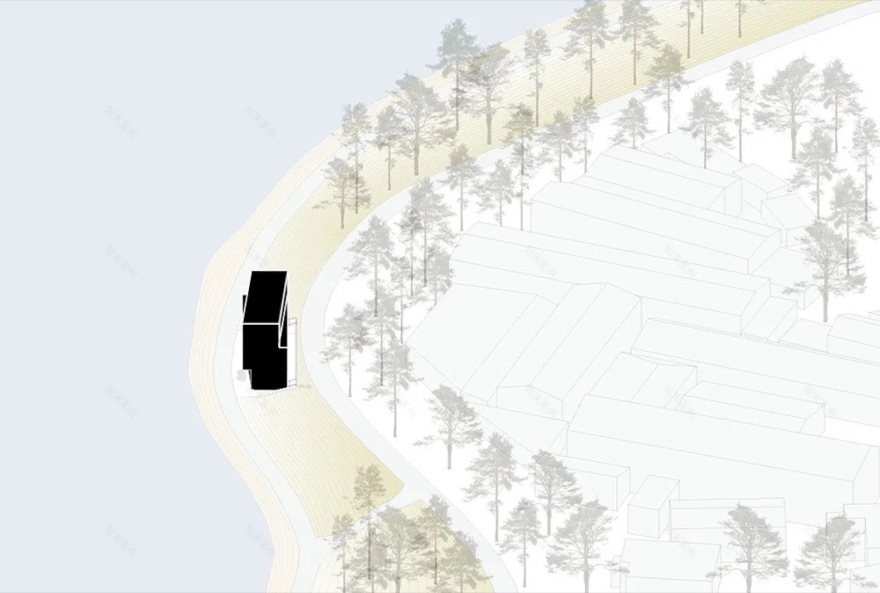
After analyzing the shoreline boundary, the architectural style of the surroundings, and the current state of the revetment, the design adopted a strategy of “Overturning Conventional But Conform To Tao principle.” Conventional logic often leads to the building’s disappearance or retreat. Due to the clutter of original unauthorized structures and building layouts, the Houhu shoreline lacked a sense of identity. Therefore, the design introduces a landmark building to inversely integrate the originally fragmented and weakly identifiable shoreline structure, serving a role of focus and consolidation, thereby enhancing the overall sense of belonging along the lakeside trail.
▼周边环境,Surrounding context© 存在建筑


▼顶视,Top view© 存在建筑

因此,设计通过设置一个具有标识性的建筑,反向整合原本零散、可识别性弱的岸线结构,起到聚焦与凝练的作用,进而增强环湖步道的整体归属感。▼项目模型,model© 地方工作室 + 湖南大学设计研究院有限公司

Despite its small scale, the building is presented as a unified form. The elevation adopts a tripartite composition, with each segment rotated in relation to the revetment and the direction of the path, generating subtly shaped in-between spaces and visual corridors that allow the building to almost merge with its surroundings. Visitors, whether viewing from across the lake or passing by on foot or while jogging, can experience a natural interactive relationship between the building and its environment—like a “zipper” that “stitches” together previously disconnected environmental elements.
▼隔水远眺,Looking across the water © 存在建筑


在景观层面,该区域视野开阔,缺乏视觉屏障。为呼应景观的多维性,建筑一层向水面敞开,二层体量可观察到后方步道上的人流活动,形成若即若离的对话关联,三层则提供眺望岳麓山与湖面的远眺视野。由于建筑形态狭窄,设计有意强化了这种极端的景观体验。▼建筑轴测图,axo of the building©地方工作室 + 湖南大学设计研究院有限公司

At the landscape level, the area offers open views but lacks visual barriers. To respond to the multidimensionality of the landscape, the ground floor opens up towards the water. The second-floor volume allows observation of pedestrian activity on the rear path, creating a dialogue of subtle connection and detachment. The third floor provides a distant view of Yuelu Mountain and the lake. Given the narrow building form, the design intentionally accentuates this extreme landscape experience.
▼建筑近景,Close view© 存在建筑


▼建筑旁的小路,Path beside the building© 存在建筑

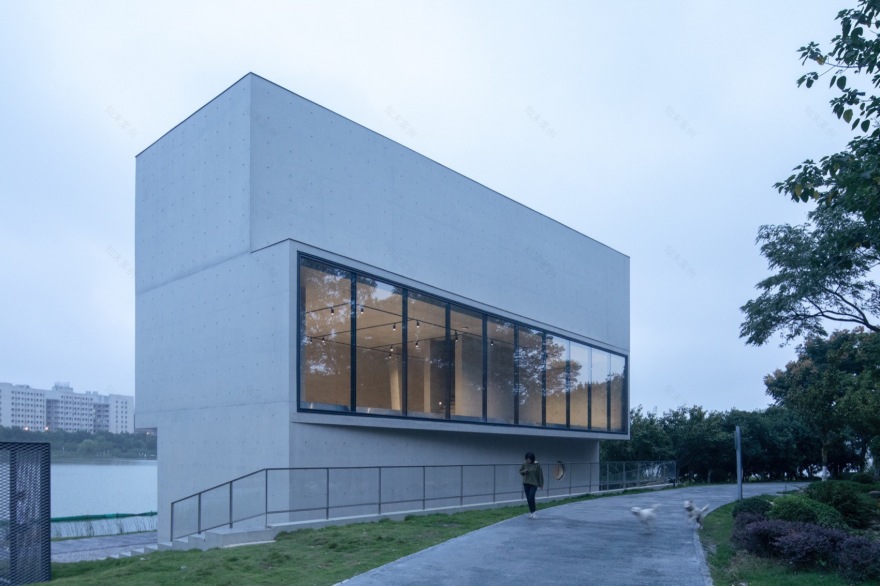
▼建筑立面,Facade© 存在建筑
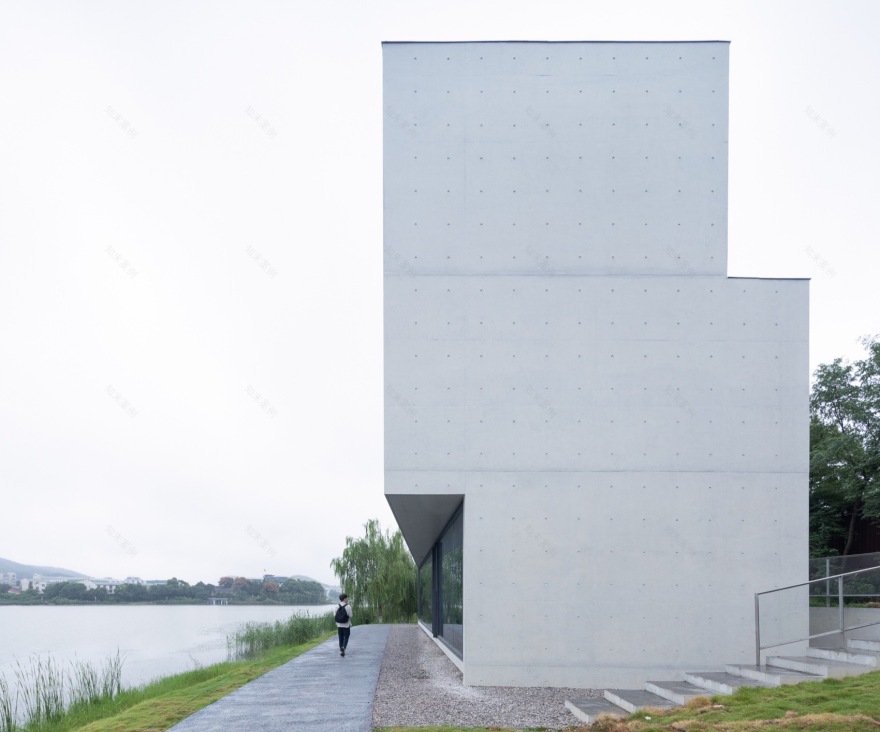


▼一层面向水面,The first layer facing the water surface © 存在建筑
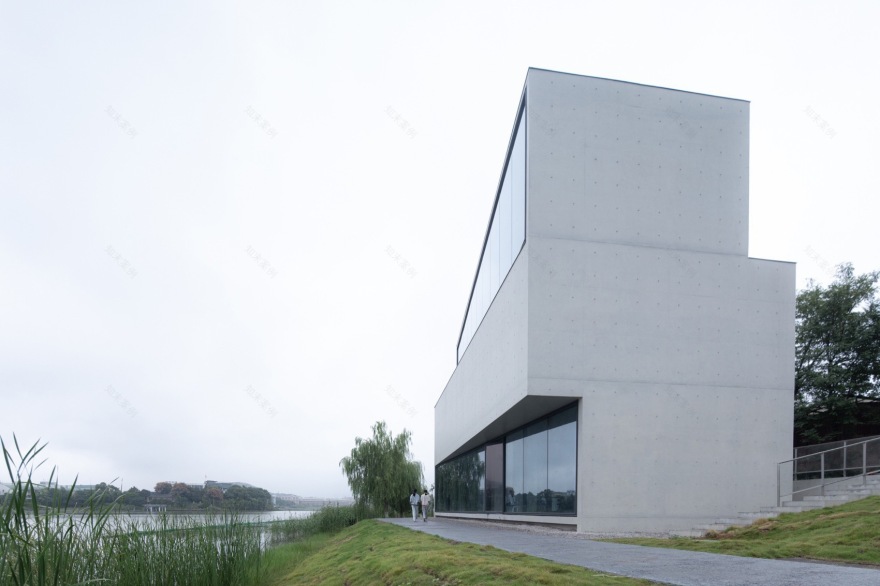
构造细节方面,玻璃幕墙下方的金属排水板、顶层幕墙上方的异形截面反梁,以及设备井道面向幕墙的斜向处理,均体现出建筑在细部控制上的严谨态度。建筑形体在竖向上经历两次扭转,平面呈平行四边形,内部立柱倾斜设置,整体构成逻辑基于斜向建构系统,并在三维空间中贯穿始终。
In terms of construction details, the metal drainage panel beneath the glass curtain wall, the specially shaped inverted beam above the top-floor curtain wall, and the slanted treatment of the equipment shaft facing the curtain wall all reflect the rigorous attention to detail control. The building form undergoes two twists vertically, with a parallelogram plan and internally tilted columns—the entire compositional logic is based on an oblique tectonic system that runs consistently through the three-dimensional space.
▼立面近景,Facade close view© 存在建筑


▼入口通道,Entrance path© 存在建筑

▼入口处,Entrance© 存在建筑

作为湖边小体量建筑,设计未采用拟态自然的手法,而是以理性、人工化的几何形态与自然环境形成反差的对比。这种具有明确几何导控的建筑体量,介入自然驳岸乃至步道系统中,展现出理性建构与自然法则的殊途同归。▼剖面轴测图,axo©地方工作室 + 湖南大学设计研究院有限公司

As a small-scale building by the lake, the design avoids mimicking nature, instead employing a rational, artificial geometric form to create a contrasting dialogue with the natural environment. This architectonic volume, with its clear geometric guidance, intervenes in the natural revetment and even the path system, demonstrating how rational construction and natural principles can converge through different paths.
▼室内空间,Interior space© 存在建筑
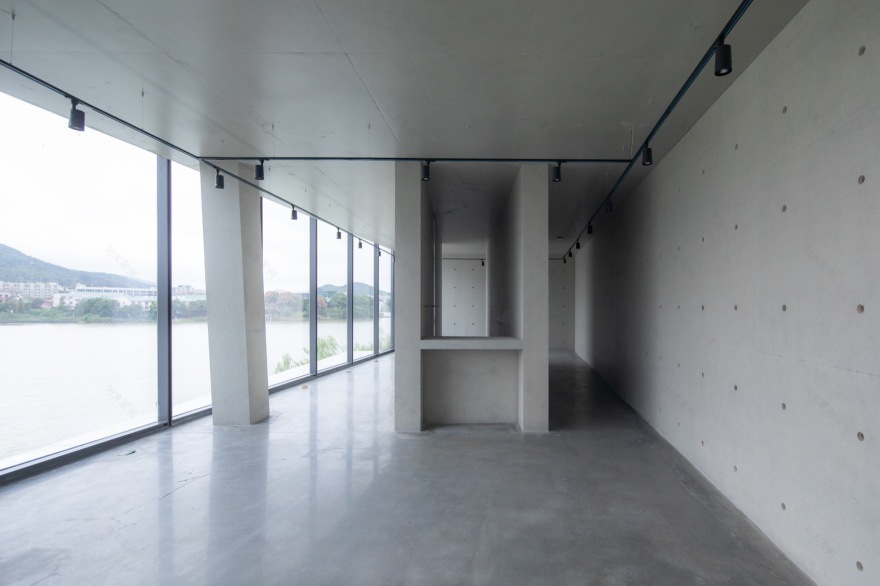
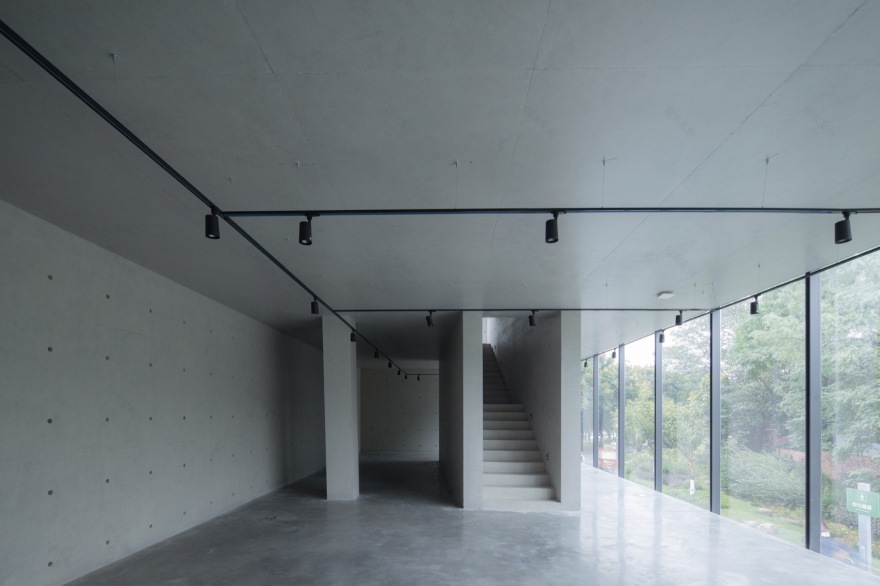
▼楼梯空间,Stairs© 存在建筑
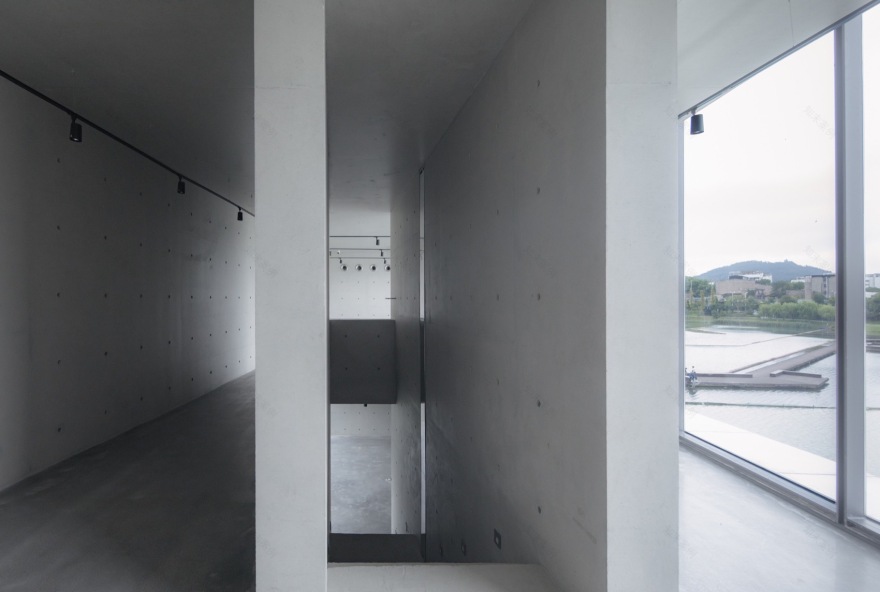


凭借严谨的逻辑控制,建筑在自然与人工环境的叠加中,并未选择模仿自然,而是以理性之光与自然韧性交相辉映。镜像旨在成为自然中的一面镜子,映射周边水、树、山三重景观维度。建筑与其水中倒影亦构成镜像关系,隐喻人工与自然环境的叠合与互映。
Through strict logical control, the building, within the overlay of natural and artificial environments, does not imitate nature but allows the light of rationality to resonate with natural resilience. Jing Xiang aims to act as a mirror within nature, reflecting the three landscape dimensions of water, trees, and mountains. The building and its reflection in the water also form a mirror relationship, metaphorically representing the overlay and mutual reflection of the artificial and natural environments.
▼夜览,Night view© 存在建筑


▼项目区位,site plan© 地方工作室 + 湖南大学设计研究院有限公司


▼各层平面图,floor plan© 地方工作室 + 湖南大学设计研究院有限公司

▼楼梯平面图,stairs plan© 地方工作室 + 湖南大学设计研究院有限公司

▼立面图,elevation© 地方工作室 + 湖南大学设计研究院有限公司

▼剖面图,section© 地方工作室 + 湖南大学设计研究院有限公司


▼玻璃窗框细节,glass window frame details © 地方工作室 + 湖南大学设计研究院有限公司
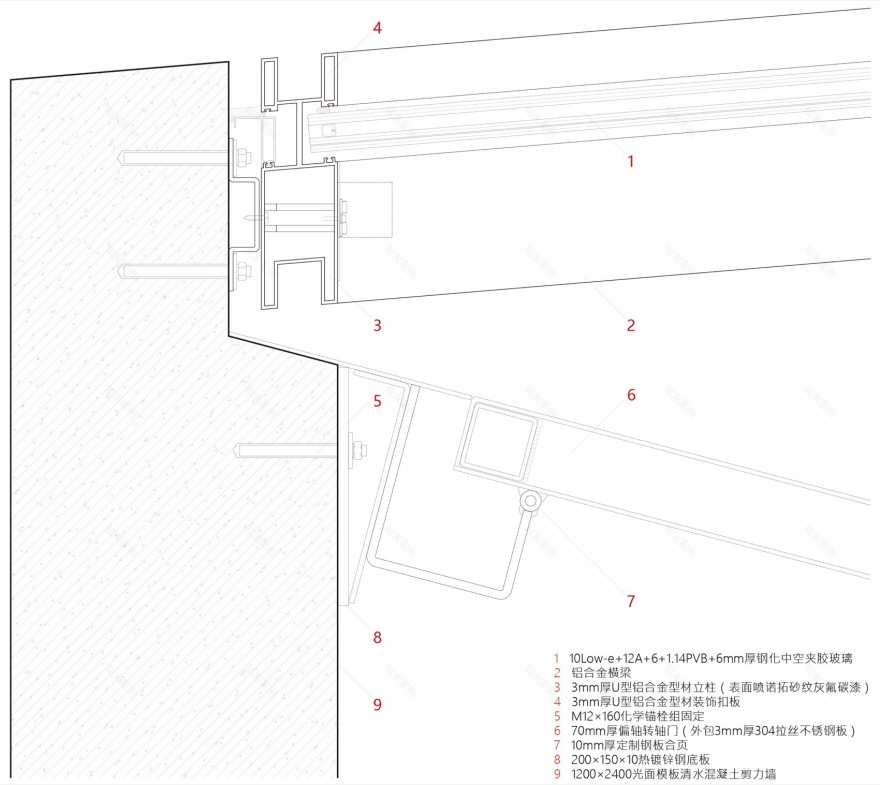
▼门细节,door details© 地方工作室 + 湖南大学设计研究院有限公司

▼幕墙顶部,curtain wall top © 地方工作室 + 湖南大学设计研究院有限公司

▼幕墙底部,Curtain wallbottom© 地方工作室 + 湖南大学设计研究院有限公司

▼平面细节,details© 地方工作室 + 湖南大学设计研究院有限公司

▼节点,details© 地方工作室 + 湖南大学设计研究院有限公司

工程名称:镜像
设计单位:地方工作室 + 湖南大学设计研究院有限公司
建筑师:张光 魏春雨 关明浩
地点:湖南长沙
设计时间:2022年
竣工时间:2024年
业主:长沙后湖产业投资发展有限公司
设计团队:肖广鹏、张懿、沈娴、周子怡、李朗、林卓凡、王欣(建筑);朱建华(结构);李静波(室内);钟鸣、张勇(幕墙);刘剑、谭超予、苏振韬、王蔚林(电气);李成(给排水);罗轶伦(暖通)
室内设计:长沙视码空间设计有限公司
景观设计:地方工作室
建筑面积:372.88㎡
建筑层数:3F
结构形式:框架剪力墙结构
摄影:存在建筑-建筑摄影


南京喵熊网络科技有限公司 苏ICP备18050492号-4知末 © 2018—2020 . All photos and trademark graphics are copyrighted by their owners.增值电信业务经营许可证(ICP)苏B2-20201444 苏公网安备 32011302321234号
苏公网安备 32011302321234号客服
消息
收藏
下载
最近