

创作上传
VIP
收藏下载
登录 | 注册有礼
查看完整案例

收藏

下载

分享

翻译
Architects:Cave Urban
Area:84m²
Year:2025
Photographs:Bas Princen
Manufacturers:Rothoblaas,Bamboo Pure,Bhoomi,Indobamboo,Kaltimber,Unknown (Removed),Unknown (Removed)
Lead Architect:Jed Long
Category:Pavilion,Community
Project Manager:Bondan Petra
Documentation:Furqan Muhammadsyah
Builder:Mustofa
Concept, Re Built Initiative Lead:Bauhaus Earth
Design:Cave Urban
Project Management:Bamboo Village Trust
Structural Engineering:Atelier One
Community Engagement:Kota Kita
Academic Collaboration:Warmadewa University
Government Engagement:Gamalaw
Environmental & Sustainability Consultant (Lca):Eco Mantra
Manufacturing / Laminated Bamboo Fabrication:Indobamboo
Material Supply – Reclaimed Timber:Kaltimber
Material Supply – Natural Finishes:Bhoomi
Material Supply – Bamboo Components:Bamboo Pure
Material Supply – Hardware Systems:Rothoblaas
Contractor / On Site Assembly:Cave Urban with Local Craftspeople
Funder:German Federal Ministry for the Environment, Climate Action, Nature Conservation and Nuclear Safety (BMUKN)
City:Bali
Country:Indonesia

The Bale Bio Pavilion reinterprets the Bale Banjar, the open-sided meeting hall that anchors every Balinese village. Raised off the ground and open to the air, the Bale Banjar has long been a space for ceremony, music, and community discussion. At Mertasari Beach in Sanur, Cave Urban translated this familiar form into a lightweight pavilion built from bamboo and recycled materials, merging local typology with regenerative design principles. "We were really interested in the Bale Banjar," says Jed Long, Director at Cave Urban. "It's a space that everyone in Bali recognises, a structure that connects people and community."


Design and Architecture – Part of Bauhaus Earth's ReBuilt Project, the pavilion sits within a wider inquiry into "transformation pathways towards a regenerative built environment" in Berlin, Bhutan, South Africa, and Bali. "The ReBuilt project is thinking about how the built environment can transition towards a regenerative future. And by regenerative, what I mean is that when we build, we do good rather than doing harm."
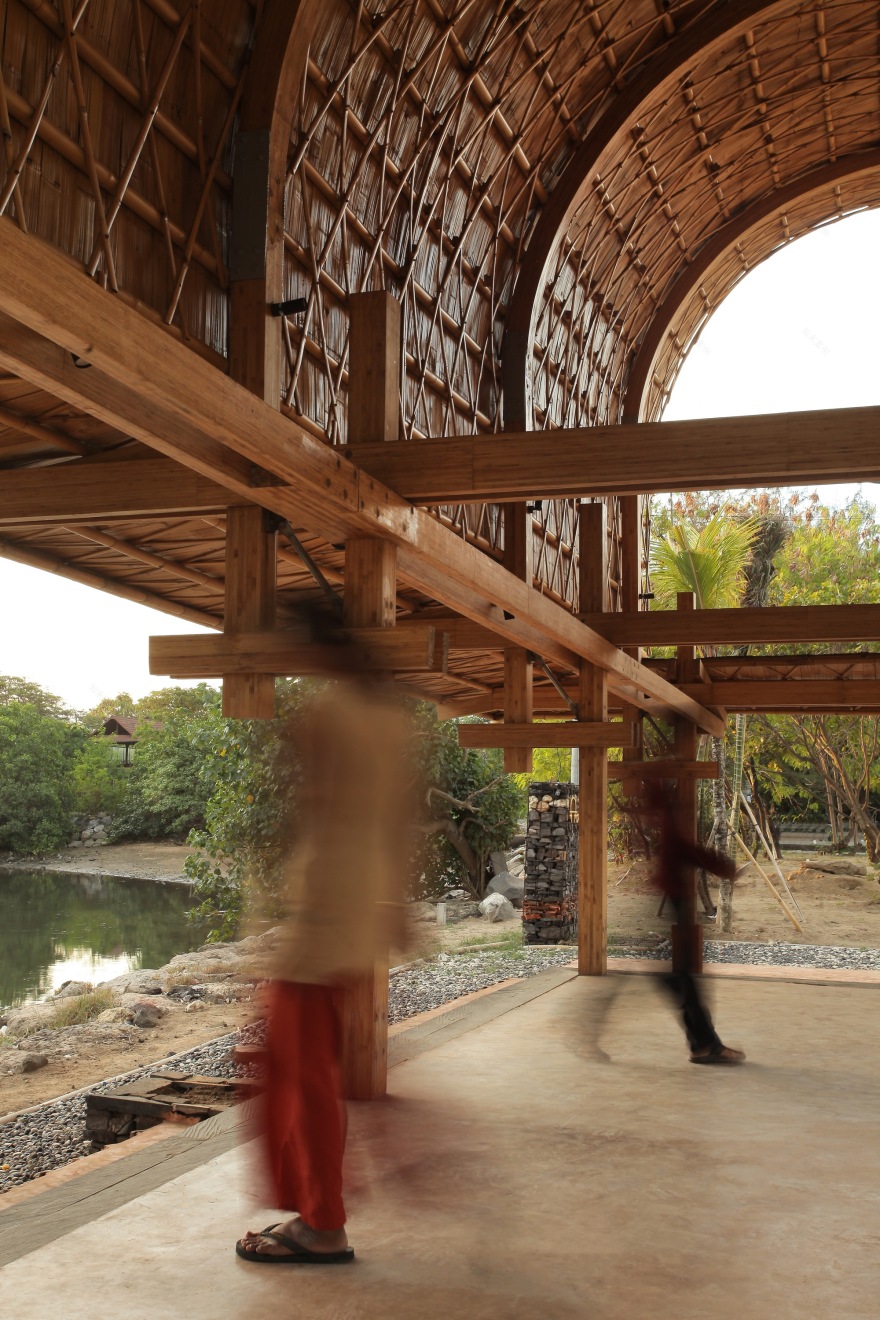

As part of Bauhaus Earth's ReBuilt Project, Cave Urban engaged with the work of Bauhaus Earth, Bamboo Village Trust, and Kota Kita, who had been mapping Bali's urban context and identifying innovation around bio-based building materials. Drawing on these outcomes, the team explored ways to connect local craft-based experiments with approaches to urban construction. "One of the big things that we found was that there's a lot of existing innovation around bio-based building materials in the tourism industry … but that innovation doesn't necessarily translate into urban construction."

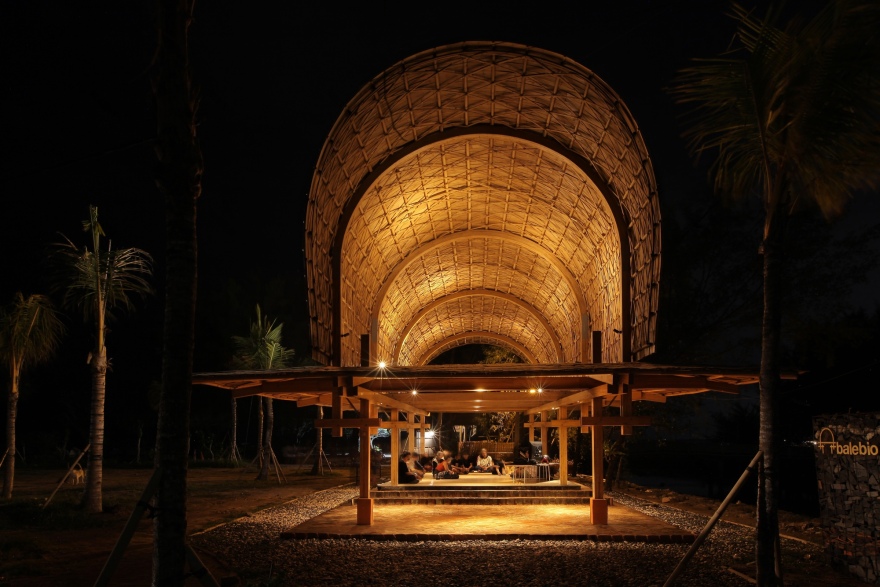
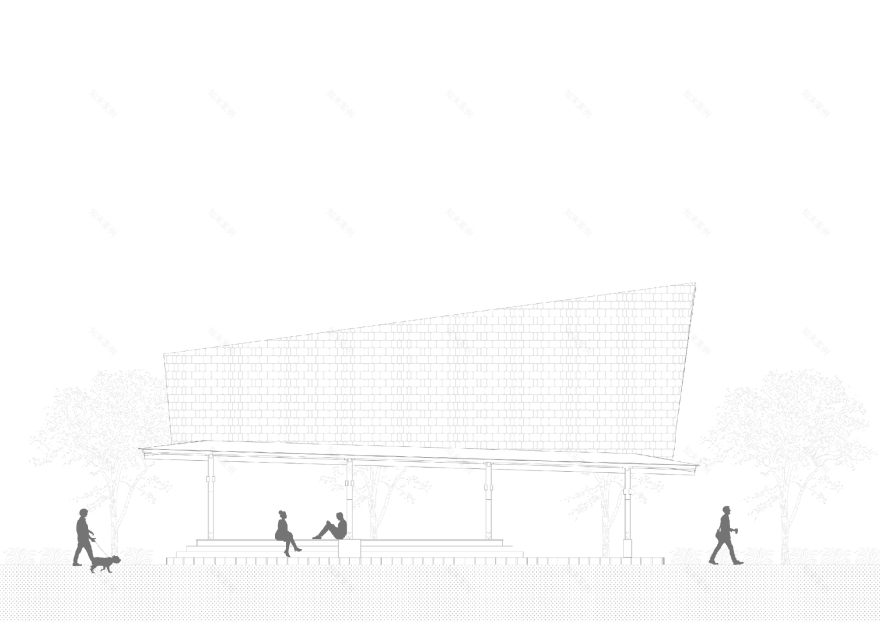
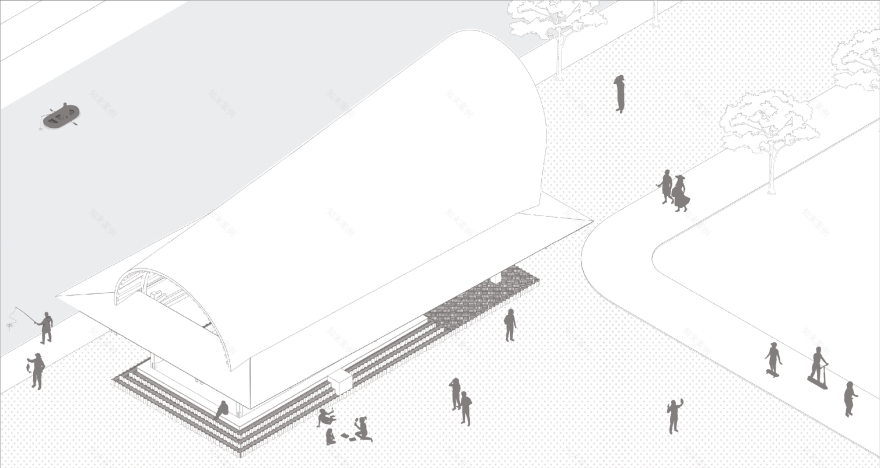
Three curved laminated-bamboo vaults span four metres each, rising 8.5 metres above a podium built from recycled temple stone. The open, elevated plan maintains the generosity of the traditional Bale Banjar, while the prefabricated, bolted system allows rapid assembly and long-term stability in tropical conditions. The roof's arched profile also draws from the Lumbung (rice-barn) form, a gesture to agrarian architecture and coastal boatbuilding traditions, blending inland and maritime vernaculars within one fluid structure.

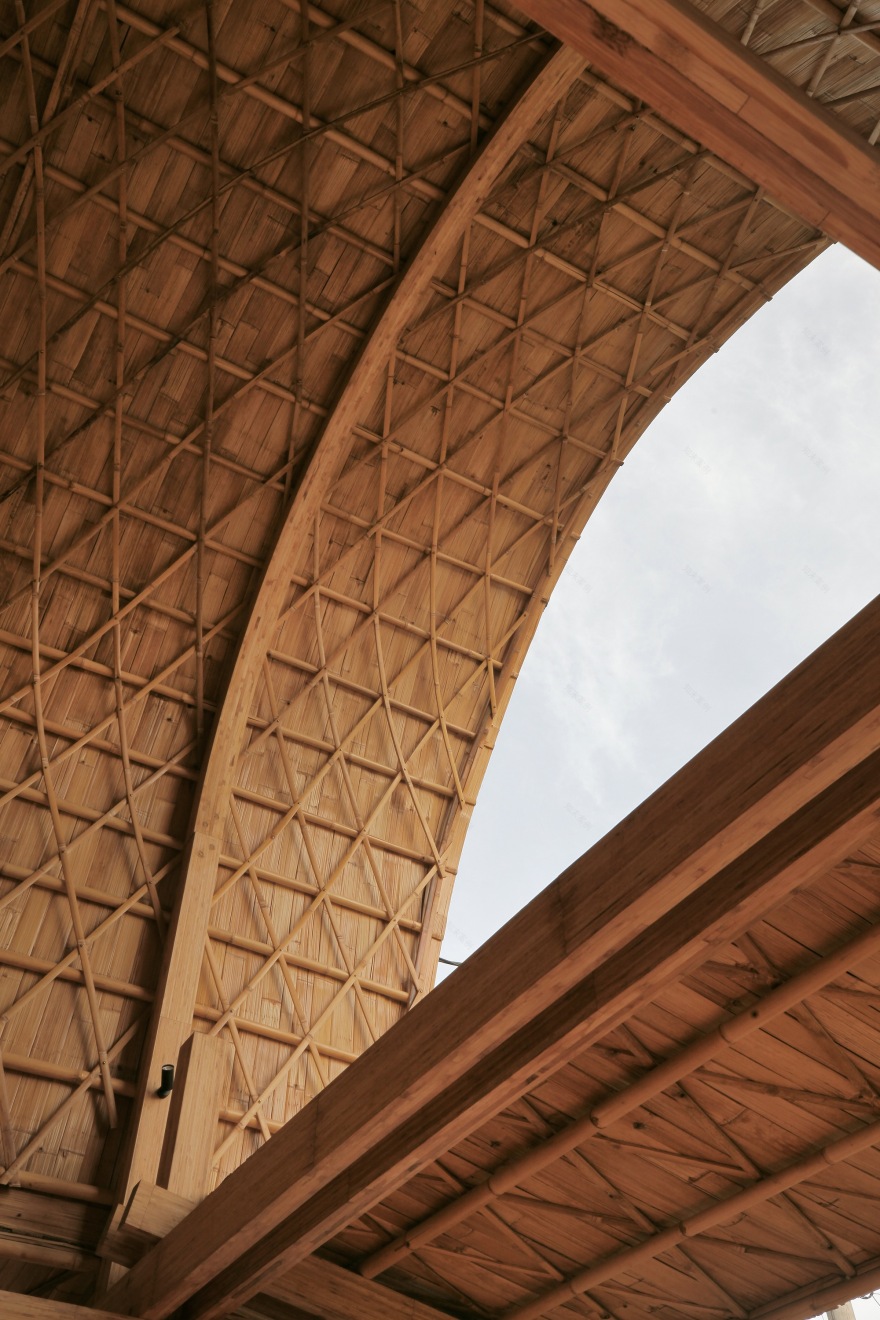
Material Language – The Bale Bio draws entirely on materials sourced and remade within Indonesia.
Laminated Bamboo: Dendrocalamus asper, grown by smallholder farmers in Flores and processed by Indo Bamboo in Bali.
Paras Stone: off-cuts from temple-carving workshops reused in gabion walls forming the base.
Plupuh (Flattened Bamboo): hand-split panels for the roof, part of Bali's long craft tradition.
Reclaimed Ironwood (Ulin): hardwood recovered from disused Kalimantan houses and bridges, used for podium edges.
Clay Roof Tiles and Lime Plaster: recycled finishes that cool and ground the interior.
Recycled Plastic Sheet: waste polymers pressed into durable signage and inscription panels.

Together, these components form a circular material system that fuses vernacular craft with engineered precision. "The whole ground section was made out of geo-based materials … we were sourcing stone that was a waste product from local temple manufacturers … we used it to make gabion walls to raise the base of the building up off the ground."


Making and Community – The pavilion was realised through collaboration between Cave Urban, Bauhaus Earth, the Bamboo Village Trust, Atelier One, Eco Mantra, Kota Kita, Indobamboo, and students from the University of Warmadewa, together with local craftspeople. Prefabricated elements were delivered to the site and bolted together, demonstrating a model for rapid, low-impact construction. "It was really amazing watching the pavilion come up in a really short period of time using construction methodologies much more similar to mass timber."

Before building began, the team consulted local architects to ensure the design embodied three principles: to use natural materials, do no harm to the environment, and serve the community. The site was blessed through the Meruak rituals at both ground-breaking and completion. The build also became a training ground, as workers learned to assemble laminated bamboo structures, passing on new material knowledge within local craft traditions.

Impact – The Bale Bio functions as both prototype and catalyst, a carbon-negative demonstration of what regenerative construction can look like in Indonesia. A Life Cycle Assessment by Eco Mantra found that the pavilion "reduced its Stage A carbon footprint by 110 percent compared to a baseline business-as-usual construction practice." The pavilion avoids more than 53 tonnes of CO₂ emissions (equivalent to planting over 2,400 trees) and continues to actively absorb carbon through its nature-based materials. "The building that we've created is not only carbon negative but is also traceable to a whole bunch of social and environmental initiatives along the value chain."
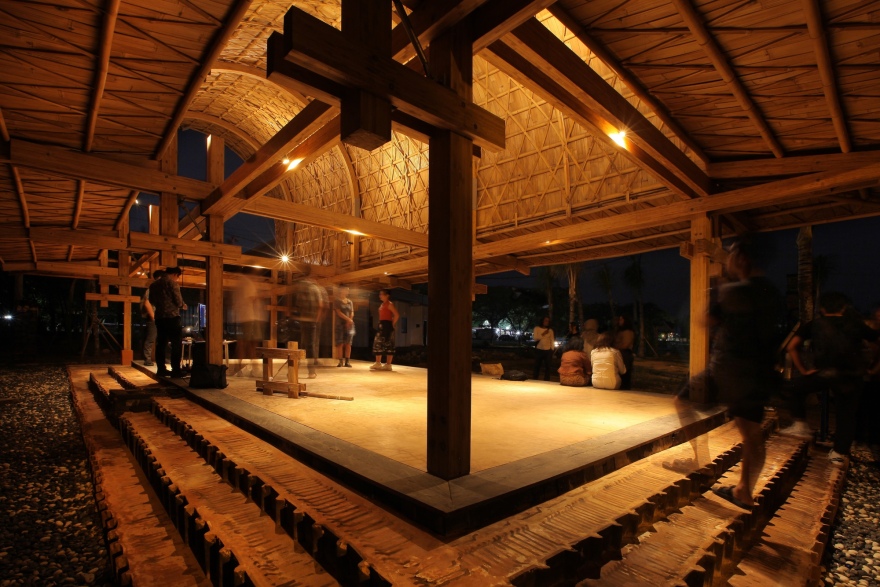
Designed for disassembly, the pavilion can be taken apart and reused, extending its circular logic through the entire life cycle. "The pavilion was a great success because not only was it a showcase for how we can implement regenerative building practices here in Bali, but it's also serving as a catalyst and a proof of concept." Since its completion, the Bale Bio has hosted community gatherings, workshops, and multi-stakeholder talks, a living pavilion for dialogue on Bali's transition toward regenerative design.

Project gallery








南京喵熊网络科技有限公司 苏ICP备18050492号-4知末 © 2018—2020 . All photos and trademark graphics are copyrighted by their owners.增值电信业务经营许可证(ICP)苏B2-20201444 苏公网安备 32011302321234号
苏公网安备 32011302321234号客服
消息
收藏
下载
最近