

创作上传
VIP
收藏下载
登录 | 注册有礼
查看完整案例

收藏

下载

分享

翻译
Architects:Alventosa Morell Arquitectes,Joan Josep Fortuny Giró
Area:400m²
Year:2024
Photographs:José Hevia
Lead Architects:Joan Fortuny, Marc Alventosa, Xavier Morell
Category:Apartments
Design Team:Andrea Capella Mònaco, Joan Martí Elias, Carolina Capella Mònaco, Jordi Adell Roig i Júlia Nabona Jasans, Sandra Vargas, Marina Morey, Gori Llambias, Raquel Mirón, Rebeca Lopez, Eric Moyá
Technical Team:Baltasar Nicolau
Engineering & Consulting > Civil:Estudis d’Enginyeria de les Illes
City:Puigpunyent
Country:Spain

Text description provided by the architects. Located in Puigpunyent, Mallorca, this project led by the IBAVI (Balearic Housing Institute) proposes a building designed with criteria of sustainability, energy efficiency, and respect for the natural environment. To achieve this, the project develops from a model of local economy that recovers trades, construction systems, and passive strategies inherent to the native island culture.
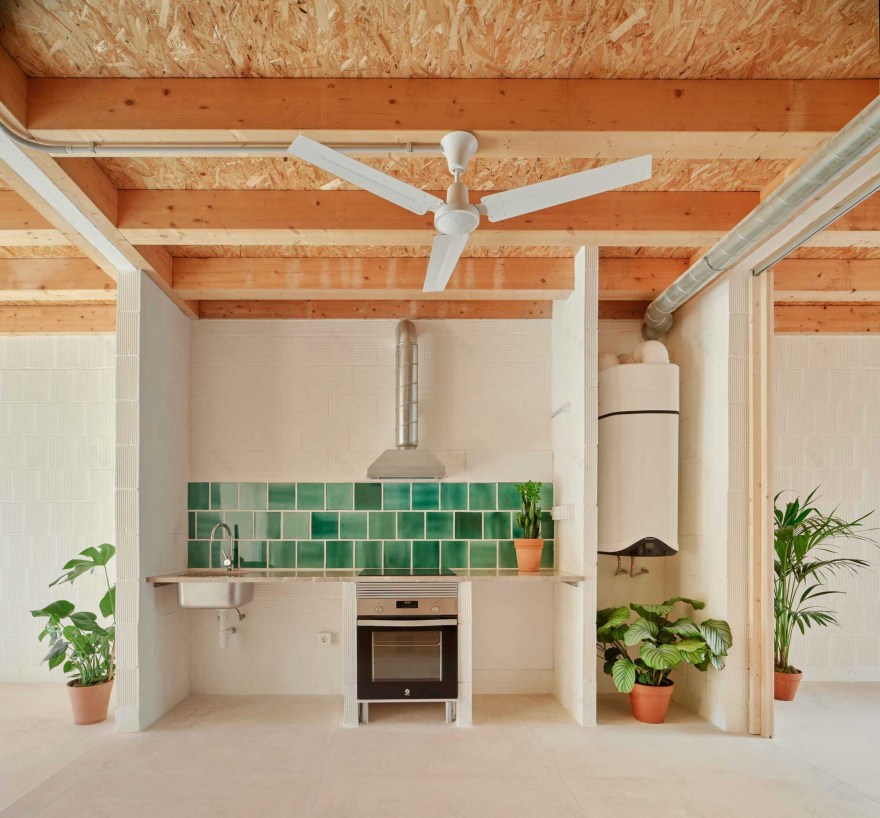
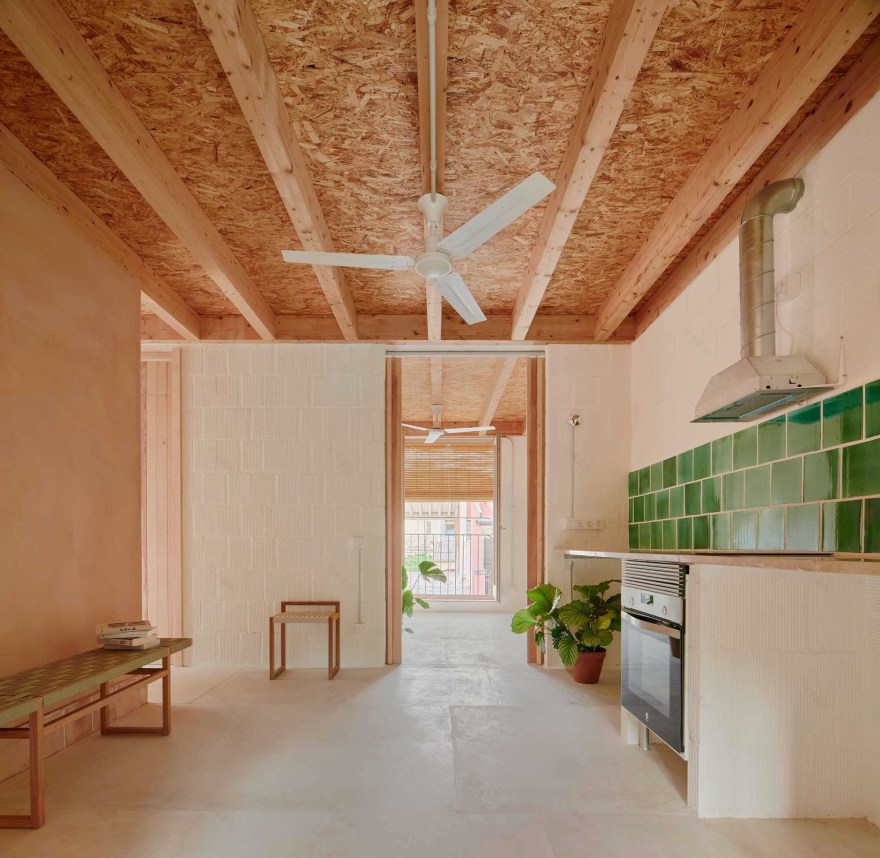
With two floors and a gabled roof, the building is divided into six housing units, four on the ground floor and two on the upper floor. The units on the ground floor have one bedroom and access to a private outdoor space, while the apartments on the upper floor accommodate two bedrooms and open to their own exterior terrace. Open, flexible, and adaptable spaces are proposed, directly relating to each other with the kitchen as the central area. This layout is the result of combining three structural bays.
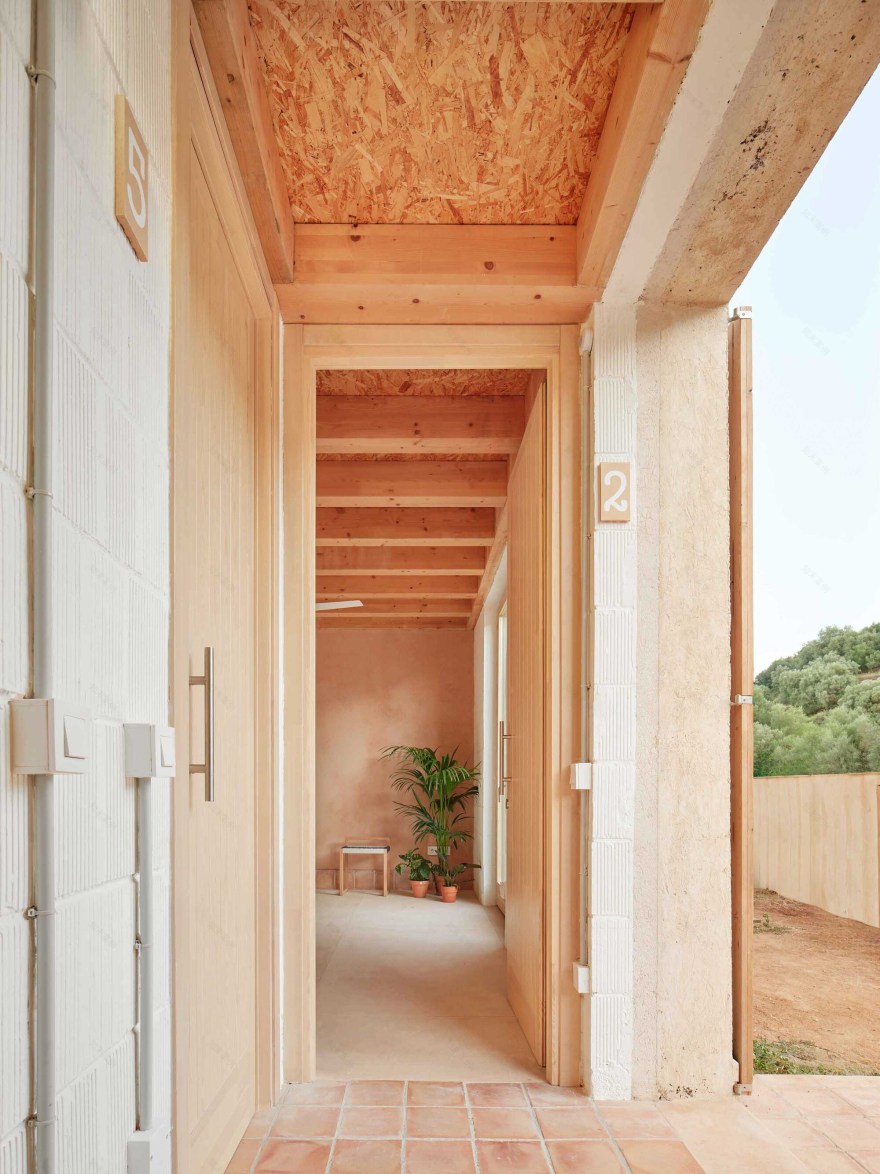
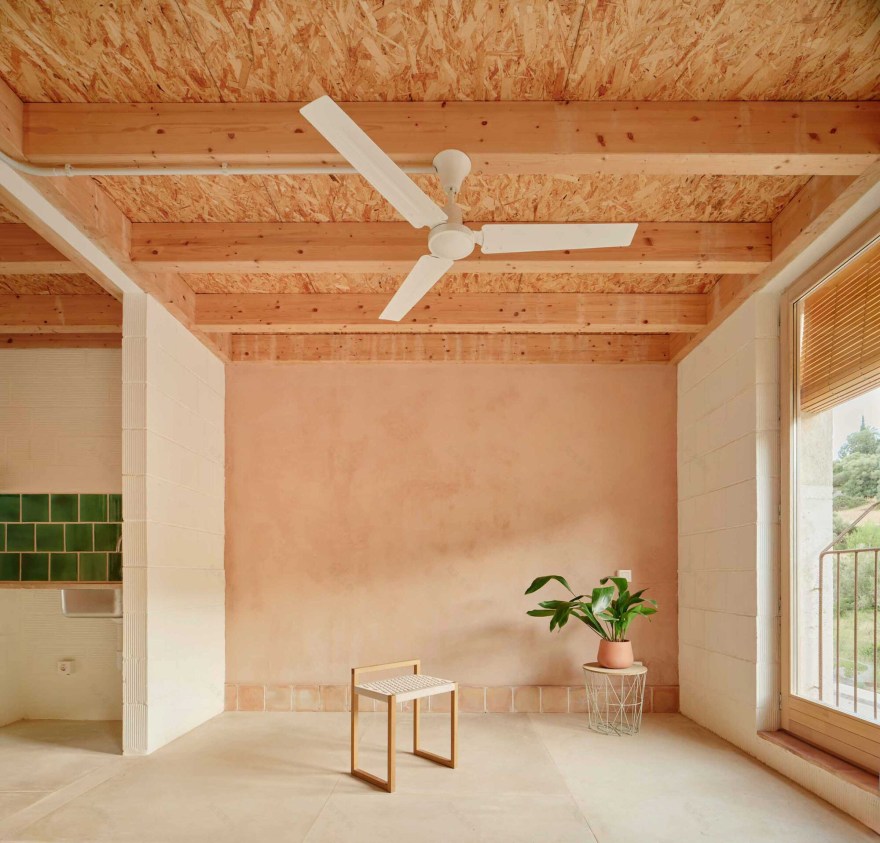
The materiality of the building responds to its surroundings, using local materials and strategies. The cyclopean lime facades incorporate stones and earth from the excavation itself. The partitions are made of island ceramics, filled with leftover sand from local quarries and finished with clay and straw. The floors and carpentry are made of FSC-certified wood. The interior floors of local lime, exterior pavements, tiles, and roof tiles were also sourced nearby.


The building is strategically designed to maximize solar capture in winter and reduce cooling demand in summer, incorporating cross ventilation, solar protection, high thermal inertia in floors and walls, and hygroscopic and breathable materials that regulate humidity. The "trombe" roof is a key element that captures heat in winter and ventilates in summer, regulating temperature and thus eliminating active systems. Finally, the private patios serve as control and filtering elements for user ventilation of the homes.

With an almost zero energy consumption (1.7 kWh/m²·year, NZEB), the project reduces CO₂ emissions by 50%, while circularity criteria lead to a 60% reduction in waste. Moreover, there has been a conscious effort to build systems where materials can be separated in the event of demolition for reuse. The Life Cycle Analysis demonstrates a low CO2 cost in construction (230 Kg CO2/m²), which represents a 50% reduction compared to conventional buildings.

The result is a set of homes that reduces its impact on the environment while reinforcing the local economy and promoting territorial regeneration. By incorporating vernacular materials and techniques, Ses Veles Puigpunyent proposes an architecture in dialogue with island culture, combining technical innovation and environmental responsibility.

Project gallery




南京喵熊网络科技有限公司 苏ICP备18050492号-4知末 © 2018—2020 . All photos and trademark graphics are copyrighted by their owners.增值电信业务经营许可证(ICP)苏B2-20201444 苏公网安备 32011302321234号
苏公网安备 32011302321234号客服
消息
收藏
下载
最近