

创作上传
VIP
收藏下载
登录 | 注册有礼
查看完整案例

收藏

下载

分享
以现代设计焕发传统活力
借创新手法重塑空间意境

▲项目概览
©️DK大可建筑
乡村更新不是简单的物理改造,而是关于生活方式与时代需求的深度对话,建筑作为有思想的空间将成为激活乡村基因的关键媒介。
Rural renewal is not merely a simple physical transformation, but a profound dialogue about lifestyle and the demands of The Times. Architecture, as a space with thoughts, will become a key medium to activate the genes of rural areas.

▲
立面细节
©️DK大可建筑
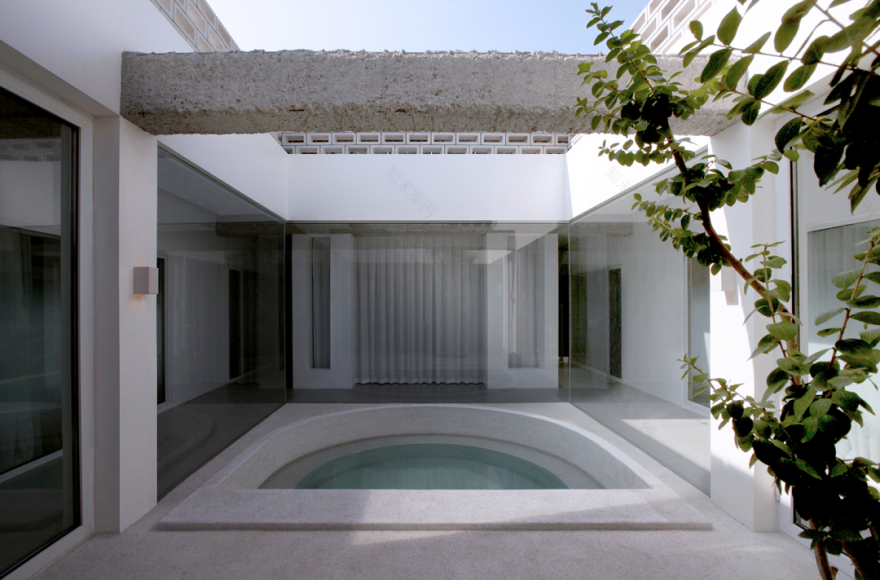
▲
庭院空间
©️DK大可建筑
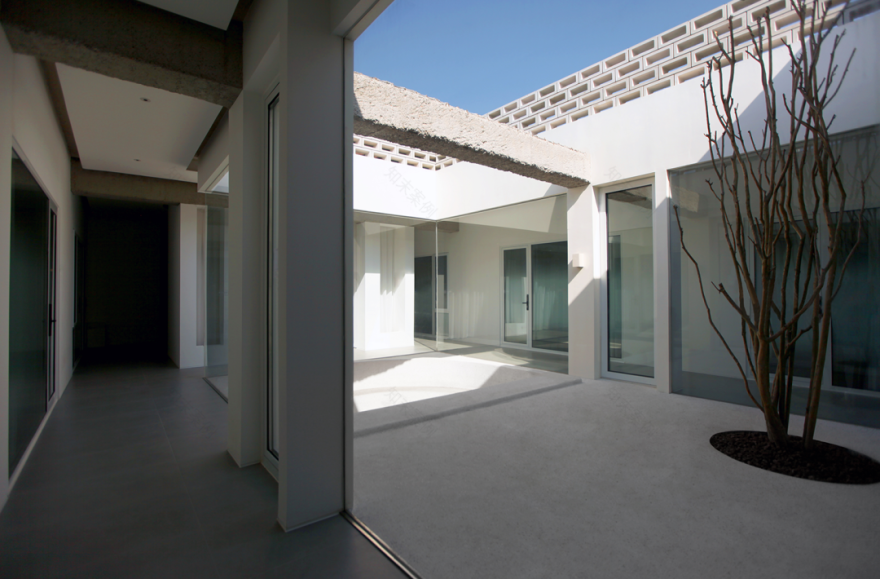
▲走廊与
庭院空间
©️DK大可建筑
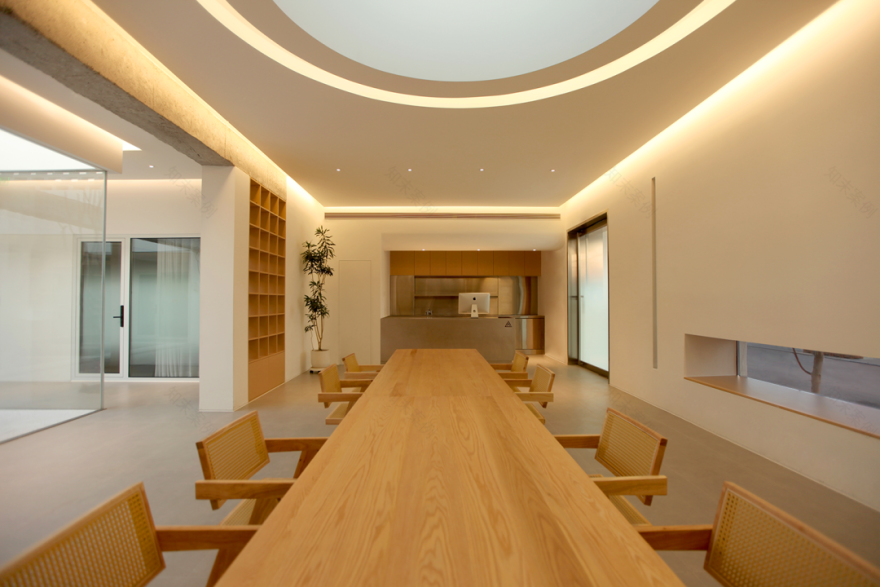
公共区域
©️DK大可建筑

▲西院中心庭院
©️DK大可建筑

▲东院中心庭院©️DK大可建筑
项目背景
项目位于北京市通州区唐大庄村,依托北京环球影城带来的超级流量场域,村落有了新的发展方向,将宅院改造成民宿成为该村的共识。我们在此改造的12个院落,均通过建筑艺术介入乡村更新的方式实现功能的转型。
The project is located in Tangdazhuang Village, Tongzhou District, Beijing. Relying on the super traffic field brought by Universal Studios Beijing, the village has a new development direction. Transforming the residences into homestays has become a consensus in the village. The 12 courtyards we have renovated here have all achieved functional transformation through the intervention of architectural art in rural renewal.
▼项目总平面图
©️DK大可建筑

▼改造前
©️DK大可建筑

项目地位于该村主路的核心地段,
占
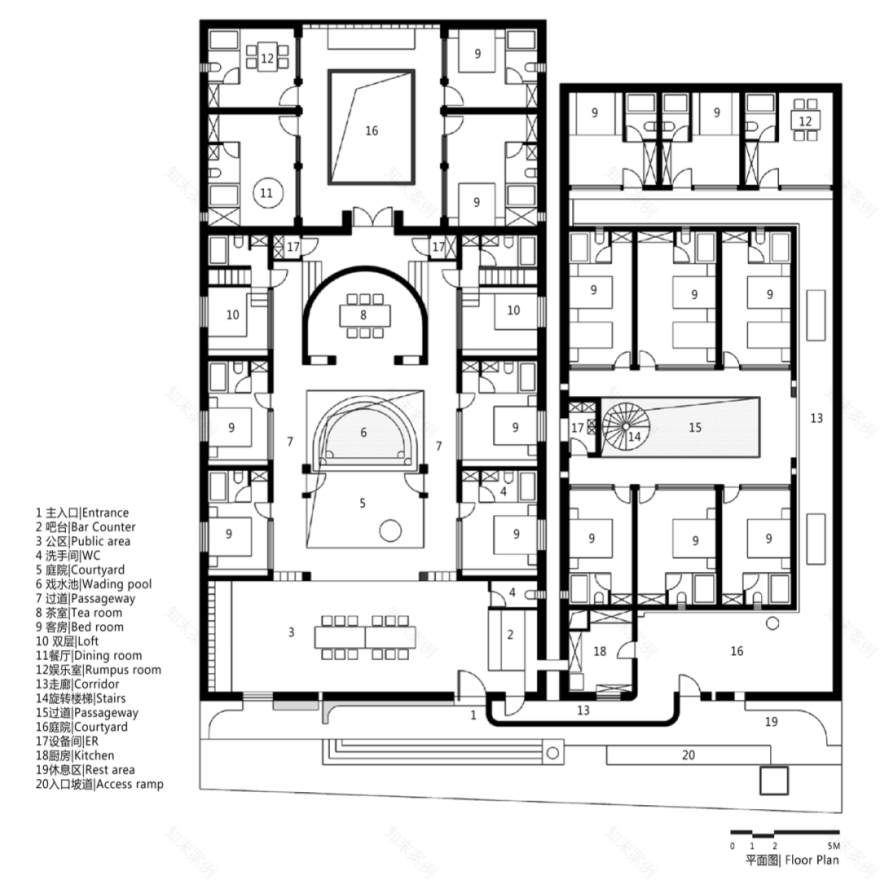
地面积约一千平方米,由两处宅基地合并而成,空间内包含库房、三合院及一处围合院落,原有建筑在体量、空间形态及高度上均存在较大差异。如何通过合理的流线组织,将原本分散杂乱的空间有效整合,并将其改造为舒适宜居的民宿空间是本项目面临的首要挑战。
The project is located in the core area of the main road in the village, covering an area of approximately 1,000 square meters. It is formed by the merger of two homesteads. The space includes a warehouse, a three-sided courtyard and a enclosed courtyard. The original buildings have significant differences in volume, spatial form and height.
How to effectively integrate the originally scattered and disordered space through reasonable circulation organization and transform it into a comfortable and livable homestay space is the primary challenge faced by this project.
▼入口空间
©️DK大可建筑

两户宅基地的南立面总长约30米,与沿街路面存在近0.8米的高差,且原有建筑边线并不齐平。如何将这两栋建筑在形态和空间上融为一体,并形成风格统一的整体,成为我们重点思考的问题。
The total length of the south facades of the two homesteads is approximately 30 meters, with a height difference of nearly 0.8 meters from the street surface, and the original building boundaries are not flush.
How to integrate these two buildings in terms of form and space and create a unified style as a whole has become the key issue we need to consider.
▼立面改造前后对比图
©️DK大可建筑

▼建筑立面夜景
©️DK大可建筑
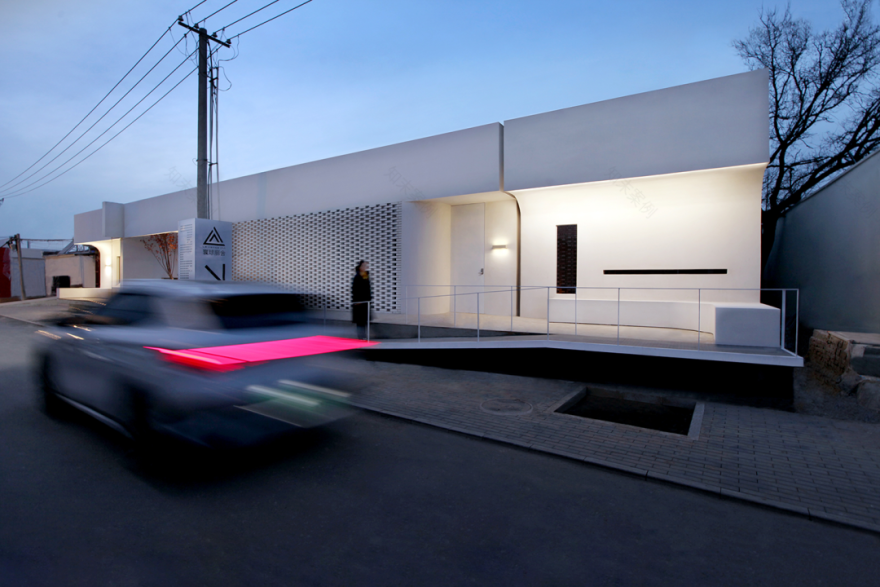
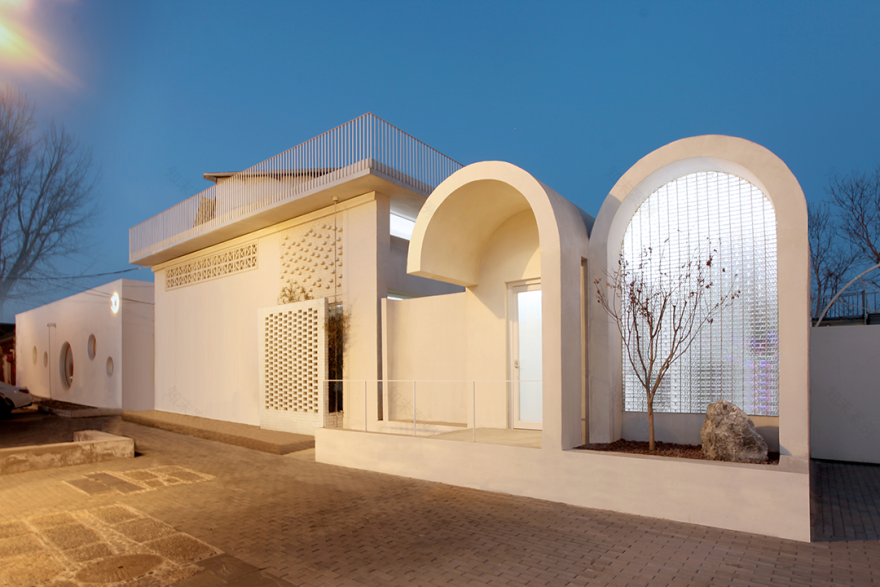
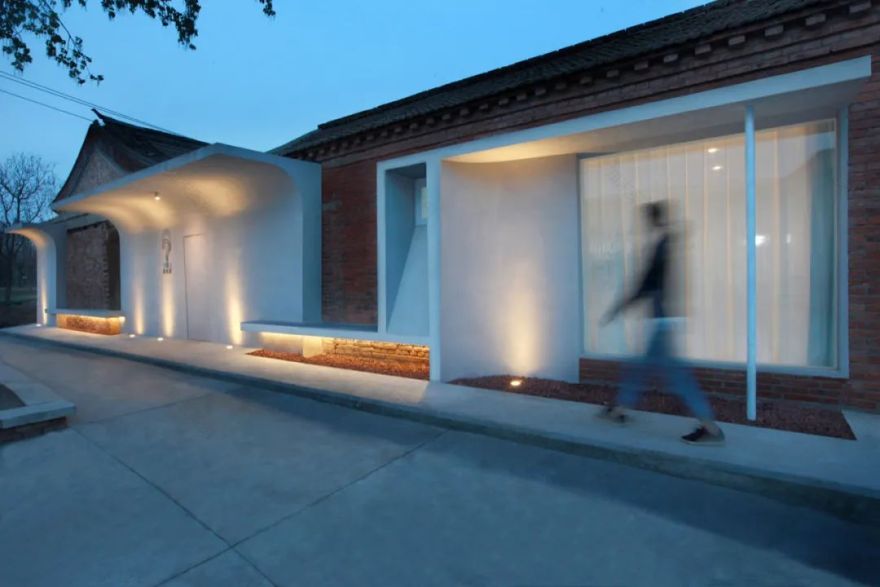
经过多轮方案推敲,最终选择以“灰空间”的形式进行衔接。通过一道轻盈上挑的弧形廊道,既模糊了原本参差的建筑边界,也创造出丰富的空间体验可能性。
该廊道通过缓坡与台阶结合的方式,自然消化了与路面之间的高差,不仅巧妙连接了两栋建筑,也使其成为有机的整体。
After multiple rounds of scheme deliberation, it was ultimately decided to carry out the connection in the form of "grey space".
Through a light and upward-sloping arc-shaped corridor, not only are the originally uneven architectural boundaries blurred, but also rich spatial experience possibilities are created.This corridor, by combining gentle slopes and steps, naturally absorbs the height difference with the road surface. It not only ingeniously connects the two buildings but also makes them an organic whole.
▼采用坡道解决立面高差
©️DK大可建筑

▼立面台阶与坡道
©️DK大可建筑

我们希望,借助这一空间的整合,不仅能够梳理周边复杂的生活流线,更能让客人体验到建筑与环境和睦共存的舒适感,同时回应当下村落有机更新的内在需求。
We hope that through the integration of this space, not only can the complex living flow lines around be sorted out, but also guests can experience the comfort of harmonious coexistence between the building and the environment, while responding to the current intrinsic need for organic renewal of the village.
▼西院公共区域
©️DK大可建筑

▼
公区看向庭院
©️DK大可建筑
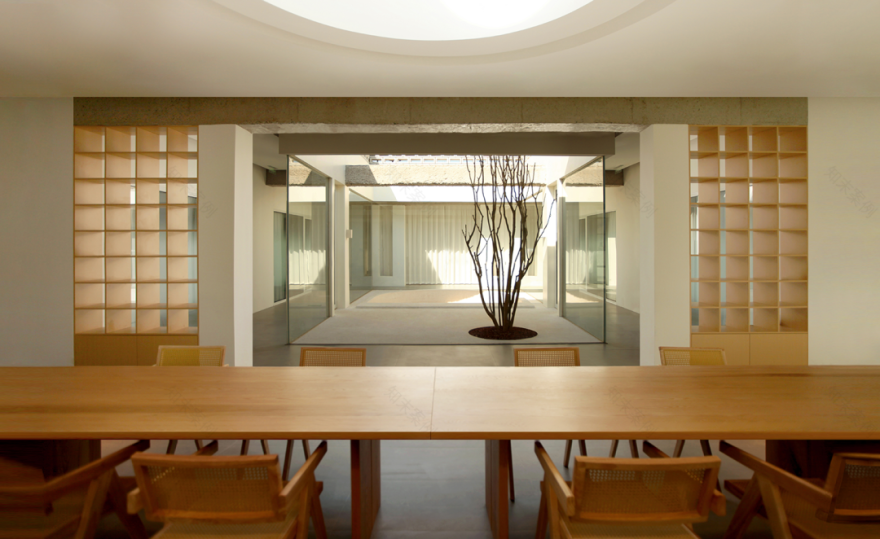
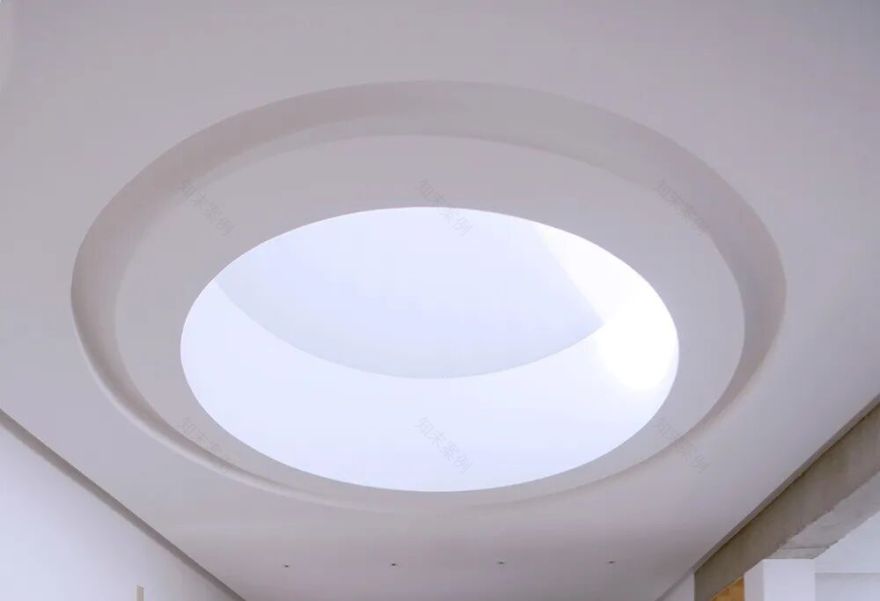
该公区是民宿的核心空间,作为民宿与村落的纽带,承载着多元复合的功能,同时为居者提供了一个宽敞的活动场所。位于区域中央的圆形天井构成整个空间的视觉焦点,阳光会随着不同的季节、时间与此处的场所产生不同的反馈。
This public area is the core space of the homestay. As a link between the homestay and the village, it carries multiple and complex functions and provides residents with a spacious activity area at the same time.
The circular atrium located in the center of the area forms the visual focus of the entire space. Sunlight will produce different feedback with different seasons, times and the place here.
▼公区
©️DK大可建筑

▼圆形天井
©️DK大可建筑
中庭以露天玻璃盒子为核心,两侧对称布置客房单元,我们采用这种形式将室外与室内相连接,自然光线被充分引入并漫射于整个空间内部,人与建筑与自然的关系被悄然拉近。
The atrium takes an open-air glass box as its core, with guest room units symmetrically arranged on both sides. We adopt this form to connect the outdoors with the indoors, allowing natural light to be fully introduced and diffused throughout the entire space. The relationship between people, buildings and nature is quietly brought closer.
▼玻璃盒子庭院
©️DK大可建筑

▼庭院空间
©️
DK大可建筑

▼
庭院
©️DK大可建筑

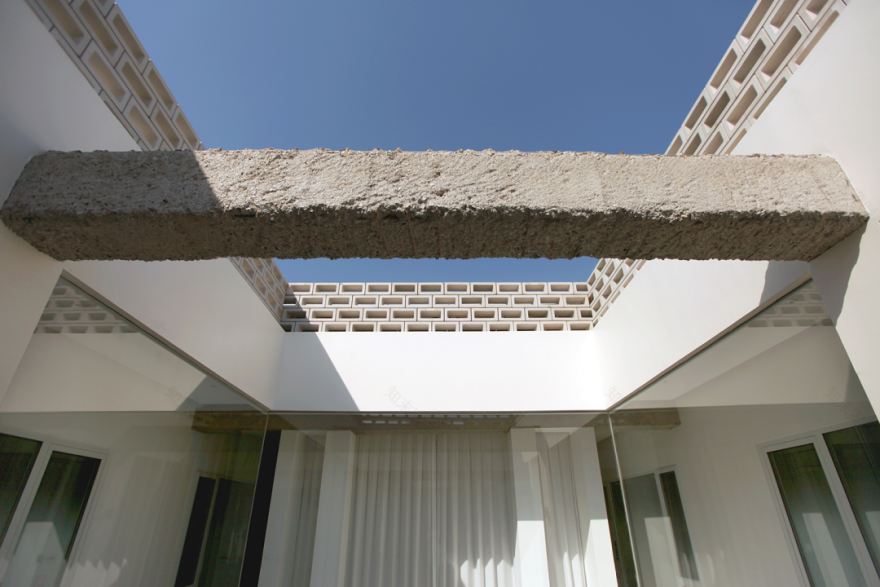
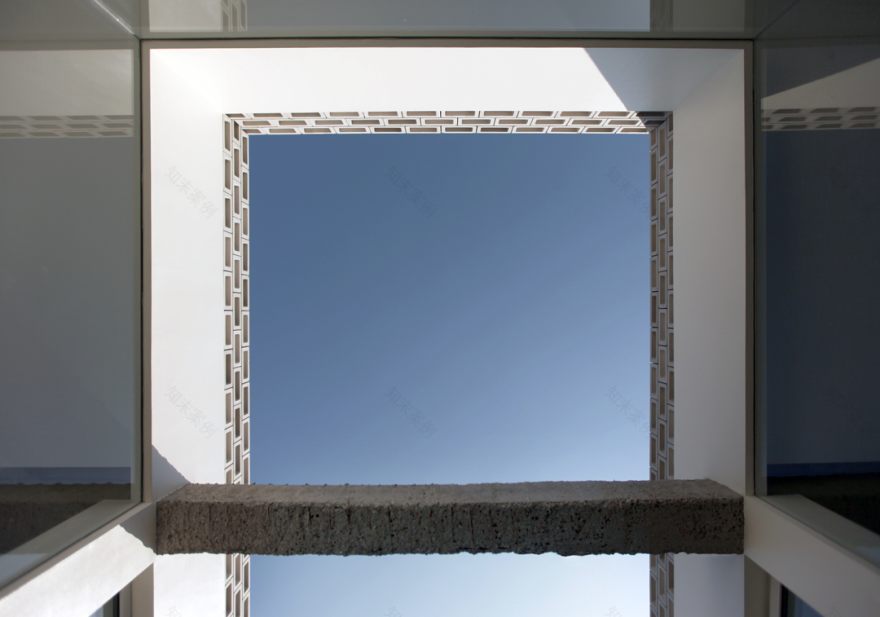
庭院中央设置了温泉池及配套的室外休息区,既满足了泡汤、休憩、社交的多元使用的功能,也进一步模糊了建筑与自然的界限,营造出放松的场所氛围。庭院上方保留了原始的建筑结构,延续了空间场地记忆,旧梁与新构形成了一种时间上的空间叙事。
In the center of the courtyard, a hot spring pool and an outdoor rest area are set up, which not only meet the multiple functions of soaking in the hot spring, resting and socializing, but also further blur the boundary between the building and nature, creating a relaxing atmosphere. The original architectural structure is preserved above the courtyard, continuing the memory of the spatial site. The old beams and the new structures form a spatial narrative in terms of time.
▼
保留原有库房结构梁
©️DK大可建筑
▼方形
天井
©️DK大可建筑
▼庭院内外
©️DK大可建筑

▼庭院温泉
©️DK大可建筑

▼阳光透过玻璃盒子洒进室内
©️DK大可建筑

▼LOFT客房
©️
DK大可建筑

▼LOFT客房
©️
DK大可建筑

在设计中我们将东院东侧的过道转化为一道连廊,以此将前院、中院和后院有机的串联起来,形成流畅而连贯的空间序列。
In the design, we transformed the corridor on the east side of the east courtyard into a connecting corridor, thereby organically linking the front courtyard, middle courtyard and back courtyard, forming a smooth and coherent spatial sequence.
▼东院客房入口处小院
©️
DK大可建筑

▼东侧连廊串联三排客房,顶部开天井
©️
DK大可建筑

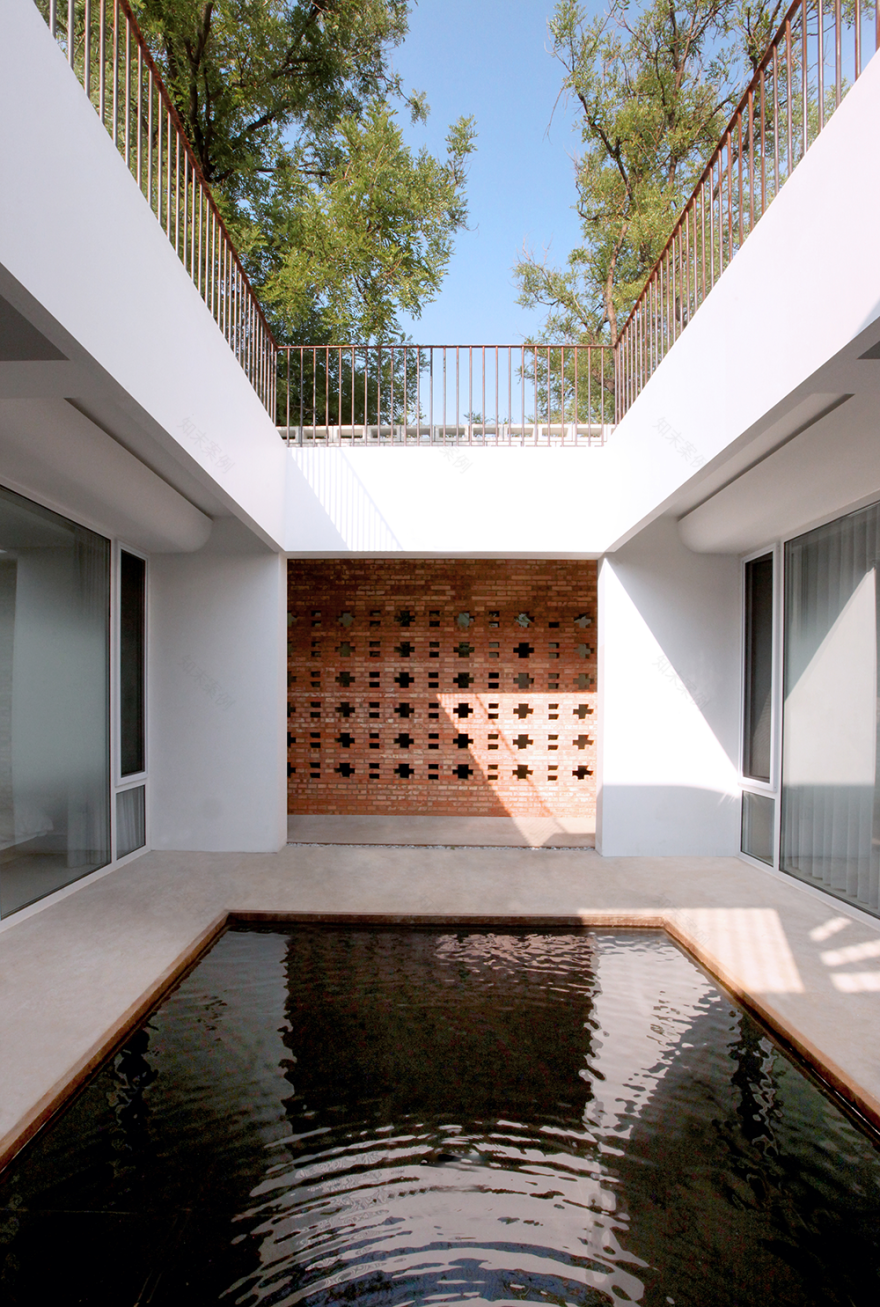
连廊立面采用镂空红砖砌筑,其肌理与东侧两棵百年槐树形成巧妙呼应。
当宾客置身于中间庭院之际,能够透过红砖的孔隙,隐约捕捉到大树苍劲的树干轮廓,
这一视觉互动不仅丰富了空间层次,更深化了场所的情感厚度。
The facade of the corridor is built with hollowed-out red bricks, and its texture ingeniously echoes the two century-old locust trees on the east side. When guests are in the middle courtyard, they can faintly catch the outline of the vigorous trunk of the big tree through the gaps in the red bricks. This visual interaction not only enriches the spatial layers but also deepens the emotional depth of the place.
▼中心庭院借景院外槐树
©️
DK大可建筑

庭院内设置旋转楼梯通达二层平台,该院落的平屋顶是整个民宿空间的重要延展空间,可作为公共的活动场地,在此场域下,屋顶景观与周边复杂多样的屋顶及树木形成互动,客人可以在此举行不同的活动。
A spiral staircase is set up in the courtyard leading to the second-floor platform. The flat roof of this courtyard is an important extension space of the entire homestay and can be used as a public activity area. In this area, the roof landscape interacts with the complex and diverse rooftops and trees around it, allowing guests to hold various activities here.
▼中心庭院旋转楼梯
©️
DK大可建筑

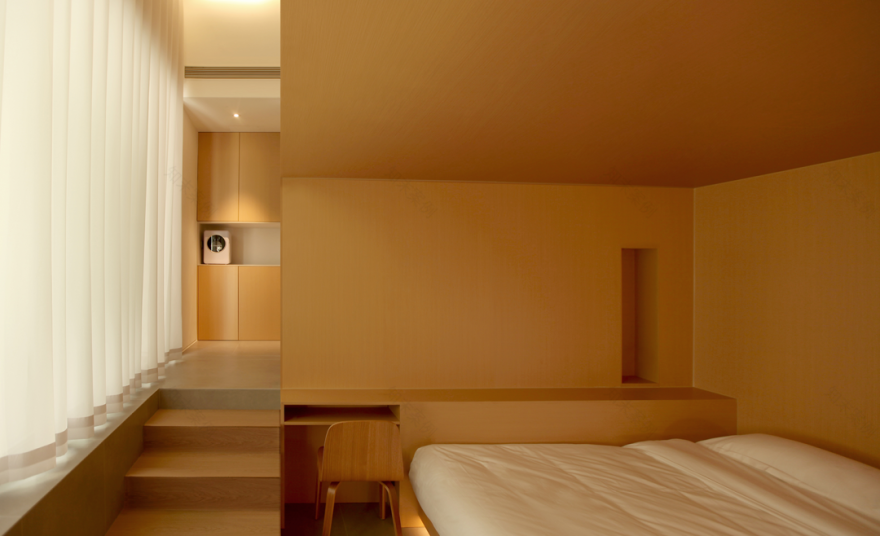
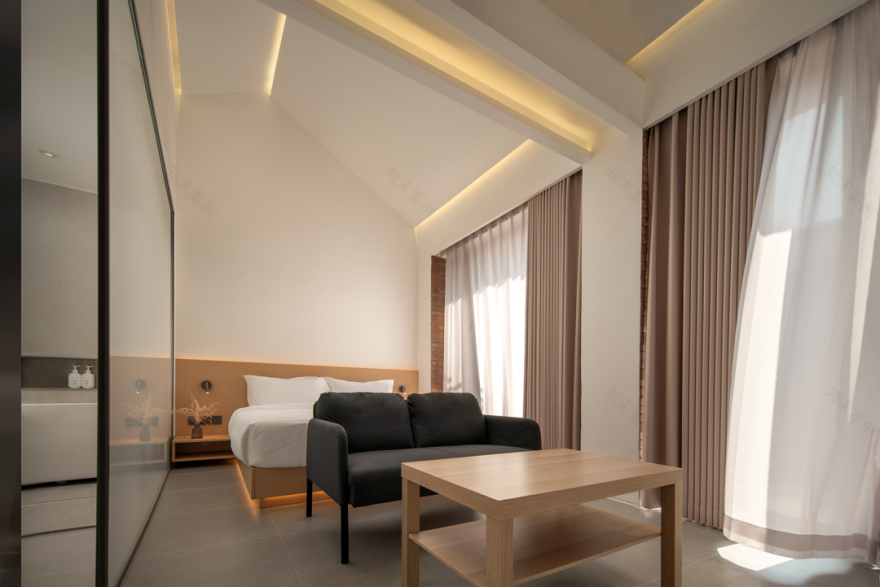
▼客房空间
©️
DK大可建筑

▼LOFT客房空间
©️
DK大可建筑
▼客房空间
©️
DK大可建筑
▼平面图
©️DK大可建筑
▼立面
图
©️
DK大可建筑

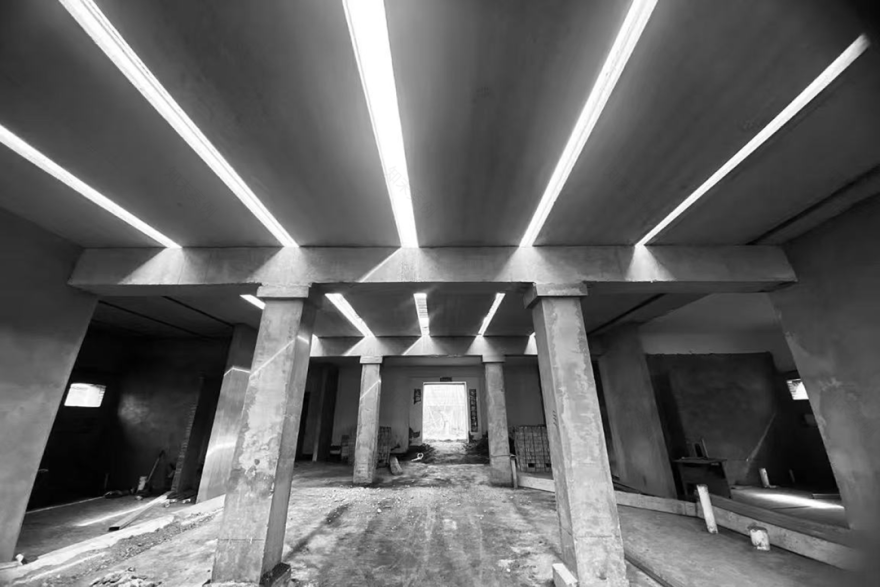
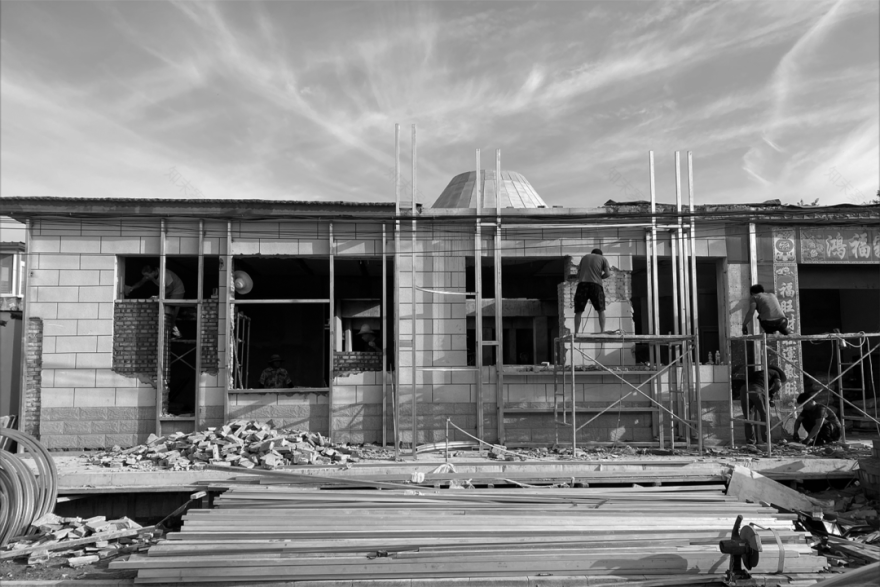
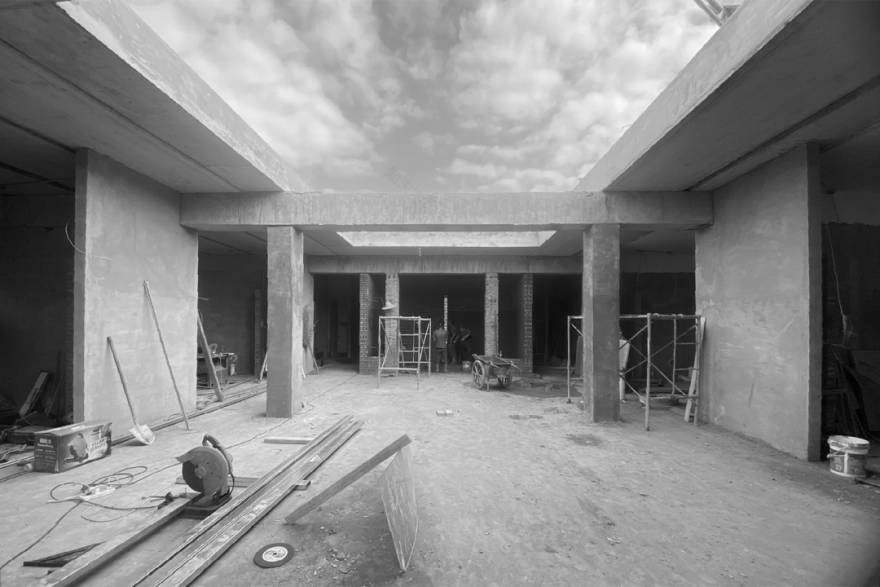
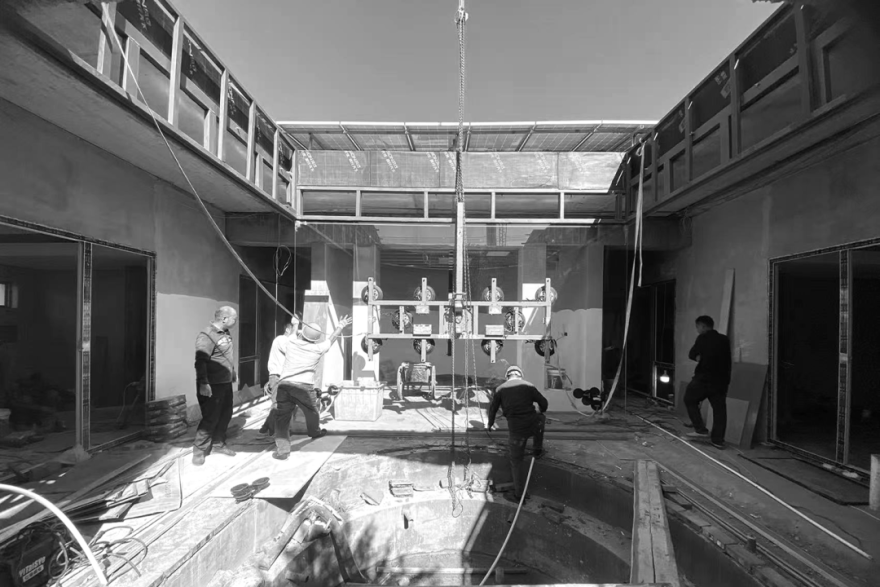
▼施工图
©️
DK大可建筑


项目信息
项目名称:寰球丽舍
设计单位:DK大可建筑
项目类型:改造
项目地址:北京市通州区
设计团队:杨玺琛 王域沣
王学艺
王浩瀚(实习)
项目设计:2024.5
完成年份:2025.9
用地面积:1031
㎡
建筑面积:756
㎡
摄影版权:DK大可建筑
往期案例
89号
·拾光夏%
|北京,通州

11号
·圆境| 北京,通州

12号·云隐| 北京,通州
29号
·映山居| 北京,通州

19号
·寓廊小舍| 北京,通州

拾光夏$舍| 北京,通州

拾光夏?舍| 北京,通州
拾光夏#舍| 北京,通州

拾光夏民宿| 北京,通州

龙湾·竹里馆| 北京,顺义
“影”院民宿| 北京,通州

1971 研学营地旧学校改造 | 山东,日照

磐舍|山东,日照
新宿咖啡厅兼工作室|山东,枣庄
诗的剧场《月出》|北京,朝阳
南京喵熊网络科技有限公司 苏ICP备18050492号-4知末 © 2018—2020 . All photos and trademark graphics are copyrighted by their owners.增值电信业务经营许可证(ICP)苏B2-20201444 苏公网安备 32011302321234号
苏公网安备 32011302321234号客服
消息
收藏
下载
最近