

创作上传
VIP
收藏下载
登录 | 注册有礼
查看完整案例

收藏

下载

分享


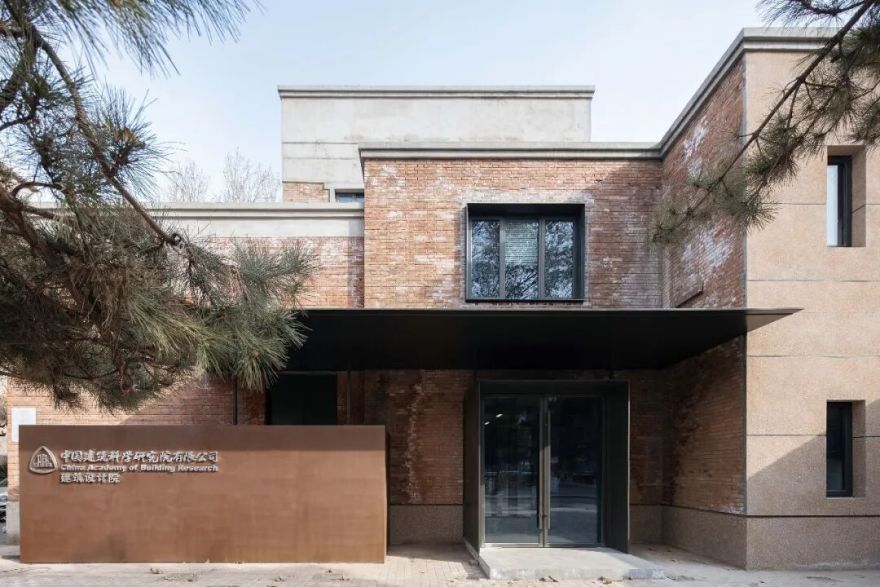


本项目位于北京市朝阳区,始建于1958年,近七十年的岁月,见证了几代建研人的青春记忆。
Sitting in Chaoyang District, Beijing,, this auditorium was first built in 1958. Nearly seventy years of use have made it a repository of memories for generations of CABR people.
本次修缮的核心理念是“光”——通过自然光与人工光的精妙融合,既保留老建筑的历史温度,又赋予其现代活力,最终呈现出最舒适的空间氛围。
Light is the guiding idea for this renovation. By weaving natural and artificial light together, we preserve the warm patina of the old building while injecting contemporary vitality, and ultimately shape the most comfortable atmospheric experience.


自然光的最大化利用:在设计伊始,我们便确定了“优先依托自然光”的原则。礼堂南北侧墙面的窗户、顶层开口的侧窗,都是引入自然光的重要“通道”。为了更精准地利用自然光,我们进行了详细的模拟分析。
Maximizing natural light was our first directive. From the start we insisted on “prioritizing daylight.” Windows on the north and south walls and the clerestory side openings at the top are not decorative elements — they are the primary conduits for daylight. To use them precisely, we ran detailed simulation analyses.
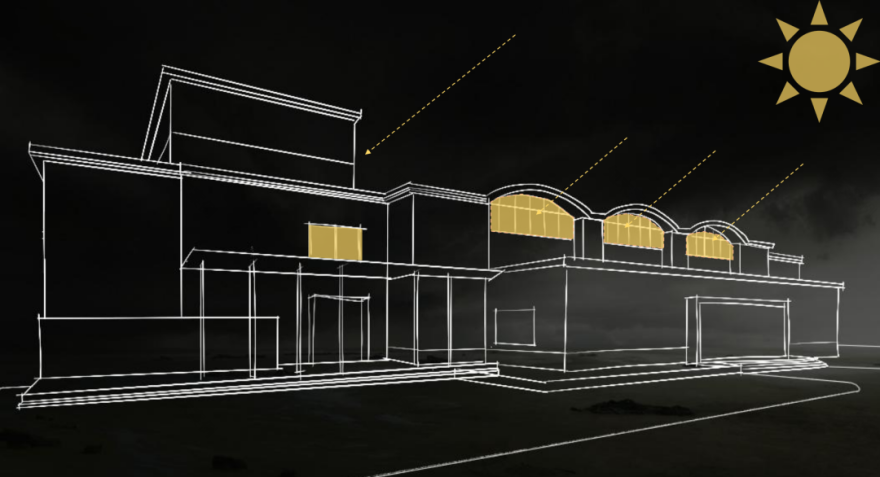

自然采光
Daylight

阳光下泻
Sunlight Spill
以夏至日为例,从早上8点到下午6点,我们清晰量化了不同时段的采光效果。
Take the summer solstice as an example. From 8:00 a.m. to 6:00 p.m. we quantified the daylighting performance across different periods, hour by hour.

充足的光线不仅让室内充满“沐浴阳光”的温暖氛围,更有效地减少了人工光源的使用,这也是我们践行节能减排理念的关键一步。
Ample daylight comforts the interior with a sun-warmed ambiance and, importantly, cuts down on reliance upon electric lighting. That reduction in artificial load is a concrete step toward our energy-saving and emission-reduction goals.
然而,自然光并非“万能”,总会有些角落无法照射到,这时人工光成为最佳补充。我们的核心思路是“按需设计、场景适配”,从空间功能出发,为不同区域定制专属的灯光方案。
But daylight has limits. Some corners remain unreachable, and there artificial light becomes the indispensable supplement. Our strategy is simple: function-adaptive lighting design. Starting from each space’s function, we developed tailored lighting solutions for different areas.


采光所能覆盖的全部面积
The entire area illuminated by natural light
整个项目的人工照明色温定为4000K,营造明亮通透的灯光效果,既不会像冷白光那样刺眼,也不会像暖黄光那样昏暗,正好契合舒适办公的需求。
We set the artificial lighting color temperature at 4000K across the project to achieve a bright, transparent quality that is neither harsh like cool white nor too dim like warm amber — a balanced tone that suits comfortable office work.


进入大门,一层的展示空间不仅是展示区域,还是连接二层办公区的通道。为了满足现代化使用需求,我们选择了线性光作为主光源。这种设计能够实现区域内均匀的照明,既满足日常展品展示的光照需求,也能灵活应对临时会议的人员交流。
At the entrance, the ground-floor exhibition space functions both as display and as the transitional corridor to the second-floor offices. For modern flexibility we selected linear lighting as the primary source. It gives even illumination across areas, supports exhibition requirements, and adapts quickly for impromptu meetings and conversations.

接下来是南北两侧的楼梯,它们与环廊相结合,形成了上下自然联通的“对话空间”。这里的灯光设计不止是“照明”——除了基础的自然光与常规人工照明,我们还在台阶底部增加了氛围引导光。当灯光缓缓亮起,原本冷峻的钢架楼梯仿佛有了生命的活力,不仅解决了夜间行走的安全问题,也为空间增添了一份设计感与温度。
The staircases on the north and south sides, integrated with the circular gallery, form an up-and-down “dialogue space.” Here lighting does more than illuminate. Beyond basic daylight and conventional artificial light, we introduced ambient guidance lighting beneath the steps. When those lights come on, the austere steel stair seems to take a breath; safety for nighttime circulation is solved, and the space gains a layer of warmth and design presence.

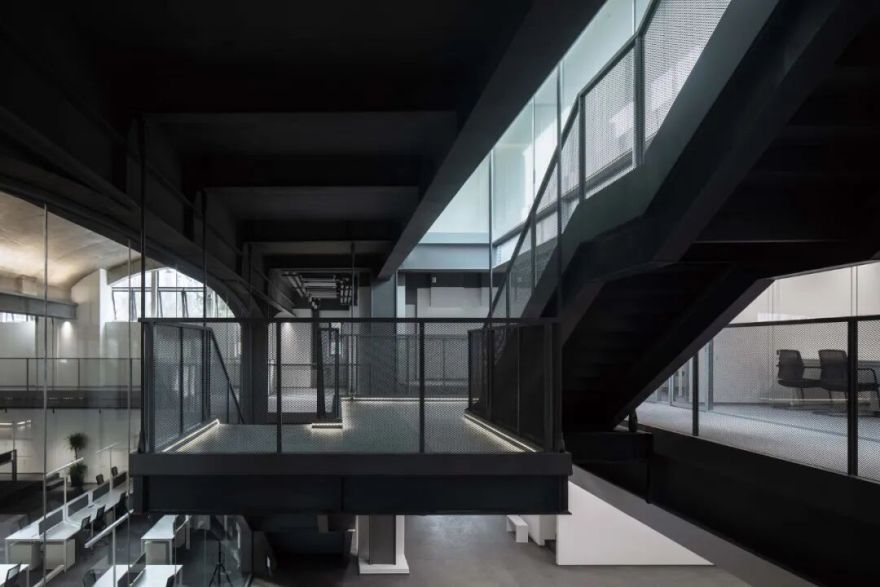

最后,我们来看核心的室内办公区域。这个空间的设计,以结构与建构美学为核心,宽阔的钢结构展现出力学之美,新旧材质的碰撞更营造出独特的张力。
Finally, the core interior office area. This space celebrates structure and tectonic aesthetics: broad steel members reveal mechanical beauty, and the juxtaposition of old and new materials creates a compelling tension.


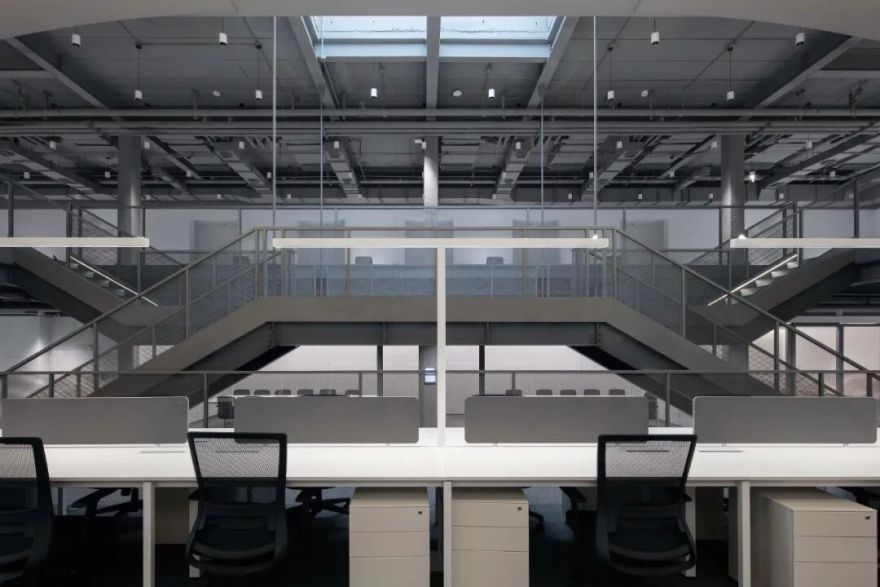
灯光设计则旨在让这种美感得到“极致绽放”。在开敞办公区,我们采用上下分段隐藏的照明方式:通过线性洗墙灯照亮弧形穹顶,利用漫反射为空间提供柔和均匀的基础光;同时,灯具与钢架结构完美结合,做到“见光不见灯”,最大程度保留空间的整体美学。
Lighting is intended to let that beauty fully unfold. In the open office we use a two-level, concealed illumination approach: linear wall washers lift and wash the curved dome, and diffused reflection provides a soft, even ambient base. Fixtures are integrated with the steel frame so that you see light, not the lamps — a “concealed lighting” effect that preserves the space’s holistic aesthetics.


而在办公桌面,我们则选择了落地台灯,提供局部基础光——这种设计既满足了办公照明需求,又最大程度减少了对空间结构的干扰,实现了功能性与美观性的平衡。
At each desk we specified floor lamps to deliver localized, task-appropriate light. This choice satisfies work illumination needs while minimally intruding on the structure, striking a balance between functionality and aesthetics.


回顾整个项目,我们没有将灯光视为单纯的“照明工具”,而是将其作为“空间的语言”——用自然光唤醒建筑的历史记忆,用人工光弥补光照短板、塑造现代氛围。最终,这座近七十年的礼堂,在光的映衬下,既保留了建研人的情感联结,又能从容应对当下的办公、展览、会议等多元需求。
Across the project we refused to treat light as a mere tool for seeing. Instead, light is a language for space: daylight waking the building’s memory, artificial light repairing daylight’s gaps and shaping a contemporary mood. This nearly seventy-year-old auditorium, under a carefully composed lighting scheme, keeps the emotional thread of CABR people intact while confidently meeting today’s needs for office work, exhibitions, and meetings.
项目信息
项目名称:
中国建研院礼堂修缮项目照明设计
设计范围:室内照明设计
项目地点:
北京市朝阳区北三环东路30号
项目功能:办公
项目面积:2246㎡
设计时间:12/2022-01/2024
照明设计:北京光湖普瑞照明设计有限公司
照明总设计师:胡芳
设计团队:李亚辉、马赞堡、赵娴、杨登攀、伍良泉、熊轲、张新磊、陈艺红
业主单位
:
中
国建筑科学研究院
室内设计
:
中国建筑科学研究院
文案:马赞堡
南京喵熊网络科技有限公司 苏ICP备18050492号-4知末 © 2018—2020 . All photos and trademark graphics are copyrighted by their owners.增值电信业务经营许可证(ICP)苏B2-20201444 苏公网安备 32011302321234号
苏公网安备 32011302321234号客服
消息
收藏
下载
最近