

创作上传
VIP
收藏下载
登录 | 注册有礼
查看完整案例

收藏

下载

分享

度
假庄园位于浙江由红酒室与三栋全景客房组成
松境度假庄园坐落于浙江一处全围合小山谷之中,背靠屏风山,周围松林环抱,是一座由一栋红酒室和
仅
三栋全景客房组成的
微型
精品庄园。我们希望发挥这座山谷独特的松林景色,回应场地自然印记,打造独属松境的隐居体验。于是建筑群顺应山谷肌理依势而建,每栋建筑布局朝向因景而异,
与地形连接各不相同,并都
拥有独特的景观视野,人们可以在谷地清风中开启沉浸式
度假之旅。
Pine villa is nestled in a secluded valley in Zhejiang, embraced by surrounding pineforests and backed by the natural screen of Pingfeng Mountain. This boutique estate consists of a wine and cigar bar alongside three panoramic guest suites. Pine Villa is the second luxury retreat we’ve des
igned for Anadu, continuing the philosophy of the first Anadu Resort: "Find yourself in natur
e." Our goal, from planning to architectural design, is to highlight the unique beauty of the valley’s pine forests, harmonizing with the natural landscape to create an ultimate retreat experience exclusive to Pine Valley. The buildings are carefully placed along the contours of the valley, with each structure oriented differently to maximize the unique views. Guests are invited to immerse themselves in the serene valley breeze as they begin their journey of tranquility.

场地鸟瞰图

红酒雪茄吧作为会客中心
旅程起点从庄园入口处已悄然开始酝酿静谧的氛围,竹肌理的混凝土和黑色炭化木“
L
”形大门,低调地融入景观,像是敞
开的
双臂,一边拥入一片山谷绿植,一边怀抱迎接来客。
The journey begins at the estate’s entrance, where a bamboo-textured concrete and charred black wood "L"- shaped gate seamlessly blends into the landscape, like open arms—on one side embracing the valley’s greenery, on the other welcoming guests.
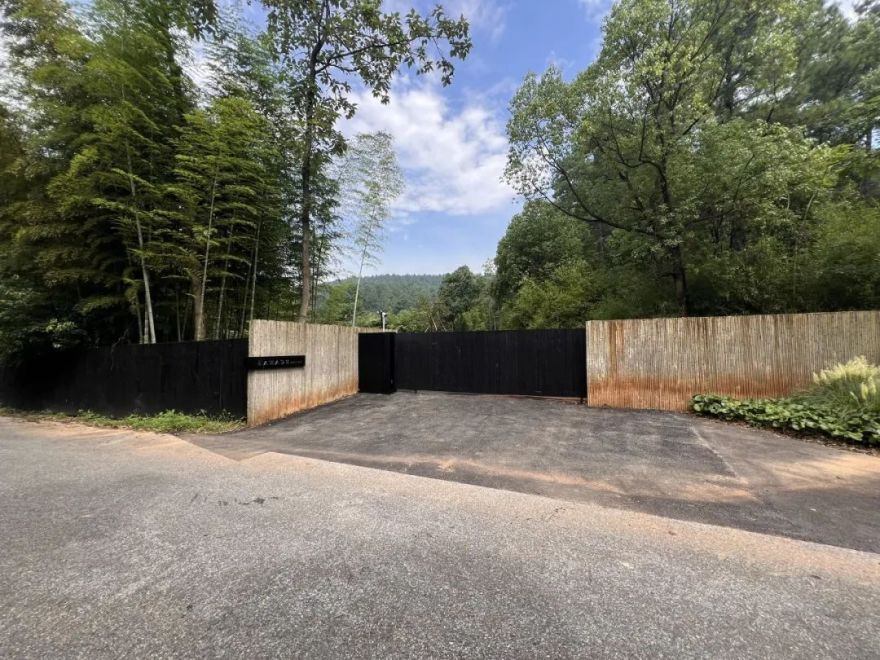
竹肌理混凝土和黑色炭化木
L形大门低调融入景观
行车驶入庄园,沿着松林夹道的山路来到一栋
四面
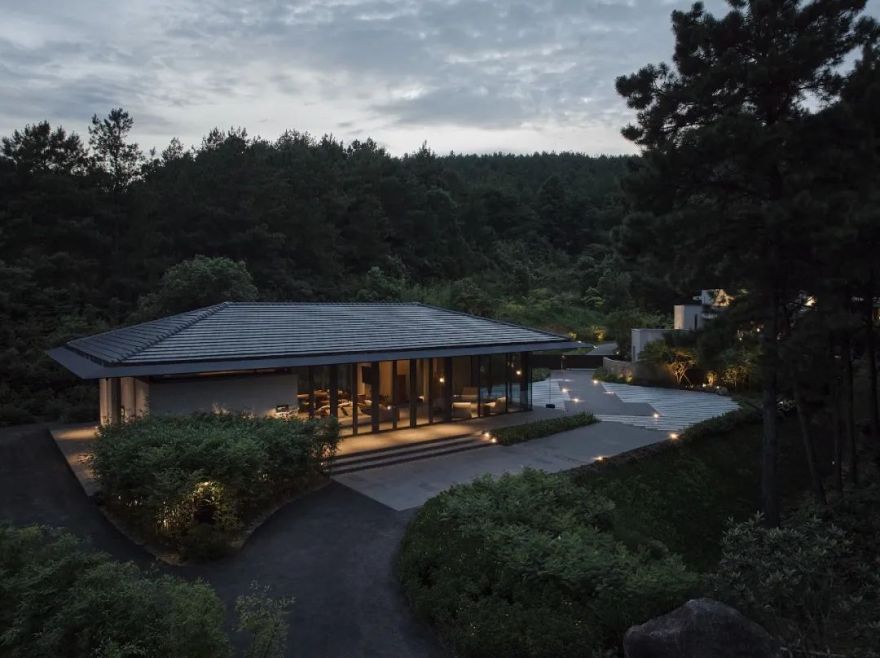
坡屋顶建筑前,泊车落客,这里便是庄园的红酒雪茄吧,也作为会客中心同时承载着下午茶、红酒和雪茄品鉴等功能。
As visitors drive along the pine-lined road, they arrive at a building with a four-sided sloped roof, the wine and cigar bar, which also serves as the reception center, offering guest services, afternoon tea, wine, and cigar tastings.
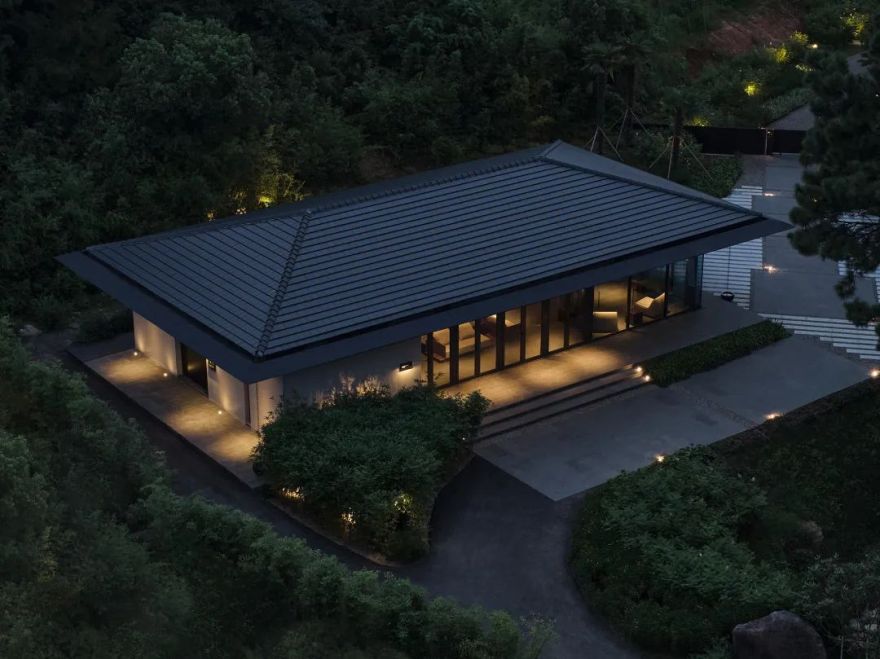
建筑主入口位于西南侧,从体到面空间逐渐展开

红酒室的原址上本来有一栋年久失修的废弃老屋,为了保留场地印记,建筑形态回应了老建筑的坡顶肌理,
但我们将原先的双坡屋顶改为四面坡顶,使从每个方向到达时,屋顶的尺度一致,更亲和、静怡
。
Originally, an abandoned old house stood where the wine house now sits. To preserve the memory and historical mark of the site, the new building echoes the gabled roof of the old structure, but we redesigned it into a four-sloped roof to create a harmonious, tranquil scale from every angle.

红酒室原址一栋年久失修的废弃老屋

红
酒室与建筑前面向松林的小广场对话贯通
建筑
主入口位于西南侧,
从体到面,
空间
逐渐展开,从入口落客步入室内,建筑体块由
一个
整体分
割
成
雪茄室和接待区两个体量
。
位于左侧的雪茄室体块封闭,与屋顶相连;而右侧的接待空间则与屋顶脱开,
轻盈的坡屋顶悬浮于接待区的体块之上,
光线逐渐引入。
The main entrance is on the southwest side, where the massing gradually opens up from exterior to interior. The building is divided into two parts: the cigar lounge on the left, enclosed and connected to the roof, and the reception area on the right, where the roof floats above the mass, allowing natural light to filter in.

主入口位于西南侧,从体到面空间逐渐展开,整体分割成两个体量
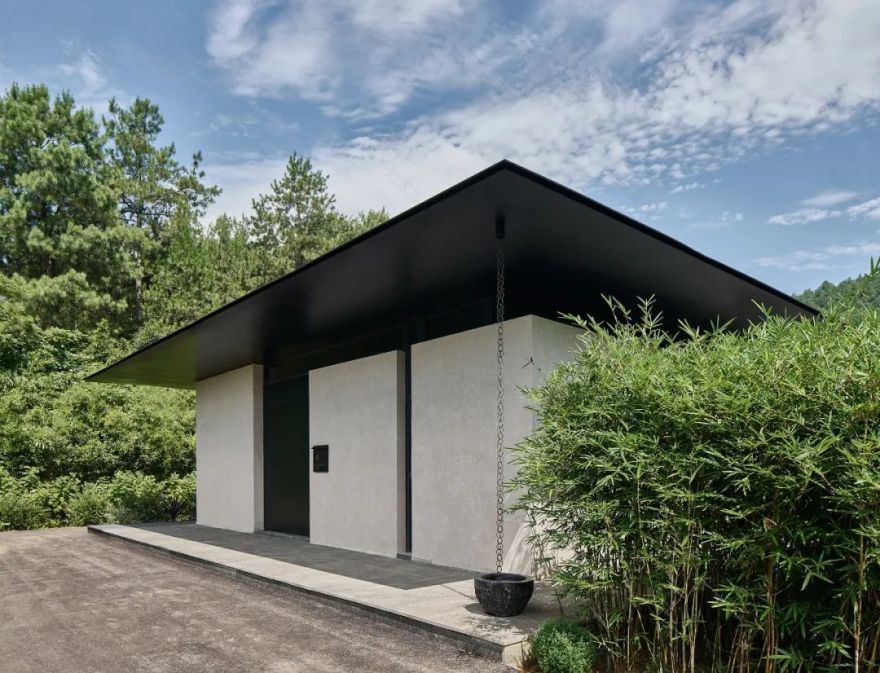
屋面兼顾
滴水功能,视觉效果上减弱尖锐张力

角落处半围合私密会客区
坡屋顶的
金属屋檐边缘
做了双层的
阴影
细节,
既兼顾了滴水的功能,又从一定程度从视觉效果上减弱了尖锐的张力
。
The double-edged shadow line details on the roof’s eaves serve both functional and aesthetic purposes, helping with dripping water and softening the roofline’s s
harp tension.

坡屋顶金属屋檐边缘,双层的阴影细节
穿过入口相对围合的功能性空间之后,体块逐步溶解
,空间全部打开。室内以简约温暖的材料为主,配以定制木家具,浅色木纹吊顶顺应屋顶造型,
坡度更缓和。
After passing through the relatively enclosed functional spaces, the interior opens entirely. The minimalist, warm material palette features custom wooden furniture and light wood ceiling panels that follow the roof’s form.

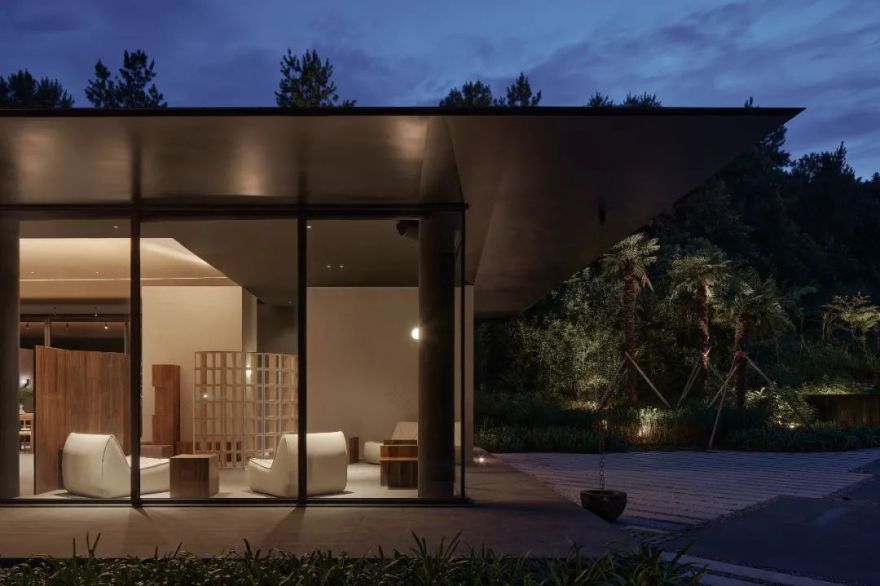
右侧的接待空间与屋顶脱开,坡屋顶悬浮于接待区体块之上
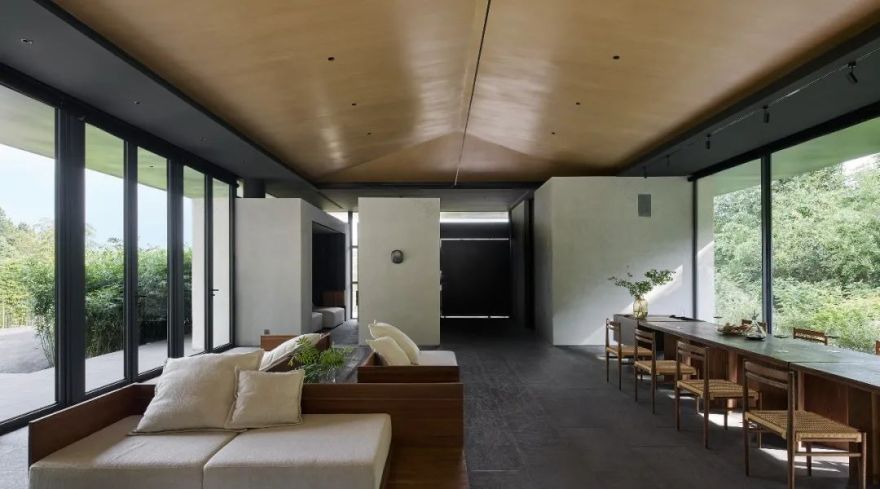
仅在沿窗的顶面用黑色平顶与黑色屋檐相连,从室内延伸至室外,悬挑形成开阔的灰空间,并
与
建筑前面向松林的小广场对话贯通。在气温适宜的季
节,可以敞开玻璃门,让小广场成为建筑空间的一部分。
The slope softens towards the windows, with black flat ceilings extending outdoors, creating a generous shaded space that connects the building with a small plaza facing the pine forest. In pleasant weather, glass doors can be fully opened to integrate the plaza into the indoor space.

气温适宜的季节可敞开玻璃门,将小广场纳为建筑空间的一部分

夜晚的红酒屋
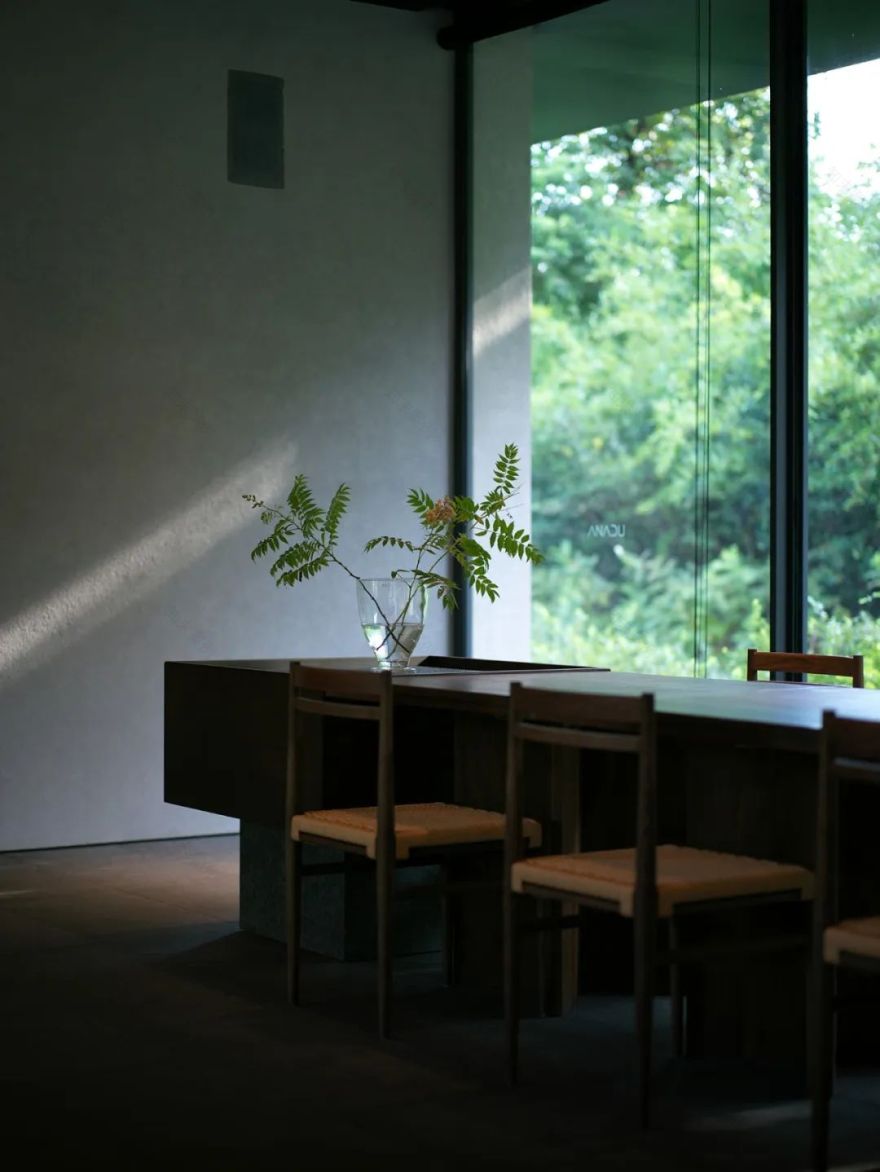
除了功能性的体块,立面全部采用落地玻璃,将景观最大化。位于东北侧的长桌区面向山坡更
幽静,角落处半围
合的会客区则更私密
。
The walls are entirely glass, maximizing the views, while the northeast dining area faces a quieter hillside, and the semi-enclosed lounge provides a more private atmosphere.


东北侧长桌区面向幽静山坡
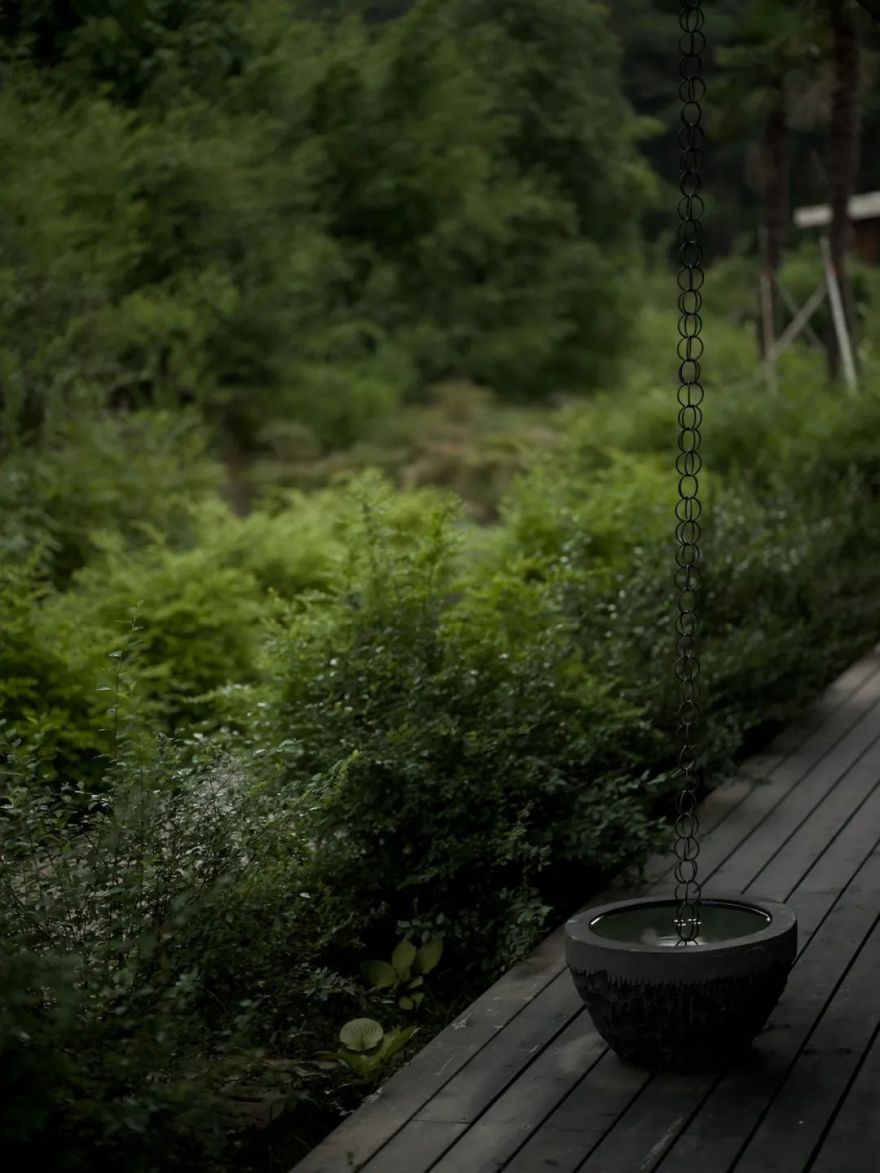

悬挑形成开阔的灰空间,并与建筑前面向松林的小广场对话贯通
穿过红酒室,一面竹编纹理
的弧形
围墙将人们引入客房区。落脚也从硬质的地面变成细软的沙石地,边缘不规则的度假感在细软的沙石行径中不断
变化
,路尽头设计了一方小小的广场作为入户前的驻足停留空间,进一步营造出隐秘感。三栋极简独立的建筑单体悄然坐落于山谷深处,环绕在广场周围,抬头可以望到建筑后面高大的自然松林,但还无法触碰。面对错落墙体的“阻挡”,为后面的空间留足想象。
A curved bamboo-textured wall leads guests from the wine house to the guest area, where the hard ground transitions into soft gravel paths, evoking a vacation atmosphere. At the path’s end, a small plaza provides a moment of pause before entering the guest area, enhancing the sense of seclusion. The three minimal standalone structures sit quietly in the valley, surrounded by the forest. Facing staggered walls that obscure the rear of the space, guests are invited to imagine what lies beyond.

竹编纹理弧形围墙将人们引入客房区

三栋极简独立的建筑单体悄然坐落于山谷深处环绕在广场周围

落脚从硬质地面变成细软沙石地,度假氛围在边缘不规则沙石行径中不断烘托
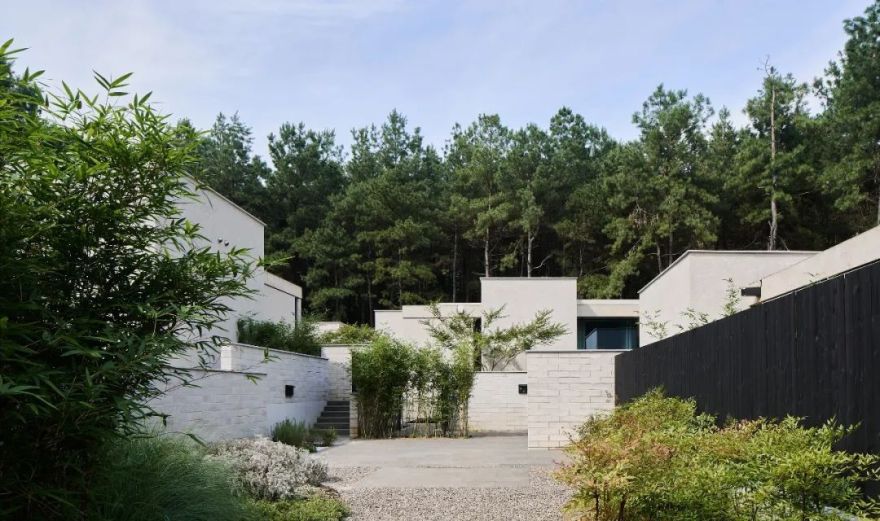
错落墙体
“
阻挡
”
为后面的空间留足想象
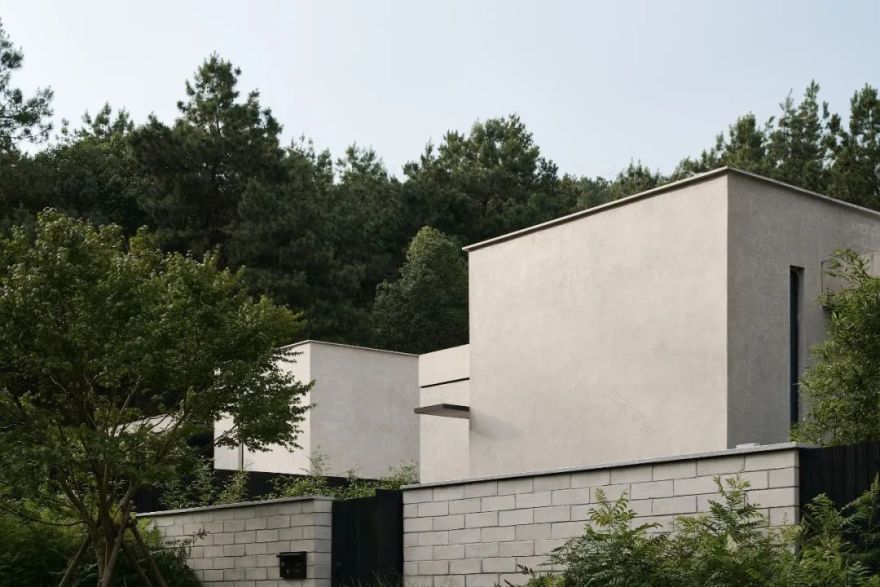
通过院门和曲折的小径,
在体验了一
系列
神秘
的
仪式感之后,当真正穿过入口封闭的“体量”进入客房,视野豁然开朗,上下两块楼板面向山谷全然打开,室内空间因为270度的景观面变得流动而通透,旅程的欣喜达到顶峰。
每间客房都被自然三面环抱,拥有独特的框景。
As guests walk through the courtyard and winding paths, they experience a series of mysterious moments before reaching the guest rooms. Upon entering, the view dramatically opens up—two concrete slabs face the valley with no obstructions. The interior flows seamlessly with 270-degree panoramic views, offering a fully immersive experience. The rooms are embraced by nature on three sides, each framing its own unique view.

通向别墅院门

为了消隐结构,让空间最大化,建筑结构采用素混凝土一体浇筑,同时采用上翻梁并预埋管线,室内无悬梁、
吊顶造型或灯线
,
整块的素混凝土顶板
保证了空间的整体性。
与建筑顶板相呼应的底板距离地面一定距离,与山谷地形自然脱开,仿佛漂浮在自然的地面上,最大程度尊重地形,又与之联系。两块混凝土楼板之间无多余立柱,只有一片山谷松境映入眼帘。
To keep the structure minimal, the buildings are cast from exposed concrete with integrated beams and embedded piping, ensuring no visible ceiling beams, lighting fixtures, or suspended structures. The clean concrete slabs unify the space. The floor slab floats above the valley, respecting and connecting with the terrain, while appearing to hover above it. Between the two concrete slabs, only the serene pine valley is in sight.
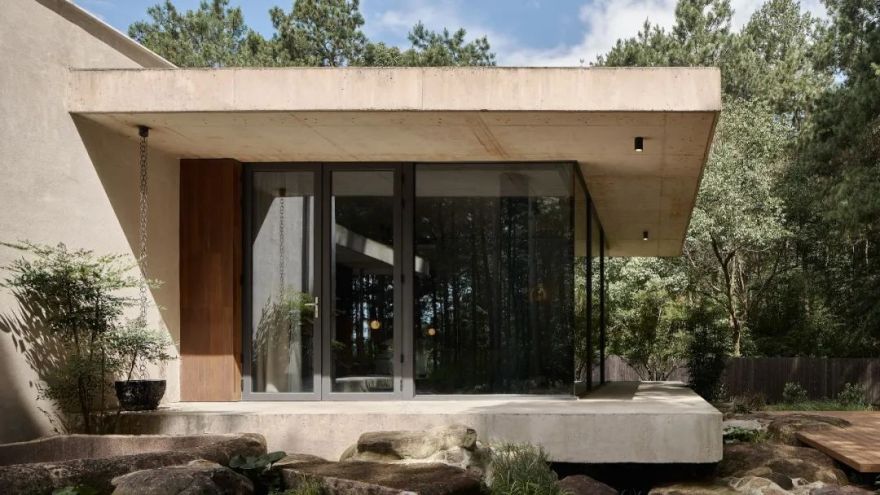
建筑结构采用素混凝土一体浇筑,消隐结构让空间最大化

室内无悬梁吊顶造型或灯线,整块素混凝土顶板保证了空间整体性
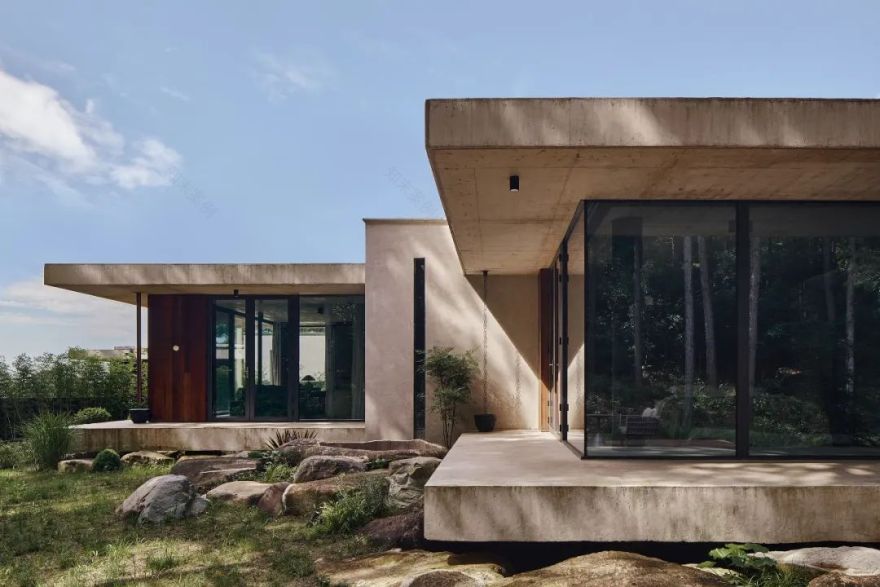


局部用木头包裹,承载着部分结构和管道作用,同时也为硬朗素雅的空间增添温暖柔性的元素。
Selective use of wood cladding serves both functional and aesthetic purposes — it conceals parts of the structure and piping, while also introducing a warm, gentle touch to soften the otherwise clean and understated space.

木头包裹部分起到包裹结构和管道作用
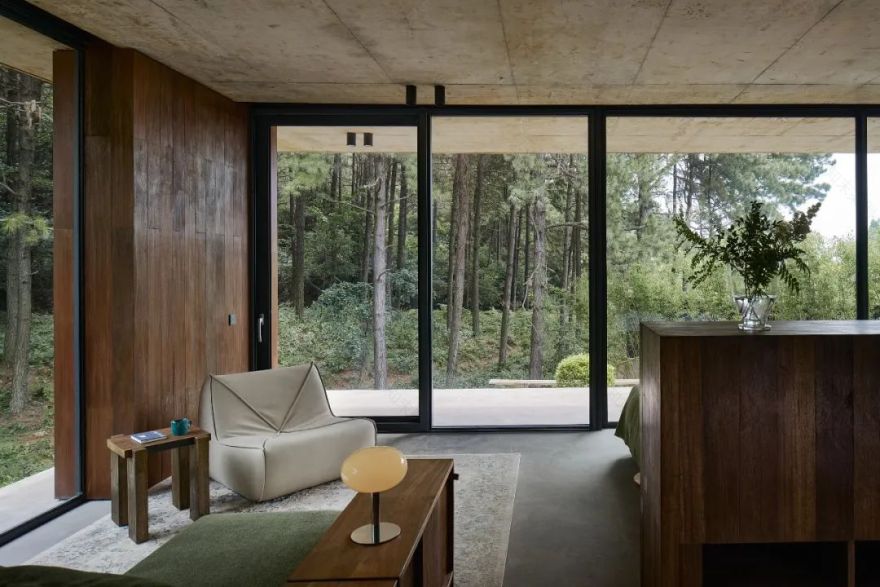
上翻梁并预埋管线
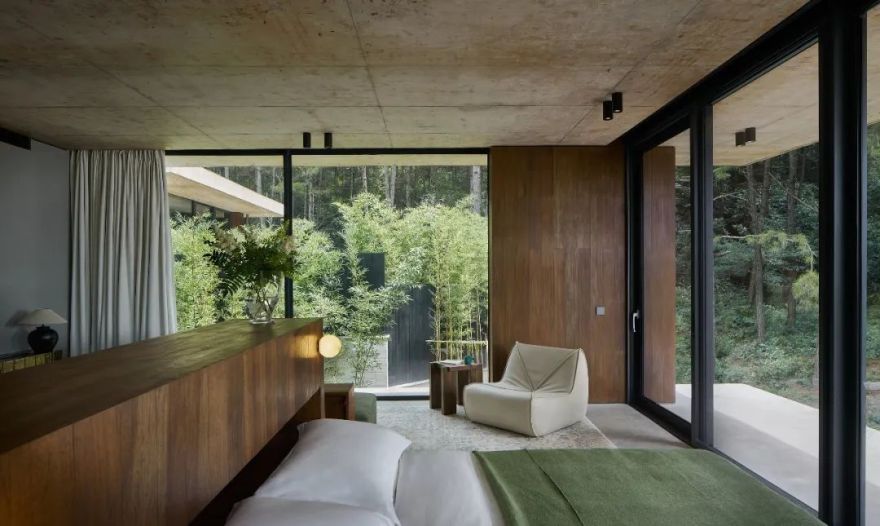
客房入口恰到好处的天窗开洞与立面开窗,让封闭的空间体量有了光的流动和自然的照见。无高差的平铺地面使
得起居动线流畅,同时室内外的空间
互相渗透、延展
,与自然联结。
A carefully placed skylight at the guest room entrance, along with a window on the façade, brings light and a sense of openness to the otherwise enclosed volume. The seamless, level flooring ensures a smooth circulation throughout the living space, while also allowing the interior and exterior to flow into each other — extending and intertwining with nature in a quiet, effortless connection.

客房入口天窗开洞与立面开窗引入阳光
此外浴室的下沉式泡池也是提前规划,整体浇筑与地面连成一体。室内空间虽然划分为客厅、
厨房、卧室和卫浴等多个区域,但彼此之间没有明确界限,布局有机自然,转角的
多功能
家具
“包裹”墙角,存在于不同区域,连接和服务于
不同空间,
也使
空间
之间过渡自然
并相互融合
。
The sunken bathtubs in the bathrooms are also integrated into the concrete floor during the construction process, creating a seamless, sculptural feature. The interior space is divided into distinct functional areas—living room, kitchen, bedroom, and bathroom—yet they flowinto one another without strict boundaries. Multifunctional furniture wraps around corners, connecting different spaces and allowing them to blend seamlessly.

家具选用沉稳胡桃木与窗外景色映衬沉浸于自然居住体验中

转角的多功能家具
“
包裹
”
墙角

下沉式泡池提前整体浇筑与地面连成一体
在卫生间的转角处,再次使用了“包裹”的设计语言,从地面到墙面,手工砖砌筑的置物矮墙,在墙的另一侧变成了化妆台,为空间的跨越转换
,也为朴素的空间增添亮点和趣味。家具选用沉稳的胡桃木,与窗外的景色相互映衬,让人更沉浸于自然居住的体验中。另外,灯光布局配合不同功能区,除了筒灯,从墙上的壁灯、餐桌上的吊灯,到台面的造型灯,
用不同层次的光效
烘托着
温馨静谧的气氛。
At the corner of the bathroom, the design language of “enclosure” is revisited — from floor to wall, a low partition wall built with handmade bricks wraps around the space. On the other side of the wall, it transforms into a vanity table, creating a seamless transition between functions while adding a touch of charm and interest to the otherwise modest setting.
The
furniture is crafted from rich walnut wood, echoing the natural scenery outside the window and enhancing the immersive experience of living close to nature. In addition, the lighting layout is tailored to the needs of different functional zones. Beyond recessed ceiling lights, wall sconces, pendant lights above the dining table, and sculptural lamps on countertops are thoughtfully arranged — their layered lighting effects together cultivate a warm and tranquil atmosphere.


手工砖砌筑的置物矮墙,在墙另一侧变成化妆台

打玻璃门进入
独属的
松林后院,屋檐下的灰空间与自然相融,每间客房都有独一无二的户外
悬浮
景观平台,可进一步深入山谷自然,
依据地形,设置了或连接或脱离的木休闲平台。
Stepping through the glass doors, guests enter their private pine-forest courtyard. The outdoor floating platforms, made of wood, invite them to explore deeper into the valley. Each guest suite is separated by low walls and vegetation, ensuring privacy and exclusive outdoor spaces for each guest.
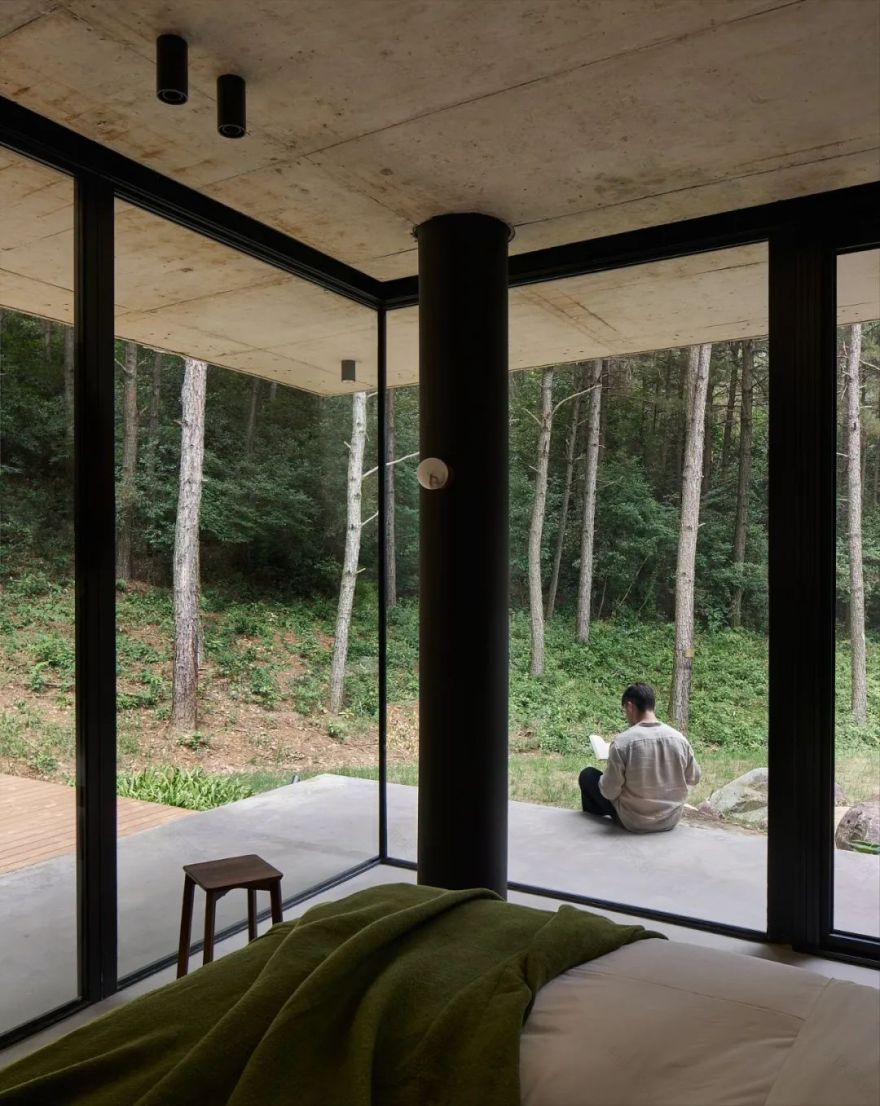
松林后院屋檐下灰空间与自然相融,独一无二户外悬浮景观平台

依据地形木质休闲平台或连接或脱离,邀人深入山谷自然

每户能各自独享私域景观,设计柔化了庄园与山谷景观边界
客房之间以植物和矮墙分隔,保证每户的独立性,能各自独享私域度假空间。
景观设计柔化了庄园与山谷景观的边界,在植物种类的选择上,也挑选了山谷
中的
在地植物,有机地融入所处的自然环境。灯光犹如萤火虫,星星点点般点缀于树丛中,或在地面低矮处照亮路径,烘托低调的隐居氛围。
The landscape design softens the boundaries between the estate and the surrounding valley, with local plants chosen to blend harmoniously with the natural environment. Delicate lights, like fireflies, dot the trees and pathways, enhancing the understated sense of seclusion.

灯光点缀树丛中或在地面低矮处照亮路径,烘托低调隐居氛围


建筑依据地形最大程度保留租地范围中自然景观
整个庄园
由体及面
,
从体块包裹的私密性,到空间的开敞流动,再到与自然的连通互动,通过面体交错打造惊
喜愉悦的空
间体验。一座山谷,三份独属松境的隐居体验,不论是与朋友小聚还是独自度假,松林平静
的力量与建筑方正的体量,相互映衬,建筑亦归隐于山林,静谧而
出世
。
The entire estate unfolds from solid form to open space, from privacy to fluidity, and from architecture to nature. Through the interplay of solid and void, we create a delightful and surprising spatial experience. From the building’s massing to the interior spaces, the design is seamless, with no unnecessary embellishments. By carefully considering the “bones” of the space, we lay a foundation for high-quality interiors. The result is a unique, boundary-less retreat in the pine forest, where both the architecture and the human experience are immersed in the tranquility of nature.

利用景观,建于自然且溶于自然,注重空间叙事层次
八荒
设计重视建筑和室内的整体设计,我们相信当建筑的结构、密度与尺度——“骨相“已经推敲到最佳的时候,室内空间的品质将不再过分依赖于装饰性材质,而显现出其真正经久的品质。
At Studio8, we truly value the connection between architecture and interior design. W
e believe that when the structure, density, and scale of a building are carefully consi
dered—the "bone structure"—the quality of the interior space will naturally reveal its lasting value, without reliance on overly decorative materials.

项目信息
业主:湖州阿那度文化旅游开发有限公司
项⽬地点:浙江湖州长兴县
项⽬类型:度假酒店
项⽬规模:4960平方米
建筑面积:608平方米(红酒屋234平方米,客房374平方米)
设计时间:2021
建成时间:2024
主持建筑师:董雪莲, Matteo Piotti, Andrea Maira
设计团队:八荒设计团队
设计范围:规划,建筑,室内,景观设计,标识系统
主要材料:混凝土、水泥、真石漆、混凝土砖、再生木材、实木、不锈钢、瓷砖、石材、艺术涂料
品牌:草字头、格度、&Tradition、本土创造
摄影:Seth Powers
撰文:孔秋实
PROJECT FACT
Client: ANADU
Location: Changxing, Huzhou, Zhejiang
Program: Resort
Project Area: 4,960 sqm
Building Area: 608 sqm (Wine House 234 sqm,Villas 374 sqm)
Design Stage: 2021
Completion: 2024
Chief Architects: Shirley Dong, Matteo Piotti, Andrea Maira
Design Team: STUDIO8 Architects team
Design Scope: Planning, Architecture, Interior, Landscape, Way-finding
Main Materials: Concrete, cement, render, concrete brick, reclaimed wood, solid wood, steel, tiles, granite stone, stucco
Brands: Caozitou, grado, &Tradition, Bentu
Photography: Seth Power
Copywriter: Zoe Kong
请关注八荒设计STUDIO8 ARCHITECTS
南京喵熊网络科技有限公司 苏ICP备18050492号-4知末 © 2018—2020 . All photos and trademark graphics are copyrighted by their owners.增值电信业务经营许可证(ICP)苏B2-20201444 苏公网安备 32011302321234号
苏公网安备 32011302321234号客服
消息
收藏
下载
最近