

创作上传
VIP
收藏下载
登录 | 注册有礼
查看完整案例

收藏

下载

分享
A TRIBUTE TO THAI CRAFTMANSHIP
向泰国手工艺致敬
MUSEUM OF CONTEMPORARY ART (MOCA)
当代艺术博物馆(MOCA)

Museum of Contemporary Art (MOCA) 曼谷当代艺术博物馆
项目地点:泰国曼谷
景观面积:20,000 平方米
概念立面与景观设计:P Landscape Co., Ltd.
建筑设计:PAA Studio Co., Ltd.
室内设计:PIA Interior Company Limited
灯光设计:Withlight Co., Lt
d.
The Museum of Contemporary Art in Bangkok (MOCA) was commissioned by a well know Thai philanthropist and avid art collector to help deliver his vision for a museum to house and exhibit his extensive private collection encompassing over four hundred pieces of art, each individually selected over a span of 35 years.
曼谷当代艺术博物馆(MOCA)由一位著名泰国慈善家与资深艺术收藏家发起,其愿景是在城市中建立一座能够容纳其私人艺术收藏的当代表达空间。这批藏品逾四百件,横跨三十五年的时间跨度,每一件皆由他亲自甄选、悉心积累。我们所参与设计的,不只是一个展陈容器,更是一段文化记忆的具象延伸。
Blending Architecture with Experience
将建筑与体验相融合
The landscape and architectural design create a structure that not only becomes the home of these valuable pieces of Thai art, history, and heritage, but also enhances the visitor experience of viewing and interacting with them. By combing both interior and landscape, a seamless experience becomes an extension of the exhibit itself and leads the visitor through as the story of the art unfolds.
我们认为,艺术展览的体验不仅止于画作本身,更关乎其所依托的空间氛围。因此,景观与建筑在此被一体化思考,使参观的路径成为艺术故事的延展。透过精细的尺度安排与自然材质的引导,观者在步行中与作品共处,在空间节奏中感知情绪的起伏。艺术在建筑中展开,而建筑也因艺术而被重新定义。

The shape of the amphitheater draws inspiration from the form of folded banana leaves. It serves as a multifunctional space hosting lectures, film screenings and other special events.
灵感取自泰国传统的香蕉叶折叠工艺,圆形剧场兼具功能与意象,既承载讲座、放映与表演活动,也成为文化记忆与当代表达之间的柔性连接。
A Landscape that shields and engages
景观:保护与参与并重
The design of the museum is a response to not only the functional and aesthetic requirements mentioned above and the practical challenges of the site conditions. Chief among these challenges is its location adjacent to a major elevated highway. The design strategy adopted to mitigate the noise, pollution and heat from the highway was to create a robust landscape buffer between the architecture and highway.
本案的景观设计不仅回应了建筑本体的审美与功能要求,也直面场地的挑战——毗邻高架公路所带来的噪音、污染与热负荷。我们采用以景观作为“缓冲界面”的策略,在建筑与城市之间植入一层生态与情绪的过滤层。

The landscape consists of a series of enclosed garden courtyards to draw the view inwards and provide opportunities for exhibiting sculpture and an amphitheater for performances and special events. The form of these spaces, in particular the woven banana leaf form of the amphitheater evokes a sense of traditional Thai craft. The courtyards and bold clean lines of the landscape create a calm and continuous relationship between interior and exterior and help to bridge the museum with its chaotic urban surroundings.
一系列围合式的庭院空间,使视线由外转向内,并巧妙容纳雕塑展陈与表演场所。在设计语言上,圆形剧场延续了香蕉叶的编织形态,唤起人们对泰国传统手工艺的联想。庭院之间的节奏呼应,搭配干净有力的线条处理,在内与外之间建立起平静而连贯的空间关系,使博物馆在都市喧嚣之中自成一隅沉稳的文化场所
。


Tall clipped hedges of
Ficus microcarpa
enclose the space, obscuring views towards the nearby railroad junction. A large
Ficus bengalensis
tree serves as a visual anchor and will provide ample shade as it matures.
修剪整齐的小叶榕树篱构成视觉屏障,柔和过渡至周边交通系统,而一棵孟加拉榕 (
Ficus bengalensis)
则成为整个
户
外空间的视觉锚点,未来将提供稳定的庇荫,也象征着文化的向下扎根与向上生长。
Light and Space
光影之间,文化流动
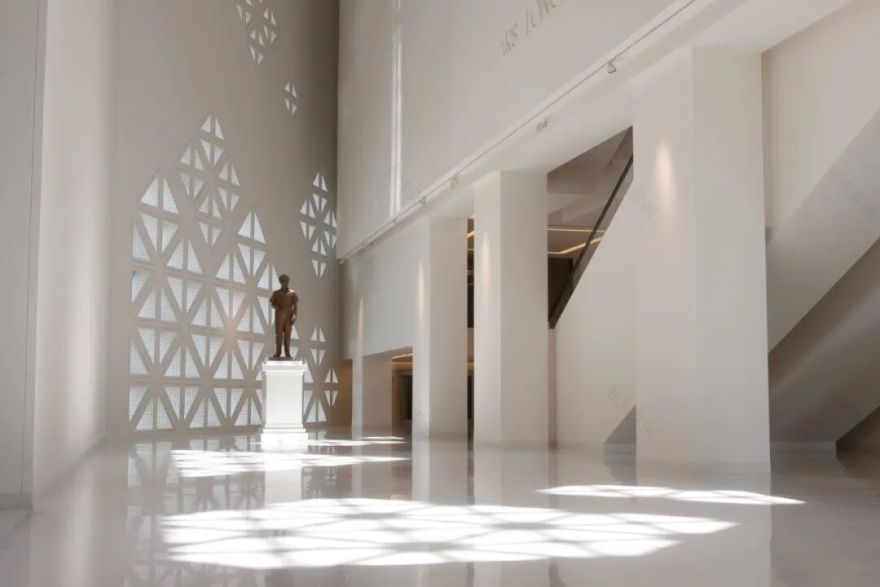
The sequence of interior experiences are characterized by a sense of calm and pureness placing emphasis on the artwork. At the same time ornamentation inspired by traditional Thai motifs is inscribed into the walls, facade and window screens. These decorative screens were introduced to diffuse the bright tropical sun while still allowing natural light to illuminate the central spaces. The intricate shadows created by the screens add a temporal dimension to the space as the shadows move throughout the day. The unique architectural language and ornamentation was inspired by traditional Thai floral art and garland making, with the garlands being abstracted and becoming a sort of “garland chandelier”.
内部空间的体验围绕“纯净”与“平衡”展开,去除多余装饰,将注意力引向艺术本身。然而,我们并未忽略空间的文化肌理——装饰屏风、窗饰与墙面细节皆融合了泰国传统花饰图案,以克制的姿态铺陈于当代表达之中。
这些设计既在功能上柔化热带强光,又在光影投射之间,赋予空间时间的流动性。当阳光穿过屏风,在灰石地面与木质门扇上留下移动的光影轨迹,泰式花艺的语汇便悄然浮现,成为空间与文化之间低语的桥梁。


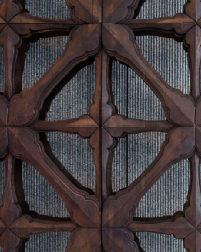
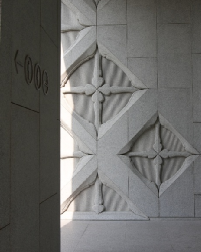
The shape of a jasmine flower can be transformed into a monolithic expression constructed of concrete and stone, through the artistic harmony of craft.
一朵茉莉花的形状可以通过艺术性的和谐工艺转化为混凝土和石材的整体表现形式。

From Floral Garland to Spatial Expression
从花环到空间语言的转译
The flower garland motif is evident in different forms throughout the gallery spaces and is carved into the wooden doors and grey granite walls adding a subtle touch of Thai culture to the contemporary design.
一朵茉莉花的轮廓,在这里被转译为由混凝土与石材构成的建筑语言,展现出工艺与构造之间的微妙和谐。在展厅之中,花环的形式以抽象图纹呈现于木门与石墙之上,既非符号复制,也非传统复刻,而是通过抽象与重构,延伸出一种内敛、当代、充满记忆温度的空间感受。



A Return, Through the Eyes of a Visitor
从使用者的角度,再次回望
As returning visitors, we have walked through this space many times—and each encounter has felt distinct. MOCA does not seek to impress; it unfolds quietly, allowing each person to enter into dialogue—with the space, and with themselves.
我们以使用者的身份多次回訪这片空间,而每一次的感受都不尽相同。它不试图取悦,而是静静展开,容许每一位观者与其对话、与自己对话。
It is a place where architecture and art speak to each other with calm and restraint—quietly, yet meaningfully. Here, landscape does more than define form—it carries emotion. What remains is not only a sense of place, but a resonance that gently stays with you.
MOCA 是一个让空间与艺术相互成就的场域,在沉稳与节制之中,悄然触动人心。
景观在此不仅塑形,更抚情。它所带来的,不只是场所感,更是一种可以被深刻记住的精神共鸣。
© P Landscape
如需媒体或商业使用,请提前取得授权。
Sharing and reposting are welcomed with proper credit to P Landscape.
For m
edia or commercial use, please seek prior authorization.


plandscape


(+86) 158 6718 6355
南京喵熊网络科技有限公司 苏ICP备18050492号-4知末 © 2018—2020 . All photos and trademark graphics are copyrighted by their owners.增值电信业务经营许可证(ICP)苏B2-20201444 苏公网安备 32011302321234号
苏公网安备 32011302321234号客服
消息
收藏
下载
最近