

创作上传
VIP
收藏下载
登录 | 注册有礼
查看完整案例

收藏

下载

分享
家是什么?对我而言,家不是一个可以简单定义的词语,而是一系列情感与记忆交织的集合体——关于爱,关于归属,也关于我们在这个世界中的位置。它不只是一处遮风挡雨的居所,更是生活的容器,装载着我们的习惯、热爱、灵感和温度。作为一个长期从事空间设计的人,我常常被问及“设计理念”。但在这个家的构建过程中,我毅然摒弃了“做设计”的冲动,转而更专注于一家人真实的生活。我不希望家被某种风格或趋势所裹挟,而是希望它成为我们互动、独处、放松和成长的背景。这座位于海边的别墅,作为我们放松身心的第二居所,从最初便承载了这样的使命。
What is a home? To me, it is not a word easily defined, but rather a tapestry woven from emotion and memory—of love, of belonging, of our place in the world. It is more than just shelter; it is a vessel for life, holding our habits, passions, inspirations, and warmth. As someone long involved in spatial design, I’m often asked about my “design philosophy.” Yet, in creating this home, I consciously set aside the impulse to “design” and focused instead on the authentic life of my family. I didn’t want the house to be dictated by a particular style or trend, but rather for it to become a backdrop for our interactions, solitude, relaxation, and growth. This seaside villa, our second home for unwinding, was conceived with this purpose from the start.
▼项目鸟瞰,aerial view of the project©瀚墨视觉-叶淼

▼住宅外观,exterior of the house©瀚墨视觉-叶淼


▼外观细部,facade detail©瀚墨视觉-叶淼

▼住宅入口,entrance©瀚墨视觉-叶淼


很多人把家当作展示审美或财富的舞台,而在我看来,家首先应当回归本质——服务于人。我的专业背景让我深知,一个好的空间不是被“设计”出来的,而是从人的行为与情感中自然生长出来的。这个家的核心构思,正是建立在我们一家三口的生活习惯、兴趣爱好以及对自然的向往之上。我希望它是通透的、松弛的,能容纳欢笑,也能安放寂静。我和我的夫人都喜欢安静和放空,女儿则从事创意设计,需要一个能激发灵感的环境。与此同时,我们都渴望与自然建立更深度的连接。因此,“家是生活的容器”成为我一以贯之的设计思维。空间不应该是目的,而是媒介;不是为了被观看,而是为了被体验。这座别墅坐落于一片宁静的海湾,我们将它视为“第二居所”,主要用于度假和放松。在有限面积中,如何平衡功能与感受,成为布局的关键。
Many see a home as a stage to display taste or wealth. In my view, a home must first return to its essence—serving the people within it. My professional background tells me that a good space isn’t “designed” into existence; it grows organically from human behavior and emotion. The core concept of this home is built upon the habits, hobbies, and yearning for nature shared by our family of three. I wanted it to be airy, relaxed, capable of containing laughter and embracing silence. My wife and I enjoy quietude and moments of repose, while our daughter, who works in creative design, needs an environment that sparks inspiration. Above all, we all crave a deeper connection with nature. Thus, “home as a vessel for life” became the guiding principle. Space should not be an end in itself, but a medium; not for viewing, but for experiencing. Nestled in a tranquil bay, we see this villa as a “second home,” primarily for vacations and relaxation. Within its limited area, balancing function and feeling was key to the layout.
▼与自然建立更深度的连接,crave a deeper connection with nature©瀚墨视觉-叶淼
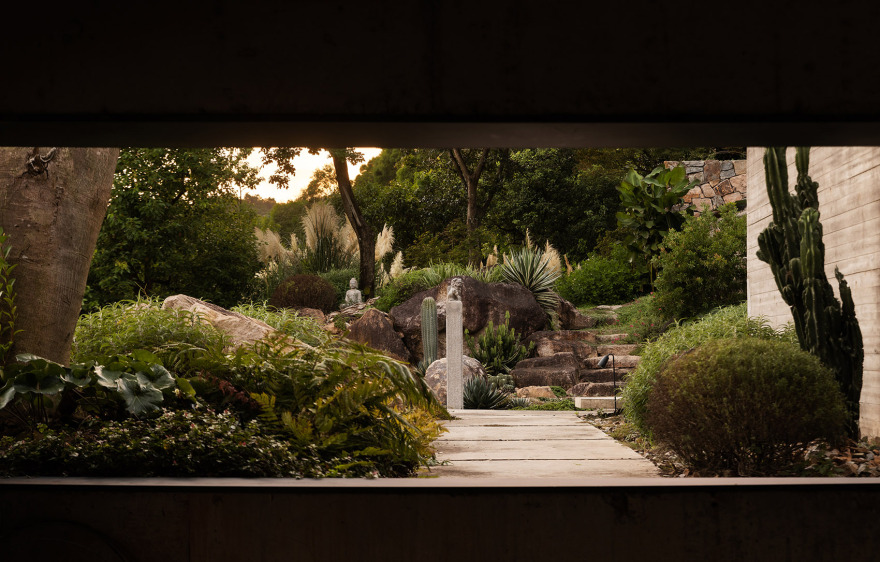

▼与自然建立更深度的连接,crave a deeper connection with nature©瀚墨视觉-叶淼


我选择了彻底开放的公共区域——厨房、餐厅与客厅之间没有实墙分隔,地面和天花板材质从自然中过渡而来,视觉上连成一片,打开分隔室内外的大玻璃门窗,便完全实现了与室外空间的连贯性,这种“无界”的处理,不仅让阳光与空气自由流动,也让我们在家的活动变得更加自在和松弛。
I opted for a completely open-plan common area—the kitchen, dining room, and living room flow into one another without solid walls. Floor and ceiling materials transition naturally, creating a seamless visual field. Throwing open the large glass doors and windows that separate inside from outside merges the interior and exterior spaces completely. This “boundary-less” approach not only allows sunlight and air to circulate freely but also makes our activities within the home more uninhibited and relaxed.
▼实现与室外空间的连贯性,merges the interior and exterior spaces completely ©瀚墨视觉-叶淼

▼厨房、餐厅与客厅之间没有实墙分隔,the kitchen, dining room, and living room flow into one another without solid walls©瀚墨视觉-叶淼


▼厨房、餐厅与客厅之间没有实墙分隔,the kitchen, dining room, and living room flow into one another without solid walls©瀚墨视觉-叶淼


我在设计这个家的厨房之时提出了“社交厨房”的概念。在过去,厨房往往被隔离在角落,只是一个完成烹饪任务的功能区。但我始终认为,家的温度常常源自那些一起做饭、聊天、分享美食的时刻。因此,我将厨房打开,让它成为家的核心场域。一家人可以一同制作、享用和打理——这里不再是一个人的战场,而是一家人情感交织的地方。
When designing the kitchen, I proposed the concept of a “social kitchen.” Traditionally, kitchens were often isolated in a corner, merely a functional zone for cooking. But I’ve always believed that a home’s warmth often stems from those moments spent cooking together, chatting, and sharing meals. Therefore, I opened up the kitchen, making it the heart of the home—a place where the family can prepare, enjoy, and clean up together. It’s no longer one person’s battlefield, but a place where family bonds are intertwined.
▼“社交厨房”,a “social kitchen.”©瀚墨视觉-叶淼


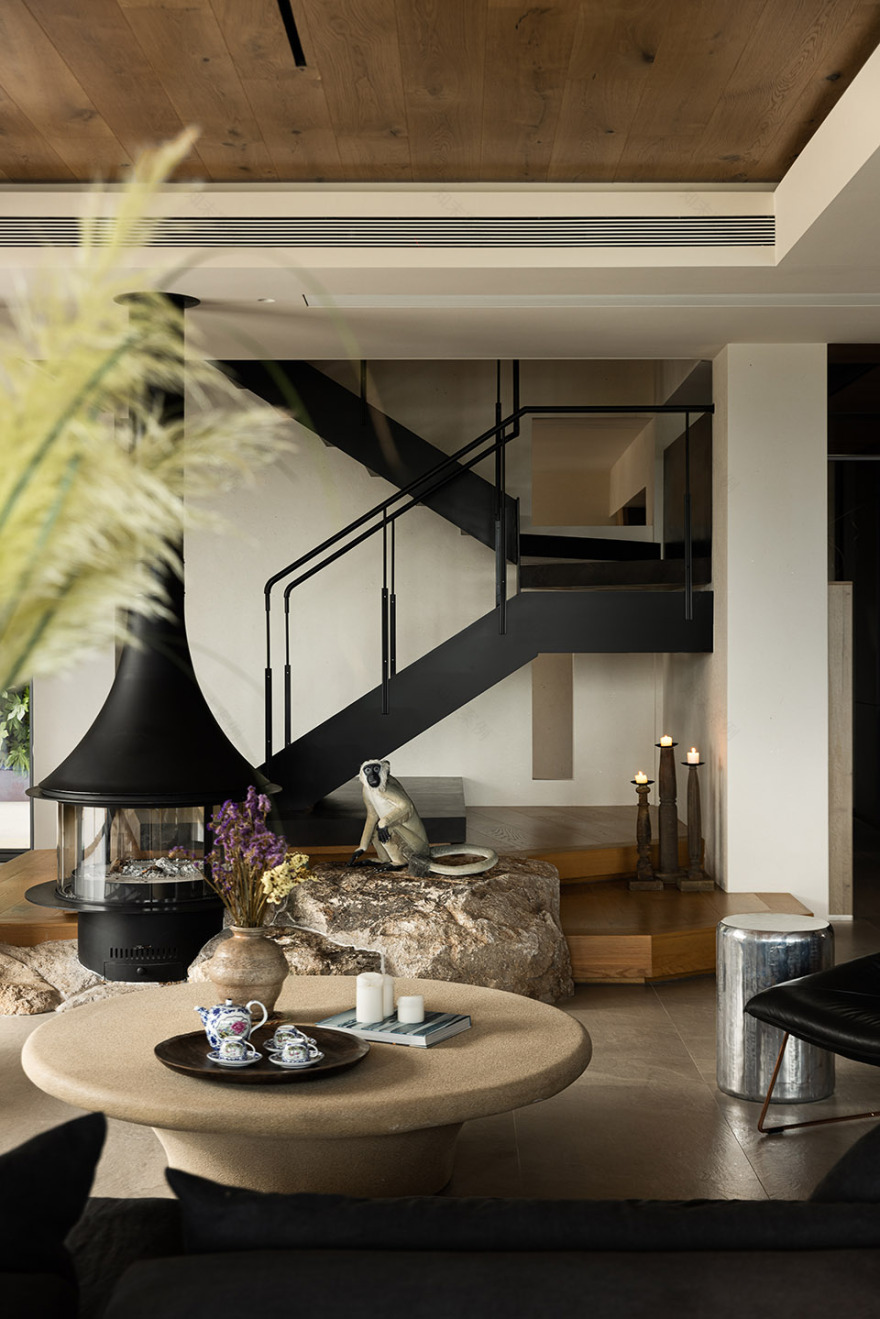
材质上,我大量运用大地米色系的岩石地砖、原木饰面,部分区域保留了水泥柱体的肌理。没有选择光亮华丽的材质,而是以哑光、粗朴、有自然质感的表面为主。它们不仅与户外的海、石、树木呼应,更在视觉与触觉上弱化了室内外的界限。当我们光脚踩在略有凹凸的石材地面上,或手指抚过一块老木头,那种来自自然的真实感,是任何抛光大理石无法替代的。
For materials, I extensively used rock tiles in earthy beige tones, raw wood finishes, and left the textured concrete of structural columns exposed in some areas. Instead of glossy, luxurious materials, I chose matte, rustic surfaces with a natural feel. These not only echo the sea, stones, and trees outside but also visually and tactilely blur the line between indoors and out. The sensation of bare feet on slightly uneven stone floors, or fingers tracing the grain of aged wood—this authenticity from nature is something no polished marble can replace.
▼以哑光、粗朴、有自然质感的表面为主,matte, rustic surfaces with a natural feel©瀚墨视觉-叶淼


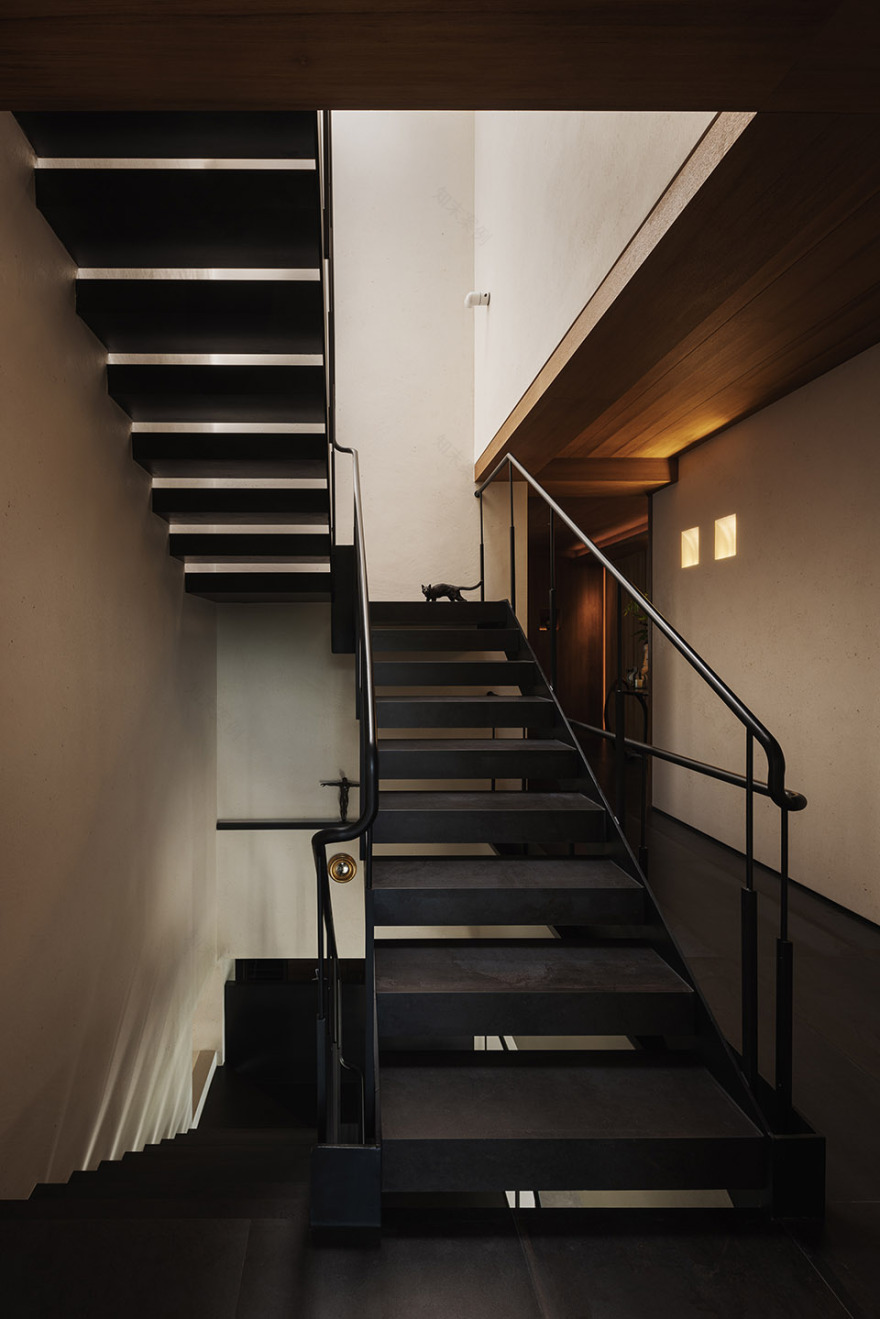
考虑到度假所需的私密性与松弛感,我们只设置了三个卧室,偶尔接待一些亲密的家人和朋友。每一个房间都宽敞且独立,既不拥挤,也不显得冷清,完全为我们自己的休息与沉淀所服务。
Considering the privacy and relaxation needed for a holiday home, we included only three bedrooms, occasionally hosting close family and friends. Each room is spacious and self-contained, neither cramped nor coldly empty, serving solely our needs for rest and contemplation.
▼卧室空间,bedroom©瀚墨视觉-叶淼


▼卧室局部,bedroom©瀚墨视觉-叶淼


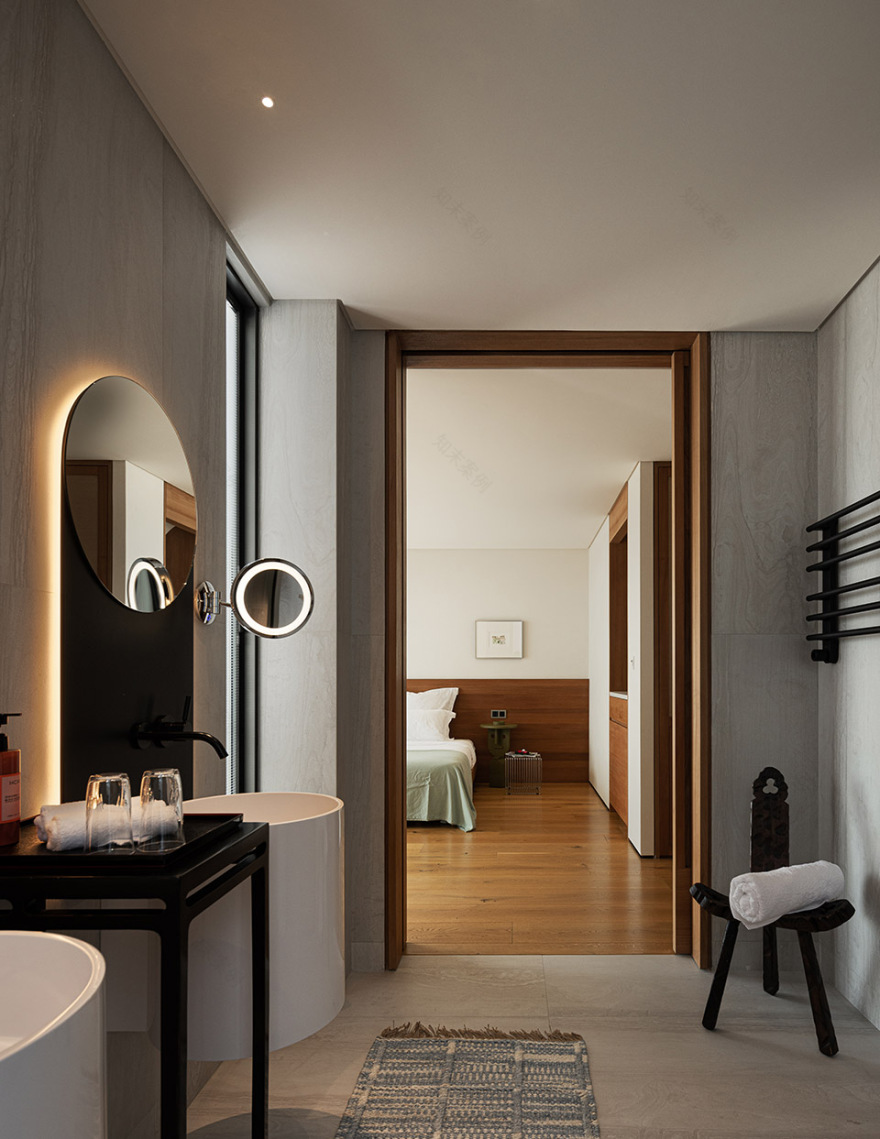
▼浴室,bathroom©瀚墨视觉-叶淼

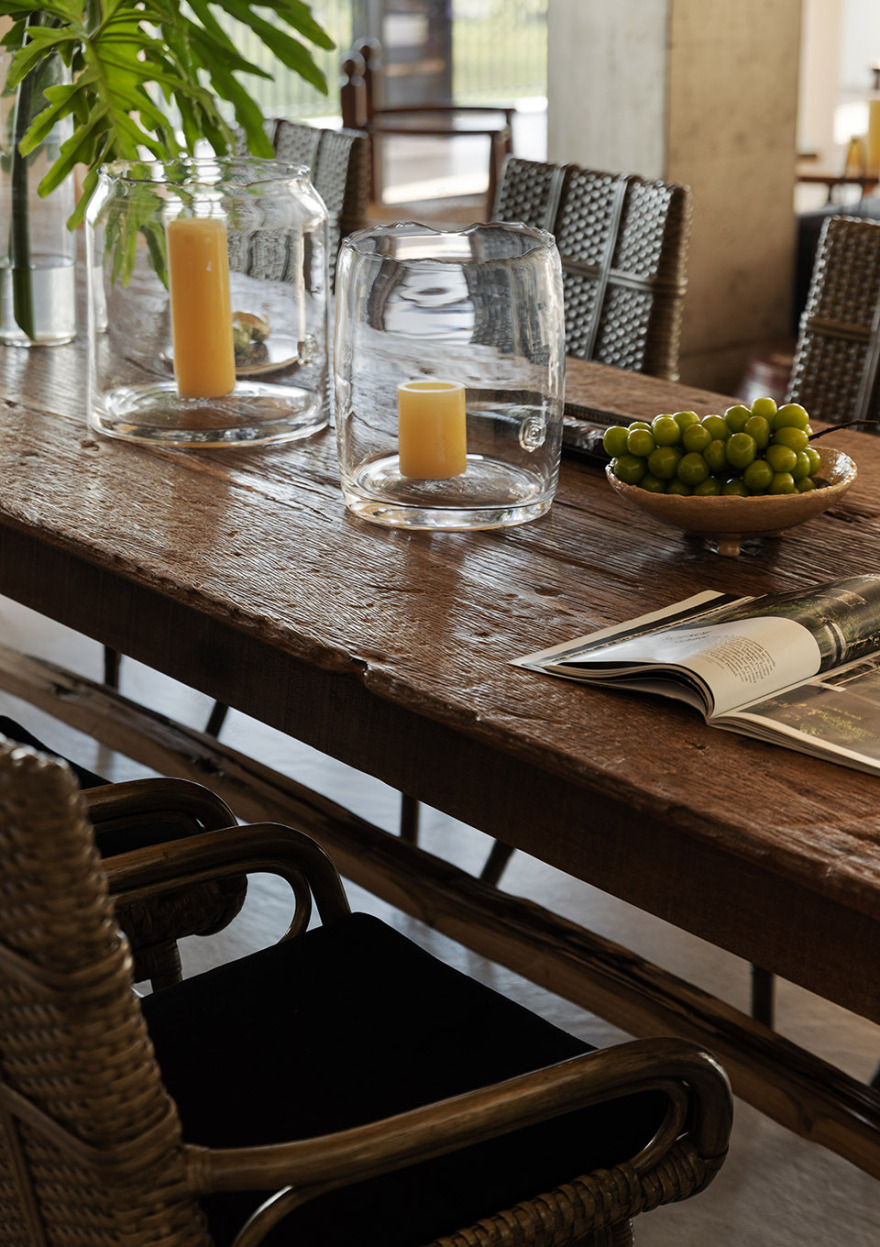
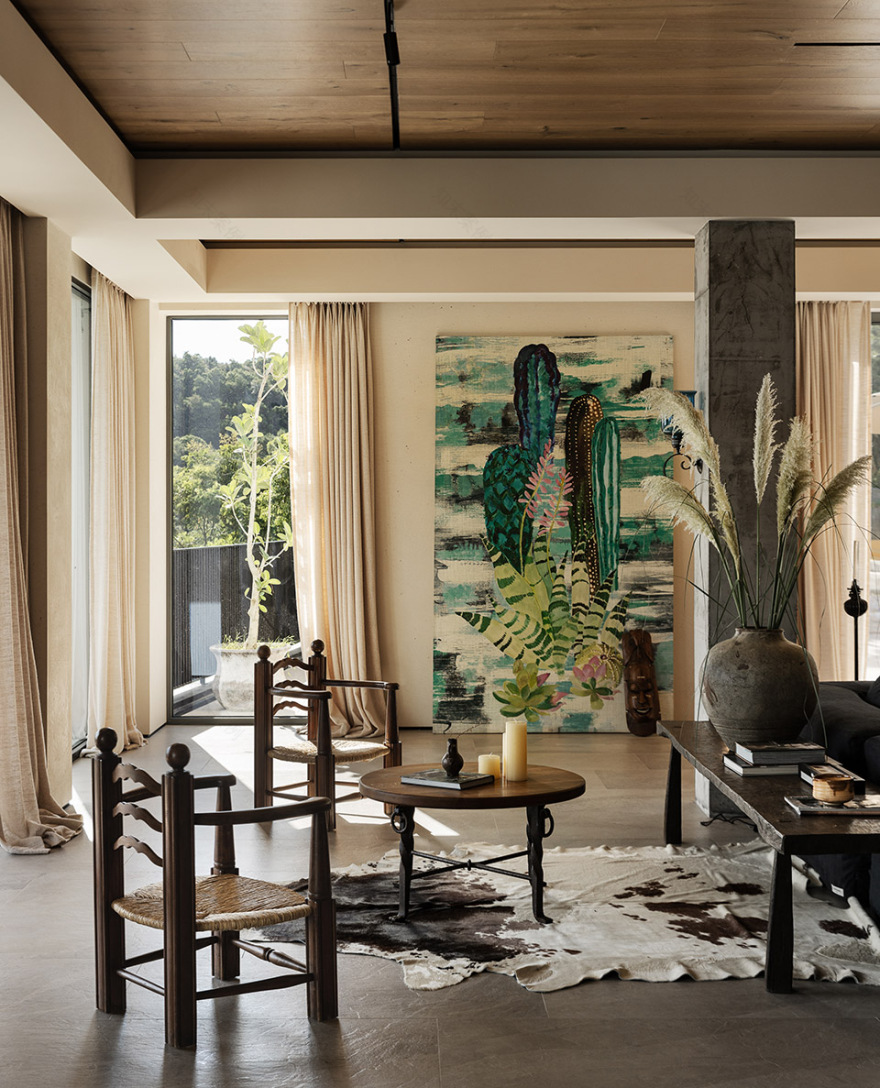
如果你来访,会注意到家中散布着许多带有时间痕迹的物件——一把用了十几年的藤椅、一只木色温润的餐桌、一些翻旧的艺术书籍和二十多年保留至今的音响设备。它们不是刻意挑选的“复古软装”,而是真正伴随着我们生活多年的旧物。我喜欢老物件的另一个原因,是它们自带“时间包浆”。它们不新,却不旧;不完美,却耐久。它们像是默默无言的家庭成员,陪伴我们度过了许多寻常的日子。我一直相信,设计师应当是一个“泛学者”,什么都要略懂一点,才能理解不同人的热爱与习性。而这些收藏,正是我对艺术、文学、音乐和手工艺长期兴趣的延伸。它们让家不只是看起来有风格,更是感觉起来有故事。
A visitor would notice objects bearing the marks of time scattered throughout the house—a rattan chair used for over a decade, a dining table with a warm wooden hue, well-thumbed art books, and audio equipment kept in use for more than twenty years. These are not deliberately chosen “vintage decor” items, but genuine artifacts that have accompanied our lives for years. Another reason I love old objects is their inherent “patina of time.” They are not new, yet not quite old; not perfect, yet enduring. They are like silent family members, having accompanied us through countless ordinary days. I have always believed that a designer should be a “general scholar,” knowing a little about everything to understand the passions and habits of different people. These objects, then, form a collection that is an extension of my long-standing interests in art, literature, music, and craftsmanship. They make the home not just look styled, but feel storied.
▼带有时间痕迹的物件,objects bearing the marks of time ©瀚墨视觉-叶淼

▼带有时间痕迹的物件,objects bearing the marks of time ©瀚墨视觉-叶淼

女儿的工作室里堆满了她的手工材料与半成品,夫人的榻榻米空间安静而明亮,适合冥想与阅读,而我的音乐房则存放着多年来收集的唱片和设备。这些空间不是展示用的,而是真正被使用的、充满生命力的角落。
Our daughter’s studio is filled with her craft materials and works-in-progress; my wife’s tatami space is quiet and bright, perfect for meditation and reading; and my music room houses the records and equipment I’ve collected over the years. These spaces are not for show; they are truly used, vibrant corners.
▼女儿的工作室,daughter’s studio©瀚墨视觉-叶淼

▼女儿的工作室,daughter’s studio©瀚墨视觉-叶淼

▼夫人的榻榻米空间,wife’s tatami space©瀚墨视觉-叶淼

▼夫人的榻榻米空间,wife’s tatami space©瀚墨视觉-叶淼

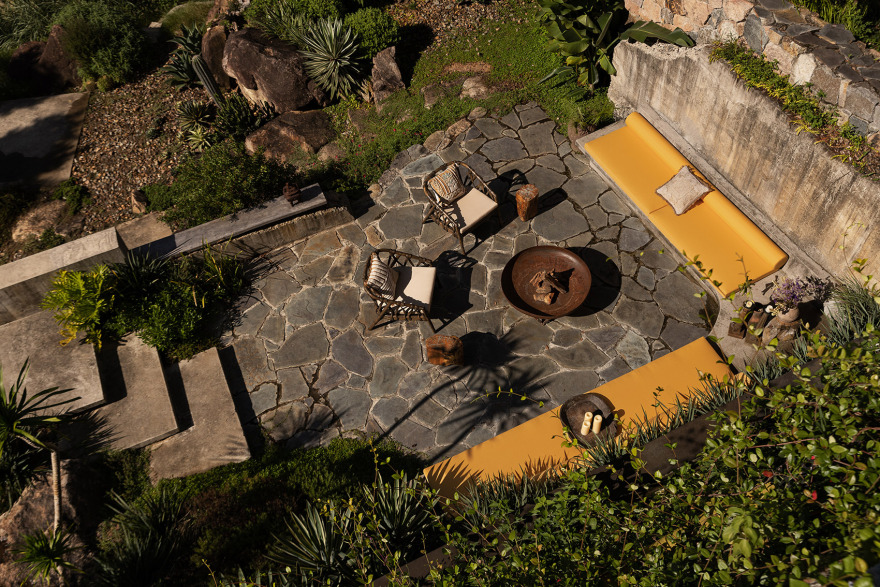
这个家最大的特质,是她与自然的关系。我们没有刻意去打造一个“观赏花园”,而是让建筑轻轻穿插进自然之中,像是一次真诚的握手。巨石堆砌在鱼池边,野草在石缝间自由生长,白鹭偶尔掠过湖面,青蛙在鱼池边安家——这些看似不被设计过的花园景观,更像是与自然的一次真切交谈。我常常在清晨或黄昏时站在花园中,与城市不同,这里很安静,什么也不做,只是发呆。这些时刻让我重新理解什么是“松弛”。不是故作的,而是一种内在的从容,是身体与精神都能安放于此的状态。
The most defining characteristic of this home is its relationship with nature. We did not intentionally craft an “ornamental garden,” but rather let the architecture gently intersect with nature, like a sincere handshake. Large rocks are piled by the fishpond, wild grasses grow freely between stone cracks, egrets occasionally skim the lake surface, and frogs have made their home by the pond—these seemingly undesigned garden scenes feel more like a genuine conversation with nature. I often stand in the garden at dawn or dusk; unlike the city, it is profoundly quiet. Doing nothing but letting my mind wander, these moments allow me to **truly comprehend** what “relaxation” truly means—not an affected pose, but an inner poise, a state where both body and spirit can settle peacefully.
▼让建筑轻轻穿插进自然之中,let the architecture gently intersect with nature©瀚墨视觉-叶淼

家里的每个人都能找到属于自己的节奏。夫人喜欢在她的空间打坐,女儿可以沉浸在她的创作中,而我则可能在音乐房中听一晚的爵士乐和老歌。到了饭点,我们又自然汇聚在厨房周边,一起做饭、吃饭、闲聊。没有必须遵守的空间规则,一切都是流动而自由的。从实践的角度,我越来越倾向于做减法,尽可能减少硬装的复杂程度,避免过度装饰带来的压迫感,也降低施工中的风险和难度。真正的舒适,往往来自于留白,而非堆砌。未来的家,一定会更个性化、智能化、模块化。但我始终提醒自己,技术只是工具,而不是目的。家的本质,是让人感到被接纳、被保护、被理解。无论未来科技如何发展,“人”的感受永远应该居于中心。
Everyone in the family finds their own rhythm here. My wife enjoys meditating in her space, our daughter immerses herself in creation, and I might spend an evening listening to jazz and old tunes in the music room. At mealtimes, we naturally converge around the kitchen to cook, eat, and chat together. There are no rigid spatial rules; everything is fluid and free. From a practical standpoint, I increasingly favor a minimalist approach, minimizing the complexity of hard construction to avoid the oppressiveness of over-decoration and to reduce risks and difficulties during building. True comfort often comes from leaving space, not from filling it. Homes of the future will undoubtedly become more personalized, smart, and modular. But I constantly remind myself that technology is merely a tool, not the goal. The essence of a home is to make one feel accepted, protected, and understood. No matter how technology evolves, human feeling must always remain at the center.
▼让居住者找到属于自己的节奏,Everyone in the family finds their own rhythm here©瀚墨视觉-叶淼
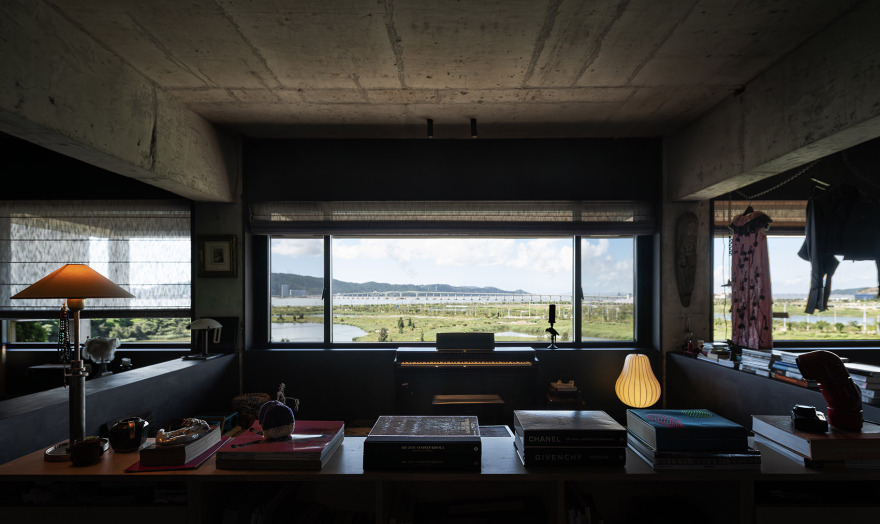
▼让居住者找到属于自己的节奏,Everyone in the family finds their own rhythm here©瀚墨视觉-叶淼


家不是一次就能完成的作品,而是随着生活阶段不断调整、迭代的生命体。孩子会长大,兴趣会迁移,季节会更替——家也应当如此,留有呼吸和变化的余地。这个家,是我们目前生活的投射,是松弛与自然的具象化,是情感与记忆的容器。但它依然在生长。也许明年我们会改造花园,也许后年女儿的工作室会变成茶室……谁知道呢?正是这种未完成的状态,让家始终充满可能性。家没有终极,只有过程。说到底,家的真正设计师,从来不是哪一个人,而是生活本身。而我们,只是怀着敬畏之心,为生活准备了一个诚恳的容器。
A home is not a project completed once and for all; it is a living entity that constantly adjusts and iterates with life’s stages. Children grow up, interests shift, seasons change—a home should likewise have room to breathe and evolve. This home is a reflection of our current life, a tangible expression of relaxation and nature, a container for emotion and memory. But it is still growing. Perhaps next year we will remodel the garden; maybe the year after, our daughter’s studio will become a tea room… who knows? It is this state of “unfinishedness” that keeps the home full of possibility. There is no final version of a home, only the process. In the end, the true designer of a home is never an individual, but life itself. And we, with a sense of reverence, have merely prepared a sincere vessel for it.
▼花园庭院,courtyard©瀚墨视觉-叶淼


▼傍晚时分,at dusk©瀚墨视觉-叶淼

项目名称:洞头海畔之家
项目类型:住宅空间
设计方:上海吾上室内设计有限公司
项目设计:2021.05
完成年份:2024.07
全案设计:上海吾上室内设计有限公司
项目地址:浙江温州
建筑面积:350㎡
空间摄影:瀚墨视觉-叶淼
Project name: Seaside Retreat in Dongtou
Project type: Residential Space
Design: Shanghai Wushang Interior Design Co., LTD
Design year: 2021.05
Completion Year: 2024.07
Leader designer & Team: Shanghai Wushang Interior Design Co., LTD
Project location: Wenzhou,Zhejiang Province
Gross built area: 350㎡
Photo credit: Hanmo Visual – Ye Miao





南京喵熊网络科技有限公司 苏ICP备18050492号-4知末 © 2018—2020 . All photos and trademark graphics are copyrighted by their owners.增值电信业务经营许可证(ICP)苏B2-20201444 苏公网安备 32011302321234号
苏公网安备 32011302321234号客服
消息
收藏
下载
最近