

创作上传
VIP
收藏下载
登录 | 注册有礼
查看完整案例

收藏

下载

分享
方案是
2022
年针对三个当时处于半废弃状态世博园场馆的改造提案之一。设计的前提是
在保留各自场馆原有结构、以及地域主题的前提下,将这些原本作为展会装置的临时建筑变为永久的酒店客
房。项目的难点(以及有趣之处)在于如何在中国为遥远的文化寻找到非符号化的表达可能。
The proposal was one of the transformation plans for three semi-abandoned Expo venues in 2022. The design premise was to transform these temporary buildings originally used as exhibition installations into permanent hotel rooms, while retaining the original structure and regional theme of each venue. The difficulty (and interesting part) of the project lies in finding non-symbolic expression possibilities for distant cultures in China.

项目工作墙
留影
©也似建筑
土耳其展园:
Türkiye Exhibition Garden Reconstruction Project
:
土耳其展园的主体馆舍形式来源是在奥斯曼帝国时期常见的皇家园林建筑。无论是建筑外观(立柱的外廊以及制造华丽光影效果的外立面)、还是平面布局(向心的单一空间、及中央的喷泉),都强调了其作为公共社交建筑的属性。这一有利于作为世园会展览建筑的设计,却与强调居住舒适性的
“
民宿
”
功能相左。对建筑形式的寻找开始于对土耳其传统居住建筑的研究与理解。对基地景观的改造,我们希望延续原有土耳其展园的
“
伊斯兰花园
”
。改造的重点是将公共意味浓厚的户外景观变得更加
“
个人化
”
The main pavilion of the
Türkiye Exhibition Garden
is inspired by the common royal garden architecture during the Ottoman Empire. Both the architectural appearance (the colonnade and the facade creating a magnificent light and shadow effect) and the floor plan (the single centripetal space and the fountain in the center) emphasize its nature as a public social building. However, this design, which is suitable for an exhibition building at the World Horticultural Exposition, is contrary to the "homestay" function that emphasizes residential comfort. The search for the architectural form began with the research and understanding of traditional T
urkish residential buildings. For th
e transformation of the site's landscape, we hope to continue the "Islamic Garden" of the original
Türkiye Exhibition Garden
. The focus of the transformation is to make the outdoor landscape with a strong public flavor more "personalized".

土耳其馆原状

土耳其视觉印记
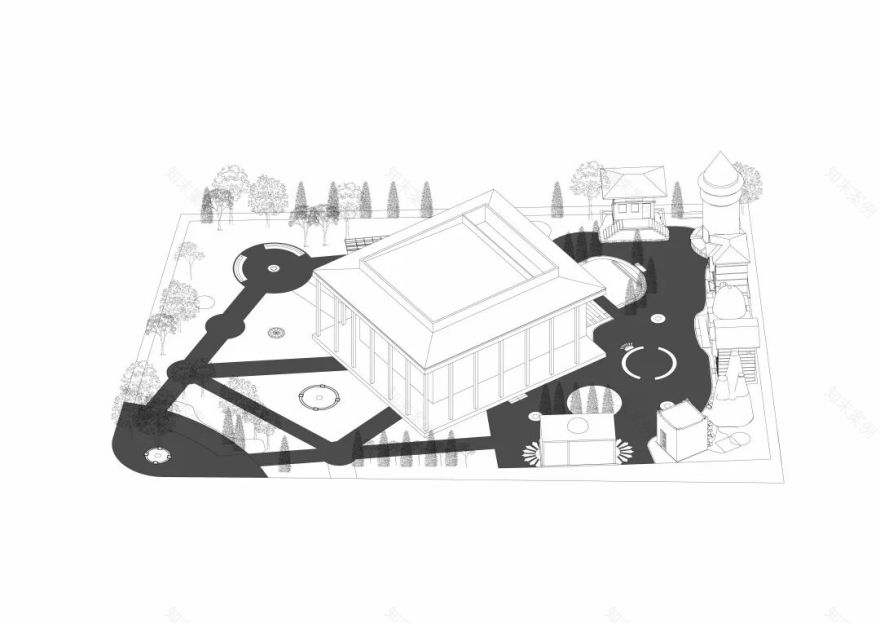
基地位于一个重要的十字路口:其角部的入口正对人流量巨大的卡塔尔馆(未来即将被改造作为重要的服务设施)原有建筑和景观的朝向都被这一区位要素所决定。但作为强调居住体验的民宿,这一规划则成为
“
不利条件
”
:建筑过度暴露在园区主干道的注视下,缺乏隐私和宁静。基地方案将原有的角部入口取消,让场地的主入口移至基地西北角。这一动作达成了如下目标:其一,避免了主干道人流对基地内部的不良影响。其二,在入
口
区将基地分为两个部分,即由基地西侧诸多现存小建筑组成的、可单独对外营业的
“
咖啡花园
”
,
以及围绕原
主展馆、仅对民宿住客开放的私享花园。
The base is located at an important crossroads: its corner entrance directly faces the highly crowded Qatar Pavilion (which will be transformed into an important service facility in the future). The orientation of the original buildings and landscapes is determined by this location factor. However, as a homestay that emphasizes the living experience, this plan becomes a "disadvantage" : the building is overly exposed to the main road of the park, lacking privacy and tranquility. The base plan eliminates the original corner entrance and moves the main entrance of the site to the northwest corner of the base. This action achieved the following goals: First, it avoided the adverse impact of the flow of people on the main road on the interior of the base. Secondly, in the entrance area, the site is divided into two parts: the "Coffee Garden" composed of many existing small buildings on the west side of the site, which can be opened to the public independently, and the private garden surrounding the original main exhibition hall, which is only open to the guests of the homestay.
改造策略
1
:场地现状

改造策略
2
:场地改造后

总平面图
建筑外观

咖啡花园
建筑现有的室内尺度和立面均不利于一个需布置
10
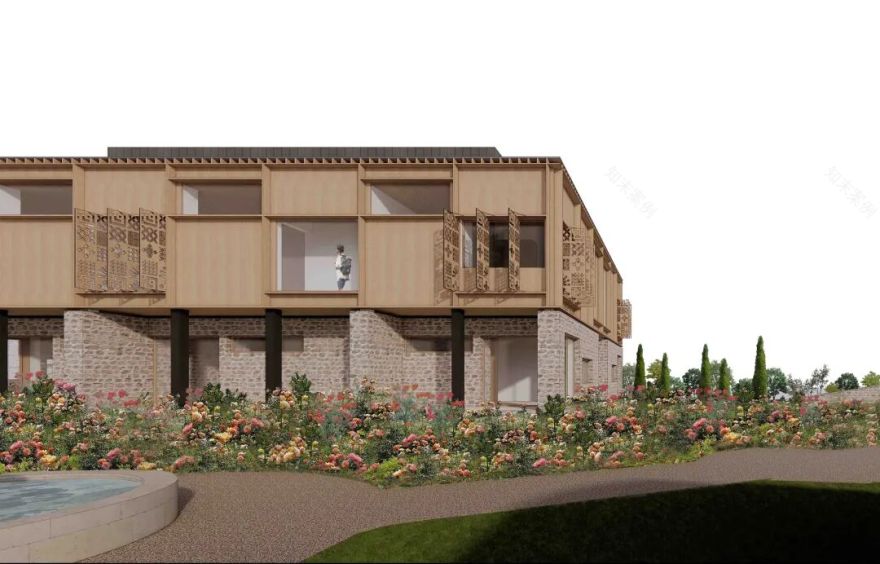
间以上客房的民宿需要。因此改造应尽可能利用现有建筑投影范围进行增建。受到土耳其传统居住建筑启发,一个上大下小的倒
“
凸
”
形体量被植入。该形式一方面唤起了传统土耳其建筑的典型形体逻辑。另一方面则解决了楼层对客房
“
均好性
”
的影响:首层的客房相比二层客房而言,在隐私性上居于劣势;但其均可拥有一个面朝宁静花园的
“
檐廊
”
The current interior scale and facade of the building are not conducive to the needs of a homestay that requires more than 10 guest rooms. Therefore, the renovation should make full use of the existing building's projection range for additional construction as much as possible. Inspired by traditional Turkish residential architecture, an inverted "convex" shape that is larger at the top and smaller at the bottom was implanted. This form, on the one hand, evokes the typical form logic of traditional Turkish architecture. On the other hand, it resolves the impact of floor levels on the "evenness" of guest rooms: guest rooms on the ground floor are at a disadvantage in terms of privacy compared to those on the second floor. But all of them can have a "veranda" facing the peaceful garden.

改造策略
3
:建筑现
状

改造策略
4
:倒“凸”状室内空间

剖面图
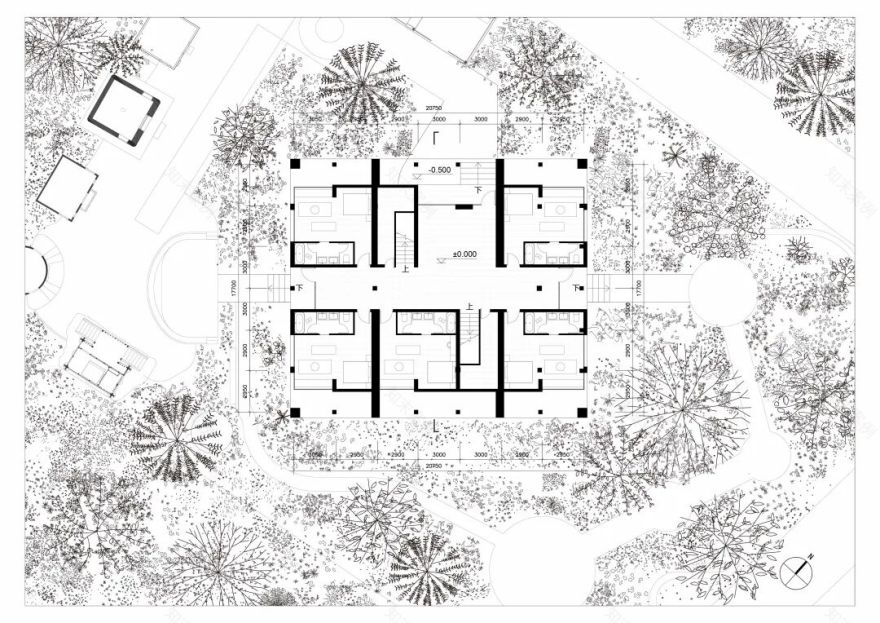
一个贯穿两层的公共中庭被插入到建筑体量中央。这源于土耳其建筑内部“向心性”公共空间的传统。同时也将所有的客房维持在同一面积。建筑首层墙体立面效果采用石材与二层的木材形成轻重对比的张力,原有的建筑雕花立面被裁切后作为建筑的外遮阳构件让原建筑的记忆存续下来。建筑内部是一个向心的中庭为客人们提供了聚拢的可能性。客房围绕着“沙发空间”展开布置“咖啡花园”的露天外摆位、与利用原有小型建筑物形成的卡座,一同为咖啡爱好者提供了近东情调的社交场所。
A public atrium spanning two floors is inserted into the center of the building volume. This stems from the tradition of "centripetal" public Spaces within Turkish architecture. At the same time, all the guest rooms will be kept in the same area. The facade effect of the first floor wall of the building uses stone and wood on the second floor to create a tension of light and heavy contrast. The original carved facade of the building has been cut and used as the external shading component of the building, allowing the memory of the original building to be preserved. The interior of the building features a centripetal atrium that offers guests the possibility to gather. The guest rooms are arranged around the "sofa space" with an outdoor seating arrangement of a "coffee garden", and together with the booths formed by using the original small buildings, they provide coffee lovers with a social venue with a Near Eastern flavor.

室内中庭

中庭效果

房间室内
首层平面图

二层平面
设计单位:也似建筑
项目名称:
土耳其展园
主持建筑师: 罗韧、赵耀
设计团队:吴晨雨,温一帆
建筑面积:
911
㎡
用地面
积:
2384
㎡
设计时间:
2022
年
10
月
Architect: YES.ARCH
Company website
:
Project Name:
Türkiye Exhibition Garden
Reconstruction Projec
Design Motif
:
on site exotic
Principals In Charge: Luo Ren
、
Zhao Yao
Design Team: Wu Chenyu
、
Wen Yifan
Site Area:
911
㎡
Floor Area:
2384
㎡
Year:2022.10
南京喵熊网络科技有限公司 苏ICP备18050492号-4知末 © 2018—2020 . All photos and trademark graphics are copyrighted by their owners.增值电信业务经营许可证(ICP)苏B2-20201444 苏公网安备 32011302321234号
苏公网安备 32011302321234号客服
消息
收藏
下载
最近