

创作上传
VIP
收藏下载
登录 | 注册有礼
查看完整案例

收藏

下载

分享
方案是2022年针对三个当时处于半废弃状态世博园场馆的改造提案之一。设计的前提是在保留各自场馆原有结构、以及地域主题的前提下,将这些原本作为展会装置的临时建筑变为永久的酒店客房。项目的难点(以及有趣之处)在于如何在中国为遥远的文化寻找到非符号化的表达可能。
The proposal was one of the transformation plans for three semi-abandoned Expo venues in 2022. The design premise was to transform these temporary buildings originally used as exhibition installations into permanent hotel rooms, while retaining the original structure and regional theme of each venue. The difficulty (and interesting part) of the project lies in finding non-symbolic expression possibilities for distant cultures in China.
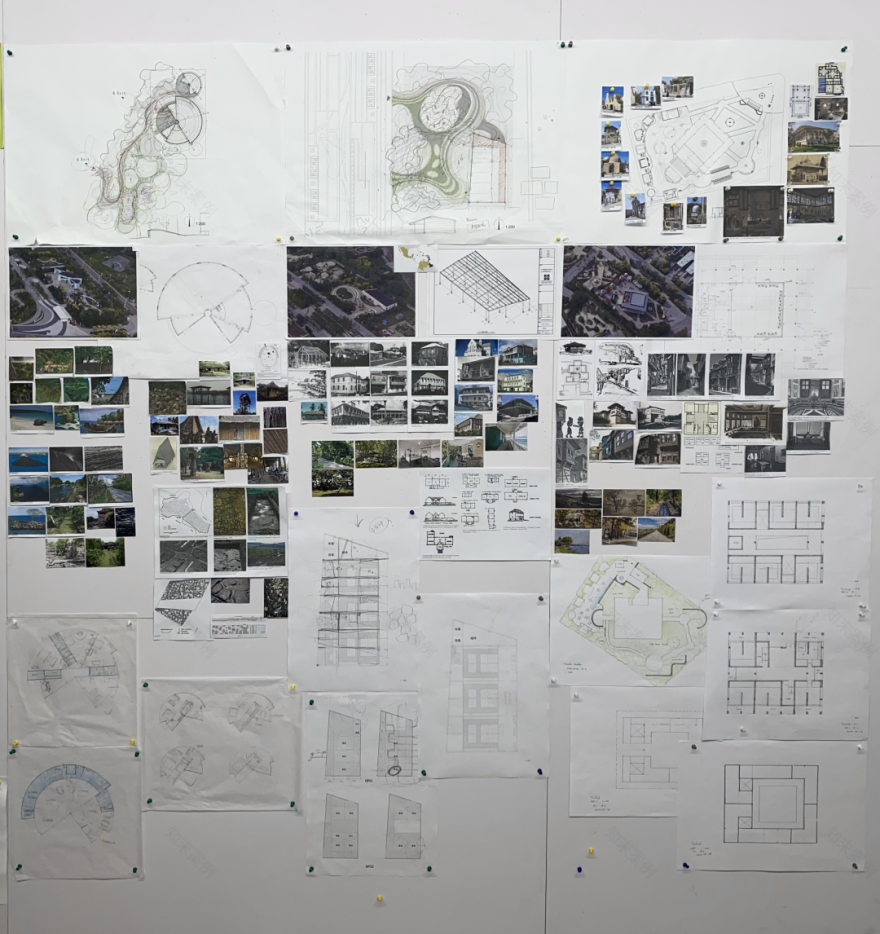
项目工作墙
留影
©也似建筑
太平洋岛国联合展园:
Renovation project of the Joint Exhibition Garden of Pacific Island Countries:
“
太平洋岛国
”
这个名词所包含的宽泛地理、政治与经济概念,使得任何草率的
“
文化解读
”
都变得非常敏感。这个包含了不同人种、语言、气候条件、以及文化历史的
“
集合
”
,其形象的模糊性成为方案需要厘清的关键所在。
“
太平洋岛国
”
所在区域的气候与自然风光是其闻名于世的名片。但在华北地区无法复刻
“
海洋
”“
沙滩
”“
棕榈树
”
等景色。广阔的地理边界让太平洋岛国内的在地建筑形式各异、却又大多非常原始。它们与当代人所需要的各种居住必须条件相去甚远。尽管可摘取一些材料记忆,却不适合照搬作为建筑原型。
The broad g
eographical, political and econ
omic concepts contained in the term "Pacific island countries" make any hasty "cultural interpretation" extremely sensitive.
The ambiguity of the image of this "collection" that encompasses different races, languages, climatic conditions, and cultural histories has become the key point that the plan needs to clarify.
The climate and natural scenery of the region where the "Pacific Island Countries" are located are its world-famous calling cards.
However, in North China, it is impossible to replicate the scenes such as "ocean", "beach" and "palm trees".
The vast geographical boundaries have led to a variety of local architectural forms within the Pacific Islands, yet most of them are very primitive.
They are far from the various essential living conditions that contemporary people need.
Although some materials can be retrieved for memory, they are not suitable to be directly copied as architectural prototypes.

太平洋岛国联合展园原状
太平洋岛国形成的突出原因是
”
火山活动
“
。地热运动让太平洋岛国的岩石与突然都具备了非常特别的样貌。也是在波光之下暗暗将人们所生活的土地联结起来的力量。与刻板的印象不同,太平洋地区不仅仅有丰富的渔业资源,也以靠火山运动所馈赠的肥沃土壤,拥有超过一万年历史的农耕文化。基地的景观重塑灵感正来自于农耕中所展现的太平洋地区人民与土地之间的关系。
The prominent reason for the formation of Pacific island countries is "volcanic activity". The geothermal movement has endowed the rocks and landscapes of the Pacific island countries with very distinctive appearances. It is also the force that secretly connects the land where people live beneath the waves. Contrary to the stereotypical impression, the Pacific region not only has abundant fishery resources but also has a farming culture with a history of over 10,000 years, thanks to the fertile soil bestowed by volcanic activities. The inspiration for the landscape reshaping of the base comes from the relationship between the people and the land as demonstrated in farming in the Pacific region.

太平洋岛国视觉印记
基地四边现种植有密集的乔木,自然地形成了场域的围合与视线的遮挡,是应该保留的有利条件。基地内面积过大、尺度开阔的硬质铺地区域不利于民宿内私密居住空间的营造,且造成景致单一。大幅度缩减硬质铺地面积,从而将场地恢复为自然状态。从新几内亚岛的农业情境获得启发,用“岛屿”状的土丘分割乔木间开阔的场地,并在岛屿间自然形成沟渠重塑基地的地表径流方向,形成局部内聚的“雨水花园”。让花园在不同季节随降水的变化展现不同的样貌。
The base is surrounded by dense trees on all four sides, which naturally form a boundary and block the view. This is a favorable condition that should be preserved. The large and open hard-surfaced areas within the base are not conducive to creating private living spaces in the guesthouse and result in a monotonous landscape. The area of hard-surfaced ground should be significantly reduced to restore the site to its natural state. Inspired by the agricultural context of New Guinea Island, "island"-shaped mounds are used to divide the open spaces among the trees, and natural channels are formed between the islands to reshape the direction of surface runoff on the base, creating local, cohesive "rain gardens". These gardens will present different appearances in different seasons as precipitation changes.

改造策略
1
:太平洋岛国场地原状

改造策略
2
:太平洋岛国场地改造后方案

总平面图

建筑与岛屿景观
建筑的扇形平面对房间的布局形成了挑战。如何避免视线的相互干扰、且让建筑保持
“
简洁
”
与
“
高效
”
?通过精心研究现有建筑的结构位置与几何逻辑,一系列
“
功能体块
”
(或成为
“
服务空间
”
)被以特定的逻辑植入现建筑结构内部。它们一方面为建筑内的房间提供了盥洗、储物等设施;一方面也巧妙将客房边界定义。
“
深窗
”
:每一间客房都有一扇尺度可观的窗户望向一处特定的景色。它们相互之间完全避免了对视,保证了每一个房间的隐私性。建筑内外墙之间因
“
功能
”
产生的
“
几何差异
”
自然让窗户产生了
“
纵深
”
,并形成了可供坐卧的平台。宛如专供客房的取景框,将自然景色引至榻前。建筑外立面采用深色的预制混凝土挂板赋予建筑类似
“
火山岩石
”
视觉效果,建筑宛如自大地而出。
The fan-shaped plan of the building poses a challenge to the layout of the rooms. How to avoid visual interference and keep buildings "simple" and "efficient"? By carefully studying the structural location and geometric logic of existing buildings, a series of "functional blocks" (or "service spaces") are implanted into the interior of the building structure with specific logic. On the one hand, they provide facilities such as washing and storage for the rooms inside the building; On the one hand, it cleverly defines the boundaries of guest rooms.
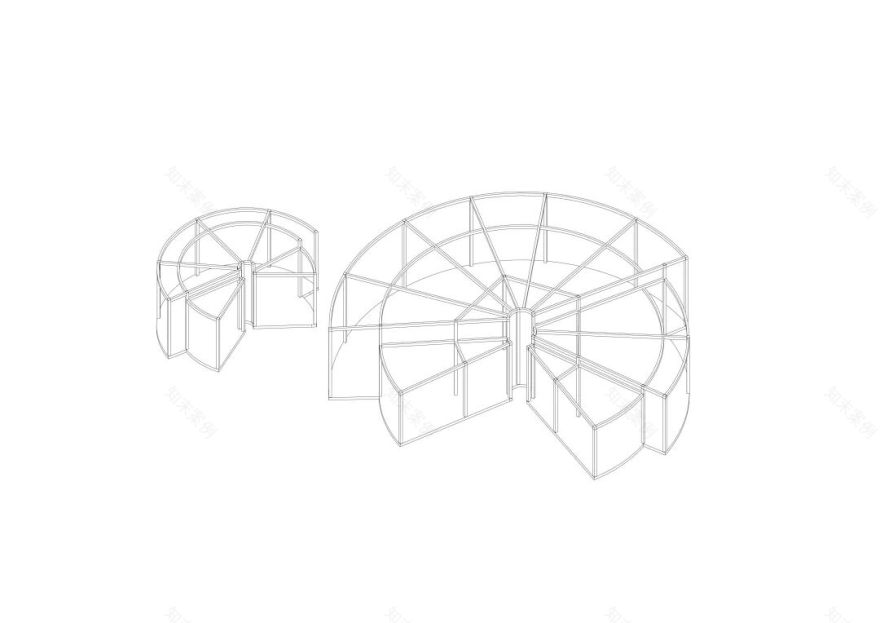
改造策略
3
:建筑原结构体系

改造策略
4
:划分空间的服务筒

建筑立面
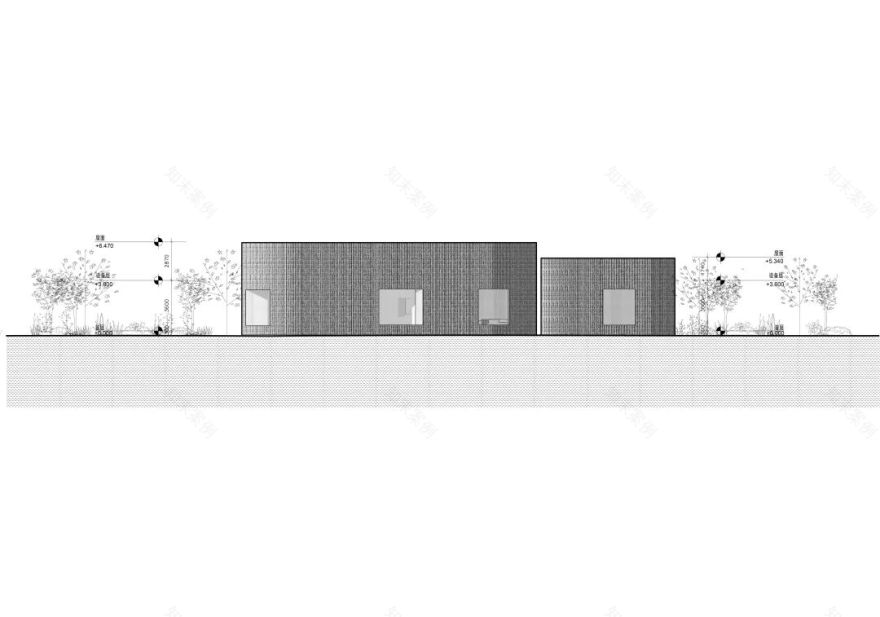
建筑立面
客房围绕的公共区域洒满阳光,在冬季,这里也可以成为住客们围炉夜话的客厅。环形布局的房间呼应了太平洋岛国上的原始居住方式。客房的天花使用棕榈编制的挂板,配合客房内的其他木材饰面,唤起海岛居舍的触觉记忆。
“
深窗
”
为将景色拉入房间内,同时为居室提供了多种坐卧的可能。独立的套房拥有私密性更好的居住体验,包括一个不受打扰的户外活动场地。
The public area surrounded by guest rooms is bathed in sunlight, and in winter, it can also become a living room for guests to chat around the stove at night. The circular layout of the rooms echoes the primitive way of living in Pacific island countries. The ceiling of the guest room is made of palm woven hanging boards, combined with other wood finishes in the room, to evoke tactile memories of the island dwelling. The 'deep window' brings the scenery into the room and provides multiple possibilities for sitting and sleeping in the living room. Independent suites offer a more private living experience, including an undisturbed outdoor activity area.

入口门厅公区

套房室内

单间室内
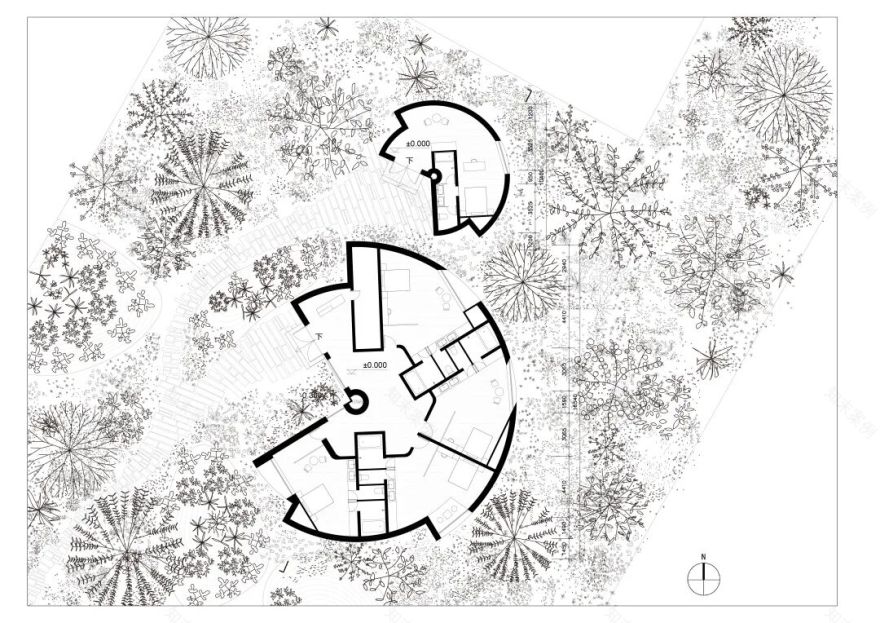
平面图

剖面图
设计单位:也似建筑
项目名称:太平洋岛国联合展园改造项目
主持建筑师: 罗韧、赵耀
设计团队:吴晨雨,温一帆
建筑面积:
312
㎡
用地面积:
2616
㎡
设计时间:
2022
年
10
月
Architect: YES.ARCH
Company website
:
Project Name:
Renovation project of the Joint Exhibition Garden of Pacific Island Countries
Design Motif
:
on site exotic
Principals In Charge: Luo Ren
、
Zhao Yao
Design Team: Wu Chenyu
、
Wen Yifan
Site Area:
312
㎡
Floor Area:
2616
㎡
Year:2022.10
南京喵熊网络科技有限公司 苏ICP备18050492号-4知末 © 2018—2020 . All photos and trademark graphics are copyrighted by their owners.增值电信业务经营许可证(ICP)苏B2-20201444 苏公网安备 32011302321234号
苏公网安备 32011302321234号客服
消息
收藏
下载
最近