

创作上传
VIP
收藏下载
登录 | 注册有礼
查看完整案例

收藏

下载

分享

Nestled deep in the alleys of the historic center of Mérida, Mexico, Casa Paradiso, a narrow canvas measuring 3.3 meters wide and 30 meters deep, showcases the symbiosis of tradition and modernity. Designed by Binomio Taller Architects, this 115-square-meter residence, within the framework of heritage preservation, transforms spatial constraints into design inspiration. A central courtyard connects traces of the past with contemporary comforts, creating a vibrant and intimate living space on the narrow site.
在墨西哥梅里达历史中心的街巷深处,Casa Paradiso 以 3.3 米宽、30 米深的 “狭长画布”,演绎着传统与现代的共生之美。由 Binomio Taller 事务所操刀的这座 115 平方米住宅,在遗产保护的框架下,将空间限制转化为设计灵感,用中央庭院串联起时光的痕迹与当代的舒适,让窄地之上生长出充满呼吸感的生活秘境。


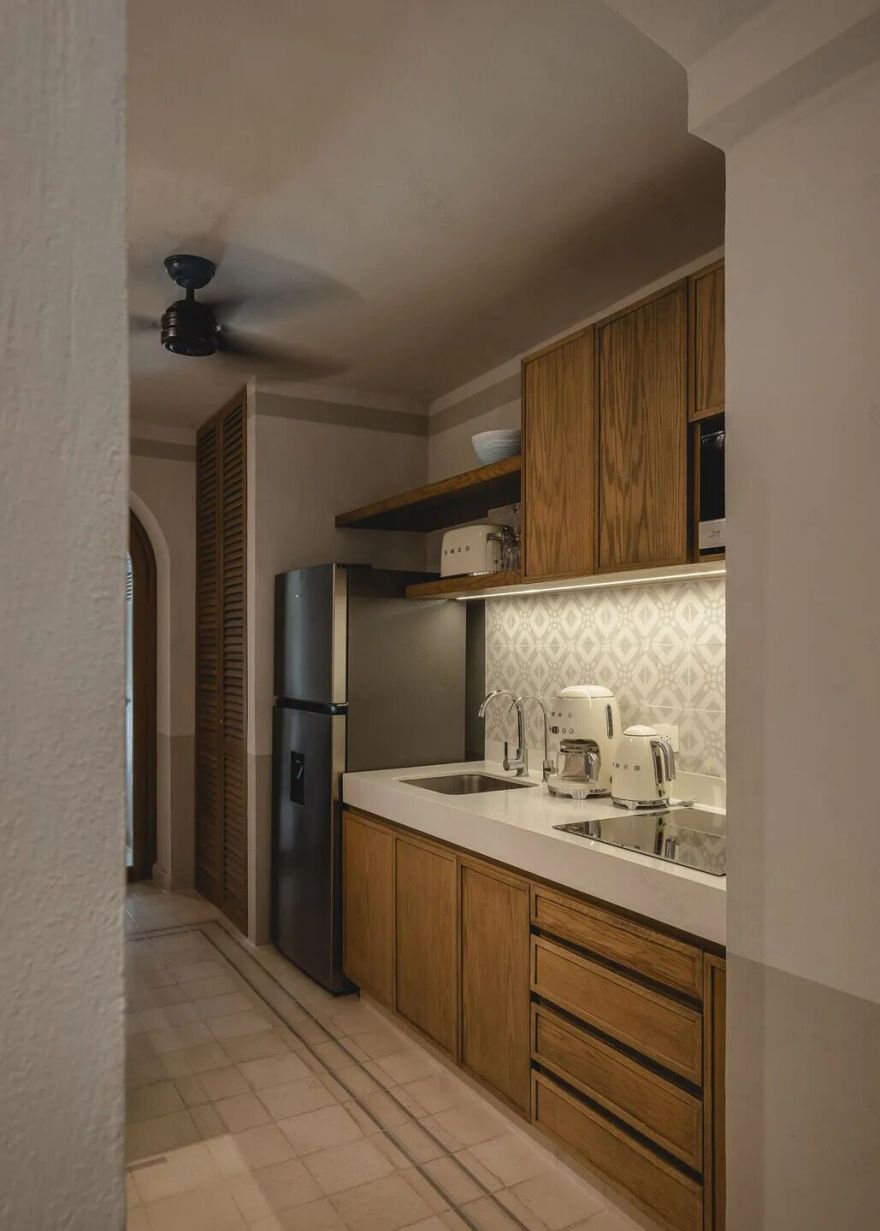
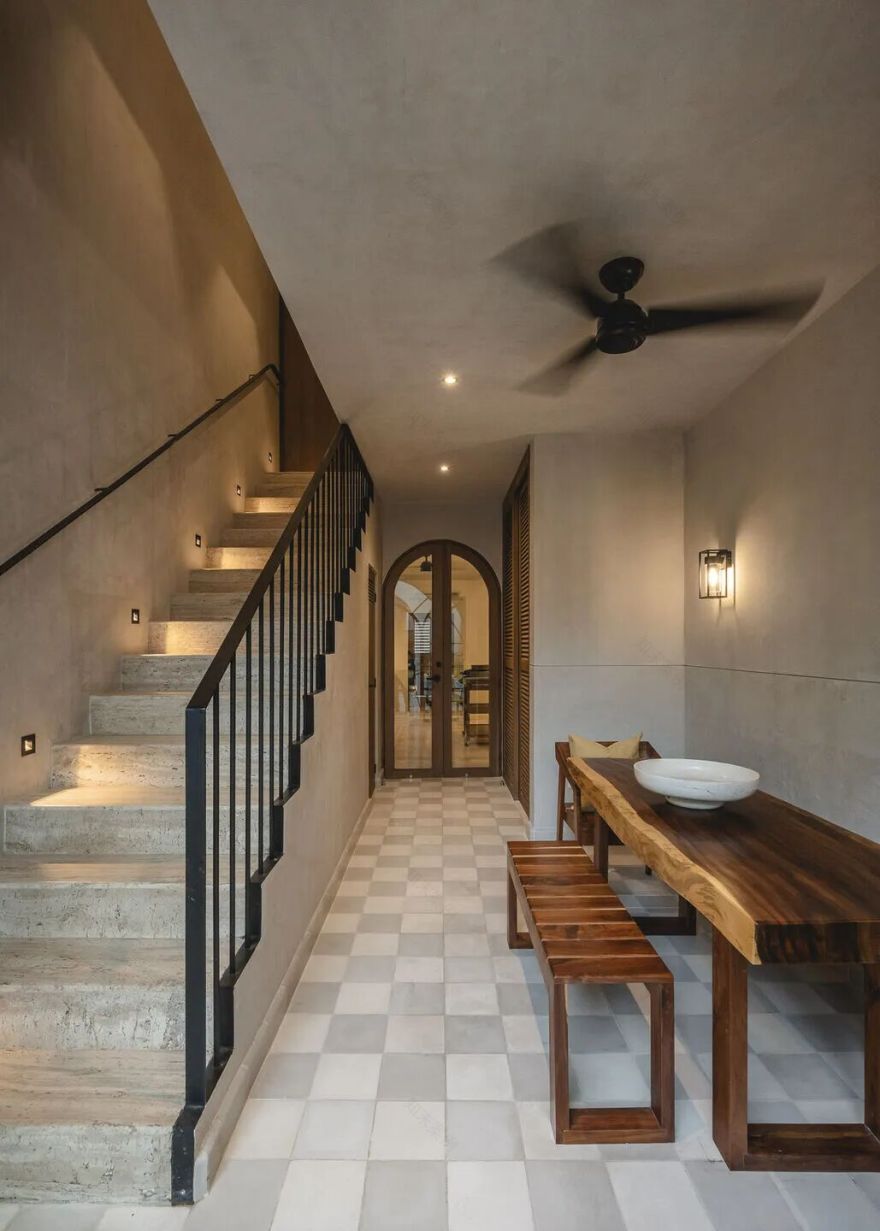
Upon opening the front door, the two-story building facing the street begins a narrative of time. Focusing on restoration, the designers preserved the building's original texture and character. The handmade pasta tiles (pasta tiles refer to handmade ceramic tiles, referring to the traditional handmade ceramic flooring within the residence) evoke a subtle, hand-pressed texture, creating a unique warmth. The traditional brickwork on the walls remains unadorned, with the traces of time clearly visible between the joints, a glimpse into the past of Mérida's old town. The ground floor's social area, with its living room, dining room, and kitchen, is organized vertically, yet feels effortlessly spacious. In the morning, sunlight streams through the street-facing windows, and the hostess prepares breakfast at the counter, reflecting the morning light on the ceramic tile floor, creating a warm atmosphere. In the evening, as the family gathers in the dining room, light filtering through the handmade glass lampshades casts soft glints of light on the masonry walls. Here, the grandeur of the old building blends with the hustle and bustle of everyday life. The upper-floor guest rooms and en suite bathrooms continue the tranquility of traditional spaces, while the private terrace holds a hidden surprise. Standing here, one can gaze upon the red-tiled roofs of the old town and glimpse the greenery of the courtyard behind, adding a touch of dialogue with the city and nature to the accommodation experience.
推开大门,临街的两层老建筑率先展开 “时光的叙事”。设计师以修复为核心,保留了建筑原有的肌理与气质 —— 地面铺设的手工 pasta tiles(pasta tiles 指手工陶砖,这里指住宅内传统手工瓷砖地面),每一块都带着匠人手工压制的细微纹路,踩上去能感受到陶土特有的温润;墙面的传统砖石未经过度修饰,砖缝间的岁月痕迹清晰可见,仿佛在诉说着梅里达老城的过往。一层的社交空间里,客厅、餐厅与厨房沿纵向有序排布,却不显局促:清晨,阳光透过临街的窗户洒进厨房,女主人在料理台旁准备早餐,陶砖地面映着晨光,暖意漫溢;傍晚,家人围坐在餐厅,灯光透过手工玻璃灯罩,在砖石墙面投下柔和的光斑,老建筑的厚重与生活的烟火气在此交融。上层的客房与独立卫浴,则延续了传统空间的静谧感,私人露台更是藏着惊喜 —— 站在这里,既能望见老城的红瓦屋顶,又能瞥见后方庭院的绿意,让住宿体验多了几分与城市、自然的对话。


The soul of this residence lies in the central courtyard. Adhering to the "heart of the courtyard" typology of traditional Yucatán dwellings, the designers imbued the narrow space with a "breathing heart." In the center of the courtyard, an old, native tree has been preserved intact, its robust branches embedded within the masonry wall. The rough texture of the bark creates a gentle contrast with the hard, solid masonry. In the morning, sunlight filters through the leaves, casting dappled shadows on the ground. In the afternoon, a gentle breeze stirs the branches, and the shadows of the tree gently sway against the green concrete wall, creating a natural light show. A small swimming pool shimmers nearby, its water vapor blending with the fragrance of the plants, bringing a refreshing coolness to the sweltering Mexican climate. Here, children chase the light spots and play, while adults relax in rattan chairs, reading books. The courtyard is no longer simply a landscape, but a "living stage" for family interaction and connection with nature.
这座住宅的灵魂,藏在中央庭院里。设计师沿用尤卡坦半岛传统民居的 “庭院核心” typology(typology 指建筑类型学,这里指传统庭院式布局),让狭长的空间有了 “呼吸的心脏”。庭院中央,一棵原生老树被完整保留,粗壮的枝干部分嵌入 masonry wall(masonry wall 指砖石墙,这里指庭院的砖石围墙),树皮的粗糙质感与砖石的冷硬形成温柔对比。清晨,阳光穿过树叶的缝隙,在地面投下斑驳的光影;午后,微风吹动枝叶,树影在绿色混凝土墙上轻轻摇晃,仿佛一场自然的光影秀。一旁的小型泳池泛着粼粼波光,水汽与草木的清香交织,为炎热的墨西哥气候注入阵阵清凉。在这里,孩子们追逐着光斑嬉戏,大人们坐在藤椅上翻阅书籍,庭院不再是单纯的景观,而是家人互动、亲近自然的 “生活舞台”。

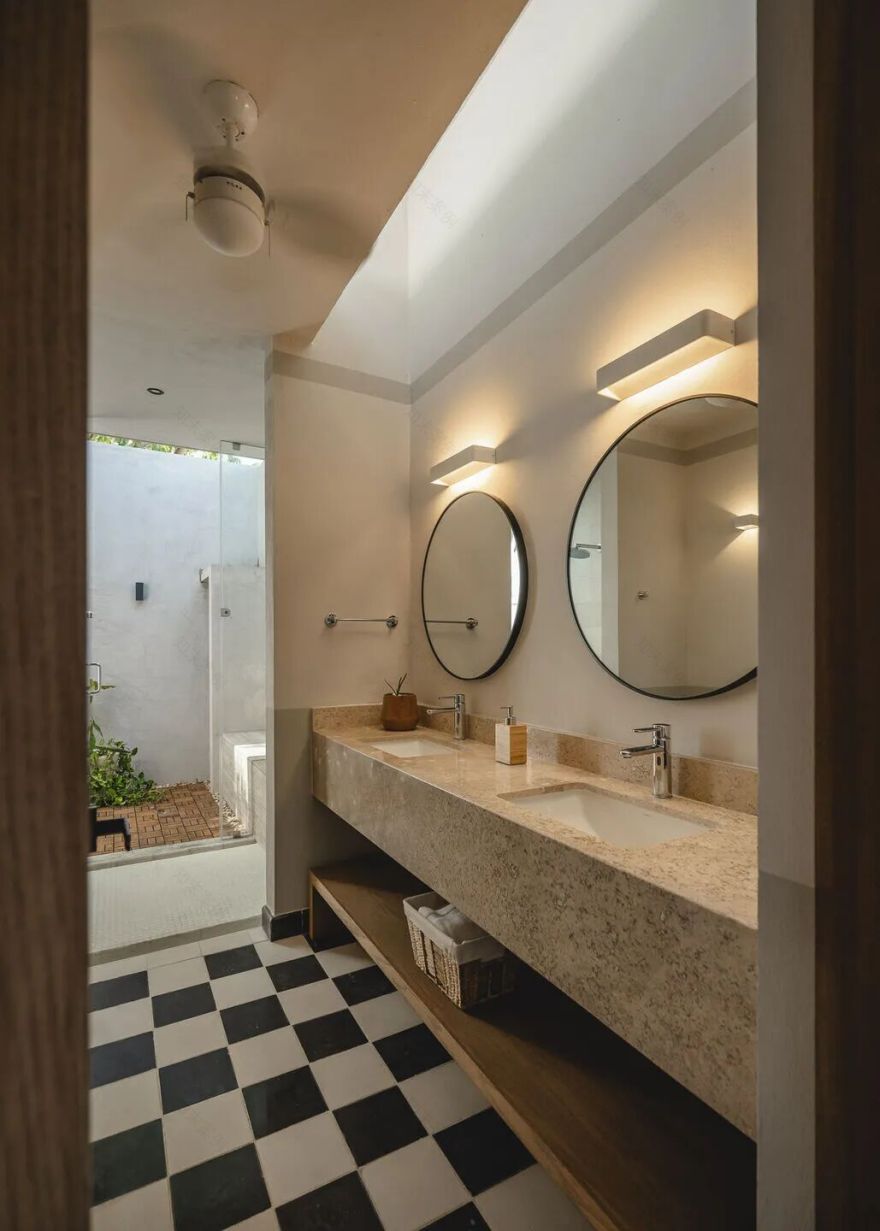
The new building volume, nestled deep within the residence, provides a comfortable haven for private living. The master bedroom and bathroom face a secondary courtyard, where expansive glass windows and doors bring in natural light and greenery, completely breaking the potentially oppressive feeling of the narrow plot. The flooring, clad in Yucatán travertine marble (in this case, the master bedroom's marble floor), boasts a natural veining and a warm patina, creating a delicate texture under bare feet. The walls are finished with a combination of light-colored wood and exposed concrete, creating a balance between the warmth of the wood and the coolness of the concrete, creating a modern, minimalist yet warm space. Waking up in the morning, open the curtains to gaze upon the courtyard's greenery, beginning the day with the sound of birdsong. At night, moonlight filters through the glass, reflecting softly off the marble floor, imbuing the sleeping space with tranquility and peace of mind.
住宅深处的新建筑体量,则为私密生活提供了舒适的容器。主卧与卫浴空间朝向次级庭院,大面积的玻璃门窗将自然光与绿意引入室内,彻底打破了狭长地块可能带来的压抑感。地面铺设的 Yucatán travertine marble(Yucatán travertine marble 指尤卡坦石灰华大理石,这里指主卧的大理石地面),带着天然的纹理与温润的光泽,赤脚踩上去能感受到石材的细腻;墙面采用浅色木材与裸露混凝土搭配,木材的暖与混凝土的冷形成平衡,既显现代简约,又不失温度。清晨醒来,拉开窗帘便能望见庭院的绿植,听着鸟鸣开启新的一天;夜晚,月光透过玻璃洒进室内,大理石地面反射着柔和的月色,让睡眠空间满是静谧与安心。

The choice of materials is imbued with a deep respect for regional culture and a dedication to craftsmanship. In addition to handmade terracotta tiles and Yucatán travertine marble, cast concrete breeze blocks (in this case, the residential concrete ventilation blocks) are a crucial finishing touch. These blocks, used for courtyard walls and partitions, feature a hollowed-out pattern that allows for ventilation while allowing light to filter through, creating unique playful effects: vibrant spots of light during the day and gentle shadows at night. These regionally imprinted materials, unadorned and presented in their most authentic form: the roughness of concrete, the warmth of wood, the heaviness of brick, and the rusticity of terracotta, collectively weave Casa Paradiso's "material narrative," allowing every touch to convey the warmth of Mexican craftsmanship.
材质的选择,始终贯穿着对地域文化的尊重与对匠心的推崇。除了手工陶砖与尤卡坦石灰华大理石,cast concrete breeze blocks(cast concrete breeze blocks 指混凝土通风砖,这里指住宅的混凝土通风砖构件)更是点睛之笔 —— 它们被用于庭院围墙与部分空间隔断,镂空的纹样既保证了通风,又让光线透过时形成独特的光影效果,白天是灵动的光斑,夜晚则成了温柔的灯影。这些带着地域印记的材质,未经过多修饰,以最本真的状态呈现:混凝土的粗粝、木材的温润、砖石的厚重、陶砖的质朴,共同编织出 Casa Paradiso 的 “材质叙事”,让每一次触摸都能感受到墨西哥本土的匠艺温度。


From initial design conception to final implementation, the Binomio Taller team consistently sought possibilities within limitations. Neither heritage preservation requirements nor the constraints of the narrow plot became obstacles to design, but rather served as inspiration for shaping the spatial identity. Rather than blindly pursuing a bold, modern style, they fostered a gentle dialogue between the new and the old, seamlessly integrating traditional layout with contemporary functionality. Casa Paradiso stands like a piece of "timeless amber" in Mérida's historic center, preserving the city's historical memories while embracing the daily lives of a contemporary family. Here, every space holds its own story, every material imbued with warmth. The meaning of "home" is most movingly expressed through the vitality and warmth of this narrow plot.
从最初的设计构思到最终的落地,Binomio Taller 团队始终在 “限制” 中寻找 “可能”—— 遗产保护的要求、狭长地块的约束,都没有成为设计的阻碍,反而化作了塑造空间个性的灵感来源。他们没有盲目追求现代风格的张扬,而是让新建筑与老结构温柔对话,让传统布局与当代功能有机融合。Casa Paradiso 就像梅里达老城里的一颗 “时光琥珀”,既封存着城市的历史记忆,又容纳着当代家庭的生活日常。在这里,每一处空间都有它的故事,每一种材质都有它的温度,而 “家” 的意义,便在这窄地之上的生机与温情中,得到了最动人的诠释。


编辑:
夏边际
撰文:豆宝宝
校改:吴一仁
编排:布忠耀
本文素材图片版权来源于网络,
如有侵权,请联系后台,我们会第一时间删除。
建筑 | 室
内 | 设计 | 艺
术
商务联络
南京喵熊网络科技有限公司 苏ICP备18050492号-4知末 © 2018—2020 . All photos and trademark graphics are copyrighted by their owners.增值电信业务经营许可证(ICP)苏B2-20201444 苏公网安备 32011302321234号
苏公网安备 32011302321234号客服
消息
收藏
下载
最近