

创作上传
VIP
收藏下载
登录 | 注册有礼
查看完整案例

收藏

下载

分享
“埊木庭”,是埊木设计(中央美术学院CAFA·A城市艺术创新中心)一次轻建构、可持续、移动式的城市微展厅实践探索。2025年第四届“北京城市更新最佳实践”颁奖典礼在中关村大融城举办,作为获奖方之一的埊木设计在活动现场构筑了这座独特的临时展厅。该建构不仅是工作室形象与获奖成果的展示载体,更是融合了艺术策展、文创市集与公共参与的城市微缩艺术装置。
Created by DIMU Design (CAFA·A Urban Art Innovation Center) for the 4th Beijing Urban Regeneration Best Practices Award Ceremony (2025) at ART PARK, Zhongguancun, the DIMU Pavilion is a lightweight, sustainable, and mobile micro-exhibition hall. This temporary structure serves both as a showcase for the award-winning studio and as an integrated urban art installation featuring curation, a cultural market, and public engagement.
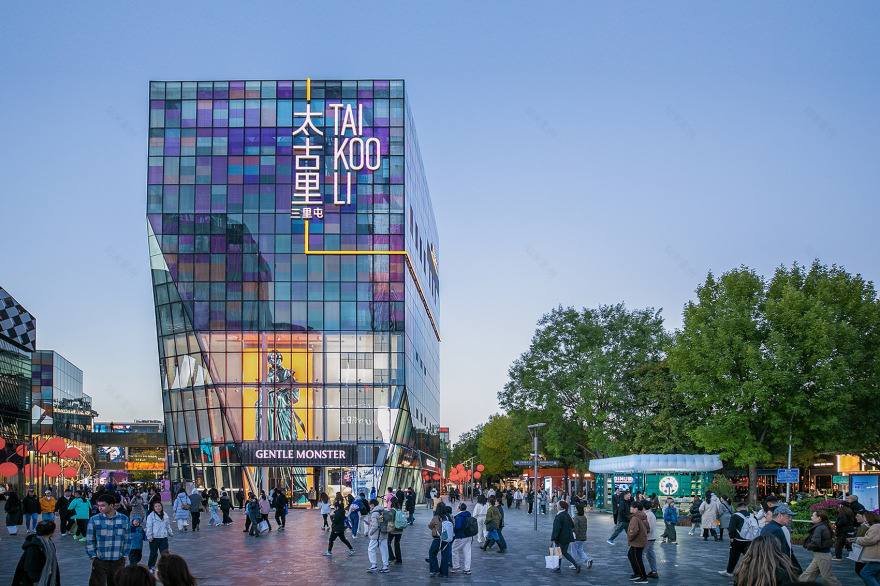
▼移动至太古里南区入口的“埊木庭”,the DIMU Pavilion at Taikoo Li south area entrance© 埊木设计(CAFA·A城市艺术创新中心)


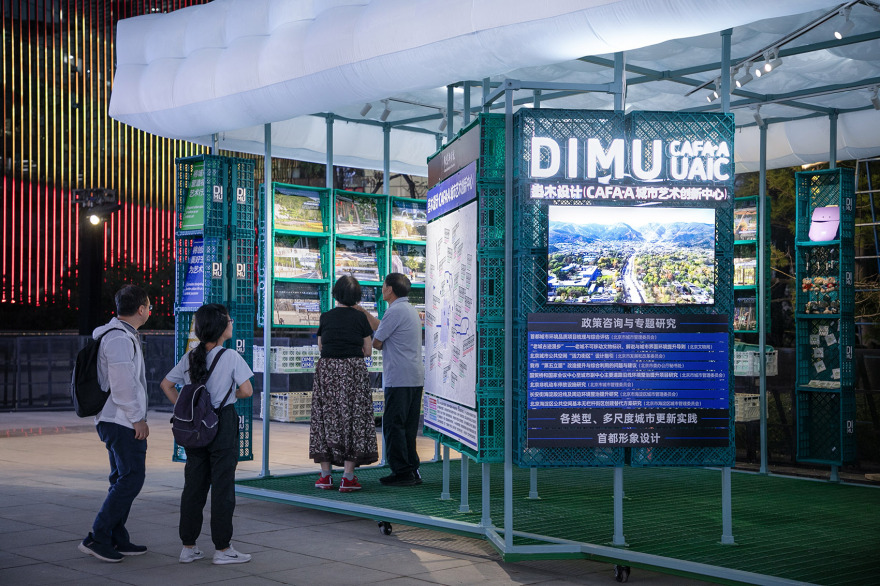
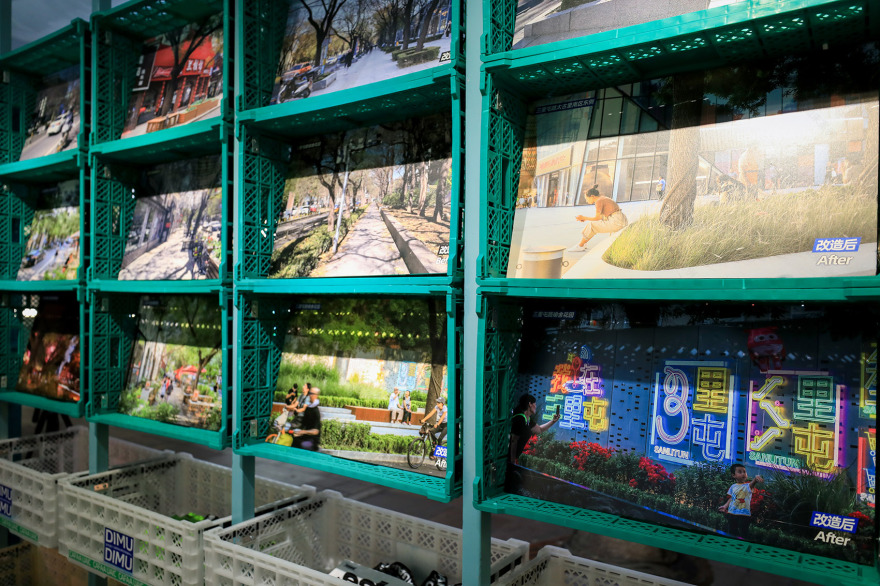
而它的使命并未随典礼结束而终止。经与三里屯街道的共同商议,展厅在活动结束后从海淀的颁奖地点移至朝阳的三里屯路,放置在获奖项目所处之地。落于太古里南区入口广场的“埊木庭”展厅,变成了一个面向公众展示三里屯路更新前后对比与设计理念的公共窗口。
The pavilion’s mission continued after the ceremony. Through coordination with Sanlitun Subdistrict, it was relocated from Haidian to the award-winning Sanlitun Road in Chaoyang, where it now serves as a public showcase at Taikoo Li South, presenting the street’s renewal and its design philosophy.
▼用于太古里的展厅使用场景,the DIMU Pavilion in use at Taikoo Li© 埊木设计(CAFA·A城市艺术创新中心)

而它的使命并未随典礼结束而终止。经与三里屯街道的共同商议,展厅在活动结束后从海淀的颁奖地点移至朝阳的三里屯路,放置在获奖项目所处之地。落于太古里南区入口广场的“埊木庭”展厅,变成了一个面向公众展示三里屯路更新前后对比与设计理念的公共窗口。
The pavilion’s mission continued after the ceremony. Through coordination with Sanlitun Subdistrict, it was relocated from Haidian to the award-winning Sanlitun Road in Chaoyang, where it now serves as a public showcase at Taikoo Li South, presenting the street’s renewal and its design philosophy.
▼用于太古里的展厅使用场景,the DIMU Pavilion in use at Taikoo Li© 埊木设计(CAFA·A城市艺术创新中心)

一、物性赋形:基于低技建构的逻辑与起点
Ⅰ. Form Follows Materiality: Grounded in Low-Tech Construction
设计始于对“物”的尊重,从手头已有的方钢出发确立整体建构逻辑。这种“因物施策”的理念,通过主动利用现有材料搭建框架,从设计之初直接定义了空间的结构与基调。其后所有操作均严格遵循材料的自身特性与低技的连接原则——螺丝紧固、捆扎固定,杜绝一次性胶合,以直白的建造逻辑回应材料特性。▼展厅结构框架,structural logic diagram© 埊木设计(CAFA·A城市艺术创新中心)

Beginning with the available square steel tubing, the design establishes a material-led logic. By using these components to define the framework, it sets the project’s tone. All work follows low-tech assembly principles—bolting and tying, without adhesives—using a direct logic that responds to the materials.
© 埊木设计(CAFA·A城市艺术创新中心)▼搭建后的展厅外观,pavilion exterior after assembly© 金伟琦


▼搭建后的展厅外观夜景,pavilion exterior after assembly at night© 金伟琦

二、时代回应:日常物件的创意使用与赋能
Ⅱ. Response to the Times: Creative Use and Empowerment
设计承载着明确的问题意识,并试图在文化诉求与社会现实之间建立连接,这体现于对“绿色可持续”与“青年文化认同”的回应。对于当代环保议题,设计团队将常见于菜市场、超市或餐厅后厨等地方的篮筐,转化为展厅建构语言的基本单元。▼作为基本建构单元的篮筐,plastic cratesas modular units© 埊木设计(CAFA·A城市艺术创新中心)

With a problem-solving focus, the design links cultural aims to social realities by addressing sustainability and youth identity. It repurposes plastic crates—commonly found in markets, supermarkets, and restaurant kitchens—into the primary units of exhibition’s structural system.
▼用于太古里的展厅使用场景,the DIMU Pavilion in use at Taikoo Li© 埊木设计(CAFA·A城市艺术创新中心)

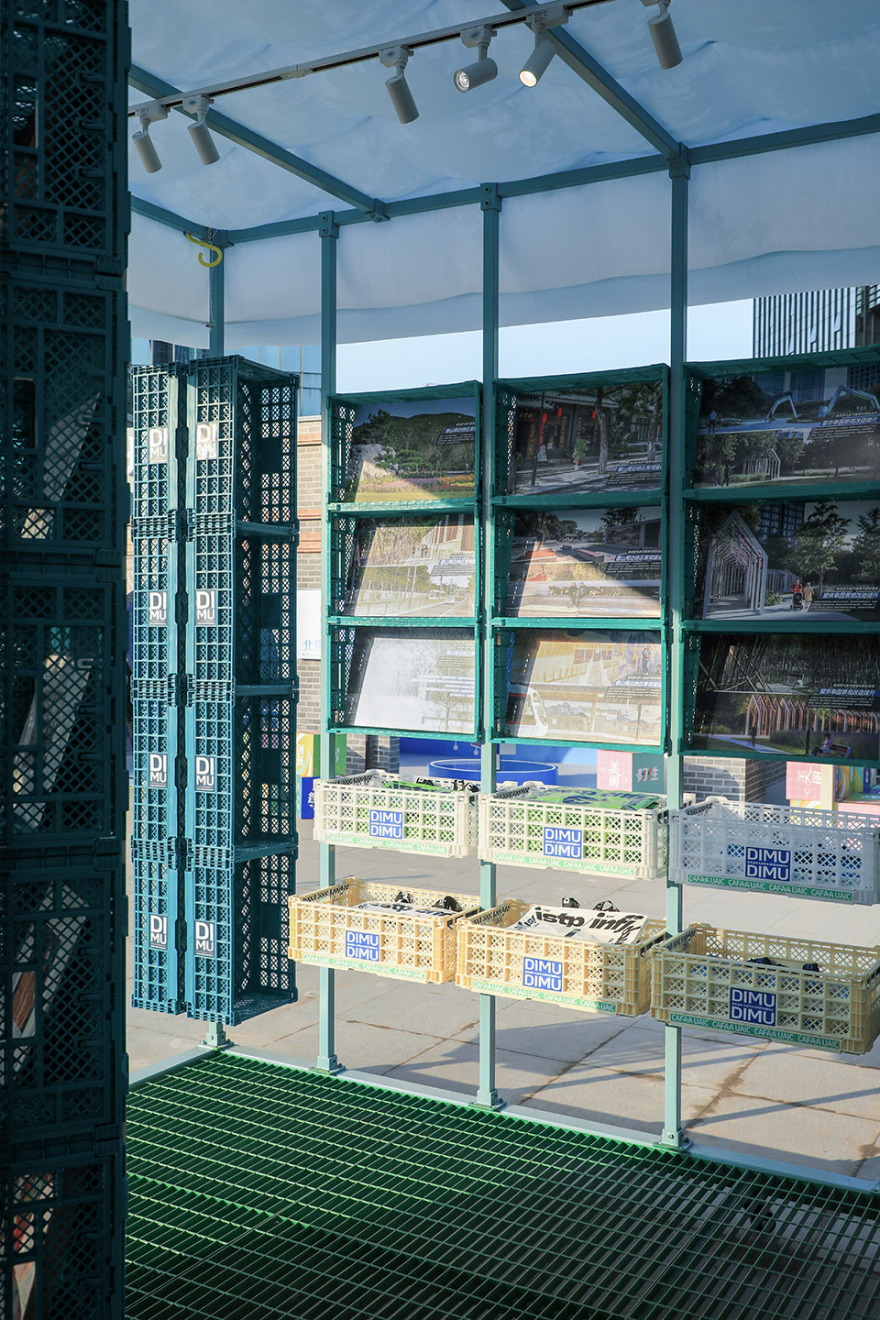
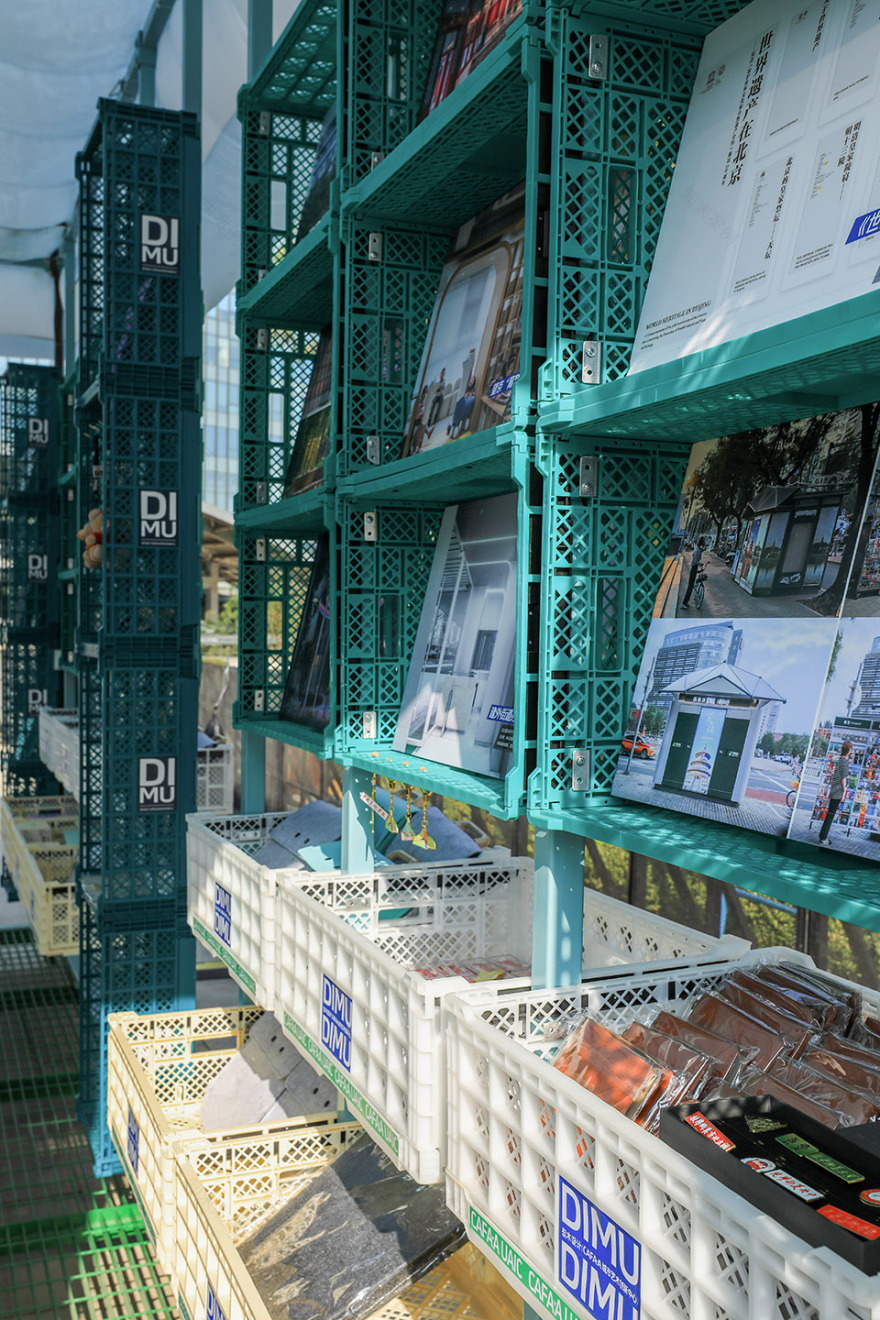
通过系统性组合,三种颜色的篮筐被赋予清晰的功能逻辑:青绿色专门用于成果展示,白色与米色承担商品的水平陈列与储存,深青色则提供竖向摆放空间。篮筐作为“皮肤”的使用不仅实现了材料的快速拆装与循环利用,更以可逆建造的低技策略展现材料自身的美学价值。由于展厅具备文创展示与销售的功能,团队进一步将目标投向年轻消费群体,融入青年文化语境考虑整体设计。通过对篮筐、方钢与气垫的结合使用,利用创意设计使寻常物件升华为具有辨识度的时尚符号,从而形成与青年文化同频和极具传播力的年轻化场域。
A systematic color code organizes the plastic crates: turquoise for displays, white and beige for horizontal layouts, and deep teal for vertical storage. Acting as a skin, they allow for rapid assembly and reuse, with their reversible, low-tech assembly showcasing the material’s innate beauty. Serving both cultural display and retail, the pavilion engages a younger audience by tapping into youth culture. It transforms plastic crates, square steel tubing, and pneumatic cubes—ordinary objects—into distinctive visual symbols, generating a resonant and highly shareable space for youth.
▼篮筐细部,the plastic crates detail © 埊木设计(CAFA·A城市艺术创新中心)

三、观念构建:作为艺术策展与装置的叙事
Ⅲ. Conceptual Construction: Narratives of Curation and Installation
展厅设计突破了传统工作室项目展陈的惯常模式,转而以完整的艺术策展思维重塑展示形态。设计团队将空间本身转化为叙事媒介,在大融城的展示中构筑起涵盖“专业项目、教学实践、文创成果”的复合型展示场域,并以此实现从“信息陈列”到“观念传达”的感知过程。
The pavilion replaces conventional display with a curatorial approach, using space as narrative to create a multi-layered platform at ART PARK. This shifts the experience from information viewing to conceptual engagement through professional projects, teaching practices and cultural products.
▼一件融入艺术策展的“互动装置”,an interactive installation integrated into the curation © 埊木设计(CAFA·A城市艺术创新中心)

1. 立面宣示:理念的直观传递
Facade Display: A Direct Expression of Concept
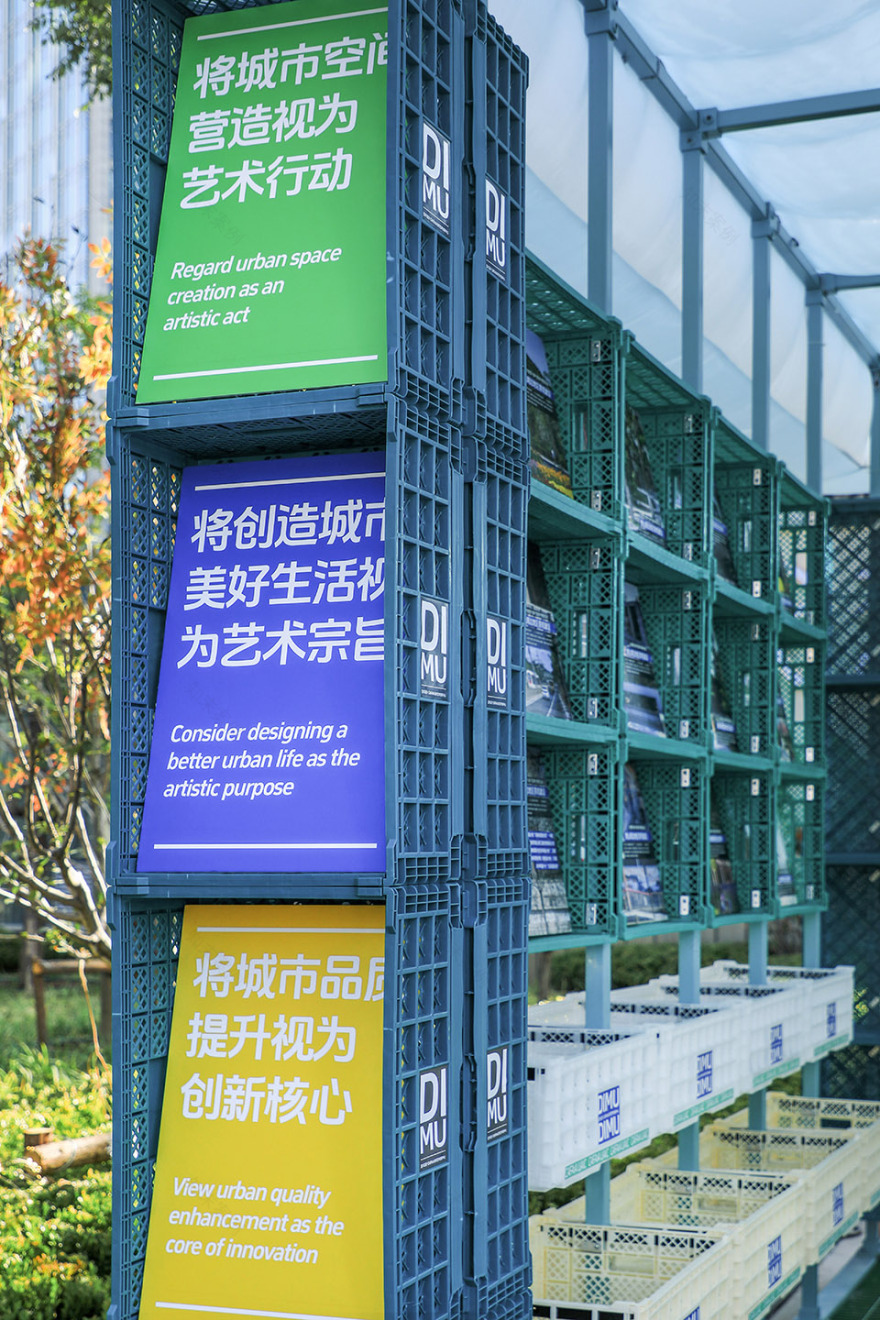
展厅门面作为首要视觉界面,以篮筐构筑的立柱形态形成了对外的理念宣言。设计充分利用篮筐的开口结构,将工作室的核心设计思想与宗旨嵌入其中,使构件本身成为承载与传播观念的载体,在入口处为公众建立起初步的认知语境。
▼立面宣示布置,facade concept display © 埊木设计(CAFA·A城市艺术创新中心)

The facade serves as the primary visual interface, where columns of plastic crates form a declarative statement of the design philosophy. Their openings embed the studio’s core principles, transforming the architecture itself into a communicative medium that establishes an immediate context at the entrance.
▼理念传递现场,concept presentation scene © 埊木设计(CAFA·A城市艺术创新中心)

▼理念传递现场,concept presentation scene © 埊木设计(CAFA·A城市艺术创新中心)

2. 入口叙事:流线中的内容渗透
Entrance Narrative: Content Weaves Into the Route
入口处通过C字型半围合结构与垂直阵列的篮筐墙体,构建出具有引导性的叙事序列。正面以工作室的北京城市更新实践地图为主体,清晰呈现项目地理分布与类型脉络。左侧深入解读获奖案例,右侧借助干挂式屏幕播放项目影像,以多维度、沉浸式的信息叠层,向公众系统地传递工作室在城市更新领域的思考与实践。
▼入口叙事结构,entrance narrative diagram © 埊木设计(CAFA·A城市艺术创新中心)

At the entrance, a C-shaped enclosure and a vertical plastic crates wall set up a guided sequence. The front wall shows a map of the studio’s urban renewal work in Beijing. To the left are award-winning cases; to the right, a suspended screen plays project footage, creating a layered and immersive information field.
▼入口正面布置项目地图展示墙,front wall with project map display © 埊木设计(CAFA·A城市艺术创新中心)

▼入口左侧布置获奖案例展示,left-side display of award-winning cases © 埊木设计(CAFA·A城市艺术创新中心)
3.空间展陈:构造与内容的交融
Spatial Exhibition:Integration of Structure and Content
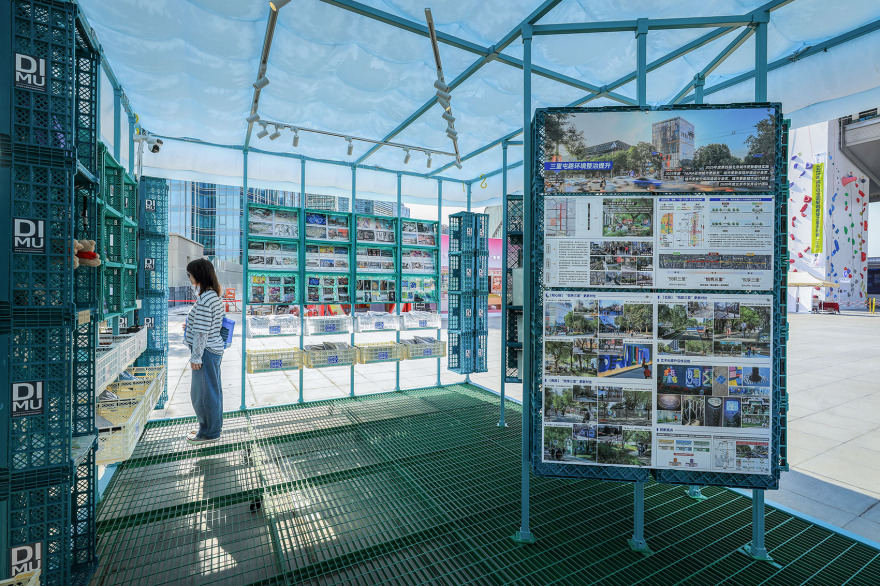
展厅突破传统展墙模式,充分激活篮筐的单元化构造潜力。每个篮筐不再仅是展厅表皮,更成为承载项目内容的展龛。该展示方式不仅强化了空间的构造美学,更在内容与容器之间建立起内在的逻辑关联,创造出一种新的展示体验。
▼工作室成果展示布置,studio work display © 埊木设计(CAFA·A城市艺术创新中心)

Moving beyond the usual exhibition wall, the design highlights the plastic crates’ modular potential. Each plastic crates becomes its own display niche, strengthening the space’s structural aesthetic and forming a clear logic between content and container.
▼展陈内部空间日景,interior view by day © 埊木设计(CAFA·A城市艺术创新中心)

▼展陈内部空间夜景,interior view by night © 埊木设计(CAFA·A城市艺术创新中心)

4. 教学呈现:实践与教育的并置对话
Teaching Presentation: Practice and Education in Dialogue
设计特意将美院教学成果纳入展示框架,设置独立的毕业生作品展墙。通过篮筐展陈与配套明信片,既呈现了工作室在建筑教育领域的持续投入,也与专业实践板块形成有机对话,完整勾勒出“实践—教学—研究”的一体化形象。▼教学成果布置,teaching work display © 埊木设计(CAFA·A城市艺术创新中心)

The design brings the CAFA’s teaching work into the exhibition, creating a dedicated wall for graduation projects. Through plastic crates displays and matching postcards, it shows the studio’s ongoing role in architectural education and links it with professional practice, presenting a clear picture of the “practice–teaching–research” system.
▼教学成果布置,teaching work display © 埊木设计(CAFA·A城市艺术创新中心)

▼教学成果展示与明信片单元,teaching display with postcard unit © 埊木设计(CAFA·A城市艺术创新中心)

5. 物料延伸:策展维度的补充与拓展
Material Extension:Curatorial Expansion
作为空间叙事的延伸,定制化的项目手册进一步丰富了策展层次。它不仅是信息的补充载体,更成为观众进场时的内容延伸工具,并于离场后仍可延续阅读记忆,该双向联结增强了工作室整体形象的塑造深度与传播持久力。
As an extension of the spatial narrative, a custom project booklet adds another layer to the curation. It works not only as an information supplement but also as a take-along tool that visitors continue to read after leaving, strengthening the studio’s identity and long-term reach.
▼配对设计的工作室项目手册及周边,studio project booklet © 埊木设计(CAFA·A城市艺术创新中心)


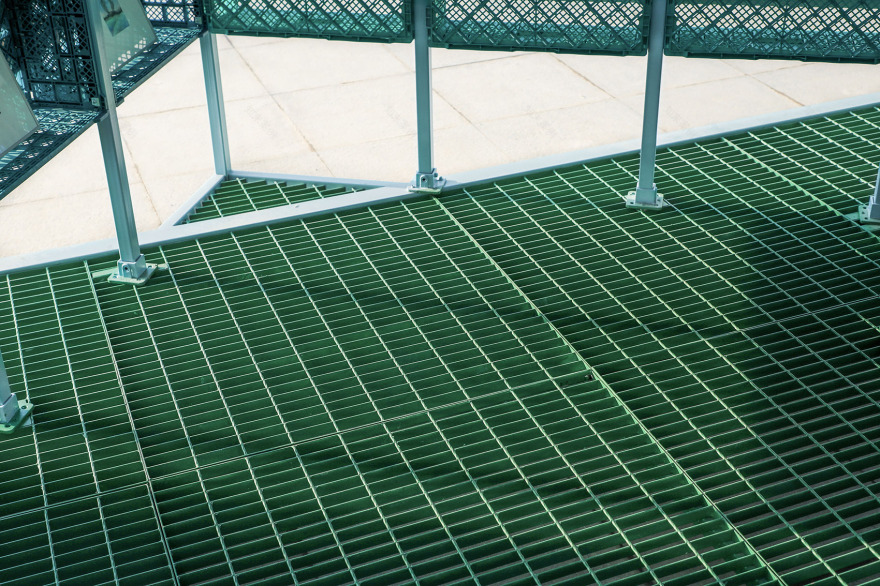
另一方面,除艺术策展的手段以外,设计团队基于将展厅视作艺术装置视角进行了多方面的考虑与设计,通过多重细节强化空间质感:为每一件篮筐设计贴纸以削弱工业品的粗粝感、采用密排组合形成细腻肌理的钢格栅作展厅地面、将商品陈列纳入展厅造型系统、透过篮筐造型特点形成特定的光影效果以塑造质感。
Beyond curatorial methods, the team also treated the exhibition as an art installation. The team refined the space with simple design moves: stickers to soften the plastic crates’ industrial feel, dense steel grating for a finer floor texture, product displays built into the form, and light-and-shadow effects created by the plastic crates’ geometry.
▼篮筐二次设计,redesigned plastic crates © 埊木设计(CAFA·A城市艺术创新中心)

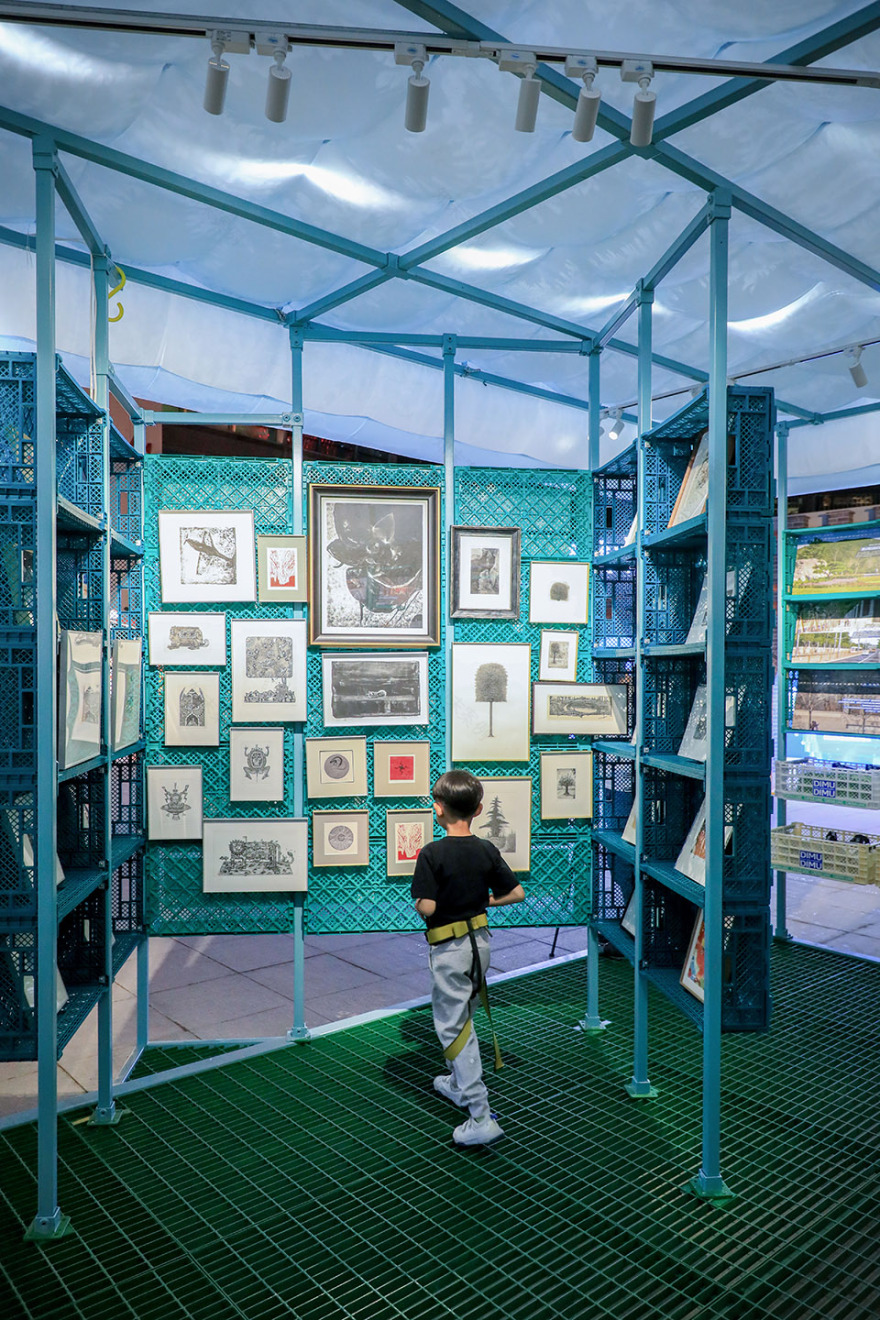
为进一步提升展厅的艺术维度,设计特邀艺术家版画作品介入空间进行展示和售卖。它们或被悬挂于篮筐背面,或被置于筐体内部,与构件形成叠透与共生的视觉关系,以此丰富展厅的艺术层次,更将当代美学观念直接传递给公众,使展厅在履行展示职能的同时,亦成为一场可游可感的美学传播现场。
▼版面墙布置,print wall arrangement© 埊木设计(CAFA·A城市艺术创新中心)

To enhance the artistic dimension, the exhibition includes print works by invited artists. Hung behind the plastic crates or placed inside them, the works create layered visual relationships with the structure, enriching the space and bringing contemporary aesthetics directly to visitors. This turns the exhibition into a walkable and engaging artistic setting.
▼商品展陈,display of products© 埊木设计(CAFA·A城市艺术创新中心)

▼商品展陈,display of products© 埊木设计(CAFA·A城市艺术创新中心)

▼版画展示墙实景,print wall scene© 埊木设计(CAFA·A城市艺术创新中心)

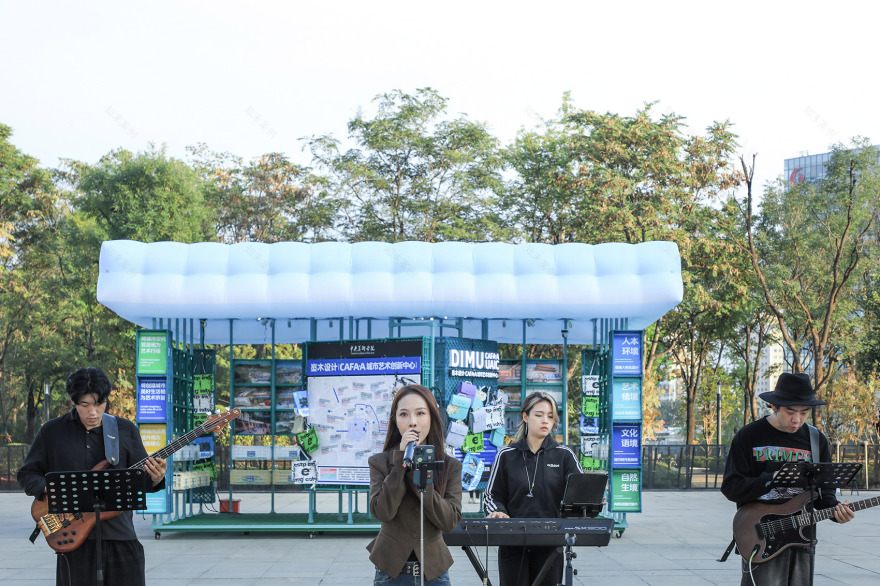
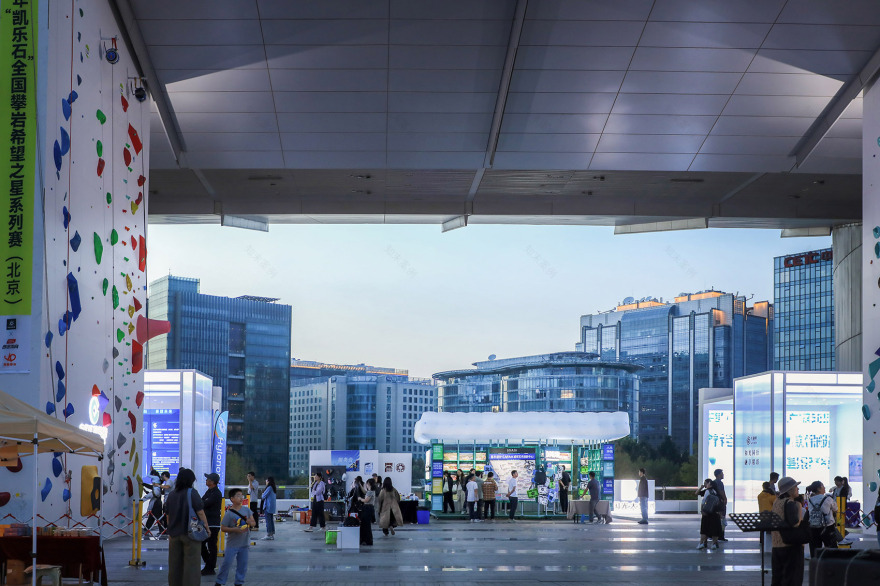
此外,打造可移动的城市艺术装置,是重要的设计观念。为此展厅底部预设滑轮系统,解除固定后可灵活移动至场地内任一位置,使自身成为“动态展品”。在当天颁奖典礼至城市更新体验周开幕暨国庆黄金周期间,展厅曾根据场地不同时段活动需求多次改变位置,以“游牧”方式主动融入不断变化的都市生活之中。
A key idea of the design is to create a mobile urban art installation. The pavilion’s base is fitted with a caster system, allowing it to move freely once unlocked. During the award ceremony, the Urban Renewal Experience Week, and the National Day period, the pavilion was relocated several times to match different event needs, taking on a “nomadic” presence within the changing urban environment.
▼不同位置内的展厅空间,pavilion in different locations© 埊木设计(CAFA·A城市艺术创新中心)
四、意识对话:建构精神性与情感性的共鸣
Ⅳ. Dialogues of Awareness: Resonance of Spirit and Emotion
在满足物理功能与观念表达之外,设计追求与环境和心灵的精神对话。空间构成讲究功能与视线环境的结合,让空间的细节、构造、形式融于目及所至之处,带来不同于传统户外展厅的体验。此外,顶部的透光充气垫在夜间被内置灯光点亮,如同一盏悬浮于城市空中的柔光云顶,以其温和的视觉语言,为都市注入一份静谧的艺术氛围。
Beyond function and concept, the design aims for a quiet dialogue with its surroundings. The spatial layout links use, sightlines, and atmosphere, creating an experience unlike typical outdoor pavilions. At night, the glowing pneumatic cubes hangs over the city like a soft cloud, bringing a calm, poetic mood to the urban setting.
▼城市夜空中的柔光“云顶”,glowing pneumatic cubes at night© 埊木设计(CAFA·A城市艺术创新中心)


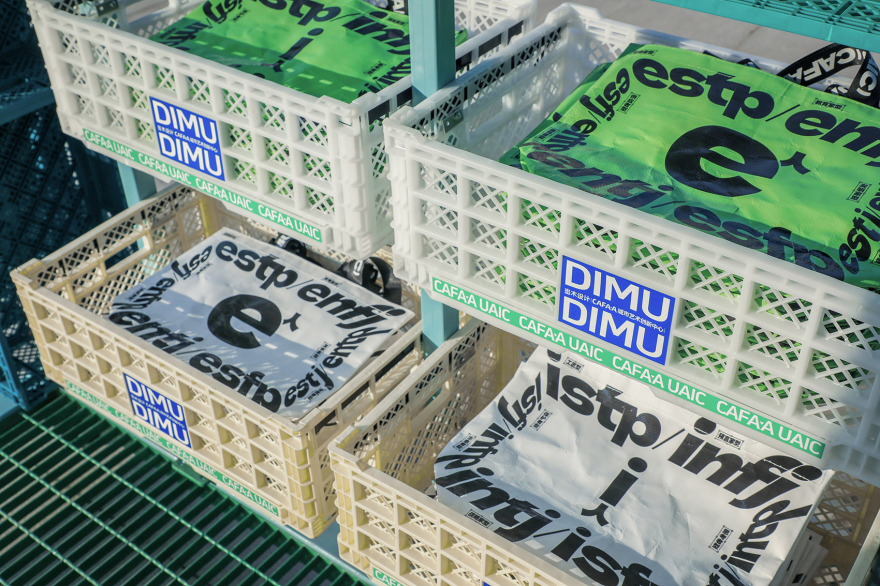
另一方面,工作室精心设计的文创产品亦成为引发公众共鸣的媒介。MBTI人格背包以社交文化符号促成身份认同与互动;而从获奖项目(如三里屯路的霓虹灯墙、地砖)中提取元素制作的冰箱贴与明信片,则将身边的城市更新议题,转化为可被携带、收藏的日常记忆,完成了从专业实践到公众情感的微妙联结。
▼工作室MBTI人格编织袋,MBTI- themed bags© 埊木设计(CAFA·A城市艺术创新中心)
尾声:一场有关建构与叙事的户外探索
Epilogue: An Outdoor Exploration of Construction and Narrative
在有限的物质与时空条件下,埊木设计凭借对物性的独特理解、对时代精神的真切回应、对观念叙事的艺术构建,以及对精神性的细腻追求,将临时展厅塑造成既能引发情感共鸣、又具备高度传播性的体验节点,形成连接文化、城市与公众的活跃界面。它不仅是工作室形象的展示窗,更是一件生动存在于城市之中、与每个人进行对话的公共艺术装置,并诠释了“赋寻常以新意,融艺术于日常”的设计哲学。
Against material and time limits, DIMU Design created a temporary pavilion that embodies material sensitivity, contemporary relevance, and narrative depth. The space resonates emotionally while connecting culture, city, and the public. It serves not just as a studio showcase, but as living urban art—demonstrating a design philosophy that finds new meaning in the ordinary and brings art into daily life.
▼“埊木庭”夜景,the DIMU Pavilion at night© 埊木设计(CAFA·A城市艺术创新中心)


项目名称:埊木庭——可移动城市微展厅设计
项目位置:北京市海淀区大融城、朝阳区太古里南区
项目类型:建筑设计
项目面积:18平方米
项目设计年份:2025年7月
项目完成年份:2025年10月
设计方:埊木设计(CAFA·A城市艺术创新中心)
主创及设计团队:李琳、梁志豪、闫玉琢、李虹润
文创团队:梁志豪、李虹润、刘子逸、候乐然、李鑫悦
摄影版权:埊木设计(CAFA·A城市艺术创新中心)、金伟琦
Project name: DIMU Pavilion, a Mobile Urban Micro-Exhibition
Project location: ART PARK (Haidian) and Taikoo Li South (Chaoyang), Beijing
Project type: Architectural Design
Project area: 18 m²
Design year: July 2025
Completion year: October 2025
Designer: DIMU Design(CAFA·A Urban Art Innovation Center)
Lead creator and design team:Li Lin, Liang Zhihao, Yan Yuzhuo, Li Hongrun
Cultural products team:Liang Zhihao, Li Hongrun, Liu Ziyi, Hou Leran, Li Xinyue
Photography copyright: DIMU Design(CAFA·A Urban Art Innovation Center), Jin Weiqi
Video copyright: DIMU Design(CAFA·A Urban Art Innovation Center)






南京喵熊网络科技有限公司 苏ICP备18050492号-4知末 © 2018—2020 . All photos and trademark graphics are copyrighted by their owners.增值电信业务经营许可证(ICP)苏B2-20201444 苏公网安备 32011302321234号
苏公网安备 32011302321234号客服
消息
收藏
下载
最近