

创作上传
VIP
收藏下载
登录 | 注册有礼
查看完整案例

收藏

下载

分享
Appreciation towardsMVRDVfor providing the following description:
MVRDV 在台湾台中市的 21 层高住宅建案《屿76 The Island》,近日已正式获得建照核准。设计理念著重于将绿意与自然带入城市,并提供充足的公共空间,以创造出极致的宜居性。为了呼应这样的愿景,这栋建筑以有机形态呈现——层层阳台与植栽平台沿立面错落展开,建筑边缘与开口皆以柔和曲线勾勒出外型;立面则采用不规则陶砖马赛克拼贴,灵感源自西班牙建筑师高第(Antoni Gaudí)之作,呈现独特的自然韵律。
MVRDV has received construction permission for “The Island”, a 21-storey residential tower in Taichung, Taiwan. The design focuses on bringing greenery and nature to the city, as well as providing communal spaces for maximum liveability. Taking a cue from these ambitions, the tower takes on an organic expression: its many balconies and planters, as well as the building’s edges and openings, are defined by their soft curves, while the façade is finished in a mosaic of irregular ceramic tiling inspired by the work of Antoni Gaudí.
▼项目概览,Project Overview © MVRDV
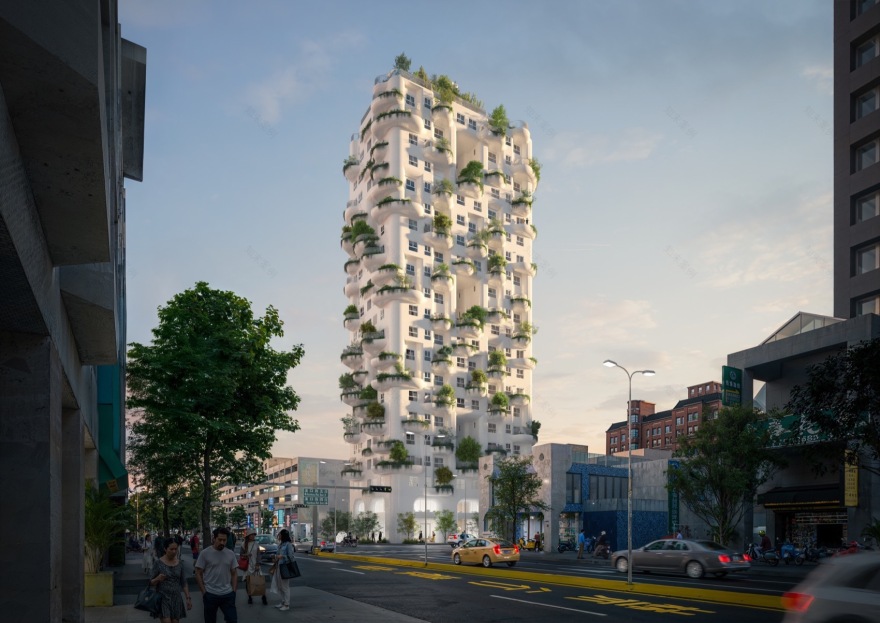
本案共规划 76 户住宅单元,位于两层商业及公设空间之上。公设层设有社区宴会厅、交谊厅与KTV 空间等多元共享设施。目标族群以中产阶级及年轻夫妻为主,设计特别著重于促进社交互动的公共区域,并规划多样的户外共享空间。顶楼设有层叠绿冠环绕的屋顶花园与多功能空间;全栋共配置五处三层高的共享阳台,这些阳台错落地嵌入建筑立面,营造开阔通透的空间感。
The project features 76 apartments for sale above two floors featuring commercial spaces and a communal dining room, lounge, and karaoke space. With the development aimed at middle-class residents and especially young couples, communal areas are a significant focus of the design, with a large variety of shared outdoor spaces. The roof features a shared garden terrace, surrounding a layered green crown that hosts a multi-functional shared space for residents’ use. Five communal balconies are distributed among the building’s 21 floors, with each one carving a three-storey indent into the building’s façade to create a feeling of spaciousness.
▼户外空间与绿化量,Outdoor space and greenery © MVRDV

《屿76 The Island》的设计初衷旨在回应台中市「宜居建筑」相关规范,透过增加户外空间与绿化量,实践更永续的都市居住模式。基地位于台中北区与北屯区交界处,早期为城市边缘地带,随近年北屯地区快速都市化,如今已成为商业活动密集的市中心区域。
The Island is a response to Taichung’s liveable building regulations, which incentivise an increase in outdoor space and greenery. Located at the border between Taichung’s North District and Beitun District, until the 21st century the site was close to the edge of the city; today, following a wave of urbanisation in Beitun District, it finds itself at the heart of a densely packed commercial neighbourhood.
▼街景立面效果,Street view facade effect © MVRDV

为回应此愿景,设计以「城市绿洲」为构想,于住宅楼内外注入多层次植栽。除屋顶花园与共享阳台外,设计亦在街道层引入植栽,同时设置 104 座附植栽的私人阳台及 38 个独立的花槽。整体植栽配置反映台中地区丰富的自然样貌,整现丰富的生态多样性。
To counteract this condition, the project creates an oasis of greenery within the city. In addition to the aforementioned rooftop and communal balconies, the design introduces street-level planting, 104 private balconies with planted areas, and 38 standalone façade planters, complete with a selection of plants that reflects the diversity of nature in the whole of Taichung province.
▼104 座附植栽的私人阳台及 38 个独立的花槽,104 private balconies with planted areas, and 38 standalone façade planters © MVRDV
除了达成生物多样性的目标,本建案也以减少碳排放为目标,追求永续性。目前基地上为一栋 13 层楼的商办大楼,基于当地的耐震法规,将进行拆除。MVRDV 计划在《屿76 The Island》的施工过程中重复利用部分旧建材,例如回收原建物墙面与地坪石材,重新应用于新建筑的地面铺面,以减少废弃与碳排放。
In addition to the project’s biodiversity goals, sustainability is also a goal in the context of carbon emissions. Currently the site is home to a 13-storey commercial and office building that was built before the country’s most recent earthquake-related building regulations, and therefore has to be demolished. Instead of discarding this material as waste, the construction of The Island will reuse materials where possible, for example by saving the stone from the existing building’s walls and floors to be reused as a floor finish in the new building.
▼街道视角,Street view© MVRDV

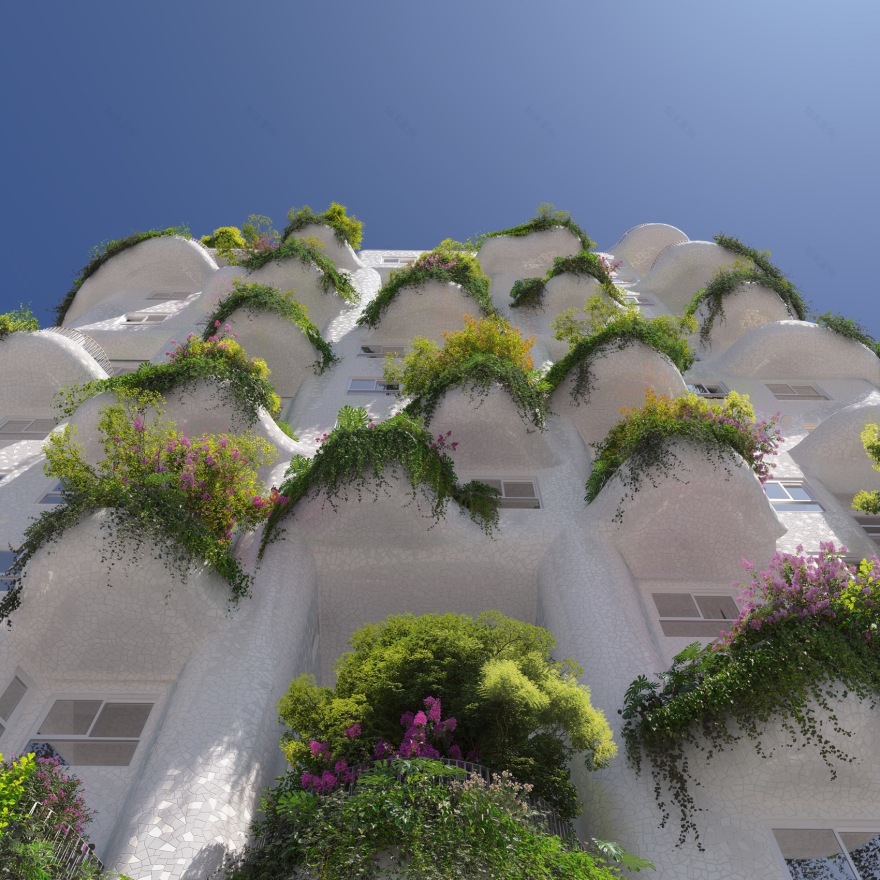
为了突显建案将自然带回城市的设计主题,外墙立面的有机曲线由陶瓷组构而成。这种外墙采用不规则小块的马赛克拼贴,能灵活贴合曲面,呼应高第的建筑语汇。立面以多种白色阶调交错铺陈:平面区域使用较大块的陶砖,而曲面转折处则以细致纹理呈现流畅光感。此工法不仅兼具细腻质感与视觉层次,也具备良好的维护性。
To emphasise the project’s dedication to bringing nature back to the city, its greenery is complemented by the organic curves throughout the design, made possible by the ceramic façade. Using a mosaic of small irregular shapes, the tiles can be adapted to every curve, in a technique best known from the work of Catalan architect Antoni Gaudí. Using a variety of different shades of white, larger pieces are used on the flat areas and a smaller, more granular pattern gives a smooth finish to the tighter curves. This technique not only provides a high-quality finish but also one that is easy to maintain.
▼陶瓷材质外观,Ceramic façade © MVRDV

MVRDV 创始合伙人 Jacob van Rijs 表示:「《屿76 The Island》为充满方盒量体的城市带来一抹柔和的气息。与多数台湾住宅大楼相似,住宅平面布局采高效率、标准化的规划逻辑,因此建筑个性更多来自细节——柔和的曲线、受高迪启发立面质感,以及绿意如同有机生命般融入建筑之中。」
“The design of The Island brings a soft touch in a city full of boxes”, says MVRDV founding partner Jacob van Rijs. “As with other residential buildings in Taiwan, the building’s underlying layout had to follow a fairly standardised and highly efficient approach. The building’s character therefore has to come from its details, from the soft curves, from the Gaudí-inspired façade finish, and from the way greenery is integrated as if the building is part of the same organic system.”
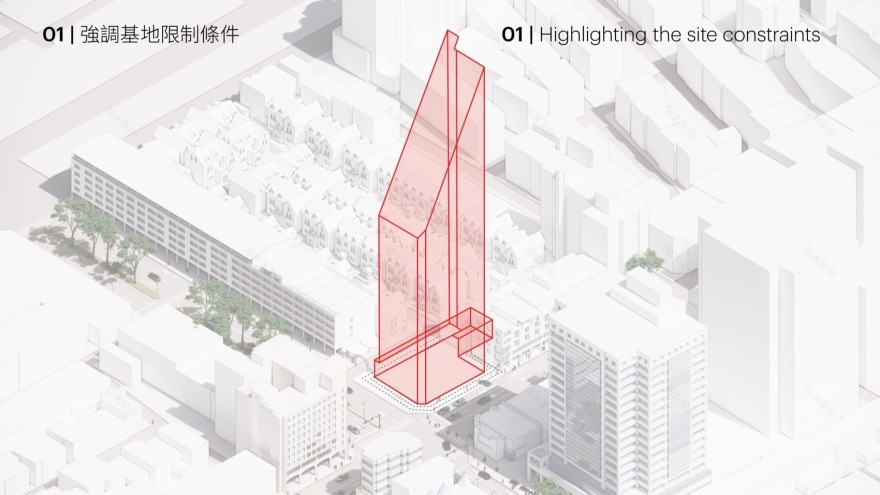
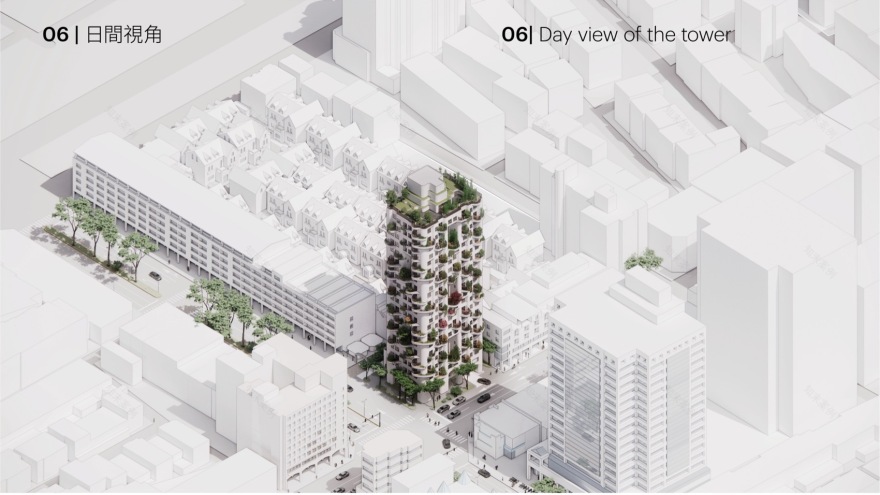
▼形体生成分析图,Shape generation analysis diagram © MVRDV



▼不同绿植类型,Different green plant types© MVRDV

▼总平面图,Site plan© MVRDV
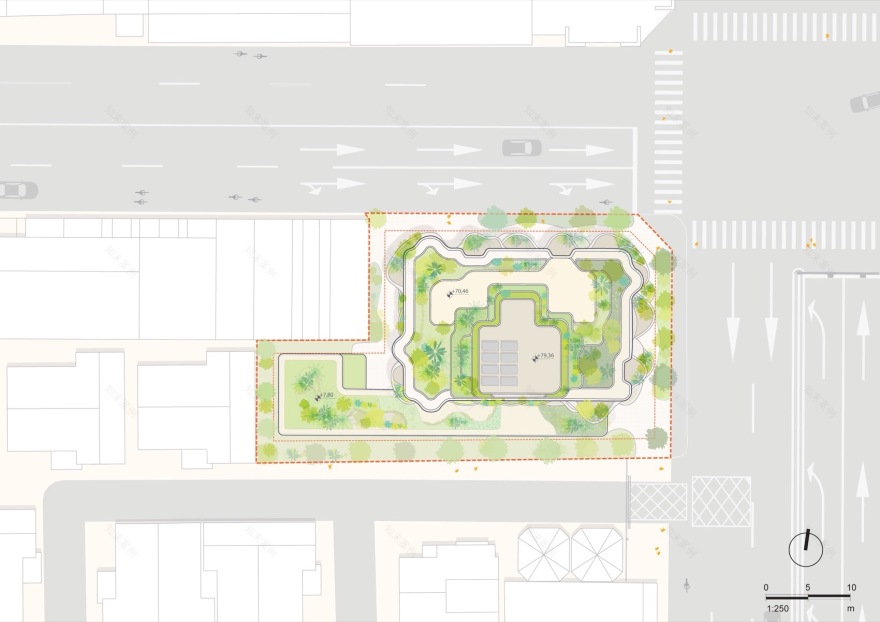
▼11层平面图,Floorplan Level 11 © MVRDV

▼1-11层平面图,Floor plans 1 to 11 © MVRDV

▼12-R4层平面图,Floor plans 12 to R4© MVRDV

项目名称: The Island
地点: 台湾台中市
年份: 2024
客户: Cheering Zu
项目规模与功能: 9000平方米,住宅单元,商业空间
建筑师: MVRDV
总负责人: Jacob van Rijs
项目总监: Gideon Maasland
台湾负责人: Hui Hsin Liao
设计团队: Laura Petroncini, Mark van Wasbeek, Herng Tzou, Veronica della Ventura, Piotr Janus, Francesca Cambi, Olly Veugelers, Lorenzo Mennuti, Joyce de Louw, Nicola Panico
可视化: Antonio Luca Coco, Luana La Martina, Angelo La Delfa, Lorenzo D’ Alessandro, Ciprian Buzdugan, Stefano Fiaschi; Teresa Papachristou(平面设计)
版权: MVRDV, Winy Maas, Jacob van Rijs, Nathalie de Vries
合作单位
联合建筑师: Sd-Haus,台中市,台湾
景观建筑师: Ele-Garden景观设计
结构工程师: Dayan工程咨询
机电工程(MEP): Songlin工程咨询
照明顾问: LHLD照明设计
Project Name: The Island Location: Taiwan, Taichung City Year: 2024 Client: Cheering Zu Size and Programme: 9000 sqm, housing units, commercial spaces
Architect: MVRDV
Founding Partner in charge: Jacob van Rijs
Director: Gideon Maasland
Head of Taiwan: Hui Hsin Liao
Design Team: Laura Petroncini, Mark van Wasbeek, Herng Tzou, Veronica della Ventura, Piotr Janus, Francesca Cambi, Olly Veugelers, Lorenzo Mennuti, Joyce de Louw, Nicola Panico
Visualisation: Antonio Luca Coco, Luana La Martina, Angelo La Delfa, Lorenzo D’ Alessandro, Ciprian Buzdugan, Stefano Fiaschi; Teresa Papachristou (Graphic Design)
Copyright: MVRDV Winy Maas, Jacob van Rijs, Nathalie de Vries
Collaborators
Co-architect: Sd-Haus, Taichung City, Taiwan
Landscape architect: Ele-Garden Landscape Design
Structural engineer: Dayan Engineering Consultant
MEP: Songlin Engineering Consultant
Lighting Consultant: LHLD Lighting Design
南京喵熊网络科技有限公司 苏ICP备18050492号-4知末 © 2018—2020 . All photos and trademark graphics are copyrighted by their owners.增值电信业务经营许可证(ICP)苏B2-20201444 苏公网安备 32011302321234号
苏公网安备 32011302321234号客服
消息
收藏
下载
最近