

创作上传
VIP
收藏下载
登录 | 注册有礼
查看完整案例

收藏

下载

分享

翻译

Born from his obsession with the colour black, The Black Book is architect Paul Cournet's in-depth investigation into 100 black material samples. Here, he highlights 10 of his favourites.
The book features materials ranging from charcoal, lava stone, carbon fibre and coal to vegan leather, charred wood, recycled plastics and 'the blackest black', accumulated by the author over several years.
"For many years I have been obsessed with the colour black – in architecture but also in arts, fashion, design and science," said Cournet.
"The black book is more like a catalogue"
Throughout the evolution of his Rotterdam-based architecture and design practice Cloud, he has requested new material samples from manufacturers, every time asking if they also have the material in black.
"When traveling to Japan, Argentina, Indonesia, Morocco… I have been interested to understand the meaning and stories of this black colour in different cultures," he said.
"In the end, the black book is more like a catalogue or an atlas of materials," he continued.
"It combines a selection of 100 black samples that I have carefully selected over the years, as well as some references and diagrams that reflect my research."
"An in-depth investigation into the colour black"
Each material has been studied, photographed and catalogued by hue, composition, and origin. The author seeks to unravel the complexities of the colour black through maps, infographics and visual references.
"The Black Book is more than a book about a single colour," stated Cournet.
"It is an in-depth investigation into the colour black, its visual power, material diversity and cultural significance. Arguably, in search of where art and science unite, black is the ultimate colour."
Here, Cournet selects 10 of his favourite materials from the book and explains some of the intrigue behind them:

#30. Graphite pigment
Grounded by traditional millstones in the Netherlands - the last windmills in the world producing paint in this original way – graphite pigment is a high-quality, finely ground black pigment made from graphite, the pure carbon mineral.
The same technology is still used today to transform raw materials like minerals into pigments to produce paints and watercolors.
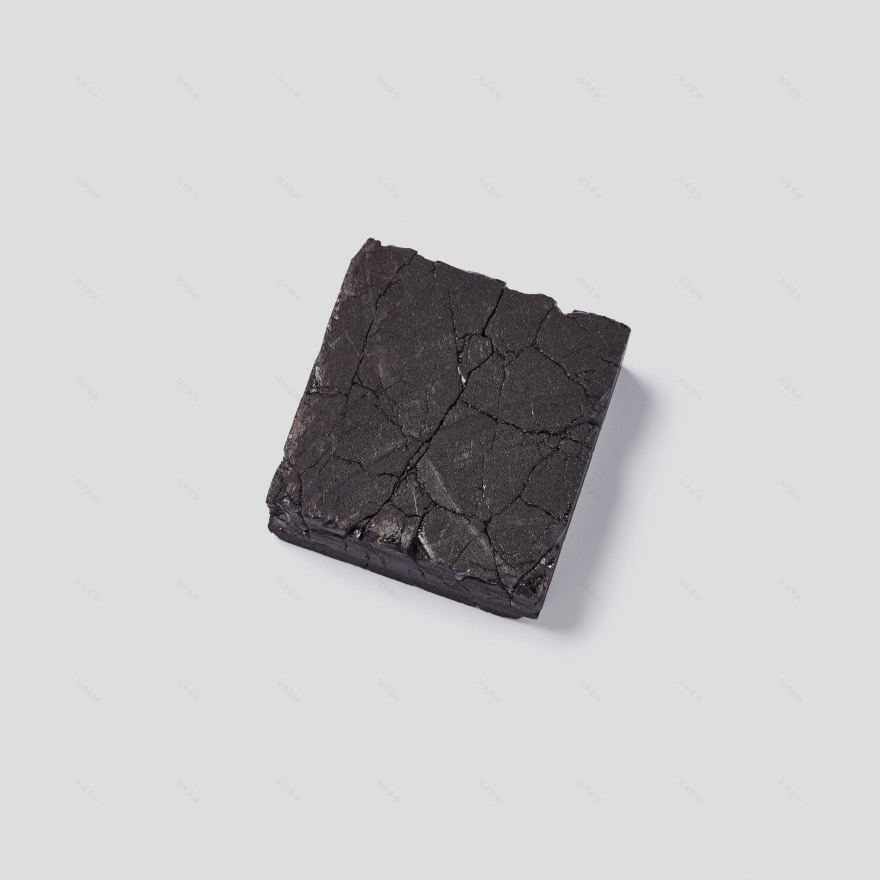
#31. Compressed coal
Sourced in the coal mines from South Wales, the compressed coal blocks aim to change the social perception of coal, from a widely used and harmful fuel for the planet to a valuable resource and material.
The material is processed in a similar way as a natural stone, shown here with a black-marble-like finish, and then turned into solid blocks that can be used for various architectural features. Compressed coal is still an experimental material, yet it could gain wide popularity considering its original and practical format.

#34. Marugame charred wood
Based on a Japanese traditional technique that was developed in the early 18th-century, charred wood is still commonly used today as a way to create protective surfaces with natural wood.
Once torched, the surface of the wood becomes water-repellent, resistant to rot and insects, and requires little to no maintenance over the years. Still today, charred wood uses the traditional Japanese technique of Shou Sugi Ban (or Yakisugi) which creates this dark silvery charred layer finish.
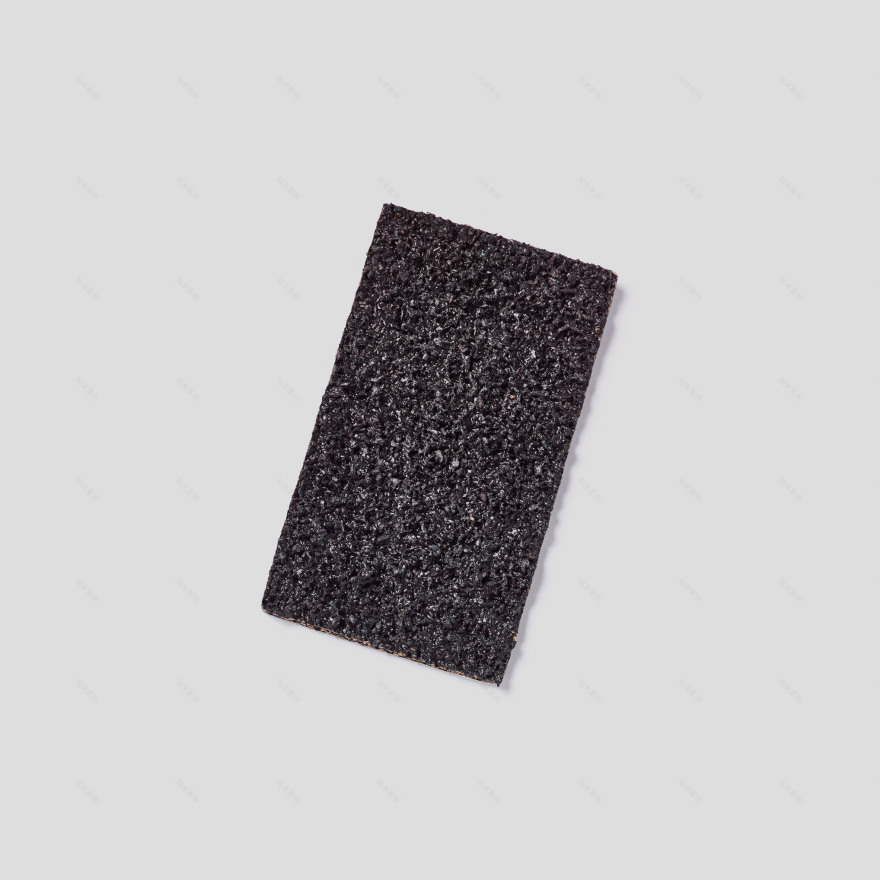
#36. Spray cork
Developed in Portugal, spray cork is using the waste from the natural cork industry. Once mixed with pigments, this sprayed cork can then be applied as a watertight coating on walls and facades of buildings.
The texture produces a rough and textured surface that offers various qualities such as noise reduction and insulation.

#52. Recycled textile felt
Born from second hand materials collected in The Netherlands, this recycled felt merges waste textiles from industries such as KLM, IKEA and the Dutch Ministry of Defence.
These recycled and recyclable felt sheets are then developed for interior application with acoustic properties.

#62. Apple waste leather
Rooted in Denmark, the apple waste leather project transforms apple waste from the juice industry into innovative faux leather.
With over 80 per cent of bio-based content, it uses less water and emits fewer emissions, offering a more circular alternative to traditional animal based leather solutions.

#74. Texture recycled latex
This texture jet-black recycled latex had been developed in Belgium through the process of coating recycled natural latex foam coming from the mattress industry.
The experimental material is then rejuvenated and brings a newfound strength to the idea of what soft latex can be for future indoors and outdoors settings.

#79. Carbon fibre
Carbon fibre, created through a high-temperature process that removes all non-carbon atoms and causing it to absorb nearly all visible light, is woven into a strong technical fabric to create sturdy and light-weight materials.
Its iridescent black surface follows carbons' natural structure. The material offers a future-forward aesthetic that is lightweight and built to last across a diversity of advanced applications.

#88. Recycled PC Tile
The recycled PC tile is a unique post-consumer / post-industrial material that has been reprocessed to create new forms. It features a hypnotic graphite colorway that captures light from every angle.
Its uniqueness lies in the way it is made: it is hand spun by craftsmen near the harbour of Rotterdam and is 100 per cent recycled and recyclable.

#100. World's blackest acrylic paint
There's much to be explored in the blackest shade of black. Developed in Japan, this unique water-based acrylic paint absorbs up to 99.4 per cent of light, opening new possibilities for architecture, design and arts.
Musou Black is known today as the commercially available world’s blackest black. It achieves this by creating a powdery coating – best applied with an air brush - that traps light within its layers, resulting in an extreme, deep, non-reflective, matte finish. What could it mean for future spaces to perceive new depths, where color itself challenges our sense of space and dimension?
南京喵熊网络科技有限公司 苏ICP备18050492号-4知末 © 2018—2020 . All photos and trademark graphics are copyrighted by their owners.增值电信业务经营许可证(ICP)苏B2-20201444 苏公网安备 32011302321234号
苏公网安备 32011302321234号客服
消息
收藏
下载
最近