

创作上传
VIP
收藏下载
登录 | 注册有礼
查看完整案例

收藏

下载

分享

翻译
Premium-Class Apartment Complex
Bukit, Bali
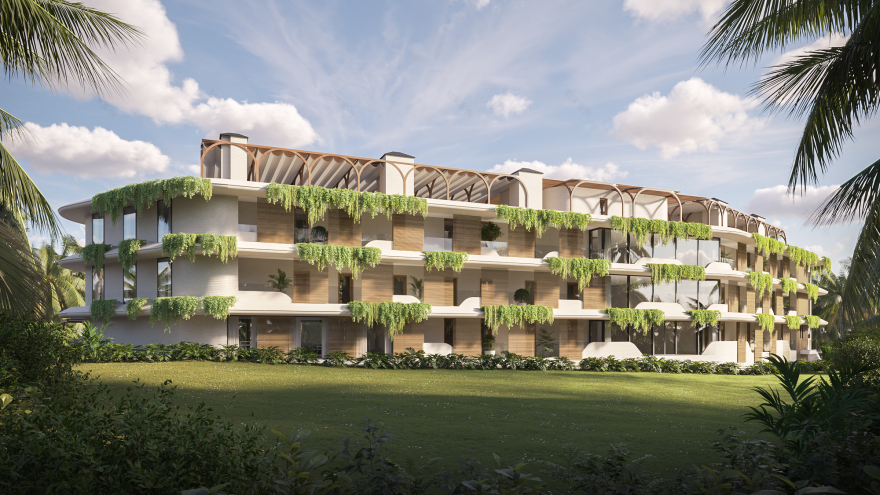
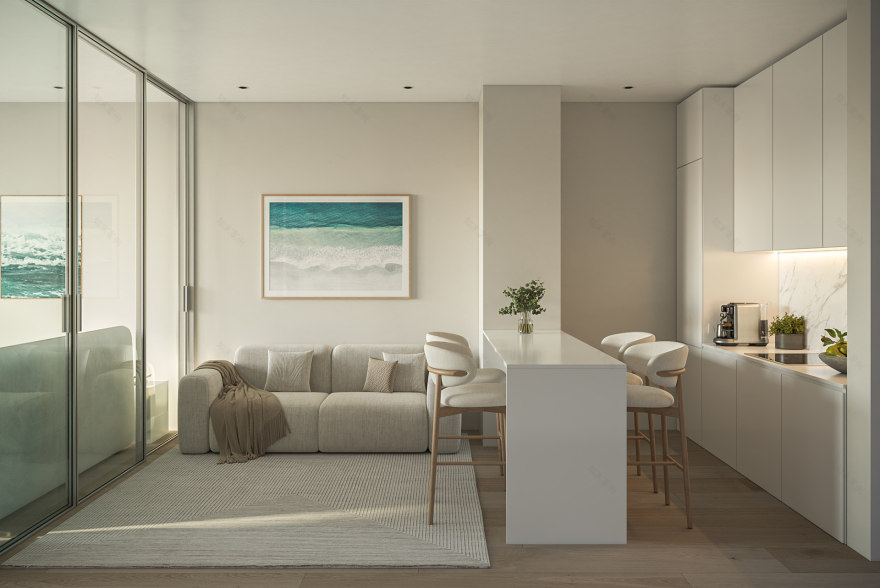
The project was created as part of a cottage settlement in Uluwatu in the south of the island of Bali. The complex unites about twenty small villas located on a site with terrain where rice fields used to be. The new development became a logical continuation of the settlement’s architecture and supports its overall plastic, contemporary appearance.
Architecture is based on a combination of bionic forms and functional minimalism. Soft lines, rounded corners, and smooth transitions of the walls make each villa a natural element of the landscape, creating a sense of lightness and seclusion.
• Site area — 89 ares
• Floors — 14 floors

Client Task
The task was to place twenty compact private villas on the site, of two types: triangular and paired rectangular. Each villa had to have its own pool, a small adjacent outdoor area, and access to the roof with a relaxation zone. At the same time, it was important to preserve privacy between neighboring plots and to integrate the project organically into the cascading terrain of the former rice terraces.

Concept
The concept is based on the principles of bionic architecture. The forms of each villa were created with consideration of 3D-printing technology, where the material defines the plasticity without additional finishing. The terrain made it possible to arrange the houses in tiers: the upper row of villas at the highest level, the middle level with a shared pool, and the lower row in the shade of the trees. This solution ensures open views and visual separation between neighboring units.


Architecture
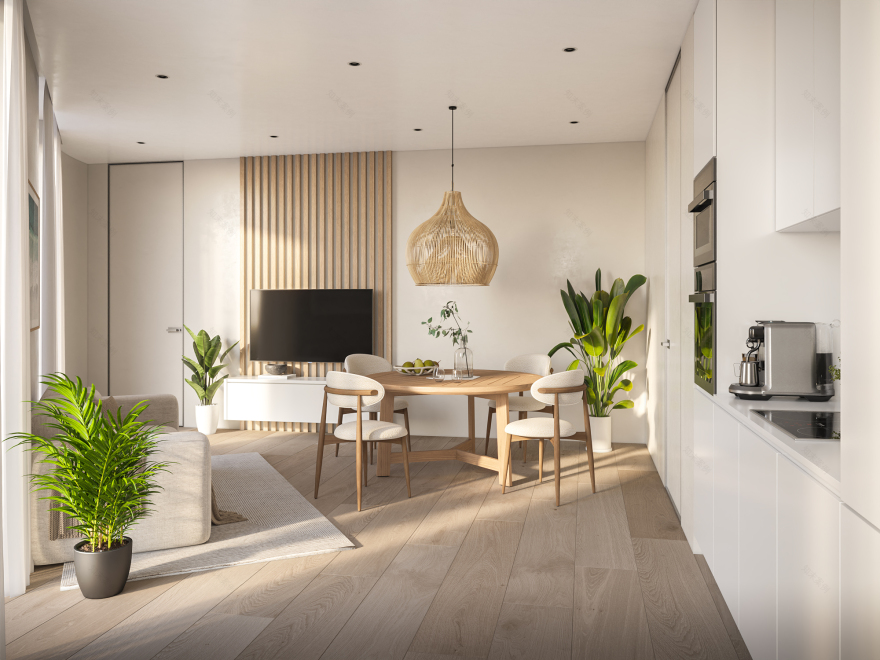
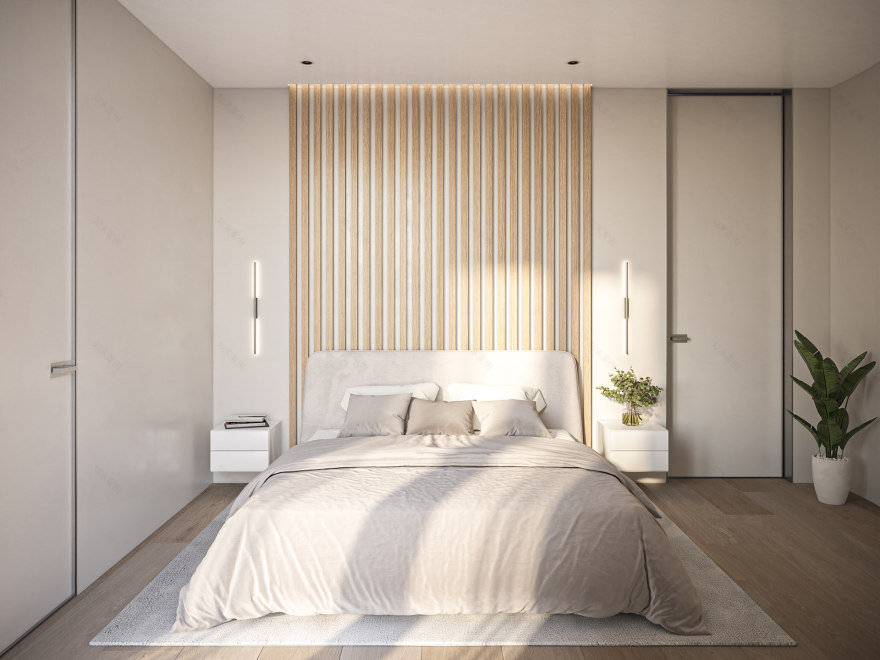
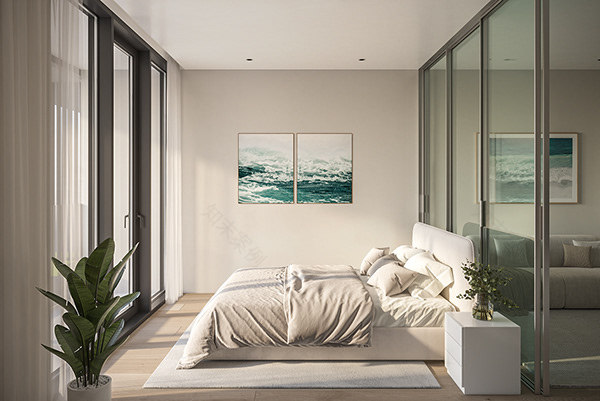
The architecture is executed in a bionic style with elements of contemporary minimalism. The villas have rounded façades and smooth lines, and the expressiveness is created by the texture of the printed walls. In the triangular villas, each volume is autonomous; in the rectangular ones, there is a shared wall, but the internal zones are oriented in different directions so that residents do not intersect visually. All houses have flat roofs with a wooden pergola and greenery along the perimeter.
The main wall material is concrete printed on the foundation slab using a construction 3D printer. The surface of the walls does not require additional finishing, preserving the pattern of the printing layers. The roof is flat, with a wooden pergola and concealed drainage. The construction uses monolithic staircases, elements made of local wood, and metal components to reinforce the joints.
Each villa includes water supply, cooling, and ventilation systems, including forced extraction in kitchen and sanitary zones. Water-filtration systems for the pools and septic systems with annual maintenance are implemented.
Rainwater drainage is concealed inside the building structure and directed into the site’s shared stormwater network.
• smooth bionic forms created by 3D printing
• cascading placement of the villas on the terrain of former rice terraces
• two typological solutions: triangular and paired rectangular villas
• private pools and accessible roofs with relaxation areas
• concealed engineering systems and drainage within the structures


南京喵熊网络科技有限公司 苏ICP备18050492号-4知末 © 2018—2020 . All photos and trademark graphics are copyrighted by their owners.增值电信业务经营许可证(ICP)苏B2-20201444 苏公网安备 32011302321234号
苏公网安备 32011302321234号客服
消息
收藏
下载
最近