

创作上传
VIP
收藏下载
登录 | 注册有礼
查看完整案例

收藏

下载

分享
格栅(Latticework)的设计原则,作为印度尼西亚数百年来炎热潮湿的热带气候中的重要元素,既是关键的身份标识,也是基本的微气候控制手段,更是生物气候设计(Bioclimatic Design)的杰出典范。通过双重编码(Dual Coding)——即功能性与象征性的结合,该设计以更大的自由度与灵活性进行了重新适配,使格栅转化为一种现代、高性能的遮阳装置。它同时作为一个视觉丰富且具有语境相关性的建筑表皮(Screen/Skin),呼应了当地在可持续性方面的建筑实验。
The latticework principle, having been essential in the hot, humid tropical climate of Indonesia for hundreds of years, is a key identity component for essential climate control and a brilliant example of bioclimatic design. When readapted with greater design freedom and flexibility through dual coding (function and symbolism), the lattice becomes a modern, high-performing shading device that simultaneously serves as a visually rich, contextually-relevant screen recalling local architectural experimentation in sustainability.
▼项目鸟瞰,aerial view of the project © Ernest Theofilus


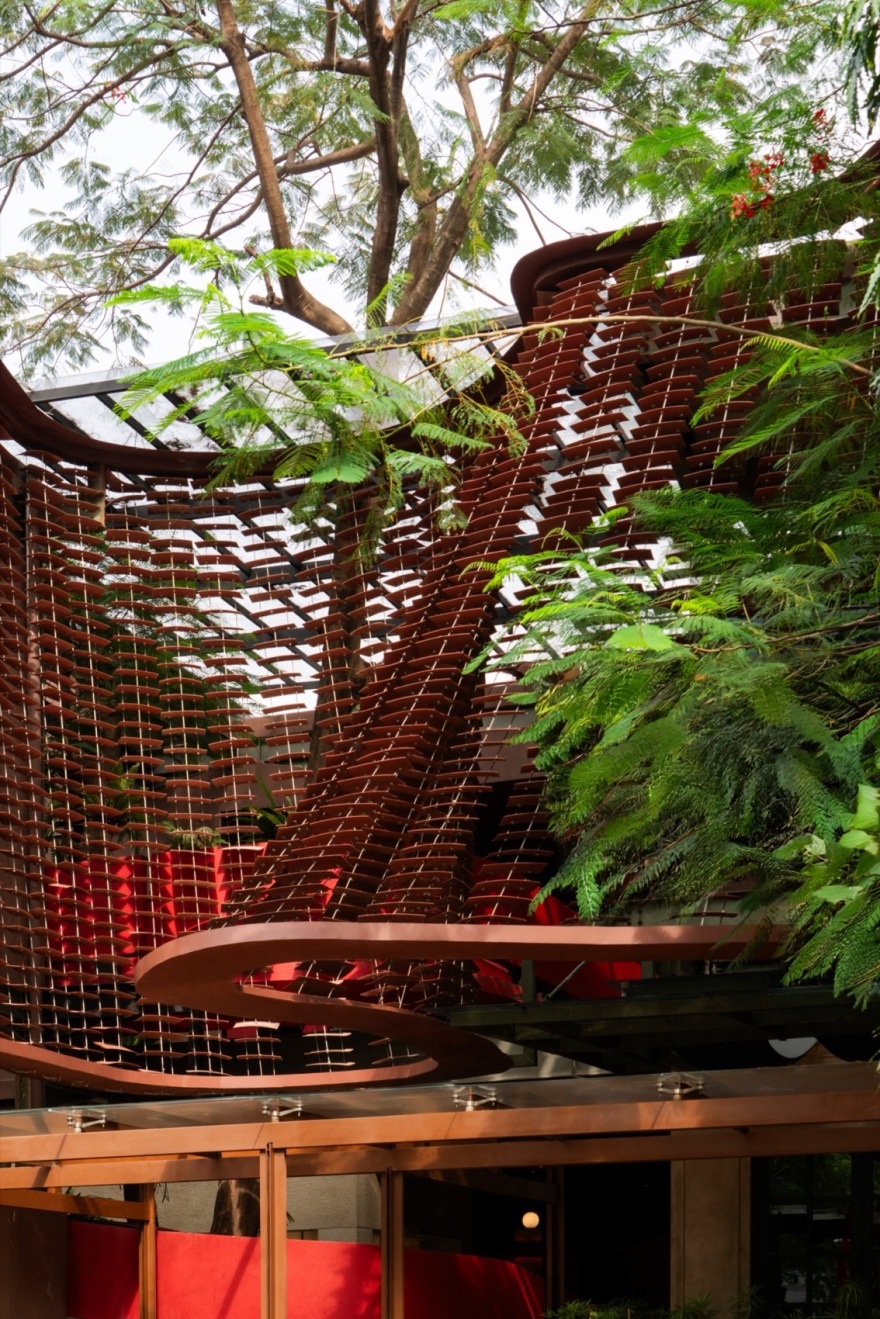
经过张拉索几何结构的优化,再生塑料构件形成了在树林间舞动的波浪形态。这层包裹状的参数化表皮(Parametric Skin) 经过精确推演以提供计算好的日照防护,既作为气候控制机制,又作为响应式生物气候建筑的象征。
Refined by a tensioned cable geometry, the recycled plastic elements create an undulating form that dance among the trees. This wrapping lattice skin is parametrically derived to provide calculated solar protection, functioning as both a climate control mechanism and a symbol of responsive bioclimatic architecture.
▼树林间舞动的波浪形态,undulating form that dance among the trees © Ernest Theofilus

▼参数化表皮,parametric skin © Ernest Theofilus


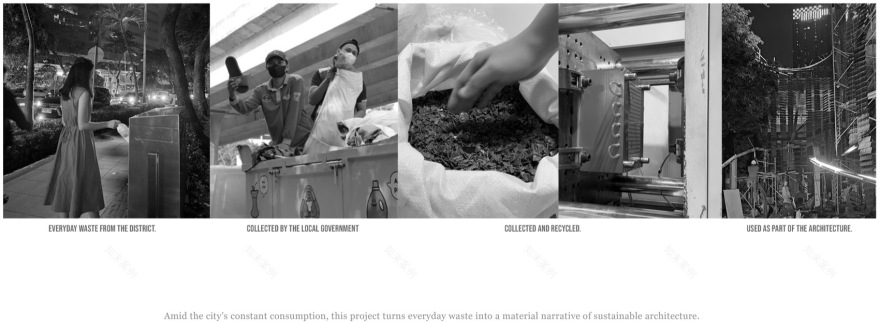
该项目利用了SCBD(苏迪曼中央商务区)每周产生的4,800公斤塑料废弃物,生成了16,800个功能性建筑格栅单元。通过将这种再生材料系统整合到雅加达的核心地段,该结构成为了废弃物管理议题的有力见证,提醒公众和决策者关注印度尼西亚每年700万吨未经处理的塑料垃圾。
Sourced from 4,800 kg of SCBD’s (Business Districts Area) weekly plastic output, this project generates 16,800 units of functional architectural Lattice Plates. By integrating this recycled material system into a prominent site of Jakarta, the structure stands as a testament to waste management issues, reminding the public and policymakers of the 7 million tons of plastic untreated annually in Indonesia.
▼从垃圾到形态:建筑能改变我们对塑料的看法吗,from waste to form: can we architecture change how we see plastic? © RAD+ar

▼重新思考废物:当塑料成为设计,rethinking waste: when plastic becomes design © RAD+ar

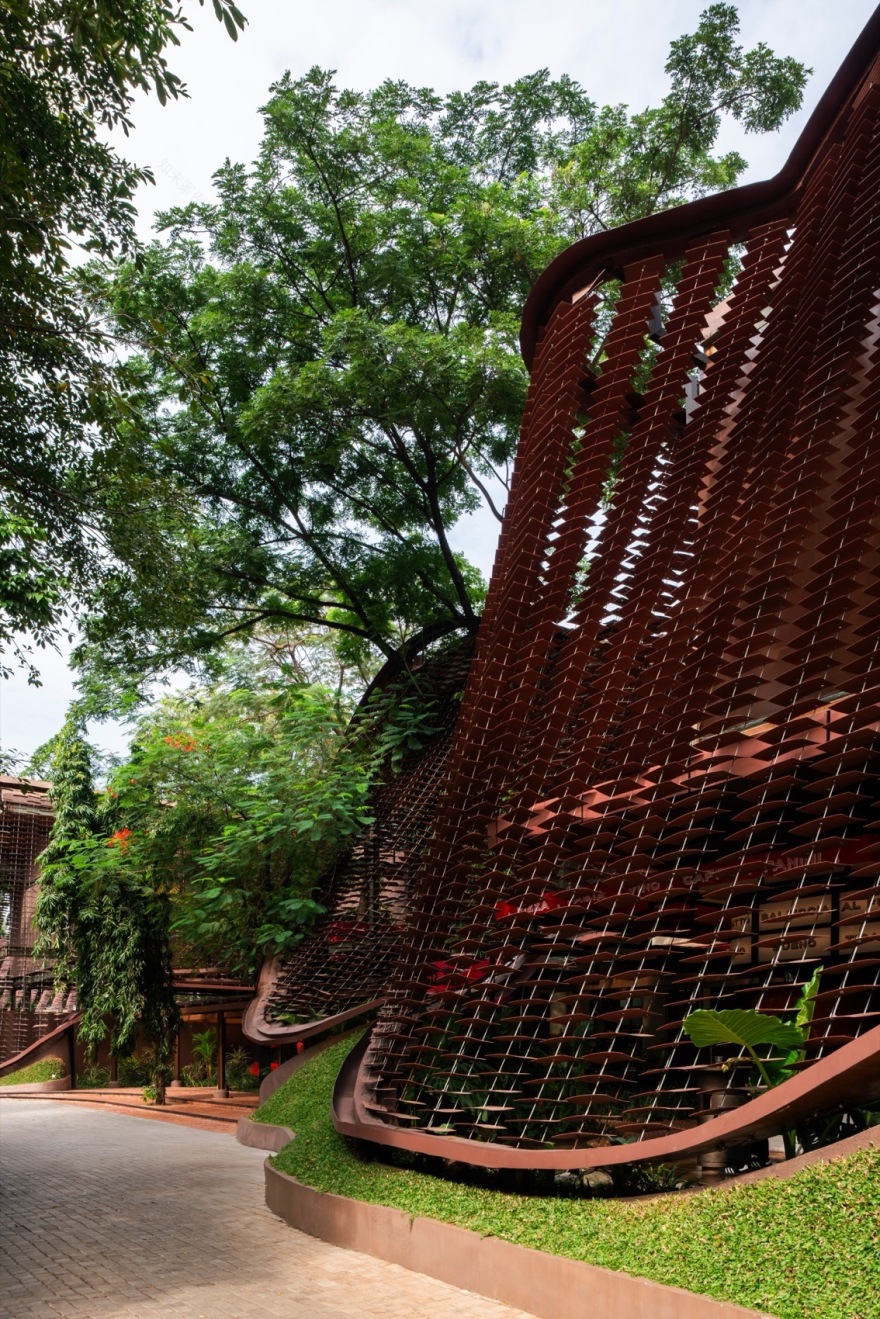
为了与场地生态共存,设计维持了仅40%的建筑密度(Ground Cover),精心编排可售区域与活动空间,使其与现有的20米高乔木相互交织。与其将景观视为建筑的附属品,该过程采用了逆向推导(Reverse-engineered) 的逻辑:建筑的体量生成(Massing) 是围绕保留的树木区域展开的。这在参数化表皮与自然之间创造了流动的对话,二者通过多孔渗透的露台相连,在优化功能面积的同时让树木得以茁壮生长。最终生成的体量通过一系列过渡性的室外露台最大化了可租赁面积效率(Leasable Efficiency),这些露台架起了参数化立面与树木之间的桥梁,既适应了树木的生长,又保留了商业价值。
▼立面细节,detail facade © RAD+ar

In a move to coexist with the site’s ecology, the design maintains a minimal 40% ground cover, choreographing saleable areas and activity spaces to interweave with the existing 20-meter tall trees. Rather than treating landscape as a supplement to architecture, the process was reverse-engineered: the massing was generated around the preserved tree zones. This creates a fluid dialogue between the parametric envelope and nature, connected by porous terraces that allow the trees to thrive while optimizing the functional area. The resulting massing maximizes leasable efficiency through a series of transitional outdoor terraces that bridge the parametric facade with the trees, accommodating arboreal growth while retaining commercial value.”
▼活动空间,activity spaces © Ernest Theofilus


▼立面与树木,facade and tree © Ernest Theofilus


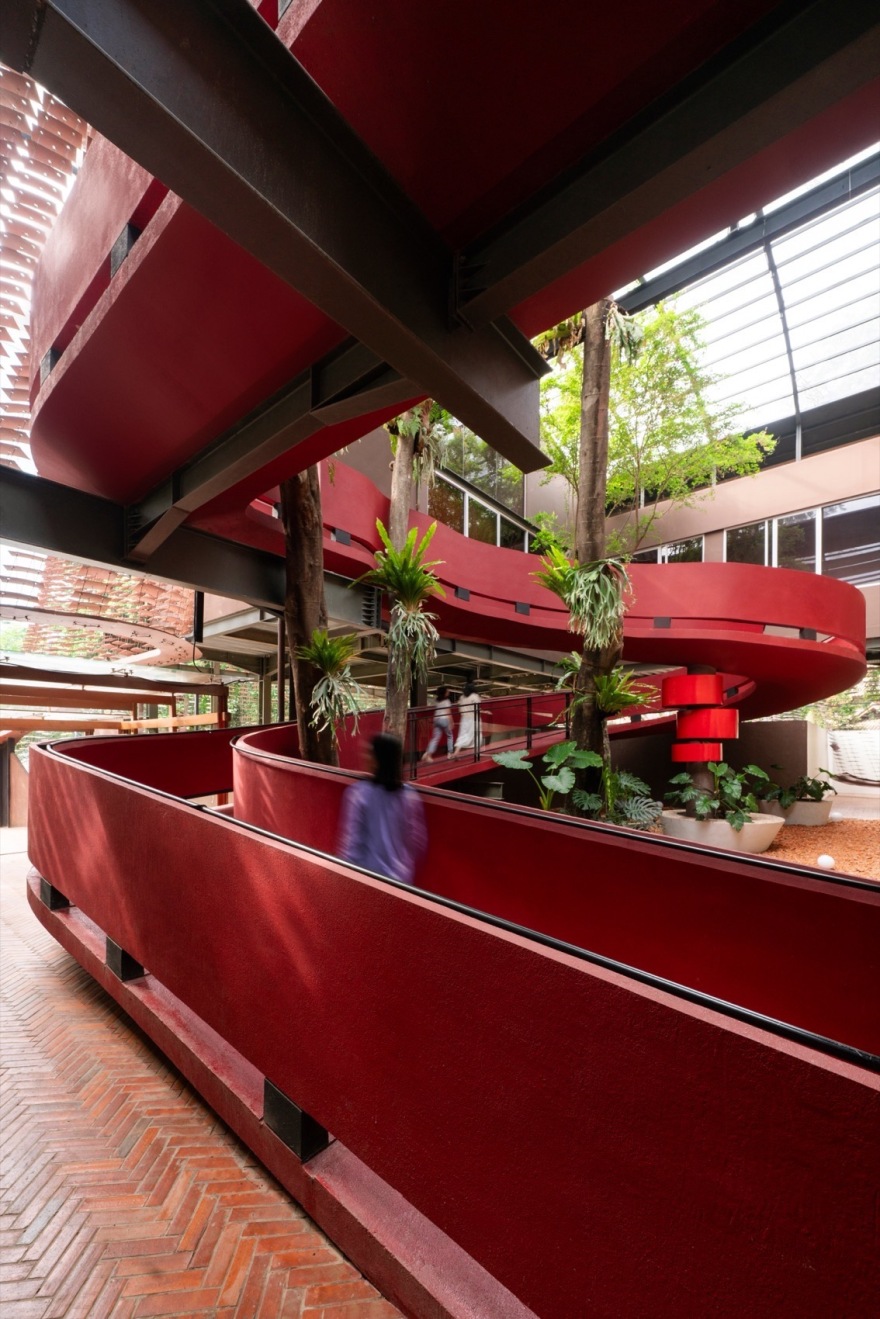
“格栅花园”(Lattice Garden)是建筑师关于租户行为与能源管家理念的原型实践。在一个受高地产价值驱动的环境中,它重新夺回了被动式设计(Passive Design) 的话语权。建筑与茂盛的树木展开对话,构建了一个极致的遮阳系统。通过将立面分离以创造通风廊道(Breezeways) 和热烟囱效应(Thermal Chimneys),并用蜿蜒的花园坡道取代机械电梯,该设计挑战了垂直交通(Vertical Circulation) 的标准类型学。其结果是显著降低了对空调和电梯的依赖。它如同一座可能性的灯塔,昭示着在发展中经济体里,环境响应性无需为了经济利益而做出牺牲。
Lattice Garden is one of architect’s prototype on tenant behavior and energy stewardship. In a landscape driven by high property values, it reclaims the passive design agenda. The architecture engages in a dialogue with the thriving trees to construct an extreme shading system. By decoupling the facade to create breezeways and thermal chimneys, and replacing mechanical lifts with a meandering garden ramp, the design challenges the standard typology of vertical circulation. The result is a significant reduction in air conditioning and elevator dependency. It stands as a beacon of possibility, illustrating that in a developing economy, environmental responsiveness need not be sacrificed for economic gain.
▼蜒的花园坡道,meandering garden ramp © Ernest Theofilus

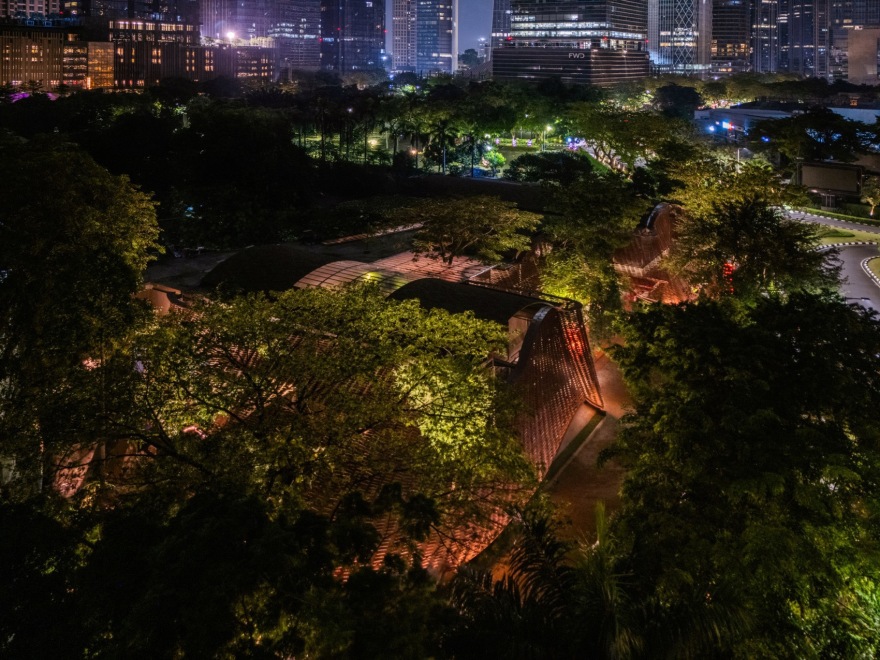
▼夜景,night view © Ernest Theofilus


▼二层平面,first floor plan © RAD+ar

▼三层平面,second floor plan © RAD+ar
▼剖面A,section A © RAD+ar

▼剖面B,section B © RAD+ar

Project Name: Lattice Creative Garden
Office Name: RAD+ar
Social Media Accounts: @radarchitects
Firm Location: Bali & Jakarta, Indonesia
–
Completion Year: 2025
Gross Built Area (m2/ ft2): 3000sqm
Project Location: Jakarta, Indonesia
Program / Building Function: Compound Commercial Outdoor Mall
–
Lead Architects: Dadi Prasojo, Antonius Richard Rusli
Photographer
Photo Credits = Ernest Theofilus
Photographer’s Website =



南京喵熊网络科技有限公司 苏ICP备18050492号-4知末 © 2018—2020 . All photos and trademark graphics are copyrighted by their owners.增值电信业务经营许可证(ICP)苏B2-20201444 苏公网安备 32011302321234号
苏公网安备 32011302321234号客服
消息
收藏
下载
最近