

创作上传
VIP
收藏下载
登录 | 注册有礼
查看完整案例

收藏

下载

分享

The Ellen DeGeneres Campus of the Dian Fossey Gorilla Fund
Project Data
Full Team
Year
2022
Status
Completed
Size
4,500 sq m
Location
Kinigi, Musanze District, Rwanda, Africa
Partners
The Dian Fossey Gorilla Fund, The Ellen Fund
Collaborators
TenXTen, Oak Consulting Group, BuroHappold Engineering, Transsolar, Sherwood Design Engineers, Jacques Nsengiyumva, Formula D Interactive, HabitatXR, Techno Engineering Company
Focus areas
Civic Spaces & Cultural Centers, Conservation & Regeneration, Education
Services
Architecture, Engineering, Exhibits & Interpretation, Film & Media, Furniture & Interiors, Landscape Architecture, Research & Publishing, Strategic Planning, Urban Design & Planning
Photographer
Iwan Baan
Full Team
Architecture
Bethel Abate, Giorgio Azzariti, Alex Dallas, Emily Goldenberg, Patricia Gruits, Victor Iyakaremye, Thandizo Kachiza, Ana Fernández Martínez, Michael Murphy, Lysette Niragira, Nadia Perlepe, Nicki Reckziegel, Yussufu Renzaho, Adam Saltzman, Megan Suau, Theophile Uwayezu, Annie Wang
Engineering
Cameron Bailey, Rosie Goldrick, Nelson Habintwari, Harriet Kirk, James Kitchin, Tilly Lenartowicz, Jacques Maniraruta, Aimable Mukire, Hervé Gilbert Ngenzi, Paterne Niyonkuru, Asyncrite Nyinganyiki, Okechi Opoko, Christian Uwinkindi
Landscape
Sierra Bainbridge, Jonathan Blaseg, Rachel Blaseg, Greg Dahlke, Jessi Flynn, Joe Christa Giraso, Therese Graf, Taylor Sinclair, Andrew Younker
Exhibit Design & Wayfinding
Bethel Abate, Marisol Andrade Muñoz, Martine Dushime, Emily Goldenberg, Patricia Gruits, Christelle Muhimpundu, Morgan O’Hara, Joelle Riffle, Amani Rwibasira, Amie Shao, Miguel Roldán Signes, Maggie Jacobstein Stern
Furniture
Sylvie Dufitimana, Niels Joseph Maria Datema, Jean Claude Kwitonda, Christelle Muhimpundu, Amani Rwibasira, Amie Shao, Miguel Roldán Signes
Film & Media
Thatcher Bean, Regina Chen, Elsemieke de Boer, David Dusabirane, Tracy Keza, Joel Muhozi, David Mutabazi, Brianne Nueslein, Gabriel Nyirijuru
Impact Evaluation
Veyom Bahl, Regina Chen, Elsemieke de Boer, Kemunto Okindo
Construction
Cihan Bakini, Zawadi Imani Barasa, Gilbert Bavugamenshi, James Blackman, T.J. Burghart, Dogan Coskun, Prosper Cyemezo, Martine Dushime
Nolaste Dushimerurema, Joe Christa Giraso, Jerome Hakizimfura, Theoneste Hategekimana, Philbert Havugiyaremye, Aline Ingabire, Stella Iradukunda, Giselle Irashimwa, Claudine Ishimwe, Nadine Ishimwe, Akyuz Ismail, Edmond Kalimba, Yvanie Kamikazi, Azarias Kuradusenge, Emmanuel Maniriho, Gaspard Masengesho, Adam McDonald, Aimable Mukire, Venuste Musanganya, Desire Mwemera, Ange Ndumuhire, Denyse Niyigena, Eric Niyigena, Jean Baptiste Nizeyimana, Jean Paul Nkurunziza, Abdul Nshimyumukiza, Valens Nshutiyimana, Christophe Nyandwi, Celine Nyirandinda, Brittany Pembroke, Janvier Rutsobe, Adam Saltzman, Jean Luc Shema Karuyonga, Dieudonne Shimirwa, Danmark Sinayobye, Bernabe Tunganirimana, Fidele Turatsinze, Florence Umugwaneza, Brigitte Umulisa, Rachel Uwamahoro, Theophile Uwayezu, Fred Uwimana, Theodore Vuguzigire
View Less
View More

The Fossey Fund campus is a living laboratory for conservation, research, and education—designed to regenerate the land, support biodiversity, and serve as an entry point for a lifetime of conservation activism.
Founded fifty-five years ago by legendary primatologist Dian Fossey, the Fossey Fund is the world’s largest and longest-running organization fully dedicated to gorilla conservation. Fossey galvanized a generation of conservationists through her groundbreaking fieldwork, extensive research, and tireless advocacy.
MASS began collaborating with the Fossey Fund in 2015. Using the Purpose Built process, MASS helped the organization strategize how its spaces could advance its mission.
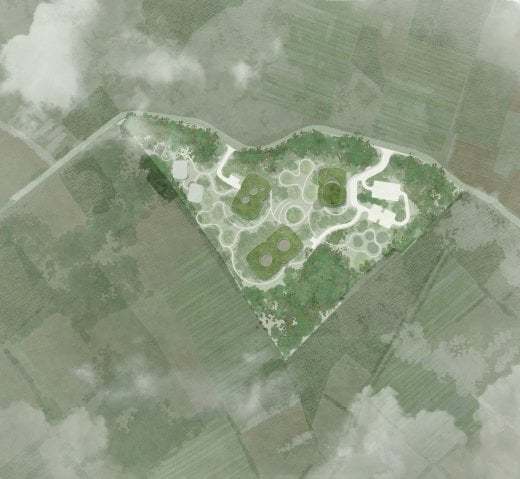
Today, the Fossey Fund’s twelve-acre campus, located near Volcanoes National Park, is more than a headquarters—it is an engine for conservation. It provides vital infrastructure for local, regional, and global communities to pursue shared principles of stewardship. Its design and construction embody a regenerative ethos, showing that abundance emerges from the balance of thriving human and ecological systems.


The campus is anchored by three main buildings: the Sandy and Harold Price Research Center, which expands laboratory capacity fivefold to advance scientific research and teaching; the Rob and Melani Walton Education Center, which houses classrooms, a computer lab, and a library; and the Cindy Broder Conservation Gallery, which offers an interactive timeline of mountain gorilla research and conservation from Fossey’s time to today.
Together, these facilities create a hub for cutting-edge research, training, and public engagement. On-site housing for 30 students and visiting researchers further strengthens access to campus resources and the park.

The design draws inspiration from Dian Fossey’s original tent at the Karisoke Research Center, reinterpreting her immersion in the forest.
Learn more


Building footprints follow the natural topography, with green roofs blending into the landscape and patios and paths encouraging seamless movement between indoors and outdoors. Central atria admit clerestory light and echo the intimacy of Fossey’s cabin, while gathering spaces modeled on Karisoke campfires foster interaction among visitors, staff, and researchers. Designed to maximize daylight, natural ventilation, and views of the surrounding volcanoes, the campus embodies Fossey’s ethos of living and working in close relationship with the environment.


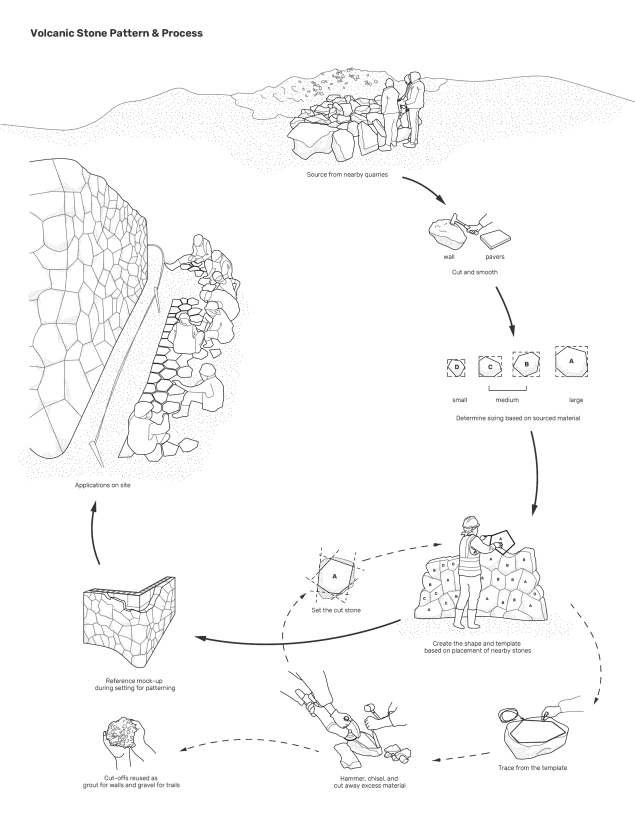
Contextually responsive strategies and locally sourced materials conserve resources and minimize environmental impact. MASS partnered with Transsolar to integrate systems that maximize daylight and ventilation while ensuring comfort and performance. Green roof canopies rest above thick volcanic stone walls, separated by continuous glass clerestories that channel light deep into interiors.
Located at the base of the seismically active Virunga Mountains, the campus required robust structural solutions: Rwanda-based engineers designed ductile reinforced concrete cores, while volcanic stone uncovered during excavation was reused for grout, gravel, and cladding. Regionally sourced pinewood warms soffits and ceilings, and clay tiles top student housing.

Transforming a heavily degraded agricultural plot into a reforested landscape, the campus supports native ecologies while serving as a model of climate adaptation, biodiversity restoration, and resilience.
MASS and TENxTEN worked with the Fossey Fund to design the landscape as a living laboratory for ecological research, demonstration, and teaching. More than 250,000 native plants were propagated and planted, extending the park’s habitats and creating a research site that informs regional reforestation strategies. Native plantings on green roofs enhance biodiversity, sequester carbon, and enable ecological studies. Trails immerse visitors in conservation, from the Gorilla Trail tracing daily gorilla movements to the Biodiversity Trail mapping vegetation zones of Volcanoes National Park, and the Wetland Trail showing how natural systems filter and return water to the environment.
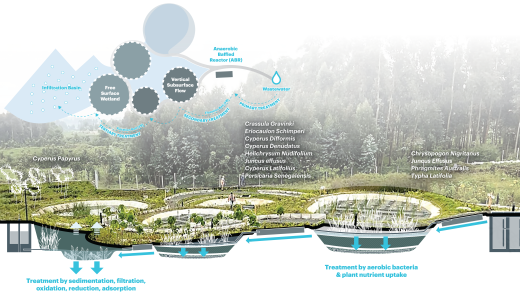
Water conservation was also prioritized. Rainwater harvested from building roofs is reused for functions such as toilet flushing, while effluent wastewater is naturally treated in a constructed wetland below the conservation gallery. A gravity-fed system—the first of its kind in Rwanda—filters water through a series of ponds before returning it to the ground, reducing energy use.


Gaël Vande Weghe
Gaël Vande Weghe

Gaël Vande Weghe


MASS and the Fossey Fund collaborated on every detail of the project, from large-scale site planning to exhibition design, furniture, and media.
This included developing an immersive exhibit that traces mountain gorilla research and conservation from Dian Fossey’s pioneering work to the present. As the campus’s public face, the Conservation Gallery communicates Fossey’s legacy, the story of gorilla habitat protection, and the role each visitor can play in sustaining it. Featuring original artifacts, a 360-degree theater, and interactive digital experiences supported by generous donors, the Gallery welcomes international tourists, students, scientists, and local Rwandans.

Inspired by Fossey’s method of “breaking the boundary,” the exhibition guides visitors from observer to participant through three chapters: Dian’s World, Gorillas and You, and Modern Conservation.
Dense scrims and photomurals recreate Fossey’s cabin, while interactive elements move audiences from curiosity to engagement, culminating in today’s frontline conservationists. Locally sourced Rwandan wood and other natural materials reinforce the gallery’s sense of place.


MASS also designed all of the campus furniture, working with artisans and cooperatives to produce over 1,600 items—including tables, desks, chairs, stools, benches, shelves, credenzas, beds, pendant lights, rugs, pillows, handles, and hooks. These pieces celebrate craft, leverage regional materials, reduce carbon footprint, and strengthen the local economy. Embedded details connect directly to the Fossey Fund’s work, such as batik throw pillows patterned with the nose prints of seven gorillas featured in the exhibition.
Storytelling was integral to the project. Building on the Fossey Fund’s legacy of conservation storytelling, MASS established an in-house film team in Rwanda with support from the Ellen Fund. Filmmakers spent more than one hundred days on-site, documenting mountain gorillas, community members, researchers, and park rangers. Their films, photos, and essays illustrated the campus’s impact and helped partners leverage stories for continued support. Many team members have since advanced their careers in conservation media, extending the project’s influence across Rwanda and beyond.

The campus was also the first project completed by MASS’s construction company, MASS.Build.
Acting as general contractor gave MASS agency over resource deployment, aligning construction with social, environmental, and economic goals. MASS.Build also developed a measurement framework tailored to the campus, evaluating mission-driven outcomes alongside broader impacts in environment, education, equity, economy, and emotion.
The project employed more than 2,400 Rwandans—99% of the total workforce, including 23% women—and invested $13.4 million into the region. MASS.Build partnered with the German Corporation for International Cooperation (GIZ) and Integrated Polytechnic Regional College (IPRC) Musanze to provide training in masonry, carpentry, steel fixing, plumbing, green roof installation, electrical systems, and health, safety, and environmental practices.


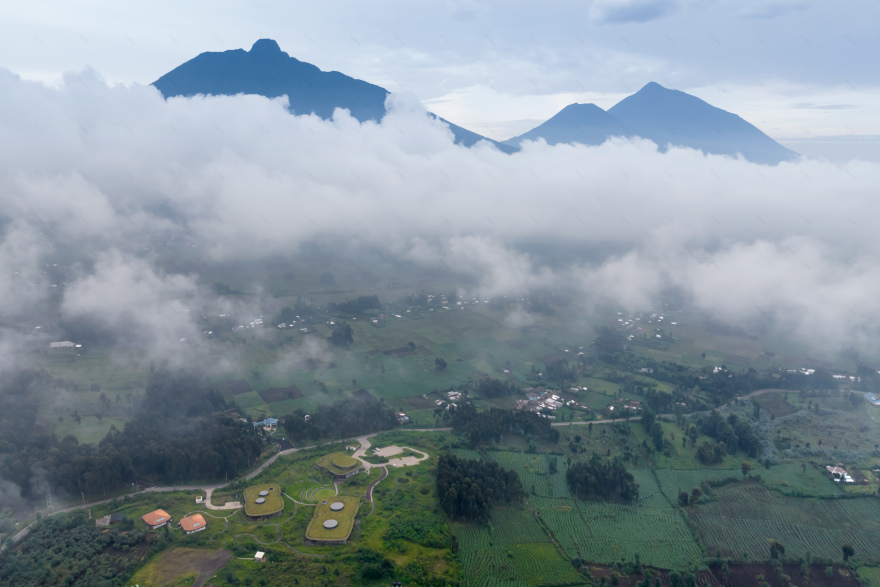

The Fossey Fund campus is more than a headquarters. It is a catalyst for ecological and social transformation in Rwanda. By reclaiming degraded farmland, restoring native ecologies, and creating new pathways for research, education, and gorilla-centered tourism, the campus extends the park boundary while strengthening local economies and reinforcing Rwanda’s global leadership in conservation. It translates the mission of conservation activism into a tangible, participatory place—making stewardship accessible and inspiring action.
Just as Dian Fossey pioneered conservation in this region, the campus embodies her ethos of testing, learning, and sharing, offering a living model of how design can restore land and regenerate community. Already influencing national park expansion and regional regeneration efforts, MASS and the Fossey Fund are now collaborating on a visionary Land Use Plan for Volcanoes National Park—setting a precedent for sustainable conservation and community resilience at scale.
American Institute of Architects: 2024 AIA COTE Top 10 Award
Boston Society of Landscape Architects Design Awards: Excellence in General Design
ARCHITECT Magazine: "The Power of Provenance"
World Economic Forum: "How sustainable tourism helps protect mountain gorillas in Rwanda and strengthens communities"
The RIBA Journal: "Sustainability Shapes Rwandan Conservation Project"
南京喵熊网络科技有限公司 苏ICP备18050492号-4知末 © 2018—2020 . All photos and trademark graphics are copyrighted by their owners.增值电信业务经营许可证(ICP)苏B2-20201444 苏公网安备 32011302321234号
苏公网安备 32011302321234号客服
消息
收藏
下载
最近