

创作上传
VIP
收藏下载
登录 | 注册有礼
查看完整案例

收藏

下载

分享
Melfield Gardens, Lewisham
Info

Project Details: An intergenerational housing scheme for older people and students, designed to a Passivhaus standard.
Client: Phoenix Community Housing
Construction Value: TBC
Completion: 2025
Location: Lewisham
Awards:
Inside Housing Development Awards 2025, Best Healthy Homes Development - Urban: Winner
Housing Design Awards 2021, GLA Award: Winner
NLA Awards 2021, Unbuilt: Shortlisted

Passivhaus principles

Intergenerational living

Housing for older people

Community engagement

Renewables on site

Ultra low carbon

Low energy use

Dual aspect homes

Enhanced biodiversity

Enhanced public realm

Health and wellbeing

New homes
Where we started
Melfield Gardens will provide 30 affordable, independent living homes for people aged 55+, and two, four-bedroom homes for postgraduate students. In return for being ‘good neighbours’, the students will be charged a sub-market rent. Each will spend time assisting older residents, offering company or participating in recreational activities in the communal spaces, to help combat loneliness.

This highly sustainable intergenerational living scheme provides housing for older people and students “Postgraduate students will get reduced rent if they commit to helping in some way with residents. There are all sorts of ways in which they could contribute to the community we’re creating. Everyone talks about the amount of loneliness there is amongst older people, but this is prevalent for students as well. So, we don’t see this as young people helping out older people; it can be a real two-way thing."
Irene Craik, Director, Levitt Bernstein
The Passivhaus scheme is split into two subtly splayed buildings that embrace a pedestrian-friendly central landscaped space. A shared ‘garden room’ sits at the foot of the western building, wrapping around into the protected garden to the rear for residents and their visitors.

Concept diagram and site plan

Axonometric view showing building proposal within the landscape

Ground floor thresholds, key views and landscape design

Model showing two subtly splayed buildings that embrace a central landscaped space for pedestrians
Co-design and community engagement was central to the design process due to the proximity of nearby houses. Any proposal had to reassure these residents that there would be benefits for them in the form of improved public realm, parking, entrances, safety and security. We held a variety of consultation events and used VR headsets to give Phoenix tenants and neighbours the opportunity to experience the new buildings in an immersive 3D way, as well as the more traditional drawings and models.
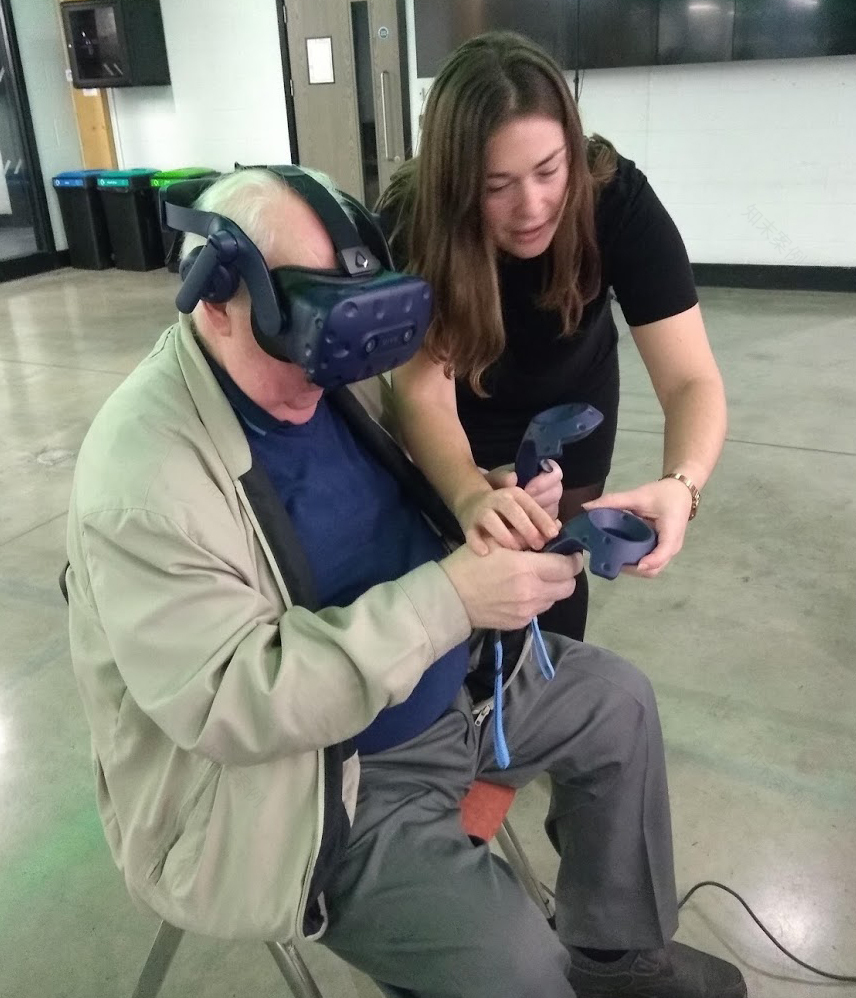
Our consultation-led approach involved several events for residents
“There’s a huge demand for affordable housing both for older people and for students. Melfield Gardens will help to meet the need for both and offer a place where different generations can mingle and support each other. I can’t wait to see them being built.”
Jim Ripley, Chief Executive at Phoenix Community Housing
Design

We are looking to achieve a fully certified Passivhaus building. As well as learning from this innovative social pilot, Phoenix Community Housing is keen to achieve a fully certified Passivhaus building as the first step towards zero carbon. This ‘fabric-first’ approach, with very high levels of insulation and air tightness which reduce energy consumption to extremely low levels, demands design rigour and excellent teamwork.
To make the new Category 2+ and 3 homes as attractive as possible to the older residents, we adopted a dual aspect and flexible ‘one-bedroom-plus’ model. This incorporates an additional ‘study/hobby room’ with a pocket door to allow it to become part of the main living space or remain separate. This provides residents with greater flexibility to tailor their homes to their own requirements as they age in place, in line with HAPPI principles. This space could be used as additional living space or somewhere temporary for a carer or relative to sleep in.

Ground floor plan

First floor plan

Fourth floor plan

Typical flat layouts
The east-west orientation of the site is not ideal for Passivhaus (north-south is preferable), so it was essential to optimise the ‘form factor’ of the buildings by keeping the massing and form simple and minimising overshadowing between the blocks on this challenging infill site. The size and placement of the triple-glazed windows were carefully considered in relation to orientation.
Brick banding, slight recesses, ribs and columns will add expression to the façades without adversely impacting the insulation layer in the wall build-ups. The new buildings pick up on subtle balustrade detailing from the adjacent tower, as well as reflecting the use of sky-frames to emphasize key corners, so the new interventions complement the existing.

Main entrance and walkway detail featuring profiled glazed brick, and view along upper floor walkway

3D detail drawings showing brick banding along walkways
Core team
Irene Craik
Director
Tom Randle
Associate Director
Olivia Smith
Project Architect
南京喵熊网络科技有限公司 苏ICP备18050492号-4知末 © 2018—2020 . All photos and trademark graphics are copyrighted by their owners.增值电信业务经营许可证(ICP)苏B2-20201444 苏公网安备 32011302321234号
苏公网安备 32011302321234号客服
消息
收藏
下载
最近