

创作上传
VIP
收藏下载
登录 | 注册有礼
查看完整案例

收藏

下载

分享
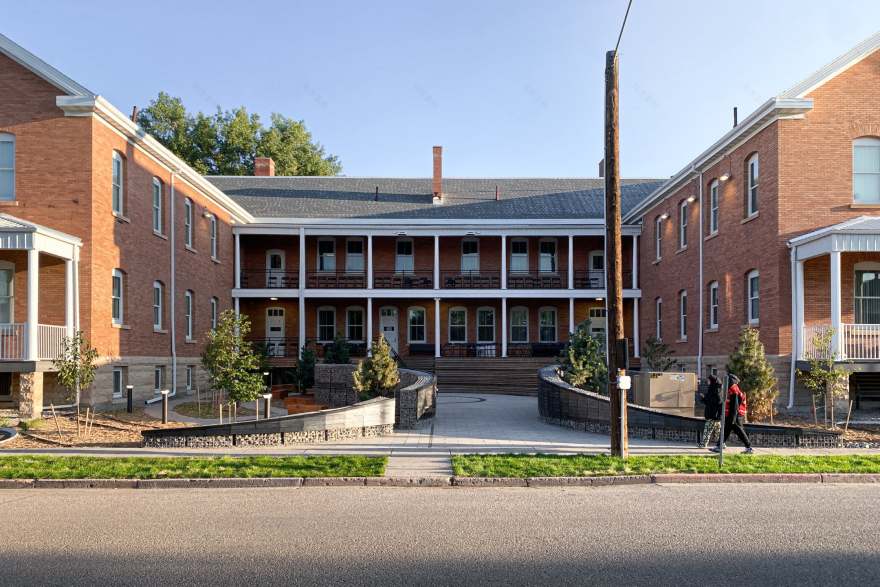
Snow Country Prison Japanese American Memorial
Project Data
Full Team
Year: 2024
Status: Completed
Size: 6,000 sq ft
Location: Bismarck, North Dakota, United States
Partners: United Tribes Technical College
Collaborators: Japanese American Confinement Sites Committee, National Parks Service Confinement Sites Program, WSB Engineering, Tillett Lighting, Emanuelson-Podas, Inc.
Photographer: MASS
Focus areas: Memorials & Monuments, Native Communities
Services: Architecture, Exhibits & Interpretation, Film & Media, Landscape Architecture
Project Team: Tya Abe, Sierra Bainbridge, Celina Brownotter, Therese Graf, Joseph Kunkel, Robert Lloyd, Jeffrey Mansfield, Taylor Sinclair, Mayrah Udvardi
Full Team
Project Team: Tya Abe, Sierra Bainbridge, Celina Brownotter, Therese Graf, Joseph Kunkel, Robert Lloyd, Jeffrey Mansfield, Taylor Sinclair, Mayrah Udvardi
View Less
View More

The Snow Country Prison Memorial honors the resilience of Japanese Americans incarcerated at Fort Lincoln during World War II and celebrates the solidarity between Japanese and Native American communities.
During WWII, more than 125,000 Japanese Americans were unjustly incarcerated in prison camps across the U.S.—often on unceded Native land. One such site was Fort Lincoln, a former military post in Bismarck, North Dakota, where over 1,100 Issei (first-generation immigrants) and 750 Nisei (second-generation U.S. citizens) were held. Today, that land is home to United Tribes Technical College (UTTC), where a new memorial will honor these lives and histories, and carry forward the Japanese spirit of ganbatte—steadfastness in the face of adversity—across generations and cultures.

Snow Country Prison Memorial
MASS collaborated with UTTC administrators and staff, descendants of former internees, and Japanese American and Tribal communities to design a space for gathering, ceremony, and reflection. The memorial is named Snow Country Prison —the colloquial name given to the Fort Lincoln Internment Camp by those imprisoned there during World War II—and aims to build solidarity around intersecting legacies of Native and Japanese American dispossession and resilience.

Map of Internment Camps across the United States
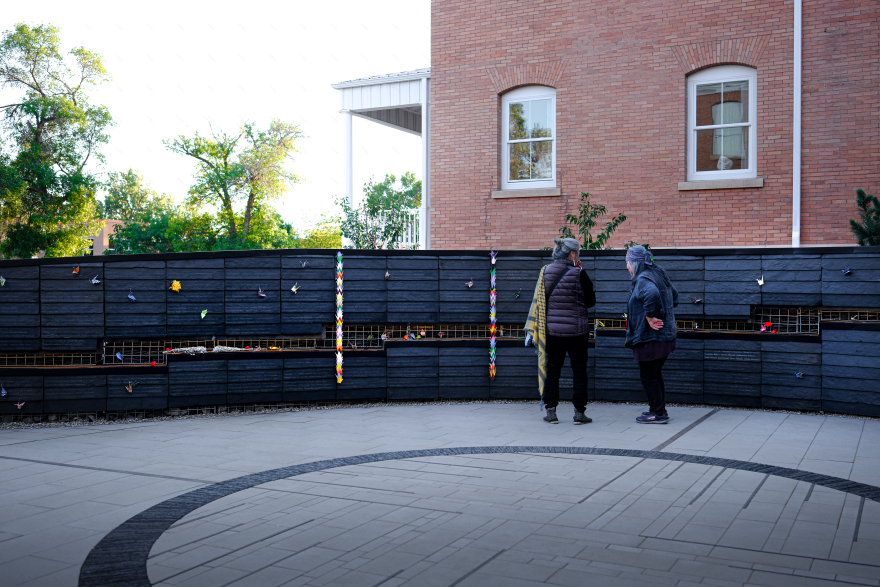
The memorial’s design draws inspiration from kintsugi, a process used in Japanese ceramics to restore broken pottery by visibly mending the cracks with powdered gold, silver, or platinum lacquer, honoring imperfection and repair. A memorial wall, constructed from slate tiles reclaimed from the prison’s roof, will incorporate kintsugi detailing and serve as a place for visitors to leave offerings such as tsuru (paper cranes), Native prayer ties, and other contributions as a call to action.


Courtyard amphitheater seating spills out from the veranda to provide gathering space and connection to interior exhibitions and the campus cultural trail. The site will also include a healing garden with significant Japanese and Native plants and a four-directions drum circle, reinforcing its role as a place of reconciliation.


The memorial’s ecological and carbon footprint were considered throughout the design. The project returns nearly 4,000 sq.ft. of space back to biodiverse habitat, lighting is used in a way that minimizes light pollution, and drought-tolerant plantings reduce water use. One quarter of the memorial’s materials are reclaimed from the former prison’s roof and the balance of material (by weight) was sourced from within a 500-mile radius of the site. Low-carbon, FSC-certified and low-emitting materials such as gabion, gravel, and spruce are used throughout.



MASS supported United Tribes and the Japanese American Confinement Sites team through a multi-year process. To facilitate fundraising efforts, MASS developed a communications plan, website content, print and presentation collateral, grant proposals, as well as a film featuring the voices and personal experiences of committee members. The engagement of a local contractor (Vantage View), material suppliers, and fabricators ensures that dollars stay within the Bismarck community. Plantings from the United Tribe’s own greenhouses will enable students, faculty, and staff to be part of the memorial’s growth long before it opens.


Designed as a space for gathering, ceremony, and reflection, the memorial will be open to both the campus community and the general public. Home to more than 1,770 Native students and 650 faculty and staff from over 75 Tribes, the United Tribes Technical College campus serves as a site of Tribal convergence and cultural exchange. The Japanese American community is also expected to continue making pilgrimages to the site to connect with the history of family members once incarcerated there. As the first memorial of its kind to recognize the solidarity between Native and Japanese American communities, it aims to catalyze broader conversations and processes of reconciliation around the intersecting systems of oppression that shape American history.
南京喵熊网络科技有限公司 苏ICP备18050492号-4知末 © 2018—2020 . All photos and trademark graphics are copyrighted by their owners.增值电信业务经营许可证(ICP)苏B2-20201444 苏公网安备 32011302321234号
苏公网安备 32011302321234号客服
消息
收藏
下载
最近