

创作上传
VIP
收藏下载
登录 | 注册有礼
查看完整案例

收藏

下载

分享

Samajik Health Science Institute & Research Centre
Project Data
Year 2020
Status In Progress
Size 124,600 sq m
Location Uttara, Dhaka, Bangladesh, Asia
Partners Grameen Telecom Trust, Grameen Kalyan
Collaborators Clinton Health Access Initiative, Stantec, Transsolar, Arup, Design Lab Architects
Focus areas Education, Healthcare
Services Architecture, Engineering, Landscape Architecture
Project Team Sierra Bainbridge, Giovanni Bortolotti, Alex Dallas, Sylvie Dufitimana, Francis Fotsing, Symphorien Gasana, Rene Gasana, Therese Graf, Emery Karenzi, Tilly Lenartowicz, Robert Lloyd, Lysette Niragira, Anibal Niyitanga, Georgios Orfanopoulos, Nadia Perlepe, Alan Ricks, David Saladik, Jean Paul Sebuhayi Uwase, Megan Suau, Joselyne Uwineza
Full Team
Project Team Sierra Bainbridge, Giovanni Bortolotti, Alex Dallas, Sylvie Dufitimana, Francis Fotsing, Symphorien Gasana, Rene Gasana, Therese Graf, Emery Karenzi, Tilly Lenartowicz, Robert Lloyd, Lysette Niragira, Anibal Niyitanga, Georgios Orfanopoulos, Nadia Perlepe, Alan Ricks, David Saladik, Jean Paul Sebuhayi Uwase, Megan Suau, Joselyne Uwineza
View Less
View More

The Samajik Health Science Institute and Research Centre bridges Bangladesh’s public and private health system and exemplifies climate and pandemic-resilient design.
Seeking to expand health access nationwide and bridge a growing gap between the quality of public versus private care, Nobel Peace Prize winner Professor Muhammad Yunus founded Grameen Kalyan as a social business enterprise: a sustainable model of premier medical education and healthcare provision available to all. His goal was to create a new and emerging countrywide health network offering a range of services from primary health clinics in rural areas to tertiary referral and specialty care in Dhaka.
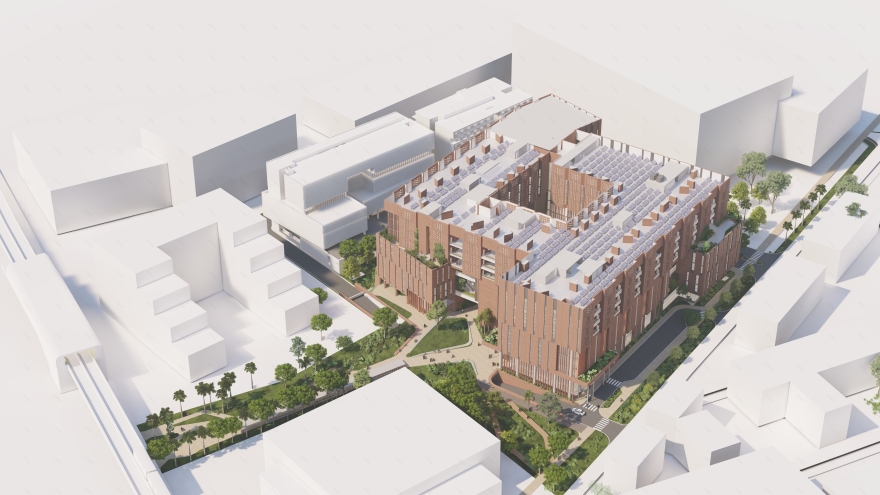

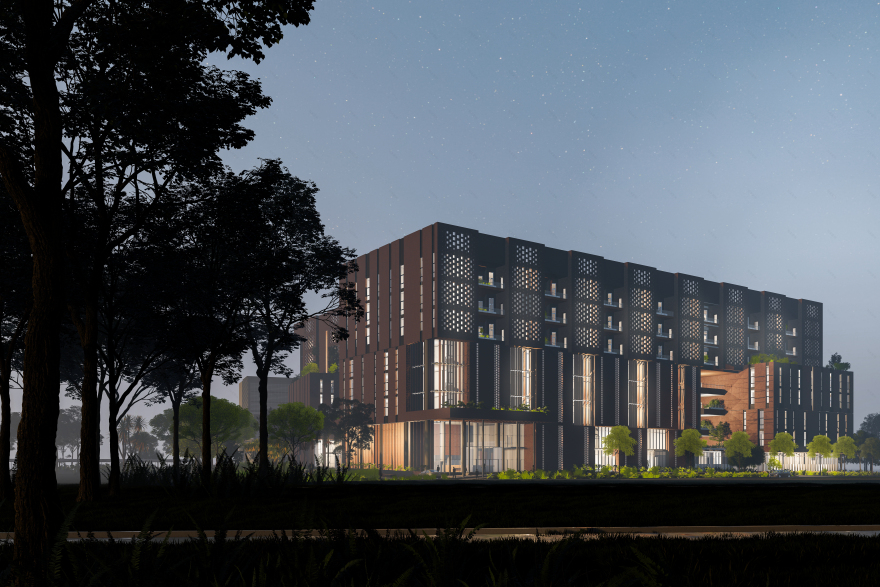

In Bengali, samajik means social. The Samajik Health Science Institute and Research Centre, a comprehensive hospital campus that provides subsidized healthcare for those who could not afford to pay, will serve as the hub of this network. The 500 bed hospital facility will employ a graduated payment scale, utilizing income from full-fee health services to subsidize free and low cost services for the poor, and be co-located with a nursing school, medical college, and health technology institute. Together, these institutions will train future generations of Bangladeshi health professionals.
The design of the Samajik Hospital navigates the transition from Dhaka’s metropolitan area, home to over 22 million inhabitants, to an enclosed care environment by efficiently managing flows across a tight urban site. The building is designed around a shaded courtyard, creating a comfortable microclimate for patients away from polluted air. In an emergency or a pandemic, the courtyard is designed to function as a triage area. To offset overcrowding and allow people to gather safely, covered outdoor waiting areas are placed around the courtyard and linked to departmental and ward terraces. These tall, multi-story terraces ventilate the courtyard and are equipped with medical gas hookups to accommodate additional beds in emergency scenarios.

Learn more

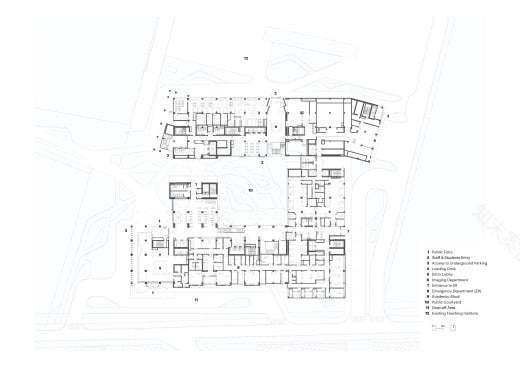
The design of the Samajik Hospital navigates the transition from Dhaka’s metropolitan area, home to over 22 million inhabitants, to an enclosed care environment by efficiently managing flows across a tight urban site. The building is designed around a shaded courtyard, creating a comfortable microclimate for patients away from polluted air. In an emergency or a pandemic, the courtyard is designed to function as a triage area. To offset overcrowding and allow people to gather safely, covered outdoor waiting areas are placed around the courtyard and linked to departmental and ward terraces. These tall, multi-story terraces ventilate the courtyard and are equipped with medical gas hookups to accommodate additional beds in emergency scenarios.
MASS located the patient rooms and shared wards on the highest levels of the building for privacy and safety, and designed them in a way that brings the outside in. A staggered, sawtooth facade gives each patient an operable window for fresh air, daylight, and views to the outside. The pattern also increases the surface area of the building envelope, providing better air flow and thermal mass exchange.

Learn more


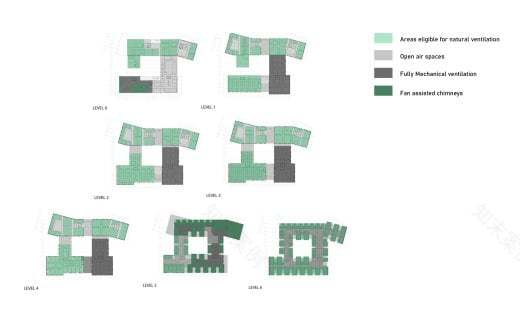
The design team maximized the use of natural and hybrid ventilation throughout the hospital to reduce long-term operational costs and carbon emissions.
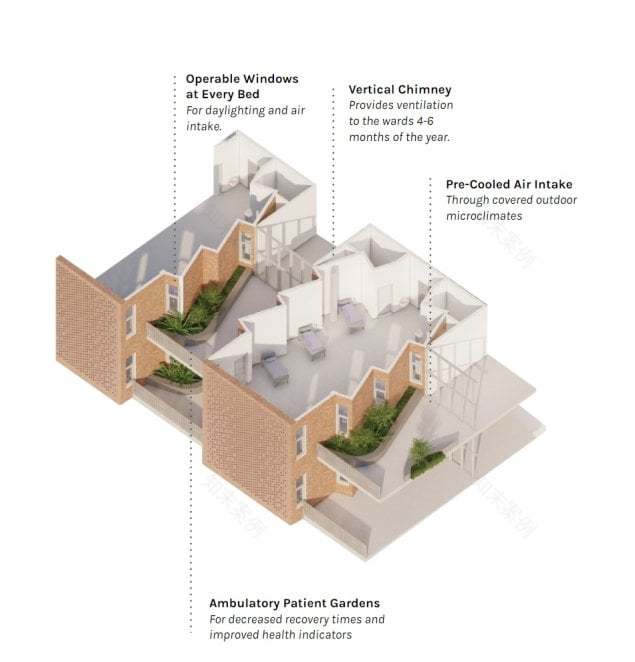
While critical clinical areas are mechanically ventilated, most other spaces are supported by this hybrid strategy. Patient wards and outpatient areas have operable windows for natural ventilation, as well as fan-assisted solar chimneys, which safely and efficiently evacuate air from the building. For thermal comfort, these same operable windows face a shaded, vegetated outdoor terrace that creates a cooling microclimate by lowering the temperatures of fresh air entering the building.
60% of the hospital and medical college spaces are eligible for natural or hybrid ventilation for four months of the year. Each room of the building is zoned for its lowest possible energy use. Full HVAC systems are paired with cross- and stack- ventilation to minimize operational carbon by 35%.

Because Bangladesh is vulnerable to both natural disasters and climate change, Samajik’s landscape is designed as a “floodable forest” to ensure resiliency in the event of extreme weather.
Native plantings create an undulating ground plane that safely collects, stores, and redistributes rainwater back into the groundwater table; allowing circulation paths to remain accessible. By connecting the hospital and medical school into a megablock, and designing convertible spaces, the hospital will also be able to expand to provide additional services in pandemics and other emergencies.
Currently, Grameen Kalyan operates 132 primary clinics across Bangladesh, with plans to grow to nearly 300 in the coming years. Future expansion plans also include the design and construction of district level secondary hospitals, as well as a potential expansion to Samajik Hospital to include new Centers of Excellence for specialty care.


南京喵熊网络科技有限公司 苏ICP备18050492号-4知末 © 2018—2020 . All photos and trademark graphics are copyrighted by their owners.增值电信业务经营许可证(ICP)苏B2-20201444 苏公网安备 32011302321234号
苏公网安备 32011302321234号客服
消息
收藏
下载
最近