

创作上传
VIP
收藏下载
登录 | 注册有礼
查看完整案例

收藏

下载

分享
The Book Stop Project
Manila, Philippines

Location: Manila, Philippines
Phase: in use
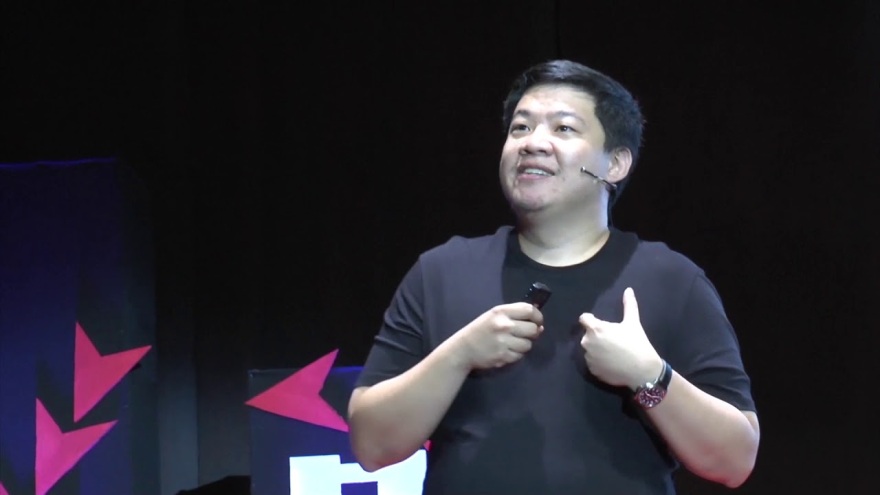
The Philippines suffers from a literacy crisis among the youth. The Book Stop Project reimagines libraries as mobile, community-driven spaces that bring books and ideas to the people. It creates micro-libraries in high-density areas, making reading inviting. More than books, it sparks conversations, fosters connections, and gathers insights to improve cities. We have so far partnered with sectors to build and bring life to five Book Stop sites.
Project leader: royce nicdao
Introduction
The Book Stop Project was conceived to help address the declining relevance of libraries in the Philippines, particularly in Metro Manila, where book accessibility remains a challenge. "Public" libraries are often underfunded, outdated, and difficult to reach, with only 3% of the legally prescribed number in existence.
Furthermore, many Filipinos, especially the youth, have limited exposure to books beyond school as digital entertainment dominates, and inviting public reading spaces remain scarce. This issue is reflected in the country’s education crisis, with less than 25% of learners proficient in language and mathematics, according to PISA 2022.
In a rapidly urbanizing Manila, The Book Stop could help revitalize reading culture by making books freely accessible in high-foot-traffic areas. Unlike our existing libraries, its openly accessible, inviting design fosters spontaneous reading and knowledge-sharing. It also serves as a cultural hub for storytelling, poetry, art activities, and civic discussions. Beyond promoting literacy, the project enhances the city’s limited public recreational spaces by integrating a dynamic reading environment into smaller parks and plazas.
The most recent sponsors for newer iterations were from the private sector, which locates new sites in commercial Malls and business districts. In the next phase, we hope to bring The Book Stop in dense community settings, with the hope of each Book Stop iteration to be community-run and enriched.
Impact
The Book Stop Project has introduced a refreshing element to Manila’s urban landscape, particularly in the historic district of Intramuros. Located in the central plaza, it welcomes a diverse mix of people—students, tourists, and local workers—providing an inclusive space where books are freely shared and reading is reintroduced as a communal activity.
In the Philippines, access to books remains a challenge. Public libraries often have barriers to entry, while bookstores sell books at prices beyond the reach of many. The Book Stop seeks to bridge this gap, offering a free and open platform for marginalized and disenfranchised groups.
In its first year (2016), The Book Stop was able to record at least 800 to 1000 visitors a day, and at least 100 to 150 books exchanged daily. It has been a site of several cultural and knowledge sharing activities and it has connected with local partners for assistance in book donations, as site partners and as donors for new iterations. The Book Stop 01 at Intramuros indirectly benefits its residents, workers and tourist at 30,000 to 40,000 daily.
The Book Stop has been recognized for its impact and idea, most notably the Honorable Mention for Landscape Architecture (Architecture MasterPrize) and as Finalist for Small Project of the Year, WAF 2016 (World Architecture Festival).
Now in its 10th year, we hope to multiply these impacts to more communities, beyond the current centers of Metro Manila, not just as sites of reading, but as sites of research - story telling.


Core team
The Book Stop’s vision is to have libraries within communities. It must blend in with the given context, the communities must feel ownership and they must not be intimidated with books.
The idea of the Book Stop was initiated and led by our principal architect, William Ti, who was himself a lover of books and reading. At WTA, he leads a team who is collectively in charge of the project’s development, from conceptualization to implementation. WTA’s practice span almost 20 years, with diverse typologies in both local architecture and urban design, like civic structures, mixed-use developments, public places and government projects.
The design process of the book stop always engages in the core problems. First is its micro-scale as a response to inherent capital and resource needs to setup a library; secondly, its open design is a response to the intimidating feeling of libraries with several barriers. Its modularity is a response to the need for easier construction and movement to several sites.
Now, WTA has set up an open-access research initiative, developed by our research team with geographers, ecologists and scientists, with the Book Stop as its intended network of platform for research story telling. We hope to bring books and our research where people are and gather and tell more stories from the grassroots.
Image gallery

The book stop in one of its stops.

The Book Stop 02 in Ayala Triangle, Makati.

The Book Stop Instagram feature post, 2017.

The Book Stop 02 in Ayala Triangle, Makati, day.
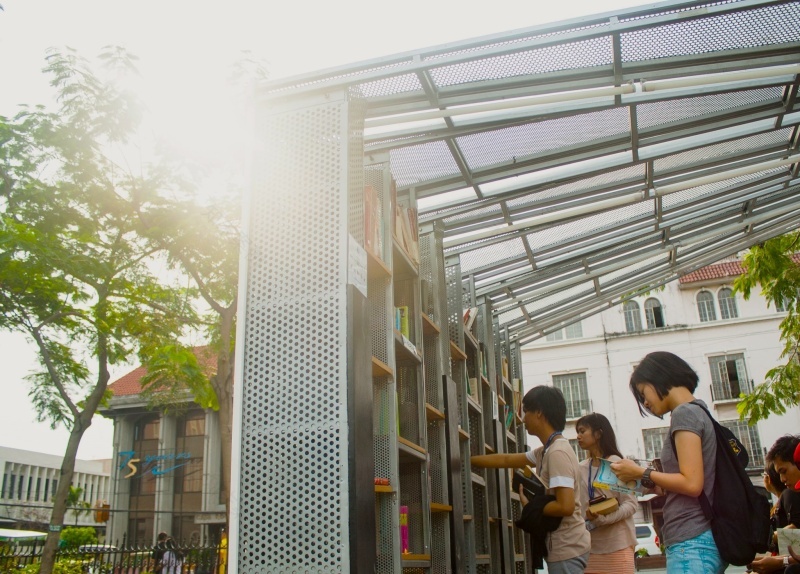
A visitor reads in the Book Stop 01, Intramuros, Manila.

The Book Stop 04, recently opened in 2024.

A lunchtime event and busking at The Book Stop 02

The Book Stop 02 in Ayala Triangle Makati (2018).
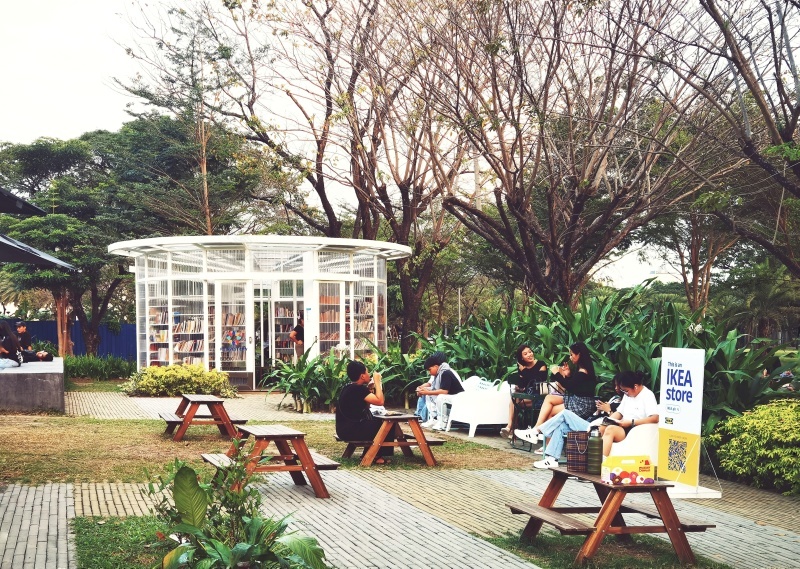
The Book Stop 05 in Filinvest, Alabang, 2025.

The Book Stop 05 in Filinvest, Alabang.

The Book Stop 01 in Intramuros, Manila (2025).

A tourist and two boys explore books in the Book Stop 01.

The Book Stop 05 with young students.
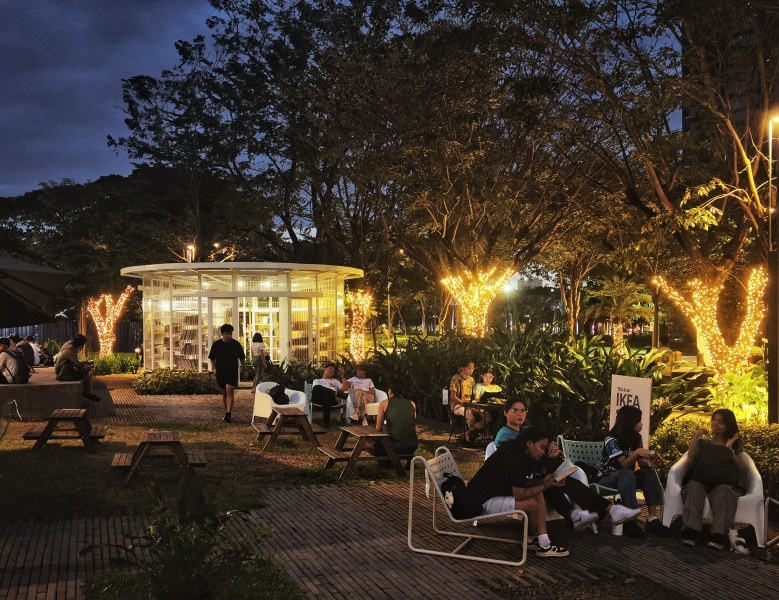
The Book Stop 05 at night time.
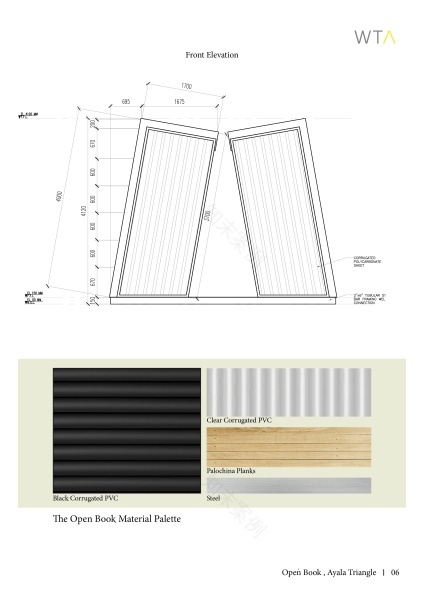
Technical drawings

The Book Stop impact.
Sections, The Book Stop 04.

The Book Stop 04, isometric diagrams.

Render, The Book Stop 04

The Book Stop 04 diagram. Concept, The Book Stop 05

Impact, The Book Stop 05
The book stop has traveled several sites, with 5 iterations currently existing. We hope to reach more communities. We have the technical expertise; we just need further financial support.
南京喵熊网络科技有限公司 苏ICP备18050492号-4知末 © 2018—2020 . All photos and trademark graphics are copyrighted by their owners.增值电信业务经营许可证(ICP)苏B2-20201444 苏公网安备 32011302321234号
苏公网安备 32011302321234号客服
消息
收藏
下载
最近