

创作上传
VIP
收藏下载
登录 | 注册有礼
查看完整案例

收藏

下载

分享

Velux Carbonlight Houses
Velux Carbonlight Houses
The UK’s contribution to the VELUX Model Home 2020 project
Clients
Velux
Information
Location: Kettering
Start Date: 2009
End Date: 2011
Specialisms: Net Zero & Low Carbon, Factory Made
VELUX engaged HTA to evolve concepts for two homes in a semi-detached arrangement as the UK’s contribution to the VELUX Model Home 2020 project a pan-European series of six building ‘experiments’. The design includes a three bedroom home and four bedroom home with integrated garage. The two homes are designed to be spacious and airy, with a very high daylight factor (5%). The sloping roof and section are designed to maximise light and natural ventilation and the super insulated buildings have high levels of air tightness to reduce the amount of heating they need.
One Place, Many Stories

Architecture
What was the overarching philosophy of the project?

Architecture
The asymmetric design
Sustainability & Building Physics
How did the project seek to refine ideas of zero carbon housing?
Architecture
What was the overarching philosophy of the project?
The overarching philosophy of the Model Home experiment is to place human comfort at the centre of zero carbon design. The design teams in each country have shared a common technical brief but each has interpreted it in the context of their own legislative framework and housing market. In the UK we have worked to create a home that addresses the evolution of the Code for Sustainable Homes while remaining relevant to the volume housing market. In common with many low and zero carbon designs the homes are super insulated, minimise thermal bridging and have high levels of air tightness to reduce the amount of heating they need. Each home then uses a combination of two renewable energy technologies for their main heat source (air source heat pumps and solar collectors) thus minimising the need for the use of non-renewable energy.


HTA worked with VELUX to involve a variety of local stakeholders including the Kettering planning and urban design team, local politicians and the North Northants Development Company (NNDC). The nature of the demonstration project meant that HTA were involved in consultation and detailed design with the projects other stakeholders who had new or innovative products that they wanted to demonstrate in the homes. Another important aspect of HTA’s role was explaining and illustrating the design and concepts at public events such as the Grand Designs Exhibition and Ecobuild, as well as explaining the principles to policy makers involved in sustainable construction.


The asymmetric design
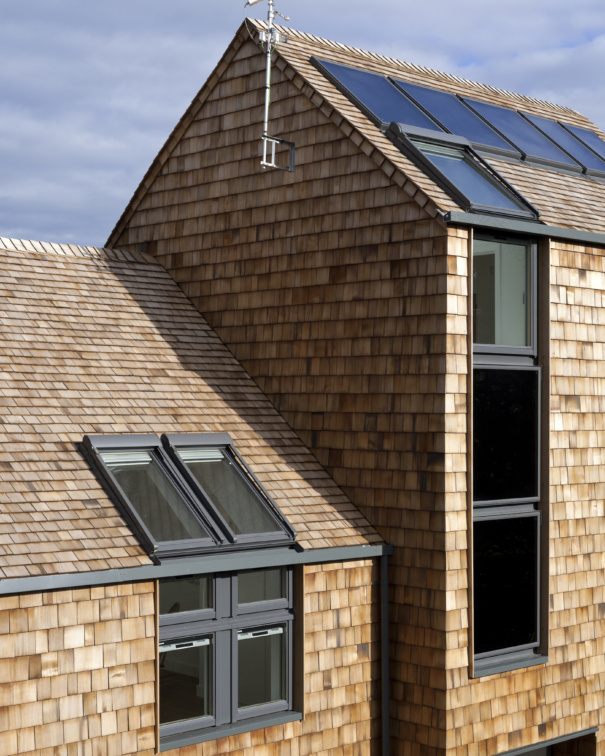
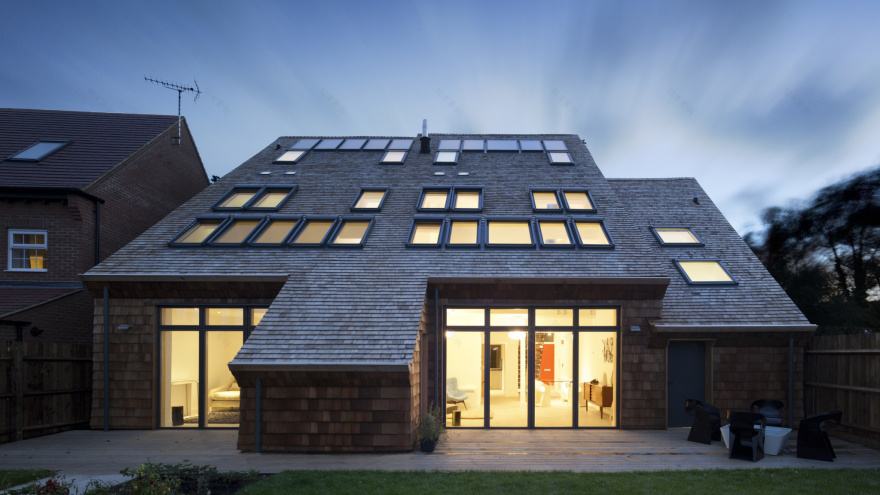
The external walls and the roof are both clad in timber shingles giving the building both individuality & simplicity. The warmth and renewable nature of timber shingles means that the environmental message is represented in the fabric of the home. The asymmetric design of the houses defines a strong frontage to the public realm while maximising light to the rear garden – allowing the occupants to enjoy a brighter space and to grow food on the micro-allotments.
Natural ventilation is harnessed through triple-height spaces and a dual-aspect atrium which maximises the combined cross and stack ventilation of each home and avoids complex, mechanical ventilation and heat recovery systems.
HTA’s scheme has been developed with the comfort of the end user in mind. Homes are organised around a central atrium that creates a bright, sun filled and naturally ventilated home that is healthy and enjoyable to live in.
Sustainability & Building Physics
How did the project seek to refine ideas of zero carbon housing?
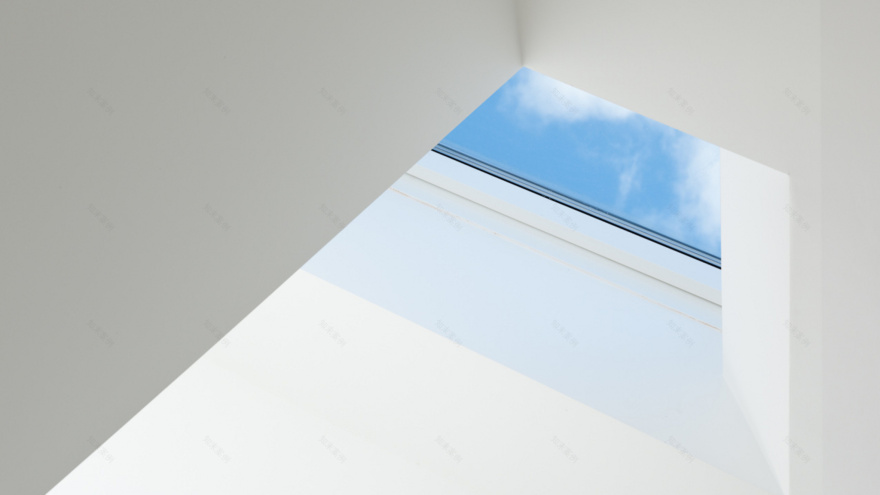
It is in the measures that go beyond technological solutions that VELUX and HTA have sought to refine ideas of zero carbon housing. Our starting point was to maximise daylight which has many health and well being benefits. Through computer modelling we have achieved designs which have a minimum daylight factor of 5% for every room in the home – more than 3 times greater than that required by the Code for Sustainable homes in living spaces.

The VELUX Model Home 2020 UK project does not end with this approach to the internal environment. Instead of constructing the homes at a university or research park they are being built as part of a typical suburban masterplan for over 200 homes on the Charter Park development by Bovis, located in Rothwell near Kettering. Our design aims to maximise the internal area while making the best use of the site. We have used a sloping roof to allow the greatest amount of daylight into the dwelling and also collecting renewable heat with solar thermal panels integrated into the roof and facade.
The homes meet Code Level 4 and will be monitored by HTA for a period of eighteen months with a family in occupation, thus enabling us to gauge the effectiveness of the design and the success of the design strategies.
南京喵熊网络科技有限公司 苏ICP备18050492号-4知末 © 2018—2020 . All photos and trademark graphics are copyrighted by their owners.增值电信业务经营许可证(ICP)苏B2-20201444 苏公网安备 32011302321234号
苏公网安备 32011302321234号客服
消息
收藏
下载
最近