

创作上传
VIP
收藏下载
登录 | 注册有礼
查看完整案例

收藏

下载

分享
Nebohatkina Oksana | BACK to reality
With the development of technological progress, the ability to immerse oneself in a virtual environment and create one’s own worlds there, letting go of fantasy,has become something ordinary.
Everything that we wanted to get, only after imagining, could appear on our screen. The farther a person went, the deeper he went into this virtual environment, finding everything in it that he lacked in real life. He could create places and locations that were difficult to imagine in real life.
Architecture is now designed mainly in the digital space,first there is an electronic image. The environment is subject to influence and formation of human activity and arising as a result of it external factors. Emerging spheres of space (environment) move in the virtual nonmaterial world. Actually, the virtual environment can not correspond to the reality.
But what if the person any more does not need to run somewhere for impressions and it can construct to itself in reality absolutely any form and will go there?
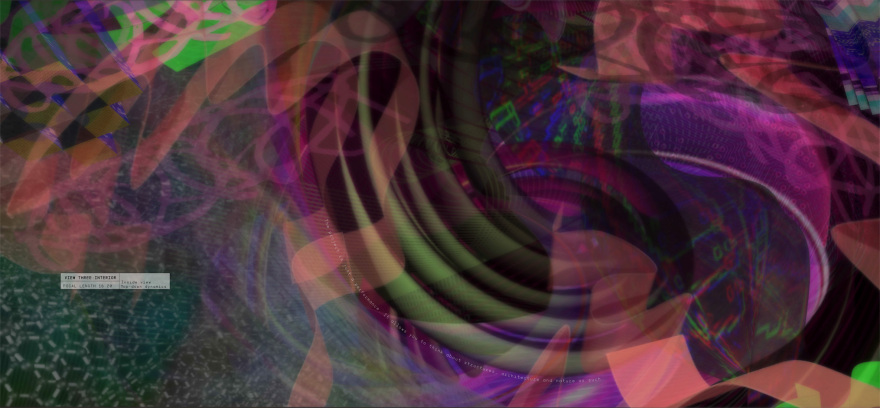
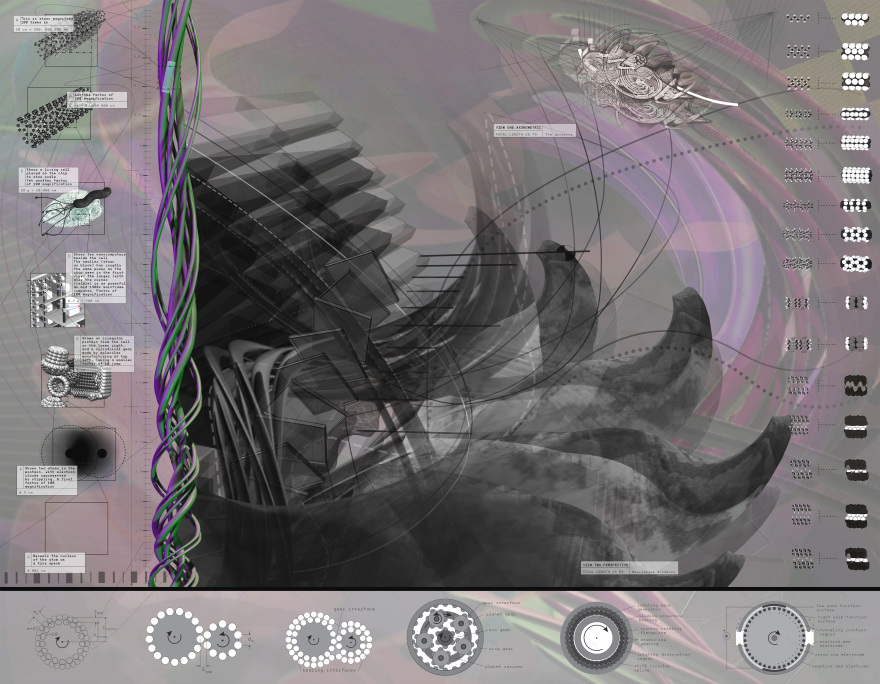
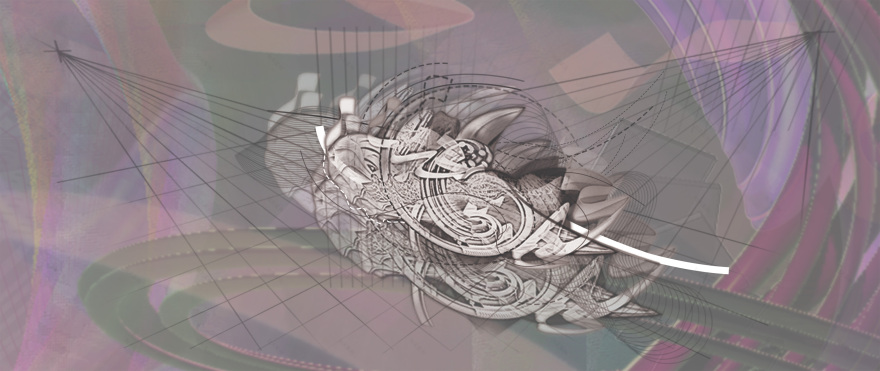
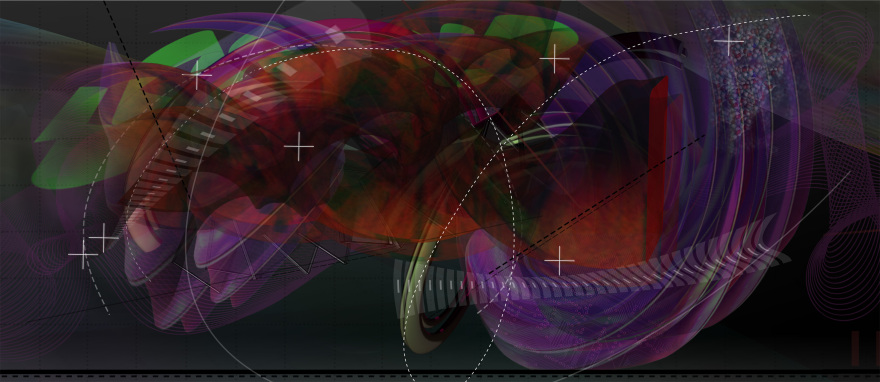
So I propose to create an architectural canvas that is fully provided and influenced by the viewer.In order to visualize and build something similar: I propose to use nanotechnology, by means ofthat can be built in any shape.
A basic definition: Nanotechnology is the engineering of functional systems at the molecular scale. This covers both current work and concepts that are more advanced. In its original sense, ’nanotechnology’ refers to the projected ability to construct items from the bottom up,using techniques and tools being developed today to make complete, high performance products.
Nanomachine work at the level of the invisible eye. We can create one nanorobot and program him to create his own likenesses. These machines are able to grab and put somewhere individual atoms will be able to build almost anything, bundling the right atoms together in this way.
Thus forming a system consisting of a material that can withstand any impact,and also replace any material previously found by humans. They could leave a vascular system in the object to be created to provide assembler and disassembler systems; they can be programmed to restore worn-out parts. As long as users supply the engine with energy and raw materials, it will update its own structure. Even more advanced engines can also be literally flexible, which are large, atomically accurate, diamond resistant, include very powerful computers (ten million MIPS)
per milliwatt) and engines (megawatt per cubic milliwatt).
We want to use and explore the artistic features of virtual This not only expands the possibilities of technically enriched parent entities, but also activates previously hidden parental authority, allowing you to create projects that, both in the imagination and in reality, are beyond our expectations.
Visualizing productive nanosystems and molecular manufacturing is a major challenge in communicating the power of this technology. To help address production of a new computer-generated animated short film called "Productive Nanosystems: from Molecules to Superproducts". This was a collaborative
The film depicts an animated view of a nanofactory and demonstrates key steps in a process that converts simple molecules into a billion-CPU laptop computer.
Thanks to Eric Drexler’s work, my architectural project is quite possible.



南京喵熊网络科技有限公司 苏ICP备18050492号-4知末 © 2018—2020 . All photos and trademark graphics are copyrighted by their owners.增值电信业务经营许可证(ICP)苏B2-20201444 苏公网安备 32011302321234号
苏公网安备 32011302321234号客服
消息
收藏
下载
最近