

创作上传
VIP
收藏下载
登录 | 注册有礼
查看完整案例

收藏

下载

分享
建筑汲取当地的文化灵感,以数字时代的匠心重释在地记忆。以地域标志兰花兰叶交织形成的自然造型,宛若叶脉水线流转,大气舒展、浑若天成;设计遵循“形随流定”法则,既承载着庄重气韵,又流淌着诗意灵动,必将成为传统文化与现代文明交响共鸣的文化地标。
The architecture draws inspiration from local culture and reinterprets local memories with the ingenuity of the digital age. The natural shape formed by the interweaving of regional orchids and leaves is like the flow of veins and water lines, with an atmosphere that stretches and is as smooth as nature; The design follows the principle of “form follows flow”, carrying both solemn charm and poetic vitality, and will surely become a cultural landmark that resonates with traditional culture and modern civilization.
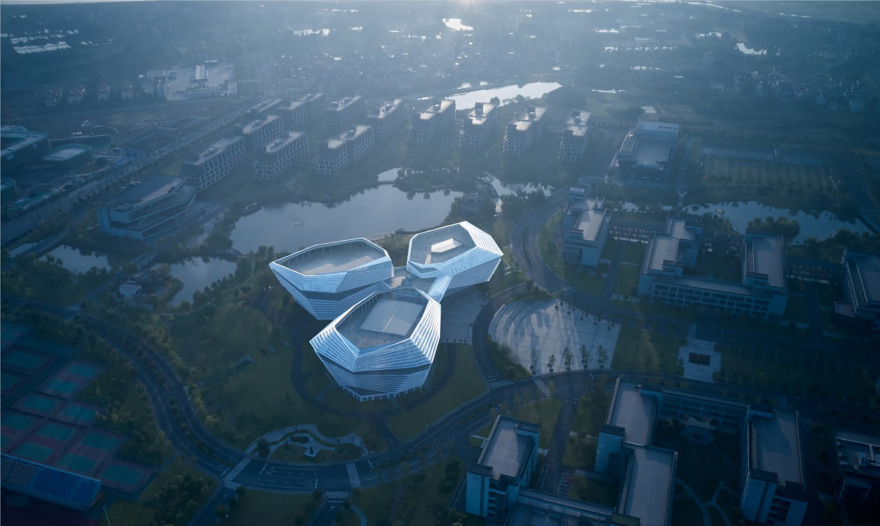
▼项目鸟瞰,Aerialview of the project © 奥观建筑视觉
一、项目背景
Project Background
浙江师范大学行知学院选址兰溪,依托历史文化名城。市内水系汇聚,盛产兰花,文化底蕴深厚。图书文化中心作为标志性建筑位于校园中央,不仅承载着知识典藏与文化传播的功能,更以强烈的象征意义成为整个校区的精神高地。建筑毗邻开阔的中心水体,与自然景观浑然相融,成为整个公园式校园景观的视觉中心。项目地上建筑面积25583.28㎡,地下建筑面积7475.83㎡。
The Xingzhi College of Zhejiang Normal University is located in Lanxi, relying on the historical and cultural city. The city’s water systems converge, producing abundant orchids and having a profound cultural heritage. The Book Culture Center, as a landmark building located in the center of the campus, not only carries the functions of knowledge collection and cultural dissemination, but also becomes the spiritual highland of the entire campus with strong symbolic significance. The building is adjacent to the open central water body and blends seamlessly with the natural landscape, becoming the visual center of the entire park style campus landscape. The above ground construction area of the project is 25583.28 square meters, and the underground construction area is 7475.83 square meters.
▼立面概览,Overview of the project © 奥观建筑视觉

二、设计文脉
Design context
兰溪自古“溪以兰名,邑以溪名”,如“兰”若“溪”成为当地人最为认同的文化精神记忆。行知学院结合“知行合一”的教育思想传承,以“学知若溪,德行如兰”作为规划理念,整个校园规划脉络如兰叶傍溪,自然舒展。而空间序列中心的图书文化中心则顺势而为,汲取兰的神韵,以兰叶脉络作为肌理,体块交叠似绽放的兰花,形成温润雅致的视觉焦点。
Since ancient times, Lanxi has been known as “the river is named after the orchid, and the town is named after the river”, with “orchid” being the most recognized cultural and spiritual memory among the locals. The Xingzhi Academy combines the educational philosophy of “integrating knowledge and action” and adopts the planning concept of “learning and knowledge like a stream, moral character like a orchid”. The entire campus planning is like a orchid leaf by a stream, naturally stretching out. The book culture center at the center of the spatial sequence follows the trend, drawing inspiration from the charm of orchids and using the veins of orchid leaves as texture. The overlapping blocks resemble blooming orchids, forming a warm and elegant visual focus.
▼图书文化中心主入口,Main entrance of the Book Culture Center © 奥观建筑视觉

三、建筑性格
Architectural personality
建筑将兰的风骨提取凝练,形成典雅舒展的独有个性。三体块向心而列,形成建筑雕塑,似是绽放瞬间,又是凝固的永恒。同时以兰叶自由伸展的线条重展形体,如国画中的抽象语言,若兰非兰,介于似与不似之间,以其独特的经典意向赋予建筑极富特质的场所精神。
▼兰的意向,The essence of the orchid © 中国联合工程有限公司

The architecture extracts and condenses the essence of the orchid, forming an elegant and unique personality. The three body blocks are arranged in a concentric manner, forming architectural sculptures that seem to bloom in an instant and solidify into eternity. At the same time, the free extension of orchid leaves is used to reshape the form, like the abstract language in traditional Chinese painting. If orchid is not orchid, it lies between similarity and dissimilarity, endowing the building with a unique and classic intention of place spirit.
▼图书文化中心正立面,Main facade of the Book Culture Center © 奥观建筑视觉

设计吸收自然传统的灵秀气韵,将自然山水、人文历史与现代建筑技术融合,在建筑形态、空间体验和技术哲学三重维度上实现在地性表达,力图打造出既承载兰溪积淀特质又彰显现代创新的公共文化中心。
The design absorbs the spiritual charm of natural tradition, integrates natural landscapes, cultural history, and modern architectural technology, and achieves local expression in the three dimensions of architectural form, spatial experience, and technological philosophy, striving to create a public cultural center that not only carries the characteristics of Lanxi accumulation but also demonstrates modern innovation.
▼设计吸收自然传统,The design absorbs the spiritual charm of natural tradition © 奥观建筑视觉

四、功能复合
Functional Composite
建筑以巨构中庭为核心,共享空间成为自然采光与人员集散的核心空间,大跨度钢桁架的文化演艺中心和中庭营造的各类图书展馆形成有机系统。地上部分的“三瓣”明确划分功能——东北侧两瓣容纳图书馆主体,西侧一瓣独立设置演艺中心。图书馆两区块通过中心共享中庭衔接,形成功能互补的整体,共藏书80万册。演艺中心可容纳1200人观演,与近 20 个图书借阅中心以“自然、智能”为核心,围绕中庭三翼展开。
▼概念体块,Conceptual Block Simulation © 中国联合工程有限公司

The building is centered around a large atrium, with shared spaces becoming the core space for natural lighting and personnel gathering. The cultural and performing arts center with large-span steel truss and various book exhibition halls created in the atrium form an organic system. The “three petals” on the ground clearly divide the functions – the northeast two petals accommodate the main body of the library, and the west one has an independent performance center. The two sections of the library are connected by a central shared atrium, forming a functionally complementary whole with a total collection of 800000 books. The performance center can accommodate 1200 people for performances, and with nearly 20 book borrowing centers centered around “nature and intelligence”, it unfolds around the three wings of the atrium.
▼巨构中庭,Large atrium © 奥观建筑视觉

图书-档案馆组团:图书档案馆采用双入口设计。南侧主入口通过共享门厅连接检索区与新书展示区,营造开放的知性氛围;北侧工作入口则服务于内部流线,与行政办公区动线分离。各楼层按学科分类布置阅览区,顶层集中设置密集书库,既保证藏阅一体又提升空间效率。
Library Archives Cluster: The Library Archives adopts a dual entrance design. The main entrance on the south side is connected to the search area and the new book display area through a shared foyer, creating an open and intellectual atmosphere; The north work entrance serves the internal flow line and is separated from the administrative office area flow line. Each floor is arranged with reading areas classified by disciplines, and a dense library is set up on the top floor to ensure the integration of collection and reading while improving spatial efficiency.
▼中心大厅,Central hall © 奥观建筑视觉

综合演艺中心组团:作为重要演艺文化设施,采用专业剧场布局。观众厅配以楼座设计,确保良好的视听效果。前厅与两侧边厅形成灵活的过渡空间,可适应不同规模的接待需求。舞台区域通过科学的进深设计满足多幕演出要求,侧台设置完善的吊装系统。后区两层化妆间配备独立休息区,支持高规格演出需求。演艺中心在满足校内使用的同时,通过独立出入口和配套服务设施的设置,实现了对社会开放的可能性。
Integrated Performing Arts Center Cluster: As an important performing arts and cultural facility, it adopts a professional theater layout. The audience hall is equipped with a tower design to ensure a good audio-visual effect. The front hall and the side halls form a flexible transition space that can adapt to reception needs of different scales. The stage area meets the requirements of multi act performances through scientific depth design, and the side stage is equipped with a complete lifting system. The dressing rooms on the second floor of the back area are equipped with independent rest areas to support the demand for high-end performances. The performing arts center not only meets the needs of campus use, but also realizes the possibility of being open to society through the establishment of independent entrances and supporting service facilities.
▼演艺中心,Performing arts center © 奥观建筑视觉

五、场地呼应
Venue response
项目采用三叉分形布局契合风场,台地筑土为坡抬升以提升防灾韧性,节省造价的同时,通过视线分析强调校园中心的视觉效果。并以“馆庭一体”串联图书馆与文化演艺中心,营造内外层次丰富的场地形态。利用半地下车库的自然抬升形成自然基座,主体造型上部悬挑、下部充分后退的雕塑感营造,使建筑和水体景观更亲近,形成了“悬浮”于“自然地形”之上的文化综合体。简洁而完整的几何形态,形成整体的城市空间界面,实现了建筑与自然的和谐共生。景观设计强调与空间的交融渗透,以地景抬升与观景平台结合,共享周围的水景山色。
The project adopts a trident fractal layout that fits the wind field, and the terrace soil is raised as a slope to enhance disaster resilience, save costs, and emphasize the visual effect of the campus center through visual analysis. And connect the library with the cultural and performing arts center through the integration of the library and the courtyard, creating a rich form of venue with internal and external levels. By utilizing the natural lifting of the semi underground garage to form a natural base, the main shape is created with a sculptural sense of overhanging at the top and fully retreating at the bottom, making the building and water landscape closer, forming a cultural complex that is “suspended” above the “natural terrain”. The concise and complete geometric form forms the overall urban spatial interface, achieving a harmonious coexistence between architecture and nature. Landscape design emphasizes the integration and infiltration with space, combining landscape elevation with viewing platforms to share the surrounding water and mountain scenery.
▼周围景观与建筑,Building with surrounding landscape © 奥观建筑视觉

六、生态保留
Ecological Preservation
场地原有一棵巨大的百年樟树,设计没有移栽,而是充分利用地形实施重点保护。将文化中心一层标高通过缓坡覆土的方式抬升,结合半地下车库的设置,既经济有效地解决了地形高差与停车需求,又自然形成了面向古树的观景平台,使珍贵的原生树木成为校园活力的核心锚点与情感寄托,实现自然保留与空间营造的双赢。枝叶繁茂的古树从悬浮平台穿越而出,打造空间感丰富的立体景观的同时,也完成了“传统城市肌理–人造生态平台–天然山水风景”的柔顺过渡。
There was originally a huge century old camphor tree on the site, which was not transplanted in the design but fully utilized the terrain to implement key protection measures. The elevation of the first floor of the cultural center is raised through a gentle slope covered with soil, combined with the setting of a semi underground garage, which not only economically and effectively solves the terrain height difference and parking needs, but also naturally forms a viewing platform facing ancient trees, making precious native trees the core anchor point and emotional sustenance of campus vitality, achieving a win-win situation of natural preservation and space creation. The ancient trees with lush branches and leaves emerge from the suspended platform, creating a three-dimensional landscape with rich spatial sense, while also completing the smooth transition from “traditional urban texture – artificial ecological platform – natural landscape”.
▼场地保留的古树,the real scene of ancient trees © 奥观建筑视觉

七、精致表皮
Exquisite facade skin
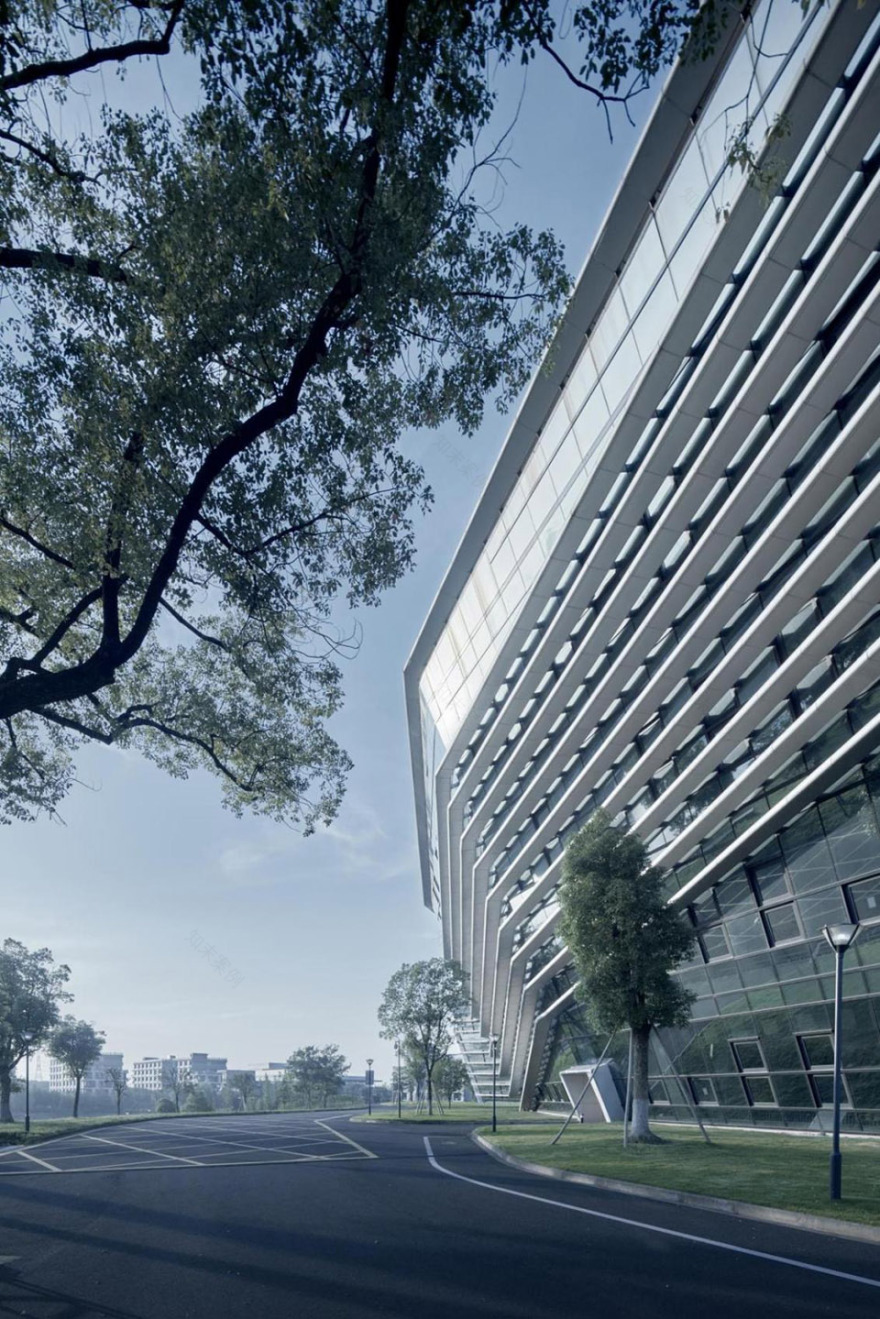
铝板线条顺应体量扩散收束,犹如兰的叶脉,勾画出建筑表皮的精致肌理。铝板线条自底层向上发散延伸,至顶层优雅收进,形成轻盈舒展的视觉效果。屋顶与立面的界限由流转变换的表皮实现融合。精心设计的线条铝板幕墙系统,结合具有视觉冲击的悬挑建筑语言,强化了形体的虚实对比关系,使建筑在完整的形体内增加了耐看的细节。象征自然流动的线性收束,绘成了图书文化中心独特的文脉特征。
The aluminum plate lines follow the volume and expand and converge, like the veins of a orchid, outlining the delicate texture of the building’s exterior. The aluminum plate lines diverge and extend upwards from the bottom layer, elegantly converging to the top layer, creating a light and relaxed visual effect. The boundary between the roof and the facade is achieved through the fusion of the flowing and transforming skin. The carefully designed line aluminum panel curtain wall system, combined with the visually impactful cantilevered architectural language, enhances the contrast between the virtual and real forms, adding durable details to the building within its complete form. The linear convergence symbolizing natural flow has been depicted as a unique contextual feature of the book culture center.
▼铝板线条顺应体量的表皮,The aluminum plate lines follow the volume © 奥观建筑视觉

文化中心的平面外形与立面轮廓双向控制,令使用者环绕建筑时随着视角的变换,体验到不同朝向各不相同的形体与高低起伏的轮廓变化。而参数化的立面细节,远观彷如微风吹动的脉络,在阳光的照射下带来丰富而充满动感的光影变化。设计以“兰叶”为特色意象元素,构建建筑整体形态,以叶脉的灵秀凝练为建筑语言,写意兰溪的“自然”文化,将简洁、流动的形态完美嵌入到肌理之中,使建筑成为耀眼的城市地标,行云流水间,彰显几何之美。
The plan shape and facade contour of the cultural center are controlled in both directions, allowing users to experience different forms and undulating contours in different orientations as they surround the building from different perspectives. And the parameterized facade details, from a distance, resemble the veins blown by a gentle breeze, bringing rich and dynamic light and shadow changes under the sunlight. The design features the imagery element of “orchid leaves” and constructs the overall form of the building. The elegant and condensed leaf veins are used as the architectural language, depicting the “natural” culture of Lanxi. The simple and flowing form is perfectly embedded into the texture, making the building a dazzling urban landmark, with flowing clouds and water, showcasing the beauty of geometry.
▼立面细部,Details of the exterior © 奥观建筑视觉
八、技术创新
Technological innovation
项目以 BIM 和 3D 扫描实现超大空间与复杂幕墙精益建造,双层玻璃幕墙以参数化生成线状自由曲面;钢框架与大跨度桁架解决扭转结构挑战。通过三维建模有效解决了暖通、幕墙、建筑与结构等专业间的碰撞问题,确保设计施工一体化高效推进。结合参数化模拟优化形态与表皮,以大尺度塑形提升通风降能耗,中庭与可调的铝板线条实现通风与律动表达。室内空间组织兼顾功能性与艺术性,建筑整体塑形通过精准的结构设计与先进的技术应用,完美实现了造型艺术、空间功能与建造技艺的有机统一。
The project utilizes BIM and 3D scanning to achieve lean construction of ultra large spaces and complex curtain walls. The double-layer glass curtain wall generates linear free-form surfaces through parameterization; Steel frames and large-span trusses solve the challenge of torsional structures. The collision problems between HVAC, curtain wall, building and structure specialties have been effectively solved through 3D modeling, ensuring the efficient integration of design and construction. By combining parameterized simulation to optimize the shape and skin, large-scale shaping is used to improve ventilation and reduce energy consumption. The atrium and adjustable aluminum plate lines achieve ventilation and dynamic expression. The organization of indoor space balances functionality and artistry, and the overall shaping of the building is achieved through precise structural design and advanced technological applications, perfectly achieving the organic unity of visual art, spatial function, and construction techniques.
▼线状自由曲面,Linear free-form surfaces © 奥观建筑视觉

结语
Conclusion
项目获得2021全国工程勘察设计三等奖和浙江省勘察设计行业优秀勘察设计一等奖。投入使用以来,广受好评,迅速成为备受关注的文化地标。行知学院图书文化中心的设计既是对兰溪传统文化的现代转译,更是在传承与创新中高校建设振翅高飞的生动注脚。
The project won the third prize of National Engineering Survey and Design in 2021 and the first prize of Excellent Survey and Design in the Survey and Design Industry in Zhejiang Province. Since its launch, it has received widespread praise and quickly become a highly regarded cultural landmark. The design of the Book Culture Center of Xingzhi College is not only a modern translation of Lanxi’s traditional culture, but also a vivid footnote to the soaring construction of universities through inheritance and innovation.
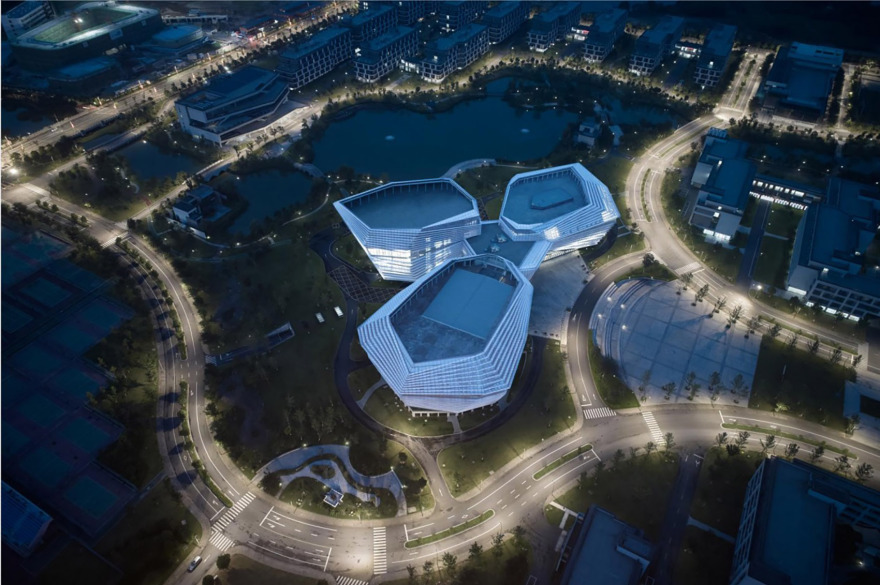
▼夜景,Nightview © 奥观建筑视觉
▼总平面图,Master plan © 中国联合工程有限公司

▼一层平面图,First floor plan © 中国联合工程有限公司

▼二层平面图,Second floor plan © 中国联合工程有限公司
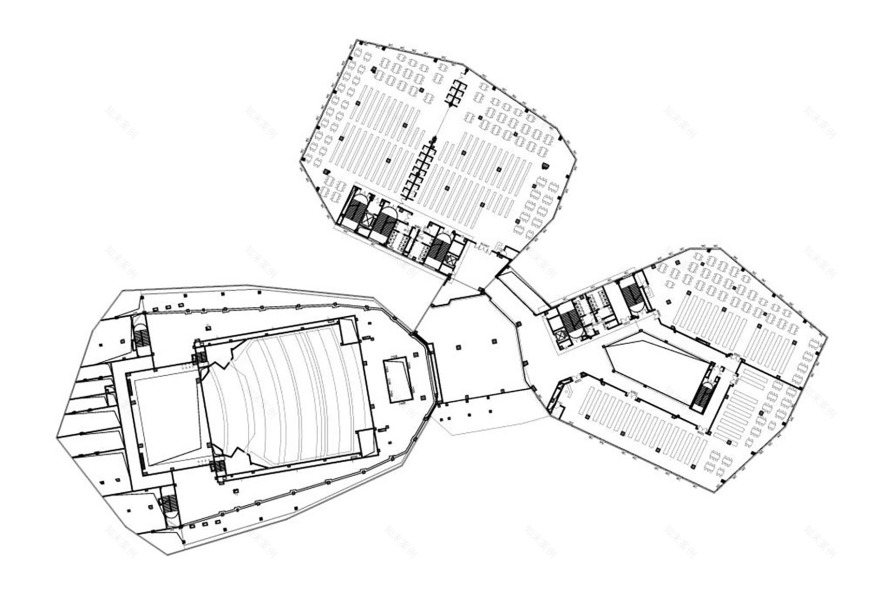
▼三层平面图,Third floor plan © 中国联合工程有限公司
▼四层平面图,Fourth floor plan © 中国联合工程有限公司
▼剧场剖面图,Sectional view of the theater © 中国联合工程有限公司

▼图书馆剖面图,Sectional view of the library © 中国联合工程有限公司
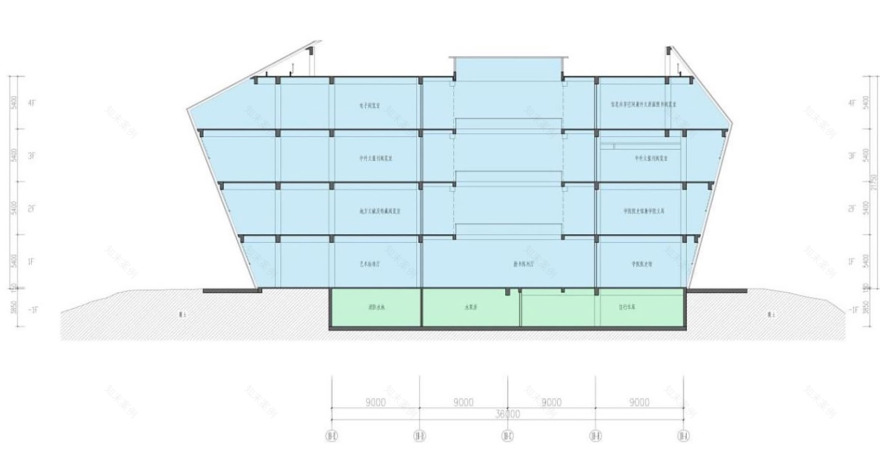
▼立面图,Elevation © 中国联合工程有限公司

项目地址:浙江/兰溪
项目总负责:姜传鉷、郭晔
建筑设计主创及建筑专业负责:汪 洁
建筑专业团队:汪 洁、吴皓
结构专业负责:方小军,结构专业团队:方小军、卢磊
机电专业负责及团队:周展浩(给排水负责)、林鑫(暖通负责)、周涛(电气负责)、丁正辽 (暖通)
建筑摄影:奥观建筑视觉
Project Address: Lanxi, Zhejiang
Project Manager: Jiang Chuanhong, Guo Ye
Architectural Design Lead and Architectural Professional Responsible: Wang Jie
Architectural Professional Team: Wang Jie, Wu Hao
Responsible for Structural Engineering: Fang Xiaojun, Structural Engineering Team: Fang Xiaojun, Lu Lei
Mechanical and Electrical Professional Responsibilities and Teams: Zhou Zhanhao (Water Supply and Drainage Responsibilities), Lin Xin (HVAC Responsibilities), Zhou Tao (Electrical Responsibilities), Ding Zhengliao (HVAC Responsibilities)
Architectural Photography: Aoguan Architectural Vision

南京喵熊网络科技有限公司 苏ICP备18050492号-4知末 © 2018—2020 . All photos and trademark graphics are copyrighted by their owners.增值电信业务经营许可证(ICP)苏B2-20201444 苏公网安备 32011302321234号
苏公网安备 32011302321234号客服
消息
收藏
下载
最近