

创作上传
VIP
收藏下载
登录 | 注册有礼
查看完整案例

收藏

下载

分享
出品人:向玲 / Producer: Xiang Ling
编辑:孙星悦,张笑然,高天旗,亓慧 / Editor: Sun Xingyue, Zhang Xiaoran, Gao Tianqi,Qi Hui
__________
“MAT”&“超级建筑” “MAT” & “Super Architecture”
“从设计理念的角度,我们做设计时喜欢从小的单元体量研究,从个人尺度衍生出一系列的公共空间,公共建筑以及乃至于生长为一个城市。”
We strive to produce work that is poetic and vibrant, grounded in meticulous thought. This spirit remains central to our practice, continually evolving in meaning and depth.
张淼:MAT有几重不同的解释:1、我们是两个创始人,唐康硕他是T,然后M是我张淼,我们两个名字的组合缩写就是MAT。2、十几年前我们在荷兰游学的期间,我们对战后出现的城市设计理论比较感兴趣,所以也借鉴了Mat-building系列设计理论这个名字。3、从设计理念的角度,我们做设计时喜欢从小的单元体量研究,从个人尺度衍生出一系列的公共空间,公共建筑以及乃至于生长为一个城市。这也暗示了我们团队在设计操作上希望有一个一以贯之,从名字到实践的一种延续性。
Zhang Miao: There are several different interpretations of the name MAT: 1, We are two founders, Tang Kangshuo represents the “T,” and I, Zhang Miao, represent the “M.” The abbreviation MAT simply combines the initials of our names. 2, More than a decade ago, while studying in the Netherlands, we became interested in the urban design theories that emerged after the war, so we borrowed the name Mat-building, which comes from a series of such design theories. 3, From a design philosophy perspective, when we design, we like to start from small modular units, exploring how human-scale interventions can grow into a series of public spaces, public buildings, and then expand into a city. This also reflects our team’s approach in design practice, where we seek a continuous logic, to create a sense of coherence from name to practice, to ensure that our name and our work are conceptually and practically aligned.
▼合伙人早年留学及工作合影,Group photo of partners during their study tour and work period© 超级建筑事务所

唐康硕:超级建筑这个名字起的听起来比较大,但事实上我们并不是很大的团队。我们的英文叫MAT,英文中mat是一个垫子的意思,垫子是一个很小的东西。前阵子展览的时候,一个建筑师朋友总结得特别好:当我们讲mat的时候是从一个小的身体尺度,一个小的单元开始,从而去建立一个整体性。然后我们中文名字叫超级,这是从一个比较宏观的、大的尺度,暗示着我们的设计思考也会从大往小去入手。那么中文名字和英文名字就分别把我们从小尺度到大尺度,从一个身体的属性到一个城市空间和城市尺度的关系归纳出来了。
Tang Kangshuo:The name “Super Architecture” may sound rather grand, but in fact, we are not a large team. Our English name is MAT, and in English, “mat” literally means a small mat, something modest in scale. During the recent exhibition, an architect friend summarized it very well: when we talk about “mat,” it begins from a small bodily scale, a single unit, and gradually builds a sense of wholeness. Our Chinese name, “超级建筑 (means Super Architecture),” on the other hand, suggests a broader and more macro scale, indicating that our design thinking also moves from the large toward the small. So when you put the two together, the English and the Chinese names actually form a kind of conceptual bridge: from small to large, from the bodily scale to the urban scale, summarizing our approach to working across different dimensions.
▼合伙人工作照,Partners group photo Zhang Miao and Tang kangshuo© 超级建筑事务所

两位创始人的合作、碰撞、探索
The Collaboration, Collision, and Exploration Between Two Founders
“这些新知识的积累和吸纳导致我们会有一种自我迭代的驱动力和需求,项目倒逼我们自己不停的学习和拓展。”
The accumulation and absorption of this new knowledge naturally drive us to keep learning and evolving.
张淼:作为一个有两个创始人的事务所,我们俩恰好共享了相似的关于建筑学启蒙的职业背景、以及后来在荷兰的教育背景,外加在大量工作中互相不同想法的碰撞,所以基本上我们处于平行工作的状态。在具体的项目操作上,在项目的不同阶段,我们两个的侧重点不太一样。项目前期的时候我们会一起去思考,一起去看场地,一起跟团队做头脑风暴,每个人都贡献自己的想法。到了项目逐渐推进过程中,相对有亲和力的我跟业主打交道的会多一点,然后唐老师在后期和工地等工作上干得多一点,但基本上是并行的工作状态。在事务所的一天,我们除了出差外,其他时候都是在办公室。我们通常会早一些到办公室,先处理对外媒体和文字工作,以及团队外部合作的事务。等同事们都来了之后,上午大家会保持分头工作的状态,我们俩之间会碰撞一下想法。下午就比较密集的开展团队内部的项目会议,基本上每个项目每天都会有一次讨论和review,把从概念到图纸到施工等各个阶段,包括不同项目在不同阶段的一个操作过程一点点去完成它。
Zhang Miao: As a practice with two founders, we happen to share similar professional backgrounds in architectural education and early inspiration, as well as a common experience of studying in the Netherlands. On top of that, through constant exchanges and collisions of different ideas during numerous projects, we have formed a mode of working in parallel. In actual project operations, our focus tends to differ at different stages. In the early phase of a project, we usually think together, visit the site together, and brainstorm with the team, with each of us contributing our own ideas. As the project progresses, I, being relatively more communicative, handle more of the client interactions, while Tang focuses more on the later stages and on-site work. But overall, we maintain a state of parallel collaboration. On a typical day at the studio, unless we are traveling, both of us work in the office. We usually arrive earlier to handle media, writing, and collaboration matters. When the rest of the team arrives, the morning is often spent on individual work, during which we two may exchange and refine ideas. In the afternoon, we hold intensive internal project meetings. Every project is reviewed daily, covering all stages from concept to drawings to construction, moving forward step by step through continuous discussion and review.

▼项目模型展示,Model display© 超级建筑

唐康硕:每一个团队都有自己的独特之处,对于我们来说,两个人一起工作时,虽然有很多不同的意见和争执,但这也会形成每个项目最终都不是某个人单方面的一个结果。第二,我们的项目尺度从小到大都有,我们有一个自己的设计方法论和自己感兴趣的建筑语言,所以能够在不同大小和类别的项目上保持相对稳定的输出。关于持续探索,我觉得持续探索首先要保持好奇心,对新的事物好奇,内心对外部开放。其次是,现在的项目类型变化多样,有很多委托项目的类型对我们来讲也是第一次接触,在每一次接触新类型时,我们会做很多前期的研究,这些新知识的积累和吸纳导致我们会有一种自我迭代的驱动力和需求,项目倒逼我们自己不停的学习和拓展。再就是,建筑师的本职工作会耗费大量的时间,在设计和生活是一种深度绑定的情况下,人的生活状态变化也会带来持续性的对设计的影响。人生的阶段不一样,自己的感受也是不一样的,也会有很多新鲜的东西,这样的状态也反过来会影响我们自己持续探索。
Tang Kangshuo: Every team has its own unique characteristics. For us, when two people work together, there are naturally many different opinions and even disagreements. But this also ensures that every project’s outcome is never the product of one single person. Second, our projects range widely in scale. We have developed our own design methodology and architectural language, which allows us to maintain a relatively consistent quality of output across different project types and sizes. As for continuous exploration, I believe it starts with curiosity, which means staying curious about new things and open to the outside world. Nowadays, project types are becoming increasingly diverse, and many commissioned projects are new to us. Every time we encounter a new one, we conduct extensive preliminary research. The accumulation and absorption of this new knowledge naturally drive us to keep learning and evolving. Architecture also takes up a great deal of time. Since design and life are deeply intertwined, changes in our life stages inevitably influence our design thinking. Different stages of life bring different insights, and that constant change, in turn, fuels our continuous exploration.
▼MAT部分代表作品,Selected representative works of MAT

超越研究 超越尺度
单元聚落+城市界面+人文视角
Extendbeyond Research+Surpass Scale
Unit Cluster + Urban Interface + Humanistic Perspective
这些新知识的积累和吸纳导致我们会有一种自我迭代的驱动力和需求,项目倒逼我们自己不停的学习和拓展。
The accumulation and absorption of this new knowledge naturally drive us to keep learning and evolving.
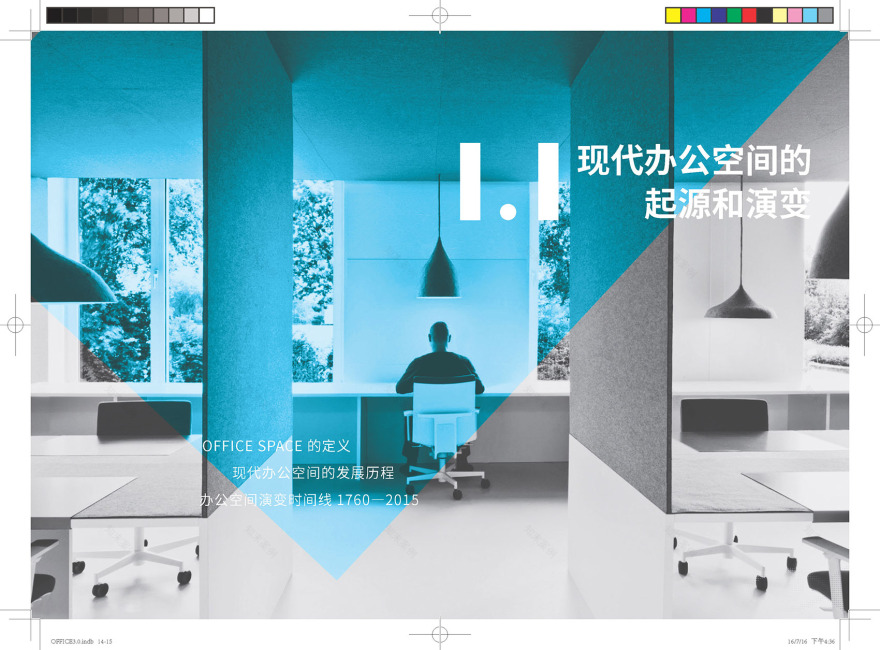
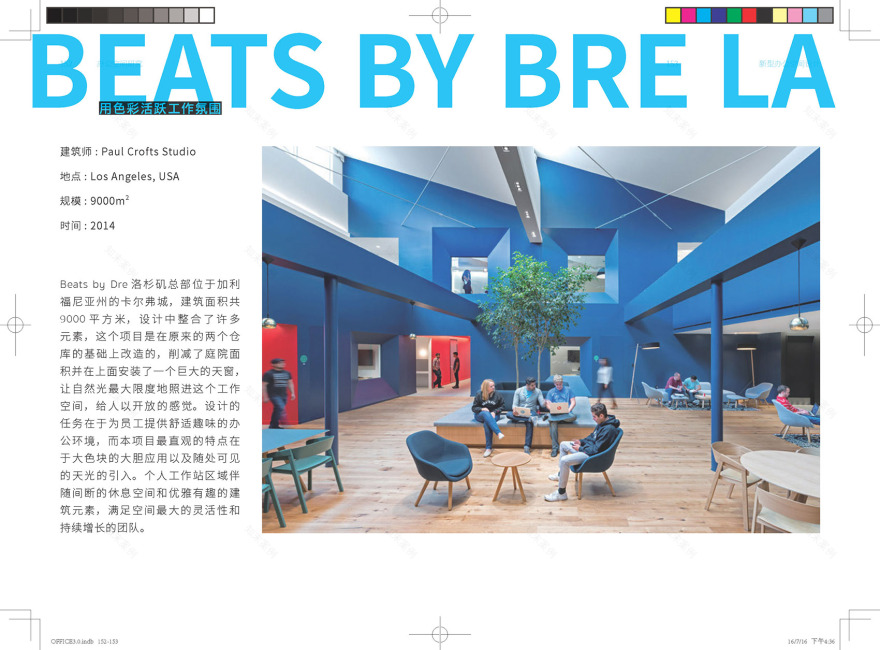
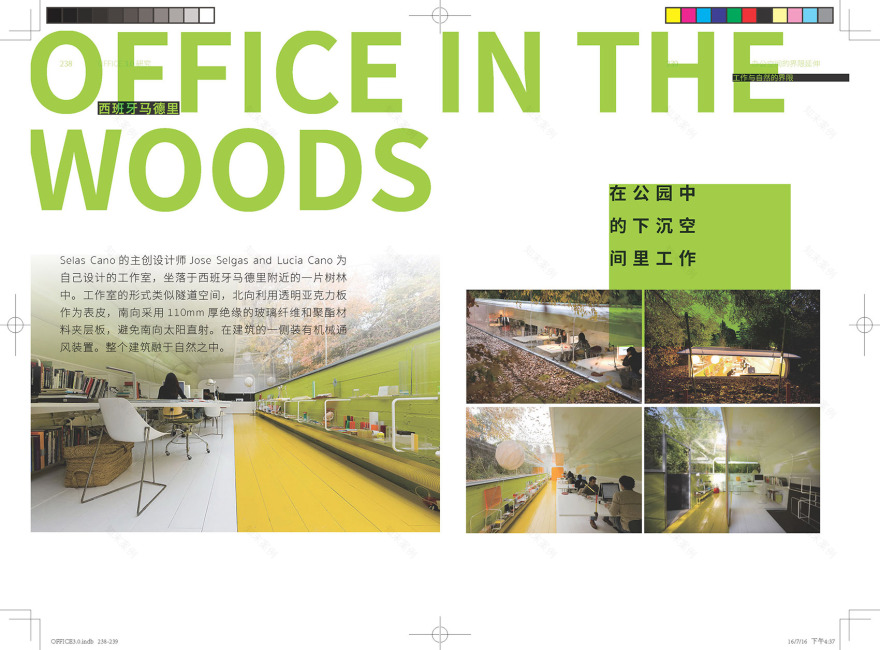
张淼:我们是个实践的团队,我们的研究并不是高校中那种严肃的理论研究,更多的是一种研究型的设计方式。我们的自发研究起源是2014年我们刚回国时,借助欧洲游学的经验,去跳出具体做具体实践的视角,用相对抽象的方式去看城市不同的功能,跟国内的城市做一个链接,这是我们主动性的选择。一开始,我们关注共享经济和共享办公, 2014年我们带学生走访了北京10多个该类型建筑空间,然后把这些案例做了分类的整理。我们研究了在共享经济出现以后,人可以脱离固定的办公室,办公室也可以不为了单一的工位布置需求而进行空间设计。那么未来的城市有没有可能不是单一的功能所导向,办公楼,住宅楼,商业楼有没有有新的混合模式出现,比如说共享居住。我们从原有建筑功能类型去思考它的边界是否突破,更多关心使用者的状态,以及在高密度城市中的人如何共同的生活。我们当时还是个年轻团队,业主的项目委托大多是这种小的改造项目和室内项目。当时还玩了一把新潮,用众筹的方式出版了一本书《OFFICE 3.0》,把那一年的调研、研究和学生工作成果结集出来。借这个自发研究的机会我们就做了共享办公,共享公寓,乃至于我们因此就借势提出了共享社区的概念。
Zhang Miao: We are a practice-oriented team. Our research is not the kind of rigorous theoretical study conducted in academic institutions, but rather a design approach driven by research. Our self-initiated research began in 2014, when we had just returned to China. Drawing from our experience in Europe, we wanted to step outside the immediate perspective of practice and instead observe urban functions in a more abstract way, linking them to the realities of Chinese cities. This was an intentional and proactive choice. At the beginning, we focused on the sharing economy and shared workspaces. In 2014, together with our students, we visited over ten shared office spaces in Beijing and categorized them systematically. We studied how the sharing economy allowed people to work outside fixed offices, and how offices themselves no longer needed to be designed solely around the layout of individual workstations. This raised a question for us: could future cities evolve beyond single-function typologies? Could office spaces, residential spaces, and commercial spaces develop new hybrid models, such as shared living? Our thinking began to extend beyond traditional building functions, focusing instead on the state of the users and how people coexist in high-density urban environments. At that time, we were still a young team, and most of our commissioned projects were small-scale renovations or interior designs. We also decided to do something more experimental by publishing a book through crowdfunding called OFFICE 3.0. It compiled a year’s worth of our research, fieldwork, and student projects. Through this self-initiated research, we began exploring shared offices and shared apartments, and from there we developed the concept of shared communities.
▼《OFFICE 3.0》研究, study of《OFFICE 3.0》©超级建筑事务所

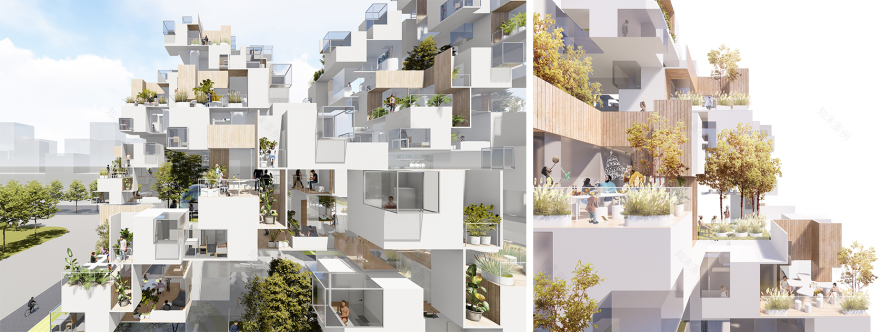
《超级巴比伦》是2019年底受日本HOUSE VISION的策展人土谷贞雄先生的邀请,我们在深圳家居设计周参加的展览,讨论中国和日本建筑师关于共享居住模式的思考。借这个展览的机会,我们把我们过去关于共享公寓和共享社区的实践进行抽离,用一种跟现实有所脱离的方式去提出我们关于未来居住的建议,最终形成《超级巴比伦》提案。将来每个人放弃掉一部分自己居住单元内部的使用空间,通过不同的人与人的链接形成一种新的社群关系,然后这种社区关系如何能转化成一种新的空间原型。这种新的空间可能是一个立体三维生长的、个性定制的新社区原型。这些年来,《超级巴比伦》在北京、上海、深圳都进行了多次展览,目前虽然还是一个纸上提案,但是其时也是我们事务所这种工作方法的一种自我鼓励。
Super Babylon was a project we created at the end of 2019 after being invited by Japanese curator Mr. TSUCHIYA Sadao, founder of HOUSE VISION, to participate in the Shenzhen Design Week Exhibition. The exhibition explored how architects from China and Japan envision future models of shared living. Taking this opportunity, we abstracted our previous practical experiences with shared apartments and shared communities, transforming them into a conceptual proposal that speculated on the future of habitation. This proposal became Super Babylon. The concept imagines a future where individuals give up a portion of their private living space to form new social relationships through human connection. These new community relationships could then generate new spatial prototypes, personalized, three-dimensional, and vertically growing community models. Over the years, Super Babylon has been exhibited multiple times in Beijing, Shanghai, and Shenzhen. Although it remains a paper-based proposal for now, it represents an important form of self-encouragement for our studio’s working methodology.
▼《超级巴比伦》,Super Babylon rendering©超级建筑事务所

唐康硕:我们的底层设计方法是从单元出发,通过关联和相似的方式形成一个整体。在我们的很多设计上都能清晰的读到这种“单元、聚落、关联、相似”的思考点。就是,首先通过单元去定义基本空间,再寻找彼此结合的相互关系,然后形成一个可控的或者不那么可控的整体。从一个小的展览搭建到一个小住宅,到一个公共建筑,都可以用类似的方式来去思考,这也是我们能够去驾驭不同尺度项目的原因。此外,对于在城市中偏规划类的项目,我们会非常关注它的城市界面。比如说刚才提到了北锣鼓巷的公寓,在北京的老城区里胡同界面其实非常重要,胡同界面是一个私有产权和非私有产权的模糊之处,这个界面没有一条非常清晰的线,但每个生活在这里的人都要争取自己利益,所以我们整个设计逻辑是从界面出发,把不同属性的边界放大、赋予其功能内容。对于像学校这样大一些的项目来说,我们首先回应它的功能需求和基本规划,然后再着重考虑城市界面。学校通常会有很多个界面会面对城市道路,甚至有的时候会开放给城市,有时候我们也会刻意的将学校和城市隔绝。在不同的情况下如何去处理不同的城市界面关系,如何从界面往内去推导,这也是我们在大尺度项目上的着手点。
Tang Kangshuo: Our underlying design method begins with the unit and develops into a whole through relationships and similarities. In many of our projects, one can clearly read this line of thinking: “unit, settlement, connection, similarity.” We first define the basic spatial unit, then explore how these units relate and merge with one another, ultimately forming an overall composition that is either controlled or intentionally open. From small exhibition installations to compact residences to large public buildings, we use the same logic to guide our design thinking. This approach also allows us to handle projects across a wide range of scales.
In more urban or planning-oriented projects, we pay close attention to the urban interface. For example, in the apartment project in Beiluoguxiang, located in Beijing’s historic city center, the hutong interface plays a critical role. It represents an ambiguous boundary between private and non-private domains. This boundary is never a fixed line, yet every resident seeks to claim and protect their own space. Therefore, our design logic begins from this interface, amplifying these diverse boundary conditions and giving them new spatial and functional meanings.
For larger-scale projects such as schools, we first respond to the programmatic and planning requirements, and then focus on how the building engages the city. Schools often have multiple interfaces facing urban streets, and sometimes these are meant to be open to the public, while other times they are deliberately enclosed. How to manage these different relationships, and how to generate the architecture from the urban edge inward, becomes the key entry point in our approach to large-scale projects.
▼北锣鼓巷胡同公寓,Beiluoguxiang alley apartment©超级建筑事务所

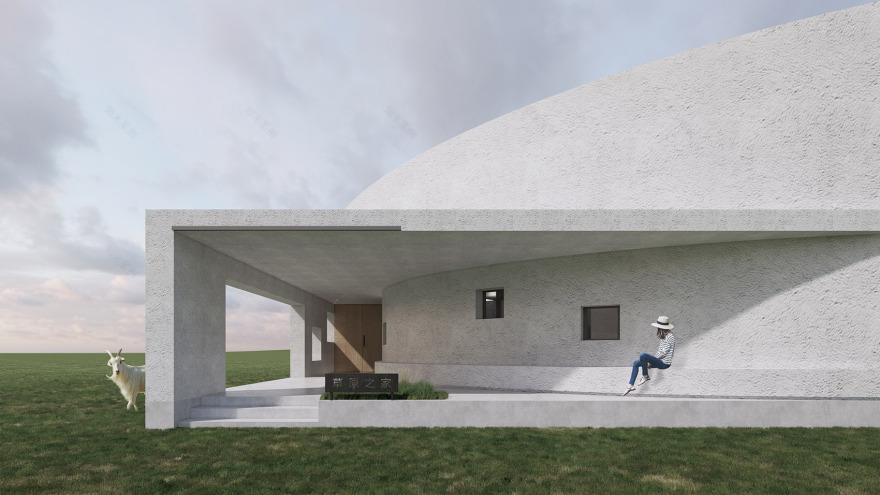
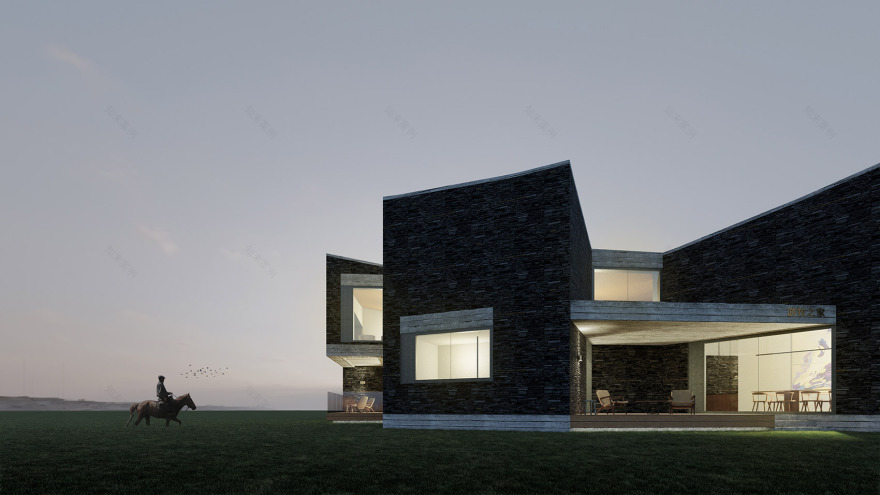
然后,在像《游牧之家》和《古蔺城市客厅》这类的项目中,我们会加入更多的人文视角和想象力。《游牧之家》位于鄂尔多斯草原,我们想像着在广袤草原上营造一个由一组黑色的牧羊人小屋组成的小建筑,在倒扣穹顶下方的火塘里,感受“天似穹庐茫茫四野”的寂静和温暖。另一个《古蔺城市客厅》项目,它的用地很特殊,位于四川赤水河峡谷一侧的平台上,周围有很小的镇子和民居聚落。我们就通过对于场地和景观环境带来的想象力,通过介于人工和自然之间的山石意象,进行人工自然的再造,为建筑提供自然和人文的双重立意,最终与周围环境进行非常有效的对话。
In projects like Nomad House and Gulin Complex, we incorporate a more humanistic perspective and imaginative quality. Nomad House, located on the grasslands of Erdos, envisions a small cluster of black shepherd huts scattered across the vast steppe. Beneath the inverted dome, a hearth burns quietly, evoking both warmth and the poetic stillness of the boundless horizon. In contrast, the Gulin Complex project occupies a unique site on a terrace overlooking the Chishui River Gorge in Sichuan, surrounded by small towns and village clusters. Here, we drew inspiration from the site and landscape, using the imagery of stones suspended between the natural and the artificial to recreate a sense of “man-made nature.” Through this, the architecture carries both natural and humanistic intentions, ultimately establishing a deep and effective dialogue with its surrounding environment.
▼《游牧之家和草原之家》,Nomad House©超级建筑事务所



▼《古蔺城市客厅》,Gulin Complex©超级建筑事务所


以简创繁–老城更新,社区空间
From Simplicity to Complexity–Old City Renewal and Community Spaces
“我们更多的是从功能策划的角度去解决问题,比如说有20种功能要在2000平米的空间内发生,应该如何用建筑设计方法去进行功能组织,调动不同的共享使用模式,再用原型空间去激活人们产生新的使用方式。”
When 20 different functions had to fit into a 2,000-square-meter space, we explored how architectural design could organize the programs, promote shared-use models, and activate new ways of inhabiting space through prototype interventions.
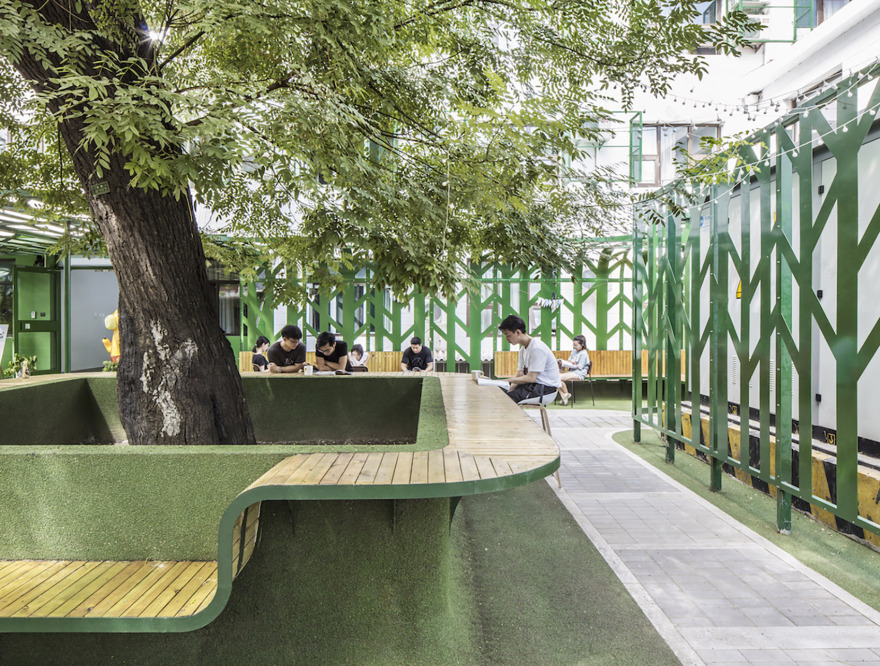
张淼:这些年我们也完成了一些老城更新的设计。北锣鼓巷泊寓是以开发为主导的青年公寓,我们在其中的角色是利用它闲置的院子做设计策略的介入,从而激发其公共空间的使用活力。广安门内街道社区文化中心项目则延续了我们关于城市更新和社区更新的做法,我们更多的是从功能策划的角度去解决问题,比如说有20种功能要在2000平米的空间内发生,应该如何用建筑设计方法去进行功能组织,调动不同的共享使用模式,再用原型空间去激活人们产生新的使用方式。这两个项目都相对成本较低,甚至有一定的临时性。尤其是在北锣鼓巷这个项目中,业主的诉求就是在一定的租期之内通过景观设计补充使用功能,并让那个院子重获活力。北京的胡同其实每年都在更新,我们认为在这种环境下去追求所谓建筑的永恒性是没有意义的,这种真实的使用状态,就是一个非常当下、且只能持续几年的时间的状态。我们需要用适时又适可而止的,比较简单的介入性策略去形成丰富的界面空间,可以容纳包括音乐会,市集,咖啡节,以及各种青年人的社群活动内容,而后通过青年人群的出现来慢慢影响原本沉寂的场地,从而带动这个区域的老城更新。后来,我们还把这个项目带到了2020年威尼斯双年展中国馆的展览上。
Zhang Miao: In recent years, we have also completed several projects focused on the renewal of old urban areas. Beiluoguxiang Port Apartment is a youth housing project led by a developer. Our role in it was to intervene strategically by redesigning an unused courtyard to revitalize its public functions. The Beijing Guanganmennei Community Center continues our approach to urban and community renewal, where we focused more on programmatic planning as a means of problem-solving. For example, when 20 different functions had to fit into a 2,000-square-meter space, we explored how architectural design could organize the programs, promote shared-use models, and activate new ways of inhabiting space through prototype interventions. Both of these projects were relatively low-cost and somewhat temporary in nature. In the Beiluoguxiang project in particular, the client’s goal was to bring vitality back to the courtyard through landscape design within a limited lease period. Beijing’s hutongs are constantly undergoing renewal, and we believe that in such an environment, pursuing architectural “permanence” is meaningless. The real vitality lies in the immediacy of use — a state that exists only for a few years. Our strategy was to create rich spatial interfaces through timely and restrained interventions, spaces flexible enough to host concerts, markets, coffee festivals, and youth community events. Over time, the presence of young people began to reanimate the once-silent site, driving the renewal of the old city. Later, we even presented this project in the China Pavilion at the 2020 Venice Biennale.
▼北锣鼓巷泊寓项目,Beiluoguxiang©超级建筑事务所

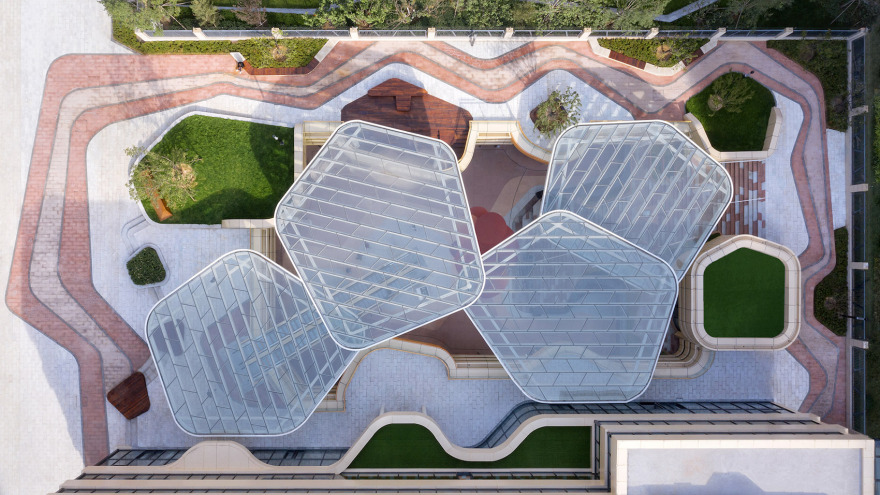
广安门内街道文化中心项目的背景是北京的基层街道部门主导的社区文化空间。我们作为一个设计型的建筑团队开始介入时,会想办法做一些空间的创新,激活它原有空间的潜力。比如说任务书要求了一个200人的大会议室,但现有空间不够大,我们当时就做了一个T型的三边小剧场,改变了原来中轴大会议室的单一空间模式,也是借鉴了话剧场的思路,创造了一个由舞台为中心,其余三个面都是座椅的那种风车型的剧场。在这里,不再是所有人面对主席台,而是说大家都朝着不同的方向,因此能产生和发生更多的交互性活动,后来我们也收到了实际使用中的照片,社区甚至发明了更多种针对这个空间的使用方式。我们也在文化中心里做了一个小的椭圆形书塔,我们希望该书塔是一个符号,能够在这附近工作的人,在这里放学后自己写作业的孩子,在这里辅导孩子的家长,以及看书的老年人都能被汇聚起来。相比空间设计的美学,在这个项目中我们更感兴趣的是能够通过一系列设计策略的介入,带来它间使用的可能性,让不同的人和众多不同的功能都能在这里找到落脚点。
Guanganmennei Community Center was initiated by Beijing’s local street-level government as a community cultural facility. When our design-oriented architecture team joined, we sought ways to introduce spatial innovation and unlock the potential of the existing structure. For instance, the brief required a large conference room for 200 people, but the available space was too small. We responded by creating a T-shaped, three-sided small theater, breaking away from the traditional axial meeting-room layout. Inspired by theatrical design, the new space positions the stage at the center, with seating arranged around it in a fan shape. Here, people are no longer facing a single podium but oriented in different directions, encouraging more interactive activities. Later, when we received photos of the space in actual use, we found that the community had even invented new ways to utilize it. We also created a small oval-shaped book tower inside the cultural center. We hoped it would become a symbolic gathering point — where nearby office workers, children doing homework after school, parents tutoring their kids, and elderly residents reading could all come together. In this project, we were less concerned with spatial aesthetics and more interested in exploring how design strategies could create opportunities for diverse uses, allowing people and programs of many kinds to find their place within a shared space.
▼广安门内街道文化中心,Guanganmennei Community Center ©超级建筑事务所 点击这里查看更多,Click HERE for details


这种策略不光是去整合功能,甚至要整合有限的建造成本,从而比较完整的去落地。完工后我们还画了一系列明信片送给了社区,我们希望借此去给空间带来品牌标签和凝聚力,让这种特别可达特别顺手的社区共享空间达到与商业空间同等的品质,最终项目也基本上也达到了设计初始预设的使用目的。
位于北京海淀的砖窑里文创是另一个非标城市更新项目。这座砖窑原建于上世纪五十年代,为当时首都建设作出了很多贡献。现场地周围已经是成熟城市社区,所以濒临倒塌的砖窑也需要被转化成公共文创空间,通过书店、咖啡、展厅和体验空间的植入,给周围城市社区带来休闲体验场所。
我们是从改造项目的结构单元类型入手来进行砖窑空间重塑的,让这个狭长的建筑在不同的剖面关系上形成不一样的空间内容:围绕着中间是有着明亮天光的展厅和烟囱大厅,一个螺旋楼梯将人们从地面带到屋顶,改造之后的烟囱内部还成为了互动媒体艺术空间;砖窑的两翼是高空间走廊和夹层,走廊中的斜的砖墙还原了原窑洞中的拱下方的空间感受,夹层内部则满足了文创中心所需的各种使用空间。
这种基于小型工业遗存而进行的城市更新近年来越来越轻量化,都是结合着社区需要的公共、文化活动场所和零售商业进行。
Our strategy not only integrates multiple functions but also works within limited budgets to achieve feasible implementation. After completion, we designed a series of postcards for the community, hoping to give the space a recognizable identity and sense of cohesion. Through this, we aimed to elevate such accessible and human-scaled community spaces to a level of quality comparable to commercial ones. The project ultimately fulfilled its intended purpose of promoting shared community life. Another example is Beijing Brickkiln Lane in Haidian District, Beijing, a non-standard urban renewal project. The brickyard was built in the 1950s and contributed to the city’s early development. Surrounded today by mature urban neighborhoods, the nearly collapsed kiln needed to be transformed into a public cultural and creative space. By introducing a bookstore, café, exhibition hall, and experience area, we created a new leisure destination for the community. Our design began by reinterpreting the structural modules of the original kiln to reshape the space. The long, narrow building was transformed into a sequence of varied sectional spaces: at its center lies a bright exhibition hall and chimney atrium filled with natural light, where a spiral staircase leads visitors from ground level to the rooftop. The renovated chimney interior now serves as an interactive media art installation. On both sides of the kiln, high-ceilinged corridors and mezzanine levels accommodate a range of creative and functional spaces. The slanted brick walls in the corridors recall the spatial feeling beneath the original kiln arches, while the mezzanine provides flexible zones for exhibitions and workshops. This kind of small-scale industrial heritage renewal has become increasingly lightweight in recent years, combining community-oriented public, cultural, and retail functions to create spaces that serve both everyday life and urban imagination.
▼砖窑里·西三旗砖窑工业遗址改造,Brick kiln Lane Innovation© 金伟琦
点击这里查看更多,Click HERE for details


▼砖窑里·西三旗砖窑工业遗址改造,Brick kiln Lane Innovation© 金伟琦&UCD
点击这里查看更多,Click HERE for details

__________
居住体验和文旅 Living Experienceand Culture Tourism
不同的场地感知和使用要求会带来不一样的设计结果,但是都需要从周围的环境氛围和个人体验上去思考。
Each project’s distinct site atmosphere and functional demands lead to different design outcomes — but all begin with a sensitivity to environment and human experience.
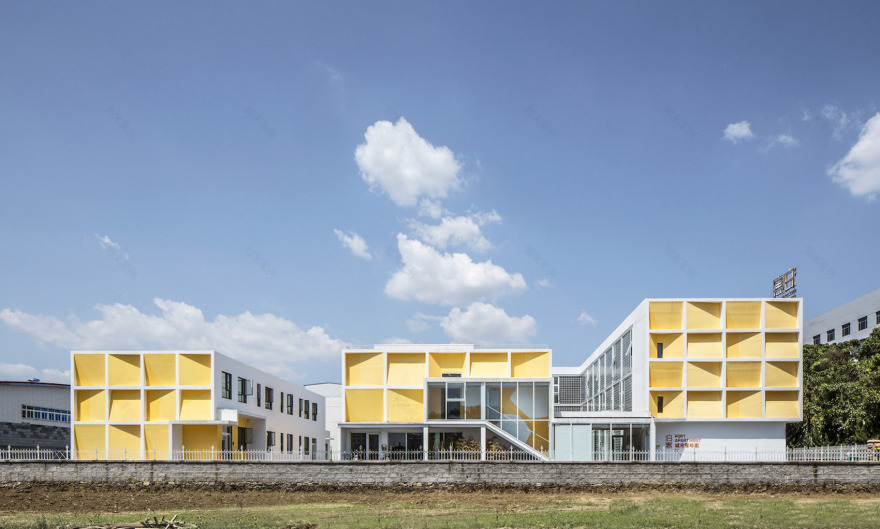
唐康硕:青年公寓和民宿酒店类项目其实有特别大的区别,但共同点就都是住的地方。不同的点是对于青年公寓来讲,用户居住的时间较长,从几个月到一两年,而且是日常居住生活的空间,因此生活必要的功能需求和长期生活舒适度就比较重要。海边或者说是山里面的民宿酒店则提供非常短期的度假体验,这种1-2天的度假体验和日常生活需要有距离感,或者说是,感官的差异。人们暂时离开规律的城市生活而去避世,去山林海边,看看海,看看夕阳,这时候人的各方面感知力会被放得很大。 城市的青年公寓项目有不同年龄段的不同特定住户,比如说刚毕业大学生,城市白领,还有年轻家庭。这些不同人群的所需求是不一样的,传导到设计上就是不同的基本居住单元。青年公寓项目大多是在老建筑基础上进行的改造,加上来自甲方对坪效和得房率的要求,最终房间不会太大,所以这个基本居住单元会是设计中比较重要的部分。此外青年公寓中共享空间也分为很多种,有的是必须的,比如说共用的洗衣房,共用的存储空间;还有一类是不必须的,比如说像读书工作的地方,一起社交的地方。不必须的共享空间往往会提供更多情绪价值、带来更多丰富的休闲内容,因此我们也会协调必要功能和延展功能的配比和空间设计。
Tang Kangshuo: Projects such as youth apartments and boutique hotels differ significantly, though they share one thing in common — they are both places for people to stay. The key difference lies in the duration of occupancy. For youth apartments, residents tend to stay much longer — from several months to a year or two — and the space serves as a daily living environment. Therefore, functional necessities and long-term comfort become crucial design priorities. Boutique hotels by the seaside or in the mountains, on the other hand, offer short-term vacation experiences lasting only a day or two. These stays must feel distinct from everyday life, offering a sensory contrast or a sense of distance. When people leave their regular urban routines to seek seclusion in nature — by the sea or in the mountains, watching sunsets — their sensory awareness becomes heightened. Urban youth apartment projects cater to different age groups and demographics, such as recent graduates, office workers, and young families. Each group has distinct needs, which translate into variations in the design of basic residential units. Most youth apartment projects are renovations of existing buildings, and since developers usually have requirements regarding floor efficiency and usable area, the units themselves tend to be compact — making the layout of the basic unit a key design focus. Shared spaces in these projects can be divided into two types: essential ones like shared laundry rooms or storage areas, and optional ones such as reading rooms, co-working areas, or social lounges. The latter types often provide emotional value and richer leisure experiences, so we carefully balance the ratio and spatial design between essential and extended functions.
▼烟台春晖路青年公寓,Yantai Chunhui Road Port Apartment© 唐康硕
点击这里查看更多,Click HERE for details


对于民宿酒店来说,在不同的环境场地上,其突出的内容会不一样。想看海的人们就对海景有很大的期望,那么人们希望在有海的地方体验到海岛渔村等要素,所以舟山的民宿项目我们首先从改变建筑状况出发,把很多海岛上的元素,比如加了贝壳和卵石的地面、当地的水刷石墙面等放入到建筑中,让游客不仅是看海,也能感受到更多的在地文化体验。烟台养马岛的精品民宿,虽然地处海岛,但场地本身不临海,所以我们更多地是强调场地的内院和周围树林,并运用建筑空间中压低的黑色廊子、玻璃砖等半透明材料来营造安静的度假居住体验。还有一些山区的设计,比如北京郊区密云的小折山院,这里被大山环抱,一年中只有半年是绿的,还有半年是枯的,所以我们通过凝练冷峻的建筑形态和石头墙,去表达北方山村的粗犷性格特点。之前提到的在鄂尔多斯草原的《草原之家》和《游牧之家》民宿项目,因为都是大草原上分散的独立点状用地,所以更多的是兼顾自然环境中独立小建筑的原型、人文和意象表达。
For boutique hotels, the design emphasis varies depending on the site and surroundings. Guests who come to see the sea expect not just the view but also an immersive island or fishing village atmosphere. In our Zhoushan project, we began by transforming the existing structures and incorporated island elements — such as shell- and pebble-infused flooring and local washed-stone walls — so visitors can experience both the sea and local culture. On Yantai’s Yangma Island, our boutique hotel site is on the island but not by the sea, so the design focuses on the courtyard and surrounding woods, using low black corridors and translucent materials like glass bricks to create a tranquil holiday experience.
▼烟台养马岛民宿,Bushe Boutique Hotel© 吴清山 & MAT 点击这里查看更多,Click HERE for details
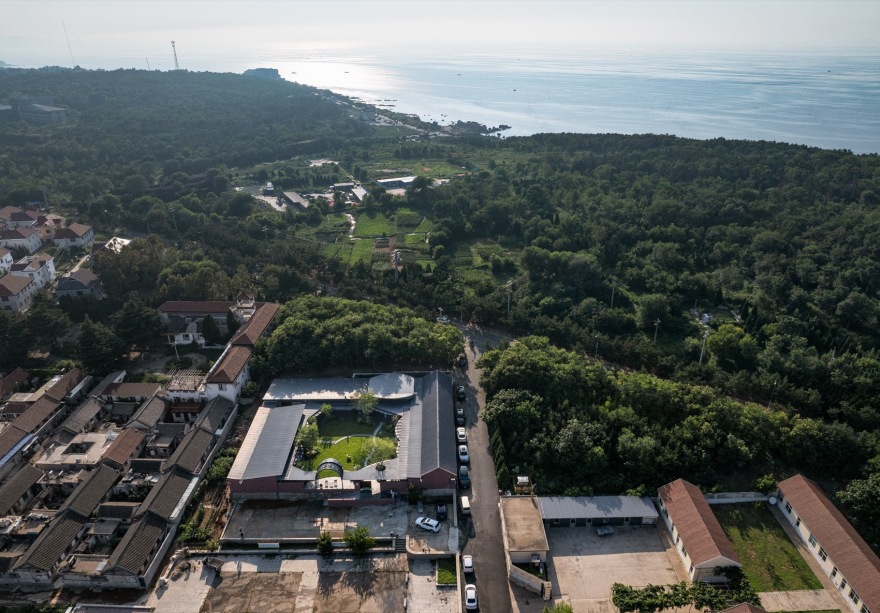


▼舟山海街11号民宿,Zhoushan Summer Hotel Phase II© 朱雨蒙
点击这里查看更多,Click HERE for details


▼北京密云折山院,Beijing Miyun ZheShan Courtyard© UK Studio
点击这里查看更多,Click HERE for details


▼北京邦舍公寓,Beijing Bonself Apartment©超级建筑事务所

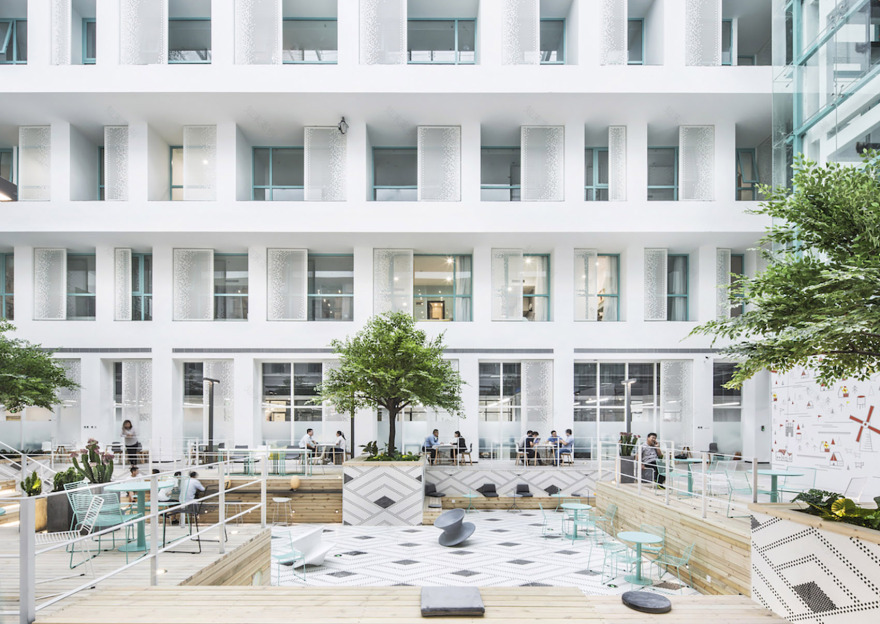
▼其他公寓类型项目,Other Apartment projects©超级建筑事务所


除了民宿酒店之外,我们现在也在尝试做不同类型的文旅项目,有小型游客中心、以及能激活在地文化和旅游区域的小建筑改造,大多数都是在乡村和自然环境中。去年我们参与了威海WAY未海岸设计竞赛邀请,在大海边六公里长的海岸线上,有山坡、高地、松林和海钓池,通过对四个场地的系统性构思和散布其中的十几个小点位设计,我们试图找到针对北方海域的场地氛围和建筑特点,形成六公里沿线上和而不同的一系列亮点。
In mountain settings — for example, Xiaozheshan Courtyard in Miyun, on the outskirts of Beijing — the site is surrounded by mountains that are green for only half the year and barren for the other half. Here, we used austere forms and stone walls to express the rugged northern village character. Similarly, in our “House on the Grassland” and “Nomad House” projects in Ordos, Inner Mongolia, the scattered plots across the vast steppe called for designs that reflect the archetype of small, independent buildings within the natural landscape, incorporating cultural and symbolic expressions. Beyond hotels, we are also exploring other cultural tourism projects — such as small visitor centers and adaptive reuse of rural buildings to revive local culture and tourism. Most are situated in villages or natural settings. Last year, we participated in the “WAY Weihai Coast” design competition. Along a six-kilometer coastal strip featuring slopes, highlands, pine forests, and fishing ponds, we developed a system of four site concepts and over a dozen small architectural interventions to capture the northern seaside atmosphere, creating a cohesive yet diverse series of highlights along the coastline.
▼威海WAY未海岸设计竞赛,“WAY Weihai Coast” design competition© 超级建筑事务所


2023年建成并投入使用的成都高山青年乡创社区,是一个在城市近郊的乡村建筑环境中为返乡的年轻人社群定制的一组建筑群,包括展厅、咖啡、工坊、驻留、研学等一系列功能空间。我们在设计中参照村落民居尺度,采用一组6X6米的方盒子,通过连接、旋转和退让场地上的树木竹林而形成的小建筑聚落。这组房子采用了混凝土、木瓦、白墙等多种建筑材料语言,试图凸显其质朴和在地性的特征。在这组小房子外侧的绿化带中,我们还完成了一个木结构的小书屋,给城市近郊和乡村社区的人们提供文化空间。此外,在成都郊区的另一个镇子上,我们正在把过去的供销社工厂转化成包含咖啡、工作室、小书店和住宿等等的青年文创基地;于此同时,我们正在重庆北边一个河流转弯的空旷自然环境中设计一个狭长的水上中心。不同的场地感知和使用要求会带来不一样的设计结果,但是都需要从周围的环境氛围和个人体验上去思考。
Completed and opened in 2023, the “Gaoshan Youth Rural Innovation Community” in Chengdu is a cluster of buildings designed for young returnees in a semi-rural environment near the city. It includes exhibition spaces, cafés, workshops, artist residencies, and research facilities. We adopted a 6×6-meter modular grid, forming a small architectural settlement through the connection, rotation, and placement of box-like volumes around existing trees and bamboo groves. Using concrete, wooden shingles, and white walls, the design expresses simplicity and locality. In the surrounding green belt, we also built a small wooden reading pavilion that provides a cultural space for nearby residents. Additionally, in another town on the outskirts of Chengdu, we are converting an old supply and marketing cooperative factory into a youth cultural-creative hub featuring a café, studios, a small bookstore, and accommodations. At the same time, we are designing a long, narrow water-side center in a natural riverside site north of Chongqing. Each project’s distinct site atmosphere and functional demands lead to different design outcomes — but all begin with a sensitivity to environment and human experience.
▼成都温江榜样青年乡创社区,Chengdu Wenjiang CSA Youth Community©存在建筑
点击这里查看更多,Click HERE for details


▼运河游客中心,Canal Tourist Center ©超级建筑事务所


▼重庆麓溪湖水上中心,Chongqing LuxiLake Water Center©超级建筑事务所


创新的“教育建筑”
Creative “Educational Architecture”
把教育建筑本身作为学习的界面,以及如何把场地独特性和学校功能做一个好的结合。
Treat educational architecture itself as a medium for learning — and how to integrate the unique qualities of a site with the functions of a school.
张淼:与其说是创新的教育建筑,不如说我们研究的更多的是把教育建筑本身作为学习的界面,以及如何把场地独特性和学校功能做一个好的结合。北方地区的幼儿园设计非常受规划指标和建筑规范的限制。我们在接手北京的窦店幼儿园和高丽营幼儿园之后,我们研究为什么过去大部分北方的六班幼儿园都是一个方盒子,发现这是因为这种形式最容易过日照和其他相关设计规范。我们相信空间能激活人的使用,或者说能激活人对世界的理解。幼儿园教育建筑是小朋友理解世界的第一站,是他们人生中长期使用的第一个公共建筑,所以我们通常会做一些共享的院子,如果室外不能做也要在室内做一个共享的中庭;然后希望是围绕着这样共享的空间能有一个有意思的路径,这在高丽营幼儿园的设计中就表现为一个跑道,用“跑向天空”的童话故事意象,由此来去调动不同的幼儿的生活单元和教学单元等等一系列的使用空间。
Zhang Miao:Rather than calling them innovative educational buildings, it would be more accurate to say that what we study is how to treat educational architecture itself as a medium for learning — and how to integrate the unique qualities of a site with the functions of a school. In northern China, the design of kindergartens is heavily constrained by planning parameters and building codes. After taking on the Dou Dian Kindergarten and Gao Li Ying Kindergarten projects in Beijing, we explored why most six-classroom kindergartens in the north tend to take the form of a simple box. We found that this configuration most easily meets sunlight and other regulatory requirements. We believe that space has the power to activate human behavior — or more precisely, to awaken people’s perception of the world. Kindergarten architecture is the first public building that children use over a long period in their lives; it is their first gateway to understanding the world. Therefore, we usually design shared courtyards — and if outdoor ones aren’t possible, we create indoor atriums. Around these shared spaces, we aim to shape an engaging path of movement. In the design of Gao Li Ying Kindergarten, this took the form of a running track inspired by the fairy-tale imagery of “running toward the sky,” connecting various living and learning units for the children.
▼北京顺义高丽营幼儿园,Beijing Shunyi Gaoliying Kindergarten©金伟琦
点击这里查看更多,Click HERE for details


我们前几年在深圳参与了一些高密度条件下的中小学校园建筑设计,当城市用地比较极端的时候,我们也会用比较极端的手段为孩子争取在地上奔跑的机会。比如我们在有一个学校项目里面做了一个大概300米长的沿街教学建筑,以一个长条状的线性建筑来串联不同的庭院。因为当周围高楼大厦的城市都已经是一个迷宫型的城市了,在这个空间里面如果依然做零碎的迷宫式建筑是对小孩天性的泯灭。建筑师的武器是设计,通过设计把大的庭院还给孩子,把地面的操场还给孩子,同时又能在他们身体比较接近的尺度营造出他们自己能够捉迷藏的小空间。在大的策略上,我们试图帮助孩子们去呐喊,通过设计营造空间回馈给他们。
A few years ago, we participated in several high-density school design projects in Shenzhen. When faced with extreme land constraints in the city, we adopted equally unconventional methods to ensure children could still run freely on the ground. For example, in one project we created a 300 - meter - long linear teaching building along the street, connecting multiple courtyards in sequence. In a cityscape already filled with high - rise “urban mazes,” it would be detrimental to a child’s natural instincts to design another maze - like campus. The architect’s tool is design — through design, we return large courtyards and ground - level playgrounds to children, while also creating small, intimate spaces at their scale where they can hide and play. On a broader level, our goal is to help children find their voices — to create spaces through design that respond to their energy and expressiveness.
▼深圳绿景沙河学校,Shenzhen Lygen Shahe School© 超级建筑事务所


当校园用地比较特别的时候,原有的自然是否应该在一定程度上被保留下来?我们在佛山顺德中标的一个未来小学就面临这样的挑战。有一条自然的小河和榕树林正好在学校的用地红线内,我们就把学校的主体建筑后退,小河和树林完全保留,并在其中植入一系列的小房子和小庭院作为开放的共享学习空间,以此来去回应与当地的自然和村落共生的关系,把从城市周围的村落环境中获得的这种空间滋养,这种风的吹拂,水的游荡,然后还有树林的声响,都能够融入到小学生的日常学习生活中。
When a school site has distinctive natural features, should those elements be preserved to some extent? In the future primary school we won in Foshan Shunde, we faced precisely this question. A natural creek and a grove of banyan trees happened to lie within the site boundary. We set the main school building back to fully preserve both, inserting a series of small pavilions and courtyards as open, shared learning spaces. In doing so, we established a relationship of symbiosis between the school, nature, and the surrounding villages — allowing the sensory nourishment from the local landscape, such as the wind’s touch, the flow of water, and the sound of trees, to become part of children’s everyday learning experience.
▼佛山顺德未来小学,FoShan Shunde Future Primary School© 超级建筑事务所

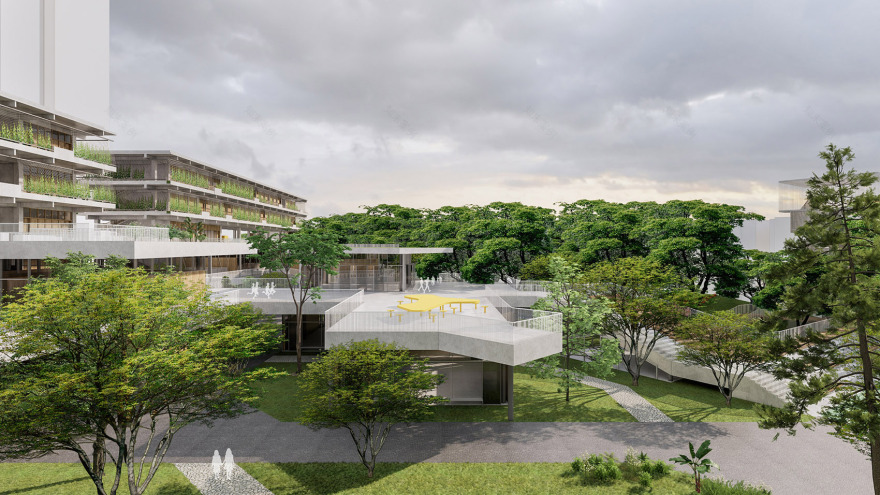
教育建筑上的探索,其实还有一个增加自信的点,我们在这十年职业发展的后期也开始养育小孩子,经历这一过程后我们对待世界、对待不同尺度空间的理解也有了新的认知。在教育建筑的思考上,我们有时候会试图把原来在建筑学上的很多固有经验归零,然后切换到以孩子以为主体的视角上,重新去看待这个世界,去看待他们的生活需求、思想需求、身体需求,从而再把这一切转化成设计。这对我们来说也是一个随着我们自己孩子年龄成长而持续的一个课题。
Our exploration in educational architecture also carries a more personal dimension — a growing sense of confidence that coincided with our own experience of raising children over the past decade. Going through this process has changed how we perceive the world and spaces of different scales. In thinking about educational buildings, we sometimes try to reset many of the conventional architectural assumptions, switching to a child’s perspective to re-examine the world — their daily needs, their ways of thinking, and their physical experience — and translate these insights into design. For us, this has become an ongoing subject that evolves as our own children grow.
▼教育建筑相关研究,Study of Educational building© 超级建筑事务所

临时性建筑与装置
Temporary Building and Installation
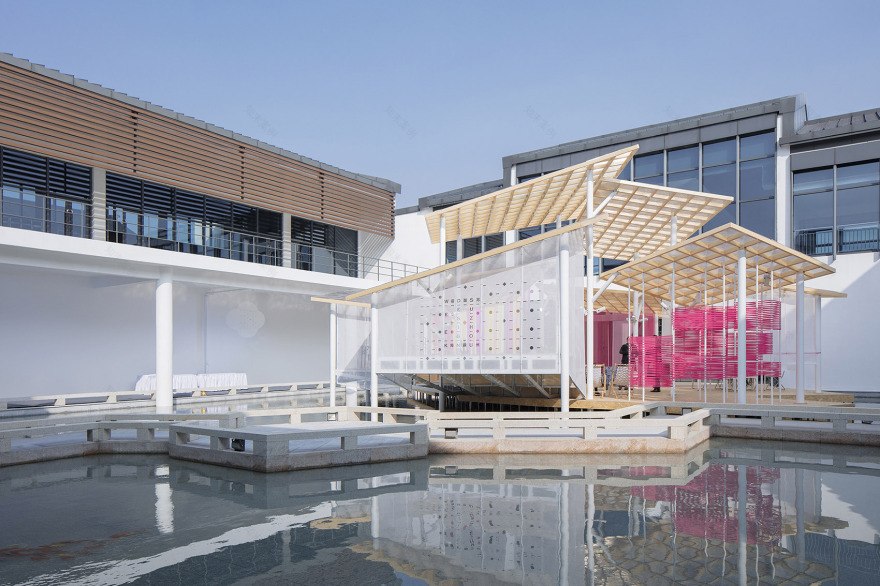
Zhang Miao:Spatial installations are one of our personal passions. We’re avid exhibition-goers — we often check social media to see what new spaces are trending, visit museums and art shows on weekends, and frequently attend international art exhibitions such as the Venice Biennale. This has become a long-term habit since we started working. For us, exhibition construction provides both a refreshing escape from architectural design and a hands-on process to refine our craft. In 2018, we were invited by the Beijing Design Week team to participate in the Suzhou Design Week. The task was to create a temporary pavilion within a newly built yet underactivated traditional-style street in Suzhou. We began by reflecting on how to engage with a city like Suzhou — one steeped in cultural heritage and, to a large extent, representative of “Chineseness” — and how a contemporary intervention might convey a renewed understanding of tradition. The result was The Pavilion of Wind. Its prototype was based on the most fundamental idea of space: when humans first learned to construct a framework and cover it for shelter, this spatial archetype was born. The question was how to reinterpret that form into an installation for Suzhou. We used roofs of varied quadrilateral geometries, supported by twenty or thirty columns of differing heights, forming a clustered canopy of shifting angles. It resembled a traditional pavilion — hence the name Pavilion of Wind. Visitors could play, observe, and wander through it. Public art installations like this bring people a particularly strong sense of emotional connection, which is why they have become so popular in media and cities today. To some extent, people have come to recognize that installations, as a type of public space, can effectively activate the vitality of a site.
▼苏州设计周《风之亭》装置,“Beyond the Wind”- 2018 Suzhou International Design Week Pavilion©夏至 & 唐康硕 点击这里查看更多,Click HERE for details


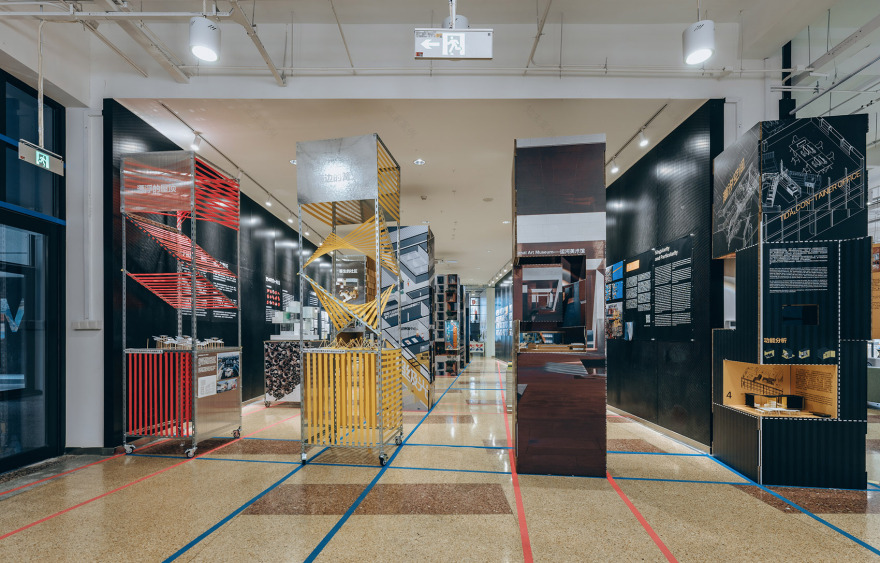
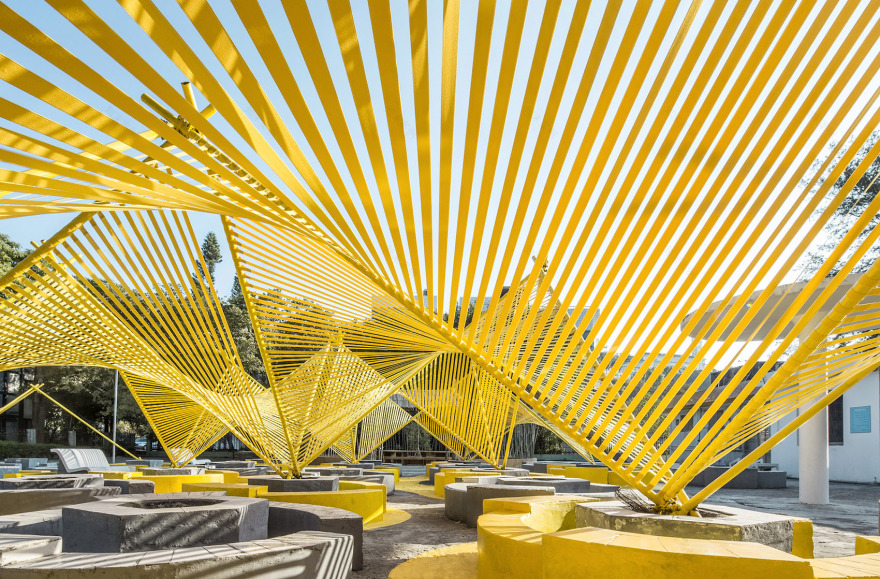
后来我们在2020年的时候,在深圳溪涌的大海边做了一个大概占地300平米的艺术装置《篝火》。我们用废弃的脚手架加上金色黄色的绷带,创作出一片像火焰、也像海浪一样的装置。它非常的抽象,非常的简单,回应了作品关于“集体”的主题。在展览搭建上,一个建造的原型能够通过一个装置在短时间内呈现出来。然后我们前段时间在北京建筑大学做的一个展览,叫《超级普罗》展,我们跟普罗建筑两个团队一起在一个300平米的展厅里面做了16个塔,我们每个塔大概0.8米的见方,三米高。我们对搭建感兴趣,所以我们选择用了金属材料——镀锌的角钢去作为框架,根据每个塔展示的项目内容定义不同的塔的属性,然后手工把所有东西整合起来。日常我们大家基本上面对的是图纸和电脑,而展览工作让我们获得图纸的工作之外的某种意义上的体力劳动,我们可以动手去感受这个材料,真实的去接触材料,然后让自己的身体性融入到展览装置中,我觉得这是最近获得的新体验。
Later, in 2020, we created another large-scale art installation titled Bonfire on the coast of Xichong in Shenzhen, occupying around 300 square meters. Using discarded scaffolding wrapped in golden and yellow fabric bands, we constructed a composition that resembled both flames and waves — abstract, simple, and evocative of the exhibition’s theme of “collectivity.” Through such installations, an architectural prototype can be built and presented within a short time.
More recently, we co-curated an exhibition at Beijing University of Civil Engineering and Architecture titled Super PRO, collaborating with the studio PRO Architecture. In a 300-square-meter gallery, we built sixteen towers, each roughly 0.8 meters square and 3 meters tall. As we are deeply interested in the act of building, we chose galvanized steel angles as the framing material. Each tower’s attributes were defined by the project it showcased, and everything was hand-assembled on site. In our everyday architectural work, we mostly deal with drawings and computers. Exhibition-making, by contrast, gives us a kind of physical engagement — a chance to work directly with materials, to touch them, to feel their weight and texture, and to let our bodies become part of the creative process. That tactile, bodily connection has been a new and meaningful experience for us.
▼深圳《篝火》装置,Bonfire installation© 唐康硕 点击这里查看更多,Click HERE for details


▼北京《超级普罗》展塔装置,“HALF STAGE – SUPER PROJECT” Exhibition© 朱雨蒙 点击这里查看更多,Click HERE for details


事务所在今年秋天还有两个小的展览搭建,一个在北京的前门大街商业区,一个在厦门岛上的高崎社,非常不一样的场地,我们把这次的展览经验做成了一个艺术装置系列。
This autumn, our office will complete two more exhibition installations — one in the commercial district of Qianmen Street in Beijing, and another on Gaoxi Island in Xiamen. These very different contexts have inspired us to turn our exhibition-building experiences into an ongoing series of artistic installations.
▼2025前门椅子计划 风之塔, Tower of the Wind© 朱雨蒙

明亮的色彩
Bright Colors
唐康硕:我们在荷兰接受教育的时候,发现荷兰除了建筑以外,他们的平面和视觉设计也都做得非常好,学校里也很重视图纸和设计表达中的视觉呈现,这些高饱和的混合色彩随处都可以见到,这给我们带来一种长久的影响,回国独立执业之后慢慢就变成团队的基因了。其实不仅仅荷兰,比如我们非常喜欢的一个西班牙建筑师SelgasCano他们也喜欢用黄色橙色这样很亮的颜色。我觉得颜色是人们对于自然界的一种捕捉,因为颜色来自于自然界,而高饱和的颜色是自然界中某一些非常细小的点被放大了,比如一朵盛开的花的颜色。我们在项目中使用色彩也有一定的针对性,比如幼儿园小学校这样的,项目本身需要通过明亮的色彩给带来空间的活泼性和张力,尤其对待低龄的少年儿童。在社区项目中,除了儿童还有老人,我们需要通过更舒适的色彩使用给他们提供温馨和家的感觉。城市更新的项目中,因为使用材料的成本会高一些,在很多更新项目的预算非常有限、没有办法去用那么多材料的时候,我们会多带入一些明亮色彩,因为色彩它也是一种设计语言。就相当于我们把建筑的材料语言置换成色彩语言,这尤其在一些使用周期不太长的改造项目中很有效果。
Tang Kangshuo:When we studied in the Netherlands, we discovered that beyond architecture, Dutch graphic and visual design were also exceptional. The schools placed great emphasis on visual presentation in drawings and design expression. High-saturation, blended colors were seen everywhere, and this has had a lasting influence on us — over time, after returning to China and starting our own practice, it naturally became part of our team’s DNA.
It’s not just the Netherlands — for example, one of our favorite Spanish architects, Selgas Cano, also loves to use bright colors like yellow and orange.
I think color represents how people capture nature — because color originates from the natural world. Highly saturated colors are often amplifications of tiny details found in nature, such as the color of a blooming flower.
In our projects, we use color purposefully. For kindergartens and primary schools, bright colors bring vibrancy and tension to the space, which is especially important for young children.
In community projects, where both children and the elderly are present, we use softer, warmer tones to create a sense of comfort and homeliness.
In urban renewal projects, where material costs are often higher and budgets are limited, we tend to use more vivid colors. Color itself is also a design language — it can replace the material language of architecture. This approach is especially effective in renovation projects with shorter lifespans.
▼MAT彩色项目,Colorful projects ofMAT© 超级建筑事务所


__________
超级未来!
Mega Future!
“不光是要去生产更多的图纸,也要生产出新的知识,甚至让它成为一个既能够在理论和思想层面进行对话,但同时又能在实体层面去给使用者去带来这种启发、思考和互动的这种结果。”
It’s not just about producing more drawings — it’s about generating new knowledge. I hope our work can spark dialogues on theoretical and intellectual levels while simultaneously creating tangible spaces that inspire, provoke thought, and foster interaction among users.
张淼 :MAT回北京开业到现在,今年正好是第十年,这十年大大小小做了上百个项目,也有一系列的项目落成了,但有的可能还并不是我们心目中想象最完美的建筑建造的结果,接下来会持续的去用更多的实践去磨练自己,然后更多的更积极的去学习去拓展自己,这也是我们给自己的一个任务。同时,我们还在扩充自己的设计方法论,我们希望感兴趣的研究方向也能够有机会真实的落实,从完美的落实到更高阶的设计实践和设计挑战。
Zhang Miao:This year marks the tenth anniversary of MAT’s establishment in Beijing. Over the past decade, we’ve completed more than a hundred projects of various scales, with many now realized. Some, however, may not yet fully reflect our ideal vision of what architecture can be. Moving forward, we aim to continue refining ourselves through practice — to keep learning, expanding, and evolving — which we see as an ongoing mission. At the same time, we’re also developing our own design methodology. We hope that the research directions we’re passionate about can find real-world expression — evolving from conceptual perfection toward higher levels of design practice and more complex challenges.
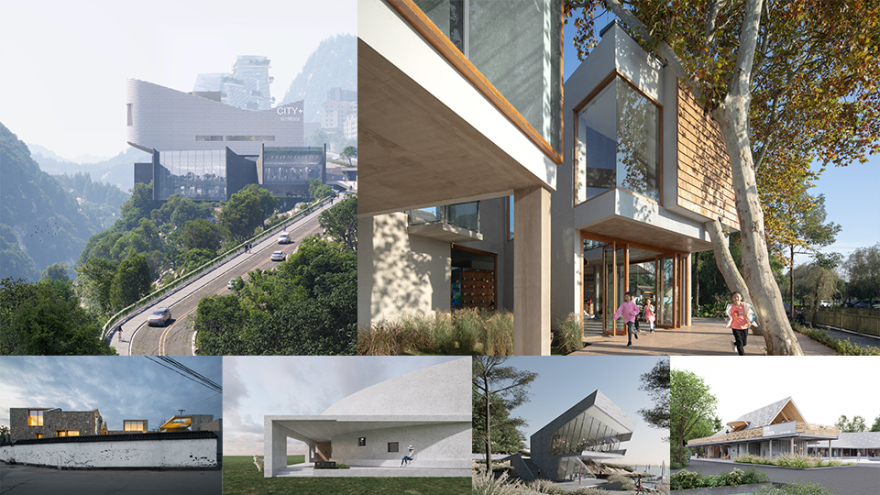
▼MAT代表项目,Representative projects ofMAT© 超级建筑事务所

We also feel that there has never been a time quite like the present, when countless new projects are shared online every day, allowing works by young studios to appear alongside those of established masters. This flattening of visibility enables architectural works to circulate more freely as media content. In such a context, design practice may have a greater opportunity to bring vitality and inspiration to the profession and to the cities around us. For me personally, it’s not just about producing more drawings — it’s about generating new knowledge. I hope our work can spark dialogues on theoretical and intellectual levels while simultaneously creating tangible spaces that inspire, provoke thought, and foster interaction among users. That, to us, is the truly interesting challenge we wish to pursue.
▼MAT代表项目,Representative projects ofMAT© 超级建筑事务所

“我们对于设计方法论的研究和实践,想在下一个十年进行突破,形成更有力的设计语言,做更有意义的事情,一边要更加专业,一边也要不那么背负‘建筑’。”
“We aim to become more professional on one hand, while on the other, remain less burdened by the weight of ‘architecture’ itself.”
Tang Kangshuo:Contemporary media and modes of communication have profoundly shaped our lives. In the past, architecture came first, and content followed; now, it’s the opposite — content precedes architecture. This shift raises the question: can architecture, or architectural design itself, in turn, become a driving force again? Could this moment give rise to new possibilities? From the 1990s through the 2000s, a generation of experimental architects in China emerged within a specific cultural and historical context. They explored architectural experimentation in ways that later influenced the trajectory of contemporary Chinese architecture. But in today’s context, where does experimentation come from, and what drives it? If the previous generation of experimental architects sought to align with the world — learning from the West and reflecting on those ideas within China’s local context — then our current situation is different. The world has become more equal; information circulates globally and instantaneously online. So, is there now another kind of opportunity, or another force, that can open up new possibilities for the next generation of architects? In addition, we hope that our research and practice in design methodology will achieve breakthroughs in the next decade — to develop a stronger design language and pursue work of deeper meaning. We aim to become more professional on one hand, while on the other, remain less burdened by the weight of “architecture” itself.
▼合伙人合影:张淼(左)和唐康硕(右),Partners group photo Zhang Miao and Tang kangshuo©MAT超级建筑

















南京喵熊网络科技有限公司 苏ICP备18050492号-4知末 © 2018—2020 . All photos and trademark graphics are copyrighted by their owners.增值电信业务经营许可证(ICP)苏B2-20201444 苏公网安备 32011302321234号
苏公网安备 32011302321234号客服
消息
收藏
下载
最近