

创作上传
VIP
收藏下载
登录 | 注册有礼
查看完整案例

收藏

下载

分享
比得哥什新港是一项位于城市中心后工业场地上的住宅开发项目。该场地具有鲜明而厚重的空间语境,既受比得哥什历史城市肌理的塑造,也与布尔达河紧密相连。投资方与建筑师共同希望打造一片连贯、深思熟虑的城市片区——一处全新的滨河城市街区。除住宅建筑外,规划还引入了由城市大道、步行通道、绿色口袋广场以及滨河步道构成的公共空间网络。总体规划由知名建筑事务所BBGK Architekci负责制定,项目的一期工程现已竣工。▼区位分析图,Location diagram © BBGK Architekci

New Port (Nowy Port) in Bydgoszcz is a residential development located on a post-industrial site in the central part of the city. The location carries a strong spatial context, shaped by Bydgoszcz’s historic urban fabric and the Brda River. The location carries a strong spatial context, shaped by Bydgoszcz’s historic urban fabric and the Brda River. Both the investor and the architects sought to create a coherent, well-considered piece of the city — a new riverside urban quarter. Alongside the residential buildings, the plan introduces a network of public spaces, including a city avenue, pedestrian passage, green pocket squares and a riverside boulevard. The masterplan was developed by the renowned architectural office BBGK Architekci. The first stage of the project has just been completed.
▼项目鸟瞰,Aerial view of the project © Nate Cook


工业遗产
Industrial heritage
建筑师受托改造一处位于比得哥什市中心的场地。这座拥有约35万居民的城市,其工业历史可追溯至19世纪末。在如今的马尔钦科夫斯基街与比得哥什保卫者街交汇处,曾建立起一处生产设施,并逐步扩展为造船工厂。如今的马尔钦科夫斯基街一段曾被称为“Nad Portem”(意为“港口旁”)。尽管该场地在20世纪经历了多次所有权与产业类型的更迭,但其造船厂时代的记忆成为项目命名“新港”的灵感来源。数座19世纪的工厂建筑得到修复,以延续这一工业遗产。
The architects were tasked with transforming a centrally located site in Bydgoszcz — a city of 350,000 residents — whose industrial history dates back to the late 19th century. At the intersection of today’s Marcinkowskiego and Obrońców Bydgoszczy streets, a production facility was established and gradually expanded into a shipbuilding factory. A section of the present-day Marcinkowskiego Street was then known as “Nad Portem” (“By the Port”). Although the site changed owners and specializations throughout the 20th century, it was the memory of its shipyard era that inspired the project’s name, New Port. Several 19th-century factory buildings have been restored to preserve this heritage.
▼滨水城市界面,Urban waterfront context © Nate Cook

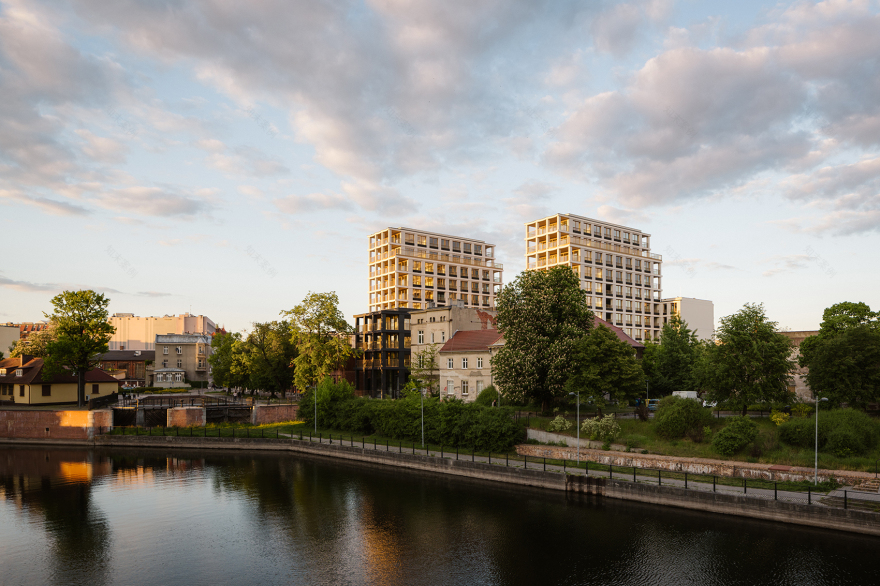
▼河岸一侧的建筑群,Buildings along the river © Nate Cook

这片闲置逾十年的后工业区域,正被转化为一处当代城市空间。投资方与建筑师希望打造一个完整、连贯的城市单元——一座嵌入周边城市肌理的街区,并提供多样化、多功能的公共空间。正如建筑师所强调的那样,新港项目意在成为一份“宣言”,展示当代城市如何成为宜居而富有吸引力的生活场所。▼总体规划渲染图,Masterplan render © BBGK Architekci
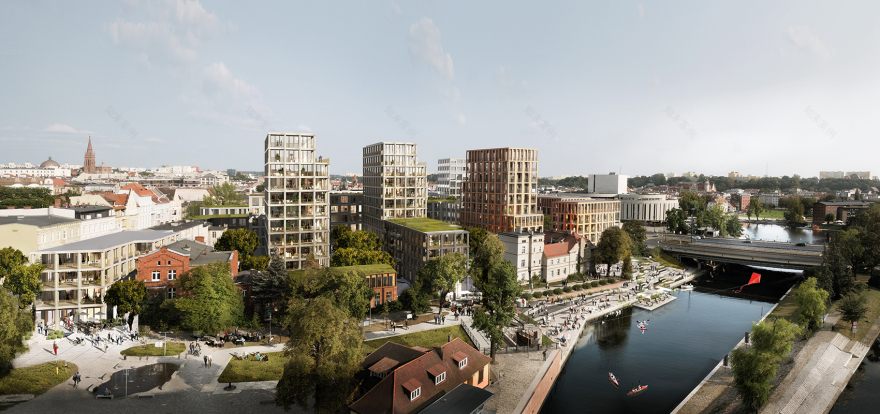
The post-industrial area, unused for more than a decade, is now undergoing a transformation into a contemporary urban space. The investor and architects aimed to create a coherent piece of the city: a block stitched into the surrounding fabric, offering a varied program of multifunctional public spaces. As the architects emphasize, New Port was intended as a manifesto—showcasing how contemporary cities can become attractive places to live.
▼新港街区概览,Overall view of the New Port© Nate Cook

河畔的新城市街区
A new urban quarter on the river
基地由两个强有力的环境锚点界定:一是历史性的联排住宅肌理,二是布尔达河的存在。BBGK Architekci 的总体规划构想了一个紧凑的城市街区,用以强化并完善比得哥什的空间结构。项目整体被组织为三个层次。第一层为保留建筑,包括三座工厂建筑与一栋历史公寓楼,均在与文保部门的协作下完成修复。第二层为新建街区开发,其尺度延续并呼应了城市中心19世纪的城市语境。第三层由四个垂直体量构成——位于场地内部的11层、36米高塔楼。它们面向河流的轮廓在低矮的历史肌理与高耸的当代体量之间形成富有张力的对比。其中两座塔楼已在一期工程中建成。它们将与河对岸阶梯式体量的 Nordic Haven 住宅楼共同勾勒出一处当代城市门户。
▼功能与空间分析图,Functional and spatial diagrams © BBGK Architekci

▼轴测分析图,Axonometric diagram © BBGK Architekci

The site is defined by two powerful contextual anchors: the historic tenement-house fabric and the presence of the Brda River. BBGK Architekci’s masterplan envisioned a compact, urban block that strengthens and completes Bydgoszcz’s spatial structure. The project is organised into three layers. The first comprises preserved buildings: three factory structures and a historic tenement, all restored in collaboration with the heritage conservator. The second is the new block development, whose scale continues and complements the 19th-century urban context of the city center. The third consists of four vertical accents — 11-storey, 36-meter towers placed within the interior of the site. Their river-facing silhouettes create a dynamic tension between the lower historic fabric and the taller contemporary volumes. Two of the towers were built in the first phase. Together with the stepped form of the Nordic Haven residential building across the river, they will frame a contemporary gateway to the city.
▼紧凑的城市街区,Compact urban block © Nate Cook

▼建筑间的公共台阶,Steps between buildings © Nate Cook

▼街道视角的建筑立面,Street-facing facades© Nate Cook


城市大道与滨河步道
City avenue and riverfront promenade
城市布局被设计为四个内城街区,由一条新建的南北向城市大道与一条东西向步行通道加以分隔。城市大道配有宽阔的人行道与成排树阵,步行通道则串联起两处景观广场。设计意图在于营造有利于城市活力的空间条件——鼓励人们停留与交流。建筑师采用以人为尺度的比例与空间层级递进。所有面向公共空间的首层均布置商业与服务功能。中央大道两侧分布着商铺、餐厅与咖啡馆,被构想为一条传统商业街——这是充满活力的欧洲城市中心的典型特征。
The urban layout is designed as four inner-city blocks divided by a new north–south city avenue with broad sidewalks and tree alignments, and a perpendicular east–west pedestrian passage with two landscaped squares. The design intention was to create conditions that support vibrant urban life — spaces that invite people to linger. The architects employed human-scaled proportions and gradation of spaces. All ground floors facing public areas will house retail and service functions. The central avenue, lined with shops, restaurants and cafés, is conceived as a traditional commercial street — a hallmark of lively European city centers.
▼城市街景与首层商业界面,Street frontage with retail at ground level © Nate Cook

滨河空间进一步提升了项目对居民与城市的价值:一条滨河步道串联起休闲空间与餐饮场所,这些功能既分布在新建建筑中,也嵌入历史建筑之内。绿化在项目中同样占据重要地位,既出现在公共空间中,也延伸至内部庭院。目前已种植约两万株植物。
The riverfront adds further value for residents and the city: a promenade with recreational spaces and dining venues located in both new and historic buildings. Greenery plays an equal role in the project, appearing in public spaces as well as within the interior courtyards. Around 20,000 plantings have already been introduced.
▼绿化,Greenery© Nate Cook

简洁与节律
Simplicity and rhythm
新建建筑以四层为主,在街区局部设置两层退台式加建。11层塔楼在城市天际线中起到标识作用。其修长的立面由具有辨识度的凉廊网格塑造,与更为厚重的侧立面形成对比。建筑形象以极简立面为特征,通过富有节律的分割与微微起伏、如波浪般的混凝土檐口加以强化。
The new buildings are primarily four storeys high, with two additional recessed floors on selected sections of the block. The 11-storey towers mark the development in the city silhouette. Their slender façades, shaped by a distinctive grid of loggias, contrast with the more solid side walls. The architectural character is defined by minimalist façades with rhythmic divisions and subtly sculpted, wave-like concrete cornices.
▼立面节律与开窗,Facade rhythm and openings © Nate Cook

▼建筑入口,Building entrance © Nate Cook

克制的体量形式辅以高品质、低饱和度的材料:浅灰色砂岩板、黑色花岗岩、有色建筑混凝土,以及实木窗框。面向河流的公寓配备进深达三米的露台与全景玻璃。
The restrained form is complemented by high-quality materials in muted tones: panels of light grey sandstone and black granite, coloured architectural concrete, and solid timber window frames. Apartments facing the river feature deep, three-meter terraces and panoramic glazing.
▼建筑立面近景,Building facades close view© Nate Cook


▼公寓露台,Apartments terraces © Nate Cook


已建成的整体构成了新港项目四个阶段中的第一期。本阶段包括七栋新建建筑,共177套住宅,以及配套的商业与办公空间。▼总体规划渲染夜景图,Masterplan render night view © BBGK Architekci

The completed ensemble constitutes the first of four phases of New Port. This stage includes seven new buildings with 177 apartments as well as retail and office spaces.
▼河岸一侧的建筑群夜景,Buildings along the river night view© Nate Cook

▼夜间立面,Facades at night © Nate Cook
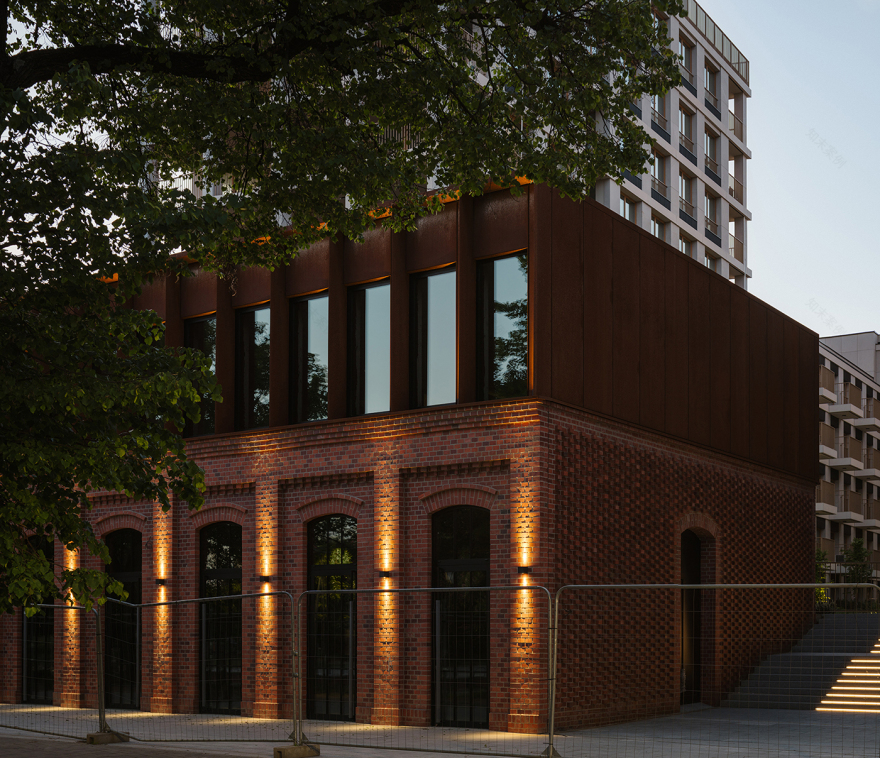

▼夜间立面近景,Facades at night close view© Nate Cook


▼场地总平面,Site plan © BBGK Architekci

▼平面图,Floor plans© BBGK Architekci
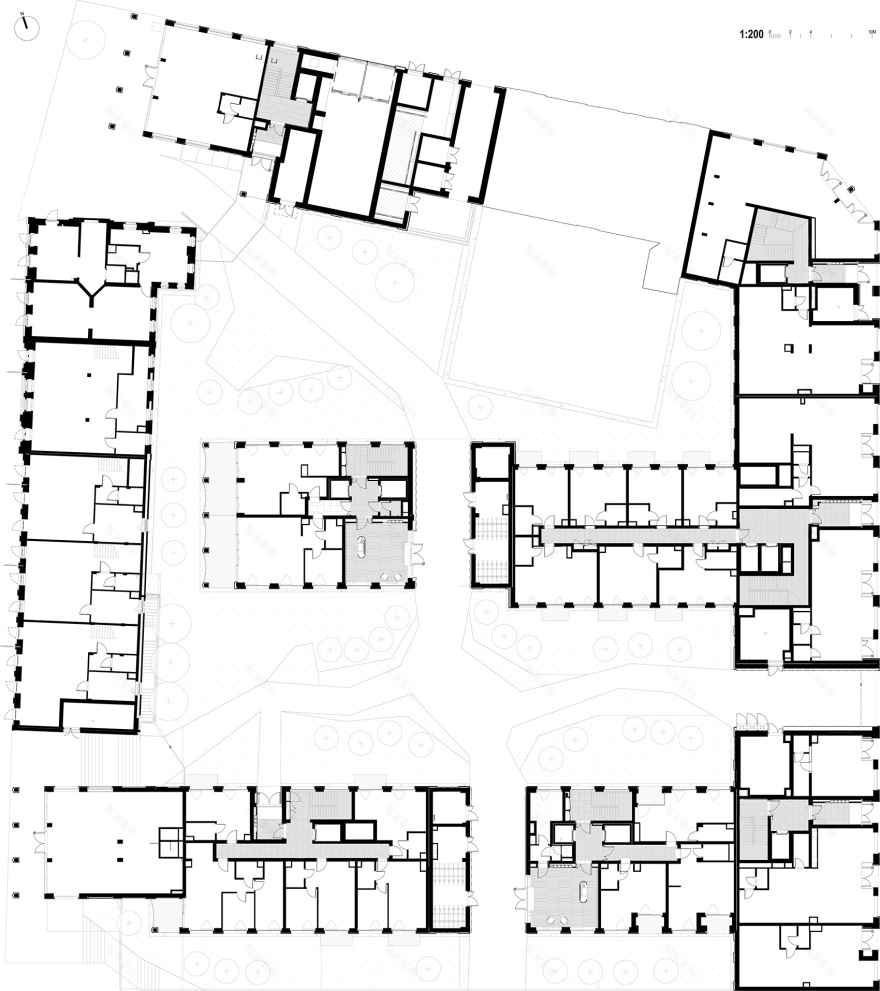

▼立面图,Elevation © BBGK Architekci

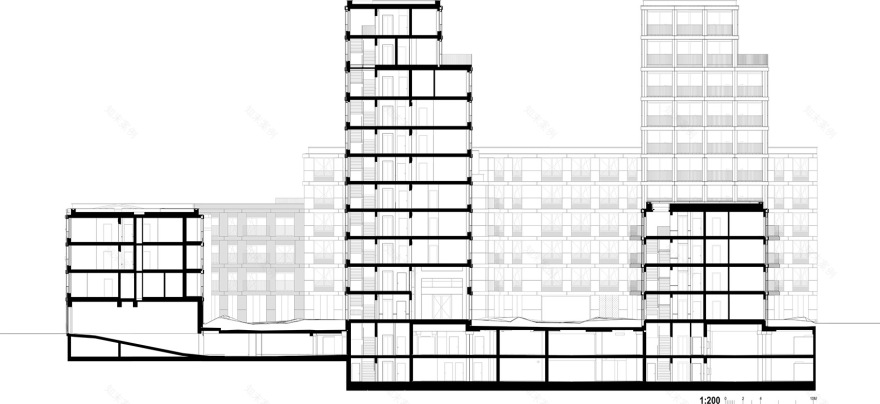
▼剖面图,Section © BBGK Architekci
Name: Nowy Port (I stage)
Authors: BBGK Architekci
Client: AWZ Deweloper
Location: Bydgoszcz, Poland
Design: 2018-2021
Development: 2024-2025


南京喵熊网络科技有限公司 苏ICP备18050492号-4知末 © 2018—2020 . All photos and trademark graphics are copyrighted by their owners.增值电信业务经营许可证(ICP)苏B2-20201444 苏公网安备 32011302321234号
苏公网安备 32011302321234号客服
消息
收藏
下载
最近