

创作上传
VIP
收藏下载
登录 | 注册有礼
查看完整案例

收藏

下载

分享
一、背景与基地条件
Background and site conditions
项目规模与定位
Project scale and positioning
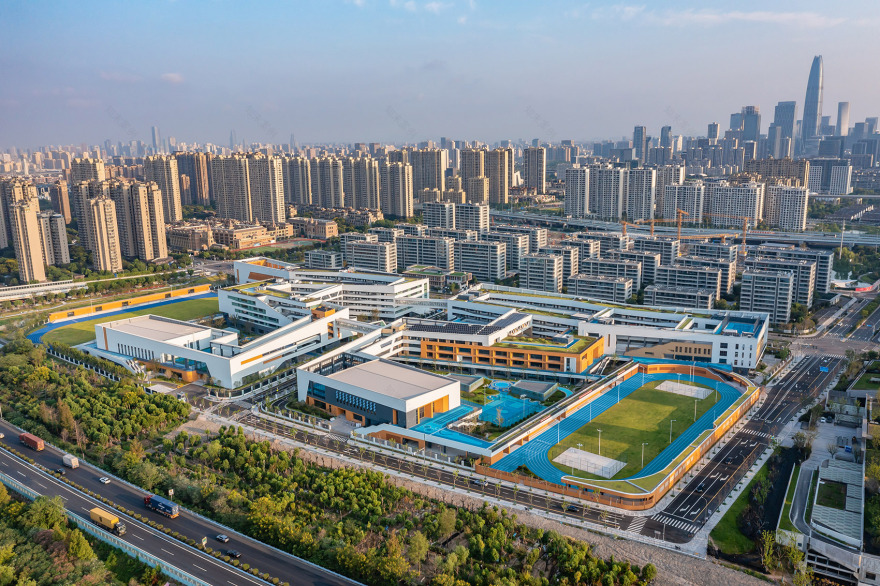
项目位于浙江省宁波市鄞州区前殷区块,场地北至潘火大道,南侧紧邻城市绿带及甬台温高速路,西侧为景观水系及金达北路,东侧为地铁上盖住宅区。该项目分为两个地块,项目总用地面积93427㎡。其中1#地块用地面积48916㎡,拟建一个48班的初中,2#地块用地面积44511㎡,拟建一个60班的小学。两个地块规划容积率均为0.9。
©DC国际
The project is located in the Qianyin area ofYinzhou District, Ningbo, Zhejiang Province. The site is bounded by Panhuo Avenue to the north, an urban green belt and the Yongtaiwen Expressway to the south, a landscape water system and Jinda North Road to the west, and an above-metro residential area to the east. The project consists of two plots, with a total site area of 93,427 m². Plot 1 covers 48,916 m² and is designated for a 48-class junior high school, while Plot 2 covers 44,511 m² and is planned for a 60-class primary school. Both plots have a planned floor area ratio of 0.9.
▼项目鸟瞰,Aerial-view of the project©DC国际

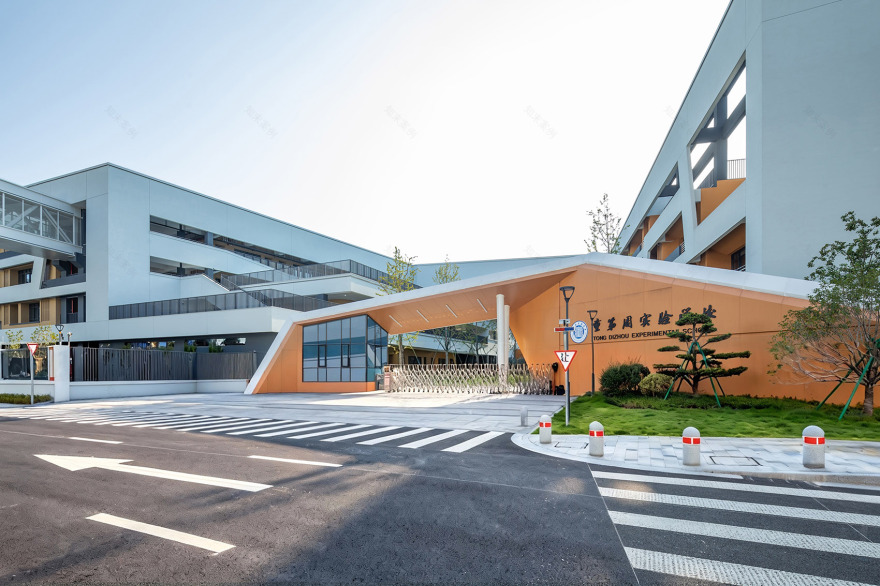
▼小学部沿街透视,Street perspectiveview ©DC国际

▼中学部沿街透视,Street perspectiveview©DC国际

基地约束条件
Site constraints
与常规校园设计相比,本项目主要面对三大挑战:一是地铁出入场线东西向横穿校园,将原本两个地块分成四个碎片化区域,涉及结构避让、振动隔离与安全防护问题;二是由于建设场地需避让地铁出入场盾构线,造成可用场地极度紧缩与高容积率(实际容积率为1.3)要求的矛盾;三是中间城市道路横亘于中小学之间,需解决物理隔离与使用功能联动问题。
▼场地规划条件,Site planning conditions© c+d设计中心

Compared with conventional campus designs, this project faces three major challenges: firstly, the east-west subway entry-exit line traverses the campus, dividing the two original plots into four fragmented areas, involvingproblems such as structural avoidance, vibration isolation, and safety protection; secondly, due to the need to avoid the subway tunnel shield line, the available land is extremely limited, conflicting with the requirement for a high floor area ratio (actual FAR: 1.3); thirdly, a city road separates the primary and secondary schools, calling forsolutions to thephysical separationbetween the two campuswhile maintaining the functional connectivityin-between.
▼项目规划鸟瞰,Aerial-view of the planning©DC国际

二、设计策略
Design strategies
地铁咽喉区的适应性布局
Adaptive layout in the subway throat area
在满足地铁咽喉区与学校同步建设的复杂要求下,基于前期与地铁公司沟通确认需满足以下约束条件:学校主体建筑需与地铁咽喉区完全脱开;地上结构与地下室边界均需退让地铁盾构线一定距离;并需利用咽喉区结构柱网,在其正上方设置地铁排烟设施。
▼总图概念草图,Sketch© c+d设计中心
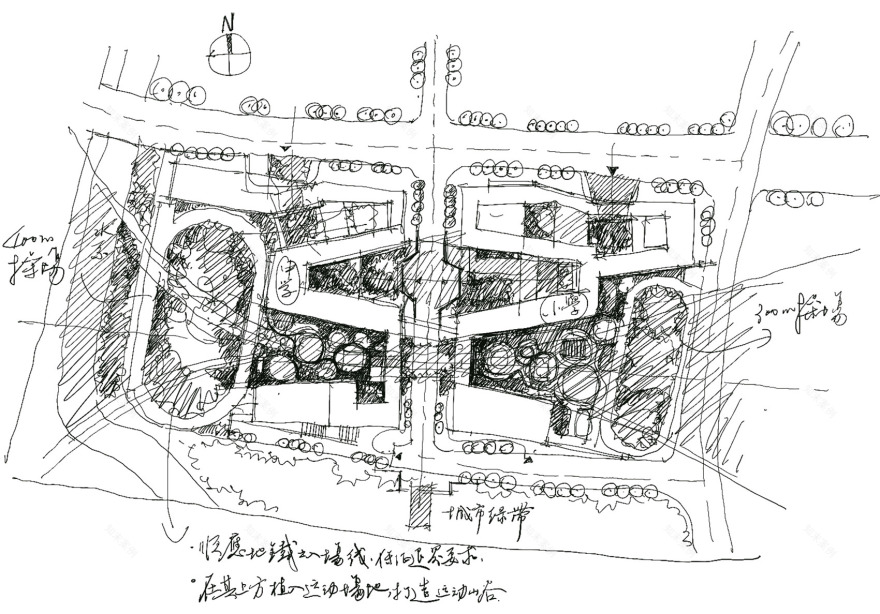
To meet the complex requirements of synchronizing construction with the subway throat area, and based on preliminary communication with the subway company, the following conditions were compulsory to be met: the main school buildings must be completely detached from the subway throat area; both above-ground structures and basement boundaries must be set back a certain distance from the subway shield line; and the subway ventilation facilities must be installed directly above the throat area using its own structural column grid.
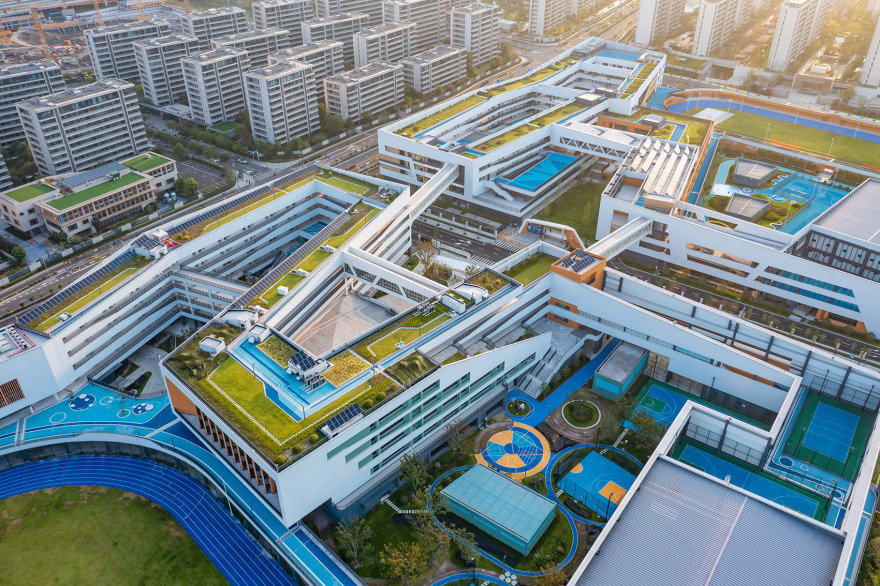
▼“运动谷”鸟瞰,Aerial-view of “Activity Valley”©DC国际

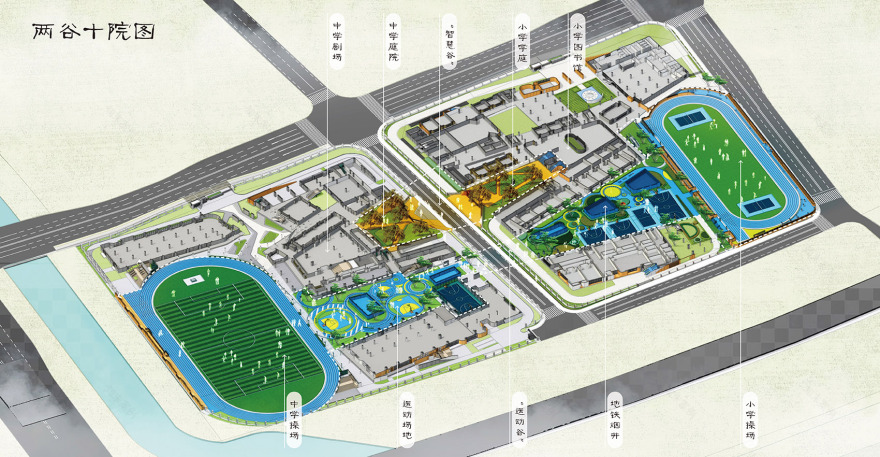
面对上述限制,设计采取顺应场地的策略:将中小学教学主体及地下室布置于咽喉区北侧,南侧则集中设置体育馆及体育活动用房。南北两部分建筑通过架空连廊进行连接。咽喉区正上方区域,除设置必需的排烟井外,主要用于承载操场、运动场地、休闲活动空间及绿地等荷载要求低、且无结构干扰的功能,形成东西延展近500米的外向型开放式“运动谷”,巧妙实现功能与限制的有机融合。
▼“两谷”概念草图,Sketch© c+d设计中心

In response to these limitations, the design adopts a site-responsive strategy: the main teaching buildings and basements of the primary and secondary schools are placed on the north side of the throat area, while the gymnasium and sports facilities are concentrated on the south side. These two sections are connected via elevated corridors. The area directly above the throat zone, apart from accommodating necessary ventilation shafts, is primarily allocated for low-load, structurally non-interfering functions such as playgrounds, sports fields, recreational spaces, and green areas. This creates an east-west extended, outward-facing “Activity Valley” stretching nearly 500 meters in length, skillfully integrating functionality with constraints.
▼实现功能与限制的有机融合,Integrating functionality with constraints©DC国际
高密高容下的适应性空间组织
Adaptive spatial organization under high density and high capacity
为化解因避让地铁盾构线导致的用地局限与高容积率挑战,本案采用了双管齐下的设计策略:▼空间组织概念图,Space function diagram© c+d设计中心

▼空间的拓扑形态,Spatial topological form© c+d设计中心

To address the land limitations and high floor area ratio challenges resulting from avoiding the subway shield line, the design employs a dual strategy:
▼院落空间鸟瞰,Aerial-view of the courtyard© DC国际

首先,通过院落组合模式打破空间局限。设计植入多组功能有别的主题院落(如学习庭院、生态花园、文化中庭),并利用架空层将其巧妙连接,形成一个有机整体。这些庭院虽在形态、尺度、风格和标高上各有特色,但均来自于咽喉区形态的拓扑变形,在有效改善采光通风的同时,更构成了一个极具趣味性的非正式学习与交流空间体系。
First, the courtyard combination model breaks spatial constraints. The design introduces multiple themed courtyards with distinct functions (e.g., learning courtyards, ecological gardens, cultural atriums), which are cleverly linked through elevated layers to form an organic whole. Although these courtyards vary in form, scale, style, and elevation, they all derive from topological transformations of the throat area’s morphology. This not only effectively improves natural lighting and ventilation but also creates an engaging system of informal learning and interaction spaces.
▼小学部院落空间,courtyard space of primary school© DC国际
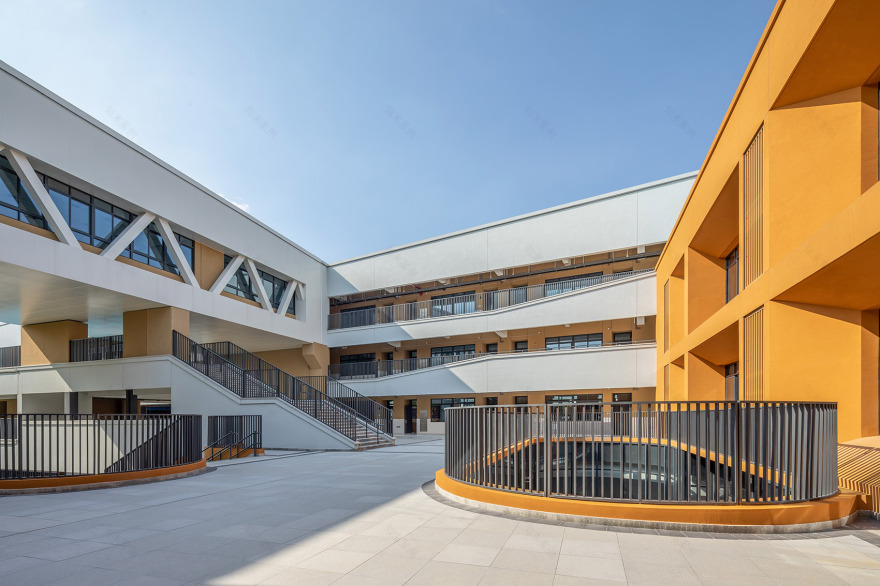

▼中学部院落空间,courtyard space of middle school© DC国际


▼通过组合打破空间局限,Thecombination model breaks spatial constraints ©DC国际


其次,积极进行垂直开发与平台联动。由于地面场地有限,设计转而向立体空间寻求解决方案,充分利用了咽喉区上方、架空层以及各层屋顶等空间。通过大台阶、坡道等积极的竖向交通设计,将这些不同标高的平台串联起来,最终构建出一个完整统一、流动而富有活力的立体公共空间网络。
▼立体平台体系分析,Analysis of the platform system© c+d设计中心

Second, vertical development and platform integration are actively pursued. Due to limited ground space, the design turns to seek three-dimensional solutions, making full use of areas above the throat zone, elevated layers, and rooftop spaces. Through active vertical circulation elements such as grand staircases and ramps, these multi-level platforms are interconnected, ultimately forming a cohesive and dynamic three-dimensional public space network.
▼立体活力平台鸟瞰,Aerial-view of three-dimensional solutions© DC国际

最终,这些策略相辅相成,使校园超越了对高密高容指标的简单满足,演进为一个与场地共生、能持续激发学习与社交活力的校园场所。
Together, these strategies go beyond merely meeting high-density and high-capacity indicators, evolving the campus into a site-symbiotic environment that continuously fosters learning and social vitality.
▼小学部立体活力平台,Primary school of three-dimensional solutions© DC国际
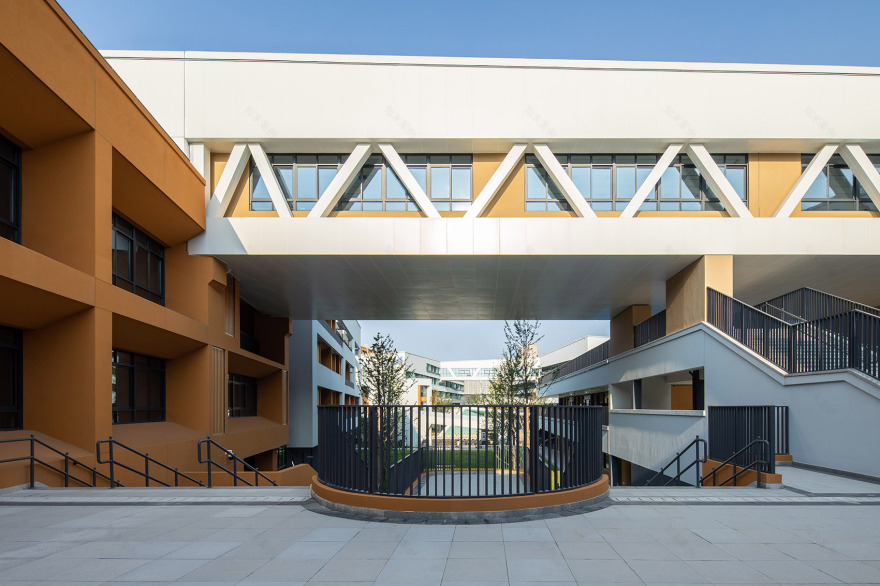

▼中学部立体活力平台,Middle school of three-dimensional solutions© DC国际


跨道路一体化连通与共享
Integrated connectivity and sharing across the road
为解决中小学被中间城市道路分隔的问题,设计采用立体连通与功能共享的策略,旨在打破物理隔阂,促进校园一体化使用。
To resolve the separation of the primary and secondary schools by the city roadin between, the design employs strategies of three-dimensional connectivity and functional sharing, aiming to break physical barriers and promote integrated campus use.
▼空中连廊鸟瞰,Aerial-view of the corridor© DC国际

在立体连通方面,设计在道路上空设置了两条宽4米、长40米的封闭式空中连廊,直接连接道路两侧的教学区。这种全天候的连廊设计,不仅能保障学生安全、便捷地通行,不受天气影响,也可有效避免人车流线的交叉,提升校园的安全性与通达性。
For three-dimensional connectivity, two enclosed aerial corridors—each 4 meters wide and 40 meters long—are designed above the road, directly linking the teaching zones on both sides. These all-weather corridors ensure safe and convenient student passage regardless of weather conditions while effectively avoiding conflicts between pedestrian and vehicular circulations, thereby enhancing campus safety and accessibility.
▼从道路看空中连廊,Street perspective view © DC国际

▼空中连廊内部,Interior view of the corridor© DC国际

在功能布局与共享方面,将中小学的主要出入口设置在中间道路两侧,使入口庭院与空中连廊相结合,共同围合出一个宽敞且相对内向的教学核心庭院。庭院周边除布置普通教室,还集中设置了图书馆、报告厅(小剧场)、书法教室、美术教室等公共性较强的教学空间。这种布局方式旨在促进中小学资源共享,提高设施使用效率,同时形成一个功能复合、氛围浓厚的教学交流中心。▼共享庭院,Sharing courtyard diagram© c+d设计中心

In terms of functional layout and sharing, the main entrances of the primary and secondary schools are located on either side of the cityroad. The entrance courtyards, combined with the aerial corridors, enclose a spacious and relatively inward-focused centralcourtyard. Surrounding this courtyard, in addition to regular classrooms, shared facilities such as the library, auditorium (small theater), calligraphy classrooms, and art studios are intensively located. This layout promotes resource sharing between the schools, improves facility utilization, and forms a multifunctional, vibrant hub for teaching and communication.
▼共享庭院鸟瞰,Aerial-view of the sharing courtyard© DC国际


▼形成一个功能复合的空间,Forming a multifunctionalspace © DC国际
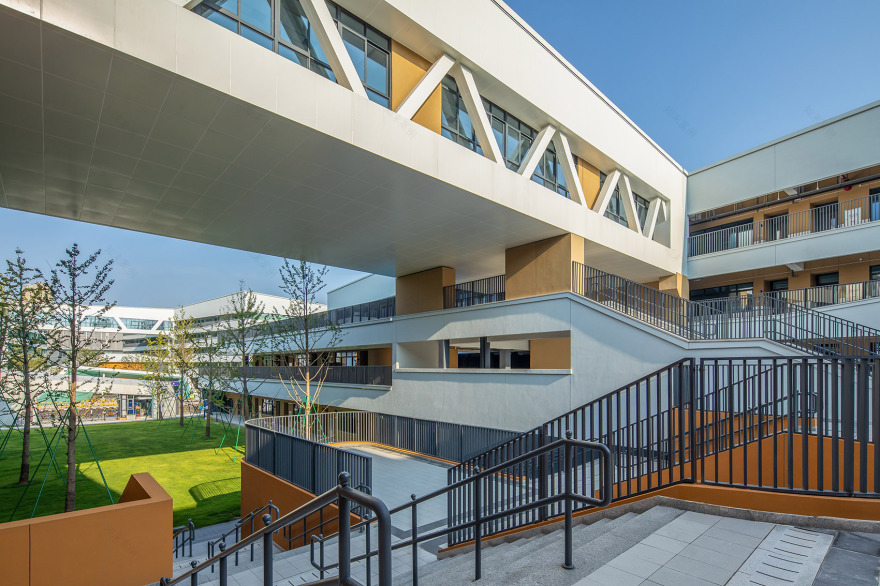

这个教学核心庭院,不仅是空间组织的枢纽,也是功能交汇的中心。它由一系列教学空间围合而成,形成一个内向、静谧且具有私密感的“智慧谷”。与南侧开放活跃的“运动谷”相呼应,一动一静,一开放一私密,二者形成阴阳互补的有机整体,共同塑造出和谐而富有张力的校园空间格局。
▼剖透视分析图,Sectional perspective analysis© c+d设计中心
▼立面概念草图,Elevation design sketch© c+d设计中心

This central courtyard serves not only as a spatial organizational hub but also as a functional convergence area. Enclosed by a series of teaching spaces, it creates an inward-oriented, tranquil, and intimate “Intellectual Valley.” In contrast to the open and active “Activity Valley” to the south, the two complement each other like yin and yang—one dynamic and open, the other serene and private—together shaping a harmonious and tensioning campus spatial structure.
▼室内交通空间,Interior transportation space ©DC国际


▼阶梯教室,Tiered classroom ©DC国际


▼图书馆,Library ©DC国际

▼食堂,Dining hall ©DC国际


▼室内体育馆,Indoor gymnasium ©DC国际


三、结论与展望
Conclusion and prospect
面对地铁线横穿校园的先天限制,我们化制约为机遇,通过创新性布局与灵活的空间策略,在满足所有安全规范的基础上,成功打造出一座集共享、高效与活力于一体的现代化校园。这一设计不仅突破了基础设施的桎梏,更开创了“轨道+教育”融合发展的新模式,期望能够为未来城市与教育空间的共生提供富有价值的实践范本。
Faced with the inherent constraint of a subway line traversing the campus, we transformed limitations into opportunitiesthrough innovative layout and flexible spatial strategies, while complying with all safety regulations.We successfully created a modern campus that integrates sharing, efficiency, and vitality,whichnot only overcomes the constraints imposed by infrastructure but also pioneers a new model of integrated development for “rail transit + education,” offering a valuable practical reference for the future symbiosis of urban and educational spaces.
▼夕阳下的学校全景,School panorama at sunset ©DC国际


▼总平面图,Master plan© c+d设计中心

▼一层平面图,First floor plan© c+d设计中心

▼二层平面图,Second floor plan© c+d设计中心

▼三层平面图,Third floor plan© c+d设计中心
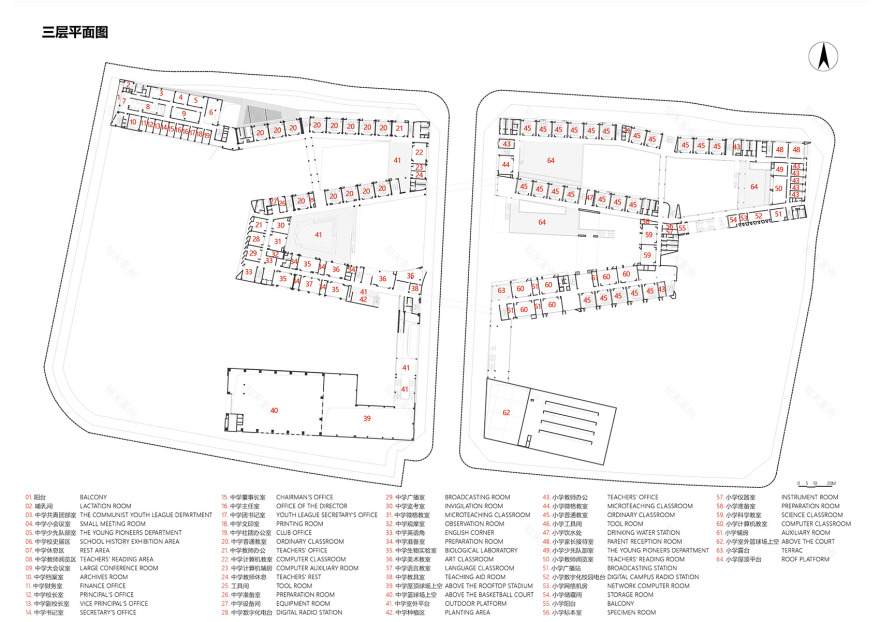
▼四层平面图,Fourth floor plan© c+d设计中心
▼五层平面图,Fifth floor plan© c+d设计中心

▼屋顶平面图,Fifth floor plan© c+d设计中心

▼地下一层平面图,Basement floor plan© c+d设计中心

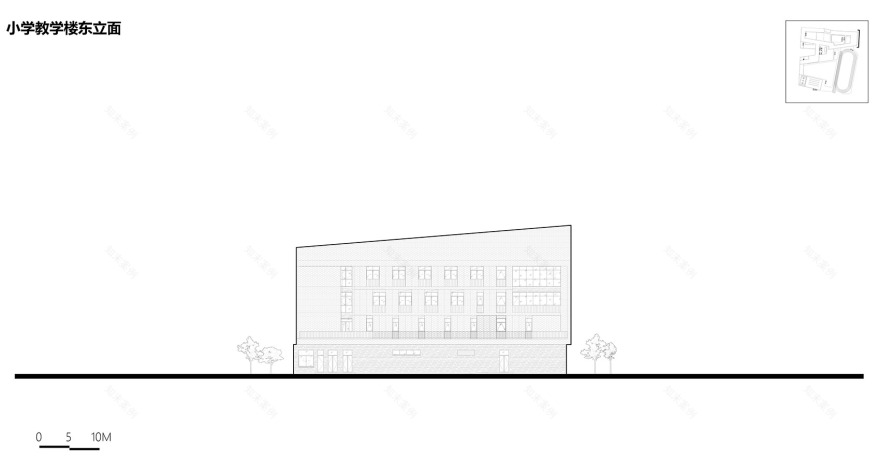
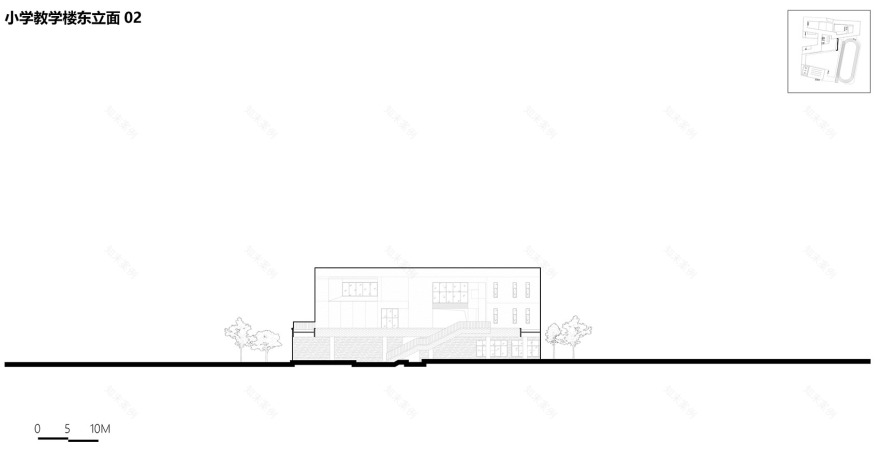
▼小学教学楼北立面图,Elevation© c+d设计中心

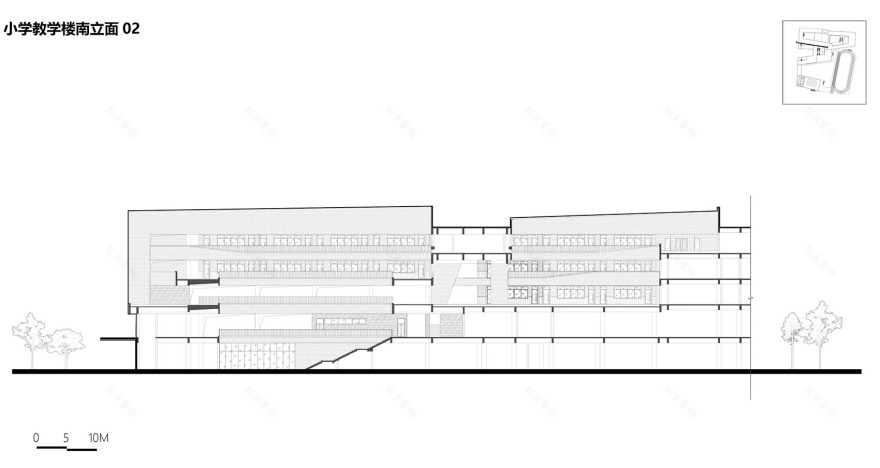
▼小学教学楼南立面图,Elevation© c+d设计中心
▼小学体育馆北立面图,Elevation© c+d设计中心

▼中学教学楼南立面图,Elevation© c+d设计中心

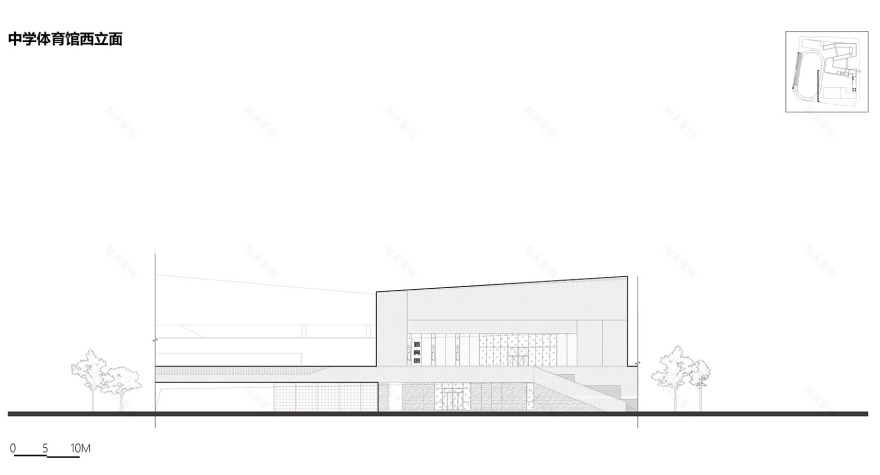
▼中学体育馆南立面图,Elevation© c+d设计中心

▼中学行政中心,Elevation© c+d设计中心

▼剖面图,Section© c+d设计中心


项目名称:宁波市鄞州区童第周实验学校
设计方:c+d设计中心
项目设计 & 完成年份:2019.11-2025.06
主持建筑师:董屹
设计团队:高盘、杨凯悦、林淑雅、祁晓晗、张雪桐、林威、刘灿星、路晨凯、李实、吴晶晶
建筑面积:102819.4㎡
摄影版权:DC国际
合作方:宁波市房屋建筑设计研究院有限公司(施工图) 浙江华展研究设计院股份有限公司(施工图)
客户:宁波市轨道交通物产置业有限公司
Project name: Ningbo Tong Dizhou Experimental School
Design: c+d studio
Design year & Completion Year: 2019.11-2025.06
Lead Architect:Yi Dong
Design Team:Pan Gao, Kaiyue Yang, Shuya Lin, Xiaohan Qi, Xuetong Zhang, Wei Lin, Canxing Liu, Chenkai Lu, Shi Li, Jingjing Wu
Gross Built Area: 102819.4 sqm
Photo credits: DC Alliance
Photo credits: DC Alliance
Partners: Ningbo Architectural Design & Research Institute Co., Ltd.(Construction drawing) Zhejiang Huazhan Engineering Design & Research Institute Co., Ltd.(Construction drawing)
Clients: Ningbo Rail Transit Real Estate Ltd.








南京喵熊网络科技有限公司 苏ICP备18050492号-4知末 © 2018—2020 . All photos and trademark graphics are copyrighted by their owners.增值电信业务经营许可证(ICP)苏B2-20201444 苏公网安备 32011302321234号
苏公网安备 32011302321234号客服
消息
收藏
下载
最近